From Surf Wiki (app.surf) — the open knowledge base
Liman (landform)
Russian term for an estuary lagoon formed by a sandbar at a river's mouth
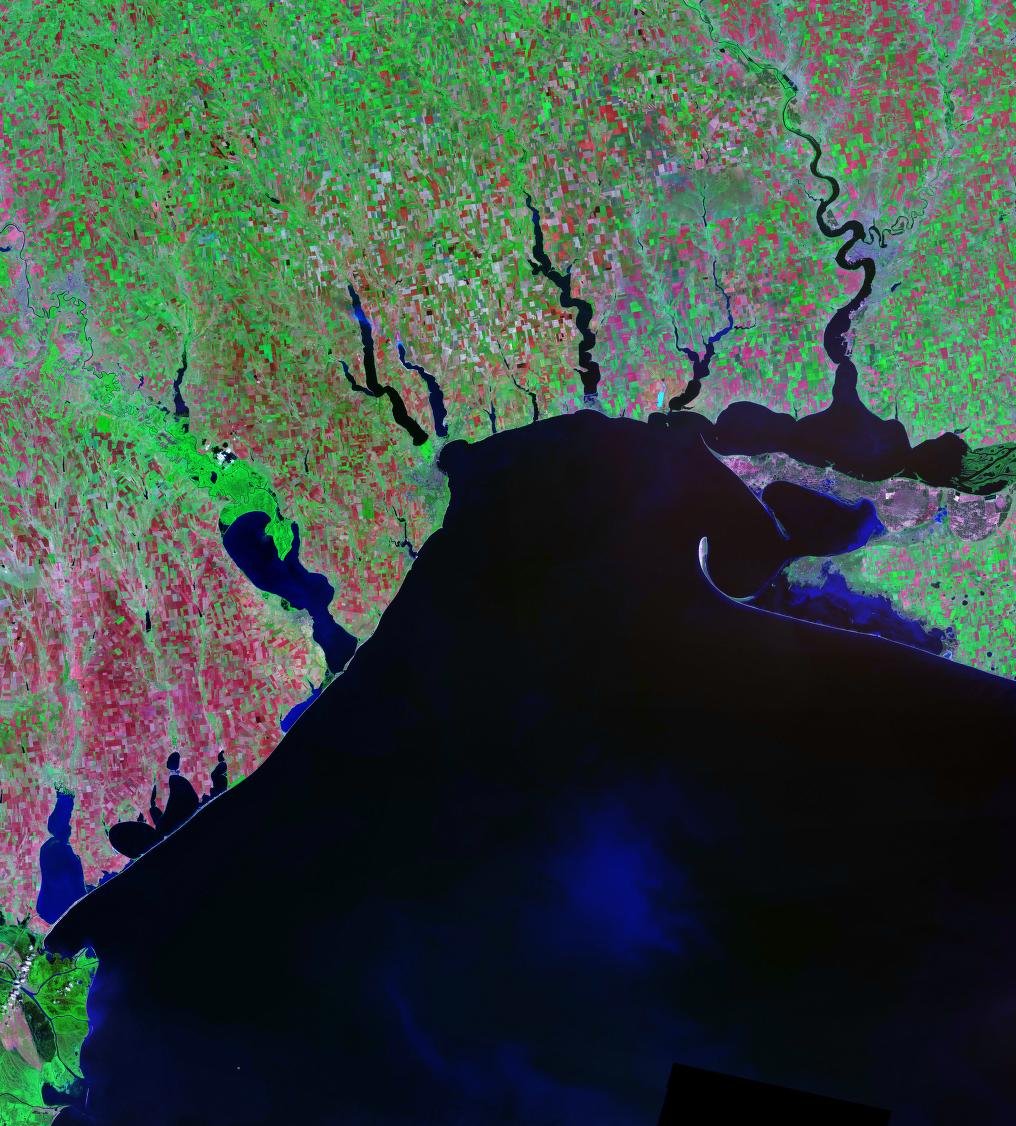
Russian term for an estuary lagoon formed by a sandbar at a river's mouth


A liman is a wide estuary formed as a lagoon at the mouth of one or more rivers where flow is constrained by a sediment bar created by sea or river current. The hydrological term comes from the Russian language and is used in various national and regional languages for estuary lagoons all around the Black Sea and Sea of Azov coasts.
A liman is classified as either maritime or fluvial: "maritime" if its sediment bar was formed by sea current; "fluvial" if the bar is created by obstructed flow in a saturated river.
Water in a liman is brackish with variable salinity. During periods of reduced fresh water intake, an especially deep liman or a liman at a very wide river mouth will have a higher salinity than its narrower and shallower counterparts due to greater seawater inflow and evaporation.
Examples of Black Sea limans include the Dniester Liman and the Razelm Liman (Lake Razelm). The Russian name for the liman's mouth bar is peresyp. The term guba (губа) is used for non-significantly blocked estuaries in the Russian North.
Etymology
"Liman" comes from the for "bay" or "port". The word next appeared as , then as (). The English term "limnology", meaning the study of inland aquatic ecosystems, is related to "liman" through the shared Greek root for "lake" or "sea", —rendered in English as "limno–" or "limn–".
Distribution
Limans are most prevalent on the western and northern Black Sea coasts; these are areas with low tidal ranges. Examples include: Lake Varna in Bulgaria; Lake Razelm in Romania; the Dniester Liman in Ukraine; and Lake Büyükçekmece and Lake Küçükçekmece in Turkey.
Russians also use the term "liman" for lagoons not on the Black Sea, for example the Anadyrskiy Liman and Amur Liman in Siberia.
References
References
- {{in lang. ro Mihai Ielenicz (ed., 1999): ''Dicționar de geografie fizică,'' Corint publ., Bucharest, 1999; Grigore Antipa (1941) : ''Marea Neagră,'' Romanian academy press, Bucharest, 1941, pp. 55-64, and Petre Gâștescu, Vasile Sencu (1968) : ''Împărăția limanelor,'' Meridiane publ., Bucharest.
- [http://starling.rinet.ru/cgi-bin/response.cgi?root=%2Fusr%2Flocal%2Fshare%2Fstarling%2Fmorpho&morpho=1&basename=%5Cusr%5Clocal%5Cshare%5Cstarling%5Cmorpho%5Cvasmer%5Cvasmer&first=1&text_word=%D0%BB%D0%B8%D0%BC%D0%B0%D0%BD&method_word=substring&text_general=&method_general=substring&text_origin=&method_origin=substring&text_trubachev=&method_trubachev=substring&text_editorial=&method_editorial=substring&text_pages=&method_pages=substring&text_any=&method_any=substring&sort=word "лимáн" ''Vasmer's Etymological Dictionary''] in Russian
This article was imported from Wikipedia and is available under the Creative Commons Attribution-ShareAlike 4.0 License. Content has been adapted to SurfDoc format. Original contributors can be found on the article history page.
Ask Mako anything about Liman (landform) — get instant answers, deeper analysis, and related topics.
Research with MakoFree with your Surf account
Create a free account to save articles, ask Mako questions, and organize your research.
Sign up freeThis content may have been generated or modified by AI. CloudSurf Software LLC is not responsible for the accuracy, completeness, or reliability of AI-generated content. Always verify important information from primary sources.
Report