From Surf Wiki (app.surf) — the open knowledge base
Liberal conservatism
Political ideology within conservatism
Political ideology within conservatism
the political philosophy of conservatism as influenced by liberalism
Liberal conservatism is a political ideology combining conservative policies with liberal stances, especially on economic issues but also on social and ethical matters, representing a brand of political conservatism strongly influenced by liberalism.
The ideology incorporates the classical liberal view of minimal government intervention in the economy, according to which individuals should be free to participate in the market and generate wealth without government interference. However, liberal conservatives also hold that individuals cannot be thoroughly depended on to act responsibly in other spheres of life; therefore, they believe that a strong state is necessary to ensure law and order and that social institutions are needed to nurture a sense of duty and responsibility to the nation. Liberal conservatives also support civil liberties, along with some socially conservative positions. They differ on social issues, with some being socially conservative and others socially liberal, though all liberal conservatives broadly support the rule of law regarding civil rights, social equality and the environment. This is equated with the creation of a cohesive and tolerant society with increased levels of individual responsibility and less inequality.
Liberal conservatism shares the classical liberal tenets of a commitment to individualism, belief in negative freedom, a lightly regulated free market, and a minimal rule of law state. A number of commentators have stated that many conservative currents in the 1980s, such as Thatcherism, were rejuvenated classical liberals in all but name. However, in contrast to classical liberalism, there is a stronger social agenda and support for a greater degree of state intervention, especially in those areas of social life which liberal conservatives believe should not be subject to market forces. Particularly in regards to the family, sexuality, health and education, these should either always be periodically regulated or minimally protected by the state.
Overview, definitions and usage
Both conservatism and liberalism have had different meanings over time in different centuries. The term liberal conservatism has been used in quite different ways. It usually contrasts with aristocratic conservatism, which deems the principle of equality as something discordant with human nature and emphasizes instead the idea of natural inequality. As conservatives in democratic countries have embraced typical liberal institutions such as the rule of law, private property, the market economy and constitutional representative government, the liberal element of liberal conservatism became consensual among conservatives. In some countries such as the United Kingdom and the United States, the term liberal conservatism came to be understood simply as conservatism in popular culture, prompting some conservatives who embraced more strongly classical-liberal values to call themselves libertarians instead. However, there are differences between classical liberals and libertarians.
In their embrace of liberal and free market principles, European liberal conservatives are clearly distinguishable from those holding national-conservative, fully socially conservative and/or outright populist views, let alone a right-wing populist posture. Being liberal often involves stressing free market economics and the belief in individual responsibility together with the defense of civil rights and support for a limited welfare state. Compared to other centre-right political traditions such as Christian democracy, liberal conservatives are less socially conservative and more economically liberal, favouring low taxes and minimal state intervention in the economy.
At the European level, Christian democrats and most liberal conservatives are affiliated to the European People's Party (EPP), while liberals (including conservative and social liberals) to the Alliance of Liberals and Democrats for Europe Party (ALDE Party). In this context, some traditionally Christian-democratic parties (such as Christian-Democratic and Flemish in Belgium, the Christian Democratic Appeal in the Netherlands, the Christian Democratic Union in Germany and the People's Party in Austria) have become almost undistinguishable from other liberal-conservative parties. On the other hand, newer liberal-conservative parties (such as New Democracy in Greece, the Social Democratic Party in Portugal, the People's Party in Spain, Forza Italia/The People of Freedom/Forza Italia in Italy, the Union for a Popular Movement/The Republicans in France and most centre-right parties from countries once belonging to the Eastern Bloc and Yugoslavia) have not adopted traditional labels, but their ideologies are also a mixture of conservatism, Christian democracy and liberalism.
In the modern European discourse, liberal conservatism usually encompasses centre-right political outlooks that reject at least to some extent social conservatism. This position is also associated with support for moderate forms of social safety net and environmentalism (see also green conservatism and green liberalism). This variety of liberal conservatism has been espoused by Nordic conservatives (the Moderate Party in Sweden, the Conservative Party in Norway and the National Coalition Party in Finland) which have been fending off competition from right-wing populists to their right and do not include Christian democrats; and at times the British Conservative Party. In an interview shortly after taking office as Prime Minister in 2010, David Cameron introduced himself as a liberal conservative. During his first speech to a party conference in 2006, Cameron had defined this as believing in individual freedom and human rights, but being skeptical of "grand schemes to remake the world".
Relation to American conservatism
In the United States, conservatives often combine the economic individualism of classical liberals with a Burkean form of conservatism that emphasizes the natural inequalities between men, the irrationality of human behavior as the basis for the human drive for order and stability and the rejection of natural rights as the basis for government. From a different perspective, American conservatism (a "hybrid of conservatism and classical liberalism") has exalted three tenets of Burkean conservatism, namely the diffidence toward the power of the state, the preference of liberty over equality and for patriotism while rejecting the three remaining tenets, namely loyalty to traditional institutions and hierarchies, skepticism regarding progress and elitism. Consequently, the term liberal conservatism is not used in the United States. Modern American liberalism happens to be quite different from European liberalism and occupies the centre-left of the political spectrum, in contrast to many European countries where liberalism is often more associated with the centre and centre-right while social democracy makes up a substantial part of the centre-left. The opposite is true in Latin America, where economically liberal conservatism is often labelled under the rubric of neoliberalism both in popular culture and academic discourse.
Although libertarian conservatism has similarities to liberal conservatism with both being influenced by classical liberal thought, libertarian conservatism is far more anti-statist than liberal conservatism and is much more hostile to government intervention in both social and economic matters. Combining conservative cultural principles but with less social intervention and a more laissez faire economic system. Neoconservatism is sometimes described as the same or similar to liberal conservatism in Europe. However, Peter Lawler has regarded neoconservatism in the United States as conservative liberalism and distinguished it from liberal conservatism.
Classical conservatism and economic liberalism
Historically, conservatism in the 18th and 19th centuries comprised a set of principles based on concern for established tradition, respect for authority and religious values. This form of traditionalist or classical conservatism is often considered to be exemplified by the writings of Joseph de Maistre in the post-Enlightenment age. Contemporaneous liberalism, now recalled as classical liberalism, advocated both political freedom for individuals and a free market in the economic sphere. Ideas of this sort were promulgated by John Locke, Montesquieu, Voltaire, Jean-Jacques Rousseau, Ben Franklin, Thomas Jefferson, Thomas Paine, Edward Gibbon, David Hume, Adam Smith, Jeremy Bentham and John Stuart Mill, who are respectively remembered as the fathers of liberalism, including economic liberalism, the separation of church and state, social liberalism and utilitarianism.
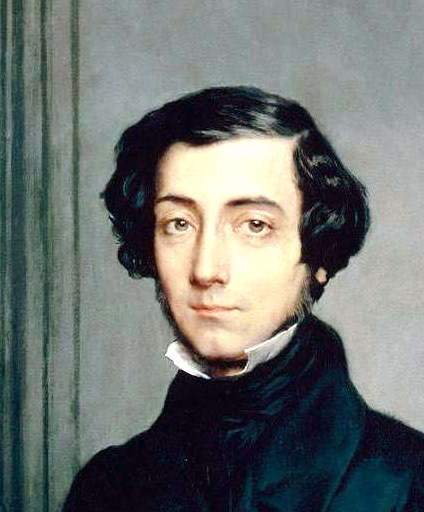
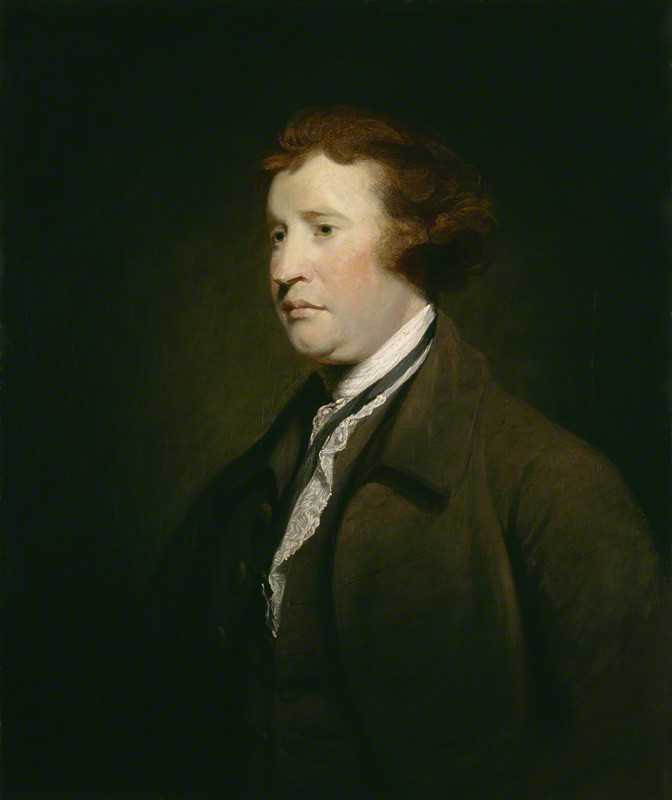
According to scholar Andrew Vincent, the maxim of liberal conservatism is "economics is prior to politics". Others emphasize the openness of historical change and a suspicion of tyrannical majorities behind the hailing of individual liberties and traditional virtues by authors such as Edmund Burke and Alexis de Tocqueville as the basis of current liberal conservatism which can be seen both in the works of Raymond Aron and Michael Oakeshott. However, there is general agreement that the original liberal conservatives were those who combined conservative social attitudes with an economically liberal outlook, adapting a previous aristocratic understanding of natural inequalities between men to the rule of meritocracy, without directly criticizing privileges of birth as long as individual liberties were guaranteed. Over time, the majority of conservatives in the Western world came to adopt free market economic ideas as the Industrial Revolution progressed and the monarchy, aristocracy and clergy lost their wealth and power, to the extent that such ideas are now generally considered as part of conservatism. Nonetheless, the term liberal is used in most countries to describe those with free-market economic views. This is the case in continental Europe, Australia and Latin America.
Liberal-conservative parties or parties with liberal-conservative factions
Current parties
- Albania: Democratic Party of Albania
- Algeria: Democratic National Rally
- Andorra: Democrats for Andorra
- Argentina: Republican Proposal, Democratic Party
- Australia: Country Liberal Party, Liberal Party of Australia, Liberal National Party of Queensland, National Party of Australia
- Austria: Austrian People's Party
- Bahamas: Free National Movement
- Belarus: United Civic Party of Belarus
- Belgium: New Flemish Alliance
- Botswana: Botswana Democratic Party
- Brazil: Liberal Party, Democratic Renewal Party, Republicans (Brazil), New Party, Podemos
- Bulgaria: Union of Democratic Forces, Citizens for the Development of Bulgaria
- Canada: Conservative Party of Canada
- Chile: National Renewal
- Costa Rica: Social Christian Unity Party
- Cyprus: Democratic Rally
- Czech Republic: Civic Democratic Party, TOP 09
- Croatia: Croatian Democratic Union
- Denmark: Venstre, Conservative People's Party, Liberal Alliance
- Egypt: New Wafd Party
- Estonia: Estonian Reform Party
- Fiji: People's Alliance, Social Democratic Liberal Party
- Finland: National Coalition Party, Centre Party
- France: The Republicans
- Germany: Christian Democratic Union of Germany, Free Democratic Party, Free Voters
- Ghana: New Patriotic Party
- Greece: New Democracy
- Greenland: Feeling of Community
- Iceland: Independence Party
- Ireland: Fine Gael, Fianna Fáil
- Israel: Likud, New Hope
- Italy: Forza Italia, Us Moderates
- Japan: Liberal Democratic Party
- Latvia: Unity
- Liechtenstein: Patriotic Union
- Lithuania: Homeland Union
- Mexico: National Action Party
- Morocco: Constitutional Union
- Mongolia: Democratic Party
- Myanmar: National League for Democracy
- Netherlands: People's Party for Freedom and Democracy JA21
- New Zealand: National Party
- North Macedonia: VMRO-DPMNE
- Norway: Conservative Party
- Philippines: Partido Federal ng Pilipinas
- Poland: Civic Coalition, Polska 2050, Trzecia Droga
- Portugal: Social Democratic Party
- Romania: National Liberal Party
- Russia: Civic Platform, Party of Growth
- Serbia: People's Party, Serbian Progressive Party
- Slovakia: Democrats, NOVA, Civic Conservative Party, For the People
- Slovenia: Slovenian Democratic Party
- Spain: People's Party
- Sri Lanka: United National Party
- Sweden: Moderate Party
- Republic of China: Kuomintang
- ** Thailand**: Pheu Thai Party
- Turkey: Justice and Development Party, Democrat Party (current)
- ** Ukraine**: European Solidarity
- United Kingdom: Conservative Party
- ** United States**: Republican Party (factions)
- ** Uruguay**: National Party
Historical parties or factions
- Brazil: Democratic Social Party, Democrats
- Canada: Progressive Conservative Party of Canada
- Czech Republic: Civic Democratic Alliance, Freedom Union – Democratic Union, Realists
- Estonia: Res Publica Party
- France: National Centre of Independents and Peasants, Union for the New Republic, Independent Republicans, Perspectives and Realities Clubs, Union of Democrats for the Republic, Republican Party, Rally for the Republic, Union for French Democracy, Union for a Popular Movement
- Germany: Free Conservative Party
- India: Swatantra Party
- Israel: General Zionists
- Italy: Forza Italia, The People of Freedom, Tyrolean Homeland Party, Italian Liberal Party
- Japan: Japan New Party, New Party Sakigake, Democratic Party of Japan (factions)
- Montenegro: Movement for Changes
- New Zealand: United Future
- Poland: Conservative People's Party,
- Romania: Democratic Convention of Romania, Democratic Liberal Party
- Serbia: G17 Plus
- Slovakia: Slovak Democratic and Christian Union – Democratic Party
- South Korea: Bareunmirae Party
- Spain: Liberal-Conservative Party
- Turkey: Democrat Party (historical)
Liberal-conservative organisations
- United Kingdom: Bright Blue
- Hungary: Everybody's Hungary Movement
- Germany: Konrad Adenauer Foundation
Explanatory notes
Citations
General and cited references
References
- Nordsieck, Wolfram. (2020). "Content".
- Gibbon, Gary. (7 October 2015). "David Cameron tries to return to his liberal Conservatism mission".
- "What was David Cameron's Conservatism? (overview)".
- Redford, Pete. "Cameron and Welfare: Questioning the liberal Conservatism project". LSE Research Online.
- Grigsby, Ellen: Analyzing Politics: An Introduction to Political Science. Cengage Learning, 2011.
- Cameron, David. (2010-05-16). "I am a Liberal Conservative". BBC.
- [http://news.bbc.co.uk/2/hi/uk_news/politics/5407714.stm "Full text of David Cameron's speech to the Conservative Party conference"], BBC, October 2006
- Grigsby, Ellen: Analyzing Politics: An Introduction to Political Science. Cengage Learning, 2011. p.106-112
- (2011). "The Right Nation: Why America is Different". Penguin Books Limited.
- Bethell, Leslie: The Cambridge History of Latin America: Latin America since 1930. Cambridge University Press, 1991.
- (2021). "Ukrainian Dissidents: An Anthology of Texts". Rowman & Littlefield.
- Lawler, Peter. (2002). "Liberal Conservatism, Not Conservative Liberalism". [[The Intercollegiate Review]].
- Lakoff, Sandoff, "Tocqueville, Burke, and the Origins of Liberal Conservatism." ''The review of politics'' '''60'''(3), pp. 435–464, 1998. {{doi. 10.1017/S003467050002742X
- Slomp, Hans. (2011-09-26). "Europe, a Political Profile: An American Companion to European Politics". ABC-Clio.
- (20 July 2010). "Liberal? Are we talking about the same thing?". [[BBC News]].
- ""The Two Meanings of "Liberalism"".
- "Introduction: Albanian Politics Today".
- (2022). "Party Politics in European Microstates". [[Routledge]].
- Sergio D. Morresi & Gabriel Vommaro, [http://live.v1.udesa.edu.ar/files/UAHumanidades/EVENTOS/PaperMorresi040413.pdf The Difficulties of the Partisan Right in Argentina: The Case of the PRO Party] {{Webarchive. link. (2016-03-03 , Draft, March 2013)
- Lattuada, Mario J.. (1987). "Política agraria del liberalismo-conservador, 1946-1985". Centro Editor de América Latina.
- (May 2, 2012). "Right-Wing Politicians Prefer the Emotional Left". PLOS ONE.
- Ralph P Güntzel. (2010). "Understanding "Old Europe": An Introduction to the Culture, Politics, and History of France, Germany, and Austria". Tectum Wissenschaftsverlag.
- Janusz Bugajski. (2002). "Political Parties of Eastern Europe: A Guide to Politics in the Post-Communist Era". M.E. Sharpe.
- "Beyond issue diversification - Graduate Institute of International and Development Studies".
- "The European Conservatives and Reformists Group: Cooperation or Opposition in Europe’s Parliament?".
- (19 March 2025). "The Reluctant Lion of Flanders: How a Former Separatist Became the Prime Minister of Belgium".
- Maipose, Gervase S.. (2008). "Policy and Institutional Dynamics of Sustained Development in Botswana". Commission on Growth and Development.
- Paul Lewis. (2002). "Political Parties in Post-Communist Eastern Europe". Routledge.
- Sonja Schüler. (2016). "Exchange, Dialogue, New Divisions?: Ethnic Groups and Political Cultures in Eastern Europe". LIT Verlag Münster.
- (2009). "Liberalism and Hegemony: Debating the Canadian Liberal Revolution". Springer Nature.
- (2005). "Transforming Latin America: The International And Domestic Origins Of Change". University of Pittsburgh Press.
- (1999). "Democracy and Democratization: Post-Communist Europe in Comparative Perspective". SAGE Publications.
- Elizabeth Bakke. (2010). "Central and Southeast European Politics since 1989". Cambridge University Press.
- (2016). "Political Communication and European Parliamentary Elections in Times of Crisis: Perspectives from Central and South-Eastern Europe". Palgrave Macmillan UK.
- (25 June 2016). "Portret tjedna/Andrej Plenković, kandidat za šefa HDZ-a: Salonski političar i HDZ-ov liberal, antipod Karamarku".
- Nordsieck, Wolfram. (2019). "Denmark".
- (19 June 2024). "LA er optaget i EPP for første gang".
- Kjetil Duvold. (2017). "Borders in the Baltic Sea Region: Suturing the Ruptures". Springer.
- Mads Dagnis Jensen. (2015). "The Nordic Countries and the European Union: Still the Other European Community?". Routledge.
- "Finland—Political parties". Norwegian Centre for Research Data.
- Nordsieck, Wolfram. (2017). "France".
- Martin Steven. (2018). "Conservative Moments: Reading Conservative Texts". Bloomsbury Academic.
- Gordon Smith. (1995). "The Federal Republic of Germany at Forty-Five: Union Without Unity". Peter Lang.
- Ricky Van Oers. (2013). "Deserving Citizenship: Citizenship Tests in Germany, the Netherlands and the United Kingdom". Martinus Nijhoff Publishers.
- (2020). "Assessing the 2019 European Parliament Elections". Taylor & Francis.
- José María Magone. (2003). "The Politics of Southern Europe: Integration Into the European Union". Greenwood Publishing Group.
- Christina Bergqvist. (1999). "Equal Democracies?: Gender and Politics in the Nordic Countries". Nordic Council of Ministers.
- Agust Thor Arnason. (2006). "Nordic and Other European Constitutional Traditions". BRILL.
- (2010). "Parties, Elections, and Policy Reforms in Western Europe: Voting for Social Pacts". Routledge.
- (2021). "Campaigning on Facebook in the 2019 European Parliament Election: Informing, Interacting with, and Mobilising Voters". Palgrave Macmillan.
- Amnon Rapoport. (1990). "Experimental Studies of Interactive Decisions". Kluwer Academic.
- Nordsieck, Wolfram. (2018). "Italy". Parties and Elections in Europe.
- Karan, Pradyumna P.. (2005). "Japan in the 21st century: environment, economy, and society". University Press of Kentucky.
- Omar Noman. (2010). "Responsible Development: Vulnerable Democracies, Hunger and Inequality". Routledge.
- William D. Hoover. (2011). "Historical Dictionary of Postwar Japan, First Edition". Scarecrow Press.
- (16 July 2019). "Beautiful Harmony: Political Project Behind Japan's New Era Name – Analysis". eurasia review.
- (9 July 2022). "Shinzo Abe and the long history of Japanese political violence".
- (3 February 2013). "Liechtenstein voters elect new government". [[The Local]].
- O'Toole, Gavin. (2007). "Politics Latin America". Pearson Education.
- (1999). "Legislative Politics in the Arab World: The Resurgence of Democratic Institutions". Lynne Riener.
- Zappulla, Roberta. (2017). "Challenges for the National League for Democracy in Achieving Peace and Democracy in Myanmar". Metropolitan University of Prague.
- (26 November 2014). "Policy analysis in the Netherlands". Policy Press.
- Liubomir K. Topaloff. (2012). "Political Parties and Euroscepticism". Springer.
- José M. Magone. (2017). "The Statecraft of Consensus Democracies in a Turbulent World: A Comparative Study of Austria, Belgium, Luxembourg, the Netherlands and Switzerland". Taylor & Francis.
- (18 December 2020). "Eerdmans en Nanninga doen met 'JA21' mee aan verkiezingen".
- Boersema, Wendelmoet. (2021-03-15). "''Waarom de strijd op rechts nooit een volledig rechts kabinet oplevert''".
- Vowles, Jack. (1987). "The New Zealand Journal of History". University of Auckland.
- VMRO-DPMNE (Internal Macedonian Revolutionary Organization – Democratic Party for Macedonian National Unity). https://vmro-dpmne.org.mk/
- (2007). "Valgomaten: Riksdekkende 2007". [[Aftenposten]].
- André Krouwel. (2012). "Party Transformations in European Democracies". SUNY Press.
- Nordsieck, Wolfram. (2020). "Romania".
- (2016). "2016 Russia legislative elections: State Duma". Parties and Elections in Europe.
- "Program Narodne stranke". Narodna Stranka.
- Čamprag, Nebojša. (2019-01-02). "Re-imagineering Belgrade and Skopje: urban megaprojects between politics and struggle". European Planning Studies.
- Dérens, Jean-Arnault. (2016-12-01). "Rewriting Balkan history".
- Alfio Cerami. (2006). "Social Policy in Central and Eastern Europe: The Emergence of a New European Welfare Regime". LIT Verlag Münster.
- Inmaculada Egido. (2005). "Transforming Education: The Spanish Experience". Nova Publishers.
- Fernando Reinares. (2014). "The Evolution of the Global Terrorist Threat: From 9/11 to Osama bin Laden's Death". Columbia University Press.
- (2016). "Encyclopedia of World Political Systems". [[Routledge]].
- Peter Viggo Jakobsen. (2006). "Nordic Approaches to Peace Operations: A New Model in the Making?". Taylor & Francis.
- Hariz Halilovich. (2013). "Places of Pain: Forced Displacement, Popular Memory and Trans-local Identities in Bosnian War-torn Communities". Berghahn Books.
- "Liberala partier i Sveriges riksdag & deras ideologiska hållning".
- (2019). "The Changing Of The Guard: President Clinton And The Security Of Taiwan". Routledge.
- Satrusayang, Cod. (2021). "Thailand".
- Ahmet Yıldız. (25 March 2008). "Secular and Islamic Politics in Turkey: The Making of the Justice and Development Party". Routledge.
- Tanil Bora. (2013). "Turkey Between Nationalism and Globalization". Routledge.
- (26 October 2020). "Republicans closely resemble autocratic parties in Hungary and Turkey – study". The Guardian.
- Nordsieck, Wolfram. (2019). "Ukraine".
- Stephen Driver. (2011). "Understanding British Party Politics". Polity.
- Martínez, Magdalena. (2019-11-25). "Luis Lacalle Pou, el peso de un apellido". El País.
- Kirby, Peadar. (2003). "Introduction to Latin America: Twenty-First Century Challenges". Sage.
- "Liberální strana".
- "Unie svobody – zoufalé hledání identity".
- (22 July 2019). "Politická strana Realisté po třech letech končí, rozhodli členové".
- David Hanley. (1999). "Changing Party Systems in Western Europe". Continuum International Publishing Group.
- Alistair Cole. (2003). "The French Party System". Manchester University Press.
- Nordsieck, Wolfram. (2012). "France".
- Pratapchandra Rasam, Vasanti. (1997). "Swatantra Party: a political biography". Dattsons.
- (1955). "Congressional Record: Proceedings and Debates of the United States Congress". U.S. Government Printing Office.
- (2013). "Analysing Fascist Discourse: European Fascism in Talk and Text". Routledge.
- Donatella M. Viola. (2015). "Routledge Handbook of European Elections". Routledge.
- (2013). "The Pragmatics of Political Discourse: Explorations across cultures". John Benjamins Publishing Company.
- Pallaver, Günther. (2008). "Tolerance Through Law: Self Governance and Group Rights in South Tyrol". Martinus Nijhoff Publishers.
- (3 November 1988). "Liberal Parties in Western Europe". Cambridge University Press.
- (2009). "The changing party system in Japan 1993-2007: More competition and limited convergence". [[Ritsumeikan University]].
- William D. Hoover. (2019). "Historical Dictionary of Postwar Japan, Second Edition". Rowman & Littlefield.
- Hideko Magara. (2012). "Varieties of Capitalism, Types of Democracy and Globalization". Taylor & Francis.
- Caroline Miller. (2011). "Implementing Sustainability: The New Zealand Experience". Routledge.
- Aleks Szczerbiak. (2006). "Centre-right Parties in Post-communist East-Central Europe". Psychology Press.
- (3 February 2018). "What about the re-establishment of the four-party system, the future political circle?". 아이뉴스21.
- (11 June 2021). "New conservative party sets sail ahead of April parliamentary elections". [[The Korean Herald]].
- Elizabeth Özdalga. (2013). "Turkey Between Nationalism and Globalization". Routledge.
- (2018-05-24). "Meet The New Conservative Think-Tanks Hoping To Reboot The Tories".
- (2021-10-02). "Winners & Losers: Hungary's opposition primaries first-round recap".
- "Konrad Adenauer Stiftung – Global Democracy Coalition".
This article was imported from Wikipedia and is available under the Creative Commons Attribution-ShareAlike 4.0 License. Content has been adapted to SurfDoc format. Original contributors can be found on the article history page.
Ask Mako anything about Liberal conservatism — get instant answers, deeper analysis, and related topics.
Research with MakoFree with your Surf account
Create a free account to save articles, ask Mako questions, and organize your research.
Sign up freeThis content may have been generated or modified by AI. CloudSurf Software LLC is not responsible for the accuracy, completeness, or reliability of AI-generated content. Always verify important information from primary sources.
Report