From Surf Wiki (app.surf) — the open knowledge base
Leszno

| Field | Value | |
|---|---|---|
| name | Leszno | |
| settlement_type | City county | |
| image_skyline | {{multiple image | |
| border | infobox | |
| total_width | 270 | |
| image_style | border:1; | |
| perrow | 1/2 | |
| caption_align | center | |
| image1 | City view from Leszno 2023 (5).jpg | |
| image2 | City view from Leszno 2023 (6).jpg | |
| image3 | Leszno Saint Nicholas church 2022 P25.jpg | |
| caption1 | Old Market Square and Town Hall | |
| caption2 | Tenements at Leszno's Old Town | |
| caption3 | St. Nicholas' Church | |
| image_flag | POL Leszno flag.svg | |
| image_shield | POL Leszno COA.svg | |
| image_blank_emblem | LOGO LESZNO.svg | |
| blank_emblem_type | Brandmark | |
| motto | "Leszno — rozwiń skrzydła" | |
| "Leszno — spread your wings" | ||
| pushpin_map | Poland | |
| pushpin_label_position | top | |
| coordinates | ||
| subdivision_type | Country | |
| subdivision_name | ||
| subdivision_type1 | Voivodeship | |
| subdivision_name1 | Greater Poland Voivodeship | |
| subdivision_type2 | County | |
| subdivision_name2 | city county | |
| established_title | First mentioned | |
| established_date | 1393 | |
| established_title3 | City rights | |
| established_date3 | 1547 | |
| leader_title | City mayor | |
| leader_name | Grzegorz Rusiecki (PO) | |
| area_total_km2 | 31.9 | |
| population_as_of | 31 December 2024 | |
| population_total | 59 521 | |
| population_density_km2 | auto | |
| timezone | CET | |
| utc_offset | +1 | |
| timezone_DST | CEST | |
| utc_offset_DST | +2 | |
| postal_code_type | Postal code | |
| postal_code | 64-100 to 64-110 | |
| area_code | +48 065 | |
| blank_name | Car plates | |
| blank_info | PL | |
| website | {{URL | http://www.leszno.pl |
"Leszno — spread your wings" Leszno (; , ) is a historic city in western Poland, seat of Leszno County within the Greater Poland Voivodeship. It is the seventh-largest city in the province with an estimated population of 59 521, as of 2024.
Leszno is a former residential city of prominent Polish magnate families of Leszczyński and Sułkowski, including King Stanisław Leszczyński, under whose patronage it flourished to become one of the major economic and cultural centers of Greater Poland, as reflected in the variety of landmarks, especially of the Baroque period.
Located on a highway and railway line at about half the distance between the two main cities of western Poland, Poznań and Wrocław, Leszno is the largest city of south-western Greater Poland and a major location for industry, services and tourism. It is particularly well known as the location of an annual air show with attendance reaching tens of thousands of people from various countries, and as the home of Unia Leszno, one of the most accomplished motorcycle speedway clubs.
History
Early history
The city's unrecorded history dates to the 13th century. It was first mentioned in historical documents in 1393, when the estate was the property of a noble named Stefan Karnin-Wieniawa. The family eventually adopted the name Leszczyński (literal meaning "of Leszno"), derived from the name of their estate, as was the custom among the Polish nobility.
16th–18th centuries
In around 1516, a community of Protestants known as the Unity of the Brethren (Unitas fratrum) were expelled from the Bohemian lands by King Vladislaus II and settled in Leszno. They were invited by the Leszczyński family, imperial counts since 1473 and who had converted to Calvinism. The arrival of the Bohemian Protestants, in addition to weavers from nearby Silesia, helped the settlement to grow.
In 1547 it became a town by a privilege according to Magdeburg Law granted by King Sigismund I of Poland. Leszno was a private town, administratively located in the Wschowa County in the Poznań Voivodeship in the Greater Poland Province. Leszno became the largest printing center in Greater Poland thanks to the activity of the Protestant community. Their numbers grew with the inflow of refugees from Silesia, Bohemia, and Moravia during the Thirty Years War.
In 1631, Leszno was vested with further privileges by King Sigismund III Vasa, who made it equal with the most important cities of Poland such as Kraków, Gdańsk and Warsaw. By the 17th century, the town had a renowned Gymnasium (school), which was headed by Jan Amos Komenský (known in English as Comenius), an educator and the last bishop of the Unity of the Brethren. Johann Heermann, a German-speaking poet, lived in Leszno from 1638 until his death in 1647. Between 1636 and 1639, the town became fortified and its area increased.
The era of Leszno's prosperity and cultural prominence ended during the Second Northern War, when the town was burnt down on 28 April 1656 by Polish forces faithful to King John Cassimir Vasa in retribution for letting in Swedish forces by protestant majority of burghers. Quickly rebuilt afterwards, it was set on fire again during the Great Northern War by Russian forces in 1707 and was ravaged by plague in 1709.
The Leszczyński family owned the city until 1738, when King Stanislaus I Leszczynski sold it to Aleksander Józef Sułkowski following his abdication.
19th–20th centuries
In the Second Partition of Poland in 1793, Leszno was annexed by the Kingdom of Prussia, within which it was referred to as Lissa. In 1807 it was taken by Napoleon's Grand Armee and included within the newly established but short-lived Polish Duchy of Warsaw.
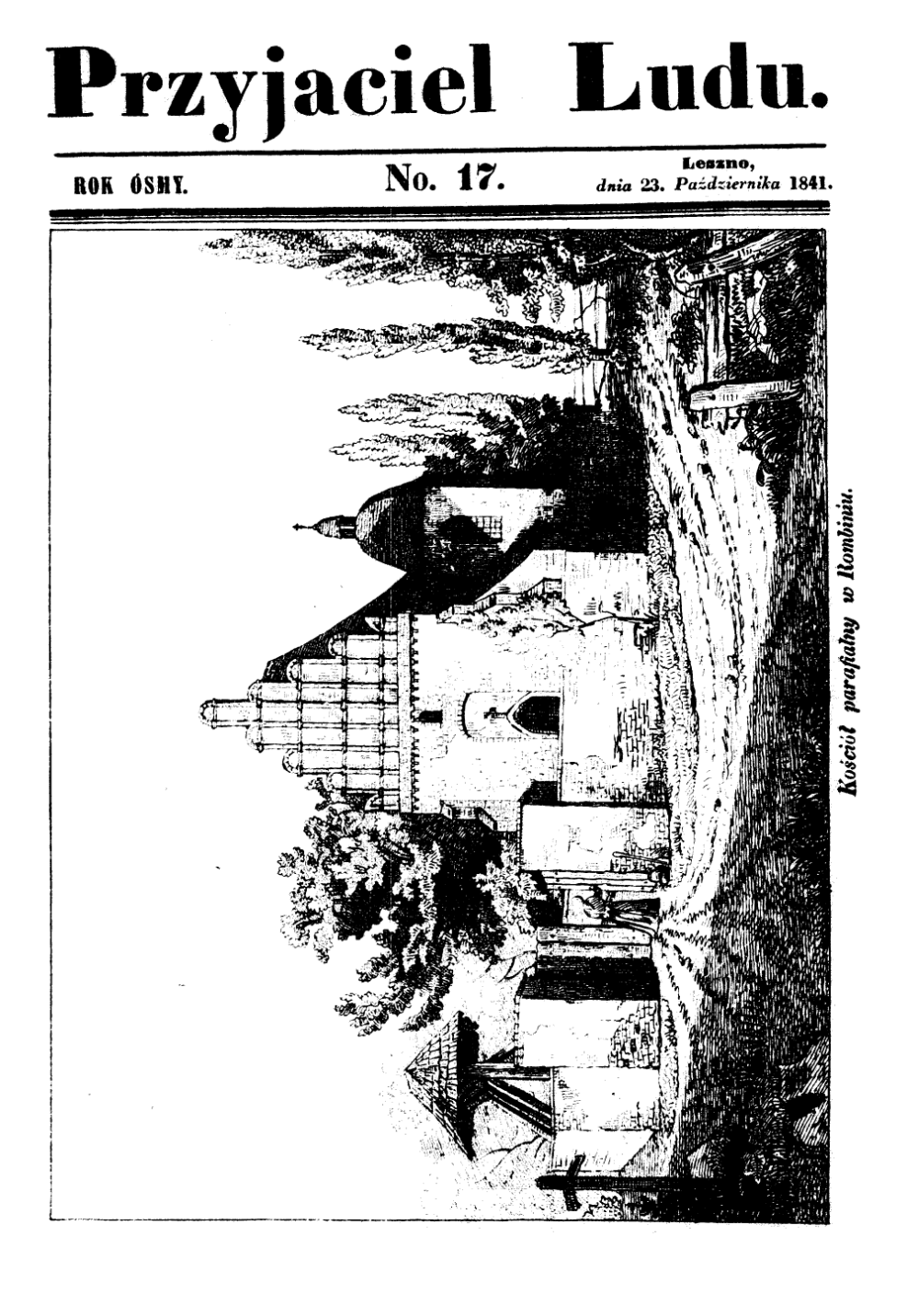
Following Napoleon's defeat in the Napoleonic Wars, in 1815 the town was reannexed by Prussia, initially as part of the semi-autonomous Grand Duchy of Posen. The town was subjected to Germanisation policies. Nevertheless, Polish press was issued in the town (Przyjaciel Ludu) and in the 1840s, Polish historian, geographer and former officer Stanisław Plater published the ** ("Little Polish Encyclopedia"), one of the pioneering 19th-century Polish encyclopedias, in the town. In 1871 it became part of Germany, and in 1887, it became the administrative seat of the Prussian Kreis Lissa. According to the 1910 census, the population of the town was 17,156, of whom 14,479 (84%) reported German as their sole mother tongue, while 2,365 (14%) reported Polish; the Jewish population was 802 (4.6%).
After World War I, in November 1918, Poland regained independence. Shortly after the Greater Poland Uprising of 1918–19 broke out, attempting to reintegrate Greater Poland and Leszno with Poland. The first local battles of the uprising took place in the area on 28 December 1918. Though the city was located on the German side of the military demarcation line established following the ceasefire in February 1919, Leszno became part of the newly established Second Polish Republic under the Treaty of Versailles, with effect from 17 January 1920. The local populace had to acquire Polish citizenship. In the interbellum, Leszno was a county seat within the Polish Poznań Voivodeship. In 1924, a monument dedicated to the Polish insurgents of 1918–19 was erected.
World War II

During the joint German–Soviet invasion of Poland, which started World War II in September 1939, the town was annexed by Nazi Germany and incorporated into Reichsgau Wartheland. The Germans carried out mass arrests of Poles accused of "anti-German activities". Attending church services and having private meetings in Polish households were considered suspect activities. A prison for Poles was established in the local monastery, where more than 200 people had already been imprisoned in September 1939 during the Intelligenzaktion. The Polish population was expelled to the General Government (German-occupied central Poland).
Most of the town's Jewish population (which had included such notable rabbis as Leo Baeck and Jacob of Lissa, as well as the writer Ludwig Kalisch) and the remaining Poles were massacred by the Nazi Einsatzgruppen, which entered the town in September 1939. A notable public execution of 20 Poles, members of the "Sokół" Polish Gymnastic Society, former Polish insurgents of 1918–1919, a local teacher, and a lawyer, was carried out in Leszno by the Einsatzgruppe VI on 21 October 1939. Poles who were initially imprisoned in Leszno were also murdered in nearby towns and villages of Poniec, Osieczna, Włoszakowice and Rydzyna. Poles from Leszno were also among the victims of the large Katyn massacre committed by the Russians in April–May 1940.

Already in late 1939, the Germans expelled over 1,000 Poles, including families of Poles murdered in various massacres, in addition teachers, local officials, activists, former insurgents, and owners of shops and workshops, which were then handed over to German colonists as part of the Lebensraum policy. A transit camp for Poles expelled from various nearby settlements was established in the local school.
The occupiers established and operated a forced labour subcamp of the Stalag XXI-D prisoner-of-war camp in the city.
Despite such circumstances, local Poles organized an underground resistance movement, which included the Ogniwo and Świt organizations, the secret youth organization Tajna Siódemka and structures of the Polish Underground State. Polish underground press was printed in Leszno. The German occupation ended in 1945, and the town returned to Poland.
Post-war history
The pre-war monument of the Greater Poland insurgents was restored in 1957. In 1991, a monument to the Constitution of 3 May 1791 and the heroes of the fights for Poland's independence was unveiled, From 1975 to 1998, it was the capital of the Leszno Voivodeship. In 2000, the city was awarded "The Golden Star of Town Twinning" prize by the European Commission.
Transport
Leszno is bypassed by the S5 expressway to the west. Exits 47, 46 and 45 of the expressway provide quick access to Poznań and Wrocław.
Leszno has a station on the Poznań-Wrocław railway line.
Railway lines from Głogów and Ostrów Wielkopolski also converge in Leszno.
Climate
Leszno has an oceanic climate (Köppen: Cfb) although notably with warm summer continental characteristics (Dfb), typical of inland west and south polish.{{Weather box | Jan record high C = 16.9 | Feb record high C = 20.4 | Mar record high C = 24.0 | Apr record high C = 30.0 | May record high C = 31.6 | Jun record high C = 37.6 | Jul record high C = 37.0 | Aug record high C = 37.8 | Sep record high C = 34.9 | Oct record high C = 27.5 | Nov record high C = 20.1 | Dec record high C = 16.6 | year record high C = 37.8 | Jan record low C = -28.8 | Feb record low C = -26.9 | Mar record low C = -24.4 | Apr record low C = -7.4 | May record low C = -4.3 | Jun record low C = -1.4 | Jul record low C = 2.2 | Aug record low C = 0.8 | Sep record low C = -3.3 | Oct record low C = -8.0 | Nov record low C = -15.8 | Dec record low C = -25.5 | year record low C = -28.8 | Jan snow depth cm = 4.0 | Feb snow depth cm = 4.6 | Mar snow depth cm = 2.5 | Apr snow depth cm = 0.6 | May snow depth cm = 0.0 | Jun snow depth cm = 0.0 | Jul snow depth cm = 0.0 | Aug snow depth cm = 0.0 | Sep snow depth cm = 0.0 | Oct snow depth cm = 0.2 | Nov snow depth cm = 1.5 | Dec snow depth cm = 3.6 | year snow depth cm = | archive-url = https://web.archive.org/web/20211203115527/https://klimat.imgw.pl/pl/climate-normals/TSR_AVE | archive-date = 3 December 2021 | access-date = 5 February 2022}} | archive-url = https://web.archive.org/web/20220115043924/https://klimat.imgw.pl/pl/climate-normals/TMIN_AVE | archive-date = 15 January 2022 | access-date = 5 February 2022}} | archive-url = https://web.archive.org/web/20220115044916/https://klimat.imgw.pl/pl/climate-normals/TMAX_AVE | archive-date = 15 January 2022 | access-date = 5 February 2022}} | archive-url = https://web.archive.org/web/20220109045820/https://klimat.imgw.pl/pl/climate-normals/OPAD_SUMA | archive-date = 9 January 2022 | access-date = 5 February 2022}} | archive-url = https://web.archive.org/web/20220115051112/https://klimat.imgw.pl/pl/climate-normals/OPAD_01 | archive-date = 15 January 2022 | access-date = 5 February 2022}} | archive-url = https://web.archive.org/web/20220115054936/https://klimat.imgw.pl/pl/climate-normals/SNIEG_SR_GRUB | archive-date = 15 January 2022 | access-date = 5 February 2022}} | archive-url = https://web.archive.org/web/20220121044246/https://klimat.imgw.pl/pl/climate-normals/SNIEG_0 | archive-date = 21 January 2022 | access-date = 5 February 2022}} | archive-url = https://web.archive.org/web/20220115055331/https://klimat.imgw.pl/pl/climate-normals/USL | archive-date = 15 January 2022 | access-date = 5 February 2022}} | access-date = 5 February 2022}} | access-date = 5 February 2022}} | access-date = 5 February 2022}}
Sports
.jpg)


-
Unia Leszno speedway club The Leszno motorcycle club was founded on 8 May 1938. The club was re-established on 2 May 1946 after World War II. On 28 July 1949 the Leszno motorcycle club changed its name to Unia Leszno Speedway Club. Some rules and regulations were revised as well. The Unia Leszno has been a very successful club that has won many awards and medals throughout the years. The Unia Leszno Speedway Club has won over 78 different medals since the formation of the club.
-
Leszno Aero Club The Leszno Aero Club is the largest airfield in the Wielkopolska area. The Aero Club belongs to the Polish Aero Club central gliding school. The Aero Club in Leszno hosted the world gliding championship in 1958, 1969, and 2003. It is the only place that has done so. The Aero Club also has a pilot school called the Central Gliding school. The school has been around for over 50 years and was managed by pilot Irena Kempówna in the 1950s and 1960s.
-
KS Polonia Leszno The Klub Sportowy Polonia Leszno was formed in 1912 in Leszno. It is an indoor soccer field. The first President of the club was Marcin Giera. The club did not gain much popularity until after World War II when official teams started playing there. Prior to World War I most of the people that played there were locals.
Education
Primary schools
- Szkoła Podstawowa nr 1 im. Marii Konopnickiej w Lesznie
- Szkoła Podstawowej nr 2 im. Obrońców Polskiego Morza w Lesznie
- Szkoła Podstawowa nr 3 im. Marii Skłodowskiej Curie w Lesznie
- Szkoła Podstawowej nr 4 im. Adama Mickiewicza w Lesznie
- Szkoła Podstawowa nr 5 im. Henryka Sienkiewicza w Lesznie
- Szkoła Podstawowa Specjalna nr 6 w Lesznie
- Szkoła Podstawowa nr 7 im. Wojska Polskiego w Lesznie
- Szkoła Podstawowa nr 9 im. ks.kardynała Stefana Wyszyńskiego w Lesznie
- Szkoła Podstawowa nr 10 im. Świętego Jana Pawła II w Lesznie
- Szkoła Podstawowa nr 12 im. Generała Dywizji Stefana Roweckiego „Grota” w Lesznie
- Szkoła Podstawowa nr 13 z Oddziałami Integracyjnymi im. Króla Stanisława Leszczyńskiego w Lesznie
Secondary schools
- I Liceum Ogólnokształcące im. Rodu Leszczyńskich w Lesznie
- II Liceum Ogólnokształcące im. Mikołaja Kopernika z Oddziałami Dwujęzycznymi i Międzynarodowymi w Lesznie
- III Liceum Ogólnokształcące im. Juliusza Słowackiego w Lesznie
- IV Liceum Ogólnokształcące im. Karola Kurpińskiego w Lesznie
- Prywatne Liceum Ogólnokształcące w Lesznie
- Pierwsze Prywatne Liceum Ogólnokształcące w Lesznie
Technical schools
- Zespół Szkół nr 4 im. Powstańców Wielkopolskich w Lesznie
- Zespół Szkół Ekonomicznych im. Jana Amosa Komeńskiego w Lesznie
- Zespół Szkół Technicznych – Centrum Kształcenia Zawodowego i Ustawicznegoim. 55 Poznańskiego Pułku Piechoty w Lesznie
- Zespół Szkół Rolniczo – Budowlanych im. Synów Pułku w Lesznie
- Zespół Szkół Elektroniczno – Telekomunikacyjnych w Lesznie
Colleges
- Akademia Nauk Stosowanych im. Jana Amosa Komeńskiego w Lesznie
- Wyższa Szkoła Humanistyczna im. króla Stanisława Leszczyńskiego w Lesznie
Notable people
_-_NARA_-_532941.jpg)
- Stephan Born (1824–1898), German revolutionary
- Rafał Dobrucki (born 1976), Polish speedway rider
- Stanisław Grochowiak (1934–1976), Polish poet and dramatist
- Ludwig Kalisch (1814–1882), German-Jewish novelist
- Zvi Hirsch Kalischer (1795–1874); German Orthodox rabbi
- Jan Jonston (1603–1675), Reformed teacher and scholar, physician
- Leser Landshuth (1817–1887), German Jewish liturgiologist
- Jacob of Lissa (1760–1832), a rabbi
- Albert Mosse (1846–1925), German judge and legal schola
- Carl Friedrich Richard Förster (1825–1902), German ophthalmologist
- Otto Schultzen (1837–1875), German physician
- Ottomar Anschütz (1846–1907), German inventor, photographer and chronophotographer
- Paul Cinquevalli (1859–1918), German-British artist
- Albert Moll (1862–1939) German psychiatrist
- Leo Baeck (1873–1956), German-Jewish rabbi, scholar, and theologian
- Rudolf Leonhard (1889–1953), German author and communist activist
- Wolfgang Martini (1891–1963), German general
- Ludwig Schulz (1896–1966), Luftwaffe general
- Gerhard Weisser (1898–1989) German social scientist
- Johannes Eisermann (1900–1976), Wehrmacht officer
- Wolfgang Thomale (1900–1978), German general
- Antoni Janusz (1902–2000), Polish sportsman and pilot
- Peter Lindbergh (1944–2019), German photographer and director
- Tomasz Parzy (born 1979), Polish footballer
- Krzysztof Kasprzak (born 1984), Polish speedway rider
- Ilse Schwidetzky (1907–1997), German anthropologist
- Haym Solomon (1740–1785), an important figure in the American Revolutionary War
- Daniel Strejc-Vetterus, Reformed printer and author of the oldest Polish guidebook of Iceland (1638)
- Carl Gottfried Woide (1725–1790), Reformed pastor, Orientalist and fellow of the British Royal Society
International relations
Twin towns – Sister cities
Leszno is twinned with:
- FRA Montluçon, France{{cite web | access-date = 4 April 2019 | archive-date = 31 March 2022 | archive-url = https://web.archive.org/web/20220331011353/https://www.leszno.pl/440_fr.html | url-status = dead
- NLD Deurne, Netherlands{{cite web | access-date = 4 April 2019 | archive-date = 30 March 2022 | archive-url = https://web.archive.org/web/20220330020906/https://www.leszno.pl/439_fr.html | url-status = dead
- GER Suhl, Germany
- HUN Dunaújváros, Hungary
Notes
References
References
- "Local Data Bank". Statistics Poland.
- "Historia miejscowości".
- . (2017). "Atlas historyczny Polski. Wielkopolska w drugiej połowie XVI wieku. Część I. Mapy, plany". *Instytut Historii [[Polish Academy of Sciences*.
- "Leszno - miasto niebanalne".
- Jan Wasiewicz „Pod szwedzkim zaborem”, „Le monde diplomatique”, grudzień 2018 r., s. 41.
- "Informacja historyczna".
- (1912). "Gemeindelexikon für die Regierungsbezirke Allenstein, Danzig, Marienwerder, Posen, Bromberg und Oppeln". Königlich Preußisches Statistisches Landesamt.
- "Leszno (miasto powiatowe i powiat grodzki)".
- Wardzyńska, Maria. (2009). "Był rok 1939. Operacja niemieckiej policji bezpieczeństwa w Polsce. Intelligenzaktion". [[Institute of National Remembrance.
- Wardzyńska (2009), p. 117
- Wardzyńska (2009), pp. 57, 60
- Wardzyńska (2009), pp. 196–197
- Wardzyńska (2009), pp. 198, 201
- Wojciech Bininda. "77 rocznica Zbrodni Katyńskiej".
- Wardzyńska, Maria. (2017). "Wysiedlenia ludności polskiej z okupowanych ziem polskich włączonych do III Rzeszy w latach 1939–1945". [[Institute of National Remembrance.
- Poles were held there several days, their money, valuables and food were confiscated, and then they were either deported to [[Tomaszów Mazowiecki]] or [[Łódź]] in German-occupied central Poland or sent to local German colonists or to Germany as [[Forced labour under German rule during World War II. slave labour]].Wardzyńska (2017), pp. 164, 210–211, 276
- "Work Camps".
- Pietrowicz, Aleksandra. (2011). "Konspiracja wielkopolska 1939–1945". IPN.
- . (1998). "Encyklopedia konspiracji Wielkopolskiej 1939–1945". *Instytut Zachodni*.
- "Ustawa z dnia 28 maja 1975 r. o dwustopniowym podziale administracyjnym Państwa oraz o zmianie ustawy o radach narodowych.".
- "Summary of applications for the Europe Prize and the Plaque of Honour for 2006".
- "Leszno, Poland Köppen Climate Classification (Weatherbase)".
- "Leszno Climate". Climate-data.org.
- "Ś".
- Urbaniak, Magdalena. "Suhl".
- Urbaniak, Magdalena. "Dunaújváros".
This article was imported from Wikipedia and is available under the Creative Commons Attribution-ShareAlike 4.0 License. Content has been adapted to SurfDoc format. Original contributors can be found on the article history page.
Ask Mako anything about Leszno — get instant answers, deeper analysis, and related topics.
Research with MakoFree with your Surf account
Create a free account to save articles, ask Mako questions, and organize your research.
Sign up freeThis content may have been generated or modified by AI. CloudSurf Software LLC is not responsible for the accuracy, completeness, or reliability of AI-generated content. Always verify important information from primary sources.
Report