From Surf Wiki (app.surf) — the open knowledge base
Lesbian
Homosexual woman or girl
.jpg)
Homosexual woman or girl
.svg)
A lesbian is a homosexual woman or girl. The word is also used as an adjective for women in relation to their experiences, regardless of their sexual orientation; or as an adjective relating to female homosexuality.
The term lesbian is a derivative of the island of Lesbos, the Greek island home to ancient poet Sappho. Relatively little in history was documented to describe women's lives in general or female homosexuality in particular. The earliest mentions of lesbianism date to around the 600s-500s BC, including Sappho's poetry.
Lesbian relationships and attractions, along with gender nonconforming behaviors more often displayed by lesbians, have been treated in different ways throughout different ages and cultures. While there is a longer documented history of lesbian behavior and relationships throughout different cultures, the idea of a 'lesbian' as a category of person distinct from other women emerged in Europe around the turn of the 19th century. Lesbians' current rights vary widely worldwide, ranging from severe abuse and legal persecution to general acceptance and legal protections.
Modern polls often estimate lesbians to be 1-3% of the population (i.e., 2-6% of women). Lesbian social movements often advocate for legal changes (such as anti-discrimination protections, child custody protections, and legal civil unions or marriages), as well as for cultural, familial, and religious acceptance of lesbian orientations and relationships.
Etymology

The word lesbian is the demonym of the Greek island of Lesbos, home to the 6th-century BCE poet Sappho. Some of Sappho's surviving poetry discusses her love for other women.
Before the mid-19th century, the word lesbian referred to any aspect of Lesbos, including a type of wine. A shift of the word to describe erotic relationships between women had been documented in 1870. In 1875, a critic referred to Baudelaire's poem "Delphine and Hippolyte" (a poem about love between two women, and without reference to Lesbos) as "Lesbian". In 1890, the term lesbian was used in the National Medical Dictionary as an adjective to describe tribadism.
The terms lesbian, invert and homosexual were interchangeable with sapphist around the turn of the 20th century. The use of lesbian in medical literature became prominent; by 1925, the word was recorded as a noun to mean the female equivalent of sodomite.
Sexuality and identity


Biological factors
Prenatal androgen exposure correlates with same-sex sexual behavior in women. Biological characteristics known to be affected by prenatal hormone exposure have been shown to vary by sexual orientation in women. The finding that digit ratios (one characteristic affected by prenatal hormone exposure) differ between lesbian and heterosexual women has been replicated in cross-cultural studies. Neuroimaging studies have found differences between heterosexual and homosexual women in neurological structures, including both those known to be affected by prenatal androgen exposure and those not known to be affected by prenatal androgen exposure. A later meta-analysis concluded that the small sample sizes and small number of studies meant that findings were inconclusive as of 2021. Genetics plays a role; around 20% of the variance of sexual orientation in women is controlled by genes.
Lesbian identity formation
When a woman realizes she is a lesbian, it may cause an "existential crisis". When a woman was raised in an environment with negative stereotypes of lesbians, she may need to work through these stereotypes and prejudices to come to terms with her orientation. Lesbians in modern times share an identity that parallels those built on ethnicity, including the concept of group heritage and group pride. Compared to gay men, lesbians more often developed their sexual self-concepts either alone or in intimate relationships, instead of in communities, and disclosed them less often.
Self-identification and behavior
Some women report a consistently lesbian orientation. Other women report varying degrees of fluidity in how they describe their sexual orientation. Women who identify as lesbians and report never having been with men may be referred to as "gold star lesbians." Women who identify as lesbians and had sex with men before coming out may face ridicule from other lesbians or identity challenges with regard to defining what it means to be a lesbian. Some researchers observe that self-applied identity labels and reported sexual behavior do not always align: for example, some self-identified straight women report sex with women, and some self-identified lesbians report sex with men.
Several studies have found that the sexual behavior and attractions of exclusively lesbian women are significantly more likely to be aligned with their identity than those of exclusively heterosexual women. These included studies of reported attraction throughout the fertility cycle, and direct measures of arousal by different imagery.
Some people identify as both lesbian as well as non-binary or queer, while others eschew the label and prefer to describe themselves as queer. Additionally, some women use both the terms bisexual and lesbian as self-applied identity labels.
The importance of sex
A 1983 survey asked couples "About how often during the last year have you and your partner had sex relations?". The survey found that long-term lesbian couples named lower numbers than long-term heterosexual or homosexual male couples. This conclusion became known as "lesbian bed death". Numerous critiques were leveled at the study, including that the language could be misinterpreted to mean "heterosexual intercourse", and that the survey sample was limited to a biased sample of self-identified lesbians in 1983.
Researchers report that lesbian and heterosexual women are just as likely to view achieving orgasm as important, and that the two groups report statistically equivalent rates of overall sexual and romantic satisfaction. The research suggests that lesbian women tend to achieve said satisfaction through higher quality rather than more frequent sex, and that they engage in different romantic and sexual scripts than heterosexual women.
In history
Main article: History of lesbianism
Women have been underrepresented in history as both writers and subjects, and lesbianism has been correspondingly under-recorded. Since the 1970s, efforts have been made to gather together and preserve lesbian history.
In ancient Greece, Sappho of Lesbos wrote poetry regarding her love for other women, fragments of which survive. Other Greek references include mentions in Plato's Symposium
,_kylix_attica_con_due_etere_alla_toeletta,_490-480_ac.jpg)
In ancient Rome, accounts of lesbian characters include the story of Iphis and Ianthe, a myth from fabulist Phaedrus, and Lucian's Dialogues of the Courtesans..
In the Aztec Empire, female homosexuality is described in the Florentine Codex, a 16th-century study of the Aztec world, including its violent repression during Spanish colonization. Some Indigenous peoples of the Americas conceptualize a third gender for women who dress as, and fulfill the roles of men or a third sex in their cultures.
In early Modern western literature, homoerotic masquerade of one gender for another to seduce an unsuspecting woman was a common plot device, seen for instance in Twelfth Night (1601), The Faerie Queene (1590), and The Bird in a Cage (1633). From the 17th to the 19th centuries in the West, it was fashionable, accepted, and encouraged for a woman to express passionate love for another woman.
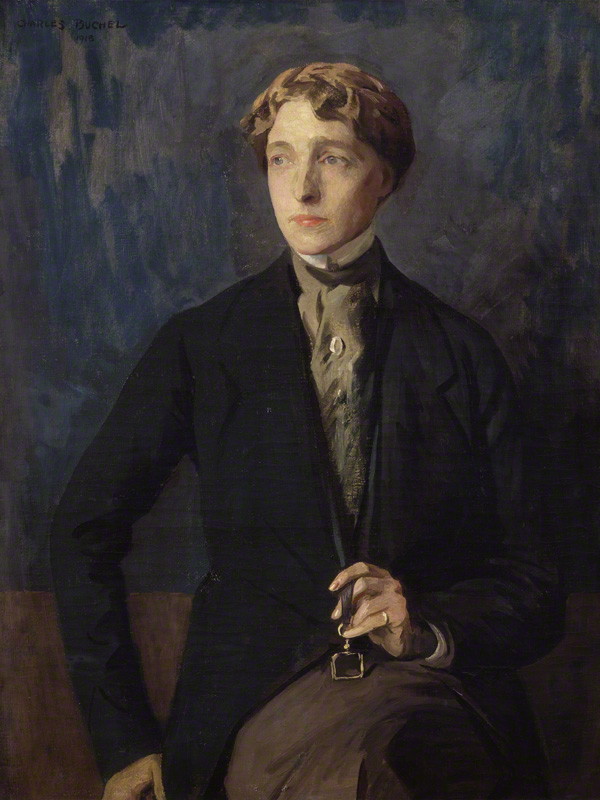
In the 19th and 20th centuries, sexologists Richard von Krafft-Ebing from Germany and Britain's Havelock Ellis created categorizations of female same-sex attraction, approaching it as a form of insanity. In the 1920s, Berlin had a vibrant homosexual culture with some 50 clubs for lesbians. In 1928, Radclyffe Hall published the novel The Well of Loneliness, intended as a call for tolerance. Professor Laura Doan described the resulting trial for obscenity as "the crystallizing moment in the construction of a visible modern English lesbian subculture". In the United States, the 1920s was a decade of sexual experimentation. Homosexual subculture disappeared in Germany with the rise of the Nazis in 1933. Following World War II, the U.S. government began persecuting homosexuals around 1950. Between 1955 and 1969, over 2,000 books of lesbian pulp fiction were published in North America. From the late 1950s to the 1970s, the sexual revolution encouraged women to try varied sexual experiences.
Lesbians face government persecution in the Middle East, such as in Yemen, where homosexuality is criminalized.
In Latin America, lesbian subcultures increased as several countries transitioned to or reformed democratic governments. However, social harassment has remained common.
Cross-gender roles and marriage between women have been recorded in over 30 traditional African societies. In Africa, the Coalition of African Lesbians has worked since 2004 to eradicate stigma, legal discrimination, and violence against lesbians. In Africa, lesbian activities have been "shaped by silence and secrecy, oppression and repression".
Historical Chinese culture has not recognized female homosexuality.
Demographics
Early reports
The most extensive early study of female homosexuality was the 1953 Kinsey Institute analysis of the sexual experiences of more than 8,000 American women. Its methodology has been criticized, but it proved popular. It reported that 28% of women had been aroused by a female, that 19% had had sexual contact with a female, and that some 9% had orgasmed. Its dispassionate discussion of homosexuality as a form of sexual behavior was revolutionary.
In 1976, sexologist Shere Hite did a qualitative survey of 3,019 women on their sexual experiences. Hite's questions focused on how women identified and what they preferred, rather than their prior experiences. Respondents indicated that 8% preferred sex with women, while 9% said that they identified as bisexual or had had sexual experiences with men and women without indicating a preference.
Population estimates
- A 2023 international survey (which excluded Africa and the Middle East) found that, on average, 3% of participants self-identified as lesbian or gay
- Lesbians in the U.S. form about 2.6% of the population, according to a 2000 survey. Another survey showed that between 2000 and 2005, the number claiming to be in same-sex relationships increased by 30%, possibly because people were more comfortable self-identifying as homosexual.
- A survey by the UK Office for National Statistics in 2010 found that 1.5% of Britons identified as gay or bisexual; other surveys had shown the number between 0.3% and 3%.
- Polls in Australia recorded a range of self-identified lesbian or bisexual women from 1.3% to 2.2% of the total population.
- A 2016 survey in France found 4% of women identifying as gay or bisexual.
- In a 2012 survey in Israel, 15.2% of women self-reported attraction to women, 8.7% reported having had a same-gender encounter, and 4.8% identified as lesbian or bisexual.
- In a 2013 survey in the Philippines, 1.8% of women identified as lesbian.
- A 2021 survey in Sri Lanka found that 0.5% of the population (some 1% of women) identified as lesbian.
Health
Disparities
A 2023 systematic review found that lesbian and bisexual women were 1.5–2 times more likely to have asthma than heterosexual women, and somewhat more likely to have back pain, hepatitis B/C, and urinary tract infections. They were less likely to have heart attacks, diabetes, or hypertension, perhaps (for these last two) because they avoided pregnancy. Since lesbians are less likely to become pregnant, they are less likely to receive protection from pregnancy hormones against breast and other cancers.
American studies in the 2010s and 2020s have found that LGBT people experience higher rates of mental distress, and that this relationship is mediated by experiences of rejection and adverse childhood experiences.
Factors
Lifestyle
Factors that add to risk of heart disease include the prevalence of obesity and smoking among lesbians. Lesbians are less concerned about weight issues than heterosexual women; and lesbians consider women with higher body masses to be more attractive than heterosexual women do. Lesbians are more likely to exercise regularly than heterosexual women.
Social
Lesbians experience negative social factors such as discrimination, stigma, and violence; policies that oppose their sexuality, such as access to marriage or employment; and lower incomes. Partly as a result, lesbians may be less likely to be in a marriage. These factors contribute to increased levels of chronic ill-health, increased misuse of alcohol and substances, reduced mobility, increased cardiovascular disease, chronic pain, and poor sleep.
Lesbians may fear doctors' attitudes to their sexuality. Lesbians perceive a lower risk of contracting sexually transmitted diseases, and may therefore miss routine screenings such as for cervical cancer.
Media representation
The majority of media about lesbians has been produced by men; women's publishing companies did not develop until the 1970s, films about lesbians made by women did not appear until the 1980s, and women-written television shows portraying lesbians written only began to be created in the 21st century. When depictions of lesbians began to surface, they were often one-dimensional, simplified stereotypes.
Literature
Ancient lesbian writers include Sappho. Ancient stories interpreted as examples of lesbianism include the Book of Ruth, Camilla and Diana, Artemis and Callisto, and Iphis and Ianthe. For ten centuries after the fall of the Roman Empire, lesbianism disappeared from literature. Foster points to the particularly strict view that Eve—representative of all women—caused the downfall of mankind; original sin among women was a particular concern, especially because women were perceived as creating life. During this time, women were largely illiterate and discouraged from intellectual pursuit, and men shaped ideas about sexuality.
In the 15th and 16th centuries, French and English depictions of relationships between women, writers' attitudes spanned from amused tolerance to arousal. Physical relationships between women were often encouraged, as long as they did not supersede heterosexual relationships; there was a cultural belief that lesbian sex and relationships could not be as fulfilling as heterosexual sex and relationships. At worst, if a woman became enamored of another woman, she became a tragic figure. Male intervention into relationships between women was necessary only when women acted as men and demanded the same social privileges. In the 18th century, writings mentioning lesbianism included the 1749 English erotica Fanny Hill and the 1778 erotica L'Espion Anglais.
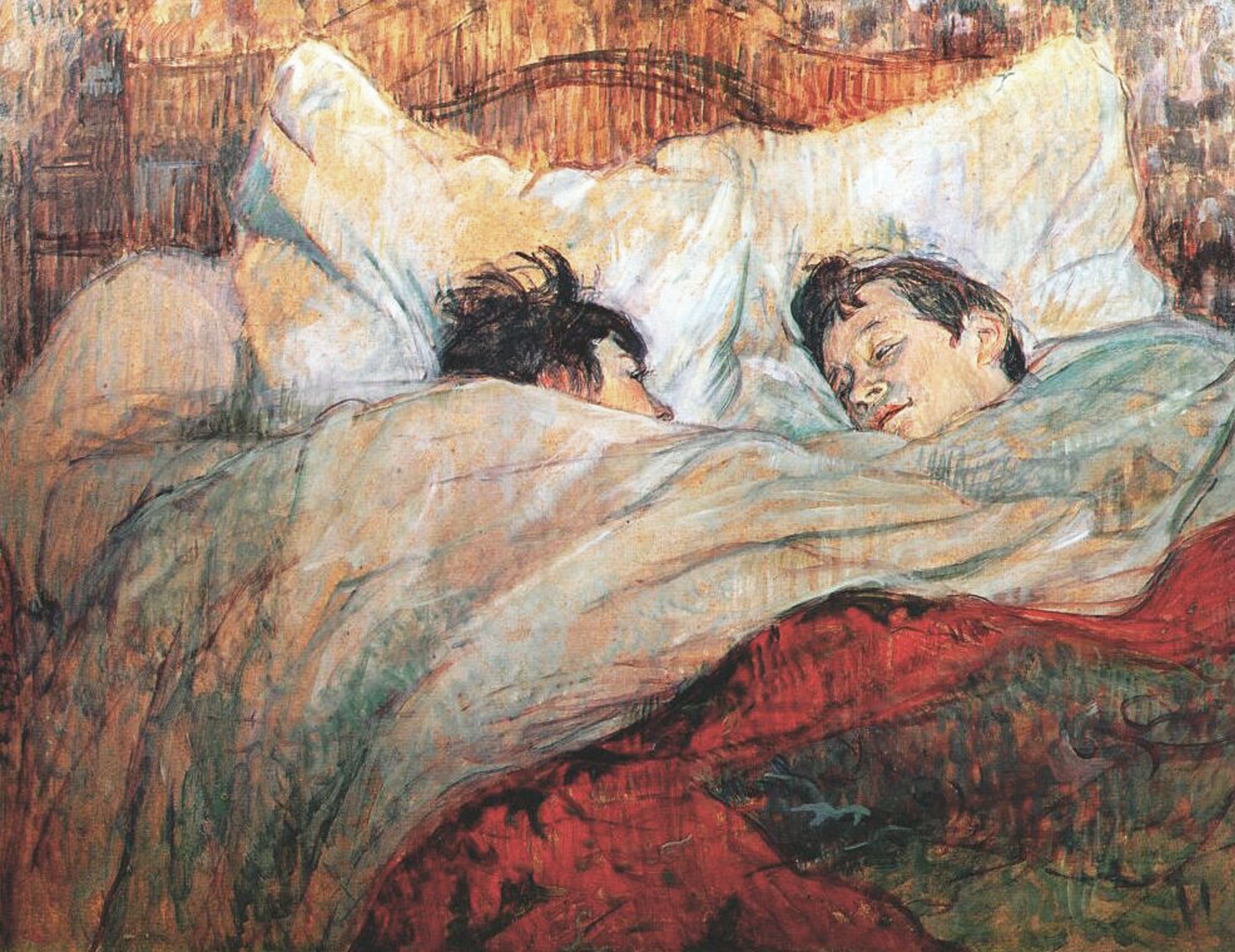
Lesbianism became almost exclusive to French literature in the 19th century, based on male fantasy and the desire to shock bourgeois moral values. Honoré de Balzac, in The Girl with the Golden Eyes (1835), employed lesbianism in his story about three people living amongst the moral degeneration of Paris, and again in later works. His work influenced novelist Théophile Gautier's Mademoiselle de Maupin, which provided the first description of a physical type that became associated with lesbians: tall, wide-shouldered, slim-hipped, and athletically inclined. Charles Baudelaire repeatedly used lesbianism as a theme in his poems "Lesbos", "Femmes damnées 1" ("Damned Women"), and "Femmes damnées 2". Reflecting French society, as well as employing stock character associations, many of the lesbian characters in 19th-century French literature were prostitutes or courtesans: personifications of vice who died early, violent deaths in moral endings. Samuel Taylor Coleridge's 1816 poem "Christabel" and the novella Carmilla (1872) by Sheridan Le Fanu both present lesbianism associated with vampirism.
Gradually, women began to write, and began to write about lesbian relationships. Until the 1920s, most major works involving lesbianism were penned by men. Foster suggests that women would have encountered suspicion about their own lives had they used same-sex love as a topic, and that some writers including Louise Labé, Charlotte Charke, and Margaret Fuller either changed the pronouns in their literary works to male, or made them ambiguous. Author George Sand was portrayed as a character in several works in the 19th century; writer Mario Praz credited the popularity of lesbianism as a theme to Sand's appearance in Paris society in the 1830s.
In the 20th century, Katherine Mansfield, Amy Lowell, Gertrude Stein, H.D., Vita Sackville-West, Virginia Woolf, and Gale Wilhelm wrote popular works that had same-sex relationships as themes. In 1928, The Well of Loneliness and three other novels with lesbian themes were published in England: Elizabeth Bowen's The Hotel, Woolf's Orlando, and Compton Mackenzie's satirical novel Extraordinary Women. Unlike The Well of Loneliness, none of these other novels were banned.
As the paperback book came into fashion, lesbian themes were relegated to pulp fiction. Many of the pulp novels typically presented very unhappy women, or relationships that ended tragically. Marijane Meaker later wrote that she was told to make the relationship end badly in Spring Fire because the publishers were concerned about the books being confiscated by the U.S. Postal Service. Patricia Highsmith, writing as Claire Morgan, wrote The Price of Salt in 1951 and refused to follow this directive. In the 1970s, lesbian feminist magazines such as The Furies and Sinister Wisdom began publication. Well-known writers who wrote on lesbian topics or about lesbian-themed plots included Rita Mae Brown, Dorothy Allison, Audre Lorde, and Cherríe Moraga.
Film
Main article: List of feature films with lesbian characters
Lesbianism arrived early in filmmaking. The same constructs as in literature were placed on women in film. Women could challenging their feminine roles. Actresses appeared as men in male rolesas early as 1914 in A Florida Enchantment. In Morocco (1930) Marlene Dietrich kisses a woman on the lips, and Katharine Hepburn plays a man in Christopher Strong in 1933 and again in Sylvia Scarlett in 1936. Overt female homosexuality was introduced in the 1929 film Pandora's Box. German films depicting homosexuality were distributed throughout Europe, but 1931's Mädchen in Uniform was thought unsuitable for the U.S.

The 1930 Hays Code resulted in censoring of most references to homosexuality in American films. The originally-lesbian play The Children's Hour was converted into a heterosexual love triangle and retitled These Three. The 1933 biopic Queen Christina veiled speculation about Christina of Sweden's affairs with women. Censors removed a lesbian scene from the 1951 film The Pit of Loneliness. The code was relaxed somewhat after 1961, and the next year William Wyler remade The Children's Hour, though with a tragic ending that set a precedent for endings of films about homosexuality. If not victims, lesbians were depicted as villains or morally corrupt, such as brothel madames by Barbara Stanwyck in Walk on the Wild Side from 1962 and Shelley Winters in The Balcony in 1963. Lesbians as predators were presented in Rebecca (1940), women's prison films like Caged (1950), or From Russia with Love (1963). Lesbian vampire themes reappeared in Dracula's Daughter (1936), Blood and Roses (1960), Vampyros Lesbos (1971), and The Hunger (1983). Basic Instinct (1992) featured a bisexual murderer played by Sharon Stone; it set off protests about the depiction of gay people as predators.
The first film to address lesbianism with depth was The Killing of Sister George in 1968, filmed in London's lesbian Gateways club. Film historian Vito Russo considers the film to treat a multifaceted, openly lesbian character who other lesbians force into silence. Personal Best in 1982, and Lianna in 1983 treated lesbian relationships more sympathetically, though with unhappy relationships. Personal Best was criticized for its plot device of one woman returning to a relationship with a man, implying that lesbianism is a phase. More ambiguous portrayals were seen in Silkwood (1983), The Color Purple (1985), and Fried Green Tomatoes (1991).
An era of independent filmmaking brought different stories, writers, and directors to films. Desert Hearts (1985) was directed by lesbian Donna Deitch, loosely based on Jane Rule's novel Desert of the Heart. It received a mixed reception. The late 1980s and early 1990s ushered in New Queer Cinemam treating lesbian issues seriously. Films included Rose Troche's avant garde romantic comedy Go Fish (1994) and the first film about African American lesbians, Cheryl Dunye's The Watermelon Woman, in 1995. Later films included The Incredibly True Adventure of Two Girls in Love (1995), Antonia's Line (1995), When Night Is Falling (1995), Better Than Chocolate (1999), and the social satire But I'm a Cheerleader (1999).
Theatre
The first stage production to feature a lesbian kiss and open depiction of two women in love is the 1907 Yiddish play God of Vengeance (Got fun nekome) by Sholem Asch. Rivkele, a young woman, and Manke, a prostitute in her father's brothel, fall in love. On March 6, 1923, during a performance of the play in a New York City theatre, producers and cast were informed that they had been indicted by a Grand Jury for violating the Penal Code that defined the presentation of "an obscene, indecent, immoral and impure theatrical production." They were arrested the following day when they appeared before a judge. Two months later, they were found guilty in a jury trial. The producers were fined $200 and the cast received suspended sentences. The play is considered by some to be "the greatest drama of the Yiddish theater". God of Vengeance was the inspiration for the 2015 play Indecent by Paula Vogel, which features lesbian characters Rifkele and Manke. Indecent was nominated for multiple 2017 Tony Awards.
Broadway musical The Prom featured lesbian characters Emma Nolan and Alyssa Greene. In 2019, the production was nominated for six Tony Awards, including Best Musical, and received the Drama Desk Award for Outstanding Musical. A performance from The Prom was included in the 2018 Macy's Thanksgiving Day Parade and made history by showing the first same-sex kiss in the parade's broadcast. Jagged Little Pill featured lesbian character Jo, who is dealing with her religious mother's disapproval.
Television
Main article: List of lesbian characters in television
Television began to address homosexuality much later than film. The first time a lesbian was portrayed on network television was the NBC drama The Eleventh Hour in the early 1960s, ending with the lesbian being "converted" to heterosexuality. Lesbian invisibility in TV continued into the 1970s. Police drama series could include a gay stock character to serve as a victims of blackmail or anti-gay violence, or as a criminal. Lesbians were included as villains, motivated to murder by their desires, internalized homophobia, or fear of being exposed as homosexual. One episode of Police Woman earned protests by the National Gay Task Force before it aired for portraying a trio of murderous lesbians who killed retirement home patients for their money. NBC edited the episode because of the protests. In the mid-1970s, lesbians began to appear as police officers or detectives. In 1991, a bisexual lawyer character on L.A. Law shared the first significant lesbian kiss on primetime television, stirring controversy.
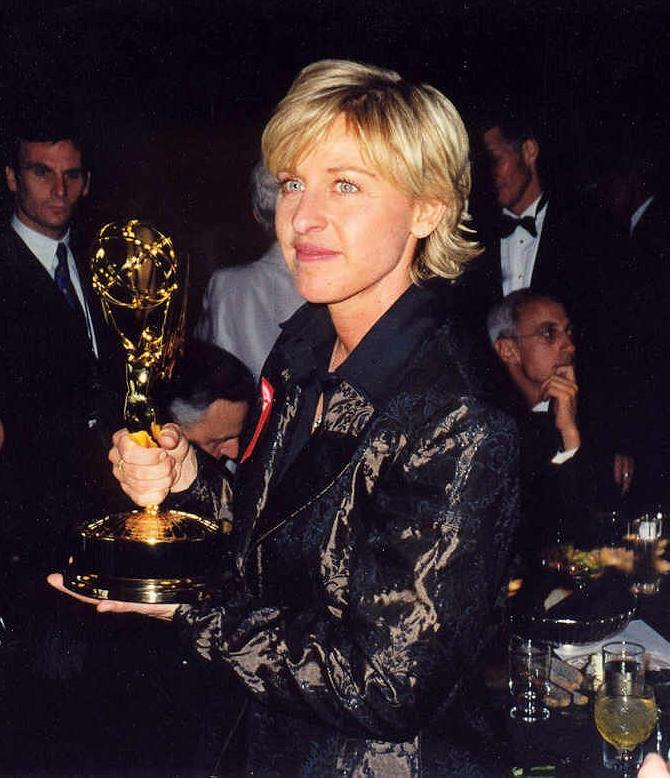
In the mid-1980s through the 1990s, sitcoms frequently employed a "coming out" episode, where a friend of one of the stars admits she is a lesbian, forcing the cast to deal with the issue, as in Designing Women, The Golden Girls, and Friends. Recurring openly lesbian characters were seen on Married... with Children, Mad About You, and Roseanne with a highly publicized episode. The sitcom with the most significant impact to the image of lesbians was Ellen, which generated enormous publicity from the 1997 coming out episode; Ellen DeGeneres appeared on the cover of Time magazine with the headline "Yep, I'm Gay". The episode won DeGeneres an Emmy, but conservative organizations opposed it, and the show was cancelled. A popular show for adolescents was Buffy the Vampire Slayer. In the fourth season, Tara and Willow admit their love for each other, without fanfare. In the 2000s came network television series devoted solely to gay characters. Showtime's American rendition of Queer as Folk ran from 2000 to 2005 with a lesbian couple as main characters. Aggressive advertising made the show the highest rated on the network.
Chic and popular culture

Lesbian visibility has improved since the early 1980s, partly due to public figures who have attracted public and press discussion of their sexuality. The primary figure earning this attention was Martina Navratilova, as she denied being lesbian, admitted to being bisexual, had very public relationships with Rita Mae Brown and Judy Nelson, and acquired as much press about her sexuality as she did her athletic achievements.
Other public figures acknowledged their homosexuality, such as musicians k.d. lang and Melissa Etheridge. Madonna pushed sexual boundaries in her performances. In 1993, heterosexual supermodel Cindy Crawford posed for a cover of Vanity Fair in a provocative arrangement that showed Crawford pretending to shave k.d. lang's face. The image "became an internationally recognized symbol of the phenomenon of lesbian chic".
The year 1994 marked a rise in lesbian visibility, particularly appealing to women with feminine appearances. Between 1992 and 1994, Mademoiselle, Vogue, Cosmopolitan, Glamour, Newsweek, and New York magazines featured stories about women who admitted sexual histories with other women. Lesbian visibility increased again in 2009 when sexually fluid female celebrities, such as Cynthia Nixon and Lindsay Lohan, commented openly about their relationships with women, and reality television addressed same-sex relationships. Psychiatrists and feminist philosophers wrote that the rise in women acknowledging same-sex relationships was due to growing social acceptance, but conceded that "only a certain kind of lesbian—slim and elegant or butch in just the right androgynous way—is acceptable to mainstream culture."
Legal rights
Criminalization of sexual activity
Thirty-eight countries penalize sex between women, or have unclear laws that may be applied to lesbian sex. Penalties explicitly listed for lesbian sexual activity include lashings (as in Iran and Brunei) or prison sentences (as in Oman, Gambia, and Malawi), or lashes and fines (as in Mauritania).
Custody and parenting
Family issues were significant concerns for lesbians when gay activism became more vocal in the 1960s and 1970s. Custody issues in particular were of interest since often courts would not award custody to mothers who were openly homosexual, even though the general procedure acknowledged children were awarded to the biological mother.
Several studies performed as a result of custody disputes compared outcomes for children of single lesbian mothers and single nonlesbian mothers. They found that children's mental health, happiness, overall adjustment, sexual orientation, and sex roles, were similar between both groups.
The ability to adopt domestically or internationally children or provide a home as a foster parent is a political and family priority for many lesbians, as is improving access to artificial insemination.
Marriage

In a 2023 international survey covering thirty countries, 56% of respondents wanted same-sex marriage to be legal. In 19 of the 20 countries in the survey that have same-sex marriage, support for the practice is above 50%; in 9 of the other 10 countries, over half of respondents favor some legal recognition for same-sex couples. As of 2025, same-sex marriage is legal in thirty-nine countries.
Notes
References
References
- (August 11, 2022). "Montreal's makeshift Pride march was more meaningful than any parade".
- {{harvnb. Stevens. 2000
- "Lesbian". [[Oxford University Press]].
- (1999). "Lesbian Health: Current Assessment and Directions for the Future". [[National Academies Press.
- Lamos, Colleen. (2000). "Lesbian". [[Garland Publishing]].
- (2006). "Gay Life and Culture: A World History". [[Thames & Hudson]].
- Gollmann, Wilhelm. (1855). "The Homeopathic Guide, In All Diseases of the Urinary and Sexual Organs, Including the Derangements Caused by Onanism and Sexual Excesses". Rademacher & Sheek.
- (22 July 2008). "Lesbos locals lose lesbian appeal". [[BBC News]] Europe.
- Stevens, Christy. (2000). "Symbols". [[Garland Publishing]].
- (2001). "The Literary Channel: The Inter-National Invention of the Novel". [[Princeton University Press]].
- "Lesbian Terms & Code In Women's LGBTQ History".
- "Lesbian", [http://dictionary.oed.com/ Oxford English Dictionary] {{Webarchive. link. (2006-06-25 , Second Edition, 1989. Retrieved on January 7, 2009.)
- (April 2019). "Lesbian Flag, Sadlesbeandisaster".
- Murphy-Kasp, Paul. (6 July 2019). "Pride in London: What do all the flags mean?".
- Bendix, Trish. (8 September 2015). "Why don't lesbians have a pride flag of our own?".
- Andersson, Jasmine. (4 July 2019). "Pride flag guide: what the different flags look like, and what they all mean". [[The i Paper]].
- Rawles, Timothy. (July 12, 2019). "The many flags of the LGBT community". [[San Diego Gay & Lesbian News]].
- Roselli, C.E.. (2018). "Neurobiology of gender identity and sexual orientation". [[Journal of Neuroendocrinology]].
- McFadden, Dennis. (April 2011). "Sexual orientation and the auditory system". [[Frontiers in Neuroendocrinology]].
- (August 2017). "Prenatal Influences on Human Sexual Orientation: Expectations versus Data". [[Archives of Sexual Behavior]].
- (2007). "Homosexual Women Have Less Grey Matter in Perirhinal Cortex than Heterosexual Women". [[PLOS ONE]].
- (2017). "Cerebral sex dimorphism and sexual orientation". Human Brain Mapping.
- (2008). "PET and MRI show differences in cerebral asymmetry and functional connectivity between homo- and heterosexual subjects". [[Proceedings of the National Academy of the Sciences of the United States of America]].
- (2021). "Structural, Functional, and Metabolic Brain Differences as a Function of Gender Identity or Sexual Orientation: A Systematic Review of the Human Neuroimaging Literature/". [[Archives of Sexual Behavior]].
- (2020). "Genetic and environmental effects on same-sex sexual behavior: a population study of twins in Sweden". [[Archives of Sexual Behavior]].
- (1998). "Gay & Lesbian Almanac". [[St. James Press]].
- (November 1992). "The Politics of Sexual Identity: Sexual Attraction and Behavior among Lesbian and Bisexual Women". [[Social Problems]].
- (2014). "Female Same-Sex Sexuality from a Dynamical Systems Perspective: Sexual Desire, Motivation, and Behavior". [[Archives of Sexual Behavior]].
- (2014). "Lesbian Women and Sexual Health: The Social Construction of Risk and Susceptibility". [[Routledge]].
- Lisa M. Diamond. (2009). "Sexual Fluidity". [[Harvard University Press]].
- (2022-01-01). "Menstrual Cycle Changes in Daily Sexual Motivation and Behavior Among Sexually Diverse Cisgender Women". [[Archives of Sexual Behavior]].
- (1 January 2026). "The Lesbian-Identified Lesbian: Lesbian Feminisms for a Post-Binary Future". [[Signs (journal).
- (September 2022). "Specificity without identity: Articulating post-gender sexuality through the "non-binary lesbian"". [[Sexualities (journal).
- (2 October 2025). "The lezurrection: lesbian identity in queer times". [[Journal of Lesbian Studies]].
- (12 July 2000). "Two Many and Not Enough: The Meanings of Bisexual Identities". [[Journal of Bisexuality]].
- (September 2011). "The negotiation of closetable identities: A narrative analysis of lesbian, gay, bisexual, transgendered queer Jewish identity". Journal of Social and Personal Relationships.
- (1983). "American Couples: Money, Work, Sex". William Morrow and Company.
- White, Ro. (August 4, 2022). "The Gay B C's of Sex: L Is for Lesbian Bed Death".
- (2004). "Lesbian sexuality/female sexuality: Rethinking 'lesbian bed death'". Sexual and Relationship Therapy.
- Yurcaba, Jo. (April 9, 2024). "New research helps explain why lesbians report more orgasms than straight women". NBC.
- (2021-11-01). "Debunking Lesbian Bed Death: Using Coarsened Exact Matching to Compare Sexual Practices and Satisfaction of Lesbian and Heterosexual Women". [[Archives of Sexual Behavior]].
- Castleman, Michael. (February 28, 2023). "Debunking the Myth of 'Lesbian Bed Death'". Psychology Today.
- (2016). "Out of the Closet and Into the Archives: A Partnership Model for Community-Based Collection and Preservation of LGBTQ History". [[Pennsylvania History (journal).
- Vanessa. (19 June 2012). "The Lesbian Herstory Archives: A Constant Affirmation That You Exist".
- Dunn, Daisy. (30 July 2024). "The First Lesbian: How Sappho's Poetry Paved the Way for Modern Queer Literature".
- Plato. "The Symposium". [[Project Gutenberg]].
- (2023). "300,000 Kisses: Tales of Queer Love from the Ancient World". Clarkson Potter/Publishers, an imprint of Crown Publishing Group.
- (2001). "Sexual Diversity and Catholicism: Toward the Development of Moral Theology". Liturgical Press.
- "LUCIAN:Dialogues of the Courtesans Section 5: LEAENA AND CLONARIUM". Fordham University.
- (6 December 1993). "Aztec Homosexuality: The Textual Evidence". [[Journal of Homosexuality]].
- Vowel, Chelsea. (2016). "Indigenous Writes: A Guide to First Nations, Métis & Inuit Issues in Canada". Highwater Press.
- (2016). "Two-Spirit People: Sex, Gender & Sexuality in Historic and Contemporary Native America". National Congress of American Indians Policy Research Center.
- Jennings, Rebecca. (2007). "A Lesbian History of Britain". [[Greenwood World Publishing]].
- Faderman, Lillian. (1981). "Surpassing the Love of Men: Romantic Friendship and Love Between Women from the Renaissance to the Present". Quill.
- Doan, Laura. (2001). "Fashioning Sapphism: The Origins of a Modern English Lesbian Culture". [[Columbia University Press]].
- Faderman, Lillian. (1991). "Odd Girls and Twilight Lovers: A History of Lesbian Life in Twentieth Century America". [[Penguin Books]].
- Edsall, Nicholas. (2003). "Toward Stonewall: Homosexuality and Society in the Modern Western World". [[University of Virginia Press]].
- (June 2005). ""Was It Right to Love Her Brother's Wife so Passionately?": Lesbian Pulp Novels and U.S. Lesbian Identity, 1950-1965". [[American Quarterly]].
- "GayLawNet - Laws - Yemen".
- Gerber, Paula. (17 March 2014). "Countries that still criminalise homosexuality".
- Mogrovejo, Norma (2004). "Relevancia de las lesbianas en América Latina: la recuperación de nuestra historia". In Drucker, Péter; Mercad, Enrique (in Spanish). ''Arco iris diferentes''. Siglo XXI. {{ISBN. 978-968-23-2486-4. pp. 85–103, 281-294
- (2021). "Boy-Wives and Female Husbands". [[SUNY Press]].
- (2004). "Standing up for their rights: Coalition of African Lesbians formed in Windhoek". Sister Namibia.
- (3 April 2017). ""Lesbian"/female same-sex sexualities in Africa". [[Journal of Lesbian Studies]].
- (2001). "Gay and Lesbian Asia: Culture, Identity, Community". Harrington Park Press.
- Leonhardt, David. (July 28, 2000). "John Tukey, 85, Statistician; Coined the Word 'Software'". [[The New York Times]].
- (2003). "Biography 15.1, ''John W. Tukey'' (1915–2000)".
- [[Kinsey Institute. Institute for Sex Research]] ([[Alfred Kinsey. Kinsey]], ''et al.'') (1953). ''[[Sexual Behavior in the Human Female]]'', Saunders.
- (1998). "Alfred Kinsey and the Kinsey report: Historical overview and lasting contributions". [[Journal of Sex Research]].
- Hite, Shere. (1976). "The Hite Report: A Nationwide Study on Female Sexuality". MacMillan.
- (1 June 2023). "Global survey finds 9% of adults identify as LGBTQ". NBC News.
- Wright, John, ed. "Homosexuality in the U.S., 1998–2000", ''The New York Times Almanac'' (2009), Penguin Reference. {{ISBN. 0-14-311457-3, p. 314.
- Gates, Gary [October 2006]. "Same-sex Couples and the Gay, Lesbian, Bisexual Population: New Estimates from the American Community Survey", [http://www.law.ucla.edu/williamsinstitute/home.html The Williams Institute on Sexual Orientation Law and Public Policy] {{Webarchive. link. (2009-02-13 , [[University of California Los Angeles]], pp. 1–25.)
- (23 September 2010). "Measuring Sexual Identity : Evaluation Report, 2010". [[Office for National Statistics]].
- Harford, Tim. (1 October 2010). "More or Less examines Office for National Statistics figures on gay, lesbian and bisexual people". [[BBC]].
- (December 2004). "Gay, lesbian, bisexual and transgender identification and attitudes to same-sex relationships in Australia and the United States". [[People and Place]].
- (19 December 2016). "Paris, ville lumière, ville de débauche ? L'OBSERVATOIRE DE LA VIE SEXUELLE DES PARISIENS".
- (August 2016). "Sexual Orientation and Behavior of Adult Jews in Israel and the Association With Risk Behavior". [[Archives of Sexual Behavior]].
- (2013). "Young Adult Fertility and Sexuality Survey".
- "Mapping LGBTQ Identities in Sri Lanka". Equal Ground.
- (2023). "Comprehensive systematic review and meta-analysis on physical health conditions in lesbian- and bisexual-identified women compared with heterosexual-identified women". Women's Health.
- (20 Jan 2021). "Mental health challenges of lesbian, gay, bisexual and transgender people: An integrated literature review". NIH National Library of Medicine.
- (July 2006). "Primary Care for Lesbians and Bisexual Women". [[American Family Physician]].
- (2008). "Predictors and Effects of Self-Objectification in Lesbians". [[Psychology of Women Quarterly]].
- (2018). "International Handbook on Gender and Demographic Processes". Springer Netherlands.
- (2024). "Health Disparities Among Lesbian, Gay, Bisexual, Transgender, and Queer Older Adults: A Structural Competency Approach". The International Journal of Aging and Human Development.
- "Frequently Asked Questions: Lesbian Health". [[U.S. Department of Health and Human Services]].
- (2003). "The Literature of Lesbianism: A Historical Anthology from Ariosto to Stonewall". [[Columbia University Press]].
- [[Jeannette Howard Foster. Foster, Jeannette H.]] (1956). ''Sex Variant Women in Literature'', Naiad Press edition, 1985. {{ISBN. 0-930044-65-7
- (28 October 2025). "On a Hunt for 19th-Century Erotica, We Found Lesbians". History News Network.
- (24 October 2020). "Lesbian Historic Motif Podcast Episode 181 - The Anandrine Sect".
- (1997). "The Myth of the Modern Homosexual: Queer History and the Search for Cultural Unity". Cassell.
- Lanser, 1979, p. 39.
- (1979). "Speaking in Tongues: 'Ladies Almanack' and the Language of Celebration". [[Frontiers: A Journal of Women Studies]].
- Barnes, Djuna. With an introduction by Susan Sniader Lanser. (1992). ''Ladies Almanack'', [[New York University Press]]. {{ISBN. 0-8147-1180-4. p. xxxi
- Packer, Vin (Marijane Meaker). ''Spring Fire'', Introduction. 2004, Cleis Press.
- "The Furies Collective". [[National Park Services]].
- "History, SINISTER WISDOM, founded 1976". Sinister Wisdom.
- (2006). "Queer Images: A History of Gay and Lesbian Film in America". [[Rowman & Littlefield Publishers]].
- Russo, Vito. (1987). "[[The Celluloid Closet: Homosexuality in the Movies]]". [[Harper & Row]].
- ''[[The Celluloid Closet (film). The Celluloid Closet]]''. Dir. Epstein, R., Friedman, J. DVD, Home Box Office, 1996.
- Curtin, Kaier. (1987). "We Can Always Call Them Bulgarians: The Emergence of Lesbians and Gay Men on the American Stage". [[Alyson Publications]].
- Curtin, Kaier. (Spring 1988). "Yiddish Lesbian Play Rocks Broadway".
- Gold, Sylviane. (15 October 2015). "'Indecent' Opens Yale Repertory Theater Season". [[The New York Times]].
- (29 April 2017). "'Indecent': A Play About A Yiddish Play That Was Ahead Of Its Time".
- (2 May 2017). "2017 TONY AWARD® NOMINATIONS".
- Vagianos, Alanna. (November 22, 2018). "Macy's Thanksgiving Day Parade Features Same-Sex Kiss In Historic Moment". [[HuffPost]].
- Wild, Stephi. (23 November 2018). "THE PROM Makes History With First LGBTQ Kiss on Macy's Thanksgiving Day Parade". [[BroadwayWorld]].
- Kircher, Madison Malone. (June 13, 2020). "''Jagged Little Pill''{{'}}s Lauren Patten Will Not Admit That She Steals the Show".
- Tropiano, Stephen. (2002). "Prime Time Closet: A History of Gays and Lesbians on TV". Applause Theater and Cinema Books.
- (2000). "Alternate Channels: The Uncensored Story of Gay and Lesbian Images on Radio and Television". [[Ballantine Books]].
- Hamer, Diane, Budge, Belinda, eds. (1994). ''The Good, The Bad, and the Gorgeous: Popular Culture's Romance with Lesbianism'', Pandora. {{ISBN. 0-04-440910-9. pp. 1, 57–77, 87–90.
- Bennetts, Leslie. (August 1, 1993). "k.d. lang Cuts It Close".
- Streitmatter, Rodger. (2009). "From 'Perverts' to 'Fab Five': The Media's Changing Depiction of Gay Men and Lesbians". [[Routledge]].
- (April 23, 2009). "Why women are leaving men for other women". [[CNN]].
- "#OUTLAWED "THE LOVE THAT DARE NOT SPEAK ITS NAME"". [[Human Rights Watch]].
- (2 June 2025). "Same-Sex Marriage Around the World". [[PEW Research Center]].
This article was imported from Wikipedia and is available under the Creative Commons Attribution-ShareAlike 4.0 License. Content has been adapted to SurfDoc format. Original contributors can be found on the article history page.
Ask Mako anything about Lesbian — get instant answers, deeper analysis, and related topics.
Research with MakoFree with your Surf account
Create a free account to save articles, ask Mako questions, and organize your research.
Sign up freeThis content may have been generated or modified by AI. CloudSurf Software LLC is not responsible for the accuracy, completeness, or reliability of AI-generated content. Always verify important information from primary sources.
Report