From Surf Wiki (app.surf) — the open knowledge base
Leonid Plyushch
Ukrainian mathematician (1938–2015)
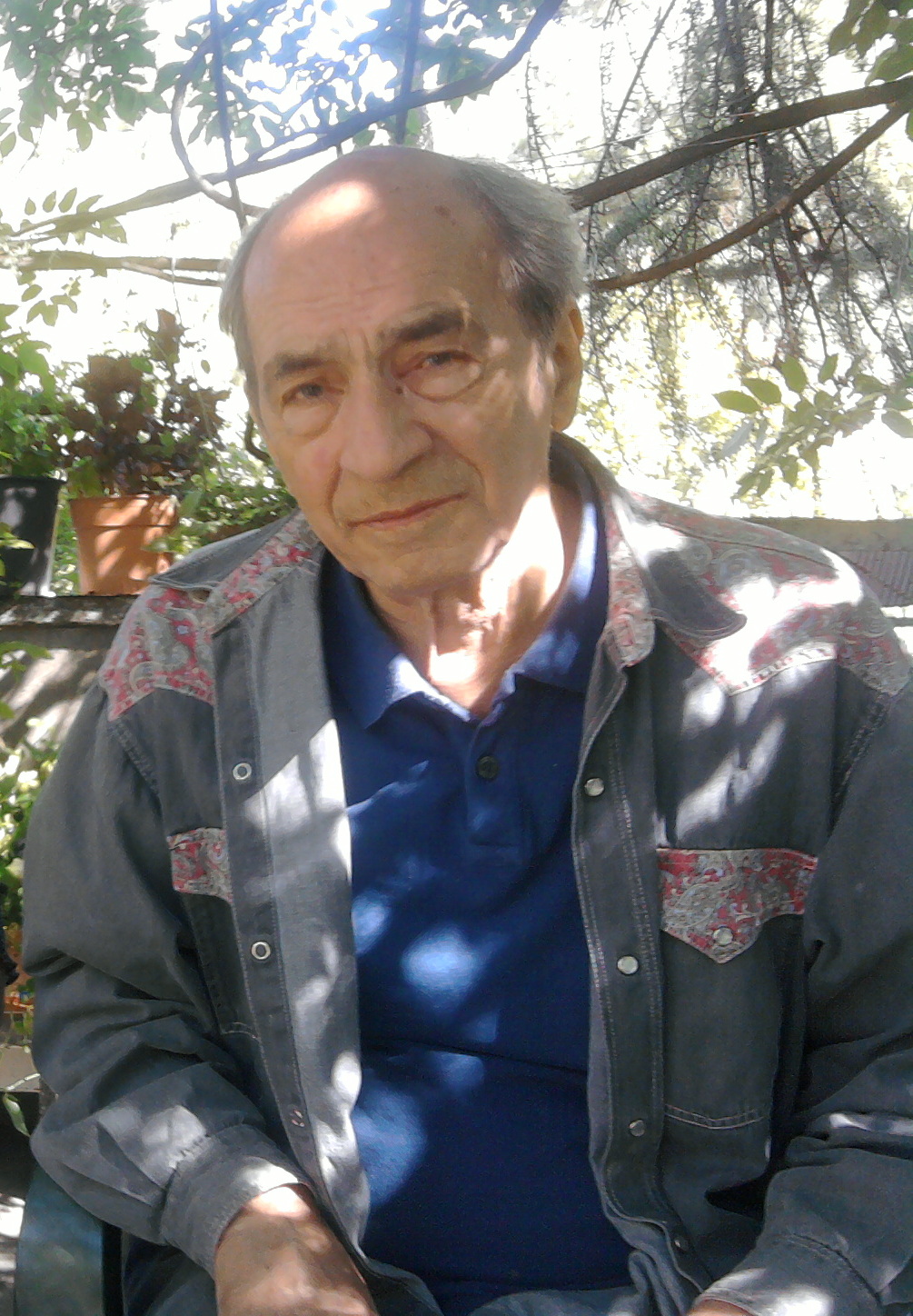
Ukrainian mathematician (1938–2015)
| Field | Value |
|---|---|
| name | Leonid Plyushch |
| native_name | Леонід Плющ |
| image | Leonid Ivanovych Plyushch.jpg |
| birth_name | Leonid Ivanovych Plyushch |
| birth_date | |
| birth_place | Naryn, Kirghiz SSR, Soviet Union |
| death_date | |
| death_place | Bessèges, France |
| alma_mater | |
| known_for | Human rights activism with participation in the Ukrainian Helsinki Group |
| occupation | Mathematician |
| nationality | Ukrainian |
| citizenship | |
| movement | dissident movement in the Soviet Union |
| spouse | Tatyana Ilinichna Zhitnikova |
| awards | Order For Courage |
| Antonovych prize (1987) |
Antonovych prize (1987) Leonid Ivanovych Plyushch (, ; 26 April 1938 – 4 June 2015) was a Ukrainian mathematician and Soviet dissident.
Although he was employed to work on Soviet space missions, he became disillusioned with some aspects of the Soviet Union, and started to protest, by sending letters to multiple entities and signing petitions and declarations. These activities led to his interrogation and, in 1972, eventual arrest and imprisonment by the Soviet authorities, where he was injected with drugs and mistreated. He was put on trial in secret, closed to public scrutiny, by the Soviet authorities. Eventually, in 1976, he was able to leave the Soviet Union, and later settled in France, after which he became involved in trying to promote human rights.
In 1979, with the help of his wife, he wrote a book describing how he and other dissidents were placed in psychiatric facilities. Throughout his later years, he supported anti-totalitarian publications.
Early life and career
Leonid Plyushch was born into a working-class family in 1938 in Naryn, Kirghizia. His father worked as railway foreman, and died on the front in 1941. Leonid's childhood was marked by tuberculosis of the bone, which he contracted at the age of 8.
Plyushch graduated from Kyiv University in 1962 with a degree in mathematics. In his last year of studies he became interested in the mathematical modeling of biological systems, in particular mental illness, which he sought to model with the help of a computer. This proved too difficult a task, but Plyushch published papers on modeling and regulating simpler biological systems like the blood sugar level. He was eventually hired by the Institute of Cybernetics of the USSR Academy of Sciences, which was often tasked with solving various problems for the Soviet space program.
Dissident activities
Plyushch became a dissident by taking a public stance on political hot topics of the time. In 1968 he protested against the misconduct of the Galanskov–Ginzburg trial by sending a letter to Komsomolskaya Pravda, which was not published. When Soviet troops invaded Czechoslovakia in 1968, Plyushch jointly signed with 16 other Soviet dissidents a declaration of solidarity with the democratic movement in Czechoslovakia. In the same year he joined the Initiative Group for the Defense of Human Rights in the USSR, which sent a letter to the UN Human Rights Commission asking it to investigate the violations by the USSR of the right to hold independent beliefs and to propagate them by legal means. Plyushch was one of the fifteen signatories to An Appeal to The UN Committee for Human Rights. Due to blowback from his political stances, he was dismissed from the Cybernetics Institute in 1968, and the KGB confiscated a number of his manuscripts and interrogated him several times.
Trial and imprisonment
He was arrested in January 1972 on charges of anti-Soviet activity, and was jailed for a year before his trial began. During his trial, the court sat in camera and in the absence of the accused. Although no expert witnesses of any kind were called, Plyushch was declared insane, and was ordered to be "sent for treatment in a special type of hospital." He was locked up in a ward for severely psychotic patients in the Dnipropetrovsk Special Psychiatric Hospital where high doses of haloperidol, insulin and other drugs were administered, which temporarily made him incapable of reading and writing. On 28 November 1976, Plyushch said, Moscow has taken advantage of the Helsinki security pact to improve its economy while increasing the suppression of political dissenters.
While he was imprisoned, he corresponded with Tatiana Khodorovich. His imprisonment triggered international protests, including a letter by 650 American mathematicians addressed to the Soviet embassy. Henri Cartan brought the case to the attention of the participants to the 1974 International Congress of Mathematicians, which was held in Vancouver. Amnesty International sponsored an International Day for Plyushch in April 1975,
Freedom and later life
Eventually he was allowed to leave the Soviet Union together with his family in 1976. His arrival in the West increased the friction between Western and Soviet psychiatrists leading eventually to a condemnation of Soviet practices by the World Psychiatric Association at the Sixth World Congress of Psychiatry. At a press conference in Paris, Plyushch gave a memorable account of the effects of his detention and medications:
I noted with horror the daily progression of my degradation. I lost interest in politics, then in scientific problems, finally in my wife and children. My speech became blurred; my memory worsened. In the beginning, I reacted strongly to the sufferings of other patients. Eventually I became indifferent. My only thoughts were of toilets, tobacco and the bribes to the male nurses to let me go to the toilet one more time. Then I began to experience a new thought: 'I must remember everything I see here, I told myself, so that I can tell about it afterwards.'
Plyushch became a member of the Ukrainian Helsinki Group in 1977, promoting human rights in his native Ukraine.
On 23 July 1978, Plyushch visited Ukrainians in Australia and addressed the Australian Parliament.
In 1979, with the contribution of his wife, Plyushch published his book History's Carnival: A Dissident's Autobiography in which he described how he and other dissidents were committed to psychiatric hospitals. At the same year, the book was translated into English. In 1980, Andrei Snezhnevsky, who was a Corresponding Fellow of the Royal College of Psychiatry, was invited by his British colleagues to answer criticism relating to Plyushch and other dissidents. He refused to do so, and instead resigned his Fellowship.
Later in life, although he retained communist convictions,
In 2006, he translated the book Talking with angels (originally Dialogues avec l'ange, ) into Russian and Ukrainian with his wife Tatiana.
Plyushch died 4 June 2015 in Bessèges, France. His death was reported by a friend and fellow ex-Soviet dissident, Arina Ginzburg.
References
Bibliography
Books
Articles and interviews
Audiovisual material
References
- (16 June 2015). "Lettre ouverte de Tatiana Pliouchtch".
- Plyushch L., (1979) pp. 3-4
- Sakwa, Richard. (1999). "The Rise and Fall of the Soviet Union, 1917-1991". Routledge.
- Plyushch L., (1979) pp. 31–37
- Khodorovich T. (1976), p. xv
- (21 August 1969). "An Appeal to The UN Committee for Human Rights". [[The New York Review of Books]].
- [http://www.osaarchivum.org/files/holdings/300/8/3/text/89-5-339.shtml The "Madness" of Leonid Plyushch] {{webarchive. link. (2012-09-14 , [[Radio Free Europe]] Research material, 1973-1-31)
- Khodorovich T. (1976), p. 5
- Whitaker, Leighton. (1992). "Schizophrenic disorders: sense and nonsense in conceptualization, assessment, and treatment". Springer Science & Business Media.
- (28 November 1976). "Helsinki pact said abused". [[The Spokesman-Review]].
- Campbell, AV. (December 1976). "The case of Leonid Plyushch". [[Journal of Medical Ethics]].
- Bloch, Sidney. (September 1978). "Psychiatry as ideology in the USSR". [[Journal of Medical Ethics]].
- Bers, Lipman. (30 August 1974). "Imprisoned Soviet mathematician". [[Science (magazine).
- (August 1999). "Interview with Henri Cartan". [[Notices of the American Mathematical Society]].
- Boobbyer, Philip. (2004). "Conscience, dissent and reform in Soviet Russia". Routledge.
- (12 September 1977). "Behavior: censuring the Soviets".
- Reich, Walter. (1 January 1978). "Soviet psychiatry on trial". [[Commentary (magazine).
- (16 February 1976). "Soviet Union: the psukhushka horror".
- (4 June 2015). "Украинский диссидент Леонид Плющ умер сегодня во Франции".
- (23 July 1978). "Plyushch visits Ukrainians in Australia, addresses Parliament". [[The Ukrainian Weekly]].
- Плющ, Леонид. (1979). Overseas Publications Interchange. link
- Plyushch, Leonid. (1979). "History's carnival: a dissident's autobiography". Collins and Harvill Press.
- Levine, Sidney. (1 May 1981). "The Special Committee on the Political Abuse of Psychiatry". Psychiatric Bulletin.
- Диалоги с ангелом, Fact Publishers, Kyiv, 2006
- Діалоги з Янголом, Fact publishers, Kyiv, 2006
- (4 June 2015). "Помер правозахисник, дисидент Леонід Плющ". [[Radio Free Europe/Radio Liberty.
- (4 June 2015). "Famous Soviet dissident Leonid Plyushch dies aged 77".
- (4 June 2015). "Prominent Soviet dissident Leonid Plyushch dies".
This article was imported from Wikipedia and is available under the Creative Commons Attribution-ShareAlike 4.0 License. Content has been adapted to SurfDoc format. Original contributors can be found on the article history page.
Ask Mako anything about Leonid Plyushch — get instant answers, deeper analysis, and related topics.
Research with MakoFree with your Surf account
Create a free account to save articles, ask Mako questions, and organize your research.
Sign up freeThis content may have been generated or modified by AI. CloudSurf Software LLC is not responsible for the accuracy, completeness, or reliability of AI-generated content. Always verify important information from primary sources.
Report