From Surf Wiki (app.surf) — the open knowledge base
Legislature III of Italy
3rd legislature of the Italian Republic (1958–1963)

3rd legislature of the Italian Republic (1958–1963)
| Field | Value | |
|---|---|---|
| name | Legislature III of Italy | |
| native_name | III legislatura della Repubblica Italiana | |
| native_name_lang | it | |
| legislature | 3rd legislature | |
| coa_caption | Emblems of the Senate and the Chamber of Deputies | |
| house_type | bicameral | |
| houses | Chamber of Deputies | |
| Senate of the Republic | ||
| foundation | ||
| disbanded | ||
| () | ||
| preceded_by | II Legislature | |
| succeeded_by | IV Legislature | |
| leader1_type | President of the Senate | |
| leader1 | Cesare Merzagora | |
| party1 | Ind | |
| election1 | 12 June 1958 | |
| leader2_type | President of the Chamber of Deputies | |
| leader2 | Giovanni Leone | |
| party2 | DC | |
| election2 | 12 June 1958 | |
| seats | 596 (C) | |
| 246+ (S) | ||
| house1 | Chamber of Deputies | |
| house2 | Senate | |
| structure1 | [[File:Italian Chamber of Deputies 1958.svg | 250px]] |
| structure2 | [[File:Italian Senate 1958.svg | 250px]] |
| {{unbulleted list | class | nowrap |
| {{unbulleted list | class | nowrap |
| voting_system1 | Proportional | |
| voting_system2 | Proportional | |
| last_election3 | 25 May 1958 | |
| meeting_place | Palazzo Montecitorio, Rome (C) | |
| meeting_place2 | Palazzo Madama, Rome (S) | |
| website | Third Legislature – Chamber of Deputies | |
| Third Legislature – Senate | ||
| constitution | Constitution of Italy |
Senate of the Republic () 246+ (S) | DC (273) | PCI (140) | PSI (84) | MSI (24) | PSDI (22) | PLI (17) | PMP (14) | PNM (11) | PRI (6) | SVP (3) | MC (1) | UV (1) | DC (123) | PCI (60) | PSI (36) | MSI (8) | PMP (5) | PSDI (5) | PLI (4) | PNM (2) | SVP (2) | Others (1) Third Legislature – Senate
The Legislature III of Italy () was the 3rd legislature of the Italian Republic, and lasted from 12 June 1958 until 15 May 1963. Its composition was the one resulting from the general election of 25 May 1958.
Main chronology
In the 1958 general election, Amintore Fanfani, as secretary of the Christian Democrats, run as the main candidate to become the next prime minister. The electoral result was similar to the one of five years before. Christian Democracy (DC) gained 42.4% of votes, nearly doubling Palmiro Togliatti's Communist Party, which arrived second. However, the poor results of the other small centrist and secular parties kept the same problems of political instability within the centrist coalition, which characterised the previous legislature.
Christian Democracy resulted even more polarized between Fanfani's leftist faction and the opposite one which urged for a rightist policy; Fanfani relaunched his reformist agenda, advocating for a dialogue with the Italian Socialist Party (PSI), which had stopped its ties with the communists after the Hungarian Revolution. However, a government between DC and PSI was too premature due to the strong opposition of DC's right-wing, so, on 1 July 1958, Fanfani sworn in as new prime minister at the head of a coalition government with the Italian Democratic Socialist Party (PSDI), and a case-by-case support of the Italian Republican Party (PRI).
The unprecedented concentration of power that Fanfani had achieved within this party was the main reason of his second government's decline. The outrageous conservative opposition resulted in a progressive breakdown of the internal majority faction, "Democratic Initiative". In January 1959, a conspicuous group of Christian Democrats started voting against their own government, forcing Fanfani to resign on 26 January 1959, after only six months in power.
On 16 February 1959, Antonio Segni, member of the right-wing faction of the party, sworn in as new prime minister. Segni formed a one-party government, composed only by members of the Christian Democracy, which was externally supported by minor centre-right and right-wing parties, included the neo-fascist Italian Social Movement (MSI). However, in March 1960, the Italian Liberal Party (PLI) withdrew its support to the government and Segni was forced to resign.
President Giovanni Gronchi then gave Fernando Tambroni the task of forming a new cabinet. Tambroni formed a one-party cabinet composed only by DC members, with the sole external support of the neo-fascist Italian Social Movement (MSI), a unique case in the history of the Italian Republic. On 8 April, the Chamber of Deputies gave the confidence vote to government, with the fundamental support of the MSI. However, the neo-fascist vital support created growing tensions within the DC and with some ministers who threatened their resignations, Tambroni was forced to resign. President Gronchi gave then the task of forming a new cabinet to Fanfani, to verify the possibility of starting a centre-left government. However, he was opposed by an important part of the DC, so Tambroni returned to the Senate, where he received the confidence vote on 29 April.
Tambroni listed among the main focus of his government's program the institution of regions with a special statute for Friuli-Venezia Giulia, the reform of local finances, the modernization of public administration, a wide program of social and economic interventions, the reorganization of the state railways and a new foreign policy to improve bilateral relations with emerging countries like China, India and Arab countries. However, the most controversial decision of his cabinet, was the permission to the MSI to hold its national congress in Genoa, one of the capitals of Italian Resistance against Fascism. This move was considered by the public opinion as a further and unacceptable opening to the neo-fascists, by the government.
On 30 June 1960, a large demonstration summoned by the left-wing CGIL trade union and by other leftist forces in the streets of Genoa was heavily suppressed by the Italian police. Other popular demonstrations in Reggio Emilia, Rome, Palermo, Catania, Licata again saw violent intervention by the police, causing several deaths. On 7 July, while news of the demonstrators killed in Reggio Emilia arrived in the Chamber, Tambroni only spoke about "unpleasant incidents", stating the government's willingness was to do "its duty to defend the state and the free institutions". Moreover, the interior minister, Giuseppe Spataro, accused the PCI of having stirred up the riots.
On 8 July, the political situation was so worrying that the president of the Senate, Cesare Merzagora, with an unprecedented practice and not informing the president of the Republic, proposed, finding support also in the president of the Chamber Giovanni Leone, a fifteen-day truce, with the return of the police to the barracks and the consequent stop of anti-fascist protests. This effectively delegitimized the actions of Tambroni and Spataro, and represented the beginning of the government crisis. On 19 July, when many members of his own party, withdrew their supports to the government, Tambroni was forced to resign, after only 116 days in power.
President Gronchi then decided to ask again Amintore Fanfani to forma new government. Fanfani's third government officially sworn in in July 1960 and was formed only by DC ministers. The cabinet was externally supported by PSDI, PRI and PLI. With Fanfani as prime minister and Aldo Moro as secretary of the party, the so-called Organic Centre-left period was ready to begin.
In February 1962, after the national congress of the Christian Democracy, Fanfani reorganised his cabinet and gained the benign abstention of the socialist leader Pietro Nenni. During this term as Prime Minister Fanfani carried out a number of reforms in areas such as health, education, and social security. On 8 April 1962 the cabinet introduced broad provisions covering building areas. Local governments were obliged to provide plans of areas suitable for economic housing, while strict price controls for building areas were introduced to prevent speculation.
On 31 December 1962, the Parliament approved a law that extended compulsory education to the age of 14 and introduced a single unified curriculum, lasting for a 3-year period after primary education. On 12 August 1962, Fanfani introduced a supplementary pension payment, equal to one-twelfth of the annual amount of pension minima, while also introducing child supplements for pensioners. Moreover, on 5 March 1963, he introduced a voluntary pension insurance scheme for housewives. On 19 January 1963, the government proposed a bill that extended the insurance against occupational diseases to artisans, while general improvements to cash benefits were carried out: all pensions were to be adjusted every third year to the minimum contractual wage in the respective industrial sector, while earnings-replacement rates were raised to correspond to contractual disability rates. In February 1963, improved health benefits for agricultural workers, with the introduction of free pharmaceutical assistance and the flat-rate sickness indemnity replaced by an earnings-related indemnity equal to 50% of minimum contractual pay (in each province) for a maximum of 180 days.
In his three years rule, thanks to the key support of the PSI, Fanfani approved the nationalization of Enel, the national electric company and the establishment of middle school, the introduction of share taxation. Only the implementation of the ordinary statute regions and the urban reform remained uncompleted, due to a strong internal opposition within the DC. Moreover, the new international balance of power marked by the presidency of John F. Kennedy, influenced Western politics in favor of reformism, as the best alternative to defeat communism.
Presidential election
On 2 May 1962 the Parliament met to elect the third President of Italy. On 6 May 1962 the Christian democrat Antonio Segni was elected on the ninth ballot with 443 votes out of 854.
Government
| Prime Minister | Party | Term of office | Government | Composition | Took office | Left office |
|---|---|---|---|---|---|---|
| Christian Democracy (Italy)}};" | [[File:Amintore Fanfani daticamera.jpg | 70px]] | Amintore Fanfani | |||
| (1908–1999) | Christian Democracy | 1 July 1958 | 16 February 1959 | Fanfani II | ||
| Christian Democracy (Italy)}};" | [[File:Antonio Segni Official.jpg | 70px]] | Antonio Segni | |||
| (1891–1972) | Christian Democracy | 16 February 1959 | 25 March 1960 | Segni II | ||
| Christian Democracy (Italy)}};" | [[File:Fernando Tambroni-1.jpg | 70px]] | Fernando Tambroni | |||
| (1901–1963) | Christian Democracy | 25 March 1960 | 26 July 1960 | Tambroni | ||
| Christian Democracy (Italy)}};" | [[File:Amintore Fanfani daticamera.jpg | 70px]] | Amintore Fanfani | |||
| (1908–1999) | Christian Democracy | 26 July 1960 | 21 February 1962 | Fanfani III | ||
| 21 February 1962 | 21 June 1963 | Fanfani IV | DC PSDI PRI | |||
| (with PSI's external support) |
Fanfani II Cabinet
| 10–19 July 1958 | ||||||
|---|---|---|---|---|---|---|
| Investiture votes for Fanfani II Cabinet | House of Parliament | Vote | Parties | Votes | Senate of the Republic | |
| (Voting: 241 of 257, | ||||||
| Majority: 121) | Chamber of Deputies | |||||
| (Voting: 582 of 596, | ||||||
| Majority: 291) | ||||||
| Yes | DC, PSDI | |||||
| No | PCI, PSI, PNM, PMP, PLI, MSI | |||||
| Abstention | SVP | |||||
| Yes | DC, PSDI | |||||
| No | PCI, PSI, PLI, MSI, PRI, PNM, PMP, PLI |
Segni II Cabinet
| 24 February–6 March 1959 | ||||||
|---|---|---|---|---|---|---|
| Investiture votes for Segni II Cabinet | House of Parliament | Vote | Parties | Votes | Chamber of Deputies | |
| (Voting: 581 of 596, | ||||||
| Majority: 291) | Senate of the Republic | |||||
| (Voting: 240 of 257, | ||||||
| Majority: 121) | ||||||
| Yes | DC, MSI, PNM, PLI, PMP | |||||
| No | PCI, PSI, PRI, PSDI | |||||
| Yes | DC, MSI, PNM, PLI, PMP | |||||
| No | PCI, PSI, PSDI, SVP |
Tambroni Cabinet
| 4–29 April 1960 | ||||||
|---|---|---|---|---|---|---|
| Investiture votes for Tambroni Cabinet | House of Parliament | Vote | Parties | Votes | Chamber of Deputies | |
| (Voting: 593 of 596, | ||||||
| Majority: 297) | Senate of the Republic | |||||
| (Voting: 238 of 257, | ||||||
| Majority: 120) | ||||||
| Yes | DC, MSI | |||||
| No | PCI, PSI, PNM, PDI PLI, PRI, PSDI | |||||
| Yes | DC, MSI | |||||
| No | PCI, PSI, PNM, PDI, PLI, PSDI, SVP |
Fafani III Cabinet
| 2–5 August 1960 | ||||||
|---|---|---|---|---|---|---|
| Investiture votes for Fanfani III Cabinet | House of Parliament | Vote | Parties | Votes | Senate of the Republic | |
| (Voting: 220 of 257, | ||||||
| Majority: 111) | Chamber of Deputies | |||||
| (Voting: 446 of 590, | ||||||
| Majority: 224) | ||||||
| Yes | DC, PLI, PSDI, SVP | |||||
| No | PCI, MSI | |||||
| Abstention | PSI, PNM, PDI | |||||
| Yes | DC, PLI, PRI, PSDI | |||||
| No | PCI, MSI |
Fanfani IV Cabinet
| 2–15 March 1962 | ||||||
|---|---|---|---|---|---|---|
| Investiture votes for Fanfani IV Cabinet | House of Parliament | Vote | Parties | Votes | Chamber of Deputies | |
| (Voting: 490 of 590, | ||||||
| Majority: 246) | Senate of the Republic | |||||
| (Voting: 190 of 257, | ||||||
| Majority: 96) | ||||||
| Yes | DC, PLI, PSDI, PRI | |||||
| No | PCI, MSI | |||||
| Yes | DC, PLI, PSDI | |||||
| No | PCI, MSI |
Parliamentary composition
Chamber of Deputies
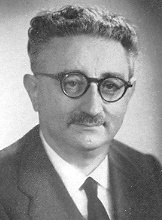
- President: Giovanni Leone (DC), elected on 12 June 1958
- Vice Presidents: Brunetto Bucciarelli-Ducci (DC), Paolo Rossi (PSDI), Girolamo Li Causi (PCI), Ferdinando Targetti (PSI)
| Initial composition | ||||||||
|---|---|---|---|---|---|---|---|---|
| (12 June 1958) | Final composition | |||||||
| (15 May 1963) | Parliamentary group | Seats | Parliamentary group | Seats | Change | |||
| Christian Democracy (Italy)}}" width=1% | Christian Democracy | 273 | Christian Democracy (Italy)}}" width=1% | Christian Democracy | 275 | 2 | ||
| Italian Communist Party}}" width=1% | Italian Communist Party | 143 | Italian Communist Party}}" width=1% | Italian Communist Party | 140 | 3 | ||
| Italian Socialist Party}}" width=1% | Italian Socialist Party | 84 | Italian Socialist Party}}" width=1% | Italian Socialist Party | 86 | 2 | ||
| Italian Social Movement}}" width=1% | Italian Social Movement | 24 | Italian Social Movement}}" width=1% | Italian Social Movement | 25 | 1 | ||
| Italian Democratic Socialist Party}}" width=1% | Italian Democratic Socialist Party | 22 | Italian Democratic Socialist Party}}" width=1% | Italian Democratic Socialist Party | 19 | 3 | ||
| Italian Liberal Party}}" width=1% | Italian Liberal Party | 17 | Italian Liberal Party}}" width=1% | Italian Liberal Party | 23 | 6 | ||
| People's Monarchist Party | 14 | Italian Democratic Party | 10 | 4 | ||||
| Monarchist National Party}}" width=1% | Monarchist National Party | 11 | Monarchist National Party}}" width=1% | Monarchist National Party | 10 | 1 | ||
| Independent (politician)}}" width=1% | Mixed | 11 | Independent (politician)}}" width=1% | Mixed | 11 | |||
| Italian Republican Party}}" width=1% | Italian Republican Party | 6 | Italian Republican Party}}" width=1% | Italian Republican Party | ||||
| South Tyrolean People's Party}}" width=1% | Südtiroler Volkspartei | 3 | South Tyrolean People's Party}}" width=1% | Südtiroler Volkspartei | ||||
| Community Movement | 1 | Community Movement | ||||||
| Valdostan Union}}" width=1% | Union Valdôtaine | 1 | Valdostan Union}}" width=1% | Union Valdôtaine | ||||
| *Total seats* | 596 | *Total seats* | 596 |
Senate of the Republic

- President: Cesare Merzagora (Ind), elected on 12 June 1958
- Vice Presidents: Stanislao Ceschi (DC), Giacinto Bosco (DC, until 25 July 1960), Mauro Scoccimarro (PCI), Ettore Tibaldi (PSI), Ennio Zelioli-Lanzini (DC, from 12 October 1960)
| Initial composition | ||||||||
|---|---|---|---|---|---|---|---|---|
| (12 June 1958) | Final composition | |||||||
| (15 May 1963) | Parliamentary group | Seats | Parliamentary group | Seats | Change | |||
| Christian Democracy (Italy)}}" width=1% | Christian Democracy | 123 | Christian Democracy (Italy)}}" width=1% | Christian Democracy | 120 | 3 | ||
| Italian Communist Party}}" width=1% | Italian Communist Party | 60 | Italian Communist Party}}" width=1% | Italian Communist Party | 56 | 4 | ||
| Italian Socialist Party}}" width=1% | Italian Socialist Party | 36 | Italian Socialist Party}}" width=1% | Italian Socialist Party | 25 | 1 | ||
| Italian Social Movement}}" width=1% | Social–Monarchist | 10 | Italian Social Movement}}" width=1% | Social–Monarchist | 13 | 3 | ||
| Independent (politician)}}" width=1% | Mixed | 28 | Independent (politician)}}" width=1% | Mixed | 33 | 5 | ||
| Italian Democratic Socialist Party}}" width=1% | Italian Democratic Socialist Party | 5 | Italian Democratic Socialist Party}}" width=1% | Italian Democratic Socialist Party | ||||
| People's Monarchist Party | 5 | Italian Democratic Party | ||||||
| Italian Liberal Party}}" width=1% | Italian Liberal Party | 4 | Italian Liberal Party}}" width=1% | Italian Liberal Party | ||||
| South Tyrolean People's Party}}" width=1% | Südtiroler Volkspartei | 2 | South Tyrolean People's Party}}" width=1% | Südtiroler Volkspartei | ||||
| Independent (politician)}}" width=1% | Independents – Non inscrits | 12 | Independent (politician)}}" width=1% | Independents – Non inscrits | ||||
| *Total seats* | 257 | *Total seats* | 257 |
[[Senators for life in Italy|Senators for Life]]
| Senator | Motivation | Appointed by | From | Till |
|---|---|---|---|---|
| Enrico De Nicola | Former President of Italy | ex officio | Previous legislature | 3 October 1959 (deceased) |
| Pietro Canonica | Merits in the artistic field | President Luigi Einaudi | Previous legislature | 8 June 1959 (deceased) |
| Pasquale Jannaccone | Merits in the social field | President Luigi Einaudi | Previous legislature | 22 December 1959 (deceased) |
| Luigi Sturzo | Merits in the social field | President Luigi Einaudi | Previous legislature | 8 August 1959 (deceased) |
| Umberto Zanotti Bianco | Merits in the artistic and social field | President Luigi Einaudi | Previous legislature | Next legislature |
| Luigi Einaudi | Former President of Italy | ex officio | Previous legislature | 30 October 1961 (deceased) |
| Giuseppe Paratore | Merits in the social field | President Giovanni Gronchi | Previous legislature | Next legislature |
| Giovanni Gronchi | Former President of Italy | ex officio | 11 May 1962 | Next legislature |
| Cesare Merzagora | Merits in the social field | President Antonio Segni | 2 March 1963 | Next legislature |
| Ferruccio Parri | Merits in the social field | President Antonio Segni | 2 March 1963 | Next legislature |
| Meuccio Ruini | Merits in the social and scientific field | President Antonio Segni | 2 March 1963 | Next legislature |
References
References
- "Camera dei Deputati – 3ª Legislatura".
- "Senato della Repubblica – 3ª Legislatura".
- [https://elezionistorico.interno.gov.it/index.php?tpel=C&dtel=25/05/1958&tpa=I&tpe=A&lev0=0&levsut0=0&es0=S&ms=S Elezioni del 1958], Ministero dell'Interno
- [http://www.criticasociale.net/index.php?&lng=ita&function=rivista&pid=page&id=0002998&top_nav=autori_1996&sintesi=1 Ungheria, la rottura tra PCI e PSI]
- [http://www.senato.it/leg/03/BGT/Schede/Governi/0045_M.htm Governo Fanfani II], senato.it
- [http://www.dellarepubblica.it/iii-legislatura-ii-fanfani 1958 – 1963, II governo Fanfani]
- [https://web.archive.org/web/20090813222259/http://www.time.com/time/magazine/article/0,9171,895359,00.html Italy's Fanfan], Time Magazine, 16 June 1961
- [http://www.senato.it/leg/02/BGT/Schede/Governi/0043_M.htm Governo Segni I], senato.it
- [http://www.senato.it/leg/03/BGT/Schede/Governi/0047_M.htm Composizione del Governo Tambroni], ''Senato della Repubblica''
- [[Chamber of Deputies (Italy). Chamber of Deputies]], ''Atti Parlamentari. Discussioni, III Legislatura'', 4 April 1960, page 13424
- [http://www.raiscuola.rai.it/articoli-programma-puntate/il-governo-tambroni/29968/default.aspx Il governo Tambroni], ''Rai Scuola''
- [https://www.genova24.it/2017/06/30-giugno-1960-no-pasaran-genova-quel-accadde-182598/ 30 giugno 1960: il “No pasaràn!” di Genova (e quel che accadde prima e dopo)], ''Genova 24''
- ''Camera dei Deputati, Atti Parlamentari. Discussioni, III Legislatura'', 7 July 1960, page 15700–15701
- ''Camera dei Deputati, Atti Parlamentari. Discussioni, III Legislatura'', 7 July 1960, page 157689
- ''La rivolta di Genova nelle parole di chi c'era'', Alessandro Benna, Lucia Compagnino, Fratelli Frilli Editore, 30 June 1960
- [http://www.governo.it/it/i-governi-dal-1943-ad-oggi/iii-legislatura-12-giugno-1958-18-febbraio-1963/governo-tambroni/3215 Governo Tambroni], ''www.governo.it''
- [http://www.governo.it/it/i-governi-dal-1943-ad-oggi/iii-legislatura-12-giugno-1958-18-febbraio-1963/governo-fanfani-iii/3214 Governo Fanfani III], governo.it
- [https://www.raicultura.it/storia/articoli/2019/01/LItalia-della-Repubblica---Il-centrosinistra-c98599d1-c45f-4b1c-a44f-5a360bb67392.html Il centrosinistra – Storia]{{Dead link. (August 2025)
- [https://web.archive.org/web/20100717184205/http://www.time.com/time/magazine/article/0,9171,828912,00.html A Sinistra?], ''Time Magazine'', 12 January 1962
- Growth to Limits: The Western European Welfare States Since World War II Volume 4 edited by Peter Flora
- "III Legislatura della Repubblica italiana / Legislature / Camera dei deputati – Portale storico".
- "senato.it – Composizione dei gruppi parlamentari nella III Legislatura".
This article was imported from Wikipedia and is available under the Creative Commons Attribution-ShareAlike 4.0 License. Content has been adapted to SurfDoc format. Original contributors can be found on the article history page.
Ask Mako anything about Legislature III of Italy — get instant answers, deeper analysis, and related topics.
Research with MakoFree with your Surf account
Create a free account to save articles, ask Mako questions, and organize your research.
Sign up freeThis content may have been generated or modified by AI. CloudSurf Software LLC is not responsible for the accuracy, completeness, or reliability of AI-generated content. Always verify important information from primary sources.
Report