From Surf Wiki (app.surf) — the open knowledge base
Launch vehicle system tests
Preparation procedures for verifying carrier rocket performance
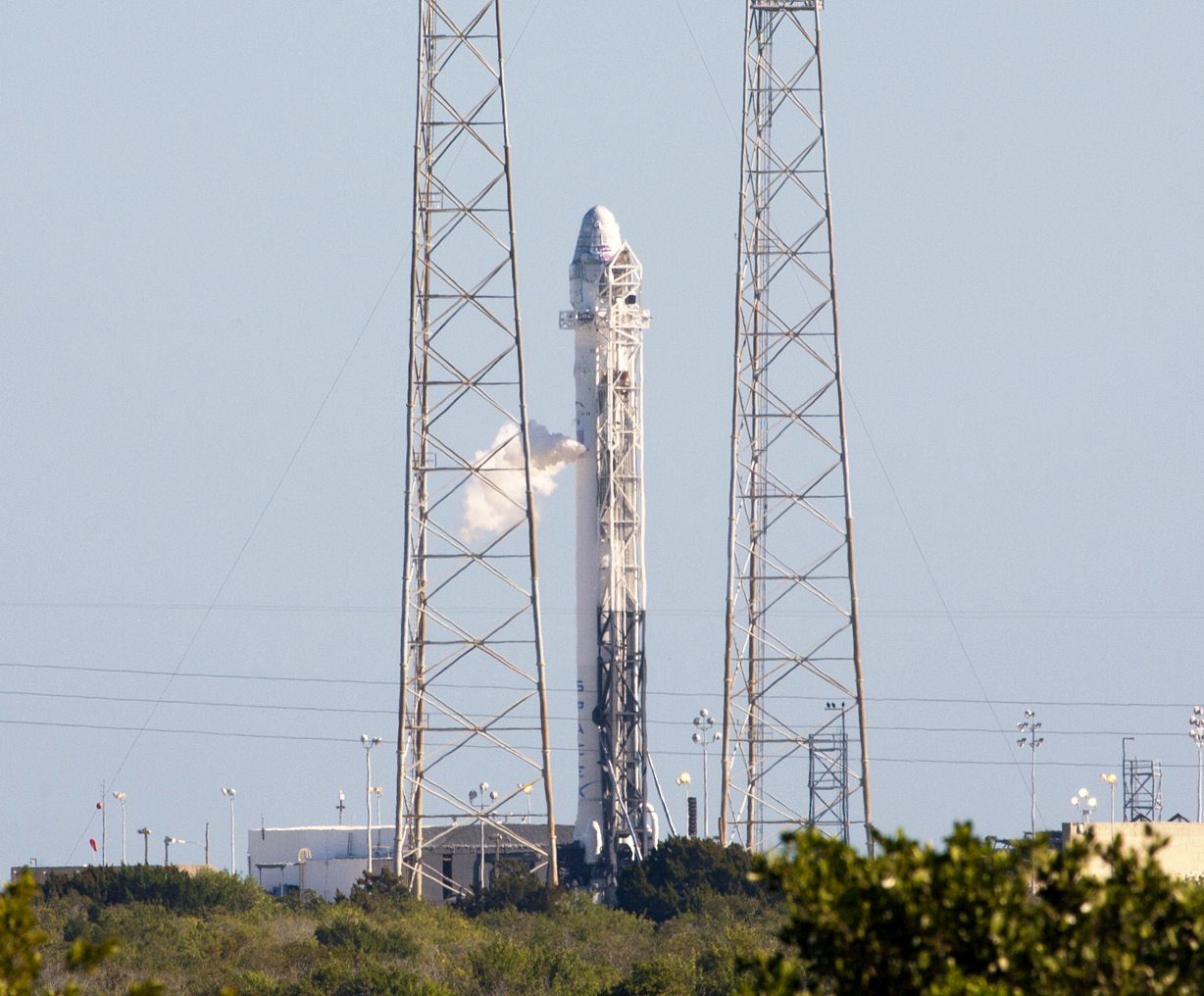
Preparation procedures for verifying carrier rocket performance
Launch vehicle system tests assess the readiness of a launch system to safely reach orbit. Launch vehicles undergo system tests before they launch. Wet dress rehearsals (WDR) and more extensive static fire tests prepare fully assembled launch vehicles and their associated ground support equipment (GSE) prior to launch. The spacecraft/payload may or may not be attached to the launch vehicle during the WDR or static fire, but sufficient elements of the rocket and all relevant ground support equipment are in place to help verify that the rocket is ready for flight.
Propellant load tests and static fire tests may also be done on prototype rocket stages, in which case no fully assembled launch vehicle is involved, as is the case of the SpaceX Starship stages, the booster Super Heavy and the second stage Starship.
Wet dress rehearsal
A wet dress rehearsal is called "wet" because the liquid propellant components (such as liquid oxygen, liquid hydrogen, etc.) are loaded into the rocket during the test. In a pure wet dress rehearsal the rocket engines are not ignited. Wet dress rehearsals may be used on production launch vehicles before each flight or on prototypes under development.
Static fire
A static fire test includes a wet dress rehearsal and adds the step of firing the engines at full thrust. and even twenty seconds, although shorter firings are more typical.
Use
Many launch service providers do not regularly perform wet dress rehearsals on new launch vehicles; some regularly perform wet dress rehearsals or even full static fire tests on the launch mount. For example, SpaceX typically performs a full static fire on every new booster before its first flight. They typically do not static fire reflown boosters unless they are to be used for a crewed launch. In January 2018, SpaceX did two wet dress rehearsals on the Zuma Falcon 9 mission, and conducted multiple wet dress rehearsals on the Falcon Heavy launch vehicle which had its maiden launch on 6 February 2018. Both were explicitly booked as wet dress rehearsals, but with the option to proceed to a static fire test. The second wet dress rehearsal on 24 January 2018 led to a full 12-second static fire test of the 27 engines of the Falcon Heavy — a much longer static fire test than the typical 3–7 second duration tests SpaceX uses for the Falcon 9.
Anomalies
Wet rehearsal and static fire tests can fail catastrophically, such as that which resulted in a pad explosion of a SpaceX Falcon 9 on September 1, 2016. The failure resulted from a major breach of the cryogenic helium system of the second stage during propellant-loading operations. The explosion destroyed the rocket and its payload - the AMOS-6 satellite. Furthermore, due to extensive fire, the SLC-40 launch pad was heavily damaged and had to be rebuilt.
Static fire test failures have resulted in the unintentional launch of the test vehicle. On June 6, 1952, Viking 8 broke loose of its moorings during a static fire test. After 55 seconds of flight, a command was sent to cut propulsion, and the rocket crashed 4 mi or 5 mi downrange. On June 30, 2024, during a static fire test of the first stage of the Space Pioneer Tianlong-3, a structural failure between the rocket and test stand resulted in an unintentional launch. The rocket landed and exploded in the nearby mountains.
References
References
- Harbaugh, Jennifer. (December 4, 2020). "NASA 'Go' for Green Run Wet Dress Rehearsal – Artemis".
- "GPS IIF-2 Wet Dress Rehearsal – SpacePod 2011.06.09".
- Ralph, Eric. (12 May 2020). "SpaceX's first high-flying, triple-Raptor Starship is almost finished". Teslarati.
- Chris Gebhardt. (24 January 2018). "Falcon Heavy comes to life as SpaceX conduct Static Fire test". NASASpaceFlight.com.
- Evans, Ben. (19 September 2015). "Firing Up the Shuttle: Looking Back at the Flight Readiness Firings". AmericaSpace.
- Chris Gebhardt. (12 January 2016). "SpaceX Falcon 9 v1.1 conducts static fire test ahead of Jason-3 mission". NASASpaceFlight.com.
- "SES-10 F9 static fire – SpaceX for history books & first core stage re-flight – NASASpaceFlight.com".
- Gebhardt, Chris. (2018-01-24). "Falcon Heavy comes to life as SpaceX conduct Static Fire test". [[NASASpaceFlight.com]].
- [http://www.latimes.com/business/la-fi-spacex-investigation-20160909-snap-story.html Elon Musk: Launch pad explosion is 'most difficult and complex' failure in SpaceX's 14 years] {{Webarchive. link. (2017-02-16 Los Angeles Times September 9, 2016)
- Etherington, Darrell. "SpaceX investigation suggests helium breach caused its Falcon 9 explosion".
- Hull, Dana. (2016-09-23). "SpaceX Sees Clue to Rocket Blast in Super-Chilled Helium Breach". Bloomberg.com.
- Milton W. Rosen. (1955). "The Viking Rocket Story". Harper & Brothers.
- Andrew Jones. (30 June 2024). "Wow. This is apparently what was supposed to be a STATIC FIRE TEST today of a Tianlong-3 first stage by China's Space Pioneer. That's catastrophic, not static. Firm was targeting an orbital launch in the coming months. https://m.weibo.cn/detail/5050998629862652".
- "关于天龙三号大型液体运载火箭一子级动力系统试车的情况说明".
This article was imported from Wikipedia and is available under the Creative Commons Attribution-ShareAlike 4.0 License. Content has been adapted to SurfDoc format. Original contributors can be found on the article history page.
Ask Mako anything about Launch vehicle system tests — get instant answers, deeper analysis, and related topics.
Research with MakoFree with your Surf account
Create a free account to save articles, ask Mako questions, and organize your research.
Sign up freeThis content may have been generated or modified by AI. CloudSurf Software LLC is not responsible for the accuracy, completeness, or reliability of AI-generated content. Always verify important information from primary sources.
Report