From Surf Wiki (app.surf) — the open knowledge base
Latin Emperor
Ruler of the Latin Empire (1204–61)
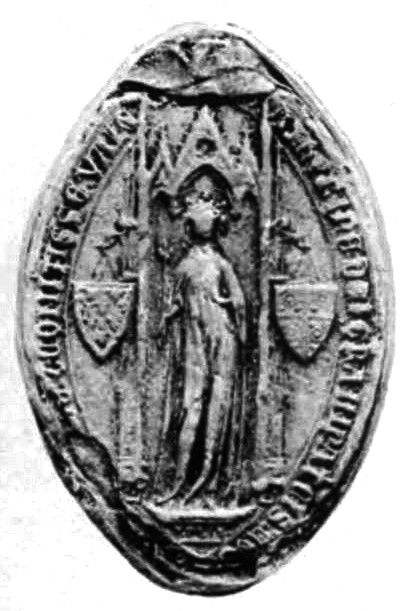
Ruler of the Latin Empire (1204–61)
| Field | Value |
|---|---|
| border | imperial |
| royal_title | Emperor |
| realm | Constantinople |
| coatofarms | Arms_of_Courtenay-Constantinople.svg |
| coatofarmscaption | Attributed arms (historically used by Philip of Courtenay) |
| image | Baldwinus2 Courtenay.jpg |
| caption | Last in office |
| Baldwin II | |
| Early 1228 – 24 July 1261 | |
| first_monarch | Baldwin I |
| last_monarch | Baldwin II |
| residence | Bucoleon Palace |
| began | 16 April 1204 |
| ended | 25 July 1261 |
Baldwin II Early 1228 – 24 July 1261
The Latin emperor was the ruler of the Latin Empire, the historiographical convention for the Crusader realm, established in Constantinople after the Fourth Crusade (1204) and lasting until the city was reconquered by the Byzantine Greeks in 1261. Its name derives from its Catholic and Western European ("Latin") nature. The empire, whose official name was Imperium Romaniae (Latin: "Empire of Romania"), claimed the direct heritage of the Eastern Roman Empire, which had most of its lands taken and partitioned by the crusaders. This claim however was disputed by the Byzantine Greek successor states, the Empire of Nicaea, the Empire of Trebizond and the Despotate of Epirus. Out of these three, the Nicaeans succeeded in displacing the Latin emperors in 1261 and restored the Eastern Roman (Byzantine) Empire.
Latin emperors of Constantinople, 1204–1261
| Portrait | Name | Reign | Succession | Life details | Dynasty |
|---|---|---|---|---|---|
| [[File:Baldwin I of Constantinople.jpg | alt=bust | frameless | 165x165px]] | Baldwin I | |
| Baudouin | 9 May 1204 – 14 April 1205 | ||||
| (11 months and 5 days) | Son of Baldwin V, Count of Hainaut and Margaret I, Countess of Flanders. Crowned emperor on 16 May 1204 in the Hagia Sophia | July 1172 – 1205/1206 | |||
| (aged 33–34)Married to Marie of Champagne (2 daughters). Captured by the Second Bulgarian Empire in the Battle of Adrianople; died in captivity. | [[File:Arms of Flanders.svg | frameless | 50x50px]] | ||
| House of Flanders | |||||
| [[File:Eppignoc.jpg | alt=bust | frameless | 104x104px]] | Henry | |
| Henri | 20 August 1206 – 11 June 1216 | ||||
| () | Brother of Baldwin I; ruled as regent until the news of his brother's death arrived to Constantinople | 1178 – 11 June 1216 | |||
| (aged 37–38)Married to Agnes of Montferrat and Maria of Bulgaria. Died of natural causes | [[File:Arms of Flanders.svg | frameless | 50x50px]] | ||
| House of Flanders | |||||
| [[File:Peter 2 of Courtenay.jpg | alt=bust | frameless | 117x117px]] | Peter | |
| Pierre | 1217 | ||||
| (Less than 1 year) | Brother-in-law of Baldwin I and Henry, son of Peter of Courtenay, also a cousin of king Philip II of France; crowned emperor in Rome by Pope Honorius III on 9 April 1217 | Married Yolanda of Flanders (10 children). Captured by the despot of Epirus, Theodore Komnenos Doukas in 1217; died in captivity some time after. | [[File:Blason maison fr de Courtenay.svg | frameless | 50x50px]] |
| House of Courtenay (Capet) | |||||
| [[File:Coat of Arms of the Latin Empire.svg | alt=bust | frameless | 95x95px]] | Yolanda | |
| Yolande | 1217 – August 1219 | ||||
| (2 years) | Daughter of Baldwin V, Count of Hainaut and wife of Emperor Peter | 1175 – August 1219 | |||
| (aged 44)Made an alliance with Theodore I Lascaris of the Empire of Nicaea. Died of natural causes. | [[File:Arms of Flanders.svg | frameless | 50x50px]] | ||
| House of Flanders | |||||
| Regency of Conon de Béthune (1219) and Giovanni Colonna (1220–1221) | |||||
| [[File:Coat of Arms of the Latin Empire.svg | alt=bust | frameless | 95x95px]] | Robert I | 25 May 1221 – early 1228 |
| (6 years) | Son of Emperor Peter and Yolanda, crowned emperor after an interregnum | Married Lady of Neuville. Died of natural causes in the Principality of Achaea while traveling back to Constantinople. | [[File:Blason maison fr de Courtenay.svg | frameless | 50x50px]] |
| House of Courtenay (Capet) | |||||
| [[File:Baldwinus2 Courtenay.jpg | alt=bust | frameless | 104x104px]] | Baldwin II | |
| Baudouin | early 1228 – 25 July 1261 | ||||
| (33 years) | |||||
| (; | |||||
| without Regency) | Son of Emperor Peter and Yolanda. Still a child in 1221, he ruled under John's regency until 23 March 1237 | late 1217 – October 1273 | |||
| (aged 56)Married Marie of Brienne (1 son). Fled during the Reconquest of Constantinople. | [[File:Blason maison fr de Courtenay.svg | frameless | 50x50px]] | ||
| House of Courtenay (Capet) | |||||
| [[File:JanBrienne (Cropped).jpg | alt=bust | frameless | 102x102px]] | John | |
| Jean | 9 April 1229 – 23 March 1237 | ||||
| () | Son of Erard II, Count of Brienne, and father-in-law of Baldwin II, crowned senior co-emperor and regent for Baldwin II | 1170 – 23 March 1237 | |||
| (aged 67)Married Stephanie of Armenia (1 son) and Berengaria of León (4 children). Only Latin emperor to die in Constantinople. | [[File:Coat of arms of the House of Brienne (Counts of Brienne).svg | frameless | 50x50px]] | ||
| Brienne |
Latin emperors of Constantinople in exile, 1261–1383
Latin Empire was disestablished in 1261, but Latin states in Greece, also known as Frankokratia, continued to recognize Latin emperors in exile as their overlords until 1383.
- Baldwin II (1261–1273), in exile from Constantinople
- Philip I (1273–1283), his son
- Empress suo jure Catherine I (1283–1307), his daughter, with
- Charles (1301–1307), her husband
- Empress suo jure Catherine II (1307–1346), their daughter, with
- Philip II (1313–1331), her husband
- Robert II (1346–1364), their son
- Philip III (1364–1373), his brother
- James (1373–1383), his nephew
James of Baux willed his titular claims to Duke Louis I of Anjou, also claimant to the throne of Naples, but Louis and his descendants never used the title. However, there was further activity in regards to the imperial prerogatives of Latin Emperors. Louis' widow Marie of Blois claimed Achaea before selling the claim to Juan Fernández de Heredia. In 1494 during his invasion of Naples, a new Capetian pretender King Charles VIII of France planned a crusade to claim Constantinople. While his Neapolitan claim from Louis' line, the claim on Constantinople came from Byzantine prince Andreas Palaiologos.
In 1396, King Ladislas of Naples sold the rights to the Principality of Achaea to Pedro de San Superano, the leader of the Navarrese Company, ending the principality's formal vassalage to the Angevins. Ultimately, Pedro did not have the funds to pay Ladislas, and through winning a family inheritance dispute that followed Peter's death in November 1402, Centurione II Zaccaria, a relative of Pedro (nephew of his wife) paid the owed sum, and became the new Prince of Achaea as per the original terms of the sale.
By acquiring the title, Centurione gained the automatic right to claim other Angevin interests in the region, including territories and feudal obligations associated with the Angevin Principality of Achaea. Centurione claimed the Latin imperial title "Despotus Romaniae" due to his possession of the principality, which was historically linked to the Angevin legacy and territorial claims, which included the Latin Empire. This title reflected his assertion of this new authority over regions that were part of the broader Angevin interest zone, which demonstrated his ambition to consolidate and expand his influence in the area.

These feudal claims exercised over the existing latin vassals of the once Latin Empire included the right to demand loyalty and tribute from the respective lords, such as the Counts of Cephalonia and Zakynthos, based on previous feudal contracts. one of whom, Carlo I Tocco simply usurped Centurione's title of "Despotus Romaniae" and also began to use it along with the similar but separate title of "Despotus Romeorum," which in fact was later confirmed by the Byzantine Emperor Manuel II Palaiologos.
References
Sources
References
- Will of James of Baux (in French) [https://www.persee.fr/doc/bec_0373-6237_1884_num_45_1_447243/ "Testament de Jacques de Tarente, dernier empereur de Constantinople, en faveur de Louis d'Anjou (15 juillet 1383)"]
- {{Setton-A History of the Crusades. Setton. Hazard. 1975-->
- Geanakoplos, Deno. (1975). "The Fourteenth and Fifteenth Centuries". Univ of Wisconsin Press.
This article was imported from Wikipedia and is available under the Creative Commons Attribution-ShareAlike 4.0 License. Content has been adapted to SurfDoc format. Original contributors can be found on the article history page.
Ask Mako anything about Latin Emperor — get instant answers, deeper analysis, and related topics.
Research with MakoFree with your Surf account
Create a free account to save articles, ask Mako questions, and organize your research.
Sign up freeThis content may have been generated or modified by AI. CloudSurf Software LLC is not responsible for the accuracy, completeness, or reliability of AI-generated content. Always verify important information from primary sources.
Report