From Surf Wiki (app.surf) — the open knowledge base
Latin Americans
Citizens of Latin American countries

Citizens of Latin American countries
| Field | Value |
|---|---|
| group | Latin Americans |
| image | Latin America (orthographic projection).svg |
| total | 680,000,000 |
| or more (in )Based on recent estimates, as of 2010. Sources by country: Australia Australian Bureau of Statistics 20680-Ancestry (full classification list) by Sex - Australia ; | |
| url | http://www12.statcan.ca/english/census06/data/highlights/ethnic/pages/Page.cfm?Lang=E&Geo=CMA&Code=01&Table=1&Data=Count&StartRec=1&Sort=2&Display=Page |
| title | Ethnocultural Portrait of Canada Highlight Tables, 2006 Census |
| access-date | 2008-05-10 |
| publisher | Statistics Canada |
| archive-date | 2008-05-07 |
| archive-url | https://web.archive.org/web/20080507053644/http://www12.statcan.ca/english/census06/data/highlights/ethnic/pages/Page.cfm?Lang=E&Geo=CMA&Code=01&Table=1&Data=Count&StartRec=1&Sort=2&Display=Page |
| url-status | dead |
| Sweden [http://www.statistikdatabasen.scb.se/pxweb/en/ssd/START__BE__BE0101__BE0101E/FodelselandArK/table/tableViewLayout1/?rxid | 86abd797-7854-4564-9150-c9b06ae3ab07c9b06ae3ab07] |
| Spain [http://www.ine.es/jaxi/tabla.do?path | /t20/e245/p04/a2007/l0/&file=00000010.px&type=pcaxis&L=0 INE], Revisión del Padrón municipal 2007. Datos a nivel nacional, comunidad autónoma y provincia. ; INE, Notas de Prensa 2008 ; |
| url | http://www.pewhispanic.org/2009/03/05/statistical-portrait-of-hispanics-in-the-united-states-2007/2007-portrait-of-hispanics-05/ |
| title | Detailed Hispanic Origin: 2007 |
| access-date | 2009-04-13 |
| format | |
| publisher | Pew Hispanic Center |
| archive-date | 2017-06-07 |
| archive-url | https://web.archive.org/web/20170607003825/http://www.pewhispanic.org/2009/03/05/statistical-portrait-of-hispanics-in-the-united-states-2007/2007-portrait-of-hispanics-05/ |
| url-status | dead |
| url | http://factfinder.census.gov/servlet/IPTable?_bm=y&-reg=ACS_2008_1YR_G00_S0201:519;ACS_2008_1YR_G00_S0201PR:519;ACS_2008_1YR_G00_S0201T:519;ACS_2008_1YR_G00_S0201TPR:519&-qr_name=ACS_2008_1YR_G00_S0201&-qr_name=ACS_2008_1YR_G00_S0201PR&-qr_name=ACS_2008_1YR_G00_S0201T&-qr_name=ACS_2008_1YR_G00_S0201TPR&-ds_name=ACS_2008_1YR_G00_&-TABLE_NAMEX=&-ci_type=A&-redoLog=true&-charIterations=414&-geo_id=01000US&-geo_id=NBSP&-format=&-_lang=en |
| title | United States - Selected Population Profile in the United States (Brazilian (360-364)) |
| work | 2008 American Community Survey 1-Year Estimates |
| access-date | 2010-03-16 |
| publisher | United States Census Bureau |
| archive-url | https://archive.today/20200212034619/http://factfinder.census.gov/servlet/IPTable?_bm=y&-reg=ACS_2008_1YR_G00_S0201:519;ACS_2008_1YR_G00_S0201PR:519;ACS_2008_1YR_G00_S0201T:519;ACS_2008_1YR_G00_S0201TPR:519&-qr_name=ACS_2008_1YR_G00_S0201&-qr_name=ACS_2008_1YR_G00_S0201PR&-qr_name=ACS_2008_1YR_G00_S0201T&-qr_name=ACS_2008_1YR_G00_S0201TPR&-ds_name=ACS_2008_1YR_G00_&-TABLE_NAMEX=&-ci_type=A&-redoLog=true&-charIterations=414&-geo_id=01000US&-geo_id=NBSP&-format=&-_lang=en |
| archive-date | 2020-02-12 |
| url-status | dead |
| regions | Latin America |
| 656,098,097 | |
| region1 | Brazil |
| pop1 | |
| region2 | Mexico |
| pop2 | |
| region3 | Colombia |
| pop3 | |
| region4 | Argentina |
| pop4 | |
| region5 | Peru |
| pop5 | |
| region6 | Venezuela |
| pop6 | |
| region7 | Chile |
| pop7 | |
| region8 | Guatemala |
| pop8 | |
| region9 | Ecuador |
| pop9 | |
| region10 | Bolivia |
| pop10 | |
| region11 | Haiti |
| pop11 | |
| region12 | Cuba |
| pop12 | |
| region13 | Dominican Republic |
| pop13 | |
| region14 | Honduras |
| pop14 | |
| region15 | Nicaragua |
| pop15 | |
| region16 | Paraguay |
| pop16 | |
| region17 | El Salvador |
| pop17 | |
| region18 | Costa Rica |
| pop18 | |
| region19 | Panama |
| pop19 | |
| region20 | Uruguay |
| pop20 | |
| region21 | Puerto Rico |
| pop21 | |
| region22 | Guadeloupe |
| pop22 | |
| region23 | Martinique |
| pop23 | |
| region24 | French Guiana |
| pop24 | |
| region25 | United States of America |
| pop25 | +62,000,000 |
| ref25 | |
| region26 | Spain |
| pop26 | + 4,600,000 |
| ref26 | |
| region27 | France |
| pop27 | 1,333,000 |
| ref27 | |
| region28 | Canada |
| pop28 | 580,235 |
| ref28 | |
| region29 | Italy |
| pop29 | 354,180 |
| ref29 | |
| region30 | Japan |
| pop30 | +345,000 |
| ref30 | |
| region31 | Germany |
| pop31 | 206,094 |
| ref31 | |
| region32 | United Kingdom |
| pop32 | 186,500 |
| ref32 | |
| region33 | Portugal |
| pop33 | ~100,000 |
| ref33 | |
| region34 | Australia |
| pop34 | 93,795 |
| ref34 | |
| region35 | Sweden |
| pop35 | 88,175 |
| ref35 | |
| region36 | New Zealand |
| pop36 | 38,742 |
| ref36 | |
| langs | Primarily Spanish and Portuguese |
| Regionally Quechua, Mayan languages, Guaraní, Aymara, Nahuatl and others | |
| rels |
or more (in )Based on recent estimates, as of 2010. Sources by country: Australia Australian Bureau of Statistics 20680-Ancestry (full classification list) by Sex - Australia ; Canada 2006 census {{cite web |access-date = 2008-05-10 |archive-date = 2008-05-07 |archive-url = https://web.archive.org/web/20080507053644/http://www12.statcan.ca/english/census06/data/highlights/ethnic/pages/Page.cfm?Lang=E&Geo=CMA&Code=01&Table=1&Data=Count&StartRec=1&Sort=2&Display=Page |url-status = dead Sweden http://www.statistikdatabasen.scb.se/pxweb/en/ssd/START__BE__BE0101__BE0101E/FodelselandArK/table/tableViewLayout1/?rxid=86abd797-7854-4564-9150-c9b06ae3ab07c9b06ae3ab07 Portugal POPULAÇÃO ESTRANGEIRA EM TERRITÓRIO NACIONAL, SERVIÇODE ESTRANGEIROS E FRONTEIRAS 2008; Spain INE, Revisión del Padrón municipal 2007. Datos a nivel nacional, comunidad autónoma y provincia. ; INE, Notas de Prensa 2008 ; USA (Self-identified ethnicity rather than birthplace) {{cite web |access-date = 2009-04-13 |archive-date = 2017-06-07 |archive-url = https://web.archive.org/web/20170607003825/http://www.pewhispanic.org/2009/03/05/statistical-portrait-of-hispanics-in-the-united-states-2007/2007-portrait-of-hispanics-05/ |url-status = dead |access-date = 2010-03-16 |archive-url = https://archive.today/20200212034619/http://factfinder.census.gov/servlet/IPTable?bm=y&-reg=ACS_2008_1YR_G00_S0201:519;ACS_2008_1YR_G00_S0201PR:519;ACS_2008_1YR_G00_S0201T:519;ACS_2008_1YR_G00_S0201TPR:519&-qr_name=ACS_2008_1YR_G00_S0201&-qr_name=ACS_2008_1YR_G00_S0201PR&-qr_name=ACS_2008_1YR_G00_S0201T&-qr_name=ACS_2008_1YR_G00_S0201TPR&-ds_name=ACS_2008_1YR_G00&-TABLE_NAMEX=&-ci_type=A&-redoLog=true&-charIterations=414&-geo_id=01000US&-geo_id=NBSP&-format=&-_lang=en |archive-date = 2020-02-12 |url-status = dead 656,098,097 Regionally Quechua, Mayan languages, Guaraní, Aymara, Nahuatl and others
Latin Americans (; ; ) are the citizens of Latin American countries, or people with cultural, ancestral or national origins in Latin America.
Latin American countries and their diasporas are multi-ethnic and multi-racial. Latin Americans are a pan-ethnicity consisting of people of different ethnic and national backgrounds. As a result, many Latin Americans do not take their nationality as an ethnicity, but identify themselves with a combination of their nationality, ethnicity and their ancestral origins. In addition to the indigenous population, Latin Americans include people with Old World ancestors who arrived since 1492. Latin America has the largest diasporas of Spaniards, Portuguese, Africans, Italians, Lebanese and Japanese in the world. The region also has large German (second largest after the United States), French, Palestinian (largest outside the Arab states), Chinese and Jewish diasporas.
The specific ethnic and/or racial composition varies from country to country and diaspora community to diaspora community: many have a predominance of mixed indigenous and European descent or mestizo, population; in others, Indigenous Amerindians are a majority; some are mostly inhabited by people of European ancestry; others are primarily mulatto. The largest single group are white Latin Americans. Together with the people of part European ancestry, they combine for almost the totality of the population.
Latin Americans and their descendants can be found almost everywhere in the world, particularly in densely populated urban areas. The most important migratory destinations for Latin Americans are found in the United States, Spain, France, Canada, Italy and Japan.
Definition
Main article: Latin America
Latin America ( or Latinoamérica; ; ) is the region of the Americas where Romance languages (i.e., those derived from Latin)—particularly Spanish and Portuguese, as well as French—are primarily spoken.
It includes 21 countries or territories: Mexico in North America; Guatemala, Honduras, El Salvador, Nicaragua, Costa Rica and Panama in Central America; Colombia, Venezuela, Ecuador, Peru, Bolivia, Brazil, Paraguay, Chile, Argentina and Uruguay in South America; and Cuba, Haiti, the Dominican Republic and Puerto Rico in the Caribbean—in summary, Hispanic America plus Brazil and Haiti. Canada and the United States, despite having sizeable Romance-speaking communities, are almost never included in the definition, primarily for being predominantly English-speaking Anglosphere countries. The ABC islands (Leeward Antilles), where the primary language is Papiamento, a Portuguese Creole, may or may not be considered part of Latin America.
Latin America, therefore, can be defined as all those parts of the Americas that were once part of the Spanish, Portuguese or French colonial empires, namely Spanish America, Colonial Brazil and New France.
Demographics
Ethnic and racial groups
Main article: Race and ethnicity in Latin America


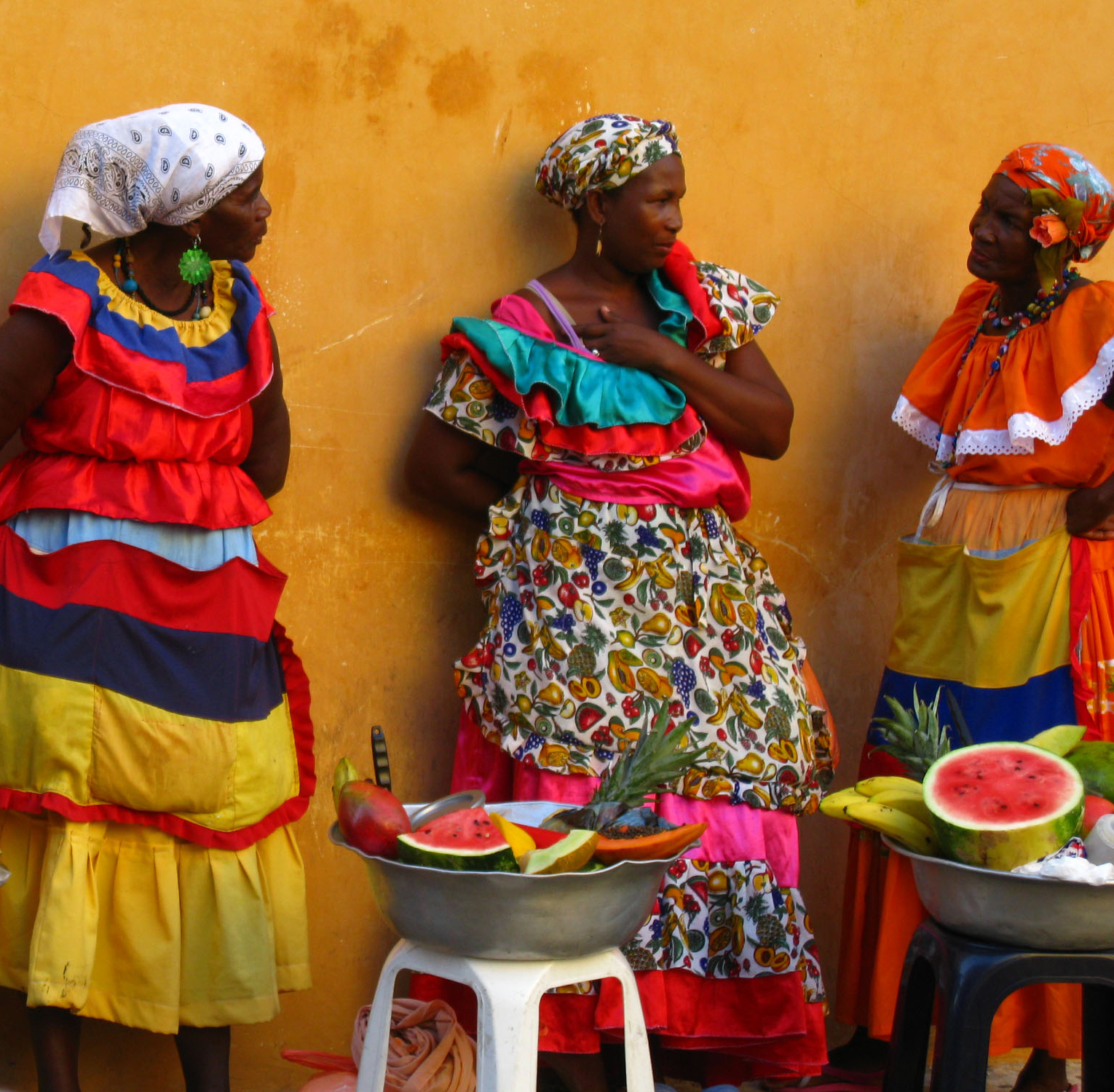


The population of Latin America comprises a variety of ancestries, ethnic groups and races, making the region one of the most diverse in the world. The specific composition varies from country to country: many have a predominance of mixed European and Amerindian, or mestizo, population; in others, Amerindians are a majority; some are dominated by inhabitants of European ancestry; and some countries' populations are primarily mulatto. White Latin Americans are the largest single group, accounting for more than one-third of the population. Black, Asian, and zambo (mixed black and Amerindian) minorities are also identified regularly.
- Mestizos: Intermixing between Europeans and Amerindians began early in the colonial period and was extensive. The resulting people, known as mestizos, make up the majority of the population in half of the countries of Latin America. Additionally, mestizos comprise large minorities in nearly all the other mainland countries.
- Whites: Beginning in the late 15th century, large numbers Of the millions of immigrants since most of Latin America gained independence in the 1810s–1820s, Italians formed the largest group, and next were Spaniards and Portuguese. Many others arrived, such as French, Germans, Greeks, Poles, Ukrainians, Russians, Croats, Serbs, Latvians, Lithuanians, English, Jews, Irish and Welsh. Most Latin Americans have some degree of European ancestry, when taking into account those of either mixed or full European descent.
- Amerindians: The indigenous population of Latin America arrived during the Lithic stage. In post-Columbian times, they experienced tremendous population decline, particularly in the early decades of colonization. They have since recovered in numbers, surpassing sixty million (by some estimates Mexico's 21% (9.8% in the official 2005 census) is the next largest ratio, and one of the largest indigenous population in the Americas in absolute numbers. Most of the remaining countries have Amerindians minorities, in every case making up less than one-tenth of the respective country's population. In many countries, people of mixed indigenous and European ancestry, known as mestizos, make up the majority of the population.
- Asians: People of Asian descent number several million in Latin America. The majority of Asian descendants in the country are either of West Asian (such as Lebanese or Syrian) or East Asian (like Chinese or Japanese) descent. The first Asians to settle in the region were Filipino, as a result of Spain's trade involving Asia and the Americas. The Brazilian Institute of Geography and Statistics states that the country's largest Asian communities are from West Asia and East Asia. It is estimated that 7 to 10 million Brazilians are of Lebanese descent. Around 2 million Brazilians self-identify as being "Yellow" (amarela or of East Asian descent) according to the 2010 census. The country is home to the largest ethnic Japanese community outside Japan itself, estimated as high as 1.5 million, and circa 200,000 ethnic Chinese and 100,000 ethnic Koreans. Ethnic Koreans also number tens of thousands of individuals in Argentina and Mexico. The 2017 census stated that under 40,000 Peruvians self-identified as having Chinese or Japanese ancestry. Though other estimates claim as much as 1.47 million people of East Asian descent reside in the country. Lebanese and Syrian descendants have also formed notable communities in countries like Mexico and Argentina. The Martiniquais population includes a mixed African, European and Amerindian descent, and an East Indian (Asian Indian) population is also present in Martinique. In Guadeloupe, an estimated 14% of the population is of East Asian descent.
- Mulattoes: Mulattoes are people of mixed European and African ancestry, mostly descended from Spanish, Portuguese, or French settlers on one side and African slaves on the other, during the colonial period. Brazil is home to Latin America's largest mulatto population. Mulattoes form a majority in the Dominican Republic and are also numerous in Cuba, Puerto Rico, Nicaragua, Panama, Peru, Colombia, and Ecuador. Smaller populations of mulattoes are found in other Latin American countries.
- Blacks: Millions of African slaves were brought to Latin America from the 16th century onward, most of whom were sent to the Caribbean region and Brazil. Today, people identified as "black" are most numerous in Brazil (more than 20 million) and in Haiti (more than 9 million). Significant populations are also found in Cuba, Dominican Republic, Puerto Rico, Panama and Colombia. Latin Americans of mixed black and white ancestry, called mulattoes, are far more numerous than blacks.
- Zambos: Intermixing between blacks and Amerindians was especially prevalent in Colombia and Brazil, often due to slaves running away (becoming cimarrones: maroons) and being taken in by indigenous villagers. In Spanish-speaking nations, people of this mixed ancestry are known as zambos, and they are also known as cafuzos in Brazil.
- Multi-ethnic/Multi-racials: In addition to the foregoing groups, Latin America also has millions of peoples who belong to multiracial backgrounds. PLEASE DO NOT MODIFY THIS TABLE EXCEPT IN ACCORDANCE WITH DISCUSSION. ALL OTHER MODIFICATIONS WILL BE REVERTED.
--
| Country | Population | Mestizos | Whites | Amerindians | Mulattoes | Blacks | Zambos | Asians | |||||
|---|---|---|---|---|---|---|---|---|---|---|---|---|---|
| Argentina | 11.1% | 85.0% | 1.0% | 0.0% | 0.0% | 0.0% | 2.9% | ||||||
| Bolivia | 28.0% | 15.0% | 55.0% | 2.0% | 0.0% | 0.0% | 0.0% | ||||||
| Brazil | 19.4% | 47.7% | 0.4% | 19.1% | 6.2% | 0.0% | url=ftp://ftp.ibge.gov.br/Censos/Censo_Demografico_2010/Caracteristicas_Gerais_Religiao_Deficiencia/tab1_2.pdf | title=Cor ou Raça | year=2010 | server=Censo Demográfico 2010: Características gerais da população, religião e pessoas com deficiência | url-status=dead | access-date=5 October 2013}} | |
| Chile | 44.0% | 53.0% | 3.0% | 0.0% | 0.0% | 0.0% | 0.0% | ||||||
| Colombia | 53.2% | 20.0% | 1.8% | 21% | 3.9% | 0.1% | 0.0% | ||||||
| Costa Rica | 15.0% | 82.0% | 0.8% | 0.0% | 0.0% | 2.0% | 0.2% | ||||||
| Cuba | 0.0% | 62.0% | 0.0% | 27.6% | 11.0% | 0.0% | 1.0% | ||||||
| Dominican Republic | 0.0% | 14.6% | 0.0% | 75.0% | 7.7% | 2.3% | 0.4% | ||||||
| Ecuador | 41.0% | 9.9% | 39.0% | 5.0% | 5.0% | 0.0% | 0.1% | ||||||
| El Salvador | 86.0% | 12.0% | 1.0% | 0.0% | 0.0% | 0.0% | 0.0% | ||||||
| Guatemala | 41.0% | 6.9% | 50.9% | 0.0% | 0.0% | 0.2% | 0.8% | ||||||
| Honduras | 85.1% | 1.9% | 7.7% | 1.6% | 0.0% | 3.9% | 0.7% | ||||||
| Mexico | 70% | 15% | 14% | 0.5% | 0.0% | 0.0% | 0.5% | ||||||
| Nicaragua | 69% | 17% | 5% | 6% | 3% | 0.6% | 0.2% | ||||||
| Panama | 32.0% | 10.0% | 8.0% | 27.0% | 5.0% | 14.0% | 4.0% | ||||||
| Paraguay | 90.5% | 3.5% | 1.5% | 3.5% | 0.0% | 0.0% | 0.5% | ||||||
| Peru | 32.0% | 12.0% | 45.5% | 9.7% | 0.0% | 0.0% | 0.8% | ||||||
| Puerto Rico | 3,285,874 | 2.3% | 17.1% | 0.5% | 10.5% | 7.0% | 0.0% | 0.1% | |||||
| Uruguay | 4.0% | 88.0% | 0.0% | 8.0% | 0.0% | 0.0% | 0.0% | ||||||
| Venezuela | 42.9% | 42.2% | 2.7% | 0.7% | 2.8% | 0.0% | 2.2% | ||||||
| Total | 635,457,371 | 30.3% | 36.1% | 9.2% | 20.3% | 3.2% | 0.2% | 0.7% |
Racial groups according to self-identification
The Latinobarómetro surveys have asked respondents in 18 Latin American countries what race they considered themselves to belong to. The figures shown below are averages for 2007 through 2011.
| Country | Mestizo | White | Amerindian | Mulatto | Black | Asian | Other | DK/NR1 | Weighted average2 | 34% | 33% | 11% | 8% | 6% | 0% | 2% | 7% | ||||||||||||||||
|---|---|---|---|---|---|---|---|---|---|---|---|---|---|---|---|---|---|---|---|---|---|---|---|---|---|---|---|---|---|---|---|---|---|
| Argentina | 15% | ||||||||||||||||||||||||||||||||
| Bolivia | 40% | ||||||||||||||||||||||||||||||||
| Brazil | 18% | ||||||||||||||||||||||||||||||||
| Chile | 26% | ||||||||||||||||||||||||||||||||
| Colombia | 43% | ||||||||||||||||||||||||||||||||
| Costa Rica | 16% | ||||||||||||||||||||||||||||||||
| Dominican Republic | 28% | ||||||||||||||||||||||||||||||||
| Ecuador | 78% | ||||||||||||||||||||||||||||||||
| El Salvador | 62% | ||||||||||||||||||||||||||||||||
| Guatemala | 29% | ||||||||||||||||||||||||||||||||
| Honduras | 61% | ||||||||||||||||||||||||||||||||
| Mexico | 60% | ||||||||||||||||||||||||||||||||
| Nicaragua | 54% | ||||||||||||||||||||||||||||||||
| Panama | 55% | ||||||||||||||||||||||||||||||||
| Paraguay | 36% | ||||||||||||||||||||||||||||||||
| Peru | 72% | ||||||||||||||||||||||||||||||||
| Uruguay | 6% | ||||||||||||||||||||||||||||||||
| Venezuela | 45% |
1 Don't know/No response.
2 Weighted using 2011 population.
Language
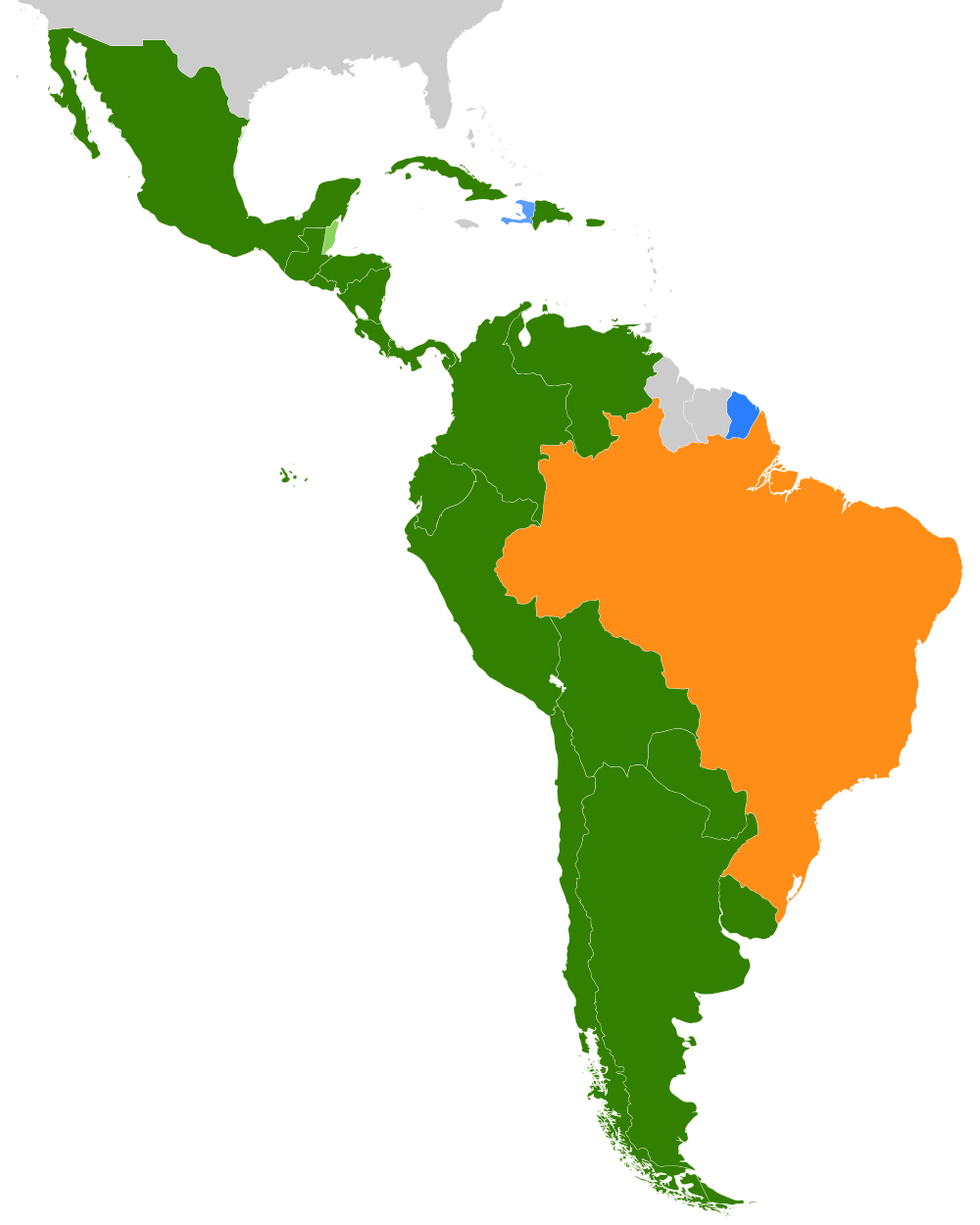
Spanish and Portuguese are the predominant languages of Latin America. Spanish is the official language of most of the countries on the Latin American mainland, as well as in Puerto Rico (where it is co-official with English), Cuba and the Dominican Republic. Portuguese is spoken only in Brazil, the biggest and most populous country in the region. French is spoken in Haiti, as well as in the French overseas departments of French Guiana in South America and Guadeloupe and Martinique in the Caribbean. Dutch is the official language of some Caribbean islands and in Suriname on the continent; however, as Dutch is a Germanic language, these territories are not considered part of Latin America.
Indigenous languages are widely spoken in Peru, Guatemala, Bolivia and Paraguay, and, to a lesser degree, in Mexico, Chile and Ecuador. In Latin American countries not named above, the population of speakers of indigenous languages is small or non-existent.
In Peru, Quechua is an official language, alongside Spanish and any other indigenous language in the areas where they predominate. In Ecuador, while holding no official status, the closely related Quichua is a recognized language of the indigenous people under the country's constitution; however, it is only spoken by a few groups in the country's highlands. In Bolivia, Aymara, Quechua and Guaraní hold official status alongside Spanish. Guarani is, along with Spanish, an official language of Paraguay, and is spoken by a majority of the population (who are, for the most part, bilingual), and it is co-official with Spanish in the Argentine province of Corrientes. In Nicaragua, Spanish is the official language, but, on the country's Caribbean coast English and indigenous languages such as Miskito, Sumo, and Rama also hold official status. Colombia recognizes all indigenous languages spoken within its territory as official, though fewer than 1% of its population are native speakers of these. Nahuatl is one of the 62 native languages spoken by indigenous people in Mexico that are officially recognized by the government as "national languages" along with Spanish.
Other European languages spoken in Latin America include: English, by some groups in Argentina, Chile, Costa Rica, Nicaragua, Panama and Puerto Rico, as well as in nearby countries that may or may not be considered Latin American, such as Belize and Guyana; English is also used as a major foreign language in Latin American commerce and education. Other languages spoken in parts of Latin America include German in southern Brazil, southern Chile, Argentina, portions of northern Venezuela and Paraguay; Italian in Brazil, Argentina, Uruguay and Venezuela; Polish, Ukrainian and Russian in southern Brazil; and Welsh in southern Argentina. Hebrew and Yiddish are used by Jewish diasporas in Argentina and Brazil.
In several nations, especially in the Caribbean region, creole languages are spoken. The most widely spoken creole language in the Caribbean and Latin America in general is Haitian Creole, the predominant language of Haiti; it is derived primarily from French and certain West African tongues with indigenous, English, Portuguese and Spanish influences as well. The other most spoken Creole is Antillean Creole French that is primarily spoken in the Lesser Antilles. It is a French-based creole, that is the local language spoken among the natives of the Caribbean islands of Saint Lucia and Dominica and also in Martinique and Guadeloupe. Creole languages of mainland Latin America, similarly, are derived from European languages and various African tongues.
Religion
Main article: Religion in Latin America

The vast majority of Latin Americans are Christians (90%), mostly Roman Catholics. About 71% of the Latin American population consider themselves Catholic. Membership in Protestant denominations is increasing, particularly in Brazil, Guatemala and Puerto Rico. Argentina hosts the largest communities of both Jews and Muslims in Latin America. Indigenous religions and rituals are practiced in countries with large indigenous populations, especially Bolivia, Guatemala, Mexico and Peru, and Afro-Latin American religions such as Santería, Candomblé, Umbanda, Macumba and Vodou are practiced in countries with large Afro-Latin American populations, especially Cuba, Brazil, Dominican Republic and Haiti. Latin America constitutes, in absolute terms, the world's second largest Christian population, after Europe.
Migration
United States
According to the 2005 Colombian census or DANE, about 3,331,107 Colombians currently live abroad. The number of Brazilians living overseas is estimated at 2 million people. An estimated 1.5 to two million Salvadorians reside in the United States. At least 1.5 million Ecuadorians have gone abroad, mainly to the United States and Spain. Approximately 1.5 million Dominicans live abroad, mostly in the United States. More than 1.3 million Cubans live abroad, most of them in the United States. It is estimated that over 800,000 Chileans live abroad, mainly in Argentina, Canada, United States and Spain. Other Chilean nationals may be located in countries like Costa Rica, Mexico and Sweden. An estimated 700,000 Bolivians were living in Argentina as of 2006 and another 33,000 in the United States. Central Americans living abroad in 2005 were 3,314,300, of which 1,128,701 were Salvadorans, 685,713 were Guatemalans, 683,520 were Nicaraguans, 414,955 were Hondurans, 215,240 were Panamanians and 127,061 were Costa Rica.
As of 2006, Costa Rica and Chile were the only two countries with global positive migration rates. Spanish colonial era censuses meanwhile show that Mexicans and Peruvians composed 2.33% of the Philippines population during the 1600s.
Notable Latin Americans
Main article: List of Latin Americans
References
References
- "Detailed Hispanic Origin: 2007". [[Pew Research Center.
- "United States - Selected Population Profile in the United States (Brazilian (360-364))". [[United States Census Bureau]].
- [https://www.ine.es/jaxiT3/Datos.htm?t=56937], [[Spanish National Statistics Institute]] press report. (Spanish)
- "Population des régions et taux d'évolution de la population".
- "List of countries in Latin America". The Editors of Encyclopaedia Britannica.
- "Measuring the Latin American population in Canada – why is it important?".
- "E' latinoamericano il 7,7% della popolazione straniera in Italia. In testa il Perù {{!".
- "Registered Foreigners in Japan by Nationality". Statistics Bureau.
- "Alemania - Emigrantes totales".
- "No Longer Invisible: The Latin American community in London". Trust for London.
- [http://www.sef.pt/documentos/56/DADOS_2007.pdf POPULAÇÃO ESTRANGEIRA EM TERRITÓRIO NACIONAL, SERVIÇO DE ESTRANGEIROS E FRONTEIRAS] 2008;
- "Redirect to Census data page". abs.gov.au.
- "Population by country of birth, age and sex. Year 2000 - 2020".
- "2023 Census population counts (by ethnic group, age, and Māori descent) and dwelling counts {{!}} Stats NZ".
- (13 November 2014). "Religion in Latin America".
- Pozzetta, George E., Bruno Ramirez and Robert F. Harney. The Italian Diaspora: Migration across the Globe. Toronto: Multicultural History Society of Ontario, 1992.
- King, Russell. (1978-01-01). "Report: The Italian Diaspora". Area.
- (2009). "Fact Sheet 3. Brazil - the Country and its People". Embassy of Brazil in London - Schools' Pack, Brazil 2009.
- Wilhelm Bleek. (2003). "Auslandsdeutsche". German Federal Agency for Civic Education.
- (1 February 2014). "Palestinians in Latin America: Between Assimilation and Long-Distance Nationalism". Journal of Palestine Studies.
- (15 July 2001). "América Latina".
- Colburn, Forrest D. (2002). "Latin America at the End of Politics". [[Princeton University Press]].
- "Latin America."''[[Oxford Dictionary of English. The New Oxford Dictionary of English]]''. Pearsall, J., ed. 2001. Oxford, UK: Oxford University Press; p. 1040: "The parts of the [[Americas. American continent]] where Spanish or Portuguese is the main national language (i.e.[[Mexico]] and, in effect, the whole of [[Central America. Central]] and [[South America]] including many of the [[Caribbean]] islands)."
- "Language and education in Aruba, Bonaire and Curaçao".
- Rangel, Carlos. (1977). "The Latin Americans: Their Love-Hate Relationship with the United States". Harcourt Brace Jovanovich.
- Gordon A. Bridger. (2013). "Britain and the Making of Argentina". WIT Press.
- Departamento de Derecho y Ciencias Políticas de la [[National University of La Matanza. (14 November 2011). "Historias de inmigrantes italianos en Argentina". infouniversidades.siu.edu.ar.
- "CIA — The World Factbook -- Field Listing — Ethnic groups".
- "South America :: Postindependence overseas immigrants".
- (June 2016). "Latinoamérica".
- "Census data".
- Lizcano Fernández, Francisco. "Composición Étnica de las Tres Áreas Culturales del Continente Americano al Comienzo del Siglo XXI". Universidad Autónoma del Estado de México.
- "Caracteristicas Etnico-raciais da Populacao Classificacoes e identidades".
- "Brazilian Ministry of Foreign Affaires".
- (1996). "Lebanon: Geography". Embassy of Lebanon in Brazil.
- (8 November 2011). "Censo Demográfi co 2010 Características da população e dos domicílios Resultados do universo".
- Shoji, Rafael. (2004). "Reinterpretação do Budismo Chinês e Coreano no Brasil". Revista de Estudos da Religião.
- "Japan-Brazil Relations". Ministry of Foreign Affairs of Japan.
- (2009). "재외동포현황/Current Status of Overseas Compatriots". Ministry of Foreign Affairs and Trade.
- "Perú: Perfil Sociodemográfico".
- (2004-08-24). ":: Overseas Compatriot Affairs Commission, R.O.C. ::". Ocac.gov.tw.
- "DESAFIOS-QUE-NOS-ACERCAN — Noticias — Universia Perú". Univeria.edu.pe.
- "Recopilaron casi 200 años de los sirio libaneses en Argentina". El Independiente.
- (2003). "The World Factbook". CIA.
- "La trata de negros".
- [https://web.archive.org/web/20110514000352/http://www.washingtonpost.com/ac2/wp-dyn?pagename=article&node=&contentId=A61891-2002Dec1%C2%ACFound%3Dtrue Stranded in Paradise: Shipwrecked Hundreds of Years Ago, the Garifuna Are Still Trying to Find Their Way] by Teresa Wiltz, The Washington Post.
- Lizcano Fernández, Francisco. (May–August 2005). "Composición Étnica de las Tres Áreas Culturales del Continente Americano al Comienzo del Siglo XXI". [[Universidad Autónoma del Estado de México]], Centro de Investigación en Ciencias Sociales y Humanidades.
- (2010). "Cor ou Raça".
- "Puerto Rico Population Declined 11.8% From 2010 to 2020".
- [http://www.latinobarometro.org/ Informe Latinobarómetro], [[Latinobarómetro]].
- Not Panicking Ltd. (21 November 2011). "h2g2 - Y Wladfa - The Welsh in Patagonia - Edited Entry". bbc.co.uk.
- "The Welsh Immigration to Argentina". 1stclassargentina.com.
- Jeremy Howat. "Opening page: The Welsh in Patagonia". argbrit.org.
- "Gaiman, Trelew y Rawson". patagonline.com.
- "Y Wladfa - Patagonia". andesceltig.com.
- "Reference for Welsh language in southern Argentina, Welsh immigration to Patagonia".
- (18 December 2012). "Christians". Pew Research Center's Religion & Public Life Project.
- "CIA — The World Factbook -- Field Listing — Religions".
- Fraser, Barbara J., [http://webarchive.loc.gov/all/20050628212330/http://www.catholicnews.com/data/stories/cns/0503707.htm In Latin America, Catholics down, church's credibility up, poll says] Catholic News Service June 23, 2005
- LeElef, Ner. "World Jewish Population".
- "The Jewish People Policy Planning Institute; Annual Assessment, 2007".
- "United Jewish Communities; Global Jewish Populations".
- "Argentina". U.S. Department of State.
- (19 September 2008). "Argentina". U.S. Department of State.
- (17 March 2005). "BBC Mundo - A fondo - Árabes y musulmanes en América Latina". bbc.co.uk.
- "The Global Religious Landscape". Pewforum.org.
- "Peter Stalker".
- "Brasileiros no Exterior — Portal da Câmara dos Deputados".
- [http://www.usaid.gov/sv/country.html Country Overview: El Salvador] {{webarchive. link. (January 1, 2010 , United States Agency for International Development)
- [https://web.archive.org/web/20071228044616/http://www.forbes.com/business/forbes/2008/0107/112.html Chavistas in Quito], Forbes.com, January 7, 2008
- "Dominican Republic: Remittances for Development". ipsnews.net.
- [http://www.radiojamaica.com/index.php?option=com_content&task=view&id=6572&Itemid=87 Cubans Abroad], Radiojamaica.com
- [http://www.migrationinformation.org/Profiles/display.cfm?ID=199 Chile: Moving Towards a Migration Policy], Migration Information Source
- "South America: Brazil, Mercosur - Migration News - Migration Dialogue". ucdavis.edu.
- "Prospects - Migration and Remittances Factbook 2011". worldbank.org.
- (2006). "Latin America & Caribbean (ElSalvador)". World Bank.
- (2006). "Latin America & Caribbean (Guatemala)". World Bank.
- (2006). "Latin America & Caribbean (Nicaragua)". World Bank.
- (2006). "Latin America & Caribbean (Honduras)". World Bank.
- (2006). "Latin America & Caribbean (Panama)". World Bank.
- (2006). "Latin America & Caribbean (CostaRica)". World Bank.
- "United Nations Population Division".
- [https://books.google.com/books?id=67xO2hUwzasC&dq=Friar+Manuel+Buzeta+1,502,574&pg=PR12 "The Unlucky Country The Republic of the Philippines in the 21st Century" By Duncan Alexander McKenzie (2012)(page xii)]
- Garcia, María Fernanda. (1998). "Forzados y reclutas: los criollos novohispanos en Asia (1756-1808)". Bolotin Archivo General de la Nación.
This article was imported from Wikipedia and is available under the Creative Commons Attribution-ShareAlike 4.0 License. Content has been adapted to SurfDoc format. Original contributors can be found on the article history page.
Ask Mako anything about Latin Americans — get instant answers, deeper analysis, and related topics.
Research with MakoFree with your Surf account
Create a free account to save articles, ask Mako questions, and organize your research.
Sign up freeThis content may have been generated or modified by AI. CloudSurf Software LLC is not responsible for the accuracy, completeness, or reliability of AI-generated content. Always verify important information from primary sources.
Report