From Surf Wiki (app.surf) — the open knowledge base
Lap dance
Type of erotic dance
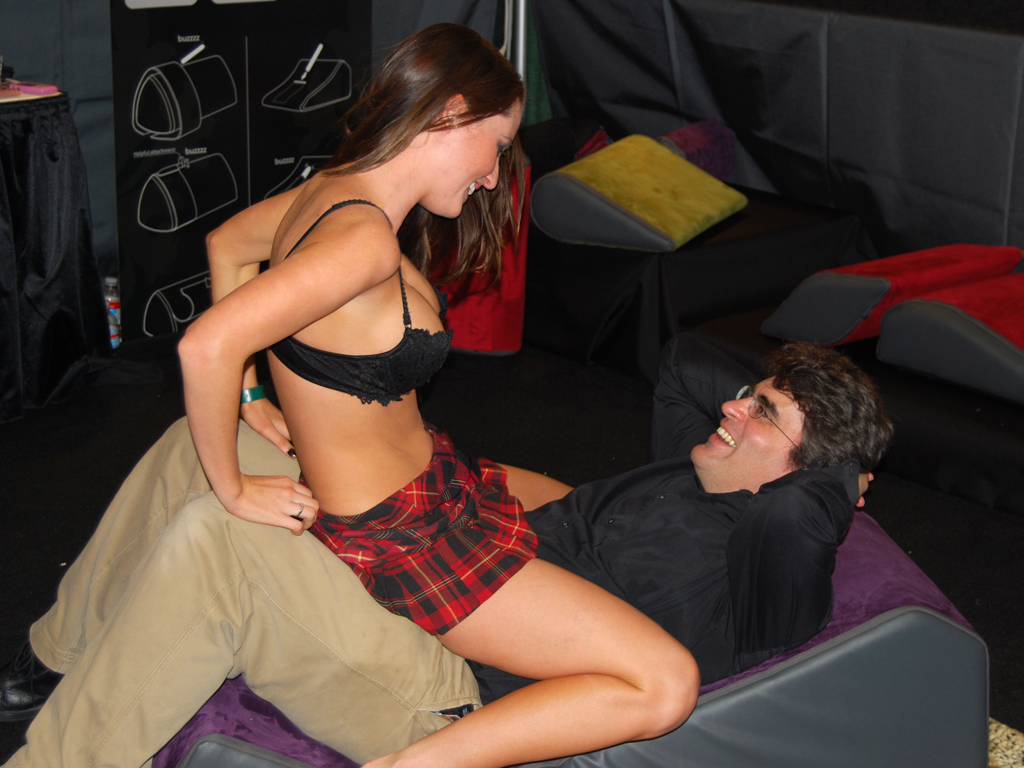
Type of erotic dance
A lap dance (or contact dance) is a type of erotic dance performance offered in many strip clubs in which the dancer typically has body contact with a seated patron. Lap dancing is different from table dancing, in which the dancer is close to a seated patron, but without body contact. Variant terms include couch dance, which is a lap dance where the recipient is seated on a couch.
With full-contact lap dances, the dancer may engage in non-penetrative sexual contact with the patron, such as "grinding" or "twerking" their body against the patron. Depending on the local jurisdiction and community standards, the participants in lap dancing are sometimes allowed to touch or be touched by each other. In some clubs any touching by the patron is forbidden. In others there is no oversight by the club and various levels of contact are negotiable between the participants. Clubs vary widely with regard to their enforcement of rules, and some turn a blind eye to any violations.
Lap dancing usually occurs with both participants being either clothed to more or less the same degree, or naked, or the dancer being partially or fully naked, depending on the laws of the jurisdiction and the club's policies. Some jurisdictions require a prohibition on alcohol if various degrees of nudity are allowed. In other jurisdictions nudity is only allowed where skin contact does not occur between the dancer and the patron, requiring at least one of them to wear clothing. Where specific licensing exists for an establishment to allow prostitution, the dress requirements may also be dependent on that licensing. As the dancer is rarely dressed to a greater degree than the patron, lap dancing is sometimes seen as a submissive act by the dancer.
In some places, a "block session" of lap dances (usually half an hour to an hour) can be booked in a "champagne room" or "VIP room", which is a private room usually located in the back of a club. In many clubs, the duration of a lap dance is measured by the length of the song being played by the club's DJ. Charges for lap dances vary significantly.
Controversy
There is some debate as to whether lap dancing is entertainment or a type of sex work. Critics of lap dancing allege that some club owners, by installing dark private booths and charging dancers steep stage fees, are covertly condoning and encouraging the sale of sexual acts between customers and dancers. This can be a concern if, as for instance in the United Kingdom, the club has a public entertainment licence rather than a sex establishment licence, and in jurisdictions where brothels are illegal.
History and legal issues

Lap dancing clubs, are a later development of earlier strip clubs, where strippers danced on stage and were paid a wage. In the 1970s, New York's Melody Theater introduced audience participation and called it "Mardi Gras". The Melody Theater became the Harmony Theater and operated in two locations in Manhattan for over 20 years until it was closed down in 1998.
Also during the 1970s, adult film makers Jim and Artie Mitchell had been running an adult movie house, called the O'Farrell Theatre, in San Francisco to feature their films. But in the second half of the 1970s, with the invention of the videocassette recorder and a proliferation of video cassette rental stores, the demand for adult movie theaters began to plummet. Realizing that they needed a new business model for their building, the Mitchell brothers sent manager Vince Stanich around the country to explore customer-contact shows in sex clubs. After Stanich reported back, the Mitchell brothers responded in 1977 by opening three new rooms at their O'Farrell Theatre featuring customer-contact shows: The Ultra Room, The Kopenhagen, and New York Live. The Kopenhagen's shows were performed by a pair of naked women in a small room with about twenty men. However the club's most profitable new venue was New York Live, which was a cabaret-style strip club act with women dancing three song sets upon a stage, while usually being totally nude for the final song.
Most of the strippers who were not dancing were sitting naked on customers' laps for tips. The amount of tipping rapidly increased and was then marketed as a "lap dance", and its popularity caused lines of men to regularly appear outside the theater's doors. The Mitchells hired new dancers as fast as they could to keep up with demand, and had created another sex-show innovation which gained them international notoriety and generated more money than their film business.
Later in 2004, a San Francisco District Attorney's decision to drop prostitution charges against lap dancers in the city changed the sexual culture of San Francisco and "has the potential to influence the policies of other cities".
In some areas of the U.S. and Canada, local authorities began cracking down on lap dancing after reports that some clubs allowed customers to engage in sexual intercourse or other sexual activity with dancers during lap dance sessions. Various strip clubs have wide-ranging rules on how customers should interact with strippers.
Canada
In 1973, an upmarket Vancouver bar called "Gary Taylor's Show Lounge" employed showgirls and strippers as waitresses who gave a free dance with every drink. The club was raided by the police under the guise of obscenity legislation, but, in 1974, Judge Jack McGivern ruled that dancer nudity was not obscene, which started a trend of nude dancing in bars. No contact between dancers and patrons was allowed at the club, but Gary Taylor's had a boxing ring where the girls performed revealing acrobatics after stripping off and then earned tips. Americans from Washington state made the trip to the club from the United States, which at the time had stricter laws.
In a landmark ruling regarding the 1994 case of Pat Mara and Allan East (the owner and manager of Cheaters Tavern), Judge E. Gordon Hachborn legally defined lap dancing and ruled that it did not contravene Canadian public decency statutes. A number of conflicting judgements were issued in the years that followed, including decisions to close certain bars in which sex acts took place on the floor of the club and other rulings in which patrons were allowed to touch the dancers, as long as an actual sex act did not take place.
In 1999, the Supreme Court of Canada ruled that a typical lap dance did not constitute an "obscene" act within the meaning of the Criminal Code. The Crown did not argue that lap dances constituted "prostitution", and therefore the court did not address the possible issue that the typical lap dance may contravene one or more anti-prostitution laws. This led to the displacement of strip clubs and table dancing clubs in Canada by lap dancing clubs.
In 2005, two Supreme Court of Canada rulings (R. v. Labaye and R. v. Kouri) decriminalized private sex clubs in Canada.
On 20 December 2013, (in Bedford v. Canada) the Supreme Court of Canada found the laws prohibiting brothels, public communication for the purpose of prostitution, and living on the profits of prostitution to be unconstitutional. The ruling gave the Canadian parliament twelve months to rewrite Canada's prostitution laws; in the meantime, existing anti-prostitution laws continued to be enforced. Current laws on prostitution in Canada, introduced in 2014, make it illegal to purchase sexual services (including lap dancing) but legal to sell them.
Ireland
In the early 2000s, lap dancing expanded rapidly in the Republic of Ireland, building on an existing strip pub industry. A number of lap-dancing clubs were opened in Dublin, including one by the English nightclub owner Peter Stringfellow. Lap-dancing clubs were also opened across the country. Many of Ireland's lap-dancing clubs have subsequently closed as a result of the worsened economic climate and changes to Ireland's licensing laws in 2008. Reputational issues have also played a part in the decline of Ireland's lap-dancing clubs.
Police raids took place on Irish lap-dancing clubs in 2003 in search of criminal activity as part of Operation Quest. Efforts to distance Irish lap dancing from the sex industry were hampered by the UK's decision in 2010 to classify its lap dancing clubs as sex establishments. Ireland's lap-dancing clubs became viewed as more expensive than their rivals overseas and more restricted in terms of the entertainment on offer. By 2012 there were five or six clubs operating in Dublin, one in Galway and one in Cork. Most lap-dancing clubs in Ireland operate a no-touching rule, and typically do not charge dancers a "house fee" to perform, instead taking a proportion of the dancer's earnings.
United Kingdom
The first lap dancing club in the UK was opened in 1995. During the 2000s the lap dancing industry grew quickly, with the Licensing Act 2003 as the only legislation in England and Wales regulating lap dancing clubs. and officially launched in 2008. It operated a code of practice for its members. According to a BBC report, as of November 2008, the association represented roughly one-third of the industry's clubs. Members included For Your Eyes Only, Spearmint Rhino, Bandit Queen and Candy Bar. In 2008, clubs were being opened at a rate of about one per week.
In April 2008 the LDA proposed that its code of conduct should become legally enforceable by local authorities as part of their licensing function. and For Your Eyes Only and who was the president of the LDA In 2009, Three MPs undertook a fact-finding visit to a London lap dancing club at the invitation of the LDA. The association opposed the provisions of the subsequent Policing and Crime Act 2009 which reclassified lap-dancing clubs in England and Wales as "sexual entertainment venues" instead of "entertainment venues", introduced a licensing system for clubs and allowed local authorities to decide the number and location of lap-dancing clubs in their area. Chris Knight, vice-chairman of the LDA, said that the cost of the additional licence required to run a lap dancing club from 2010 could affect many businesses and questioned the right of local authorities to make licensing decisions on "emotive and moralistic grounds".
In 2009, the total number of clubs had reached its peak of 310 (approximately twice the number in 2003), and the number of lap-dancers was estimated at 10,000. Lap-dancing clubs had opened in big cities, small towns, and out-of-town business parks.
Between 2010 and 2015, there were approximately forty-five refusals of licences for sexual entertainment venues in England and Wales, mainly on the grounds that the locality was unsuitable. The legislation provides for no right of appeal against such refusals, except on the grounds that committees have not followed correct procedure. The number of refusals, together with the costs of licence application, means that there have been few new businesses opened since 2010, with the overall number of clubs declining over time as a number of local authorities implemented a "nil limit" for new clubs.
In February 2014, Fiona Mactaggart (MP for Slough) asked the Secretary of State for Work and Pensions, Iain Duncan Smith, if he would "make it his policy not to offer job subsidies for employing teenagers as auxiliary workers in adult entertainment establishments". Her question related to employers in the adult entertainment industry being offered an incentive of over £2,000 from the Department for Work and Pensions for every unemployed young person (aged 18–24) that they hired. Esther McVey, the Minister of State for Employment, stated that: "The Welfare Reform Act 2012 ensured that vacancies which involve performing sexual activities were banned from being advertised on Government websites and a distinction was made in law to differentiate between performers and ancillary workers."
Scotland
In 2005 Tom McCabe MSP set up the Adult Entertainment Working Group, an advisory body within the Scottish Government, to investigate the legislative issues involved in a proposed lap dancing ban in Scotland. At that time, lap dancing clubs in Scotland were licensed under Section 41 of the Civic Government (Scotland) Act 1982, which covers general entertainment licenses, and licences in Scotland could not be refused on the basis of the nature of the entertainment in itself. The working group, headed by Linda Costelloe Baker, consisted of academics, lawyers and politicians, and had a working period from April 2005 until April 2006. It commissioned the market research organisation Ipsos MORI to examine the public's attitudes towards adult entertainment, completed site visits and took evidence from a variety of witnesses. Respondents to the group's consultation included the Church of Scotland. The group reported to Scottish ministers on 25 April 2006.
The group concluded that lap dancing venues are a form of "commercial sexual exploitation...which encompasses pornography, internet sex chat rooms, sex phone lines, escort services, prostitution, trafficking for prostitution, peep shows, lap dancing, pole dancing, table dancing and stripping". It recommended reviewing the licensing of lap dancing venues and proposed national guidelines to prevent performers from touching or being touched by customers, ensuring that activities are visible at all times, and introducing a minimum age of 18 for everyone involved. A prominent voice of opposition to a lap dancing ban was exotic dancer Veronica Deneuve who set out to try to involve the stripping community in the discussion to inform such legislation. The International Union of Sex Workers said that the "recommendations are flawed and would be extremely detrimental to workers and operators in the industry".
The Scottish Government accepted a number of the recommendations, but it rejected the idea that licensing boards should be able to determine whether full nudity is appropriate in given locales. It also rejected the idea of a compulsory one-metre no-touching zone between dancer and customer, suggesting that this would be unenforceable. It did, however, propose to enable licensing boards to consider nude dance venues as a separate class of venue.
In 2013 the Scottish Government and carried out a consultation on the regulation of "sexual entertainment venues".
Northern Ireland
Northern Ireland's first lap dancing club was opened by Donegal businessman Jerome Brennan, who already owned lap dancing clubs in Dundalk and Limerick in the Republic of Ireland, mainly using dancers from Russia and the Baltic states. In 2002 Brennan opened the Movie Star Cafe, a lap dancing club in Belfast, with dancers from Belfast and England. The Belfast club was officially opened as a restaurant to circumvent Northern Ireland's licensing laws. The opening of the club was opposed by Rev. David McIlveen, a minister in the Free Presbyterian Church of Ulster, In 2003 councillors from Belfast City Council expressed their intention to refuse the renewal of the club's licence,
A few years later Northern Ireland businessman Lawrence John organised lap dancing at a Hooters bar, followed by a clandestine lap dancing club in Belfast in 2007. It was the subject of a report on the BBC Northern Ireland TV programme Spotlight in 2008 alleging that simulated lesbian sex shows took place on the premises.
United States
Some jurisdictions in the United States outlaw lap dances and enforce a minimum distance between dancer and patron. In Seattle, one such minimum distance ordinance was overturned by public referendum in November 2006.
Also in 2006, concerned about reports of sexual assault and illegal stage fees, San Francisco's Commission on the Status of Women recommended a ban on private rooms and booths at adult clubs in the city. However, a majority of dancers at the Commission's meetings and the San Francisco Board of Supervisors' meetings protested against these efforts, fearing for their income and claiming that these rooms were safer than other venues. As a result, the Commission's proposed ban was not adopted by the city.
In February 2010, the Detroit City Council voted to ban lap dances in VIP rooms. However, across from Detroit in Windsor, Ontario in Canada, lap dancing remained legal, even where alcohol was served, and sex clubs were also legal in Windsor.
In 2012, the New York Court of Appeals ruled that lap dances were not an art form and are subject to sales tax.
Labor issues and job conditions

The economic position of lap dancers, as employees of the clubs, has also changed. Over time, most strip clubs have stopped paying wages to the dancers. Stage dancing became a showcase to advertise the bodies of the dancers, whose money came from the tips or standard charges, depending on the club, that the patrons gave them for lap dancing. In the majority of clubs, dancers are simply charged a percentage of their nightly takings. However, the latest development in many countries, including Great Britain, the United States and Canada, is that many clubs charge dancers a "stage fee" or "tip-out", which is an amount that a dancer needs to pay a club (usually in advance) in order to work on a given night, per shift. The lapdancers are expected to tip the "house mothers" (women who work in a strip club to support and assist the dancers) and DJs.
Given that dancers are basically paying for the privilege to be at a club, some clubs allow as many dancers as possible to appear on any given night, increasing competition among the dancers. Also, the vast majority of clubs will not waive this charge if a night happens to be slow. Consequently, the dancer either leaves her shift without any profit or builds a debt to the club.
Concerns raised by lapdancers include patrons stalking them, exposing their penis, ejaculating in their pants, attempting to have sex with the dancers without their consent, or committing sexual assault. Some lapdance clubs have CCTV cameras in the "champagne rooms" for the safety of the dancers. Dancer Mary Jane says that when a lapdancer wishes to have paid sexual activities with a client, she tips the management, waitresses, and DJ to "turn a blind eye" to these sexual activities.
In the U.S., most clubs treat dancers as independent contractors, thereby avoiding the need to pay minimum wages, overtime pay, income taxes and other benefits required by law. This status has repeatedly been challenged by some dancers. While labor commissions and the courts have, for the most part, ruled that exotic dancers are employees and deserving of reimbursement for back pay and stage fees,
In an article written for The Guardian, which was partly based on an interview with an anonymous former stripper, journalist Rachel Bell claimed that "[r]esearch shows that the majority of women become lap-dancers through poverty and lack of choice," and that "academic research has linked lap-dancing to trafficking, prostitution and an increase in male sexual violence against both the women who work in the clubs and those who live and work in their vicinity." For example, a "recent conference in Ireland highlighted the use of lap-dance clubs by human traffickers as a tool for grooming women into prostitution; the clubs also normalise the idea of paying for sexual services." "[R]esearch on strip clubs in the US found that all dancers had suffered verbal harassment and physical and sexual abuse while at work; all had been propositioned for prostitution; and three-quarters had been stalked by men associated with the club."
However, these claims have been disputed by some studies. A paper published in 2020 which examined the relationship between strip clubs and rates of sexual violence and violent crime in the United States concluded that "strip clubs were significantly associated with violent crime, but not with" sexual violence.
Another analysis, conducted by the University of Leeds, "which involved interviews with 300 dancers, found there was a high level of job satisfaction and all had some qualifications", while another concluded that "that there are other motivations to stripping beside just economic", and that "[n]on-monetary motivations were significantly important ... and were discussed more than monetary motivations" by those who were examined. The overwhelming majority of those surveyed were satisfied with their work, because they got to choose their own hours, got paid instantly, got more money than in other available jobs, and had the opportunity to combine "fun and work" (e.g., socializing with other dancers and patrons). They also stated that "groups hostile toward stripping disregard their right to free speech and occupational choice, dismiss their ability to think for themselves, and are patronizing and condescending". At the same time, the same study revealed various disadvantages to lap dancing work, such as uncertainty regarding earnings, having to keep their job secret from friends and family, and occasionally having to face rude and abusive customers. Additionally, while most felt safe, almost half of the dancers interviewed had faced frequent verbal harassment and unwanted touching from patrons. Another issue raised by the dancers was their lack of labour rights in the workplace and high overhead costs – house fees (or stage fees), commissions, fines (whether paid directly to the club's management or not), and tipping out (or paying a portion of their income) to DJs and bouncers.
Critics of lap dancing choose to describe it as a type of sex work, because, in their opinion, "it is difficult to discern between the performance of erotic dance and prostitution." However, others contend that it is a misnomer to call a lap dancer a sex worker, because no sexual act is technically performed during a typical lap dance. Club owners in the UK argue that lap dancing should not be labelled as sex work. On the other hand, one lapdancer, Mary Jane, told a reporter that she and other lapdancers negotiate “extras" (nicknamed the "secret menu") with clients, such as a "hand job" (male masturbation) or sexual intercourse, for additional payment.
In 2007, based on statistics from eighteen dancers over a period of 60 days, it was noted that female lap dancers earned the highest tips around the time of ovulation, during the most fertile period of their menstrual cycle and the lowest tips during menstruation; the average difference in earning between those two times amounted to about $30 per hour. Women on the pill earned overall less than those not on the pill. The results were interpreted as evidence of estrus in humans: females apparently advertise their fertility status to males in some manner. This finding earned its authors the 2008 Ig Nobel Prize (a parody of the Nobel Prize given for unusual or trivial achievements in scientific research) in Economics.
Level of contact
Establishments that offer lap dancing, and the lap dancers themselves, are sometimes rated regarding "mileage." It refers to the amount of contact between dancer and patron during the performance. Every jurisdiction has its own laws regarding such contact, but enforcement of these laws is sporadic. Ultimately, it comes down to what the club and the dancer will allow.
Nevada, and especially Las Vegas, have established very lenient laws regarding what contact is allowed during a lap dance. Patrons may legally touch the dancer anywhere she will permit, excluding the genitals. This has led to a pricing strategy in some all-nude strip clubs, in which a standard lap dance is considered to be just topless with no contact, but can be upgraded to include full nudity or touching with additional payment.
In film
- 1995: In the film Showgirls, Zack Carey (Kyle MacLachlan) gets a lap dance from Nomi Malone (Elizabeth Berkley).
- 1999: In the film Go, Marcus (Taye Diggs) and a friend get lap dances in Las Vegas, but violence ensues when a bouncer assaults them after some hand-contact with a lap dancer.
- 2001: In director Wayne Wang's film The Center of the World starring Peter Sarsgaard and Molly Parker, a wealthy dot-com entrepreneur becomes obsessed with a lap dancer.
- 2007: In Quentin Tarantino's film Death Proof, Butterfly performs a lap dance on Stuntman Mike to The Coasters' "Down in Mexico". In the double-feature Grindhouse, the scene was abruptly "skipped" in a comical manner.
- 2010: In the film Welcome to the Rileys starring James Gandolfini and Kristen Stewart, an emotionally damaged man tries to help a wayward lap dancer.
- 2014: Within the film Lap Dance starring Carmen Electra, an actress makes a pact with her fiancé to take a job as a lap dancer in order to take care of her cancer-stricken father.
References
Notes
Bibliography
References
- Einat Albin, [http://m.ilj.oxfordjournals.org/content/42/2/180.short?rss=1 "The Case of Quashie: Between the Legalisation of Sex Work and the Precariousness of Personal Service Work"], ''Industrial Law Journal'', (2013) 42 (2): 180-191. doi: 10.1093/indlaw/dwt006 - Accessed on 12 March 2014
- link. (2 April 2022 , Study for the [[Glasgow]] City Council (August 2004))
- David Steinberg. (8 September 2004). "Lap Victory: How a DA's decision to drop prostitution charges against lap dancers will change the sexual culture of S.F. – and, perhaps, the country". SF Weekly.
- "Harem Theatre in NYC?". cinematreasures.org.
- Steinberg, David. "Lap Victory". SF Weekly, LP.
- McCumber(1992), p. 78.
- McCumber(1992), p. 79.
- McCumber(1992), p. 79, 155.
- McCumber(1992), p. 81, 155
- McCumber(1992), p. 80.
- Ross, Becki. (October 2009). "Burlesque West: showgirls, sex, and sin in postwar Vancouver". University of Toronto Press.
- "Lap Dance Etiquette".
- (21 September 2012). "Lifestyles: Canada's Multi-Million Dollar Addiction To Lap-Dancing".
- (13 December 1999). "Judgement of the Supreme Court of Canada – Decisions – R. v. Pelletier".
- (20 December 2013). "Canada Supreme Court strikes down prostitution laws". BBC.
- . (December 2014). ["Technical Paper: Bill C-36, Protection of Communities and Exploited Persons Act"](http://www.justice.gc.ca/eng/rp-pr/other-autre/protect/p1.html). *Government of Canada: Department of Justice*.
- Catherine Murphy. (7 October 2012). "Life as a lap dancer". Independent.ie.
- . (November 2008). ["Memorandum submitted by The Lap Dancing Association (LDA): The Real Body of Evidence"](https://publications.parliament.uk/pa/cm200809/cmselect/cmcumeds/492/8112507.htm). *UK Parliament*.
- Cooke, Rachel. (8 March 2009). "Should lap dancing be run out of town?". The Observer.
- "Who We Are".
- Paul Lewis. (28 April 2008). "Lap dance firms call for tighter regulation". The Guardian.
- "Code of Practice".
- Turney, Ewan. (21 April 2008). "New lap-dancing body launched". Morning Advertiser.
- (4 November 2008). "Lap dancers object to 'sex' label". BBC News.
- "Reviews".
- (10 February 2011). "Would you ever take your girlfriend to watch a lapdancer?". London Evening Standard.
- (22 April 2016). "Lap dancing boss who invited MP John Whittingdale for strip club tour has club investigated over 'no touching rule breach'". The Mirror.
- Andrew Sparrow. (25 November 2008). "Lap dancing 'not sexual act' claims head of club organisation". The Guardian.
- Robert Booth. (19 April 2016). "John Whittingdale visited lapdancing club as part of MPs' inquiry". The Guardian.
- . (12 February 2010). ["New powers to crack down on lap-dancing clubs"](http://news.bbc.co.uk/1/hi/uk/8511883.stm). *BBC News*.
- (7 March 2013). "Leeds lap dancing clubs face new threat". [[Yorkshire Evening Post]].
- (6 April 2010). "Lap-dancing club rules change comes into force". BBC News.
- Hubbard, Philip. (2015). "Law, sex and the city: regulating sexual entertainment venues in England and Wales". International Journal of Law in the Built Environment.
- "SEV licensing". SEV licensing (a blog reviewing licensing news relating to Sexual Entertainment Venue license applications).
- (11 February 2014). "Employment: Sex Establishments (written question)".
- Piggott, Mark. (16 February 2014). "UK Government pays sex clubs to employ teenage girls". [[IBT Media]].
- Department for Work and Pensions. (2010). "Work Programme provider guidance (Work Choice only): treatment of different types of employment". [[Government of the United Kingdom.
- ""Adult entertainment" / Lap Dancing". Women's Support Project.
- (1 June 2006). "Public Attitudes Towards Adult Entertainment". Ipsos MORI.
- Morag Mylne. (28 September 2005). "Adult Entertainment Consultation: Official Response". Church Of Scotland Church And Society Council.
- Hubbard, Phil. (2008). "Encouraging sexual exploitation? Regulating striptease and "adult entertainment" in the UK". Loughborough University.
- Linda Costelloe Baker. (25 April 2006). "Adult Entertainment Working Group - Report and Recommendations: Volume 1". The Scottish Government.
- (25 April 2006). "Report seeks sex industry 'rules'". BBC News.
- (10 May 2006). "Trade Union Members Reaction To Scotland's Adult Entertainment Working Group Report". International Union of Sex Workers.
- Stephen McGowan. (19 August 2013). "Licensed to thrill". Journal of the Law Society of Scotland.
- Martin Hannan. (7 August 2015). "New air weapon licensing laws to be introduced next year". The National.
- "Sexual entertainment venues".
- Henry McDonald. (24 February 2002). "Lap dancers ready to scandalise Ulster". The Guardian.
- (25 October 2006). "Lapdance Club Boss Groomed Girl, 15, on Internet". Mirror.
- Henry McDonald. (18 May 2003). "Belfast war on the lap dance club". The Guardian.
- Valerie Robinson. (20 August 2013). "Paedophile asks to serve jail term in Republic". The Irish News.
- (6 August 2004). "Assaulted two Gardai on leaving nightclub". The Argus.
- Walker, Gail. (4 July 2008). "Sex Industry in Northern Ireland: Private Dancers". Belfast Telegraph.
- (13 November 2006). "Lap dance ban defeated, Seattle wonders where to put strip clubs". International Herald Tribune.
- Goodyear, Charlie. (5 August 2006). "Adult club private rooms debated". [[San Francisco Chronicle]].
- Estrella, Cicero A.. (19 August 2006). "Exotic dancers rally at City Hall to halt private-room ban in clubs". [[San Francisco Chronicle]].
- (24 February 2010). "Detroit City Council votes to allow alcohol, ban lap dances in strip clubs". MLive.com.
- (23 October 2012). "New York Court of Appeals: Lap Dancing Is Not An Art Form, Is Subject To Sales Tax".
- ''Strip City: A Stripper's Farewell Journey Across America'', Lily Burana, Talk Miramax Books, 2001
- Schwartz, Zachary. (24 July 2015). "Strippers Explain Strip Club Etiquette". Vice.
- Lucero, Karisha. (18 January 2018). "Strippers explain the 'secret menu' found at most clubs". The Rooster.
- some court decisions have decided that an exotic dancer can be classified as an independent contractor. In June 2006, in ''Tracy Buel v. Chowder House (dba The Hungry I)'' an [[appellate court]] of [[California]]'s first district ruled that dancer Tracy Buel, also known as "Daisy Anarchy", was correctly classified as an independent contractor and that "Buel shall pay defendants’ costs on appeal". A publication called the California Employment Law Letter described the case as follows: "The dancer based her suit on the fact that she was an employee of the [[nightclub]] rather than an independent contractor. The appellate court, however, after applying a 10-factor test, upheld the jury's verdict in favor of the nightclub and its owners and found that the evidence weighed in favor of classifying the dancer as an independent contractor rather than an employee.""Exotic dancer stripped of her job", David R. Ongaro, [[California Employment Law Letter]], Vol. 16, No. 9. 14 July 2006
- Bell, Rachel, [https://www.theguardian.com/world/2008/mar/19/gender.uk 'I was seen as an object, not a person'], ''[[The Guardian]]'' (19 March 2008), Accessed: 23 October 2011
- (10 October 2020). "Exploring the relationship between strip clubs and rates of sexual violence and violent crime". Journal of Community Psychology.
- (27 August 2010). "Study finds quarter of UK lap dancers have degrees".
- Monchalin, Lisa. (2006). "Motivations of professional strippers". Eastern Michigan University.
- Sanders, Teela & Hardy, Kate, [https://leeds.academia.edu/KateHardy/Papers/696317/Findings_-_The_Regulatory_Dance_Lap_Dancing_in_the_UK 'The Regulatory Dance: Sexual Consumption in the Night Time Economy'] (April 2011), Accessed on 24 October 2011
- Colosi(2010), p. 2.
- Ditmore, Melissa Hope: Prostitution and Sex Work. ABC-CLIO, 2010, pp. 6-7
- (4 November 2008). "UK | Lap dancers object to 'sex' label". BBC News.
- (November 2007). "Ovulatory cycle effects on tip earnings by lap dancers: economic evidence for human estrus?". Evolution and Human Behavior.
- (2005-01-24). "Judge Agrees That Erotic Dance Law is Too Vague".
This article was imported from Wikipedia and is available under the Creative Commons Attribution-ShareAlike 4.0 License. Content has been adapted to SurfDoc format. Original contributors can be found on the article history page.
Ask Mako anything about Lap dance — get instant answers, deeper analysis, and related topics.
Research with MakoFree with your Surf account
Create a free account to save articles, ask Mako questions, and organize your research.
Sign up freeThis content may have been generated or modified by AI. CloudSurf Software LLC is not responsible for the accuracy, completeness, or reliability of AI-generated content. Always verify important information from primary sources.
Report