From Surf Wiki (app.surf) — the open knowledge base
Lanzhou
Capital of Gansu, China
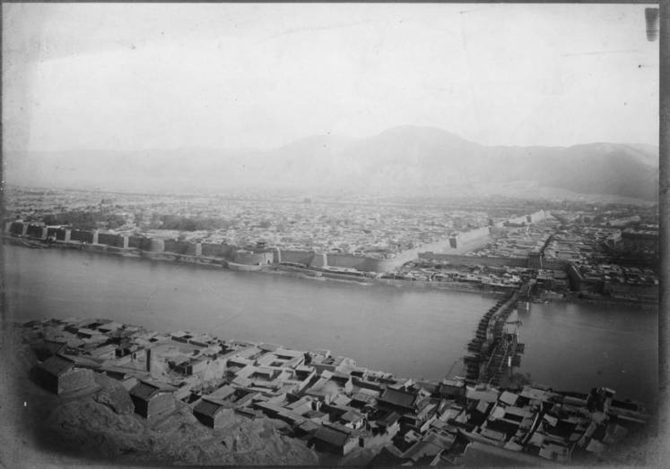
Capital of Gansu, China
| Field | Value |
|---|---|
| name | Lanzhou |
| official_name | |
| native_name | 兰州市 |
| native_name_lang | zh-Hans |
| settlement_type | Prefecture-level city |
| image_skyline | {{multiple image |
| border | infobox |
| total_width | 280 |
| image_style | border:1; |
| perrow | 1/3/2 |
| image1 | Skyline Lanzhou August 2025.jpg |
| caption1 | Lanzhou skyline and the Yellow River |
| image2 | 西关清真寺i - panoramio.jpg |
| caption2 | Xiguan Mosque |
| image3 | Lanzhou_Zhongshan_Qiao_2013.12.28_17-26-24.jpg |
| caption3 | Zhongshan Bridge |
| image4 | The Yellow River at Lanzhou - 兰州黄河边上 (17143320738).jpg |
| caption4 | Waterwheel Expo Garden |
| image5 | Lanzhou Chanyuan 2013.12.29 11-47-46.jpg |
| caption5 | Chanyuan Temple |
| image6 | 兰州牛肉面.jpg |
| caption6 | Lanzhou beef noodles |
| mapframe | yes |
| mapframe-zoom | 7 |
| mapframe-point | none |
| map_caption1 | Location of Lanzhou City jurisdiction in Gansu |
| pushpin_map | China Gansu#China |
| pushpin_map_caption | Location of the city center in Gansu |
| seat_type | Municipal seat |
| seat | Chengguan District |
| subdivision_type | Country |
| subdivision_name | China |
| subdivision_type1 | Province |
| subdivision_name1 | Gansu |
| subdivision_type2 | County-level divisions |
| subdivision_name2 | 8 |
| government_type | Prefecture-level city |
| governing_body | Lanzhou Municipal People's Congress |
| leader_title | CCP Secretary |
| leader_name | Zhang Xiaoqiang |
| leader_title1 | Congress Chairman |
| leader_name1 | Zhang Jianping |
| leader_title2 | Mayor |
| leader_name2 | Liu Jianxun |
| leader_title3 | CPPCC Chairman |
| leader_name3 | Li Hongya |
| established_title2 | |
| established_title3 | |
| unit_pref | |
| area_footnotes | |
| area_total_km2 | 13086.9 |
| area_land_km2 | |
| area_metro_km2 | 1112.9 |
| population_as_of | 2020 census |
| population_footnotes | |
| population_total | 4,359,446 |
| population_density_km2 | auto |
| area_urban_km2 | 2432.9 |
| population_urban | 3,474,858 |
| population_density_urban_km2 | auto |
| population_metro | 3,042,863 |
| population_density_metro_km2 | auto |
| population_blank1_title | |
| population_blank1 | |
| population_blank2_title | Major nationalities |
| population_blank2 | |
| demographics_type2 | GDP |
| demographics2_title1 | Prefecture-level city |
| demographics2_info1 | CN¥ 209.6 billion |
| US$ 33.7 billion | |
| demographics2_title2 | Per capita |
| demographics2_info2 | CN¥ 56,972 |
| US$ 9,147 | |
| timezone | China Standard |
| utc_offset | +8 |
| coor_pinpoint | Gansu People's Government |
| coordinates | |
| elevation_footnotes | |
| postal_code_type | Postal code |
| postal_code | 730000 |
| area_code | 931 |
| iso_code | CN-GS-01 |
| blank_name | License plate prefixes |
| blank_info | 甘A |
| website | |
| footnotes |
| mapframe-zoom = 7 | mapframe-point = none US$ 33.7 billion US$ 9,147 | zh-dungan = Ланҗу
Lanzhou is the capital and largest city of Gansu province in northwestern China. Located on the banks of the Yellow River, it is a key regional transportation hub, connecting areas further west by rail to the eastern half of the country. Historically, it has been a major link on the Northern Silk Road and it stands to become a major hub on the New Eurasian Land Bridge. The city is also a center for heavy industry and petrochemical industry.
Lanzhou is the geographical center of China’s land territory, and the third largest city in Northwest China after Xi'an and Ürümqi. Lanzhou is also an important center for scientific research and education in Northwestern China after Xi'an. The city is one of the top 50 major cities in the world by scientific research output as tracked by the Nature Index. It hosts several research institutions, including, Lanzhou University, Northwest Normal University, Lanzhou University of Technology, Gansu Agricultural University, Gansu University of Chinese Medicine, and Lanzhou Jiaotong University.
History

Originally in the territory of the ancient Western Qiangs, Lanzhou became part of the territory of the State of Qin in the 6th century BC.
In 81 BC, under the Han dynasty (206 BC–AD 220), it was taken from the Huns' Huandi Chanyu and made the seat of Jincheng commandery (), and later of the Jincheng (Golden City) county (), later renamed Yunwu. From at least the first millennium BC it was a major link on the ancient Northern Silk Road, and also an important historic Yellow River crossing site. To protect the city, the Great Wall of China was extended as far as Yumen. Parts of the Great Wall still exist within the built-up area.
After the fall of the Han dynasty, Lanzhou became the capital of a succession of tribal states. In the 4th century it was briefly the capital of the independent state of Liang. The Northern Wei dynasty (386–534) reestablished Jincheng commandery, renaming the county Jincheng. Mixed with different cultural heritages, the area at present-day Gansu province, from the 5th to the 11th century, became a center for Buddhist study. Under the Sui dynasty (581–618) the city became the seat of Lanzhou prefecture for the first time, retaining this name under the Tang dynasty (618–907). In 763 the area was overrun by the Tibetan Empire and in 843 was conquered by the Tang. Later it fell into the hands of the Western Xia dynasty (which flourished in Qinghai from the 11th to 13th century) and was subsequently absorbed by the Song dynasty (960–1126) in 1081. The name Lanzhou was reestablished, and the county renamed Lanzhuan.
After 1127 it fell into the hands of the Jin dynasty, and after 1235 it came into the possession of the Mongol Empire.
Under the Ming dynasty (1368–1644) the prefecture was demoted to a county and placed under the administration of Lintao superior prefecture, but in 1477 Lanzhou was reestablished as a political unit.
The city acquired its current name in 1656, during the Qing dynasty. When Gansu was made a separate province in 1666, Lanzhou became its capital.
In 1739 the seat of Lintao was transferred to Lanzhou, which was later made a superior prefecture called Lanzhou.
Lanzhou was badly damaged during the Dungan revolt in 1864–1875. In the 1920s and 1930s it became a center of Soviet influence in northwestern China.

Second Sino-Japanese War-World War II
During the Second Sino-Japanese War (1937–1945) Lanzhou, linked with Xi'an by highway in 1935, became the terminus of the 3,200 km Chinese–Soviet highway, used as a route for Soviet supplies destined for the Xi'an area. This highway remained the primary traffic route of northwestern China until the completion of the railway from Lanzhou to Ürümqi, Xinjiang.
The Battle of Lanzhou
Lanzhou's old Donggang Airport, located near the city centre, was the primary entry point for combat aircraft provided to China under the Sino-Soviet Non-Aggression Pact, and along with other targets around Lanzhou, including civilian centers, were heavily bombed by the Imperial Japanese Army Air Force and Navy Air Force. Many air battles were fought between the Chinese Air Force and the Imperial Japanese air forces over Lanzhou and surrounding regions from 1937 to 1945, particularly from 1938 to 1941 when the influx of Soviet war materials formed the primary support in China's War of Resistance against the Imperial Japanese invasion. Instances of major air-battles include an IJAAF raid consisting of 30 BR.20 and Ki-21 bombers against civilian targets in Lanzhou on 20 February 1939; 17th PS, 5th PG commander Capt. Cen Zeliu and his deputy commander Capt. Ma Guolian (Ma Kwok-Lim), a Canadian-Chinese volunteer for the Chinese Air Force, shot down the first two bombers in the battle, followed by two more downed as Capt. Cen led another attack on the third formation. They would be joined by pilots of the Soviet Volunteer Group led by Nikolay Garilov and the 15th PS led by Li Debiao, who would all shoot down five more of the Japanese bombers; the northern Chinese air-raid early-warning net headquarters in Xi'an observed 21 of the original 30 IJAAF bombers returning from Lanzhou.
As the Imperial Japanese forces were preparing for Operation Z against the United States and other allies in Southeast Asia and the Pacific by mid-1941, the IJANF were busy training new aircrews in live combat action across China for the upcoming war in the Pacific; on 22 May 1941, Lt. Gao Youxin of the 21st PS, 4th PG engaged an IJNAF raid on Lanzhou in an I-16 fighter aircraft, while avoiding confrontation against the Zero fighters, he shot down a Mitsubishi G3M bomber north of Lanzhou. On the ground, the KMT Muslim Generals Ma Hongkui and Ma Bufang protected Lanzhou with their cavalry troops, putting up such resistance that the Japanese never captured Lanzhou.
Geography
At 1600 m above sea level, Lanzhou lies in China's northwest geographical center. The metropolitan area covers more than 20 km2 of urbanisation along the southern banks of the Yellow River, which flows through from west to east. The Qilian Ranges, Mt. Pingliang, and Mt. Kongtong are located on the south and north sides of the city.
Lanzhou is situated on the upper reaches of the Yellow River where it emerges from the mountains and has been a center since early times, being at the southern end of the route leading via the Hexi Corridor across Central Asia. It commands the approaches to the ancient capital area of Chang'an (modern Xi'an) in Shaanxi province from both the west and the northwest, as well as the area of Qinghai Lake via the upper waters of the Yellow River and its tributaries.
Climate
Lanzhou is situated in the temperate zone and has a semi-arid climate (Köppen BSk) with hot summers and cold and very dry winters. In the urban core, based on 1971–2000 normals, the monthly 24-hour average temperature ranges from −4.1 °C in January to 23.4 °C in July. The mean annual temperature is 10.9 °C, while annual rainfall is 309 mm, almost all of which falls from May to October. The winters are so dry that snowfall is sometimes restricted to fall and spring. With monthly percent possible sunshine ranging from 47 percent in September to 57 percent in April, sunshine is generous but not abundant, as the city receives 2,350 hours of bright sunshine annually.{{cite web |script-title = zh:CMA台站气候标准值(1991-2020)
| Jan record high C = 17.1 | Feb record high C = 21.0 | Mar record high C = 29.0 | Apr record high C = 34.6 | May record high C = 35.5 | Jun record high C = 36.8 | Jul record high C = 39.8 | Aug record high C = 37.3 | Sep record high C = 34.4 | Oct record high C = 30.5 | Nov record high C = 20.3 | Dec record high C = 16.5 | Jan record low C = −21.1 | Feb record low C = −17.6 | Mar record low C = −11.6 | Apr record low C = −5.7 | May record low C = −0.1 | Jun record low C = 5.7 | Jul record low C = 9.8 | Aug record low C = 8.6 | Sep record low C = 1.6 | Oct record low C = −7.1 | Nov record low C = −12.3 | Dec record low C = −19.7
Environmental problems

The city is located in a narrow and curved river valley with surrounding mountains causing it to be hemmed in blocking a free flow of air. According to the National Environmental Analysis released by Tsinghua University and The Asian Development Bank in January 2013, Lanzhou was among the ten most air-polluted cities in the world. Air quality reportedly was so poor that at times one could not see Lanshan, the mountain rising up along the south side of the city. Lanzhou is also the home of many factories, including some involved in petroleum processing, and suffers from large dust storms kicked up from the Gobi Desert, especially in the winter and spring. In 2011, using Chinese statistics, the World Health Organization reported that Lanzhou had the worst air quality among eleven western Chinese cities. Its annual mean PM10 μg/m3 of 150 is 7 times the safe level established by the World Health Organization. It was worse than Beijing with its reading of 121.
Since then, authorities have taken measures to improve air quality, which have largely been successful. "Thirteen polluting enterprises with excessive capacity have been closed, more than 200 highly polluting enterprises were suspended in winter, and 78 industrial enterprises have moved to an industrial park outside the city."{{cite web|url=http://news.xinhuanet.com/english/china/2014-08/14/c_133556571.htm|archive-url=https://web.archive.org/web/20141008021022/http://news.xinhuanet.com/english/china/2014-08/14/c_133556571.htm|url-status=dead|archive-date=October 8, 2014|title=Across China: NW China city's air pollution transformation
The reach of the Yellow River at Lanzhou carries a high load of silt, giving the river its characteristic muddy appearance; however water quality in this reach is better than the "fetid outflow that barely passes for water two hours downstream" (2008). In recent years, several specimens of the endangered Chinese giant salamander have been found in and near the Yellow River in Lanzhou.
On April 11, 2014, Lanzhou officials advised residents not to drink tap water, because benzene levels were 20 times the national limit of 10 micrograms per liter. The city water supply suspected industrial chemical production to be the culprit, similar to what happened in the 2005 Jilin chemical plant explosions.
A brucellosis outbreak infecting humans took place in Lanzhou in 2020 after the Lanzhou Biopharmaceutical Plant involved in vaccine production accidentally pumped out the bacteria into the atmosphere in exhaust air, due to use of expired desinfectant, and affecting over 3,000 people.
Earthquakes
Lanzhou experiences earthquakes regularly, although usually at low intensities. In 1920 a large earthquake was experienced killing more than 100,000 people in Ningxia and Eastern Gansu province, although only 42 were killed in Lanzhou itself, the low number being attributed to the strong yet flexible nature of the wooden buildings in the city. Lanzhou was also affected by 2008 Sichuan earthquake in 2008.
Demographics
As of the 2020 Chinese census, Lanzhou surpassed 4 million population for the first time, with a total population of 4,359,446 inhabitants and 3,042,863 in the built-up (or metro) area of 1,112.9 square kilometres (429.7 sq mi) made of the 4 central urban districts (Chengguan, Qilihe, Anning and Xigu District). Lanzhou New Area, near the airport and Honggu Districts are not yet conurbated. The growth increased significantly after a period of slower growth. The strong growth has been attributed to parents seeking better education opportunities for their children, retired migrant workers returning to Gansu, improved services in the city and government policies.
Sport
The 14,000-capacity Northwest Minzu University Stadium is one of the main sports venues in the city. It is mostly used for football games. A new sports center complex, including a stadium with a capacity of 60,000 spectators and a swimming hall, is under development.
Lanzhou previously had a professional soccer team named Gansu Tianma from 1999 to 2003.The team played in Chinese Football Association Yi League from 1999 to 2001 and bought a position in the Jia League from Tianjin Lifei. The team relocated to Ningbo, Zhejiang and changed their name to Ningbo Yaoma in 2003. The team later relegated to China League Two in 2004 and became Dongguan Dongcheng after moving to Dongguan, Guangdong.
Former England international Paul Gascoigne played four games in both a playing and coaching role for Gansu in 2003, scoring two goals, before returning to England after falling out with the club, as his mental state meant that he had to return to America for treatment against drink and depression.
Administrative divisions
| Map | Name | Simplified Chinese | Hanyu Pinyin | Population | ||
|---|---|---|---|---|---|---|
| (2010 census) | Area (km2) | Density (/km2) | ||||
| City proper | ||||||
| Chengguan District | 城关区 | zh | 1,278,745 | 220 | 5,812.47 | |
| Qilihe District | 七里河区 | zh | 561,020 | 397 | 1,413.14 | |
| Xigu District | 西固区 | zh | 364,050 | 385 | 945.58 | |
| Anning District | 安宁区 | zh | 288,510 | 86 | 3,354.76 | |
| Suburban | ||||||
| Honggu District | 红古区 | zh | 136,101 | 575 | 236.69 | |
| Lanzhou New Area | 兰州新区 | Lánzhōu Xīnqū | 100,000 | 806 | 124 | |
| Rural | ||||||
| Yongdeng County | 永登县 | zh | 418,789 | 6,090 | 68.76 | |
| Gaolan County | 皋兰县 | zh | 131,785 | 2,556 | 51.55 | |
| Yuzhong County | 榆中县 | zh | 437,163 | 3,362 | 130.03 |
On August 20, 2012, Lanzhou New Area was approved by the State Council of China's Central Government. In 2019, Lanzhou New Area was formally established as a county-level division of Lanzhou, its area being split off from Yongdeng and Gaolan. The updated area and population of Yongdeng and Gaolan are not yet reflected in the table.
Tourism
Lanzhou serves as the primary transportation and tourism gateway to Gansu Province and the Hexi Corridor, providing access to historical sites like the Bingling Temple Grottoes.
- The Five Spring Mountain Park (五泉山公园), located on the northern side of Gaolan Mountain, is renowned for its five springs and numerous Buddhist temples, featuring many ancient architectural sites.
- [[File:Lanzhou Zhongshan Qiao 2013.12.28 17-26-24.jpg|thumb|Zhongshan Bridge]]The Zhongshan Bridge (中山桥) was the first permanent bridge over the Yellow River.
- Baita Mountain Park (白塔山公园) was built close to the mountains at an elevation of 1700 m and opened in 1958 across Zhongshan Bridge.
- [[File:Lanzhou Botanical Garden Pond.jpg|thumb|Lanzhou Botanical Garden Pond]]The Lanzhou Botanical Garden (兰州植物园), located in the Anning District, has a large variety of trees, flowers and other plants.
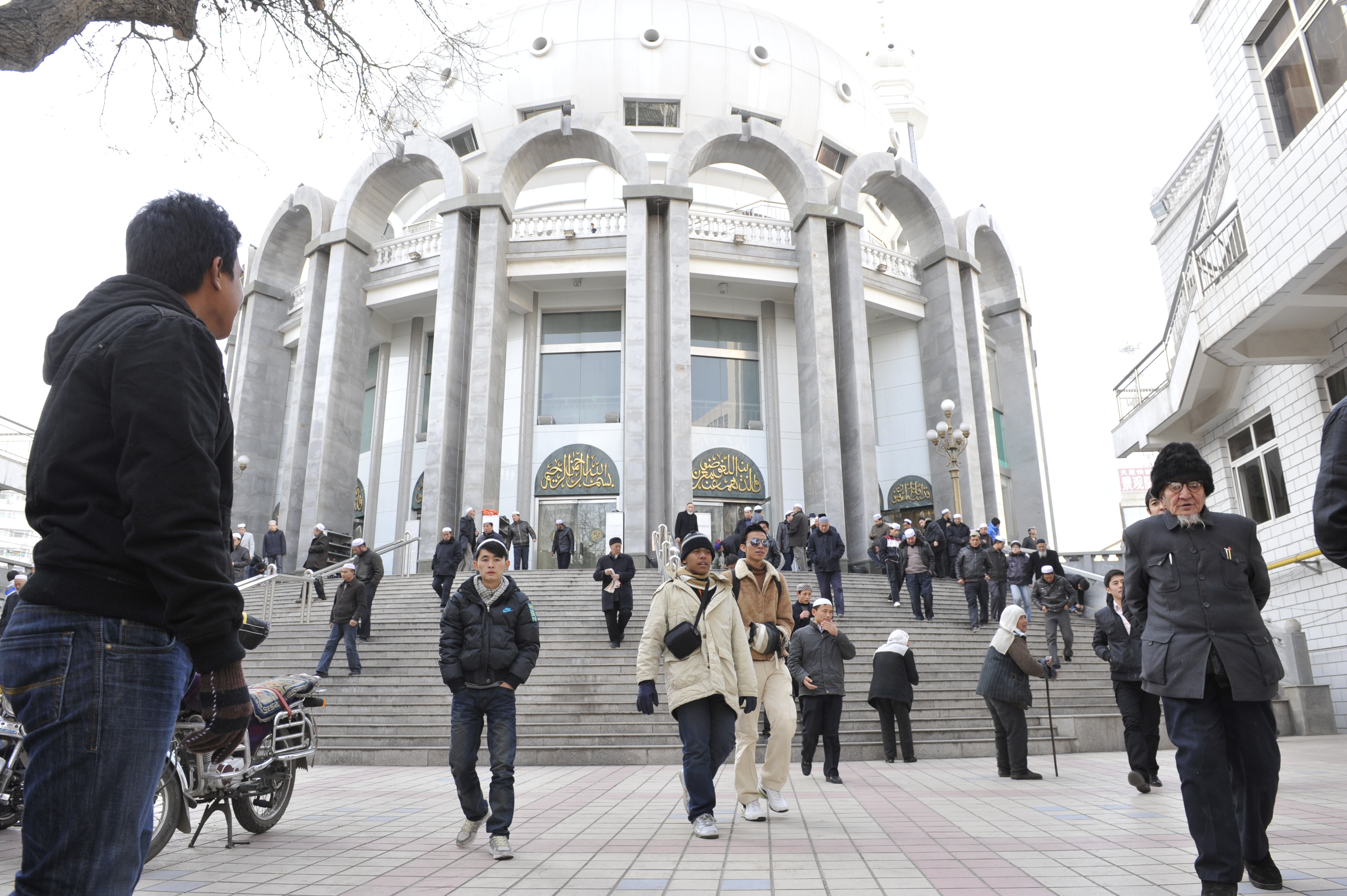
- Xiguan Mosque (西关清真寺) is one of the larger mosques in China.
- Xinglong Mountain (兴隆山) is covered with thick pine forests and scattered with colorful temples.
- Lutusi ancient government (鲁土司衙门旧址), a large complex of ancient governmental buildings.
Museums

- Gansu Provincial Museum (甘肃省博物馆), displays archaeological and fossil finds from Gansu and exhibitions on Gansu's history.
- Lanzhou Museum (兰州市博物馆), is an important cultural unit on the Silk Road. As of October 2017, the collection contains more than 13,000 pieces of collections, including pottery, porcelain, bronze, calligraphy, coins, jade, stoneware, etc. There are 52 national first-class cultural relics, 78 national second-level cultural relics and 682 national third-level cultural relics.
- Gansu Art Museum (甘肃艺术馆), Providing a broad display and external communication platform for artists.
- Lanzhou City Planning Exhibition Hall (兰州市规划展览馆), showing the profound Yellow River culture of Lanzhou and integrating indoor exhibition, architectural concept and urban characteristics.
- Lanzhou Painted Pottery Museum (兰州彩陶博物馆), The total number of collections is 250, including 50 precious cultural relics, it displays the painted pottery civilization represented by the cultural pottery of Majiayao.
- Gansu Science and Technology Museum (甘肃科技博物馆) sound, light, electricity and other high-tech means will be fully adopted, and the way of teaching and learning will enable visitors to embrace modern science in a pleasant atmosphere.
Economy

Since 1949 Lanzhou has been transformed from the capital of a poverty-stricken province into the center of a major industrial area. It was one of the first cities in China to industrialize, as a focus of the First and Second Five-Year Plans.
The GDP per capita of Lanzhou was 25,566 (RMB) (US$3,681) in 2008, ranking it at number 134 among 659 Chinese cities. In 2015, the GDP per capita had grown to 57,191 RMB (US$9,182.28) and the city ranked at place 100 for total GDP of Chinese cities.
Institutions
The International Solar Energy Center (UNIDO-ISEC) is located in Lanzhou's Chengguan district.

Natural resources
- Minerals: coal, gold, silver, zinc, nickel, manganese, clay, and dolomite
- Hydropower
There is a thermal generating plant supplied with coal from fields in Qinghai. In addition, there is a hydroelectric station at Zhulama Gorge in Gansu, and a large multipurpose dam has been built in the Liujia Gorge on the Yellow River above Lanzhou.
Industry
Main industries include textile mills, rubber processing and fertilizer plants, an oil refinery, petrochemicals, machinery, and metallurgical industry.
Gansu has one of the largest oil refineries in the country and Lanzhou itself is the center of the province's petrochemical industry. The refinery is linked to the fields at Yumen by pipeline. It also manufactures equipment for the oil industry.
Lanzhou has a large textile industry, particularly noted for the production of woolen and leather goods. In addition, Lanzhou produces locomotives and rolling stock for the northwestern railways, as well as machine tools and mining equipment. Aluminum products, industrial chemicals, and fertilizers are produced on a large scale, and there is a large rubber industry. Copper is mined in nearby Gaolan.
Lanzhou has been one of the centers of China's national nuclear power industry since the 1960s, when Lanzhou uranium enrichment plant was completed.
Agriculture
Lanzhou is the collecting center and market for agricultural produce and livestock from a wide area.
- Spring wheat, vegetables, beans, oil-boiling, melon, peaches, and tobacco
- Roses and lilies
Transportation
Airport
Main article: Lanzhou Zhongchuan International Airport
Lanzhou Zhongchuan Airport is the main airport serving Lanzhou, it is located 70 km north of Lanzhou. It opened for public service in 1970.
The airport offers direct connections to over 70 international and domestic destinations.
Railway

Subway
Main article: Lanzhou Metro
Lanzhou was the second city in northwest China to announce the construction of a subway line, in August 2012. The urban railway network, Lanzhou Metro, is planned to consist of six subway lines running 207 km. The first line, which is completely underground, opened in June 2019. Lanzhou Metro Line 2 (First-stage project), opened in June 2023. Passengers can transfer between Line 1 and Line 2 at Dongfanghong Square Station and Wulipu Station.
Regional
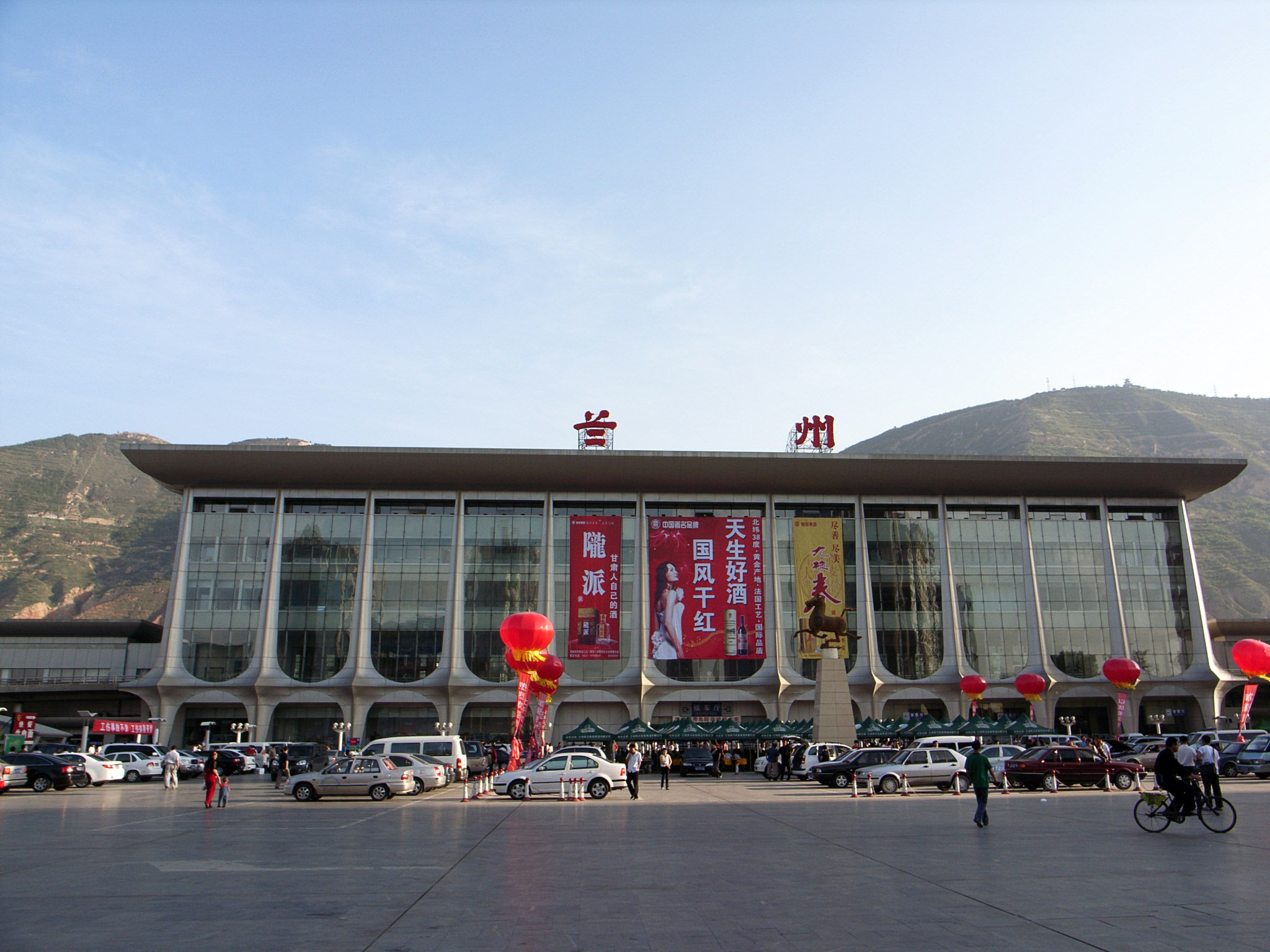
Lanzhou Railway Station is a major railway hub of western China. Every day over 100 passenger trains originate or pass via this station. It is a vital focal point connecting the western provinces with the east. Lanzhou Railway Station is located on Huochezhan Dong Lu, in Chengguan district. Lanzhou West Railway Station is the city's second major railway station, offering connection to high-speed rail services.
Lanzhou Railway Station has the following railway connections:
- Longhai Railway to the east (Xi'an, Zhengzhou, Lianyungang), with connection to the main railway of eastern China supporting direct trains to Beijing, Shanghai, etc. Finished in 1953, it was the first railway to reach Lanzhou.
- Lanxin Railway to the west and northwest (with direct trains to western Gansu and Ürümqi, and further connections to other points in Xinjiang and to Kazakhstan)
- Lanqing Railway to the west and southwest, with direct service to Xining and Lhasa
- Chongqing–Lanzhou railway to southeast, with direct service to Chongqing and Guangyuan
- A line to the north and northeast, with direct service to Yinchuan and Baotou
- Lanzhou–Zhongchuan Airport Intercity Railway between Lanzhou Railway Station and Lanzhou Zhongchuan International Airport.
- Lanhe Railway (under construction) to Linxia and Hezuo.
High speed rail
New high-speed passenger-only railways are completed both toward the east (the Xuzhou–Lanzhou high-speed railway), the west (the Lanzhou–Xinjiang high-speed railway) and the north (the Yinchuan–Lanzhou high-speed railway). These services only stop at Lanzhou West Railway Station. The Sichuan–Qinghai railway, which is designed for a top speed of 200 km/h to 250 km/h, is under construction.
Freight rail
Lanzhou forms an important link in one of the routes of the Eurasian Land Bridge and also provides rail access to Qinghai, Xinjiang and Tibet further to the west. A large rail freight terminal has recently been constructed to accommodate increasing volumes of rail freight and Lanzhou is home to China's fourth largest marshalling yard.
Regular freight services connect Lanzhou to destinations including Chongqing, Hamburg, Almaty and Kathmandu.
Road network
In 2016, Lanzhou was ranked 4th of Chinese cities with the worst rush hour traffic jams; however, by 2017, after completion of an urban ring road, it dropped to 33rd place.
Highways
- G75 Lanzhou–Haikou Expressway
- G30 Lianyungang–Khorgas Expressway
- G6 Beijing–Lhasa Expressway
- G22 Qingdao–Lanzhou Expressway
- G2201 Lanzhou Ring Expressway
- China National Highway 212
- China National Highway 213
- China National Highway 312
Bus services
.jpg)
For long-distance buses, there are three major bus stations in the urban area, West Bus Station in Xiaoxihu neighbourhood, East Bus Station near Lanzhou Station and South Bus Station near G75 Lanzhou–Haikou Expressway terminus. Furthermore, there are a total of 132 local city bus lines. These have their main node station at Xiguan.
Lanzhou has a noted bus rapid transit system which opened in 2013 and won the city an honorable mention at the 2014 Sustainable Transport Awards.
Media
- Gansu People's Press, in Lanzhou, publishes Duzhe, the most widely circulated magazine in China.
- Lanzhou Radio serves the Lhasa and Lanzhou province regions with news and music.
- Gansu Daily, newspaper for Gansu Province, has its editorial offices in Lanzhou.
Culture

The city is the cultural centre of Gansu. It is home to many different ethnic groups and their respective cultures, but the most prominent three groups are the Han, Hui, and Zang.
- Chinese opera: Qinqiang Opera
- Cuisine: Lanzhou beef noodles are well known throughout China. The city of Lanzhou is home to over 1,000 beef noodle restaurants. The root of the lily, and many different kinds of mutton are important elements of Lanzhou's food culture.
- [[File:Night View of the Xiguan Mosque (In the square).jpg|thumb|Xiguan Mosque]]Islam in China: Xiguan Mosque, the mosque was constructed in the Ming dynasty and rebuilt in 1990. It occupies an area of 467 m2 and is one of the most influential mosques in China. The architecture of the mosque predominantly reflects that of Arab architecture.
- The city is the seat of a currently vacant Roman Catholic diocese and was previously the center of a vicariate apostolic (Vicariate Apostolic of Northern Kan-Su).
Many people in Lanzhou believe in superstitions.
Colleges and universities
Lanzhou is a major center for scientific research and education in Northwestern China after Xi'an. The city is one of the top 50 major cities in the world by scientific research output as tracked by the Nature Index. The city is the seat of Lanzhou University, founded in 1909. The National Minorities Institute at Lanzhou and a branch of the Chinese Academy of Sciences are also located in the city. In particular, Northwest Normal University has been the key university at the provincial level, which has prepared over 100,000 teachers in schools across the province Gansu.
List
Note: Institutions without full-time bachelor's degree programs are not listed.
National level
.jpeg)
- Lanzhou University, founded 1909
Other public institutions
- Eastern Gansu University
- Gansu Agricultural University (), founded 1958
- Gansu University of Chinese Medicine (), Formerly known as Gansu College of Traditional Chinese Medicine, it has contributed to Gansu's medical and health undertakings and social development.
- College of Politics and Law, Gansu (), Based in Gansu, radiating to the northwest, facing the country, actively serving local social development and establishment of the legal system.
- Lanzhou University of Arts and Science (), Composed by the merger of Gansu Institute of Education and Gansu Union University in 2013.
- College of Technology, Lanzhou ()
- Lanzhou City College (), founded 1958
- Lanzhou University of Finance and Economics (), The only financial and economic university in the three provinces of Gansu, Ningxia and Qinghai.
- Lanzhou Jiaotong University (), founded 1958
- Lanzhou Medical College () (Lanzhou Medical Institute) incorporated into Lanzhou University
- Lanzhou Niuroumian (Noodle with beef soup) Cultural Research Institute ()
- Lanzhou University of Technology, (), founded 1919 (formerly Gansu University of Technology)
- Northwest University for Nationalities ()
- Northwest Normal University (), founded 1902
Healthcare
- People's Hospital of Gansu
- Second People's Hospital of Gansu (see Borden Memorial Hospital, predecessor)
- Third People's Hospital of Gansu
- First People's Hospital of Lanzhou
- Second People's Hospital of Lanzhou
- Lanzhou University First Hospital
- Lanzhou University Second Hospital
- General Military Hospital
- Lanzhou Military Hospital
- Lanzhou Heavy Ion Cancer Treatment Center, joint venture by Sheng De Group, the city government and Chinese Academy of Sciences' Institution of Modern Physics
- Gansu Tumor Hospital
Sister cities
- Albuquerque,
- Akita, (friendship city)
- Ashkhabad,
- Chorley,
- Penza,
- Nouakchott,
- Young Shire,
- Hachinohe, Aomori, since April 1998
Notes
References
Bibliography
- Cheung, Raymond. OSPREY AIRCRAFT OF THE ACES 126: Aces of the Republic of China Air Force. Oxford: Bloomsbury Publishing Plc, 2015. .
- 徐 (Xú), 露梅 (Lùméi). 隕落 (Fallen): 682位空军英烈的生死档案 - 抗战空军英烈档案大解密 (A Decryption of 682 Air Force Heroes of The War of Resistance-WWII and Their Martyrdom). 东城区, 北京, 中国: 团结出版社, 2016. .
References
- "博士刘建勋任兰州市市长,全国已有多个"70后"省会城市市长".
- "China: Gānsù (Prefectures, Cities, Districts and Counties) - Population Statistics, Charts and Map".
- 甘肃省统计局、国家统计局甘肃调查总队. (November 2016). ["《甘肃发展年鉴-2016》"](http://www.gstj.gov.cn/tjnj/2016/index.html }}{{Dead link). [[China Statistics Press]].
- Jun, Jing. (1996). "The Temple of Memories: History, Power, and Morality in a Chinese Village". Stanford University Press.
- (September 2022). "Langzhou". [[Oxford University Press]]}}{{dead link.
- "Illuminating China's Provinces, Municipalities and Autonomous Regions". PRC Central Government Official Website.
- "One World - The Most Populated Cities in China". Nations Online and PRC Central Government Official Website.
- "Leading 200 science cities {{!}} {{!}} Supplements {{!}} Nature Index".
- "Leading 200 science cities {{!}} {{!}} Supplements {{!}} Nature Index".
- (2021-10-26). "US News Best Global Universities Rankings in Lanzhou".
- "ShanghaiRanking's Best Chinese Universities Ranking".
- (March 1, 1991). "On the relation between the evolution of natural environment and human factors and the development of urban settlement—Take the Lanzhou Valley Basin as an examples". Chinese Geographical Science.
- "Silk Road, North China".
- link
- link
- Cheung, 2015, p. 63. Cen (Zeliu) and Ma Kwok-Lim, from Canada, were able to make it back to base with badly damaged planes
- Stéphane William Darrach Halsey, Bernard Johnston (M.A.). (1989). "Collier's encyclopedia: with bibliography and index, Volume 14". Macmillan Educational Co..
- link. [[China Meteorological Administration]]
- link. National Meteorological Center of CMA
- link. 中国气象局公共气象服务中心
- (January 16, 2013). "Weather & Extreme Events 7 of 10 Most Air-Polluted Cities Are in China". Imaginechina/Corbis.
- WHO report OAP_database_8_2011.xls
- (June 15, 2016). "China's far west poised to overtake Hebei in a "most polluted" list". China Dialogue.
- "WHO {{pipe}} WHO Global Ambient Air Quality Database (update 2018)". World Health Organization.
- Rob Gifford. (January 6, 2008). "Yellow River Pollution Is Price of Economic Growth". NPR.
- link
- link
- (April 11, 2014). "Xinhua Gansu".
- Spegele, Brian. (April 11, 2014). "Water Scare Hits Chinese City of Lanzhou". Wall Street Journal.
- [https://www.news.com.au/lifestyle/health/health-problems/china-reports-outbreak-of-brucellosis-disease-way-larger-than-originally-thought/news-story/b5c191369b19dc2aa8cc6b84e025b79a China reports outbreak of brucellosis disease 'way larger' than originally thought] 18 September 2020 ''www.news.com.au'', accessed 18 September 2020
- "兰州药厂泄漏事件布病患者:肿痛无药可吃,有人已转成慢性病_绿政公署_澎湃新闻-The Paper".
- "The Earthquake," E. J. Mann in Links with China and Other Lands, No. 31, April 1921, Lanzhou: China Inland Mission (quarterly) Bound volume in MS 380302, Papers of Ebenezer and Mabel Mann, SOAS, 331.[http://www.mundus.ac.uk/cats/4/913.htm] {{Webarchive. link. (October 11, 2013)
- 财经自媒体. (2021-05-26). "人口增加74万 兰州离"强省会"还有多远?".
- "Daum 카페".
- link
- link. Sina]] Sports. (September 15, 2003)
- (January 27, 2003). "Gascoigne nets contract in China". ESPN.
- Johnson, William. (January 28, 2003). "Gleeful Gascoigne nets job in China". The Telegraph.
- (March 29, 2003). "Gazza scores in winning China debut". ESPN.
- (March 29, 2003). "Gazza scores on China debut". BBC.
- (August 5, 2003). "Gazza: I'm feeling a lot better these days". London Evening Standard.
- (June 26, 2003). "Gascoigne faces the threat of legal action".
- (June 21, 2003). "Chinese club hand Gazza ultimatum". ESPN.
- (18 February 2020). "人口区划".
- 安成. (5 July 2018). "Lanzhou New Area".
- 网易. (2020-09-12). "兰州新区开始由三镇向六镇拓展".
- "2019年统计用区划代码".
- (2020-12-15). "Lanzhou: A Vital Hub on the Silk Road".
- "Xinglong Mountain, Lanzhou, Gansu".
- link. (March 12, 2012)
- "兰州市博物馆".
- link. 甘肃艺术馆. zh. 文化艺术网
- [http://www.gs.xinhuanet.com/news/2012-1/31/c_114216595.htm]{{dead link. (July 2022)
- (March 2022)
- (2015-01-23). "Gansu completes its first science and technology museum construction". [[China Daily]].
- "兰州市".
- link. (May 19, 2016)
- (January 21, 2016). link
- "UNIDO-ISEC".
- "China China Landscape – Yellow River Tour".
- link
- (August 9, 1969). "The first Western look at the secret H-bomb centre in China". [[The Toronto Star]].
- [[The Sunday Times]]. (June 15, 1969). [[Francis James]]
- link. [[:zh:甘肃日报. Gansu Daily]]. (2009-09-28)
- link. gansudaily.com.cn
- link. (2019-06-21)
- "兰州轨道交通2号线一期开通试运营-新华网".
- link. (2011-04-29)
- link. (2012-12-23)
- (July 5, 2016). ""Lanzhou" Central Asia International Freight Train Makes its Maiden Trip from Lanzhou New Area".
- link. (December 22, 2012)
- link. (December 31, 2012)
- (November 1, 2016). "Regular China-South Asia freight train officially launched".
- (November 25, 2016). "Top 10 Chinese cities with the worst jam".
- "Traffic jam in Lanzhou greatly alleviated".
- keyunzhan.com/jieshao-9314/
- "兰州汽车东站时刻表查询|兰州汽车东站长途汽车时刻表查询 - 长途客运时刻查询".
- "兰州汽车南站介绍|兰州汽车南站介绍 - 长途客运时刻查询".
- link
- [https://go.itdp.org/display/live/Buenos+Aires,+Argentina+Wins+2014+Sustainable+Transport+Award Buenos Aires, Argentina Wins 2014 Sustainable Transport Award] {{Webarchive. link. (September 1, 2014 , Institute for Transportation and Development Policy)
- "Lanzhou BRT".
- (November 16, 2012). "Rolling on a river".
- [http://www.muslim2china.com/china-mosques/Xiguan-Mosque-61.html Xiguan Mosque] {{Webarchive. link. (July 27, 2021 from Muslim2China)
- {{Catholic-hierarchy. diocese. dlnch. Archdiocese of Lanzhou [Lanchow]. January 21, 2015
- "Catholic Encyclopedia: Vicariate Apostolic of Northern Kan-Su".
- Tvetene Malme. Erik. (2014). "". link. [[University of Oslo]]
- link
- link. Gansu University of Chinese Medicine
- link. College of Politics and Law, Gansu
- "【学院简介】兰州文理学院".
- link. 宏点网络网站管理系统
- link. Lanzhou City College
- link. Lanzhou University of Finance and Economics
- "Albuquerque, New Mexico & Lanzhou, China".
- (September 22, 2010). "Heart crosses over the ocean". Akita City, Akita, Japan.
- 付博. "List of Gansu's sister cities by 2012".
- "Sister City Relationships between China and the United Kingdom".
- Council, Hilltops. (June 4, 2013). "#didyouknow #youngnsw has a sister city in #China – Lanzhou City, when in Young visit the Chinese Tribute Gardenpic.twitter.com/R81TN99ZcT".
- "Hachinohe City official home page". Sister City: Lanzhou, Gansu, China.
This article was imported from Wikipedia and is available under the Creative Commons Attribution-ShareAlike 4.0 License. Content has been adapted to SurfDoc format. Original contributors can be found on the article history page.
Ask Mako anything about Lanzhou — get instant answers, deeper analysis, and related topics.
Research with MakoFree with your Surf account
Create a free account to save articles, ask Mako questions, and organize your research.
Sign up freeThis content may have been generated or modified by AI. CloudSurf Software LLC is not responsible for the accuracy, completeness, or reliability of AI-generated content. Always verify important information from primary sources.
Report