From Surf Wiki (app.surf) — the open knowledge base
Lands of the Bohemian Crown
Incorporated states in Central Europe during the medieval and early modern periods
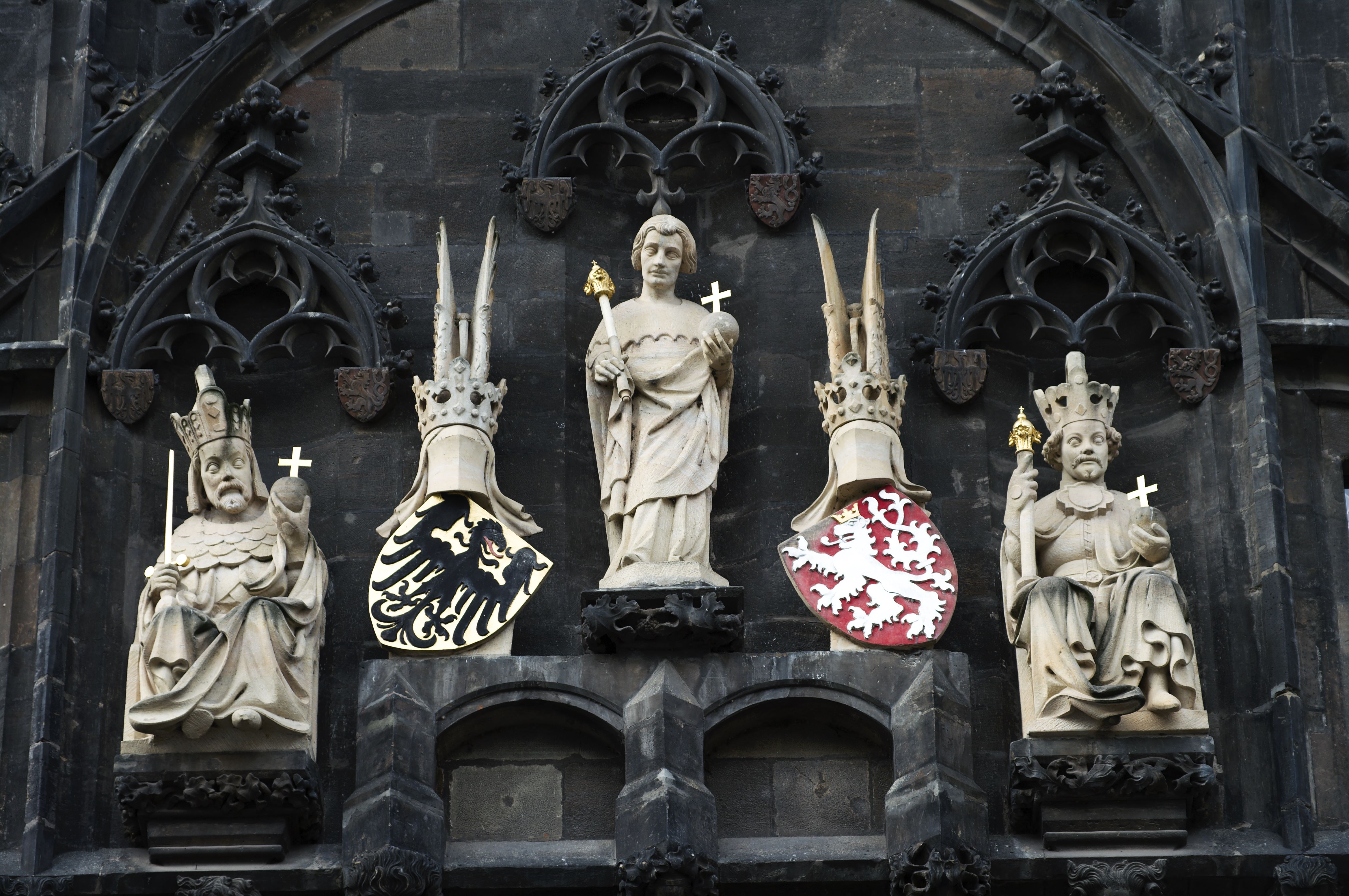
Incorporated states in Central Europe during the medieval and early modern periods
| Field | Value | |
|---|---|---|
| native_name | Země Koruny české (Czech) | |
| Länder der Böhmischen Krone (German) | ||
| Corona regni Bohemiae (Latin) | ||
| conventional_long_name | Lands of the Bohemian Crown | |
| common_name | Bohemian Crown | |
| flag | Flag of Bohemia | |
| image_flag | Flag of Bohemia.svg | |
| image_coat | Coat of arms of the lands of the Bohemian Crown.svg | |
| coa_size | 105px | |
| symbol | Coat of arms of the Czech Republic | |
| symbol_type | Coat of arms | |
| image_map | Locator Lands of the Bohemian Crown within the Holy Roman Empire (1618).svg | |
| image_map_caption | Lands of the Bohemian Crown within the Holy Roman Empire (1618) | |
| today | ||
| government_type | Monarchy | |
| status | Electorate | |
| empire | Holy Roman Empire | |
| status_text | States of the Holy Roman Empire (1348–1806), | |
| year_start | 1348 | |
| year_end | 1918 | |
| event_start | Bohemian Crown established | |
| date_start | 7 April | |
| event1 | Inauguration of the | |
| Luxembourg dynasty | ||
| date_event1 | 7 April 1348 | |
| event2 | Became main part of | |
| Bohemian Crown lands | ||
| date_event2 | 5 April 1355 | |
| event3 | King confirmed Elector | |
| date_event3 | 25 December 1356 | |
| event4 | King Ferdinand I, Holy Roman Emperor becomes king of Bohemia | |
| date_event4 | 16 December 1526 | |
| event_end | Dissolution of the Austro-Hungarian Monarchy | |
| date_end | ||
| 31 October | ||
| p1 | Kingdom of Bohemia | |
| flag_p1 | Royal banner of the Kingdom of Bohemia (colorful).svg | |
| border_p1 | no | |
| p2 | Margraviate of Moravia | |
| flag_p2 | Banner of the Margraviate of Moravia.svg | |
| border_p2 | no | |
| p3 | Duchies of Silesia | |
| flag_p3 | Banner of the Duchy of Silesia.svg | |
| p4 | Upper Lusatia | |
| image_p4 | [[File:Wappen Stadt Bautzen weiß.svg | 15px]] |
| p5 | Lower Lusatia | |
| image_p5 | [[File:Wappen Luckau.svg | 15px]] |
| p6 | Hussite Wars#Bohemian civil warBohemian Crown lands controlled by the Hussite movement | |
| flag_p6 | Husitská korouhev.svg | |
| border_p6 | no | |
| p7 | Egerland | |
| image_p7 | [[File:Cheb coat of arms.svg | 15px]] |
| p8 | Upper PalatinateUpper Palatinate (Electoral Palatinate) | |
| flag_p8 | Banner of the Palatinate.svg | |
| s1 | First Czechoslovak Republic | |
| flag_s1 | Flag of Bohemia.svg | |
| s2 | Electorate of Saxony | |
| flag_s2 | Flag of Electoral Saxony.svg | |
| s3 | Free State of Prussia | |
| flag_s3 | Flag_of_Prussia_(1918–1933).svg | |
| s4 | Second Polish Republic | |
| flag_s4 | Flag of Poland.svg | |
| title_leader | King | |
| leader1 | Charles I (first) | |
| year_leader1 | 1346–1378 | |
| leader2 | Charles III (last) | |
| year_leader2 | 1916–1918 | |
| capital | Prague | |
| religion | {{plainlist | Official religions: |
| common_languages | Czech, German, Latin | |
| stat_year1 | 1600 | |
| stat_pop1 | 2,950,000 |
Länder der Böhmischen Krone (German) Corona regni Bohemiae (Latin)
Crown lands of the Habsburg monarchy (1526–1804), of the Austrian Empire (1804–1867), and of the Cisleithanian part of Austria-Hungary (1867–1918)| Luxembourg dynasty Bohemian Crown lands 31 October|
- Latin Catholicism
- Hussitism, later Bohemian Reformed (Utraquism, Brethren)
- Others:
- Lutheranism (majority during Reformation)
- Judaism (Jews)
- Calvinism
- Hutterian Anabaptism
- Waldensianism
- Neo-Adamitism}} The Lands of the Bohemian Crown were the states in Central Europe during the medieval and early modern periods with feudal obligations to the Bohemian kings. The crown lands primarily consisted of the Kingdom of Bohemia, an electorate of the Holy Roman Empire according to the Golden Bull of 1356, the Margraviate of Moravia, the duchies of Silesia, and the two Lusatias, known as the Margraviate of Upper Lusatia and the Margraviate of Lower Lusatia, as well as other territories throughout its history. This agglomeration of states nominally under the rule of the Bohemian kings was referred to simply as Bohemia.
The joint rule of Corona regni Bohemiae was legally established by decree of King Charles IV issued on 7 April 1348, on the foundation of the original Czech lands ruled by the Přemyslid dynasty until 1306. By linking the territories, the interconnection of crown lands thus no more belonged to a king or a dynasty but to the Bohemian monarchy itself, symbolized by the Crown of Saint Wenceslas. During the reign of King Ferdinand I from 1526, the lands of the Bohemian Crown became a constituent part of the Habsburg monarchy. A large part of Silesia was lost in the mid-18th century, but the rest of the Lands passed to the Austrian Empire and the Cisleithanian half of Austria-Hungary. By the Czechoslovak declaration of independence in 1918, the remaining Czech lands became part of the First Czechoslovak Republic.
The Bohemian Crown was neither a personal union nor a federation of equal members. Rather, the Kingdom of Bohemia had a higher status than the other incorporated constituent countries. There were only some common state institutions of the Bohemian Crown that did not survive the centralization of the Habsburg monarchy under Queen Maria Theresa in the 18th century. The most important of them was the Bohemian Court Chancellery which was united with the Austrian Chancellery in 1749.
Name
The Lands of the Bohemian Crown (, Crown of the Kingdom of Bohemia) are called země Koruny české or simply Koruna česká (Crown of Bohemia or Bohemian Crown) and České země (i.e. Czech lands), the Czech adjective český referring to both "Bohemian" and "Czech". The German term Länder der Böhmischen Krone is likewise shortened to Böhmische Krone or Böhmische Kronländer. Native names include , , and . The denotation Lands of the Crown of Saint Wenceslas (země Koruny svatováclavské) refers to the Crown of Saint Wenceslas, part of the regalia of the Bohemian monarchs.
History
Přemyslids
In the 10th and 11th century, the Duchy of Bohemia, together with Moravia (the Margraviate of Moravia from 1182 on), and Kłodzko Land were consolidated under the ruling Přemyslid dynasty.
Duke Ottokar I of Bohemia gained the hereditary royal title to the Duchy of Bohemia in 1198, from the German (anti)−king Philip of Swabia, for his support. Along with the title, Philip also raised the duchy to the Kingdom of Bohemia rank. The regality was ultimately confirmed by Philip's nephew the German King Frederick II, later the Holy Roman Emperor (1220−1250), in the Golden Bull of Sicily issued in 1212.
The Přemyslid king Ottokar II of Bohemia acquired the Duchy of Austria in 1251, the Duchy of Styria in 1261, the Egerland in 1266, the Duchy of Carinthia with the March of Carniola and the Windic March in 1269 as well as the March of Friuli in 1272. His plans to turn Bohemia into the leading Imperial State were aborted by his Habsburg rival King Rudolph I of Germany, who seized his acquisitions and finally defeated him in the 1278 Battle on the Marchfeld.
Luxembourgers
In 1306, the House of Luxembourg began producing Bohemian kings upon the extinction of the Přemyslids. They significantly enlarged the Bohemian lands again, including when King John the Blind vassalized most Polish Piast dukes of Silesia. His suzerainty was acknowledged by the Polish king Casimir III the Great in the 1335 Treaty of Trentschin. John also achieved the enfeoffment with the Upper Lusatian lands of Bautzen (1319) and Görlitz (1329), by the German king Louis IV.
King John's eldest son Charles IV was elected king of the Romans in 1346 and succeeded his father as king of Bohemia in the same year. In 1348, Charles IV introduced the concept of the Crown of Bohemia (Corona regni Bohemiae in Latin), a term which designated the whole state hereditarily ruled by the kings of Bohemia, not only its core territory of Bohemia but also the incorporated provinces.
The Luxembourg dynasty reached its high point, when Charles was crowned Holy Roman Emperor in 1355.
In 1367, he purchased Lower Lusatia from his stepson Margrave Otto V of Brandenburg and the Margraviate of Brandenburg. Beside their home County of Luxembourg itself, the dynasty held further non-contiguous Imperial fiefs in the Low Countries, such as: the Duchy of Brabant and Duchy of Limburg, acquired through marriage by Charles' younger half-brother Wenceslaus of Luxembourg in 1355; as well as the Margraviate of Brandenburg, purchased in 1373. As both the king of Bohemia and the margrave of Brandenburg had been designated prince-electors in the Golden Bull of 1356, the Luxembourgs held two votes in the electoral college, securing the succession of Charles's son Wenceslaus in 1376.
With King Wenceslaus, the decline of the Luxembourg dynasty began. He himself was deposed as king of the Romans in 1400. The duchies of Brabant, Limburg (in 1406), and even Luxembourg itself (in 1411) were ceded to the French House of Valois-Burgundy; while the Margraviate of Brandenburg passed to the House of Hohenzollern (in 1415). Nevertheless, the joint rule of the Bohemian Lands outlived the Hussite Wars and the extinction of the Luxembourg male line upon the death of Emperor Sigismund in 1437.
Jagiellons
Vladislas II of the Jagiellon dynasty, son of the Polish king Casimir IV, was designated king of Bohemia in 1471, while the crown lands of Moravia, Silesia, and the Lusatias were occupied by rivaling King Matthias Corvinus of Hungary. In 1479, both kings signed the Treaty of Olomouc, whereby the unity of the Bohemian crown lands was officially retained unchanged and the monarchs appointed each other as sole heir. Upon the death of King Matthias in 1490, Vladislas ruled the Bohemian crown lands and the Kingdom of Hungary in personal union.
Habsburgs

When Vladislas' only son Louis was killed at the Battle of Mohács in 1526, ending the Jagiellon dynasty rule in Bohemia, a convention of Bohemian nobles elected his brother-in-law, the Habsburg archduke Ferdinand I of Austria, as the new king of the Bohemian crown lands. Together with the Archduchy of Austria "hereditary lands" and the Hungarian kingdom, they formed the Habsburg monarchy, which in the following centuries grew out of the Holy Roman Empire into a separate European power. Attempts by the Bohemian Protestant Reformation estates to build up an autonomous confederation were dashed at the 1620 Battle of White Mountain, whereafter the administration was centralised at Vienna. Moreover, the Habsburg rulers lost the Lusatias to the Electorate of Saxony after the Thirty Years' War in the 1635 Peace of Prague, and also most of Silesia with Kladsko to the Kingdom of Prussia after the First Silesian War in the 1742 Treaty of Breslau.
From 1599 to 1711, the border between modern Czech Republic and Slovakia was frequently subjected to raids by the Ottoman Empire and its vassals (especially the Tatars and Transylvania). Overall, hundreds of thousands were enslaved whilst tens of thousands were killed.
In the modern era, the remaining crown lands of Bohemia, Moravia and Austrian Silesia became constituent parts of the Austrian Empire in 1804, and later the Cisleithanian half of Austria-Hungary in 1867.
After World War I and the dissolution of the Austro-Hungarian monarchy, these became the historic regions usually referred to as the Czech lands forming the Czech Republic. Austrian Silesia with the Hlučín Region is today known as Czech Silesia, with the exception of eastern Cieszyn Silesia which passed to the Second Polish Republic in 1920.
Bohemian territories
Crown lands
| Crown land | Type | Map | Capital or important city | Ethnic group | Religion | Notes | [[File:Coat of arms of the House of Luxembourg-Bohemia.svg | 30px]] Bohemia | [[File:Lesser coat of arms of the Margraviate of Moravia (Wenceslaus II).svg | 30px]] Moravia | [[File:Schlesien armor.svg | 30px]] Silesia | [[File:Wappen Stadt Bautzen weiß.svg | 30px]] |
|---|---|---|---|---|---|---|---|---|---|---|---|---|---|---|
| Upper Lusatia | [[File:Wappen Luckau.svg | 30px]] | ||||||||||||
| Lower Lusatia | [[File:Goerlitz Arms.svg | 30px]] Görlitz | ||||||||||||
| (Zgorzelec) | ||||||||||||||
| Kingdom | [[File:Locator Bohemia within the Holy Roman Empire (1618).svg | 110px]] | Prague | Bohemians (Czechs) | ||||||||||
| Germans | Roman Catholic | |||||||||||||
| Hussite (15th–17th centuries) | ||||||||||||||
| Anabaptist (15th–17th centuries) | ||||||||||||||
| Lutheran | Royal dignity first bestowed upon Vratislaus II of Bohemia in 1085, hereditary since 1198 under King Ottokar I; Electorate of the Holy Roman Empire, confirmed by the Golden Bull of 1356. Included the Imperial domain of Egerland (Chebsko), obtained by King Wenceslaus II between 1291–1305, definitely given in pawn to Bohemia by King Louis IV in 1322 and subsequently ruled in personal union with Bohemia proper; as well as the County of Kladsko, established in 1459 and conquered by the Prussian king Frederick the Great in 1742. | |||||||||||||
| Margraviate | [[File:Locator Moravia within the Holy Roman Empire (1618).svg | 110px]] | Olomouc, | |||||||||||
| Brno | Czechs (Moravians) | |||||||||||||
| Germans | Roman Catholic | |||||||||||||
| Hussite (15th–17th centuries) | ||||||||||||||
| Anabaptist (15th–17th centuries) | ||||||||||||||
| Lutheran | Principalities of Olomouc, Brno and Znojmo, acquired by Přemyslid and Slavník Bohemian rulers after the 955 Battle of Lechfeld, lost in 999 to Poland and reconquered by Duke Bretislaus I in 1035. Elevated to a margraviate by the Přemyslid dukes in 1182, Bohemian fief from 1197. | |||||||||||||
| Duchies | [[File:Locator Silesia within the Holy Roman Empire (1618).svg | 110px]] | Wrocław | Germans | ||||||||||
| Czechs/Bohemians | ||||||||||||||
| Silesians | ||||||||||||||
| Poles | ||||||||||||||
| Moravians | Roman Catholic | |||||||||||||
| Lutheran | Many various duchies, acquired by the 1335 Treaty of Trentschin between King John of Bohemia and King Casimir III of Poland. The Habsburg queen Maria Theresa lost Silesia in 1742 to the Prussian king Frederick the Great by the Treaty of Breslau, with the exception of its South-East part which became called Austrian Silesia (later Czech Silesia). Today divided between Poland, the Czech Republic, and Germany. | |||||||||||||
| Margraviate | [[File:Locator Upper Lusatia within the Holy Roman Empire (1618).svg | 110px]] | Bautzen | Germans | ||||||||||
| Sorbs | Roman Catholic | |||||||||||||
| Lutheran | Former Milceni lands of Meissen, finally incorporated by King John of Bohemia in 1319 (Bautzen) and 1329 (Görlitz). The Habsburg emperor Ferdinand II of Habsburg lost the Lusatias to the Electorate of Saxony with the 1635 Peace of Prague. Formally part of the Crown of Bohemia until 1815, today divided between Germany and Poland. | |||||||||||||
| Margraviate | [[File:Locator Lower Lusatia within the Holy Roman Empire (1618).svg | 110px]] | Lübben | Germans | ||||||||||
| Sorbs | Lutheran | Former March of Lusatia, acquired by Emperor Charles IV from Margrave Otto V of Brandenburg in 1367. The Habsburg emperor Ferdinand II of Habsburg lost the Lusatias to the Electorate of Saxony with the 1635 Peace of Prague. Formally part of the Crown of Bohemia between until 1815, today divided between Germany and Poland. | ||||||||||||
| Duchy | [[File:Görlitz in GR.svg | 110px]] | Görlitz | Germans | ||||||||||
| Sorbs | Roman Catholic | Duchy created by Emperor Charles IV for his third son John of Görlitz; he was the only Duke of Görlitz (Zgorzelec) from 1377 until his death. |
Other territories
.svg)
- [[File:Wappen Mark Brandenburg.png|20px]] The Brandenburg Electorate, acquired by Charles IV from Margrave Otto V in 1373. Charles' son Sigismund granted Brandenburg in 1415 to Frederick I, Elector of Brandenburg.
- [[File:Wappen Oberpfalz.svg|20px]] The adjacent northern part of the Upper Palatinate ("Bohemian Palatinate") at Sulzbach, incorporated by Charles IV in 1355. Charles' son Wenceslaus lost the area in 1401 to the Electoral Palatinate under King Ruprecht of Germany.
- [[File:Cheb coat of arms.svg|20px]] Egerland
Administrative divisions

References
References
- Peter Wilson, "The Thirty Years War: Europe's Tragedy", 2009, p. 788. This had declined to 2,150,000 by 1650. The breakdown is 1.4 million in Bohemia, 0.65 million in Moravia, and 0.9 million in Silesia.
- (1902). "The Cambridge Modern History". The Macmillan Company.
- link. (2023-05-13 (in German and Czech))
- "The Archives of the Crown of Bohemia". National Archive of the Czech Republic (Národní archiv ČR).
- (1998). "Bohemia in history". Cambridge University Press.
- "Silesia – Pearl in the Crown of Bohemia". National Gallery in Prague (Národní galerie v Praze).
- (12 July 2016). "From Bohemia to Czechia". Czech Radio.
- Prinz, Friedrich. (1993). "Deutsche Geschichte in Osten Europas: Böhmen und Mähren". Wolf Jobst Siedler Verlag GmbH.
- Košťálová, Petra. (2022). "Contested Landscape: Moravian Wallachia and Moravian Slovakia. An Imagology Study on the Ottoman Border Narrative". OpenEdition.
This article was imported from Wikipedia and is available under the Creative Commons Attribution-ShareAlike 4.0 License. Content has been adapted to SurfDoc format. Original contributors can be found on the article history page.
Ask Mako anything about Lands of the Bohemian Crown — get instant answers, deeper analysis, and related topics.
Research with MakoFree with your Surf account
Create a free account to save articles, ask Mako questions, and organize your research.
Sign up freeThis content may have been generated or modified by AI. CloudSurf Software LLC is not responsible for the accuracy, completeness, or reliability of AI-generated content. Always verify important information from primary sources.
Report