From Surf Wiki (app.surf) — the open knowledge base
Land degradation
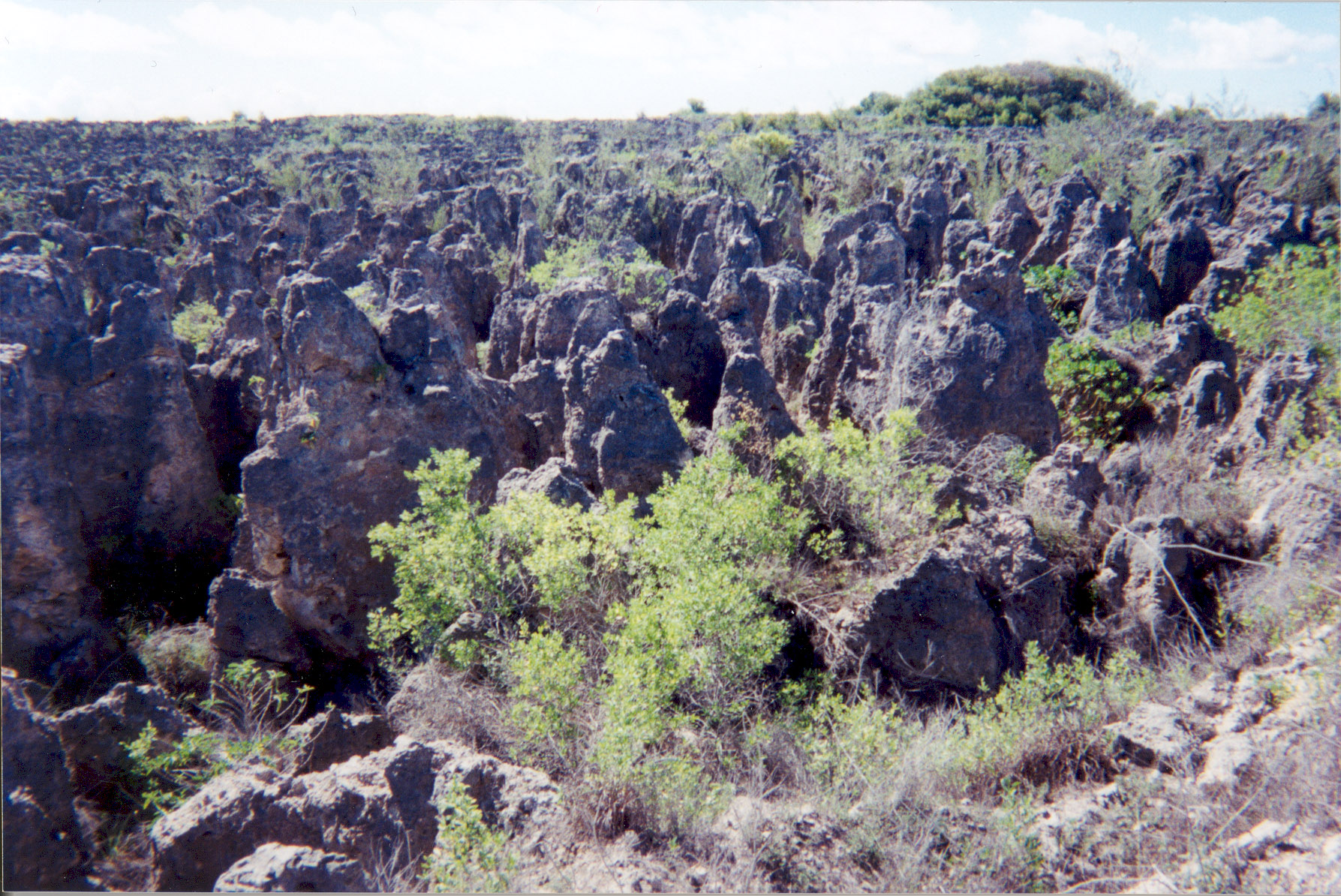
Gradual destruction of land

Gradual destruction of land
One of the impacts of land degradation is that it can diminish the natural capacity of the land to store and filter water leading to water scarcity. Human-induced land degradation and water scarcity are increasing the levels of risk for agricultural production and ecosystem services.
The United Nations estimate that about 30% of land is degraded worldwide, and about 3.2 billion people reside in these degrading areas, giving a high rate of environmental pollution. Land degradation reduces agricultural productivity, leads to biodiversity loss, and can reduce food security as well as water security. It was estimated in 2007 that up to 40% of the world's agricultural land is seriously degraded, with the United Nations estimating that the global economy could lose $23 trillion by 2050 through degradation.
Definition
As per the Millennium Ecosystem Assessment of 2005, land degradation is in defined as "the reduction or loss of the biological or economic productivity of drylands". A similar definition states that land degradation is the *"*degradation, impoverishment and long-term loss of ecosystem services".
It is viewed as any change or disturbance to the land perceived to be deleterious or undesirable.
Scale
According to the Special Report on Climate Change and Land of the Intergovernmental Panel on Climate Change in 2019: "About a quarter of the Earth's ice-free land area is subject to human-induced degradation (medium confidence). Soil erosion from agricultural fields is estimated to be currently 11 to 20 times (no-tillage) to more than 100 times (conventional tillage) higher than the soil formation rate (medium confidence)."
The United Nations estimated in 2014 that ~30% of land is degraded worldwide, and ~3.2 billion people reside in these degrading areas, giving a high rate of environmental pollution. Approximately 12 million hectares of productive land—which roughly equals the size of Greece—is degraded every year. This is due to the socio-economic exploitation of lands without proper planning for long-term sustainability.
In 2021, estimates claim that two thirds of Africa's productive land area are severely affected by land degradation.
In 2024, the United Nations claimed that 75% of soils are degraded at some extent. By the year 2050 the share of degraded land can rise to 90%, if current trends continue. During the years 2015-2019 around 100 million hectares of soil were degraded every year. The Global Environment Facility suggested that 95% of soil can degrade by 2050.
Types


In addition to the usual types of land degradation that have been known for centuries (water, wind and mechanical erosion, physical, chemical and biological degradation), four other types have emerged in the last 50 years:
- pollution, often chemical, due to agricultural, industrial, mining or commercial activities;
- loss of arable land due to urban construction, road building, land conversion, agricultural expansion, etc.;
- artificial radioactivity, sometimes accidental;
- land-use constraints associated with armed conflicts.
Overall, more than 36 types of land degradation can be assessed. All are induced or aggravated by human activities, e.g. soil erosion, soil contamination, soil acidification, sheet erosion, silting, aridification, salinization, urbanization, etc.
A problem with defining land degradation is that what one group of people might view as degradation, others might view as a benefit or opportunity. For example, planting crops at a location with heavy rainfall and steep slopes would create scientific and environmental concern regarding the risk of soil erosion by water, yet farmers could view the location as a favourable one for high crop yields.
Causes

Land degradation is mainly derived by numerous, complex, and interrelated anthropogenic and/or natural proximate and underlying causes. For example, in Ethiopia the country has been affected by chronic and ongoing land degradation processes and forms. The major proximate drivers are biophysical factors and unsustainable land management practices, while the underlying drivers are social, economic, and institutional factors.
Land degradation is a global problem largely related to the agricultural sector, general deforestation and climate change. Causes include:
- Land clearance, such as clearcutting, overlogging and deforestation
- Agricultural activities such as:
- Activities that lead to depletion of soil nutrients through poor farming practices such as exposure of naked soil after crop harvesting or deep plowing (areas with conventional tillage degrade 5-10 times faster than areas with no-till farming
- Monocultures which destabilize the local ecosystem;
- Poor livestock farming practices such as overgrazing (the grazing of natural pastures at stocking intensities above the livestock carrying capacity);
- Inappropriate irrigation
- Pollution of soil as a result of littering, urbanization, mining, oil spills, pesticides, herbicides, fertilizers and animal waste.
- Climate change because it can "exacerbate land degradation, particularly in low-lying coastal areas, river deltas, drylands and in permafrost areas"

High population density is not always related to land degradation. Rather, it is the practices of the human population that can cause a landscape to become degraded.
Severe land degradation affects a significant portion of the Earth's arable lands, decreasing the wealth and economic development of nations. As the land resource base becomes less productive, food security is compromised and competition for dwindling resources increases, the seeds of famine and potential conflict are sown.
Climate change and land degradation
According to the Special Report on Climate Change and Land of the Intergovernmental Panel on Climate Change (IPCC) climate change exacerbates land degradation, especially in low-lying coastal areas, river deltas, drylands and permafrost areas. During the years 1961–2013, the area of drylands in drought rose by more than 1% per year. In 2015, about 500,000,000 people lived in areas which experienced desertification in the years 1980s - 2000s. People living in those areas are severely impacted by climate change. Additionally, it is reported that 74% of the poor are directly affected by land degradation globally.
Significant land degradation from seawater inundation, particularly in river deltas and on low-lying islands, is a potential hazard that was identified in a 2007 IPCC report.
As a result of sea-level rise from climate change, salinity levels can reach levels where agriculture becomes impossible in very low-lying areas.
In 2009 the European Investment Bank agreed to invest up to $45 million in the Land Degradation Neutrality Fund (LDN Fund). Launched at UNCCD COP 13 in 2017, the LDN Fund invests in projects that generate environmental benefits, socio-economic benefits, and financial returns for investors. The Fund was initially capitalized at US$100 million and is expected to grow to US$300 million.
In the 2022 IPCC report, land degradation is responding more directly to climate change as all types of erosion and SOM declines (soil focus) are increasing. Other land degradation pressures are also being caused by human pressures like managed ecosystems. These systems include human run croplands and pastures.
Impacts
Land degradation takes many forms and affects water and land resources. It can diminish the natural capacity of the land to store and filter water leading to water scarcity.
The results of land degradation are significant and complex. They include lower crop yields, less diverse ecosystems, more vulnerability to natural disasters like floods and droughts, people losing their homes, less food available, and economic problems. Degraded land also releases greenhouse gases, making climate change worse.
Further possible impacts include:
- A temporary or permanent decline in the productive capacity of the land. This can be seen through a loss of biomass, a loss of actual productivity or in potential productivity, or a loss or change in vegetative cover and soil nutrients.
- Loss of biodiversity: A loss of range of species or ecosystem complexity as a decline in the environmental quality.
- Increased vulnerability of the environment or people to destruction or crisis.
- Wars and conflicts. Degradation of soil is one of the factors which increase competition over agricultural land, and all except 3 conflicts inside states in Africa from the 1990s are linked to such competition.
- Environmental migration
Sensitivity and resilience
Prevention
Sustainable land management

Actions to halt land degradation can be broadly classified as prevention, mitigation, and restoration interventions.
Sustainable land management has been proven in reversing land degradation. It also ensures water security by increasing soil moisture availability, decreasing surface runoff, decreasing soil erosion, leading to an increased infiltration, and decreased flood discharge.
The United Nations Sustainable Development Goal 15 has a target to restore degraded land and soil and achieve a land degradation-neutral world by 2030. The full title of Target 15.3 is: "By 2030, combat desertification, restore degraded land and soil, including land affected by desertification, drought and floods, and strive to achieve a land degradation-neutral world."
Public awareness and education
Increasing public awareness about the importance of land conservation, sustainable land management, and the consequences of land degradation is vital for fostering behavioral change and mobilizing support for action. Education, outreach campaigns, and knowledge-sharing platforms can empower individuals, communities, and stakeholders to adopt more sustainable practices and become stewards of the land.
References
References
- Eswaran, H.. (2001). "Land degradation: an overview". Oxford Press.
- Ian Sample. (31 August 2007). "Global food crisis looms as climate change and population growth strip fertile land". [[The Guardian]].
- (2024-12-05). "Private sector urged to act as world faces $23 trillion loss from land degradation {{!}} UN News".
- [[Millennium Ecosystem Assessment]], 2005. [https://www.millenniumassessment.org/en/Reports.html Ecosystems and Human Well-being: Desertification Synthesis]. World Resources Institute, Washington, DC.
- Johnson, D.L., S.H. Ambrose, T.J. Bassett, M.L. Garfield Bowen, D.E. Crummey, J.S. Isaacson, D.N. Johnson, P. Lamb, M. Saul, and A.E. Winter-Nelson. 1997. Meanings of environmental terms. Journal of Environmental Quality 26: 581–589.
- (2019). "Summary for Policymakers. In: Climate Change and Land: an IPCC special report on climate change, desertification, land degradation, sustainable land management, food security, and greenhouse gas fluxes in terrestrial ecosystems". Intergovernmental Panel on Climate Change.
- (2014). "Biomass Productivity-Based Mapping of Global Land Degradation Hotspots". SSRN Electronic Journal.
- "Artificial intelligence makes restaurants and farms more sustainable".
- (16 June 2019). "24 billion tons of fertile land lost every year, warns UN chief on World Day to Combat Desertification".
- "UNESCO raises global alarm on the rapid degradation of soils". United Nations.
- "Sustainable Development Goal (SDG) Indicator 15.3.1". United Nations.
- (17 June 2024). "UN food chief: Poorest areas have zero harvests left".
- Brabant Pierre, 2010. [http://www.csf-desertification.eu/dossier/item/a-land-degradation-assessment-and-mapping-method A land degradation assessment and mapping method. A standard guideline proposal] {{Webarchive. link. (7 July 2017. ''Les dossiers thématiques du CSFD. ''N°8. November 2010. CSFD/Agropolis International, Montpellier, France. 52 pp.)
- (31 March 2021). "Global forest loss increases in 2020". World Resources Institute.
- Oosterbaan, R.J.. (1989). "Effectiveness and Social/Environmental Impacts of Irrigation Projects: a Review". ILRI.
- "Land Pollution & Degradation Causes, Effects & Prevention".
- "Land Pollution: Causes, Effects and Prevention".
- "Goal 15 targets".
- "Land Degradation Neutrality (LDN) Fund – Our references – Our clients – innpact".
- (February 2019). "Land degradation neutrality: The science-policy interface from the UNCCD to national implementation". Environmental Science & Policy.
- "Special Report on Climate Change and Land — IPCC site".
- "Chapter 4: Land Degradation — Special Report on Climate Change and Land".
- (2024). "Ensuring sustainable water security through sustainable land management: Research evidences for policy". World Water Policy.
- (2012). "Land and Conflict". United Nations, European Union.
- "The Nexus of Soil Degradation, Climate Change, and Food Insecurity: A Looming Global Migration Crisis". Conscious Planet.
- (2000). "Land Degradation – Guidelines for Field Assessment". Earthscan Publications.
- (2007). "Land Degradation; Creation and Destruction". Rowman & Littlefield.
- (2013-11-05). "A Handbook for the Field Assessment of Land Degradation".
- (2017). "Resolution adopted by the General Assembly on 6 July 2017". United Nations.
- (28 June 2024). "Spreading Open and Inclusive Literacy and Soil Culture through Artistic Practices and Education". UNESCO.
This article was imported from Wikipedia and is available under the Creative Commons Attribution-ShareAlike 4.0 License. Content has been adapted to SurfDoc format. Original contributors can be found on the article history page.
Ask Mako anything about Land degradation — get instant answers, deeper analysis, and related topics.
Research with MakoFree with your Surf account
Create a free account to save articles, ask Mako questions, and organize your research.
Sign up freeThis content may have been generated or modified by AI. CloudSurf Software LLC is not responsible for the accuracy, completeness, or reliability of AI-generated content. Always verify important information from primary sources.
Report