From Surf Wiki (app.surf) — the open knowledge base
Lance corporal
Military rank
Military rank
| Field | Value | |||
|---|---|---|---|---|
| name | Lance corporal | |||
| image | [[File:United Kingdom-Army-OR-3.svg | 50px]] [[File:British Royal Marines OR-3.svg | 50px]] [[File:British RAF OR-3.svg | 50px]] |
| caption | Army, marine and RAF insignia | |||
| country | United Kingdom | |||
| service branch | ||||
| abbreviation | LCpl | |||
| rank group | Non-commissioned officer | |||
| NATO rank | OR-3 | |||
| higher rank | Corporal | |||
| lower rank | Private (or equivalent) | |||
| equivalents | Lance bombardier |
Lance corporal is a military rank, used by many English-speaking armed forces worldwide, and also by some police forces and other uniformed organisations. It is below the rank of corporal.
Etymology
The presumed origin of the rank of lance corporal derives from an amalgamation of "corporal" from the Italian phrase capo corporale ("head of the body") with the now-archaic lancepesade, which in turn derives from the Italian lancia spezzata, which literally means "broken lance" or "broken spear", formerly a non-commissioned officer of the lowest rank. It can be translated as "one who has broken a lance in combat", and is therefore a leader. Other sources claim that it referred to a knight who had broken his lance and lost his horse, and thus had to join a foot company temporarily; or to gendarmerie who could no longer afford to fight on horseback and formed a foot unit.
"Lance" or "lances fournies" was also a term used in medieval Europe to denote a unit of soldiers (usually three or six men).
Commonwealth of Nations
In Commonwealth forces, a lance corporal is usually the second-in-command of a section. Lance corporals are commonly addressed as "corporal", with "lance jack" or "half-screw" (with corporals being "full screws") being common colloquialisms for the rank. Much like the use of bombardier instead of corporal in artillery units, lance corporals are known as lance bombardiers in the UK, Australia and New Zealand. The badge of rank is a single chevron worn on both sleeves or on an epaulette.
Australia and New Zealand
Lance corporal is the lowest of the non-commissioned officer ranks in the Australian Army and New Zealand Army, falling between private and corporal. It is the only appointed rank, and thus demotion is easier than with other ranks. A commanding officer can demote a lance corporal, whereas other ranks require a court martial for demotion. A lance corporal is usually the second in command of a section, and is in control of the gun group in an infantry section. There is no equivalent rank within the Royal Australian or New Zealand Air Force or Navy.
Second corporal was also formerly used in Australia in the same way that it was used in the British Army.
Bangladesh
In the Bangladesh Army, the rank of lance corporal is above the rank of sainik (সৈনিক) and below the rank of corporal.
Canada
The Canadian Armed Forces abolished the Canadian Army rank of lance corporal on their creation as a unified force in 1968.
United Kingdom
| Non-NATO rank =
British Army and Royal Marines
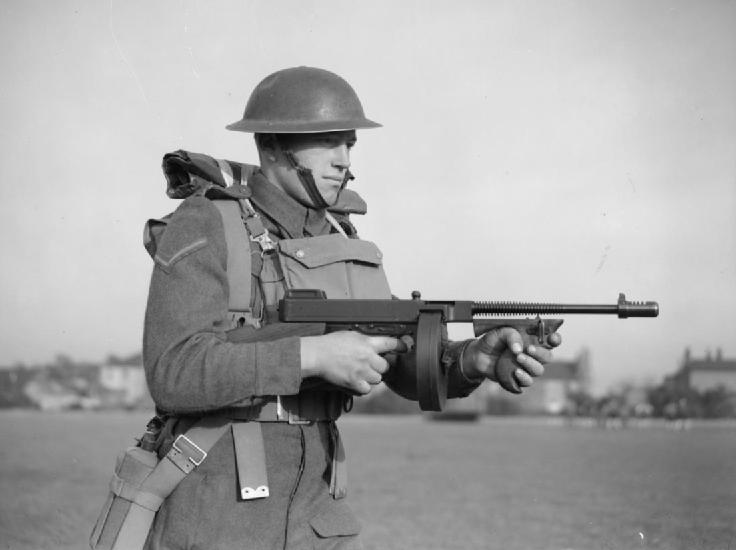
Lance corporal (LCpl or formerly L/Cpl) is the lowest ranking non-commissioned officer in the British Army and Royal Marines, between private and corporal.
The badge of rank is a single point-down chevron worn on both sleeves, or on an epaulette on the front of the Combat Soldier 95 dress standard. However, lance corporals in the Foot Guards, Honourable Artillery Company, 1st The Queen's Dragoon Guards and The Queen's Royal Hussars wear two chevrons and lance corporals in the Household Cavalry wear two chevrons surmounted by a gilt crown. The Royal Artillery uses the rank of lance bombardier instead.
The date of introduction of lance corporals to the British Army is unclear, but the rank is mentioned in late-18th century military essays such as Major William Young's "An essay on the Command of Small Detachments" (1766) and John Williamson's "The Elements of Military Arrangement" (1781):
"When from sickness or other causes there are not in a company a sufficient number of non-commission officers to do the duty, the captain can appoint corporals to do the duty of serjeants, who are called lance serjeants, and private men to do the duty of corporals, who are called lance corporals."
The designation "chosen man", used during the Napoleonic Wars, was possibly a precursor to the rank. The first mention of a lance corporal in The Times is in 1819, although the first mention in the London Gazette is not until 1831. The first mention in the London Gazette of a lance corporal in the Royal Marines is in 1838.
Until 1 September 1961, lance corporal and lance bombardier were only appointments rather than substantive ranks, given to privates (or equivalent) who were acting NCOs, and could be taken away by the soldier's commanding officer (whereas a full corporal or bombardier could only be demoted by court martial). Until 1920, the Royal Engineers and Army Ordnance Corps also used the similar rank of second corporal, which was a substantive rank (also wearing one chevron). Until 1920, bombardiers in the Royal Artillery were equivalent to second corporals and until 1918 (when the rank of lance bombardier replaced it), acting bombardiers were equivalent to lance corporals (both wearing one chevron).
In the infantry, a lance corporal usually serves as second-in-command of a section and commander of its delta fire team. It is also a rank commonly held by specialists such as clerks, drivers, signallers, machine-gunners, and mortarmen. In the Intelligence Corps and Royal Military Police, all other ranks are promoted to lance corporal on completion of their training.
Royal Air Force
On 1 April 2010, the rank of lance corporal was introduced into the RAF Regiment, although it is not used by other branches of the Royal Air Force. RAF Regiment lance corporals have powers of charge over aircraftmen, leading aircraftmen and senior aircraftmen, but not junior technicians or senior aircraftmen technicians, who, despite being OR2s, require a corporal or above to charge if required.
Cadet forces
Main article: Ranks of the cadet forces of the United Kingdom
The British cadet forces reflect the ranks of their parent services, so the Army Cadet Force, the Army section of the Combined Cadet Force (CCF), and the various marine cadet organisations use cadet lance corporal as their lowest NCO rank. In the CCF (RAF), this rank is also used as the lowest NCO rank (it was formerly known as junior corporal before its introduction into the RAF Regiment). The Air Training Corps and the naval cadet forces do not use the rank.
Singapore
Singapore Armed Forces
The Lance Corporal (LCP) rank in the Singapore Armed Forces (SAF) is between the rank of Private (PTE) and Corporal (CPL).
Lance-corporals who are appointed second-in-command/third-in-command of a section can give commands to the rest of the section. National servicemen are usually promoted to this rank after completing their respective vocational courses and within the first year of service. Servicemen who fail to pass their Individual physical proficiency test (IPPT) during their active service will have their rank capped at LCP regardless of vocation.
A lance-corporal wears rank insignia of a single point-down chevron with an arc above it (similar to an inverted US Army PFC rank insignia).
Uniformed youth organisations
In the National Cadet Corps (NCC), the National Police Cadet Corps (NPCC) and the National Civil Defence Cadet Corps (NCDCC), the rank of lance corporal is below the rank of corporal. Generally, the rank is awarded to cadets in secondary two. NCC, NPCC and NCDCC lance corporals rarely, if not never, have the chance to command a squad.
NCC lance corporals wear the same rank insignia as that of the SAF, except that the letters 'NCC' are below the insignia so as to differentiate NCC cadets from SAF personnel. NPCC and NCDCC lance corporals wear the same rank insignia as that of an SCDF lance corporal, except that the letters 'NPCC' and 'NCDCC' are below the insignia so as to differentiate NPCC and NCDCC cadets from Singapore Police Force and Singapore Civil Defence Force personnel respectively.
United States
(USMC) | Non-NATO rank = Airman first class (Air Force) Private first class (USA)
Army
Lance corporal was a title used in the United States Army to denote privates serving as temporary non-commissioned officers. The title of lance corporal existed in the U.S. Army from at least 1802, as the U.S. Army Institute of Heraldry documents its first occurrence in an "unofficial journal" dated that year. The first official use of the title of lance corporal is documented in the General Regulations for the Army, or, Military Institutes (Articles 18 and 20), authorised by an Act of Congress on 2 March 1821 and published by the War Department in July 1821 and again on 1 March 1825.
In the General Regulations for the Army of the United States (Article XVI, Paragraph 64), published on 25 January 1841, and again in the 1847 edition (Article XIII, Paragraph 121; Article XIV, Paragraph 134; and Article XLIX Paragraph 818), the title of lance corporal is authorised. Again, in the Revised Army Regulations of 1861 published on 10 August 1861 and in the 1863 edition "With An Appendix Containing the Changes and Laws Affecting Army Regulations And Articles Of War To June 25, 1863" (Article 40, Paragraph 971), lance corporal is authorised. Lance corporal is again authorised in Regulations of the Army of the United States and General Orders In Force on the 17th of February 1881 (Article LV, Paragraph 812) and in Regulations of the Army of the United States 1895 (Article XXXII, Paragraph 257).
In the edition of 1901 "With Appendix Separately Indexed And Showing Changes to January 1, 1901", in the Appendix, page 331, in Headquarters of the Army, General Orders, No. 42, June 30, 1897, Part II, the lance corporal is authorised to wear "...a chevron having one bar..." In Regulations for the Army of the United States 1904 (Article XXX, Paragraph 263), "...no company shall have more than one lance corporal at a time, unless there are noncommissioned officers absent by authority, during which absences there may be one for each absentee." This proscription appears again in Article XXX, Paragraph 272 of Regulations for the Army of the United States 1910, and the editions of 1913, and 1917 "Corrected to April 15, 1917 (Changes, Nos. 1 to 55)".
In 1920, the former lance corporal insignia of rank was assigned to the rank of private first class in War Department Circular No. 303, dated 3 August 1920. However, the Institute of Heraldry states that some older U.S. Army Tables of Organization and Equipment still in use in 1940 continued to authorise lance corporals.
In February 1965, the US Army announced that, effective from 1 September 1965, pay grade E-3 would be redesignated as lance corporal. The rank insignia was to be the pre-World War II specialist grade 6 insignia of one chevron above one arc, or "rocker". However, by September 1965 the plan was cancelled. The insignia was, however, adopted for pay grade E-3, which continued to be named private first class.
Marine Corps
Lance corporal (LCpl) is the third enlisted rank in order of seniority in the United States Marine Corps, just above private first class and below corporal. It is the most commonly held rank in the USMC, and the highest one that a marine can hold without being a non-commissioned officer.
The USMC is the only component of the U.S. Armed Forces to currently use the rank. Promotion to lance corporal is based on time in grade, time in service, and the conduct of the marine. Further promotion to the NCO ranks (corporal and above) is competitive and takes into account the individual service record of the marine. There can only be a certain number of corporals and sergeants in each MOS, so even with a qualifying score, promotions may be delayed due to an excessive number of corporals occupying billets in a certain MOS.

Other agencies
Some law enforcement agencies, most notably the South Carolina Highway Patrol, use the rank for non-supervisory officers.
Gallery
File:British Army OR-3.svg|Lance corporal (Antigua and Barbuda Regiment) File:Australian Army OR-4.svg|Lance corporal (Australian Army) File:Bangladesh-army-OR-3.svg|ল্যান্স কর্পোর্যাল Lyānsa karpōrāla (Bangladesh Army) File:BDF OR-3 (2021).svg|Lance corporal (Barbados Regiment) File:British Army OR-3.svg|Lance corporal (Belize Defence Force) File:Botswana-Army-OR-3.svg|Lance corporal (Botswana Ground Force) File:01.Bhutan Army-LCPL.svg|Lance corporal () (Royal Bhutan Army) File:01.RBrLF-LCPL.svg|Lans koperal (Royal Brunei Land Force) File:Fijian-OR-04.svg|Lance corporal (Fiji Infantry Regiment) File:01.Gambian Army-LCPL.svg|Lance corporal (Gambian National Army) File:Ghana-Army-OR-3.svg|Lance corporal (Ghana Army) File:Guyana Defence Force (GDF) Lance Corporal insignia.svg|Lance corporal (Guyana Army) File:Jamaica-Army-OR-3.png|Lance corporal (Jamaican Army) File:Kenya-Army-OR-3.svg|Lance corporal (Kenya Army) File:Zimbabwe-Army-OR-3.svg|Lance corporal (Lesotho Army) File:Blank.svg|Lance corporal (Malawi Army) File:Maldives-Army-OR-3.svg|ލާންސް ކޯޕްރަލް Laans koapral (Maldives National Defence Force) File:Malaysia-army-OR-3.svg|Lans koperal (Malaysian Army) File:01-Namibia Army-LCPL.svg|Lance corporal (Namibian Army) File:New Zealand-Army-OR-3.svg|Lance corporal (New Zealand Army) File:Koplo Usu (Tanzania Army OR-03).png|Lance corporal (Nigerian Army) File:PNGDF Land OR-03.svg|Lance corporal (Papua New Guinea Land Element) File:SKN Regiment OR-3.svg|Lance corporal (Saint Kitts and Nevis Regiment) File:Seychelles Army OR-03 (2018).svg|Lance corporal (Seychelles Infantry Unit) File:Zimbabwe-Army-OR-3.svg|Lance corporal (Sierra Leone Army) File:Army-SGP-OR-3.svg|Lance corporal (Singapore Army) File:01. SLA-LCPL.svg|Lance corporal (Sri Lanka Army) File:SAA-OR-3.svg|Lance corporal (South African Army) File:Tonga-Army-OR-3.svg|Lance corporal (Tongan Land Component) File:TaT-Army-OR-03.png|Lance corporal (Trinidad and Tobago Regiment) File:Uganda-Army-OR-3.svg|Lance corporal (Ugandan Land Forces) File:United Kingdom-Army-OR-3.svg|Lance corporal (British Army) File:LCpl - HC.svg|Lance corporal (British Household Cavalry) File:Zambia-Army-OR-3.svg|Lance corporal (Zambian Army) File:Zimbabwe-Army-OR-3.svg|Lance corporal (Zimbabwe National Army) File:USMC-E3.svg|Lance corporal (United States Marine Corps)
Variants
Sweden
Sweden uses the rank of vicekorpral (previously vicekonstapel, or "vice constable", in the artillery and anti-aircraft artillery) between private and korpral. It was primarily a training grade discontinued in 1972 but reinstated in 2009.
References
References
- (26 August 2022). "Why the Third-Lowest US Marine Corps Rank is Actually the Best".
- "Lance Corporal: What it means to be an E3 in the Corps". Hi-Desert Star.
- [[Thomas Dekker (writer). Dekker, T.]], [[Richard Herne Shepherd. Shepherd, R. H.]] (1873:371). ''The Dramatic Works of Thomas Dekker: Now First Collected with Illustrative Notes and a Memoir of the Author''. United Kingdom: J. Pearson.
- ''Notes and Queries''. (1926:2). United Kingdom: Oxford University Press.
- (1883). "Time".
- Nicolle, David. (1995). "Medieval Warfare Source Book Vol. I: Warfare in Western Christendom". Arms & Armour Press.
- Howard, Michael. (1976). "War in European History". Oxford University Press.
- NZ Army "[http://www.army.mil.nz/our-army/structure/ranks/default.htm Ranks in the New Zealand Army]". Retrieved 11 December 2009.
- . (). ["Rank Categories"](https://www.army.mil.bd/Rank-Categories).
- Williamson, John. (1981). "The Elements of Military Arrangement; Comprehending the Tacktic, Exercise, Manoevres, and Discipline of the British Infantry".
- Michael Glover, "Wellington's Army in the Peninsula, 1808-1814", p. 69, Hippocrene Books, 1977 {{oclc. 3263356.
- Nicholas Payan Dawnay, "The Badges of Warrant and Non-commissioned Rank in the British Army", p. 18, Gale & Polden for the Society for Army Historical Research, 1949 {{oclc. 459091948.
- "Ceylon Government Gazette", ''[[The Times]]'', 4 January 1819
- {{London Gazette. (9 October 1831)
- {{London Gazette. (25 December 1838)
- "Lance Corporal to Become Army Rank", ''[[The Times]]'', 26 August 1961
- Federation, RAF Families. "RAF Families Federation, Royal Air Force, RAF – RAF Families Federation".
- "New Rank for the RAF Regiment".
- "Archived copy".
- "SAF Military Ranks – Enlistees".
- "NCC Ranks and Badges".
- "National Police Cadet Corps".
- "National Civil Defence Cadet Corps (NCDCC) / National Civil Defence Cadet Corps (NCDCC)".
- ''Army Information Digest'', April 1965, page 39
- ''Army Information Digest'', September 1965, page 2
- "Ranks".
- Iaconelli, Tony. (2021-11-22). "Ranks in the Marines {{!}} Enlisted and Officers Ranks Described!".
- "World War II era Marine Corps enlisted ranks".
- (1970). "United States Marine Corps Rank and Grades 1775-1969". Historical Division Headquarters, U.S. Marine Corps.
- "Salary & Benefits {{!}} SCDPS".
- "Paratus". Regional Publications Ltd..
- "Badges of rank". Department of Defence (Australia).
- "Ranks & insignia".
- (18 Jul 2019). "Barbados Defence Force Medal Ceremony". [[Barbados Defence Force]].
- "Ranks". Government of Botswana.
- "Army ranks". Royal Bhutan Army.
- (16 December 2013). "Akta angkatan bersenjata diraja Brunei (Penggal 149)".
- (1993). "Guyana and Belize: country studies". Library of Congress.
- (2019). "BADGES OF RANK".
- "Ranks in the Army". Lesotho Defence Force.
- "ރޭންކް ސްޓްރަކްޗަރ". Maldives National Defence Force.
- "Kategori Pangkat". Malaysian Army.
- (20 August 2010). "Government Notice".
- "Badges of Rank". New Zealand Defence Force.
- (1992). "Nigeria: a country study". Library of Congress.
- (31 December 2009). "SAINT CHRISTOPHER AND NEVIS DEFENCE FORCE ACT". Government of Saint Kitts and Nevis.
- "Rank structure". Seychelles People's Defence Forces.
- "SAF Rank Insignias". Ministry of Defence (Singapore).
- "Other Ranks". Sri Lanka Army.
- "Uniform: Rank insignia". Department of Defence (South Africa).
- (10 May 2010). "Tonga Defence Services (Amendment) Regulations 2009". Tonga Government Gazette Supplement Extraordinary.
- (February 2024). "Rank Chart (Enlisted)". Trinidad and Tobago Defence Force.
- (18 September 2019). "Uganda Peoples' Defence Forces Act". Uganda Printing and Publishing Corporation.
- (February 2016). "ARMY DRESS REGULATIONS (ALL RANKS)". Ministry of Defence.
This article was imported from Wikipedia and is available under the Creative Commons Attribution-ShareAlike 4.0 License. Content has been adapted to SurfDoc format. Original contributors can be found on the article history page.
Ask Mako anything about Lance corporal — get instant answers, deeper analysis, and related topics.
Research with MakoFree with your Surf account
Create a free account to save articles, ask Mako questions, and organize your research.
Sign up freeThis content may have been generated or modified by AI. CloudSurf Software LLC is not responsible for the accuracy, completeness, or reliability of AI-generated content. Always verify important information from primary sources.
Report