From Surf Wiki (app.surf) — the open knowledge base
Lake Parishan
Lake in Fars province, Iran
Lake in Fars province, Iran
| Field | Value |
|---|---|
| name | Lake Parishan |
| image | درياچه پريشان parishan lake - panoramio.jpg |
| caption | Lake Parishan |
| pushpin_map | Iran |
| coordinates | |
| type | Lake |
| inflow | rain |
| outflow | none |
| area | 266.5 sqm |
| elevation | 820 m |
| cities | Jereh and Baladeh, Fars province, Iran |
| mapframe | yes |
| mapframe-zoom | 11 |
| mapframe-wikidata | yes |
| embedded | {{Designation list |
| embed | yes |
| designation1 | Ramsar |
| designation1_offname | Lake Parishan and Dasht-e-Arjan |
| designation1_date | 23 June 1975 |
| designation1_number | 37}} |
| max-depth = | mapframe-zoom = 11 | mapframe-wikidata = yes
Lake Parishan (Persian: دریاچه پریشان) is a lake in Iran. The Parishan Lake is in Jereh and Baladeh District in Fars province and is the largest freshwater lake in the country. It receives very small amount of water from feeder rivers and the whole lake or wetland is a protected area, as it is considered a globally significant wetland ecosystem. Another lake in this area is that of Arzan. The whole protected area is called "Arzhan National Park." This area is an important sanctuary for birds.
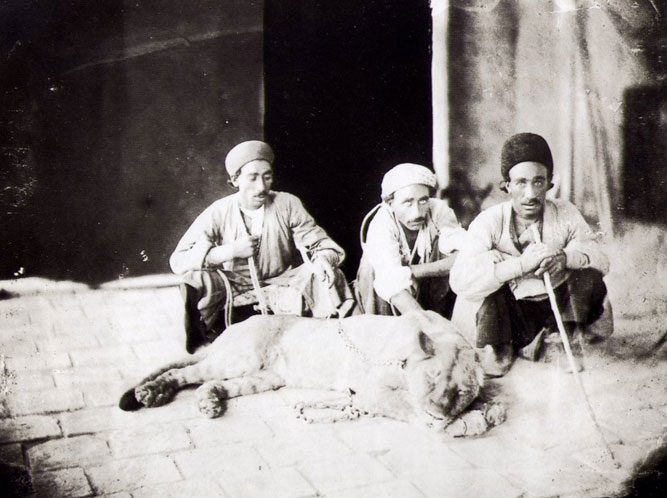
In the past, the Asiatic lion used to occur in this place, besides other parts of Iran. Nowadays, in the wilderness of Eurasia, the only members of this race of lions occur in and around Gir Forest, in Kathiawar Peninsula, India. A plan in 1977 to introduce Gir lions to the area around the lake did not eventually materialize. This area includes the village of Arzhan, and is of agricultural importance, and bringing in lions would mean setting aside farmland, and settling farmers elsewhere. Nevertheless, Iran's intention to restore its population of lions would continue into the 21st century, and in February 2019, Iran obtained a male named 'Kamran' from Bristol Zoo in the United Kingdom, followed in June by the acquisition of a female named 'Eilda' from Dublin Zoo in Ireland, and lodged them at Tehran Zoological Garden in a bid to reproduce and reintroduce lions in the wild.
Geographical location
This lake is located between 51 degrees and 44 minutes and 51 degrees and 51 minutes of east longitude and 29 degrees and 32 minutes and 30 seconds of north latitude. Its area is 4300 hectares and its height is 820 meters above the open water level. Its catchment area is 266.5 square kilometers and its largest area is in April.
Biodiversity
Flora
- In this lake, different types of coarse or fine algae and submerged algae containing green algae live, including the following: Phytoplankton, Spirogyra, Nitzschia, Lemanea, Gomphosphaeria, Gymnodinium.
- Submerged plants in Parishan Lake, which are completely submerged in water, include the following types: Najadaceae and Ceratophyllaceae families are plants that are completely submerged in water and only their flowers may appear on the surface or outside of the water surface.
- Different types of plants like the following live in this ecosystem: Phragmites, Typhaceae, Cyperaceae, Liliaceae.
Fauna
10 species of fish live in Parishan Lake, which are in the order of average abundance: Capoeta barroisi, Shishamo, Mesopotamian himri, Eurasian carp, Hypostomus plecostomus, Crucian carp, Anguillidae, Liza abu and Shabout.
Registered in UNESCO
This lake has been registered as an international wetland in the Ramsar Convention and is considered a protected area in the division of regions.
Drying up of the lake
The existence of 1,300 wells for unsustainable agriculture has been the main reason for the drying up of Parishan Lake.
References
References
- "Parishan Lake".
- "Lake Parishan and Dasht-e-Arjan".
- "Dasht-e Arjan and Lake Parishan (Important Birds Areas of Iran, Islamic Republic of)". BirdLife International.
- "Iranian Wetlands Conservation Project – Lake Urmia and Lake Parishan – Wildfowl & Wetlands Trust (WWT)". WWT.
- {{usurped
- (1999). "Lion and Gazelle: The Mammals and Birds of Iran". Images Publishing.
- Firouz, E.. (2005). "The complete fauna of Iran". I. B. Tauris.
- (1992). "Mlekopitajuščie Sovetskogo Soiuza. Moskva: Vysšaia Škola". Smithsonian Institution and the National Science Foundation.
- Singh, H. S.. (2011). "A conservation success story in the otherwise dire megafauna extinction crisis: The Asiatic lion (''Panthera leo persica'') of Gir forest". Biological Conservation.
- Johnsingh, A.J.T.. (2006). "Field Days: A Naturalist's Journey Through South and Southeast Asia". Universities Press.
- Dey, A.. (16 July 2009). "Rajasthan to be home for cheetahs". [[The Times of India]].
- Khosravifard, S.. (22 May 2010). "Russia, Iran exchange tigers for leopards but some experts express doubts". [[Payvand News]].
- Amlashi, Hamid. (5 February 2019). "Return To Motherland: Asiatic lion returns to Iran after 80 years". [[Tehran Times]].
- (4 June 2019). "From Dublin to Tehran: Persian Lioness Joins Male Companion". Iran Front Page.
- (2015-04-21). "از زندگی تا مرگ دریاچه پریشان شهرستان کازرون".
- ایران, گروه کویرها و بیابانهای. (2011-12-08). "پوشش گیاهی و جانوری تالاب پریشان".
- "ماهی های بومی و معرفی شده دریاچه پریشان".
- "آشنایی با جاذبه های دریاچه پریشان (پیرشون) + تصاویر".
- (2024-06-04). "آب فروشی؛ قاتل خاموش پریشان {{!}} 1300 حلقه چاه حقابه پریشان را میبلعد".
This article was imported from Wikipedia and is available under the Creative Commons Attribution-ShareAlike 4.0 License. Content has been adapted to SurfDoc format. Original contributors can be found on the article history page.
Ask Mako anything about Lake Parishan — get instant answers, deeper analysis, and related topics.
Research with MakoFree with your Surf account
Create a free account to save articles, ask Mako questions, and organize your research.
Sign up freeThis content may have been generated or modified by AI. CloudSurf Software LLC is not responsible for the accuracy, completeness, or reliability of AI-generated content. Always verify important information from primary sources.
Report