From Surf Wiki (app.surf) — the open knowledge base
Lagoon
Shallow body of water separated from a larger one by a narrow landform
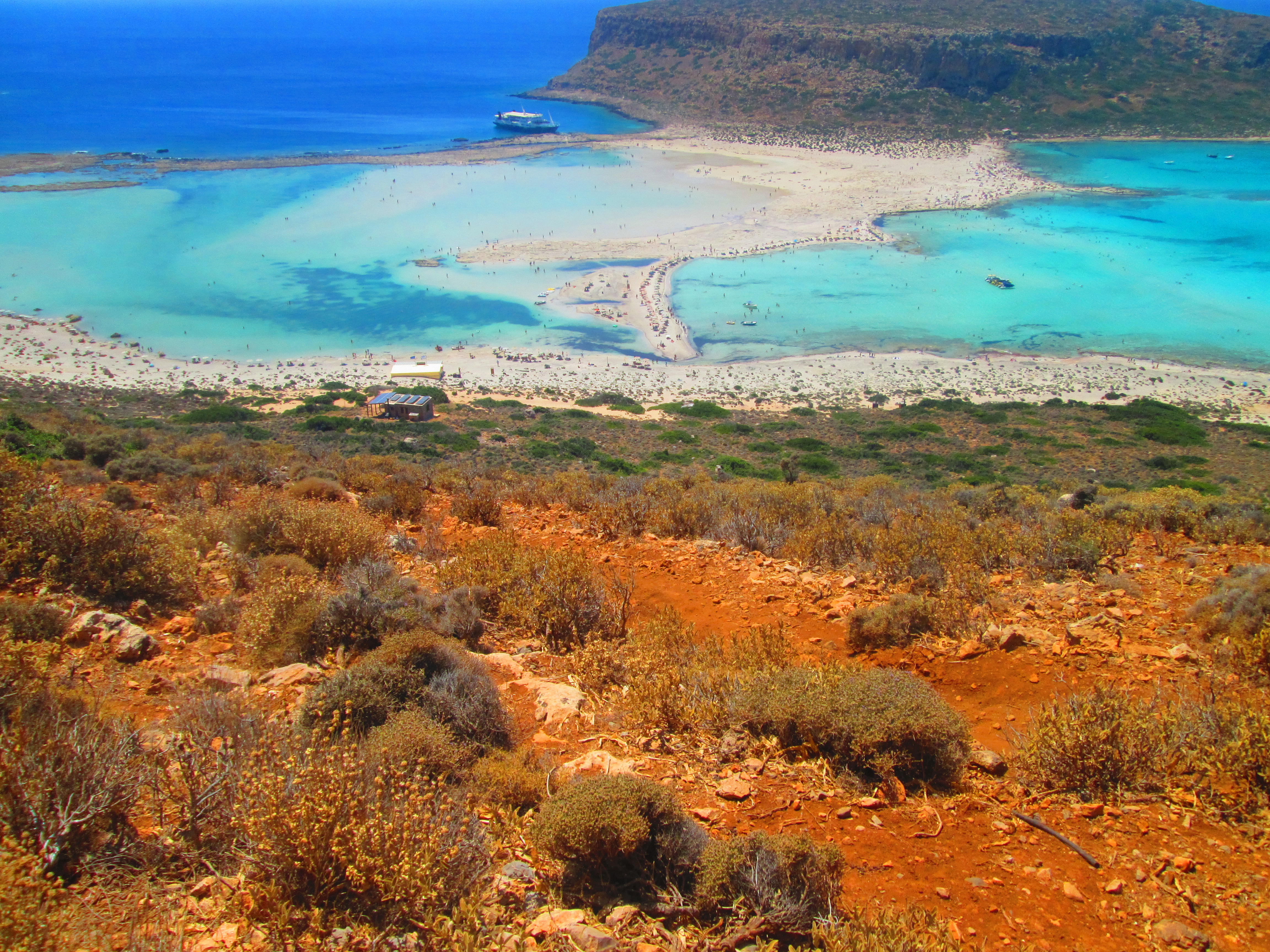
Shallow body of water separated from a larger one by a narrow landform
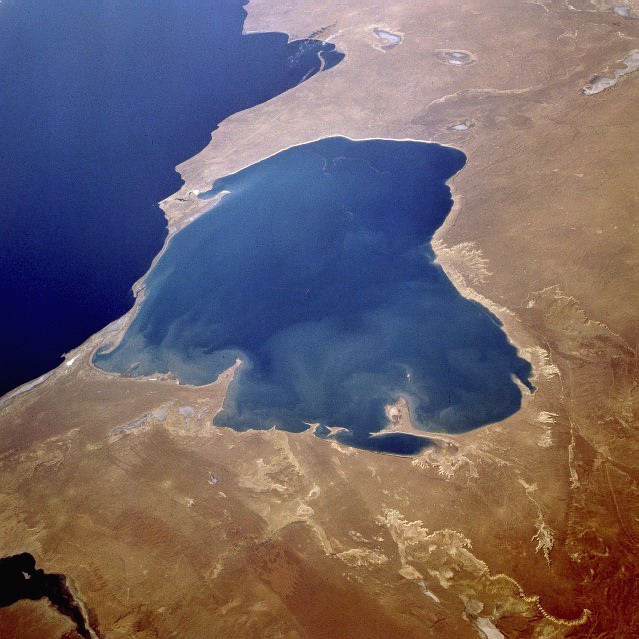
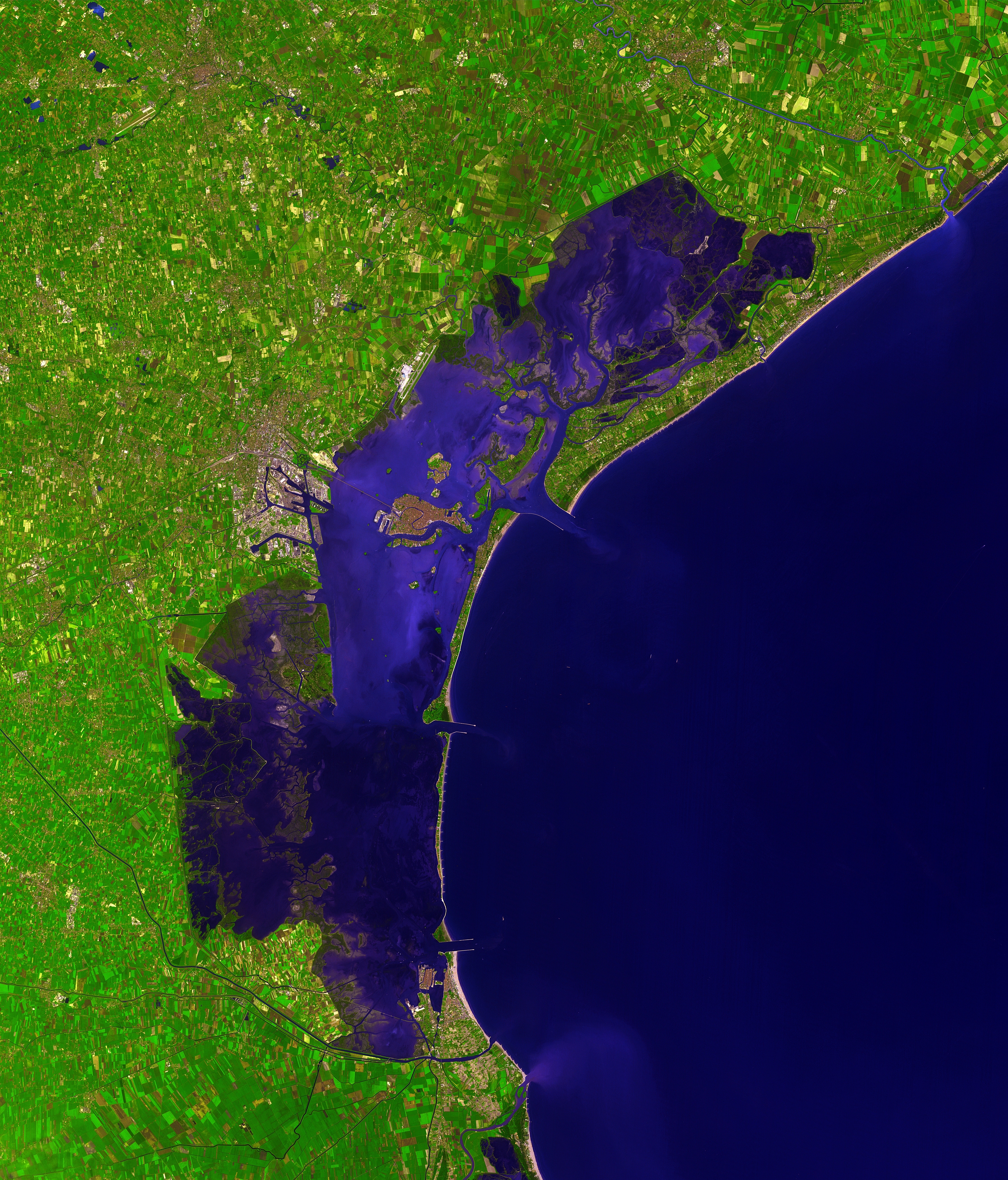
A lagoon is a shallow body of water separated from a larger body of water by a narrow landform, such as a reef, a barrier island or islands, a barrier peninsula, or an isthmus. Lagoons are commonly divided into coastal lagoons (or barrier lagoons) and atoll lagoons. They have also been identified as occurring on mixed-sand and gravel coastlines. There is an overlap between bodies of water classified as coastal lagoons and bodies of water classified as estuaries. Lagoons are common coastal features around many parts of the world.
Definition and terminology
Lagoons are shallow, often elongated bodies of water separated from a larger body of water by a shallow or exposed shoal, coral reef, or similar feature. Some authorities include fresh water bodies in the definition of "lagoon", while others explicitly restrict "lagoon" to bodies of water with some degree of salinity. The distinction between "lagoon" and "estuary" also varies between authorities. Richard A. Davis Jr. restricts "lagoon" to bodies of water with little or no fresh water inflow, and little or no tidal flow, and calls any bay that receives a regular flow of fresh water an "estuary". Davis does state that the terms "lagoon" and "estuary" are "often loosely applied, even in scientific literature". Timothy M. Kusky characterizes lagoons as normally being elongated parallel to the coast, while estuaries are usually drowned river valleys, elongated perpendicular to the coast. Coastal lagoons are classified as inland bodies of water.
When used within the context of a distinctive portion of coral reef ecosystems, the term "lagoon" is synonymous with the term "back reef" or "backreef", which is more commonly used by coral reef scientists to refer to the same area.
Many lagoons do not include "lagoon" in their common names. Currituck, Albemarle and Pamlico Sounds in North Carolina, Great South Bay between Long Island and the barrier beaches of Fire Island in New York, Isle of Wight Bay, which separates Ocean City, Maryland from the rest of Worcester County, Maryland, Banana River in Florida, US, Lake Illawarra in New South Wales, Australia, Montrose Basin in Scotland, and Broad Water in Wales have all been classified as lagoons, despite their names. In England, The Fleet at Chesil Beach has also been described as a lagoon.
In some languages the word for a lagoon is simply a type of lake: In Chinese a lake is hu (湖), and a lagoon is xihu (潟湖). In the French Mediterranean several lagoons are called étang ("lake"). Contrariwise, several other languages have specific words for such bodies of water. In Spanish, coastal lagoons generically are laguna costera, but those on the Mediterranean coast are specifically called albufera. In Russian and Ukrainian, those on the Black Sea are liman (лиман), while the generic word is laguna (Лагуна). Similarly, in the Baltic, Danish has the specific **, and German the specifics Bodden and Haff, as well as generic terms derived from laguna. In Poland these lagoons are called zalew ("bay"), and in Lithuania marios ("lagoon, reservoir"). In Jutland several lagoons are known as fjord. In New Zealand the Māori word hapua refers to a coastal lagoon formed at the mouth of a braided river where there are mixed sand and gravel beaches, while waituna, an ephemeral coastal waterbody, is neither a true lagoon, lake, nor estuary.
Some languages differentiate between coastal and atoll lagoons. In French, ** refers specifically to an atoll lagoon, while coastal lagoons are described as {{ill|étang|fr}}, the generic word for a still lake or pond. In Vietnamese, Đầm san hô refers to an atoll lagoon, whilst Đầm phá is coastal.
In Latin America, the term laguna in Spanish, which lagoon translates to, may be used for a small fresh water lake in a similar way a creek is considered a small river. However, sometimes it is popularly used to describe a full-sized lake, such as Laguna Catemaco in Mexico, which is actually the third-largest lake by area in the country. The brackish water lagoon may be thus explicitly identified as a "coastal lagoon" (laguna costera). In Portuguese, a similar usage is found: lagoa may be a body of shallow seawater, or a small freshwater lake not linked to the sea.
Etymology
Lagoon is derived from the Venetian łaguna, which refers to the waters around Venice, i.e. the Venetian Lagoon. Laguna is attested in English by at least 1612, and had been Anglicized to lagune by 1673. In 1697 William Dampier referred to a "Lagune or Lake of Salt water" on the coast of Mexico. Captain James Cook described an island "of Oval form with a Lagoon in the middle" in 1769.
Atoll lagoons
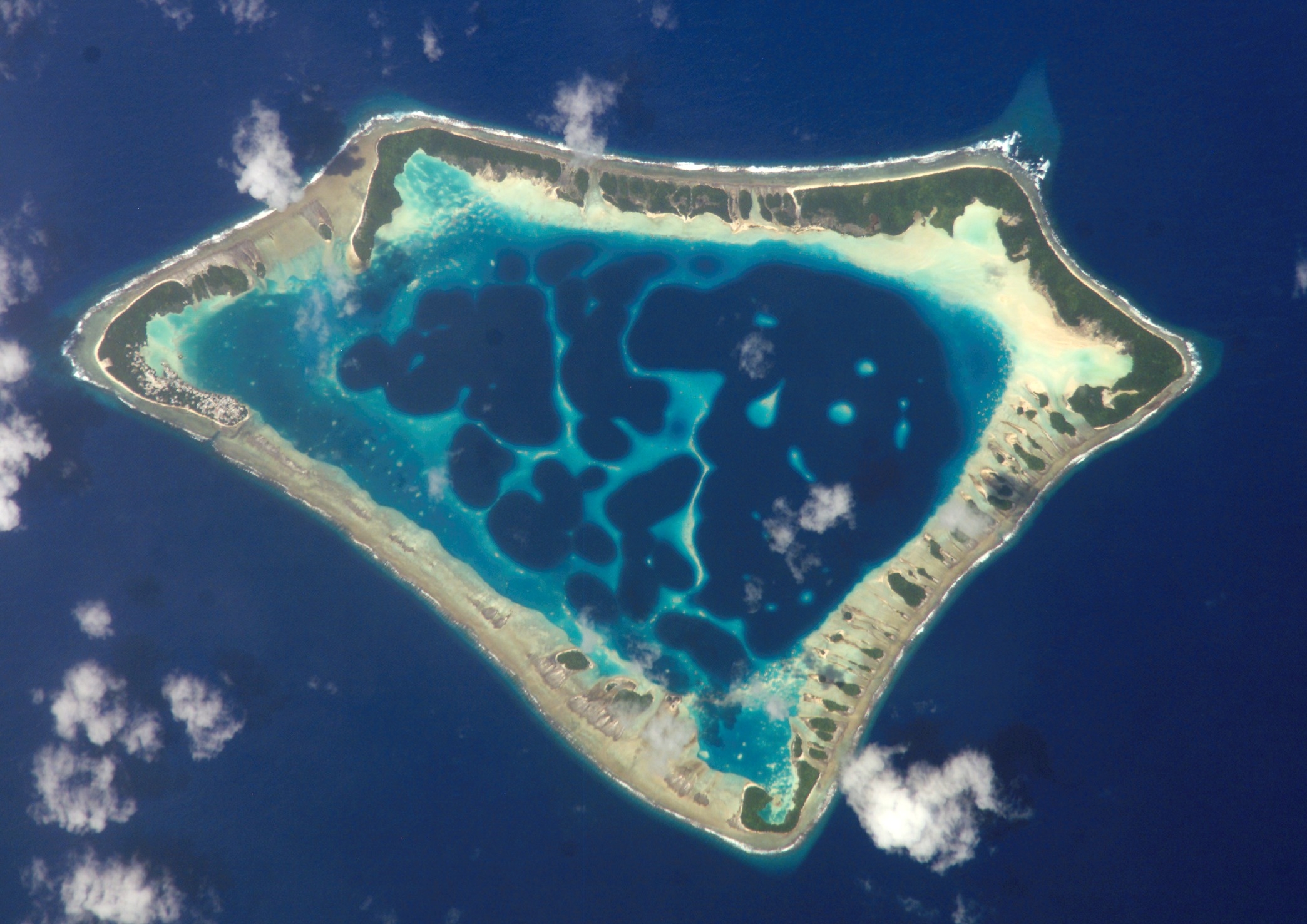
Atoll lagoons form as coral reefs grow upwards while the islands that the reefs surround subside, until eventually only the reefs remain above sea level. Unlike the lagoons that form shoreward of fringing reefs, atoll lagoons often contain some deep (20 m) portions.
Coastal lagoons

.JPG)
Coastal lagoons form along gently sloping coasts where barrier islands or reefs can develop offshore, and the sea-level is rising relative to the land along the shore (either because of an intrinsic rise in sea-level, or subsidence of the land along the coast). Coastal lagoons do not form along steep or rocky coasts, or if the range of tides is more than 4 m. Due to the gentle slope of the coast, coastal lagoons are shallow. A relative drop in sea level may leave a lagoon largely dry, while a rise in sea level may let the sea breach or destroy barrier islands, and leave reefs too deep underwater to protect the lagoon. Coastal lagoons are young and dynamic, and may be short-lived in geological terms. Coastal lagoons are common, occurring along nearly 15 percent of the world's shorelines. In the United States, lagoons are found along more than 75 percent of the Eastern and Gulf Coasts.
Coastal lagoons can be classified as leaky, restricted, or choked. Coastal lagoons are usually connected to the open ocean by inlets between barrier islands. The number and size of the inlets, precipitation, evaporation, and inflow of fresh water all affect the nature of the lagoon. Lagoons with little or no interchange with the open ocean, little or no inflow of fresh water, and high evaporation rates, such as Lake St. Lucia, in South Africa, may become highly saline. Lagoons with no connection to the open ocean and significant inflow of fresh water, such as the Lake Worth Lagoon in Florida in the middle of the 19th century, may be entirely fresh. On the other hand, lagoons with many wide inlets, such as the Wadden Sea, have strong tidal currents and mixing. Coastal lagoons tend to accumulate sediments from inflowing rivers, from runoff from the shores of the lagoon, and from sediment carried into the lagoon through inlets by the tide. Large quantities of sediment may be occasionally be deposited in a lagoon when storm waves overwash barrier islands. Mangroves and marsh plants can facilitate the accumulation of sediment in a lagoon. Benthic organisms may stabilize or destabilize sediments.
Largest coastal lagoons
| Lagoon | Area | Country |
|---|---|---|
| New Caledonian lagoon | 24,000 km2 | |
| Garabogazköl | 18,000 km2 | |
| Lake Maracaibo | 13512 km2 | |
| Lagoa dos Patos | 10,100 km2 | |
| Albemarle-Pamlico sound system | 3000 sqmi | |
| Lagos Lagoon | 6354.7 km2 | |
| Curonian lagoon | 1,619 km2 | / |
| Mayotte lagoon | ~1,500 km2 | |
| Rangiroa lagoon | 1,446 km2 | |
| Chilika Lake | 1165 km2 during monsoon season, 906 km2 during dry season | |
| Caratasca Lagoon | 1110 km2 | |
| Indian River Lagoon | 353 sqmi | |
| Vistula lagoon | 838 km2 | / |
| Biscayne Bay System | ||
| —Biscayne Bay (traditional) | 703 km2 | |
| 572 km2 | ||
| Marovo lagoon | 700 km2 | |
| Szczecin Lagoon | 689 km2 | / |
| Venetian Lagoon | 550 km2 |
Images
|File:Lagoa_dos_Patos_PIA03444_lrg.jpg|Lagoa dos Patos, the largest lagoon in South America, in the Brazilian state of Rio Grande do Sul.|Image:Boraboraluft gerade.jpg|Aerial view of Bora Bora in French Polynesia. |Image:Kivalina Alaska aerial view.jpg|Aerial view of Kivalina, Alaska from the northwest. |Image:Kiritimati-EO.jpg|Nearly half the area of Kiritimati is covered with lagoons, some freshwater and some seawater. |Image:Blue Lagoon,Nusa Lembongan-Bali.jpg|Nusa Lembongan Lagoon, Bali, Indonesia. |File:LEFKADA Panorama1.jpg|Panoramic view of Lefkada City Lagoon, Lefkada Isl., Ionian Islands Prefecture, Greece. |File:KALOGRIA Panorama.jpg|Panoramic view of Prokopos Lagoon, Achaia, Western Greece Prefecture, Greece. |File:Island lagoon in Bacuit Bay, El Nido, Palawan, Philippines.jpg|Tropical lagoon in Bacuit Bay, Palawan, Philippines. |File:Cartagena, Mar Menor, i Cap de Pals (foto satèl·lit).jpg|Photo of Mar Menor as seen from International Space Station.
Notes
References
References
- Davis, Richard A. Jr.. (1994). "The Evolving Coast". Scientific American Library.
- (1990). "Lagoon". Oxford University Press.
- (2005). "Lagoon". Facts on File.
- (2003). "Lagoon". Grolier Academic Reference.
- Reid, George K.. (1961). "Ecology of Inland Waters and Estuaries". Van Nostrand Reinhold Company.
- Maurice L. Schwartz. (2005). "Encyclopedia of coastal science". Springer.
- Kjerfve, Björn. (1994). "Coastal lagoon processes". Elsevier.
- (1993). "Hurricane effects on backreef echinoderms of the Caribbean". Coral Reefs.
- Jia, Peng and Ming Li. (2012). "Circulation dynamics and salt balance in a lagoonal estuary". Journal of Geophysical Research: Oceans.
- Goodbred, S. Jr., P. Locicero, V. Bonvento, S. Kolbe, S. Holsinger. "History of the Great South Bay estuary:Evidence of a catastrophic origin". State University of New York.
- Boynton, W. R., J. D. Hagy, L. Murray, C. Stokes, W. M Kemp. (June 1996). "A Comparative Analysis of Eutrophication Patterns in a Temperate Coastal Lagoon". Estuaries.
- "Total Maximum Daily Loads for the North and Central Indian River Lagoon and Banana river Lagoon, Florida". United States Environmental Protection Agency.
- "Proposed Swimming Enclosure Net, Entrance Lagoon, Lake Illawarra". Lake Illawarra Authority.
- Bird, Eric C. F.. (2010). "Encyclopedia of the World's Coastal Landforms". Springer.
- Kirk, R.M. and Lauder, G.A. (2000). "Significant coastal lagoon systems in the South Island, New Zealand: coastal processes and lagoon mouth closure". [[Department of Conservation (New Zealand).
- (1971). "Lagoon". Oxford University Press.
- Kjerfve, Björn. (1986). "Estuarine Variability". Elsevier.
- (2024). "Fast facts about the Indian River Lagoon".
- Smith, Ned P.. (Summer 2001). "Tides of Biscayne Bay, Card Sound, Little Card Sound, Barnes Sound, and Manatee Bay, Florida". Florida Scientist.
- Milano, Gary R.. (2000). "Island Restoration and Enhancement in Biscayne Bay, Florida".
This article was imported from Wikipedia and is available under the Creative Commons Attribution-ShareAlike 4.0 License. Content has been adapted to SurfDoc format. Original contributors can be found on the article history page.
Ask Mako anything about Lagoon — get instant answers, deeper analysis, and related topics.
Research with MakoFree with your Surf account
Create a free account to save articles, ask Mako questions, and organize your research.
Sign up freeThis content may have been generated or modified by AI. CloudSurf Software LLC is not responsible for the accuracy, completeness, or reliability of AI-generated content. Always verify important information from primary sources.
Report