From Surf Wiki (app.surf) — the open knowledge base
Lactobacillus
Genus of bacteria
Genus of bacteria
Lactobacillus is a genus of gram-positive bacteria within the Lactobacillaceae family. Members of the genus are aerotolerant anaerobes or microaerophilic, rod-shaped, and do not form endospores. Until 2020, the genus Lactobacillus comprised 261 phylogenetically, ecologically, and metabolically diverse species; a taxonomic revision of the genus reassigned many former Lactobacillus species to 25 genera (see below).
Lactobacillus species constitute a significant component of the human and animal microbiota at a number of body sites, such as the digestive system and female genital system. ILactobacillus species are normally a major part of the vaginal microbiota. Lactobacillus forms biofilms in the vaginal and gut microbiota, allowing them to persist in harsh environmental conditions and maintain ample populations. Lactobacillus exhibits a mutualistic relationship with the human body, as it protects the host against potential invasions by pathogens, and in turn, the host provides a source of nutrients. Lactobacilli are among the most common probiotics found in food such as yogurt, and the bacteria are diverse in their application in maintaining well-being, by helping to treat diarrhea, vaginal infections, and skin disorders such as eczema.
Metabolism
Lactobacilli are homofermentative, i.e., hexoses are metabolized by glycolysis to lactate as the major end product, or heterofermentative, i.e., hexoses are metabolized by the phosphoketolase pathway to lactate, CO2, and acetate or ethanol as major end products. Most lactobacilli are aerotolerant and some species respire if heme and menaquinone are present in the growth medium. Aerotolerance of lactobacilli is manganese-dependent and has been explored (and explained) in Lactiplantibacillus plantarum (previously Lactobacillus plantarum). Lactobacilli generally do not require iron for growth.
The Lactobacillaceae are the only family of the lactic acid bacteria (LAB) that includes homofermentative and heterofermentative organisms; in the Lactobacillaceae, homofermentative or heterofermentative metabolism is shared by all strains of a genus. Lactobacillus species are all homofermentative, do not express pyruvate formate lyase, and most species do not ferment pentoses. In L. crispatus, pentose metabolism is strain specific and acquired by lateral gene transfer.
Genomes
The genomes of lactobacilli are highly variable, ranging in size from 1.2 to 4.9 Mb (megabases). Accordingly, the number of protein-coding genes ranges from 1,267 to about 4,758 genes (in Fructilactobacillus sanfranciscensis and Lentilactobacillus parakefiri, respectively). Even within a single species, there can be substantial variation. For instance, strains of L. crispatus have genome sizes ranging from 1.83 to 2.7 Mb, or 1,839 to 2,688 open reading frames. Lactobacillus contains a wealth of compound microsatellites in the coding region of the genome, which are imperfect and have variant motifs. Many lactobacilli also contain multiple plasmids. A recent study has revealed that plasmids encode the genes which are required for adaptation of lactobacilli to the given environment.
Species
The genus Lactobacillus comprises the following species:
- Lactobacillus acetotolerans Entani et al. 1986
- Lactobacillus acidophilus (Moro 1900) Hansen and Mocquot 1970 (Approved Lists 1980)
- Lactobacillus agrestimuris Afrizal et al. 2023 --
- Lactobacillus amylolyticus Bohak et al. 1999
- Lactobacillus amylovorus Nakamura 1981
- Lactobacillus apis Killer et al. 2014
- Lactobacillus bombicola Praet et al. 2015
- Lactobacillus colini Zhang et al. 2017
- Lactobacillus corticus Tohno et al. 2021
- Lactobacillus crispatus (Brygoo and Aladame 195555) Moore and Holdeman 1970 (Approved Lists 1980)
- Lactobacillus delbrueckii (Leichmann 1896) Beijerinck 1901 (Approved Lists 1980)
- Lactobacillus equicursoris Morita et al. 2010
- Lactobacillus fornicalis Dicks et al. 2000
- Lactobacillus gallinarum Fujisawa et al. 1992
- Lactobacillus gasseri Lauer and Kandler 1980
- Lactobacillus gigeriorum Cousin et al. 2012
- Lactobacillus hamsteri Mitsuoka and Fujisawa 1988
- Lactobacillus helsingborgensis Olofsson et al. 2014
- Lactobacillus helveticus (Orla-Jensen 1919) Bergey et al. 1925 (Approved Lists 1980)
- Lactobacillus hominis Cousin et al. 2013
- Lactobacillus huangpiensis Li and Gu 2022
- Lactobacillus iners Falsen et al. 1999
- Lactobacillus intestinalis (ex Hemme 1974) Fujisawa et al. 1990
- Lactobacillus isalae Eilers et al. 2023
- Lactobacillus jensenii Gasser et al. 1970 (Approved Lists 1980)
- Lactobacillus juensis Jiang and Gu 2024
- Lactobacillus johnsonii Fujisawa et al. 1992
- Lactobacillus kalixensis Roos et al. 2005
- Lactobacillus kefiranofaciens Fujisawa et al. 1988
- Lactobacillus kimbladii Olofsson et al. 2014
- Lactobacillus kitasatonis Mukai et al. 2003
- Lactobacillus kullabergensis Olofsson et al. 2014
- Lactobacillus laiwuensis Li and Gu 2022
- Lactobacillus leichmannii (Henneberg 1903) Bergey et al. 1923 (Approved Lists 1980)
- Lactobacillus melliventris Olofsson et al. 2014
- Lactobacillus mulieris Rocha et al. 2020
- Lactobacillus nasalidis Suzuki-Hashido et al. 2021
- Lactobacillus panisapium Wang et al. 2018
- Lactobacillus paragasseri Tanizawa et al. 2018
- Lactobacillus pasteurii Cousin et al. 2013
- Lactobacillus porci Kim et al. 2018
- Lactobacillus psittaci Lawson et al. 2001
- Lactobacillus rhamnosus (Hansen 1968) Collins et al. 1989
- Lactobacillus rizhaonensis Jiang and Gu 2024
- Lactobacillus rodentium Killer et al. 2014
- Lactobacillus rogosae Holdeman and Moore 1974 (Approved Lists 1980)
- Lactobacillus taiwanensis Wang et al. 2009
- Lactobacillus timonensis Afouda et al. 2017
- Lactobacillus ultunensis Roos et al. 2005
- Lactobacillus xujianguonis Meng et al. 2020
- Lactobacillus xylocopicola Kawasaki et al. 2024
Taxonomy
As of 2025, the genus Lactobacillus contains 50 validly published species which are adapted to vertebrate hosts or to insects. In recent years, other members of the genus Lactobacillus (formerly known as the Leuconostoc branch of Lactobacillus) have been reclassified into the genera Atopobium, Carnobacterium, Weissella, Oenococcus, and Leuconostoc. The Pediococcus species P. dextrinicus has been reclassified as a Lapidilactobacillus dextrinicus and most lactobacilli were assigned to Paralactobacillus or one of the 23 novel genera of the Lactobacillaceae. Two websites inform on the assignment of species to the novel genera or species (http://www.lactobacillus.uantwerpen.be/; http://www.lactobacillus.ualberta.ca/).
| Genus | Meaning of the genus name | Properties of the genus |
|---|---|---|
| Lactobacillus | Rod-shaped bacillus from milk | Type species: L. delbrueckii. |
| Holzapfelia | Wilhelm Holzapfel's lactobacilli | Type species: H. floricola. |
| Amylolactobacillus | Starch-degrading lactobacilli | Type species: A. amylophilus. |
| Bombilactobacillus | Lactobacilli from bees and bumblebees | Type species: B. mellifer. |
| Companilactobacillus | Companion-lactobacillus, referring to them growing in association with other lactobacilli in cereal, meat and vegetable fermentations | Type species: C. alimentarius. |
| Lapidilactobacillus | Lactobacilli from stones | Type species: L. concavus. |
| Agrilactobacillus | Lactobacilli from fields | Type species: A. composti. |
| Schleiferilactobacillus | Karl Heinz Schleifer's lactobacilli | Type species: S. perolens. |
| Loigolactobacillus | (Food) spoiling lactobacilli | Type species: L. coryniformis. |
| Lacticaseibacillus | Lactobacilli related to cheese | Type species: L. casei. |
| Latilactobacillus | Widespread lactobacilli | Type species: L. sakei. |
| Dellaglioa | Franco Dellaglio's lactobacilli | Type species: D. algida. |
| Liquorilactobacillus | Lactobacilli from liquor or liquids | Type species: L. mali. |
| Ligilactobacillus | Uniting (host adapted) lactobacilli | Type species: L. salivarius. |
| Lactiplantibacillus | Lactobacilli related to plants | Type species: L. plantarum. |
| Furfurilactobacillus | Lactobacilli from bran | Type species: F. rossiae. |
| Paucilactobacillus | Lactobacilli fermenting few carbohydrates | Type species: P. vaccinostercus. |
| Limosilactobacillus | Slimy (biofilm-forming) lactobacilli | Type species: L. fermentum. |
| Fructilactobacillus | Fructose-loving lactobacilli | Type species: F. fructivorans. |
| Acetilactobacillus | Lactobacilli from vinegar | Type species: A. jinshani. |
| Apilactobacillus | Lactobacilli from bees | Type species: A. kunkeei. |
| Levilactobacillus | (Dough)-leavening lactobacilli | Type species: L. brevis. |
| Secundilactobacillus | Second lactobacilli, growing after other organisms depleted hexoses | Type species: S. collinoides. |
| Lentilactobacillus | Slow (growing) lactobacilli | Type species: L. buchneri. |
Phylogeny
The currently accepted taxonomy is based on the List of Prokaryotic names with Standing in Nomenclature and the phylogeny is based on whole-genome sequences.
Human health
Vaginal tract
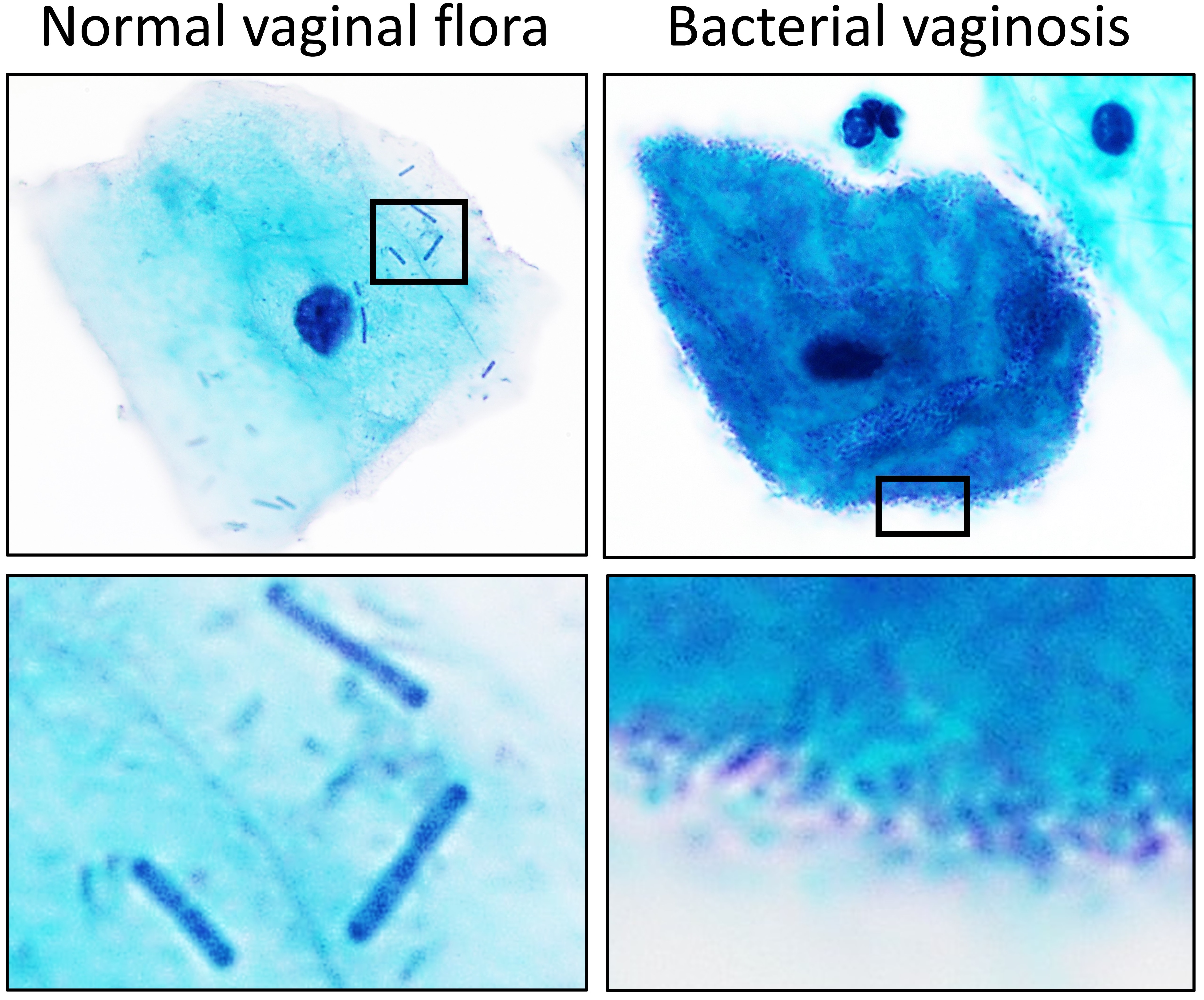
Lactobacillus s.s. species are considered "keystone species" in the vaginal microbiota of reproductive-age women. Most, but not all, healthy women have a vaginal mcirobiota dominated by one of four species of Lactobacillus: L. iners, L. crispatus, L. gasseri, and L. jensenii. Other women have a more diverse mix of anaerobic microorganisms and are still considered to have a healthy microbiome.
Interactions with pathogens
Lactobacilli produce lactic acid, which contributes to the vaginal acidity, and this lowered pH is generally accepted to be the main mechanism controlling the composition of the vaginal microbiota.
Lactobacilli are also proposed to produce hydrogen peroxide, which inhibits the growth and virulence of the fungal pathogen Candida albicans in vitro, though this is arguably not the main mechanism in vivo.
In vitro studies have also shown that lactobacilli reduce the pathogenicity of C. albicans through the production of organic acids and certain metabolites. Both the presence of metabolites, such as sodium butyrate, and decrease in environmental pH caused by the organic acids reduce the growth of hyphae in C. albicans, which reduces its pathogenicity. Lactobacilli also reduce the pathogenicity of C. albicans by reducing C. albicans biofilm formation. On the other hand, following antibiotic therapy, certain Candida species can suppress the regrowth of lactobacilli at body sites where they cohabitate, such as in the gastrointestinal tract.
In addition to its effects on C. albicans, Lactobacillus sp. also interact with other pathogens. For example, Limosilactobacillus reuteri (formerly Lactobacillus reuteri) can inhibit the growth of many different bacterial species by using glycerol to produce the antimicrobial substance called reuterin. Another example is *Ligilactobacillus salivarius (*formerly Lactobacillus salivarius), which interacts with many pathogens through the production of salivaricin B, a bacteriocin.
Probiotics
Because of the interactions with other microbes, fermenting bacteria like lactic acid bacteria (LAB) are now in use as probiotics with many applications.
Lactobacilli administered in combination with other probiotics provides benefits in cases of irritable bowel syndrome (IBS), although the extent of efficacy is still uncertain. The probiotics help treat IBS by re-establishing homeostasis when the gut microbiota experiences unusually high levels of opportunistic bacteria. In addition, lactobacilli can be administered as probiotics during cases of infection by the ulcer-causing bacterium Helicobacter pylori. Helicobacter pylori is linked to cancer, and antibiotic resistance impedes the success of current antibiotic-based eradication treatments. When probiotic lactobacilli are administered along with the treatment as an adjuvant, its efficacy is substantially increased and side effects may be lessened. In addition, lactobacilli with other probiotic organisms in ripened milk and yogurt aid development of immunity in the intestine mucus in humans by raising the number of immunoglobulin A (IgA (+)) antibodies.
Gastroesophageal reflux disease (GERD) is a common condition associated with bile acid-induced oxidative stress and accumulation of reactive oxygen species (ROS) in esophageal tissues that cause inflammation and DNA damage. In an experimental model of GERD, Lactobacillus species (L. acidophilus, L. plantarum, and L. fermentum) facilitated the repair of DNA damage caused by bile-induced ROS. For patients with GERD, there is significant interest in the anti-inflammatory effect of lactobacilli that may help prevent progression to Barrett's esophagus and esophageal adenocarcinoma.
Given the known microbial associations, lactobacilli are currently available as probiotics to help control urogenital and vaginal infections, such as bacterial vaginosis (BV). Lactobacilli produce bacteriocins to suppress the pathogenic growth of certain bacteria, as well as lactic acid, which lowers the vaginal pH to around 4.5 or less, hampering the survival of other bacteria.
In children, lactobacilli such as Lacticaseibacillus rhamnosus (previously L. rhamnosus) are associated with a reduction of atopic eczema, also known as dermatitis, due to anti-inflammatory cytokines secreted by this probiotic bacteria.
Oral health

Some lactobacilli have been associated with cases of dental caries (cavities). Lactic acid can corrode teeth, and the Lactobacillus count in saliva has been used as a "caries test" for many years. Lactobacilli characteristically cause existing carious lesions to progress, especially those in coronal caries. The issue is, however, complex, as recent studies show probiotics can allow beneficial lactobacilli to populate sites on teeth, preventing streptococcal pathogens from taking hold and inducing dental decay. The scientific research of lactobacilli in relation to oral health is a new field and only a few studies and results have been published. Some studies have provided evidence of certain lactobacilli which can be a probiotic for oral health. Some species, but not all, show evidence in defense to dental caries. Due to these studies, there have been applications of incorporating such probiotics in chewing gum and lozenges. There is also evidence of certain lactobacilli that are beneficial in the defense of periodontal disease such as gingivitis and periodontitis.
Food production
Species of Lactobacillus (and related genera) comprise many food fermenting lactic acid bacteria and are used as starter cultures in industry for controlled fermentation in the production of wine, yogurt, cheese, sauerkraut, pickles, beer, cider, kimchi, cocoa, kefir, and other fermented foods, as well as animal feeds and the bokashi soil amendment. Lactobacillus species are dominant in yogurt, cheese, and sourdough fermentations.
Their importance in fermentation comes from both metabolism of the food itself, as well as the inhibition of growth of other potentially pathogenic microbes. The antibacterial and antifungal activity of lactobacilli relies on production of bacteriocins and low molecular weight compounds that inhibit these microorganisms.
Sourdough bread is made either spontaneously, by taking advantage of the bacteria naturally present in flour, or by using a "starter culture", which is a symbiotic culture of yeast and lactic acid bacteria growing in a water and flour medium. The bacteria metabolize sugars into lactic acid, which lowers the pH of their environment and creates the signature sourness associated with yogurt, sauerkraut, etc.
In many traditional pickling processes, vegetables are submerged in brine, and salt-tolerant lactobacilli feed on natural sugars found in the vegetables. The resulting mix of salt and lactic acid is a hostile environment for other microbes, such as fungi, and the vegetables are thus preserved, remaining edible for long periods.
Lactobacilli, especially Pediococcus and L. brevis, are some of the most common beer spoilage organisms. They are, however, essential to the production of sour beers such as Belgian lambics and American wild ales, giving the beer a distinct tart flavor.
Scientist Elie Metchnikoff won a Nobel prize in 1908 for his work on LAB, the connection to food, and possible usage as a probiotic.
References
References
- (1901). "Sur les ferments lactiques de l'industrie". Archives Néerlandaises des Sciences Exactes et Naturelles (Section 2) [Dutch Archives of Exact and Natural Sciences (Section 2)].
- (October 2006). "Comparative genomics of the lactic acid bacteria". Proceedings of the National Academy of Sciences of the United States of America.
- (2020). "A taxonomic note on the genus Lactobacillus: Description of 23 novel genera, emended description of the genus Lactobacillus Beijerinck 1901, and union of Lactobacillaceae and Leuconostocaceae". International Journal of Systematic and Evolutionary Microbiology.
- (August 2017). "Lifestyles in transition: evolution and natural history of the genus Lactobacillus". FEMS Microbiology Reviews.
- (20 September 2012). "Vaginal microbiome: rethinking health and disease". Annual Review of Microbiology.
- (November 2018). "The evolution of ecological facilitation within mixed-species biofilms in the mouse gastrointestinal tract". The ISME Journal.
- (September 2016). "Biofilm Forming Lactobacillus: New Challenges for the Development of Probiotics". Microorganisms.
- (July 2013). "Role of commensal and probiotic bacteria in human health: a focus on inflammatory bowel disease". Microbial Cell Factories.
- (2017). "Combined Phenotypic-Genotypic Analyses of the Genus Lactobacillus and Selection of Cultures for Biopreservation of Fermented Food". ETH Zurich.
- Gänzle, Michael G. (2015-04-01). "Lactic metabolism revisited: metabolism of lactic acid bacteria in food fermentations and food spoilage". Current Opinion in Food Science.
- (June 1981). "Manganese, superoxide dismutase, and oxygen tolerance in some lactic acid bacteria". Journal of Bacteriology.
- Weinberg, E. D.. (1997). "The Lactobacillus anomaly: total iron abstinence". Perspectives in Biology and Medicine.
- (December 2020). "Characterization of two extracellular arabinanases in Lactobacillus crispatus". Applied Microbiology and Biotechnology.
- (April 2014). "Comparative functional genomics of Lactobacillus spp. reveals possible mechanisms for specialization of vaginal lactobacilli to their environment". Journal of Bacteriology.
- (September 2015). "Expanding the biotechnology potential of lactobacilli through comparative genomics of 213 strains and associated genera". Nature Communications.
- (December 2016). "Genomic Comparisons of Lactobacillus crispatus and Lactobacillus iners Reveal Potential Ecological Drivers of Community Composition in the Vagina". Applied and Environmental Microbiology.
- (December 2015). "Survey of compound microsatellites in multiple Lactobacillus genomes". Canadian Journal of Microbiology.
- (November 2020). "Plasmids encode niche-specific traits in Lactobacillaceae". Microbial Genomics.
- "''Lactobacillus''". [[List of Prokaryotic names with Standing in Nomenclature]] (LPSN).
- "''Lactobacillus''". National Center for Biotechnology Information.
- (2009). "Reclassification of Pediococcus dextrinicus (Coster and White 1964) Back 1978 (Approved Lists 1980) as Lactobacillus dextrinicus comb. nov., and emended description of the genus Lactobacillus". International Journal of Systematic and Evolutionary Microbiology.
- (15 March 2011). "Vaginal microbiome of reproductive-age women.". Proceedings of the National Academy of Sciences of the United States of America.
- (6 February 2018). "The implausible "in vivo" role of hydrogen peroxide as an antimicrobial factor produced by vaginal microbiota.". Microbiome.
- (April 2014). "Review article: fungal microbiota and digestive diseases". Alimentary Pharmacology & Therapeutics.
- (April 2015). "Small intestinal fungal overgrowth". Current Gastroenterology Reports.
- (19 July 2011). "In vaginal fluid, bacteria associated with bacterial vaginosis can be suppressed with lactic acid but not hydrogen peroxide.". BMC Infectious Diseases.
- (February 2015). "Lactobacillus acidophilus ATCC 4356 inhibits biofilm formation by C. albicans and attenuates the experimental candidiasis in Galleria mellonella". Virulence.
- (April 1988). "Production of a Broad Spectrum Antimicrobial Substance by Lactobacillus reuteri". Microbial Ecology in Health and Disease.
- (August 1994). "Antimicrobial activity of lactobacilli: preliminary characterization and optimization of production of acidocin B, a novel bacteriocin produced by Lactobacillus acidophilus M46". Journal of Applied Microbiology.
- (October 2014). "Efficacy of prebiotics, probiotics, and synbiotics in irritable bowel syndrome and chronic idiopathic constipation: systematic review and meta-analysis". The American Journal of Gastroenterology.
- (November 2014). "Use of probiotics in the fight against Helicobacter pylori". World Journal of Gastrointestinal Pathophysiology.
- (2014). "Immune system stimulation by probiotic microorganisms". Critical Reviews in Food Science and Nutrition.
- Bernard, J.N.; Chinnaiyan, V.; Almeda, J.; Catala-Valentin, A.; Andl, C.D. Lactobacillus sp. Facilitate the Repair of DNA Damage Caused by Bile-Induced Reactive Oxygen Species in Experimental Models of Gastroesophageal Reflux Disease. Antioxidants 2023, 12, 1314. https://doi.org/10.3390/antiox12071314
- (March 9, 2009). "Vaginal microbiota and the use of probiotics". Interdisciplinary Perspectives on Infectious Diseases.
- (January 2008). "Probiotics and oral health effects in children". International Journal of Paediatric Dentistry.
- (September 2007). "Probiotics: contributions to oral health". Oral Diseases.
- Grenier, Daniel. (October 2009). "Probiotics for Oral Health: Myth or Reality?". Professional Issues.
- Gänzle, Michael. (2019). "Fermented Foods". John Wiley & Sons, Ltd.
- (2018). "Microbiology and Technology of Fermented Foods, 2nd edition". Blackwell Publishing.
- (March 7, 2025). "Purina France confirme sa dynamique sur le marché français".
- (July 2015). "High-throughput screening assays for antibacterial and antifungal activities of Lactobacillus species". Journal of Microbiological Methods.
- (2017). "PhD Thesis - Combined Phenotypic-Genotypic Analyses of the Genus Lactobacillus and Selection of Cultures for Biopreservation of Fermented Food". ETH Zurich.
- (2019-08-02). "Lifestyles of sourdough lactobacilli - Do they matter for microbial ecology and bread quality?". International Journal of Food Microbiology.
- (June 2021). "Molecular characterization of non-biogenic amines producing Lactobacillus plantarum GP11 isolated from traditional pickles using HRESI-MS analysis.". Journal of Food Science and Technology.
- (November 2022). "Comparison Review of the Production, Microbiology, and Sensory Profile of Lambic and American Coolship Ales". Fermentation.
- 'Lactic Acid Bacteria and Their Uses in Animal Feeding to Improve Food Safety' in Advances in Food and Nutrition Research, Volume 50 (Elsevier),
This article was imported from Wikipedia and is available under the Creative Commons Attribution-ShareAlike 4.0 License. Content has been adapted to SurfDoc format. Original contributors can be found on the article history page.
Ask Mako anything about Lactobacillus — get instant answers, deeper analysis, and related topics.
Research with MakoFree with your Surf account
Create a free account to save articles, ask Mako questions, and organize your research.
Sign up freeThis content may have been generated or modified by AI. CloudSurf Software LLC is not responsible for the accuracy, completeness, or reliability of AI-generated content. Always verify important information from primary sources.
Report