From Surf Wiki (app.surf) — the open knowledge base
Lacto-ovo vegetarianism
Vegetarian diet allowing eggs and dairy
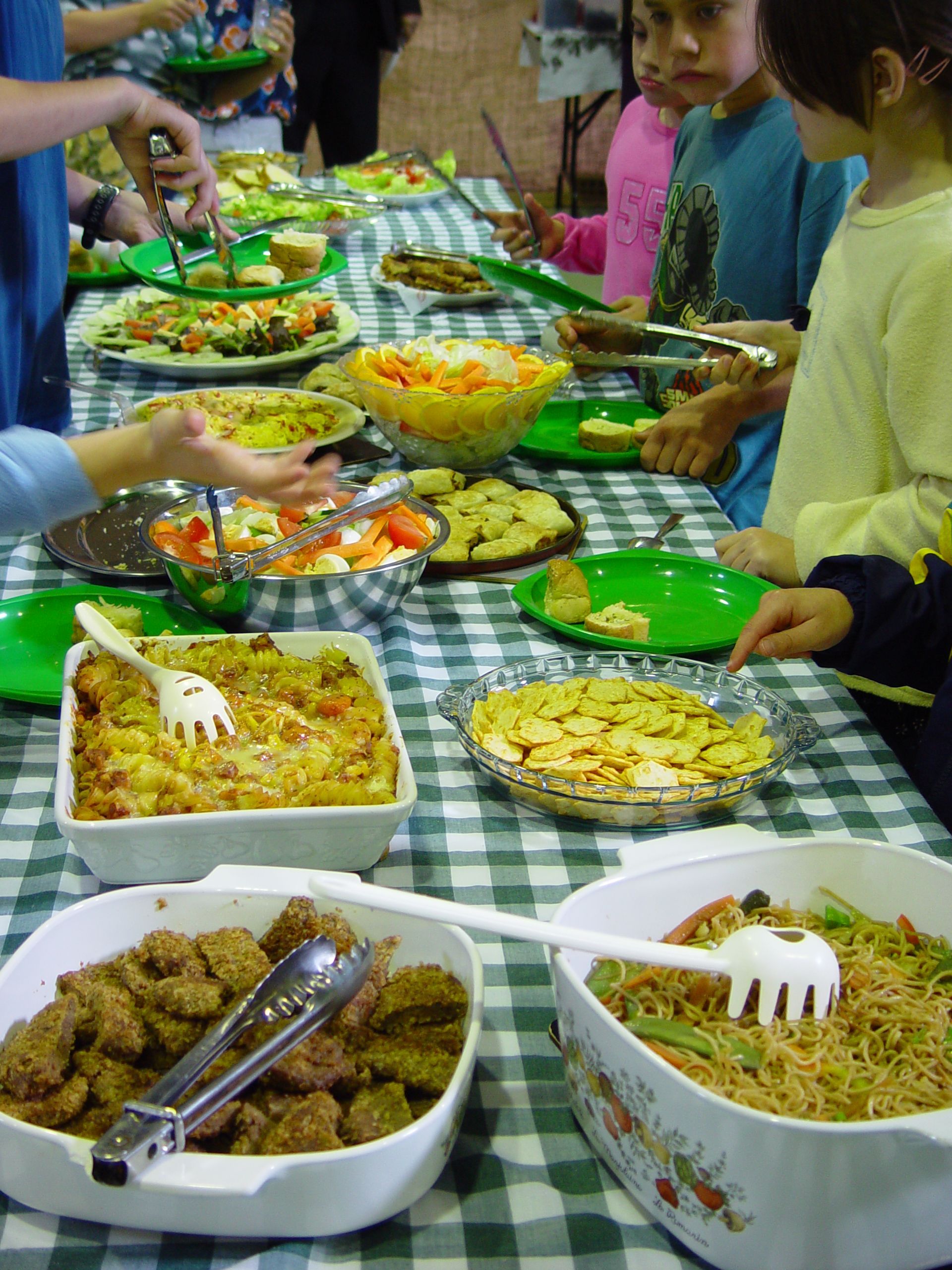
Vegetarian diet allowing eggs and dairy
Lacto-ovo vegetarianism or ovo-lacto vegetarianism is a type of diet which forbids animal flesh but allows the consumption of animal products such as dairy, eggs and honey. Unlike pescetarianism, it does not include fish or other seafood. A typical ovo-lacto vegetarian diet may include fruits, vegetables, grains, legumes, meat substitutes, nuts, seeds, soy, cheese, milk, yogurt and eggs.
In most Western English-speaking countries, the word "vegetarian" usually refers to this type of vegetarianism; however this is not universally the case. In India, lacto-ovo vegetarians are known as "eggetarian" (a portmanteau of "egg" and "vegetarian"), as "vegetarianism" usually refers to lacto vegetarianism.
Etymology
The terminology stems from the Latin lac meaning "milk" (as in 'lactation'), ovum meaning "egg", and the English term vegetarian, so as giving the definition of a vegetarian diet containing milk and eggs.
Diet
In the Western world, ovo-lacto vegetarians are the most common and most traditional type of vegetarian. Generally speaking, when one uses the term vegetarian, an ovo-lacto vegetarian is assumed.
Religion
.jpg)
In Indian religions like Hinduism and Buddhism, most individuals are either raised as ovo-lacto vegetarians or lacto vegetarians.
However, consumption of egg is not considered a part of vegetarian diet in India, as egg is an animal-product that gives birth to the next generation of that species. Those who consume egg, while not consuming other non-vegetarian products (such as fish and meat), refer to themselves as 'eggetarians'.
The Bible Christian Church was a Christian vegetarian sect founded by William Cowherd in 1809. Cowherd was one of the philosophical forerunners of the Vegetarian Society founded in 1847. The Bible Christian Church promoted the use of eggs, dairy and honey as God's given food per "the promised land flowing with milk and honey" (Exodus 3:8).
Many Seventh-day Adventists are ovo-lacto vegetarians and have recommended a vegetarian diet, which may include milk products, eggs and honey since late 19th century.
Health effects
Lacto-ovo vegetarian diets have a high overall diet quality compared to non-vegetarian diets. Lacto-ovo vegetarian diets have positive effects on blood lipids such as lowering low-density lipoprotein and total cholesterol and are associated with a reduced risk of cancer and cardiovascular disease.
There is high-quality evidence that lacto-ovo vegetarian diets reduce blood pressure.
References
pt:Vegetarianismo#Ovolactovegetarianismo
References
- Puskar-Pasewicz, Margaret. (2010). ''Cultural Encyclopedia of Vegetarianism''. Greenwood Publishing Group. p. 242. {{ISBN. 978-0-313-37556-9
- [[Johanna T. Dwyer. Dwyer, Johanna T]]. ''Vegetarian Diets''. In Benjamin Caballero. (2013). ''Encyclopedia of Human Nutrition, Volume 4''. Elsevier. pp. 316-322. ISBN 978-0-12-375083-9
- "Healthy Guidelines for Lacto-Ovo Vegetarians".
- (2018-03-15). "8 types of vegetarians found in India".
- (8 April 2020). "eggetarian-Pinkvilla".
- "What are you: Vegetarian, meatatarian, flexitarian, sustainitarian, reducetarian?".
- Sula, Mike. (2019-01-12). "Egg-O-Holic puts together Gujarat's vast eggetarian street food".
- Banerjee, Krishnendu. (2022-10-15). "Virat Kohli Fittest Indian Cricketer, yet to set foot at NCA in nearly two years, Check OUT".
- Whorton, James. (2000). [https://www.cambridge.org/core/books/abs/cambridge-world-history-of-food/vegetarianism/783278324638C7B732979B56A55D6C74 ''Vegetarianism'']. In K. Kiple & K. Ornelas. ''The Cambridge World History of Food''. Cambridge University Press. pp. 1553-1564. {{ISBN. 978-1139058643
- "Vegetarian (Lacto-ovo vegetarian)".
- (2018-08-17 }}, Quote: "An analysis of consumption data originating from National Sample Survey (NSS) shows that 42 percent of households are vegetarian, in that they never eat fish, meat or eggs. The remaining 58 percent of households are less strict vegetarians or non-vegetarians." [https://web.archive.org/web/20090619160055/http://www.fas.usda.gov/htp/highlights/2001/india.pdf "Indian consumer patterns"] and [http://www.ers.usda.gov/amberwaves/February04/Features/ElephantJogs.htm "Agri reform in India"] {{Webarchive). "2.3 Growth and Concentration in India[6]".
- Julia Twigg. (1981). "The Bible Christian Church". International Vegetarian Union.
- John Davis. "A History of Veganism from 1806". International Vegetarian Union.
- "''A Position Statement on The Vegetarian Diet Adapted from the General Conference of Seventh-day Adventists Nutrition Council''". SDADA.
- Parker, Haley W; Vadiveloo, Maya K.. (2019). "Diet quality of vegetarian diets compared with nonvegetarian diets: a systematic review". Nutrition Reviews.
- Wang F, Zheng J, Yang B, Jiang J, Fu Y, Li D.. (2015). "Effects of Vegetarian Diets on Blood Lipids: A Systematic Review and Meta-Analysis of Randomized Controlled Trials". Journal of the American Heart Association.
- Dybvik, J.S., Svendsen, M. & Aune, D.. (2022). "Vegetarian and vegan diets and the risk of cardiovascular disease, ischemic heart disease and stroke: a systematic review and meta-analysis of prospective cohort studies". European Journal of Nutrition.
- Oussalah A, Levy J, Berthezène C, Alpers DH, Guéant JL.. (2020). "Health outcomes associated with vegetarian diets: An umbrella review of systematic reviews and meta-analyses". Clinical Nutrition.
- Gibbs J, Gaskin E, Ji C, Miller MA, Cappuccio FP.. (2021). "The effect of plant-based dietary patterns on blood pressure: a systematic review and meta-analysis of controlled intervention trials". Journal of Hypertension.
This article was imported from Wikipedia and is available under the Creative Commons Attribution-ShareAlike 4.0 License. Content has been adapted to SurfDoc format. Original contributors can be found on the article history page.
Ask Mako anything about Lacto-ovo vegetarianism — get instant answers, deeper analysis, and related topics.
Research with MakoFree with your Surf account
Create a free account to save articles, ask Mako questions, and organize your research.
Sign up freeThis content may have been generated or modified by AI. CloudSurf Software LLC is not responsible for the accuracy, completeness, or reliability of AI-generated content. Always verify important information from primary sources.
Report