From Surf Wiki (app.surf) — the open knowledge base
Lacemaking in Croatia
Lacemaking tradition and intangible cultural heritage of Croatia
_-_svetomarska_čipka.jpg)
Lacemaking tradition and intangible cultural heritage of Croatia
| Field | Value |
|---|---|
| Image | File:Paška čipka.JPG |
| Caption | Lace from Pag |
| ICH | Lacemaking in Croatia |
| State Party | Croatia |
| ID | 00245 |
| Region | ENA |
| Year | 2009 |
| Session | 4th |
| List | Representative |
Lacemaking in Croatia () is a tradition dating back to the Renaissance when lacemaking began spreading throughout the Mediterranean and continental Europe. Throughout the years, Croatian lace has become notable for its unique patterns and designs. In 2009, UNESCO recognised lacemaking in Croatia as an Intangible Cultural Heritage of Humanity.
Today in Croatia, there are several centres of lacemaking tradition, most notably the Adriatic towns of Pag and Hvar, the northern town of Lepoglava, and the Sveta Marija village in the Međimurje County.
Notable lace
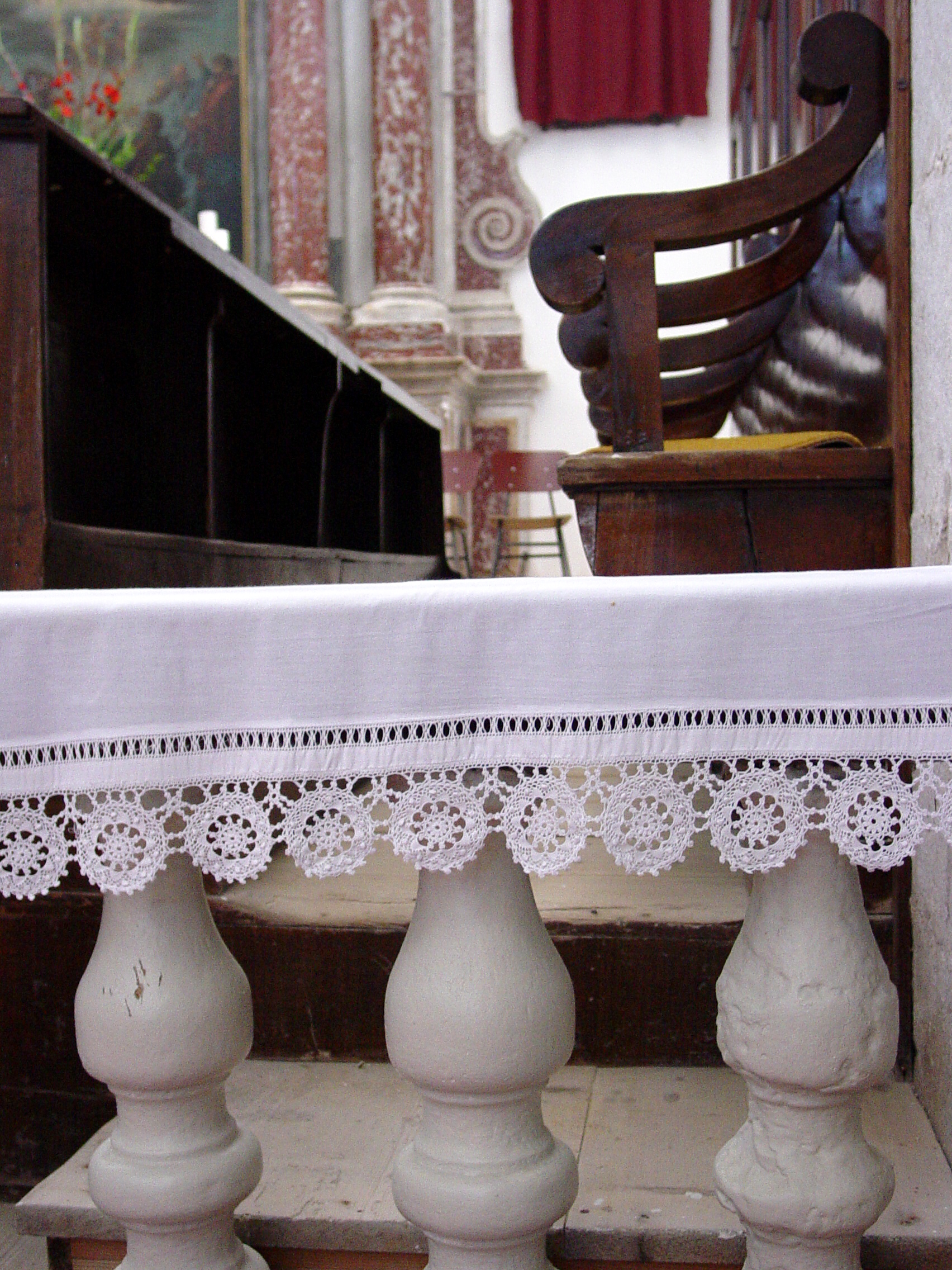
Pag: needle lace
Main article: Pag lace
Pag lace is made by needle-point and consists of spider web pattern embellishments and numerous geometrical motifs. The finished product is very firm, and unlike other Croatian laces, can be washed.
Lace in Pag is still made today in the traditional fashion from centuries ago, and a school has opened to keep the lacemaking tradition alive.
Lepoglava: bobbin lace
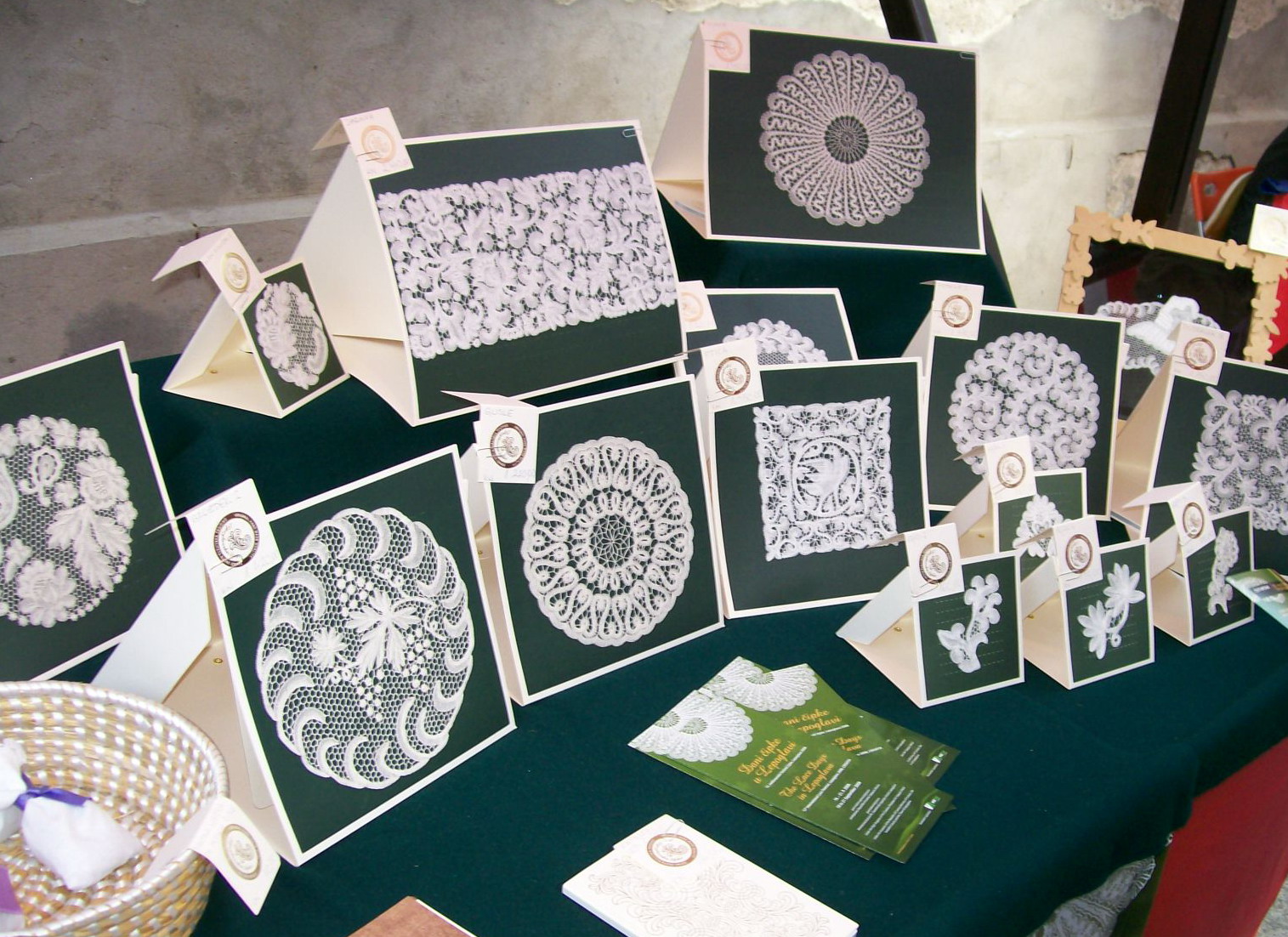
Lepoglava lace is a closely worked bobbin lace, with its structure consisting of a combination of stylized geometric, floral, and animal motifs and patterns. A flax or cotton thread is used, always in the color white, and comes in various shapes and sizes.
Lacemaking in Lepoglava began production in the late 19th century, reaching its "Golden Age" between the two World Wars. During this time, the lace won many competitions at international exhibitions: in Paris 1937 it won a gold medal, and two years later it won a bronze in Berlin. This era was one of great prosperity for Lepoglava lace.
An international lace festival is held in Lepoglava every year in September in honour of the town's lacemaking culture.
Hvar: agave or aloe lace
Hvar lace is unique in that the thread is collected from the aloe leaves of agave plants that grow on the island. The leaves are picked at a certain time of the year and are then specially processed to produce a thin, white thread.
The Benedictine nuns in the town of Hvar are the only ones who make the Hvar lace, which is also called "aloe lace".
References
References
- (2009-09-28). "Lacemaking in Croatia; DOCUMENTS: Nomination for inscription on the Representative List in 2009". UNESCO.
- "UNESCO - Lacemaking in Croatia".
- [http://www2.hgk.hr/znakovi/izvorno/Paska_cipka.asp HGK: Pag lace] {{webarchive. link. (2012-04-26)
- Miroslav Gašparović & Marina Bagarić: ''Hidden treasure of the [[Museum of Arts and Crafts, Zagreb]]: selection from the museum holdings to mark the 125th anniversary of MUO.'' Zagreb, 2005. p211
- [http://www.lepoglava-info.hr/festival-cipke/ocipki.asp Povijest čipke] {{webarchive. link. (2011-11-08)
- [http://www.lepoglava-info.hr/festival-cipke/lepoglavalace.asp 15th International Lace Festival, Lepoglava 2011] {{webarchive. link. (2011-12-05)
- United States Institute for Theatre Technology. "TD & T" , Volume 43, Issues 2-4, 2007.
- [http://www.lacecorner.com/hvar/history.aspx The Lace from Hvar] {{webarchive. link. (2012-04-26)
This article was imported from Wikipedia and is available under the Creative Commons Attribution-ShareAlike 4.0 License. Content has been adapted to SurfDoc format. Original contributors can be found on the article history page.
Ask Mako anything about Lacemaking in Croatia — get instant answers, deeper analysis, and related topics.
Research with MakoFree with your Surf account
Create a free account to save articles, ask Mako questions, and organize your research.
Sign up freeThis content may have been generated or modified by AI. CloudSurf Software LLC is not responsible for the accuracy, completeness, or reliability of AI-generated content. Always verify important information from primary sources.
Report