From Surf Wiki (app.surf) — the open knowledge base
Kuressaare
City in Estonia

City in Estonia
| Field | Value |
|---|---|
| official_name | Kuressaare |
| image_skyline | Kuressaare linn ja sadam 2015.jpg |
| image_caption | Aerial view of Kuressaare |
| mapsize | 230px |
| pushpin_map_caption | Location within Europe##Location within Baltic Sea region##Location within Estonia |
| pushpin_relief | 1 |
| pushpin_map | Europe#Baltic Sea#Estonia |
| subdivision_type | Country |
| subdivision_name | Estonia |
| subdivision_type1 | County |
| subdivision_name1 | Saare |
| subdivision_type2 | Municipality |
| subdivision_name2 | Saaremaa |
| established_title | first written mention |
| established_date | 1381 |
| area_total_km2 | 14.95 |
| area_total_sq_mi | 5.77 |
| population_as_of | 2024 |
| population_total | 13185 |
| population_footnotes | |
| population_rank | 9th |
| population_density_km2 | auto |
| population_density_sq_mi | auto |
| demographics_type1 | Ethnicity |
| demographics1_title1 | Estonians |
| demographics1_info1 | 97.6% |
| demographics1_title2 | Russians |
| demographics1_info2 | 1.2% |
| demographics1_title3 | Finns |
| demographics1_info3 | 0.3% |
| demographics1_title4 | other |
| demographics1_info4 | 0.9% |
| elevation_m | 5 |
| timezone | EET |
| utc_offset | +2 |
| timezone_DST | EEST |
| utc_offset_DST | +3 |
| coordinates | |
| postal_code_type | Postal code |
| postal_code | 93813 |
Kuressaare () is a city on the island Saaremaa in Estonia. It is the administrative centre of Saaremaa Municipality and the seat of Saare County. Kuressaare is the westernmost town in Estonia. The recorded population on 1 January 2024 was 13,185.
The city is situated on the southern coast of Saaremaa, facing the Gulf of Riga of the Baltic Sea, and is served by the Kuressaare Airport, Roomassaare harbour, and Kuressaare yacht harbour.
Names
Kuressaare's historic name Arensburg (from Middle High German a(a)r: eagle, raptor) renders the Latin denotation arx aquilae for the city's castle. The fortress and the eagle, tetramorph symbol of Saint John the Evangelist, are also depicted on Kuressaare's coat of arms.
The town, which grew around the fortress, was simultaneously known by variants of its German-language name Arensburg (or Ahrensburg) and the Estonian name Kuresaare linn; the latter name being a combination of Kure saar — an ancient name of the Saaremaa island — and linn ('city', 'fortress'). Alternatively, the name may come from kure ('crane', 'large bird') a name that may have come from the city's German name and coat of arms, or may have existed before German settlers arrived. Eventually, the town's name shortened to Kuressaare and became the official name when Estonia became an independent country in 1918. During the Soviet occupation of Estonia, the city was officially called Kingissepa in 1952—1988 after Viktor Kingissepp, a Kuressaare-native Bolshevik who was executed by KaPo on the 3rd of May, 1922
History
Flag placeholder.svg pre-Christian Saare county pre–1227
Archbishopric of Riga.svg Bishopric of Riga 1227–1228
Haapsalu coat of arms.svg Bishopric of Ösel-Wiek 1228–1343
Flag placeholder.svg rebellion 1343–1345
Haapsalu coat of arms.svg Bishopric of Ösel-Wiek 1345–1560
Haapsalu coat of arms.svg Bishopric of Ösel-Wiek (Danish-controlled) 1560–1572
Flag of Denmark.svg Kingdom of Denmark 1572–1645
Flag of Sweden (1562–1650).svg Kingdom of Sweden 1645–1704
Flag of Russia.svg Tsardom of Russia 1710–1721
Flag of Russia.svg Russian Empire 1721–1917
Russian Republic 1917
German Empire German occupation 1917–1918
Republic of Estonia 1918–1940
Union of Soviet Socialist Republics Soviet occupation 1940–1941
Nazi Germany German occupation 1941–1944
Union of Soviet Socialist Republics Soviet occupation 1944–1991
Republic of Estonia 1991–onwards
The entire island of Saaremaa (Ösel or Oesel in historical context) was conquered by the German crusading order of Sword Brethren in 1227. The western and southern portions of Saaremaa then became part of the Bishopric of Ösel-Wiek in 1228, a vassal statelet of the Holy Roman Empire. The first documentation of the Prince-bishop's castle in Kuressaare (arx aquilae) has been found in Latin texts written in 1381 and 1422. Over time, a town, which became known as Arensburg or Kuressaare linn, grew and flourished around the fortress.
Johann von Münchhausen, Bishop of Ösel-Wiek since 1542, converted from Catholicism to Protestantism and sold his lands to King of Denmark in 1559, and returned to his native Germany soon after. King of Denmark sent his younger brother Prince Magnus to Kuressaare where he was elected bishop the following year. It was through his influence that the city obtained its German civic charter in 1563. The bishopric was finally secularised in 1572 and Kuressaare as well as the entire island of Saaremaa became part of the Kingdom of Denmark.
In 1645, Saaremaa passed from Denmark to the Kingdom of Sweden through the Treaty of Brömsebro. Queen of Sweden granted her favourite, Magnus Gabriel de la Gardie, the title of Count of Arensburg. During the Great Northern War, the city suffered heavily from the plague, and eventually burnt to the ground by the invading troops of the Tsardom of Russia in 1710. Saaremaa was incorporated into the Governorate of Livonia of the Russian Empire through the Treaty of Nystad in 1721.
During the 19th century Kuressaare became a popular seaside resort on the Baltic Sea coast. The first known tourist group visited Kuressaare already in 1840, and, since then, it has remained a popular summer destination and resort town to this day.
In the middle of the 19th century, Kuressaare became a spa town when large reserves of healing mud were discovered near the town. The first mud spa was built in 1840. Healing with mud baths has been tested on the west coast of Saaremaa since the mid-1820s. It was the "healthy mud" that became Kuressaare's main attraction. New sanatoriums and boarding houses were created, the order was considerably improved and the number of visitors continued to grow.
During World War I, in the autumn of1917, German land and naval forces invaded Saaremaa during Operation Albion and occupied the island until the end of the war in November 1918. Kuressaare was the administrative capital of the Saaremaa County of independent Estonia from 1918 to 1940. During that time, the resort's heyday continued. In addition to domestic visitors, there were also visitors from foreign countries: Latvia, Finland and Sweden.

During World War II, after the Soviet Union had invaded and annexed Estonia in the summer of 1940, hundreds of Saaremaa islanders were arrested, deported and executed by the Soviet regime. Over 90 civilians were killed by the Soviet naval forces and NKVD in 1941 in the Kuressaare castle.
The development of tourism stopped during World War II, and was very slow during the second Soviet occupation of Estonia in 1944-1991, when the entire Saaremaa was declared a closed border zone, which excluded all foreign tourism. Only strictly limited and controlled domestic tourism was allowed.
Today, Kuressaare is once again a resort town. New health facilities and hotels have been built, and historical monuments have been restored. Two thirds of the current visitors to the city are mainland Estonians, the remaining visitors are mainly from Finland, Sweden and Latvia.
Sights
The old town of Kuressaare mainly preserves historical buildings from the 18th and 19th centuries, but there are also older ones. In the old town there are, for example, St. Nicholas Church and Laurentius Church, a goods yard, an old mill (1899), a harbor yard (1663) and residential buildings. The baroque town hall and council house date from the 17th century, while the building of the Saaremaa Knighthood, located next to the Kuressaare town hall, dates from the 18th century. Among the oldest preserved buildings are also the parsonage building at Kauba tänav 5 and the Põlluvahi house at the corner of Kitsa and Kitzbergi streets. The wooden church building from 1912, which belongs to the Estonian Methodist Church, is also noteworthy.
Kuressaare bishop castle
The medieval episcopal Kuressaare Castle today houses the Saaremaa Regional Museum. The original wooden castle was constructed between 1338 and 1380, although other sources claim a fortress was built in Kuressaare as early as 1260. In 1968, architect began studies on Kuressaare Castle. The square-shaped fortress consists of four building wings around the courtyard. On the northeast side are the gate and two towers: Pikk Hermann and Sturvolt. 17-18 are also important. The powerful earthen fortifications of the Kuressaare fortress around the medieval fortress core date from the 19th century. Kuressaare Castle is one of the best preserved in the Baltic States. It has been restored several times since the beginning of the 20th century. Since 2001, Kuressaare Castle Days have been organized every summer with knight tournaments, theatrical tours and processions, and other medieval attractions.
To the south-west of the castle is Tori Bay, where the port of Kuressaare is located.
Kuressaare Castle Park and the historicist-style Kuressaare Kursaal are the center of resort life. Both were founded in the second half of the 19th century.
At the beginning of Lossi Street, in the former fish market, there is a monument to those who fell in the Estonian War of Independence.
Neighborhoods of Kuressaare
There are nine neighborhoods of Kuressaare:
- Ida-Niidu
- Kesklinn
- Kellamäe
- Marientali
- Põllu alev
- Roomassaare
- Smuuli
- Suuremõisa
- Tori.
Landmarks and culture
The city's biggest attraction is the Kuressaare Bishop's Castle, which mainly dates from the 14th century, and currently houses the Saaremaa Museum.
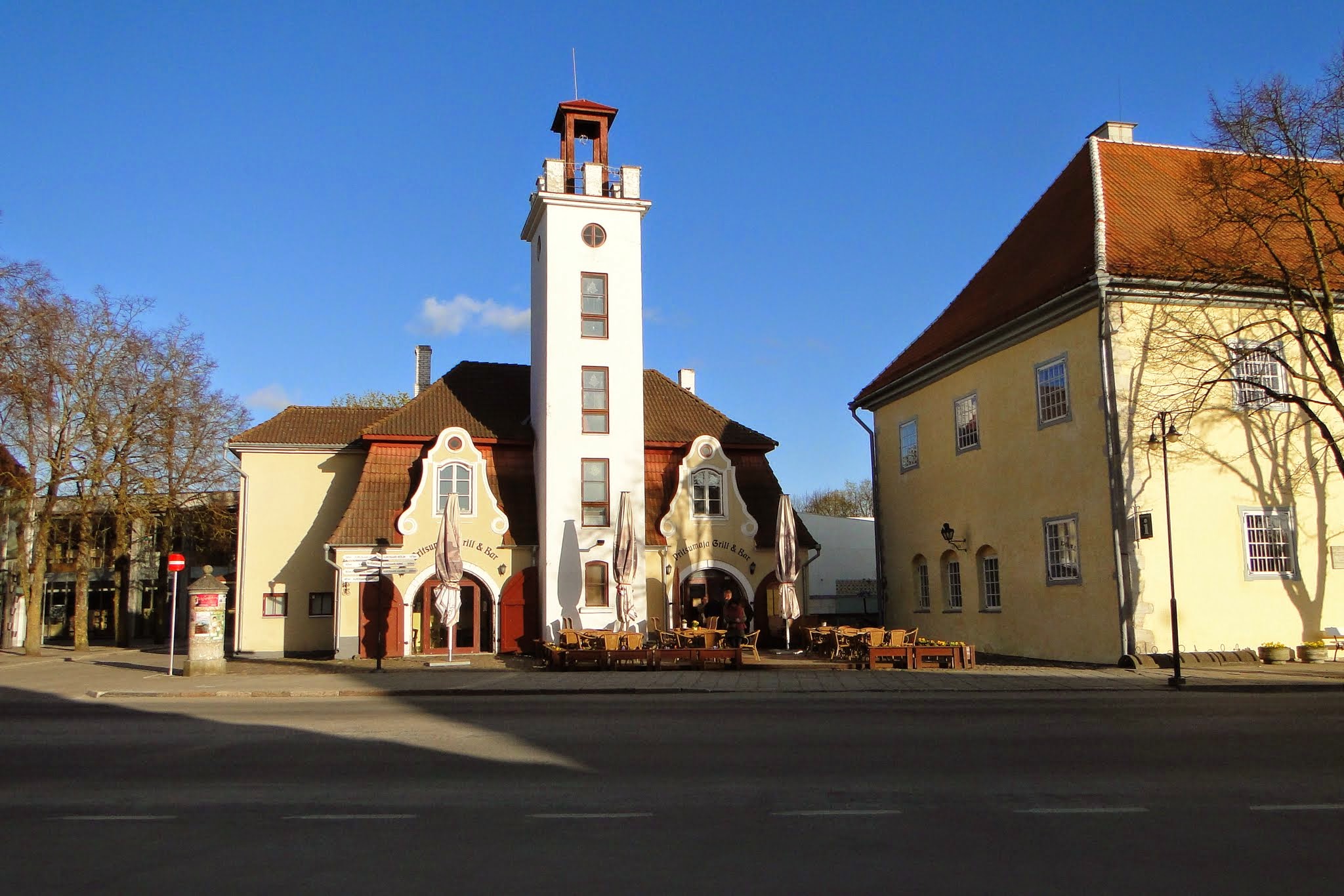
The town hall was originally built in 1654, and restored, retaining classicist and baroque features. It was last restored in the 1960s with dolomite stairs at the front. St Nicolaus Church was built in 1790.
The annual Saaremaa Opera Days (Saaremaa Ooperipäevad) have been held in Kuressaare each summer since 1999. Other festivals include Kuressaare Chamber Music Days (Kuressaare Kammermuusika Päevad), held since 1995 and Kuressaare Maritime Festival (Kuressaare Merepäevad), held since 1998.
Kuressaare also hosts the FC Kuressaare football club.
File:Kuressaare.Raekoda.jpg|Town hall File:Kuressaare-linnus, 2010.jpg|The Kuressaare Castle in winter File:Rüütelkonna hoone.jpg|Former House of the Oesel Knighthood File:KuressaareMethKirche1.jpg|Methodist Church
Demographics
| Ethnicity | 1922 | 1934 | 1941 | 1959 | 1970 | 1979 | 1989 | 2000 | 2011 | 2021 | amount | % | amount | % | amount | % | amount | % | amount | % | amount | % | amount | % | amount | % | amount | % | amount | % | Total | 3364 | 100 | 4478 | 100 | 3935 | 100 | 9720 | 100 | 12140 | 100 | 14207 | 100 | 16166 | 100 | 14925 | 100 | 13166 | 100 | 13034 | 99.9 |
|---|---|---|---|---|---|---|---|---|---|---|---|---|---|---|---|---|---|---|---|---|---|---|---|---|---|---|---|---|---|---|---|---|---|---|---|---|---|---|---|---|---|---|---|---|---|---|---|---|---|---|---|
| Estonians | 2666 | 79.3 | 3938 | 87.9 | 3835 | 97.5 | 7884 | 81.1 | 10658 | 87.8 | 12783 | 90.0 | 14999 | 92.8 | 14548 | 97.5 | 12861 | 97.7 | 12705 | 97.5 | |||||||||||||||||||||||||||||||
| Russians | 156 | 4.64 | 119 | 2.66 | 40 | 1.02 | - | - | 1063 | 8.76 | 1076 | 7.57 | 833 | 5.15 | 211 | 1.41 | 159 | 1.21 | 125 | 0.96 | |||||||||||||||||||||||||||||||
| Ukrainians | - | - | 2 | 0.04 | - | - | - | - | 261 | 2.15 | 187 | 1.32 | 178 | 1.10 | 63 | 0.42 | 41 | 0.31 | 38 | 0.29 | |||||||||||||||||||||||||||||||
| Belarusians | - | - | - | - | - | - | - | - | 64 | 0.53 | 44 | 0.31 | 51 | 0.32 | 12 | 0.08 | 9 | 0.07 | 6 | 0.05 | |||||||||||||||||||||||||||||||
| Finns | - | - | 3 | 0.07 | 6 | 0.15 | - | - | 11 | 0.09 | 19 | 0.13 | 17 | 0.11 | 35 | 0.23 | 43 | 0.33 | 57 | 0.44 | |||||||||||||||||||||||||||||||
| Jews | 39 | 1.16 | 22 | 0.49 | 0 | 0.00 | - | - | 13 | 0.11 | 5 | 0.04 | 3 | 0.02 | 1 | 0.01 | 2 | 0.02 | 0 | 0.00 | |||||||||||||||||||||||||||||||
| Latvians | - | - | 16 | 0.36 | 9 | 0.23 | - | - | 8 | 0.07 | 15 | 0.11 | 9 | 0.06 | 9 | 0.06 | 4 | 0.03 | 8 | 0.06 | |||||||||||||||||||||||||||||||
| Germans | 401 | 11.9 | 321 | 7.17 | - | - | - | - | - | - | 3 | 0.02 | 7 | 0.04 | 3 | 0.02 | 2 | 0.02 | 9 | 0.07 | |||||||||||||||||||||||||||||||
| Tatars | - | - | 0 | 0.00 | - | - | - | - | - | - | 22 | 0.15 | 13 | 0.08 | 1 | 0.01 | 0 | 0.00 | 3 | 0.02 | |||||||||||||||||||||||||||||||
| Poles | - | - | 10 | 0.22 | 4 | 0.10 | - | - | - | - | 7 | 0.05 | 3 | 0.02 | 2 | 0.01 | 2 | 0.02 | 4 | 0.03 | |||||||||||||||||||||||||||||||
| Lithuanians | - | - | 2 | 0.04 | 1 | 0.03 | - | - | 11 | 0.09 | 11 | 0.08 | 11 | 0.07 | 5 | 0.03 | 8 | 0.06 | 13 | 0.10 | |||||||||||||||||||||||||||||||
| unknown | 0 | 0.00 | 5 | 0.11 | 1 | 0.03 | 0 | 0.00 | 0 | 0.00 | 0 | 0.00 | 0 | 0.00 | 17 | 0.11 | 7 | 0.05 | 11 | 0.08 | |||||||||||||||||||||||||||||||
| other | 102 | 3.03 | 40 | 0.89 | 39 | 0.99 | 1836 | 18.9 | 51 | 0.42 | 35 | 0.25 | 42 | 0.26 | 18 | 0.12 | 28 | 0.21 | 54 | 0.41 |
Climate
Kuressaare has a warm-summer humid continental climate (Dfb), bordering on an oceanic climate (Cfb).
The Estonian Environmental Agency since 2008 conducts weather observations in Roomassaare neighbourhood of Kuressaare.
Its temperatures during the older observation period showed a stronger correlation with humid continental climate.{{cite web | access-date = 23 February 2025 |Jan record high C = 8.3 |Feb record high C = 10.8 |Mar record high C = 12.1 |Apr record high C = 24.0 |May record high C = 26.2 |Jun record high C = 31.4 |Jul record high C = 30.9 |Aug record high C = 32.0 |Sep record high C = 24.5 |Oct record high C = 18.6 |Nov record high C = 12.6 |Dec record high C = 9.4 |year record high C = 32.0 |Jan record low C = −31.6 |Feb record low C = −29.8 |Mar record low C = −20.9 |Apr record low C = −9.4 |May record low C = −3.8 |Jun record low C = 1.0 |Jul record low C = 6.4 |Aug record low C = 3.7 |Sep record low C = −3.1 |Oct record low C = −9.0 |Nov record low C = −16.4 |Dec record low C = −32.6 |year record low C = −32.6 |access-date=28 September 2016 |url-status=bot: unknown |archive-url=https://web.archive.org/web/20120222111033/http://www.emhi.ee/index.php?ide=6%2C299%2C302 |archive-date=22 February 2012 |access-date=28 September 2016 |url-status=bot: unknown |archive-url=https://web.archive.org/web/20120222112141/http://www.emhi.ee/index.php?ide=6%2C299%2C303 |archive-date=22 February 2012
Economy
Transportation


Kuressaare is served by Kuressaare Airport, located on a peninsula southeast of the city. There is regular traffic to Tallinn, as well as seasonal flights to the island of Ruhnu.
There are bus connections around the island, as well as with Kuivastu on Muhu Island, a ferry terminal with connection to the mainland.
In 1917, during the German occupation, an urban railway was built in Kuressaare, and in 1918, it was transferred to the town administration. It connected the port with the city center. One of the stations was provisionally located in Kurhouse, and in 1924, the dedicated Park Station was built. The railway functioned until the 1930s when it was gradually disused and mostly dismantled. An attempt to revive the railway in the beginning of the 1950s, during the Soviet period, was unsuccessful, and ended up with rails fully removed from the streets. In 1990, the railway station was reconstructed using old photos.
Notable people
- Adam Georg von Agthe (1777–1826), Russian military officer
- Tiiu Aro (born 1952), Estonian physician and politician
- Eugen Dücker (1841–1916), Baltic German painter
- Maria Faust (born 1979), Estonian saxophone player and composer
- Bernd Freytag von Loringhoven (1914–2007), German military officer
- Louis Kahn (1901–1974), American architect
- Madis Kallas (born 1981), Estonian decathlete and politician
- Viktor Kingissepp (1888–1922), Estonian communist politician
- Heli Lääts (1932–2018), Estonian singer
- Karl Patrick Lauk (born 1997), Estonian cyclist
- Adelaida Lemberg (1904–1986), Estonian journalist and translator
- Tullio Liblik (born 1964), Estonian entrepreneur
- Jörgen Liik (1990-2025), Estonian actor
- Ivo Linna (born 1949), Estonian singer
- Richard Maack (1825–1886), Russian naturalist
- Konstantin Märska (1896–1951), Estonian cinematographer and film director
- Gerd Neggo (1891–1974), Estonian dancer and choreographer
- Marek Niit (born 1987), Estonian sprinter
- Sulev Nõmmik (1931–1992), Estonian actor, director, humorist and dancer
- Tiidrek Nurme (born 1985), Estonian runner
- Margus Oopkaup (1959–2025), Estonian actor
- Mikk Pahapill (born 1983), Estonian decathlete
- Grete Paia (born 1995), Estonian singer and songwriter
- Tõnis Palts (born 1953), Estonian politician and businessman
- Jüri Pihl (1954–2019), Estonian police officer and politician
- Keith Pupart (born 1985), Estonian volleyball player
- Ilmar Raag (born 1968), Estonian film director and media personality
- Mihkel Räim (born 1993), Estonian cyclist
- Tuuli Rand (born 1990), Estonian singer
- Getter Saar (born 1992), Estonian badminton player
- Indrek Saar (born 1973), Estonian actor and politician
- Benno Schotz (1891–1984), Scottish sculptor
- Hannibal Sehested (1609–1666), Danish statesman
- Karen Sehested (1606–1672), Danish court official
- Adeele Sepp (born 1989), Estonian actor
- Jaanus Tamkivi (born 1959), Estonian politician
- Tarmo Teder (born 1958), Estonian writer and critic
- Ivar Karl Ugi (1930–2005), German chemist
- Voldemar Väli (1903–1997), Estonian wrestler
- Sulev Vare (born 1962), Estonian politician
- Mihail Velsvebel (1926–2008), Estonian runner
- Alexander Vostokov (1781–1864), Russian philologist
- Richard Otto Zöpffel (1843–1891), Baltic German theologian
Twin towns and sister cities
The former municipality of Kuressaare (until 2017) was twinned with:
- Finland Ekenäs, Finland (since 21 November 1988)
- Belgium Kuurne, Belgium (since 9 August 1998)
- Finland Mariehamn, Finland (since 24 October 1991)
- Denmark Rønne, Denmark (since 3 October 1991)
- Sweden Skövde, Sweden (since 23 June 1993)
- Latvia Talsi, Latvia (since 27 May 1998)
- Finland Turku, Finland (since 30 May 1996)
- Finland Vammala, Finland (since 30 June 1994)
Significant depictions in popular culture
- Arensburg (Kuressaare) is one of the starting towns of the State of the Teutonic Order in the turn-based strategy game Medieval II: Total War: Kingdoms.
References
Notes
Sources
- Е. М. Поспелов (Ye. M. Pospelov). "Имена городов: вчера и сегодня (1917–1992). Топонимический словарь." (City Names: Yesterday and Today (1917–1992). Toponymic Dictionary.) Москва, "Русские словари", 1993.
References
- "Rahvastik soo, vanuserühma ja 2017. aasta haldusreformi järgse elukoha järgi, 1. jaanuar". Statistics Estonia.
- [http://pub.stat.ee/px-web.2001/dialog/statfile1.asp Statistics Estonia]
- (2007). "Baltic Connections: Denmark, Estonia, Finland, Germany". BRILL.
- "Kuressaare linn".
- Pospelov, p. 28
- "Kuressaare". Eesti Keele Instituut (Estonian Language Institute).
- Kjaergaard, Thorkild. (1994). "Castles around the Baltic Sea: the illustrated guide". Castle Museum.
- Murray, Alan V.. (2001). "Crusade and conversion on the Baltic frontier, 1150–1500". Ashgate.
- Taylor, Neil. (17 August 2010). "Bradt Estonia". Bradt Travel Guides.
- Kirss, Sepp, Urve, Tiina. (2005). "Top of Estonia: Kuressaare". Oomen.
- Kolk, Tiina. (22 August 2010). "Mudakuurort Kuressaare". Postimees.
- (7 December 2009). "Kuressaare minevikust ja tulevikust". Saarte Hääl.
- Välja, Leele. (2014). "Kuressaare". Solnessi Arhitektuurikirjastus..
- (2 May 2011). "DK Eyewitness Travel Guide: Estonia, Latvia & Lithuania". Dorling Kindersley.
- (2006). "Archaeological research in Estonia, 1865–2005". Tartu University Press.
- (2019-06-28). "Saaremaa suvi".
- (2019-06-28). "Kure lossipäevad".
- "LINNAOSADE JA -JAGUDE LÜHENDID".
- (1924). "1922 a. üldrahvalugemise andmed. Vihk I ja II, Rahva demograafiline koosseis ja korteriolud Eestis". Riigi Statistika Keskbüroo.
- (1935). "Rahvastiku koostis ja korteriolud. 1.III 1934 rahvaloenduse andmed. Vihk II". Riigi Statistika Keskbüroo.
- (1942). "Eesti Statistika : kuukiri 1942-03/04". Riigi Statistika Keskbüroo.
- (2003). "Rahvastiku ühtlusarvutatud sündmus- ja loendusstatistika: Saaremaa 1965-1990". Eesti Kõrgkoolidevaheline Demouuringute Keskus.
- (1972). "Население районов, городов и поселков городского типа Эстонской ССР : по данным Всесоюзной переписи населения на 15 января 1970 года". Eesti NSV Statistika Keskvalitsus.
- (1990). "Eesti Vabariigi maakondade, linnade ja alevite rahvastik. 1. osa, Rahvaarv rahvuse, perekonnaseisu, hariduse ja elatusallikate järgi : 1989. a. rahvaloenduse andmed". Eesti Vabariigi Riiklik Statistikaamet.
- "RL222: RAHVASTIK ELUKOHA JA RAHVUSE JÄRGI".
- "RL0429: RAHVASTIK RAHVUSE, SOO, VANUSERÜHMA JA ELUKOHA JÄRGI, 31. DETSEMBER 2011".
- "RL21429: Rahvastik Rahvuse, Soo, Vanuserühma Ja ELukoha (Haldusüksus) Järgi, 31. DETSEMBER 2021".
- "Kuressaare, Estonia - Climate Data".
- "Roomassaare rannikujaam |".
- "Meteorological yearbooks of Estonia for the period 2015–2024.".
- "Railroad of Saaremaa".
- "Kuressaare sõpruslinnad". Kuressaare linn.
- "The Teutonic Order (M2TW-K-TC faction)".
This article was imported from Wikipedia and is available under the Creative Commons Attribution-ShareAlike 4.0 License. Content has been adapted to SurfDoc format. Original contributors can be found on the article history page.
Ask Mako anything about Kuressaare — get instant answers, deeper analysis, and related topics.
Research with MakoFree with your Surf account
Create a free account to save articles, ask Mako questions, and organize your research.
Sign up freeThis content may have been generated or modified by AI. CloudSurf Software LLC is not responsible for the accuracy, completeness, or reliability of AI-generated content. Always verify important information from primary sources.
Report