From Surf Wiki (app.surf) — the open knowledge base
Kurdish population
Ethnic group

Ethnic group
| Field | Value |
|---|---|
| group | Kurds |
| population | Turkey (14.7 million (18%)) |
| Iran (8.1 million (10%)) | |
| Iraq (5.5 million (17.5%)) | |
| Syria (1.7 million (9.7%)) | |
| Western Europe: 1.5–1.7 million | |
| Total: 31–32 million | |
| languages | Kurdish and Zaza–Gorani languages |
| religions | Sunni Islam (incl. Sufism), Shia Islam, Alevism, Yazidism, Yarsanism, with minorities of Zoroastrianism, Christianity and Judaism |
| related | Other Iranian peoples |
Iran (8.1 million (10%)) Iraq (5.5 million (17.5%)) Syria (1.7 million (9.7%)) Western Europe: 1.5–1.7 million Total: 31–32 million The Kurdish population is estimated to be between 30 and 45 million. Most Kurdish people live in Kurdistan, which today is split between Iranian Kurdistan, Iraqi Kurdistan, Turkish Kurdistan, and Syrian Kurdistan.
Kurdistan
The bulk of Kurdish groups in Kurdistan are Sunni (mostly of the Shafi'i school), but there are significant minorities adhering to Shia Islam (especially Alevis), Yazidism, Yarsanism, Christianity and Judaism.
Turkey
Main article: Kurds in Turkey, Kurds of Central Anatolia
According to a report by Turkish agency KONDA, in 2006, out of the total population of 73 million people in Turkey there were 11.4 million Kurds and Zazas living in Turkey (close to 15.68% of the total population). The Turkish newspaper Milliyet reported in 2008 that the Kurdish population in Turkey is 12.6 million; although this also includes 3 million Zazas.{{cite web |author=Milliyet|title=Türkiye'deki Kürtlerin sayısı!
Kurds mostly live in Northern Kurdistan, in Southeastern and Eastern Anatolia. But large Kurdish populations can be found in western Turkey due to internal migration. According to Rüstem Erkan, Istanbul is the province with the largest Kurdish population in Turkey.
Iran
Main article: Kurds in Iran, Kurds of Khorasan

From the 7 million Iranian Kurds, majority who are Sunni. Shia Kurds inhabit Kermanshah Province, except for those parts where people are Jaff, and Ilam Province Province; as well as some parts of Kurdistan, Hamadan and Zanjan provinces. The Kurds of Khorasan Province in northeastern Iran are also adherents of Shia Islam. During the Shia revolution in Iran the major Kurdish political parties were unsuccessful in absorbing Shia Kurds, who at that period had no interest in autonomy. However, since the 1990s Kurdish nationalism has seeped into the Shia Kurdish area partly due to outrage against government's violent suppression of Kurds farther north.
Iraq
Main article: Kurds in Iraq

Kurds constitute approximately 17% of Iraq's population. They are the majority in at least three provinces in northern Iraq which are together known as Iraqi Kurdistan. Kurds also have a presence in Kirkuk, Mosul, Khanaqin, and Baghdad. Around 300,000 Kurds live in the Iraqi capital Baghdad, 50,000 in the city of Mosul and around 100,000 elsewhere in southern Iraq.
Kurds led by Mustafa Barzani were engaged in heavy fighting against successive Iraqi regimes from 1960 to 1975. In March 1970, Iraq announced a peace plan providing for Kurdish autonomy. The plan was to be implemented in four years. However, at the same time, the Iraqi regime started an Arabization program in the oil-rich regions of Kirkuk and Khanaqin. The peace agreement did not last long, and in 1974, the Iraqi government began a new offensive against the Kurds. Moreover, in March 1975, Iraq and Iran signed the Algiers Accord, according to which Iran cut supplies to Iraqi Kurds. Iraq started another wave of Arabization by moving Arabs to the oil fields in Kurdistan, particularly those around Kirkuk. Between 1975 and 1978, 200,000 Kurds were deported to other parts of Iraq.
Syria
Main article: Kurds in Syria
Kurds are the largest ethnic minority in Syria and make up nine percent of the country's population. Syrian Kurds have faced routine discrimination and harassment by the government.
Syrian Kurdistan is an unofficial name used by some to describe the Kurdish inhabited regions of northern and northeastern Syria. The northeastern Kurdish inhabited region covers the greater part of Hasakah Governorate. The main cities in this region are Qamishli and Hasakah. Another region with significant Kurdish population is Kobanê (Ayn al-Arab) in the northern part of Syria near the town of Jarabulus and also the city of Afrin and its surroundings along the Turkish border.
Many Kurds seek political autonomy for the Kurdish inhabited areas of Syria, similar to Iraqi Kurdistan in Iraq, or outright independence as part of Kurdistan. The name "Western Kurdistan" (Kurdish: Rojavayê Kurdistanê) is also used by Kurds to name the Syrian Kurdish inhabited areas in relation to Kurdistan.{{cite news|title=Ankara Alarmed by Syrian Kurds' Autonomy
Transcaucasus
Main article: Caucasian Kurds
Armenia
Main article: Kurds in Armenia
According to the 2011 Armenian Census, 37,470 Kurds live in Armenia. They mainly live in the western parts of Armenia. The Kurds of the former Soviet Union first began writing Kurdish in the Armenian alphabet in the 1920s, followed by Latin in 1927, then Cyrillic in 1945, and now in both Cyrillic and Latin. The Kurds in Armenia established a Kurdish radio broadcast from Yerevan and the first Kurdish newspaper Riya Teze. There is a Kurdish Department in the Yerevan State Institute of Oriental studies. The Kurds of Armenia were the first exiled country to have access to media such as radio, education and press in their native tongue but many Kurds, from 1939 to 1959 were listed as the Azeri population or even as Armenians.
Georgia
Main article: Kurds in Georgia
According to the 2002 Georgian Census, 20,843 Kurds live in Georgia The Kurds in Georgia mainly live in the capital of Tbilisi and Rustavi. According to a United Nations High Commissioner for Refugees report from 1998, about 80% of the Kurdish population in Georgia are assimilated Kurds.
Diaspora
There were also many Kurds among the Kurdish diaspora and in Red Kurdistan.Ismet Chériff Vanly, “The Kurds in the Soviet Union”, in: Philip G. Kreyenbroek & S. Sperl (eds.), The Kurds: A Contemporary Overview (London: Routledge, 1992), p. 164: Table based on 1990 estimates: Azerbaijan (180,000), Armenia (50,000), Georgia (40,000), Kazakhstan (30,000), Kyrgyzstan (20,000), Uzbekistan (10,000), Tajikistan (3,000), Turkmenistan (50,000), Siberia (35,000), Krasnodar (20,000), Other (12,000) (total 410,000).
Russia
Main article: Kurds in Russia
According to the 2010 Russian Census, 63,818 Kurds live in Russia. Russia has maintained warm relations with the Kurds for a long time, During the early 19th century, the main goal of the Russian Empire was to ensure the neutrality of the Kurds, in the wars against Persia and the Ottoman Empire. In the beginning of the 19th century, Kurds settled in Transcaucasia, at a time when Transcaucasia was incorporated into the Russian Empire. In the 20th century, Kurds were persecuted and exterminated by the Turks and Persians, a situation that led Kurds to move to Russia.
Lebanon
Main article: Kurds in Lebanon
The existence of a community of at least 125,000 Kurds is the product of several waves of immigrants, the first major wave was in the period of 1925–1950 when thousands of Kurds fled violence and poverty in Turkey. Kurds in Lebanon go back far as the twelfth century A.D. when the Ayyubids arrived there. Over the next few centuries, several other Kurdish families were sent to Lebanon by a number of powers to maintain rule in those regions, others moved as a result of poverty and violence in Kurdistan. These Kurdish groups settled in and ruled many areas of Lebanon for a long period of time. Kurds of Lebanon settled in Lebanon because of Lebanon's pluralistic society.
European Union


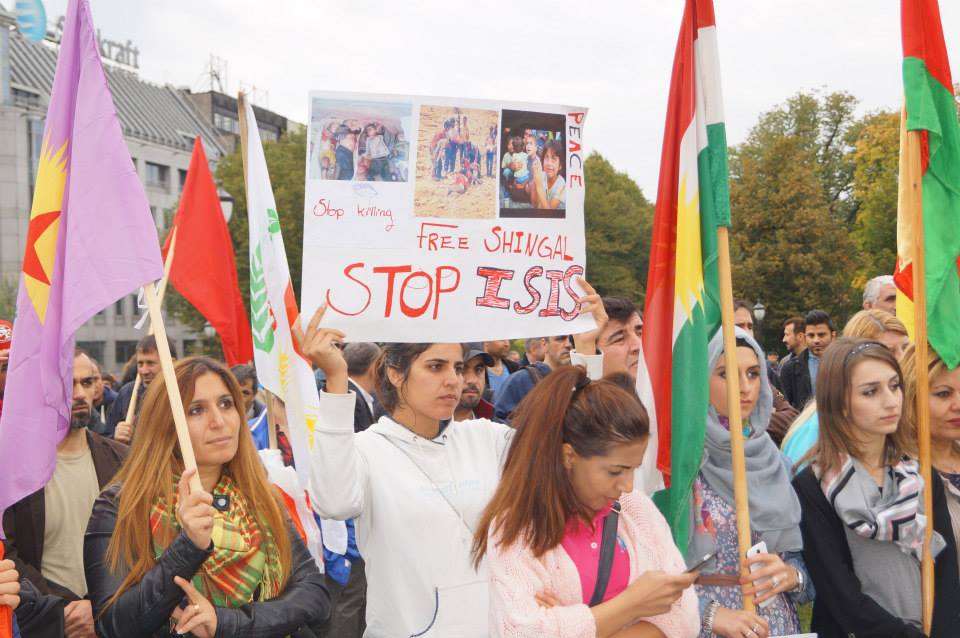
Main article: Kurds in Germany, Kurds in France, Kurds in the Netherlands, Kurds in Belgium, Kurds in Greece, Kurds in Denmark, Kurds in Sweden, Kurds in Finland, Kurds in Norway, Kurds in Switzerland, Kurds in the United Kingdom
The Kurdish diaspora in the European Union is most significant in Germany, France, Sweden, Belgium and the Netherlands. Kurds from Turkey went to Germany and France during the 1960s as immigrant workers. Thousands of Kurdish refugees and political refugees fled from Turkey to Sweden during the 1970s and onward, and from Iraq during the 1980s and 1990s.
In France, the Iranian Kurds make up the majority of the community. However, thousands of Iraqi Kurds also arrived in the mid-1990s. More recently, Syrian Kurds have been entering France illegally
In the United Kingdom, Kurds first began to immigrate between 1974 and 1975 when the rebellion of Iraqi Kurds against the Iraqi government was repressed. The Iraqi government began to destroy Kurdish villages and forced many Kurds to move to barren land in the south. These events resulted in many Kurds fleeing to the United Kingdom. Thus, the Iraqi Kurds make up a large part of the community. In 1979, Ayatollah Khomeini came to power in Iran and installed Islamic law. There was widespread political oppression and persecution of the Kurdish community. Since the late 1970s the number of people from Iran seeking asylum in Britain has remained high. In 1988, Saddam Hussein launched the Anfal campaign in the northern Iraq. This included mass executions and disappearances of the Kurdish community. The use of chemical weapons against thousands of towns and villages in the region, as well as the town of Halabja increased the number of Iraq Kurds entering the United Kingdom. A large number of Kurds also came to the United Kingdom following the 1980 military coup in Turkey. More recently, immigration has been due to the continued political oppression and the repression of ethnic and religious minorities in Iraq and Iran. Estimates of the Kurdish population in the United Kingdom are as high as 200–250,000.
In Denmark, there is a significant number of Iraqi political refugees, many of which are Kurds.
In Finland, most Kurds arrived in the 1990s as Iraqi refugees. Kurds in Finland have no great attachment to the Iraqi state because of their position as a persecuted minority. Thus, they feel more accepted and comfortable in Finland, many wanting to get rid of their Iraqi citizenship.
From 1994 to 1999, 43,759 Kurds entered Greece illegally and of the 9,797 who applied for asylum 524 were granted it.
North America
Main article: Kurds in Canada, Kurds in the United States
In the United States, estimates of the Kurdish population vary from 15,000 to 20,000 to 58,000. During the 1991 Persian Gulf War, about 10,000 Iraqi refugees were admitted to the United States, most of which were Kurds and Shiites who had assisted or were sympathisers of the U.S. –led war. Nashville, Tennessee has the nation's largest population of Kurdish people, with an estimated 8,000–11,000. There are also Kurds in Southern California, Los Angeles, San Diego, and Dallas, Texas.
In Canada, the Kurdish community is 11,685 based on the Canadian Census 2011, among which the Iraqi Kurds make up the largest group of Kurds in Canada, exceeding the numbers of Kurds from Turkey, Iran and Syria. Kurdish immigration was largely the result of the Iran–Iraq War, the Gulf War and Syrian Civil War. Thus, many Iraqi Kurds immigrated to Canada due to the constant wars and suppression of Kurds and Shiites by the Iraqi government.
Oceania
In Australia, Kurdish migrants first arrived in the second half of the 1960s, mainly from Turkey. However, in the late 1970s families from Syria and Lebanon were also present in Australia. Since the second half of the 1980s, the majority of Kurds arriving in Australia have been from Iraq and Iran; many of them were accepted under the Humanitarian Programme. However, Kurds from Lebanon, Armenia and Georgia have also migrated to Australia. The majority live in Melbourne and Sydney.
Japan
Main article: Kurds in Japan
The Japanese government has not granted refugee status. While 3,415 Kurds have so far applied for refugee status, none have yet received it.
Indonesia
Main article: Kurds in Indonesia
In Indonesia, most Kurds are currently migrant refugees, both illegal and documented, as well as asylum seekers. Most of the refugees were placed in Jakarta or in the Puncak area, on the border between Bogor and Cianjur. Between 1999 and 2001, the number was estimated at around 4,800 including other Iraqi migrant refugees.
Statistics by country

Autochthonous community
| Country | Official figures or estimates | Official figures in % | Further information |
|---|---|---|---|
| Turkey | (1993 MRGI estimate) | ||
| (2017 CFR estimate) | Kurds in Turkey | ||
| Iran | (1993 MRGI estimate) | ||
| (2017 CFR estimate) | Kurds in Iran | ||
| Iraq | (1993 MRGI estimate) | ||
| (2015 EPRS estimate) | Kurds in Iraq | ||
| Syria | (1993 MRGI estimate) | ||
| (2011 MRGI estimate) | Kurds in Syria |
Transcaucasus
| Provinces | (2011) |
|---|---|
| Armavir Province | 17,063 |
| Aragatsotn Province | 7,090 |
| Ararat Province | 5,001 |
| Yerevan | 3,361 |
| Kotayk Province | 3,305 |
| Shirak Province | 763 |
| Lori Province | 663 |
| Gegharkunik Province | 144 |
| Tavush Province | 44 |
| Syunik Province | 26 |
| Vayots Dzor Province | 10 |
|- | Azerbaijan || (1926 census) (2009 census) || || Kurds in Azerbaijan
| Administrative Divisions | title=Ethnic composition of Azerbaijan | url=http://pop-stat.mashke.org/azerbaijan-ethnic2009.htm | work=pop-stat.mashke.org | access-date=28 May 2014}} |
|---|---|---|---|---|
| Lachin District | 1,194 | |||
| Nakhchivan Autonomous Republic | 1,321 | |||
| Samukh District | 753 | |||
| Khachmaz District | 603 | |||
| Ismailli District | 498 | |||
| Yevlakh District | 210 | |||
| Baku | 185 | |||
| Goranboy District | 102 | |||
| Qazakh District | 100 | |||
| Agstafa District | 68 | |||
| Kalbajar District | 38 | |||
| Goygol District | 34 | |||
| Ganja | 31 | |||
| Absheron District | 27 | |||
| Tartar District | 27 | |||
| Shaki District | 26 | |||
| Shamkir District | 22 | |||
| Oghuz District | 21 | |||
| Aghjabadi District | 18 | |||
| Lankaran District | 14 | |||
| Zangilan District | 14 | |||
| Salyan District | 9 | |||
| Sumqayit | 9 | |||
| Dashkasan District | 8 | |||
| Mingachevir | 7 | |||
| Shusha District | 3 | |||
| Gadabay District | 1 |
|- | Georgia || (1989 census) (2002 census) (2014 census) ||
|| Kurds in Georgia
| Administrative divisions | (2014) |
|---|---|
| Tbilisi | 12,570 |
| Kakheti | 528 |
| Kvemo Kartli | 453 |
| Adjara | 81 |
| Mtskheta-Mtianeti | 74 |
| Guria | 17 |
| Imereti | 6 |
| Shida Kartli | 4 |
| Samegrelo-Zemo Svaneti | 1 |
| Samtskhe-Javakheti | 1 |
|- | Artsakh || (2015 census, ethnicity) (2015 census, mother tongue) || || |- | Abkhazia || (1989 census) || || |- | South Ossetia || (1989 census) (2015 census) || || |}
Europe
| Oblasts | (2001) |
|---|---|
| Luhansk Oblast | 470 |
| Crimea | 394 |
| Kherson Oblast | 296 |
| Kyiv | 199 |
| Odesa Oblast | 132 |
| Mykolaiv Oblast | 119 |
| Dnipropetrovsk Oblast | 116 |
| Zaporizhia Oblast | 84 |
| Kirovohrad Oblast | 68 |
| Kharkiv Oblast | 46 |
| Kyiv Oblast | 40 |
| Donetsk Oblast | 36 |
| Khmelnytskyi Oblast | 19 |
| Cherkasy Oblast | 15 |
| Ivano-Frankivsk Oblast | 11 |
| Vinnytsia Oblast | 10 |
| Lviv Oblast | 7 |
| Ternopil Oblast | 7 |
| Chernihiv Oblast | 6 |
| Zhytomyr Oblast | 4 |
| Sevastopol | 3 |
| Poltava Oblast | 2 |
| Rivne Oblast | 2 |
| Sumy Oblast | 2 |
|- | Cyprus || (2006 estimate) || || |- | Spain || (2012 estimate) || || |- | Ireland || (2016 census, Kurdish speakers) (2022 census, Kurdish speakers) | ||
|- |Luxembourg | (2021 statistics, Kurdish speakers) | | |- | Poland || (2011 census) (2021 census) | || — |- | Hungary || (2001 census) (2011 census) || || — |- | Moldova || (2017 statistics)|| || — |- | Belarus || (2009 census) || || — |- | Latvia || (2023 statistics)|| || — |- | Bulgaria || (1992 census) (2001 census) (2011 census) || || — |- | Czech Republic || (2021 census)|| || — |- | Bosnia and Herzegovina || (2013 census) || || — |- | Estonia || (2011 census) (2021 census) | || — |- | Serbia || (2011 census) || || — |- | Lithuania || (2001 census) (2010 asylum seekers by ethnicity) (2011 asylum seekers by ethnicity) (2012 asylum seekers by ethnicity) (2013 asylum seekers by ethnicity) ||0% || — |- | Croatia || (2011 census) || || — |}
Middle East
| Country | Est. population | Further information |
|---|---|---|
| Lebanon | approx. (2017 estimate) | Kurds in Lebanon |
| Israel | approx. (Jews from Kurdistan) | Kurds in Israel |
| Bahrain | approx. | — |
| Jordan | approx. (2012 estimate) | Kurds in Jordan |
| Kuwait | approx. (1991 estimate) | — |
Asia
| Regions | (2009) |
|---|---|
| Talas Region | 5,547 |
| Chüy Region | 4,544 |
| Jalal-Abad Region | 1,902 |
| Bishkek city | 489 |
| Osh Region | 287 |
| Osh city | 203 |
| Batken Region | 194 |
| Naryn Region | Not stated |
| Issyk-Kul Region | Not stated |
|- | Turkmenistan || (1989 census) (1995 census)|| || — || Kurds in Turkmenistan
| Regions | (1989) |
|---|---|
| Districts of Republican Subordination | 2,272 |
| Ashgabat | 1,480 |
| Mary Region | 570 |
| Daşoguz Region | 36 |
| Lebap Region | 29 |
|- | Afghanistan || || || approx. || — |- | Uzbekistan || (1989 census) || || — || — |- | South Korea || || || approx. || — |- | Japan || || || approx. || Kurds in Japan |- | Pakistan || || || approx. || Kurds in Pakistan |- | Tajikistan || (2010 census) || || — || — |}
Americas and Oceania
| Country | Official figures | Official figures in % | Further information |
|---|---|---|---|
| United States | (2016–2021 ACS) | Kurds in the United States | |
| Canada | (2021 census) | ||
| (2021 census, Kurdish speakers) | Kurds in Canada | ||
| Australia | (2021 census) | ||
| (2021 census, Kurdish speakers) | |||
| New Zealand | (2018 census) |
;Notes : : :
References
Bibliography
- .
- Baser, Bahar.“Kurdish Diaspora Political Activism in Europe with a Particular Focus on Great Britain.”, Diaspora Dialogues for Development and Peace Project, Berlin: Berghof Peace Support, June 2011.
- .
- .
- .
- .
- .
- .
- .
- .
- .
- .
- .
- .
References
- [http://www.institutkurde.org/en/info/the-kurdish-population-1232551004 The Kurdish Population] by the [[Kurdish Institute of Paris]], 2017 estimate. The Kurdish population is estimated at 15–20 million in Turkey, 10–12 million in Iran, 8–8.5 million in Iraq, 3–3.6 million in Syria, 1.2–1.5 million in the European diaspora, and 400k–500k in the former USSR—for a total of 36.4 million to 45.6 million globally.
- Based on arithmetic from ''World Factbook'' and other sources cited herein: A Near Eastern population of 28–30 million, plus approximately a 2 million diaspora gives 30–32 million. If the highest (25%) estimate for the Kurdish population of Turkey, in Mackey (2002), proves correct, this would raise the total to around 37 million.
- Gunter, Michael. (2008). "The Kurds Ascending". Palgrave MacMillan.
- Elling, Rasmus Christian. (2013). "Minorities in Iran: Nationalism and Ethnicity after Khomeini". Palgrave Macmillan.
- (2008). "Iran's Political, Demographic, and Economic Vulnerabilities". [[RAND Corporation]].
- (September 2006). "Toplumsal Yapı Araştırması 2006". KONDA.
- "Kurdish PKK chief Murat Karayilan says will spread to Turkish cities if we were attacked by Turkey".
- "Kurdish political rights and its impact on the Middle East economy and Stability. By Hiwa Nezhadian".
- [http://www.timeturk.com/tr/2010/03/25/en-buyuk-kurt-sehri-istanbul.html "En Büyük Şehri, İstanbul"] {{Webarchive. link. (2011-03-23 , ''Time Türk'', March 25, 2010.)
- (9 May 2024). "UNPO: Iranian Kurdistan".
- Romano, David. (2006). "The Kurdish Nationalist Movement". Cambridge University Press.
- McDowall. (1996). "A Modern History of the Kurds". I.B. Tauris.
- (2010). "The Passion and Death of Rahman the Kurd: Dreaming Kurdistan". iUniverse.
- McDowall. (1996). "A Modern History of the Kurds". I.B. Tauris.
- (1993). "A People Without a Country: The Kurds and Kurdistan". Olive Branch Press.
- G.S. Harris, ''Ethnic Conflict and the Kurds'' in the Annals of the American Academy of Political and Social Science, pp. 118–120, 1977
- [http://hrw.org/reports/1993/iraqanfal/ANFALINT.htm Introduction]. Genocide in Iraq: The Anfal Campaign Against the Kurds (Human Rights Watch Report, 1993).
- G.S. Harris, ''Ethnic Conflict and the Kurds'' in the Annals of the American Academy of Political and Social Science, p.121, 1977
- M. Farouk-Sluglett, P. Sluglett, J. Stork, ''Not Quite Armageddon: Impact of the War on Iraq'', MERIP Reports, July–September 1984, p.24
- [https://2009-2017.state.gov/r/pa/ei/bgn/3580.htm Background Note: Syria] U.S. Department of State
- (26 November 2009). "Syria: End Persecution of Kurds". Human Rights Watch.
- Ian Black. [https://www.theguardian.com/world/2010/jul/16/syrian-human-rights-unchanged-assad Syrian human rights record unchanged under Assad, report says], The Guardian, 16 July 2010.
- Morris, Loveday. (9 August 2012). "Syrian President Bashar al-Assad accused of arming Kurdish separatists for attacks against Turkish government". The Independent.
- "Information from the 2011 Armenian National Census". Statistics of Armenia.
- The Peoples of the USSR: An Ethnographic Handbook – P. 117. by Ronald Wixman
- Mannerheim: Marshal of Finland – P. 210. by Alexandre Bennigsen, Stig Jägerskiöld, S. Enders Wimbush
- United Nations High Commissioner for Refugees. (1 August 1998). "Georgia: Treatment of the Kurds". Refworld: The leader in Refugee Decision Support.
- link. rau.su
- "Kurds". Institute of Estonia (EKI).
- A Modern History of the Kurds – Page 485 by David MacDowall
- "Kurdish Culture and Society: An Annotated Bibliography".
- Lebanon a Country Study – Page 83 by Federal Research Division
- {{Harvnb. McDowall. 2000
- {{Harvnb. Miller. 2000
- France24. "Illegal migrants sent to mainland".
- Museum of London. "Belonging: Voices of London's Refugees".
- {{Harvnb. Fadloullah. 1994
- {{Harvnb. Wahlbeck. 2005
- {{Harvnb. Safran. 2009
- link. (4 March 1999)
- "2006–2010 American Community Survey Selected Population Tables". US Census Bureau.
- [http://www.institutkurde.org/en/kurdorama/ The Kurdish Diaspora]
- "Four Waves of Resettlement".
- {{Harvnb. Powell. 2005
- {{Harvnb. Kelley. Friedlander. Colby. 1993
- "2011 National Household Survey: Data tables". Statistics of Canada.
- {{Harvnb. Powell. 2005
- {{Harvnb. Jupp. 2001
- (3 September 2015). "Japan's Kurds often in limbo, despite significant community – The Japan Times". The Japan Times.
- (12 November 2003). "Kurds to arrive in Jakarta". [[The Sydney Morning Herald]].
- Hoffman, Sue. (2012). "Living in Limbo: Iraqi Refugees in Indonesia". [[Yale Law Journal]].
- (4 October 2017). "The Time of the Kurds". CFR.
- (2015). "Minorities in Iraq Pushed to the brink of existence". [[European Parliamentary Research Service]].
- (1996). "Minority Rights Group International Report – The Kurds".
- "Syria – Kurds".
- {{in lang. link. (2012-01-04 . ''Demoscope.ru'')
- "The Main Results of RA Census 2022".
- "Armenia ethnicity 2011".
- link. Statistics of Armenia
- link. Statistics of Armenia
- link. Statistics of Armenia
- link. Statistics of Armenia
- link. Statistics of Armenia
- link. Statistics of Armenia
- link. Statistics of Armenia
- link
- "Ethnic composition of Azerbaijan". pop-stat.mashke.org.
- link
- "Ethnic Groups of Georgia: Censuses 1926 – 2002".
- "2014 General Population Census Main Results".
- "Ethnic Composition of Georgia 1926–2014".
- "Ethnic groups of Georgia – map". CSEM.
- link
- link
- "Всесоюзная перепись населения 1989 года.".
- "4.5. Национальности или их самоназвания по самоопределению населения По республике южная осетия".
- (5 January 2023). "Diaspora Kurde".
- (1993). "L'identité ethnique kurde en France. L'identité kurde s'est lentement construite au cours de l'histoire". Journal des anthropologues.
- (1998). "Les mobilisations des Kurdes en Europe". Revue Européenne des Migrations Internationales.
- "Diaspora Kurde (2016)".
- "Ethnic composition: 2021 census (data for regions)".
- "Bevölkerung 2001 nach Umgangssprache, Staatsangehörigkeit und Geburtsland". Statistics of Austria.
- (29 November 2022). "Ethnic group (detailed)".
- "Main statistics".
- "3. Ethnic group".
- (29 November 2022). "Main language (detailed)".
- "Minoritetsspråk i Norge En kartlegging av eksisterende datakilder og drøfting av ulike fremgangsmåter for statistikk om språk".
- "Population résidante permanente de 15 ans et plus, ayant comme langue principale: kurde, en 2012". Statistics of Switzerland.
- "Les langues principales les plus fréquentes de la population résidente permanente âgée de 15 ans ou plus, 2015".
- "11rl – Language according to age and sex by region, 1990–2022". Statistics Finland.
- (2006). "Ethnocultural Diversity Resource Center".
- "The distribution of the population by nationality and mother tongue". [[Ukrainian Census (2001)]].
- "Crimea (occupied by Russia) – Ethnic composition: 2014 census".
- link. (2 May 2006)
- (2012). "Transnacionalismo y redes económicas migrantes. El caso del kebab kurdo". El Codesarrollo a Debate.
- "Population Usually Resident and Present in the State who Speak a Language other than English or Irish at Home 2011 to 2016 by Birthplace, Language Spoken, Age Group and Census Year". Central Statistics Office.
- "F5004 - Population usually resident and present in the State".
- "Linguistic Diversity on the Rise".
- (17 January 2014). "Tabl. 28. ludność według rodzaju i złożoności identyfikacji narodowo- -etnicznych w 2011 roku". Glowny Urzad Statysty.
- (29 April 2024). "Tablice z ostatecznymi danymi w zakresie przynależności narodowo-etnicznej, języka używanego w domu oraz przynależności do wyznania religijnego: Przynależność narodowo-etniczna, język używany w domu, przynależność do wyznania religijnego - wyniki ostateczne Narodowego Spisu Powszechnego 2021. Tablice w formacie XLSX".
- "Distribution of immigrants by nationality and purpose of arrival, 1993–2016". Statistics of Moldova.
- link. Национальный статистический комитет Республики Беларусь
- "Population by ethnicity at the beginning of year – Ethnicity and Time period".
- (2006). "Списък на етническите названия и брой на лицата, принадлежащи към съответния етнос, отразени в публикациите от преброяванията на населението в България по години". Population Review of the Center for Population Studies.
- "Ethnic composition: 2021 census".
- "1. Stanovništvo prema etničkoj/nacionalnoj pripadnosti – detaljna klasifikacija".
- "PCE04: ENUMERATED PERMANENT RESIDENTS BY ETHNIC NATIONALITY AND SEX, 31 DECEMBER 2011". pub.stat.ee.
- "RL21428: POPULATION BY ETHNIC NATIONALITY, SEX AND PLACE OF RESIDENCE (SETTLEMENT REGION), 31 DECEMBER 2021".
- link. Statistics of Serbia
- (2002). "Gyventojai pagal lyti, amziu, tautybe, ir tikyba. 2001 Surasymas".
- "Metinė ataskaita 2010 – Migracijos departamentas".
- "2011 metais – Migracijos departamentas".
- (December 2019). "2012 metais – Migracijos departamentas".
- "2013 metais – Migracijos departamentas".
- "1. Population by ethnicity – detailed classification, 2011 census". Statistics of Croatia.
- "3. Population by mother tongue – detailed classification, 2011 census". Statistics of Croatia.
- "Lebanon – Languages". Ethnologue.
- (1 September 2014). "Why Israel must help the Kurds in Iraq".
- "Bahrain – Ethnologue".
- Mahmoud A. Al-Khatib and Mohammed N. Al-Ali. "Language and Cultural Shift Among the Kurds of Jordan".
- Murphy, Kim. (11 April 1991). "Kurds in Kuwait Also Are Treated Harshly : Ethnic conflict: Many have been prevented from returning to their jobs, and some have disappeared.". New York Times.
- "Ethnic composition of Kazakhstan 2024".
- "4.1. Number of resident population by selected nationality". United Nations.
- "Statistical census – Resident population by nationality". Statistics of Kyrgyzstan.
- {{cite Kyrgyzstan census 2009. Bishkek. 33
- {{cite Kyrgyzstan census 2009. Osh. 51
- {{cite Kyrgyzstan census 2009. Osh City. 26
- {{cite Kyrgyzstan census 2009. Batken. 47
- link. asgabat.net
- "The Kurdish of Afghanistan".
- link. Demoscope.ru. Demoscope
- (21 April 2003}}{{dead link). "Kurds in Korea launch ethnic fellowship; Group hopes to raise.". Asia Africa Intelligence Wire.
- (21 April 2016). "なぜクルド人たちは埼玉県南部に集まるのか?".
- (20 June 2013). "Iraqi refugees – leading an uncertain life". Dawn.
- link. Statistics of Tajikistan
- "DP05ACS DEMOGRAPHIC AND HOUSING ESTIMATES".
- (9 February 2022). "Census Profile, 2021 Census of Population – Profile table".
- (17 August 2022). "Mother tongue by geography, 2021 Census".
- (28 June 2022). "Table 2 – Australian Bureau of Statistics".
- "SBS Australian Census Explorer".
- "2018 Census totals by topic – national highlights". Statistics of New Zealand.
- "Population by national and/or ethnic group, sex and urban/rural residence". UN data.
- An Ethnohistorical Dictionary of the Russian and Soviet Empires, James Stuart Olson, Lee Brigance Pappas, Nicholas Charles Pappas, Greenwood Publishing Group, (1994), {{ISBN. 0-313-27497-5, p.409
- The Kurds: A Contemporary Overview, Philip G. Kreyenbroek, Stefan Sperl, Routledge, {{ISBN. 0-415-07265-4, (1992), p.204
- "Всероссийская перепись населения 2010 г. Национальный состав населения Российской Федерации". Demoscope.

This article was imported from Wikipedia and is available under the Creative Commons Attribution-ShareAlike 4.0 License. Content has been adapted to SurfDoc format. Original contributors can be found on the article history page.
Ask Mako anything about Kurdish population — get instant answers, deeper analysis, and related topics.
Research with MakoFree with your Surf account
Create a free account to save articles, ask Mako questions, and organize your research.
Sign up freeThis content may have been generated or modified by AI. CloudSurf Software LLC is not responsible for the accuracy, completeness, or reliability of AI-generated content. Always verify important information from primary sources.
Report