From Surf Wiki (app.surf) — the open knowledge base
Kuopio

| Field | Value |
|---|---|
| name | Kuopio |
| official_name | Kuopion kaupunkiKuopio stad |
| City of Kuopio | |
| nickname | Promised Land of Kalakukko |
| settlement_type | City |
| image_skyline | Kuopio Montage.jpg |
| image_caption | Clockwise from top-left: the cityscape of the center, the Puijo Tower, the Kuopio Market Hall, the Kuopio Marina, the Governor Palace, the Väinölänniemi Beach, the Technopolis MicroTower, and the Kuopio City Hall. |
| image_shield | Kuopio.vaakuna.svg |
| shield_size | 120x80px |
| image_map | Kuopio sijainti Suomi.svg |
| coordinates | |
| subdivision_type | Country |
| subdivision_name | Finland |
| subdivision_type1 | Region |
| subdivision_name1 | North Savo |
| subdivision_type2 | Sub-region |
| subdivision_name2 | Kuopio |
| leader_title | City manager |
| leader_name | Soile Lahti |
| established_title | Settled |
| established_date | 1653 |
| established_title2 | Charter |
| established_date2 | 17 November 1775 |
| area_footnotes | |
| area_total_km2 | |
| area_land_km2 | |
| area_water_km2 | |
| area_rank | |
| population_as_of | |
| population_footnotes | |
| population_total | |
| population_density_km2 | |
| population_rank | |
| population_demonym | kuopiolainen (Finnish) |
| demographics_type1 | |
| demographics1_footnotes | |
| demographics1_title1 | |
| demographics1_info1 | |
| demographics1_title2 | |
| demographics1_info2 | |
| demographics1_title3 | |
| demographics1_info3 | |
| demographics1_title4 | |
| demographics1_info4 | |
| demographics_type2 | |
| demographics2_footnotes | |
| demographics2_title1 | |
| demographics2_info1 | |
| demographics2_title2 | |
| demographics2_info2 | |
| demographics2_title3 | |
| demographics2_info3 | |
| blank_name | |
| blank_info | |
| timezone | EET |
| utc_offset | +02:00 |
| timezone_DST | EEST |
| utc_offset_DST | +03:00 |
| postal_code_type | Postal code |
| postal_code | FI-70101 |
| website |
City of Kuopio Kuopio ( , ) is a city in Finland and the regional capital of North Savo. It is located in the Finnish Lakeland. The population of Kuopio is approximately , while the sub-region has a population of approximately . It is the most populous municipality in Finland, and the seventh most populous urban area in the country.
Kuopio has a total area of {{Data Finland municipality/total area|Kuopio}} km2, of which {{Data Finland municipality/waters area|Kuopio}} km2 is water and half is forest. Although the city's population is spread over {{#expr: {{Data Finland municipality/population density|Kuopio}} round 0}} PD/km2, the city's urban areas are comparatively densely populated (urban area: 1,618 /km²), making Kuopio the second most densely populated city in Finland. At the end of 2018, its urban area had a population of approximately 90,000. Together with Joensuu, Kuopio is one of the major urban, economic and cultural centres of Eastern Finland.
Kuopio is nationally known as one of the most important study cities and centres of attraction and growth. The city's history has been marked by several municipality mergers since 1969, as a result of which Kuopio now encompasses much of the countryside; Kuopio's population surpassed 100,000 when the town of Nilsiä joined the city in early 2013. When Maaninka joined Kuopio at the beginning of 2015, Kuopio became the largest milk-producing municipality in Finland and the second largest beef-producing municipality in Finland. In addition, at the end of the 2010s, Kuopio was characterised by numerous large projects, the largest in the country after the Helsinki metropolitan area. Kuopio has also become a major tourist city with the large tourist centre in Tahkovuori. Kuopio Airport, located in the municipality of Siilinjärvi, is Finland's fifth busiest airport with over 235,000 passengers in 2017.
According to the Kuntarating 2017 survey, Kuopio has the most satisfied residents among the 20 largest cities, and according to the 2018 survey, Kuopio is the best city for property investors. In the Kuntien imago 2018 survey, Kuopio ranks second among Finland's large cities after Seinäjoki in South Ostrobothnia. In T-media's study on the attractiveness and influence of the ten largest cities in 2021, 2022 and 2023, Kuopio is the second most attractive city in Finland, with Tampere in first place.
Kuopio was the European Region of Gastronomy in 2020. It is also known as the home of Kalakukko, a traditional Savonian food, which is why Kuopio is also known as the "Promised Land of Kalakukko".
Etymology
There are several theories regarding the origins of the name "Kuopio". One theory proposes that in the 16th century, a local notable named Kauhanen in Tavinsalmi, a village approximately 32 km to the northwest of the city, changed his name to Skopa. It is possible that this was derived from the Swedish word "Skopa", as Finland was under Swedish rule at the time and many members of the local Finnish nobility would adopt Swedish or Swedish-sounding names. This may explain why the word was pronounced differently when rendered in colloquial Finnish: first as "Coopia" and later "Cuopio". Another explanation is that Kuopio comes from the Finnish verb "kuopia", meaning "to paw (at)" or "to dig", as when a horse paws the ground with its hoof. The final theory, endorsed by the Research Institute for the Languages of Finland, is that the name "Kuopio" originates from Prokopij, the name of a Karelian man who lived in the Middle Ages and was said to have migrated from the village of Ruokolahti in Southern Karelia to the shores of Lake Kallavesi near present-day Kuopio, possibly to establish a trading post.
Heraldry
The coat of arms of Kuopio was designed in 1823 based on a drawing by either the town councilor Karl Hårdh or his son, Adolf Hårdh, who was an artist. The coat of arms was approved for use in 1823 by the Kuopio Magistrate in accordance with a decree of Alexander I of Russia. The building depicted in the coat of arms is Kuopio Cathedral and is often mistaken for Kuopio City Hall, which was only built in 1886.
The current coat of arms was designed by architect Seppo Ruotsalainen and draws inspiration from the original. The current design was approved by the Kuopio City Council at a meeting on November 25, 1957 and was confirmed by the Ministry of the Interior on June 12, 1958.
History
In the 1550s, the Finnish Church, under the influence of Protestant reformer Mikael Agricola, established parish church in Kuopionniemi. Governor Per Brahe the Younger founded the settlement of Kuopio in 1653. However, the official date of the city's founding is November 17, 1775, when King Gustav III of Sweden ordered the formal establishment of the city as the governmental seat of Savo-Karjala Province (Swedish: Savolax och Karelens län, Finnish: Savonlinnan ja Karjalan lääni).
Following the conclusion of the Finnish War in 1809, which occurred in the context of the broader Napoleonic Wars, Finland would be annexed by the Russian Empire as an autonomous Grand Duchy. In the 19th century, Eastern Finland would see considerable infrastructural investment and modernization, particularly in the realm of transportation. The development of infrastructure would lead to the further economic integration of previously isolated, inland areas, with economic and commercial hubs on the Baltic Coast. Major public works projects built during this time include the Saimaa Canal in 1856, which opened up a summer route between Lake Saimaa and the Baltic Sea, and the Savo railway in 1889, which passed through Kuopio en route to Mikkeli, Kouvola, Vyborg, and St. Petersburg. Kuopio's original train station was built the same year and would serve as the city's main rail terminus until 1934, when it was demolished replaced by the current Kuopio railway station.

Following World War II, Kuopio's population would grow significantly due in part to the settlement of Karelian evacuees and a high birth rate. Population growth necessitated the expansion of schools. At the end of the 1940s, support was also provided for school transports and the provision of free school meals, expanding a welfare program that had been active since 1902. In the 1960s, the construction of suburbs began with the development of Puijonlaakso. Since then, Kuopio has seen the further construction and growth of suburban areas. These include Tiihotar (as part of Saarijärvi) in the 1960s, Saarijärvi, Kelloniemi, and Levänen in the 1970s, and Jynkkä and Neulamäki in the 1980s.
The city of Kuopio has expanded to encompass several surrounding towns. The municipality of Maaninka joined the city of Kuopio in 2015, the town of Nilsiä in 2013, and Karttula in 2011, Vehmersalmi in 2005, Riistavesi in 1973, and Kuopion maalaiskunta in 1969.
Geography
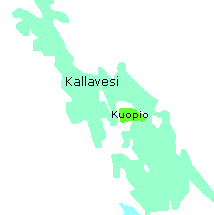
The city is surrounded by Lake Kallavesi, and several parts of it are built on islands. With an area of 472.76 km2 Lake Kallavesi is the tenth largest lake in Finland. In the wake of the Yoldia Sea, which followed the Weichselian glaciation and preceded the Baltic Sea, there are ancient beaches up to 140 m above the current sea level, of which the current Lake Kallavesi is 82 m above sea level. Kuopio's ample waterfronts and islands are also used in the Saaristokaupunki (lit. Archipelago city) -project, the biggest residential area currently being built in Finland. Saaristokaupunki will accommodate a total of 14,000 inhabitants in 2015. All houses will be situated no more than 500 m from the nearest lakeshore.
Kuopio Market Square is the undisputed center of the city and the city center follows a densely built grid pattern with several parks and narrow gutter streets. The environment of the city is quite distinctive; the surface shapes of the waterfront-lined center are so variable that a flat property is a desired rarity. The settlement has spread outside the center of Kuopio according to a dense and sparse finger model that is affordable for public transport, and the new districts have been built in a municipal drive at once; for example, the Saaristokaupunki was banned for building for the previous 25 years, and this Kuopio zoning tradition has a long history. Due to the above-mentioned factors, the population density of the Kuopio city center is the highest in Finland.
With the surrounding lakes, the shoreline in Kuopio is 4,760 kilometers. The terrain is also characterized by rich forests, and the clear center of the Kuopio's lund forest is mainly located in the area between Kuopio, Nilsiä and Siilinjärvi. Of the Finnish municipalities, Kuopio has the second largest number of summer cottages and holiday homes. In 2013, the number of summer cottages was 8,684. The number of summer homes in Kuopio has increased in recent years due to municipal associations. Due to the abundance of water bodies, Kuopio also has a remarkably favorable climate compared to the latitude. The annual sum of the effective temperature is about as high in Kuopio as in places further south than it, for example, Tampere and Lahti.
Subdivisions


There are more than 50 districts and villages in Kuopio.
- Väinölänniemi
- Vahtivuori
- Maljalahti
- Multimäki
- Kuopionlahti
- Hatsala
- Niirala
- Haapaniemi
- Itkonniemi
- Männistö
- Linnanpelto
- Saarijärvi
- Puijonlaakso
- Savilahti
- Peipposenrinne
- Inkilänmäki
- Särkiniemi
- Kettulanlahti
- Rahusenkangas
- Rönö
- Rypysuo
- Päiväranta
- Julkula
- Sorsasalo
- Kelloniemi
- Levänen
- Jynkkä
- Neulamäki
- Puijo
- Niuva
- Neulaniemi
- Kolmisoppi
- Neulalampi
- Petonen
- Litmanen
- Pirtti
- Pitkälahti
- Saaristokaupunki
- Lehtoniemi
- Rautaniemi
- Hiltulanlahti
- Kiviharju
- Vanuvuori
- Melalahti
- Kurkimäki
- Vehmersalmi
- Karttula
- Nilsiä
- Tahko
- Maaninka
- Keskisaari
- Juankoski
- Säyneinen
- Puutossalmi
- Pellesmäki
Climate
|Kuopio |-11.2|-5.2|41 |-11.8|-4.9|35 |-7.6|0.2|31 |-1.7|6.7|29 |4.6|14.2|49 |10.6|19.1|71 |13.7|21.8|85 |12.2|19.5|66 |7.6|13.5|55 |2.1|6.3|55 |-3.0|0.8|51 |-7.6|-2.6|51
Kuopio falls in the continental climate zone (Köppen climate classification Dfb), bordering on subarctic climate zone (Köppen "Dfc"). Winters are long and cold, with average highs staying below freezing from November until March, and summers are short and relatively mild. Most precipitation occurs in the late summer and early fall. The summers are relatively warm for its latitude, especially the lows. This is due to influence from the lake, making it much warmer on summer nights than in areas away from water. In winter, maritime moderation is eliminated as the lake freezes over. Average temperatures for all seasons have warmed in recent decades. |Jan record high C = 7.9 |Feb record high C = 9.7 |Mar record high C = 13.3 |Apr record high C = 21.9 |May record high C = 28.6 |Jun record high C = 31.9 |Jul record high C = 33.8 |Aug record high C = 33.2 |Sep record high C = 25.9 |Oct record high C = 19.1 |Nov record high C = 11.7 |Dec record high C = 8.6 |Jan record low C = -39.3 |Feb record low C = -37.0 |Mar record low C = -33.0 |Apr record low C = -20.9 |May record low C = -8.2 |Jun record low C = 0.1 |Jul record low C = 4.7 |Aug record low C = 2.7 |Sep record low C = -4.9 |Oct record low C = -15.0 |Nov record low C = -27.6 |Dec record low C = -41.1 | access-date = 3 January 2013 | archive-date = 20 March 2021 | archive-url = https://web.archive.org/web/20210320150526/https://helda.helsinki.fi/handle/10138/35880 | url-status = dead FMI(record highs and lows 1940-1961) |access-date = 22 May 2025}} | Jan record low C = -40.2 | Feb record low C = -41.2 | Dec record low C = -35.0 | Jan record high C = 8.0 | Feb record high C = 9.2 | Mar record high C = 13.2 | Apr record high C = 21.2 | Mar record low C = -35.4 | Apr record low C = -21.8 | May record low C = -8.4 | May record high C = 28.4 | Jun record low C = -2.7 | Jun record high C = 32.6 | Jul record low C = 1.6 | Jul record high C = 35.0 | Aug record low C = -2.2 | Aug record high C = 32.9 | Sep record low C = -6.1 | Sep record high C = 26.0 | Oct record high C = 18.4 | Oct record low C = -21.0 | Nov record low C = -32.3 | Nov record high C = 11.0 | Dec record high C = 8.5 | Jan avg record low C = -27.5 | Feb avg record low C = -27.3 | Mar avg record low C = -20.9 | Apr avg record low C = -11.0 | May avg record low C = -3.0 | Jun avg record low C = 2.5 | Jul avg record low C = 6.0 | Aug avg record low C = 4.1 | Sep avg record low C = -0.8 | Oct avg record low C = -6.8 | Nov avg record low C = -13.6 | Dec avg record low C = -21.9 | year avg record low C = -30.7 | Jan avg record high C = 3.2 | Feb avg record high C = 3.2 | Mar avg record high C = 7.7 | Apr avg record high C = 15.4 | May avg record high C = 23.5 | Jun avg record high C = 26.5 | Jul avg record high C = 27.7 | Aug avg record high C = 25.7 | Sep avg record high C = 20.1 | Oct avg record high C = 12.7 | Nov avg record high C = 7.2 | Dec avg record high C = 3.7 | year avg record high C = 28.9 |access-date = 22 May 2025}}
Demographics
Population
|1815|1087 |1840|2071 |1850|2849 |1860|4066 |1870|5639 |1880|6871 |1890|8882 |1900|11723 |1910|15845 |1920|18725 |1930|24082 |1940|25157 |1950|33353 |1960|44911 |1970|63766 |1972|96443 |1980|99687 |1990|104675 |2000|108890 |2010|112336 |2020|120210 The city of Kuopio has inhabitants, making it the most populous municipality in Finland. The region of Kuopio is the 7th largest in Finland, after the regions of Helsinki, Tampere, Turku, Oulu, Jyväskylä and Lahti. Kuopio is home to 2% of Finland's population. 7% of the population has a foreign background, which is below the national average.
Languages
mother tongue (2024) Kuopio is a monolingual Finnish-speaking municipality. , the majority of the population, persons (), spoke Finnish as their first language. In addition, the number of Swedish speakers was persons () of the population. Foreign languages were spoken by of the population. As English and Swedish are compulsory school subjects, functional bilingualism or trilingualism acquired through language studies is not uncommon.
At least 100 different languages are spoken in Kuopio. The most common foreign languages are Russian (1.5%), Arabic (0.7%), Ukrainian (0.6%), English (0.5%) and Bengali (0.3%).
Immigration
| Nationality | Population | % | ||
|---|---|---|---|---|
| Finland | ||||
| Soviet Union | ||||
| Russia | ||||
| Ukraine | ||||
| Sweden | ||||
| Nigeria | ||||
| Syria | ||||
| Bangladesh | ||||
| Thailand | ||||
| China | ||||
| Myanmar | ||||
| Estonia | ||||
| Other |
, 8,517 people with a foreign background lived in Kuopio, representing 7% of the population. There are 8,269 residents who were born abroad, which makes up 7% of the population. The number of foreign citizens in Kuopio is 5,980. Most foreign-born citizens come from the former Soviet Union, Russia, Ukraine, Sweden, Niger and Syria.
The relative proportion of immigrants in Kuopio's population is below the national average. It is lower than in the major Finnish cities of Helsinki, Espoo, Tampere, Vantaa or Turku.
Religion
In 2023, the Evangelical Lutheran Church was the largest religious group with 65.6% of the population of Kuopio. Other religious groups accounted for 3.8% of the population. 30.6% of the population had no religious affiliation.

The largest church denomination in Finland, Lutheran Church has a diocese in Kuopio, which is shepherded by bishop Jari Jolkkonen. One of the most significant Lutheran churches in the city is the Kuopio Cathedral, completed in 1816.
Until 2018, Kuopio was home to primate of the Finnish Orthodox Church, the called Archbishop of Karelia and all Finland. Since 2018, the primate is seated in Helsinki and Kuopio became the seat of the Diocese of Kuopio and Karelia. The late Archbishop Paul had been successful in producing literature of popular Orthodox theology. The city is also the location of RIISA- Orthodox Church Museum of Finland.
Kuopio also has an Islamic mosque. Muslims from various parts of the world and certain Finnish Muslims live in Kuopio.
The town is also home to the first Burmese Buddhist monastery in Finland, named the Buddha Dhamma Ramsi Monastery.
Economy

Kuopio's economic structure is very diverse. In 2008, there were about 4,200 enterprises in Kuopio, of which approximately 180 were export companies. These provided about 45,000 jobs. In 2016, this grew to a total of about 5,050 companies, of which more than 190 also trade abroad. There are a total of 50,877 jobs. The business service of the City of Kuopio plays a significant role in the development of Kuopio's business life. The business service promotes the development of companies operating in Kuopio and improves the operating environments of companies. The most important thing in developing operating environments is to improve the supply of estate and business premises. The Kuopio University Hospital (KUH) is Kuopio's second largest employer after the City of Kuopio; in 2011, KUH employed a total of 4,113 people.
Tourism is of great importance to Kuopio's business life; the Rauhalahti camping site is one indication of Kuopio's expertise, as it is the only five-star camping site in Finland. The city has also a comprehensive hotel offer for tourism, one of the most notable is Hotel Savonia, part of the Best Western hotel chain, in the Puijonlaakso district. Arranging accommodation and program services gives many jobs. Kuopio's Entrepreneurs (Kuopion Yrittäjät), the local association of Savo's Entrepreneurs (Savon Yrittäjät), operates in Kuopio.

The most significant recent business projects are the centralization of Honeywell's Finnish operations in Kuopio, the completion of Ark Therapeutics' gene medicine plant, the marine industry concentration built by Bella Boats at the Marine Park in Haapaniemi's Siikaniemi and the construction of Junttan's EUR 15 million assembly plant at Kylmämäki at the end of 2008. The site of Junttan's current factory in Särkilahti will have space for a large shopping center. The 9.7-hectare plot purchased by Savocon and TKD Finland for EUR 11 million has a building right for 58,500 square meters. The two companies plan to invest a total of about 40 million euros in the project. A significant industrial player is also Savon Sello company in Sorsasalo, which is currently owned by Powerflute Oyj. One of the biggest projects and investments of recent years is the preparation of the construction of Finnpulp's largest and most modern softwood pulp mill in Kuopio. The most significant retail investments are the Prisma hypermarket completed in December 2007 and the Päiväranta's K-Citymarket completed in August 2008. A hardware store Kodin Terra was opened in Pitkälahti, as well as the Ikano Group's Matkus Shopping Center in the Hiltulanlahti area in November 2012 and an IKEA department store in May 2013.
Culture

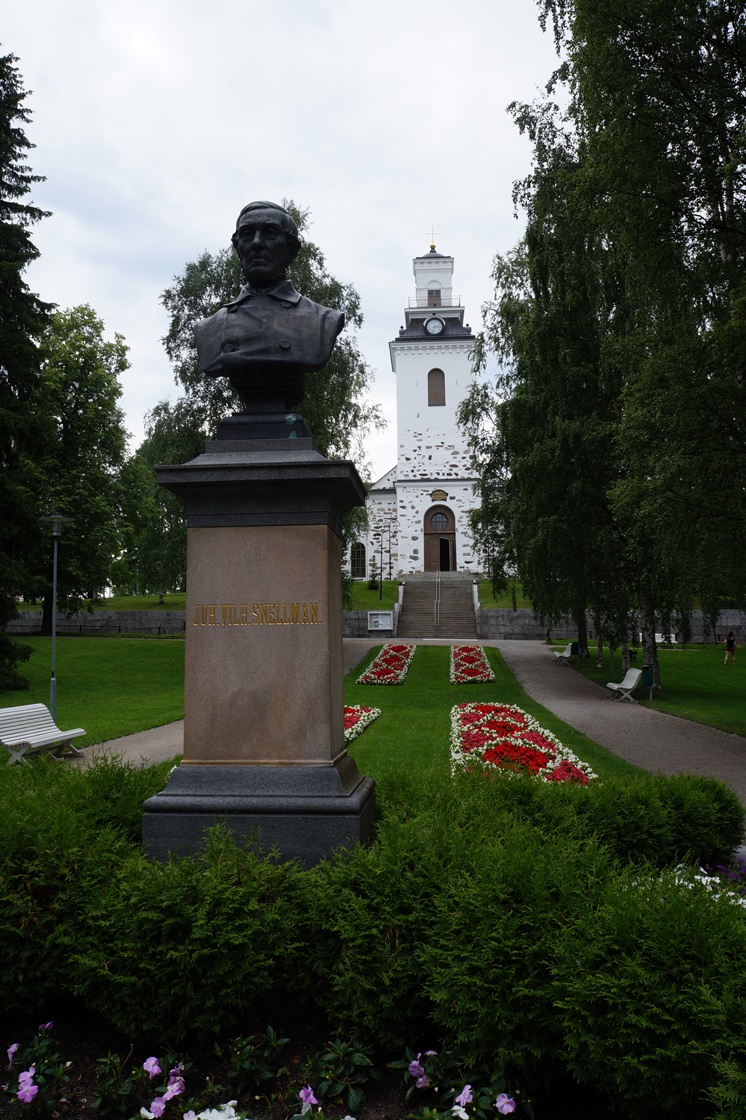
Kuopio is known as the cultural center of Eastern Finland. One of Kuopio's most important cultural venues are the Kuopio Museum, the Kuopio Art Museum and the Kuopio City Theatre in the city center. A wide range of musical (from kindergarten to doctorate-level studies) and dance education is available and the cultural life is active. Notable events include ANTI – Contemporary Art Festival, Kuopio Dance Festival, Kuopio Rockcock, Kuopio Wine Festival, Kuopio Marathon and Finland Ice Marathon in winter. A notable place, however, to enjoy the local flavor of Kuopio life and food is Sampo, a fish restaurant loved by locals and tourists as well.
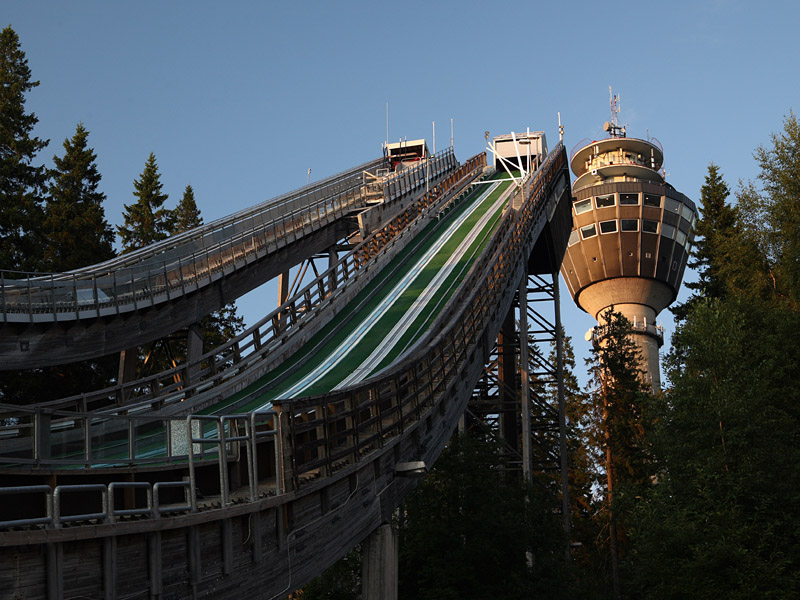
Kuopio is known for its association with a national delicacy, Finnish fish pastry (Kalakukko), and the dialect of Savo, as well as the hill of Puijo and the Puijo tower. Besides being a very popular outdoor recreation area, Puijo serves also as a stage for a yearly World Cup ski jumping competition.
In inhabitants of Kuopio have a special reputation: they are known as jovial and verbally joking. Within the Savo culture, the onus is placed on the listener to interpret the story. People of the Kuopio region and Eastern Finland have always had many health problems and the mortality has been higher than on an average in Finland. Because of this, Eastern Finland has been a hotspot for Public Health studies. The North Karelia Project by the University of Kuopio in coordination with the National Public Health Institute and the World Health Organization, beginning in the 1970s was one of its first steps towards world class research. Niuvanniemi a historical psychiatric hospital is also located in the western part of the city in the Niuva district.
During the 2000s, Kuopio has placed very well in a number of image, popularity and city-attractiveness surveys. In 2007 it was placed third, behind Tampere and Oulu.

Sports
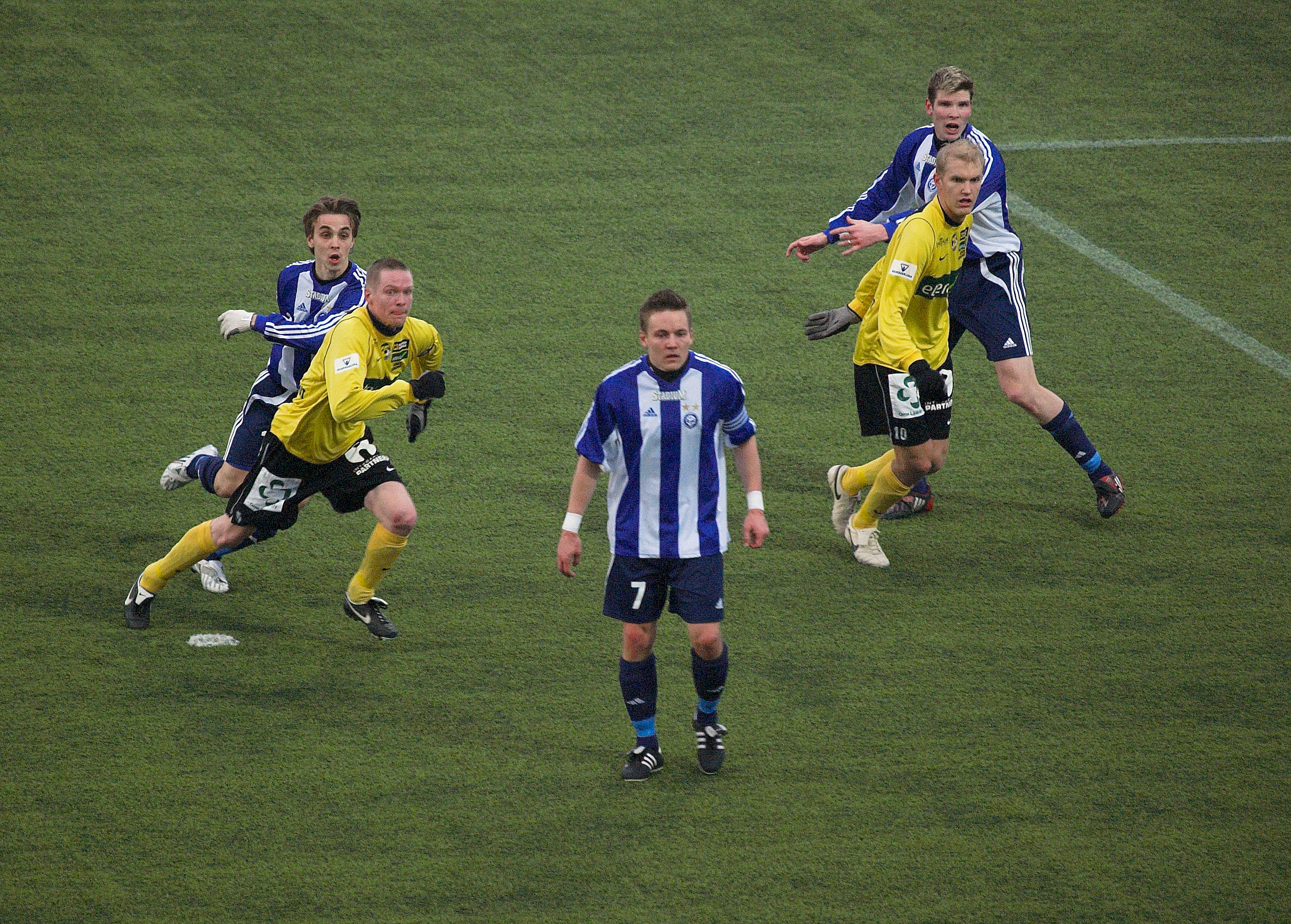
Kuopio bid for the 2012 Winter Youth Olympics, a youth sports festival in the tradition of the Olympics. It became a finalist in November 2008, but ultimately lost to Innsbruck, Austria. Kuopio's image as a small city with a large University and many active young people was considered a model of what the International Olympic Committee seeks for the Games.
- KalPa (ice hockey)
- KuPS (football)
- Kuopion Taitoluistelijat (figure skating)
- Puijon Hiihtoseura (skiing, ski jumping, nordic combined, biathlon)
- Puijon Pesis (pesäpallo)
- Kuopion Reippaan voimistelijat (gymnastics)
- Finland Ice Marathon (ice skating event)
- Kuopio Steelers (american football)
- Kuopio Skating club, Kuopion Luisteluseura KuLs (figure skating)
- Welhot (floorball)
- Linkki (basketball)
Transport

The city has a nationally unique feature in its street network, where every other street is reserved for pedestrian and cycle traffic, so-called "rännikatu" (derived from the Swedish gränd, alley). These streets provide pedestrians a calm environment away from vehicular traffic. This setup dates back to Kuopio's first town plan by Pehr Kjellman in 1776. Originally, rännikadut were created as a fire barrier to prevent a possible fire escalating in a mainly wood-constructed city.
Two Finnish highways cross Kuopio: Finnish national road 5 (Vt 5; part of E63 in the northern side of city), which extends south to Helsinki and north to Sodankylä, and Finnish national road 9 (Vt 9; part of E63 in the western side of city), which extends west to Turku and east to the Niirala checkpoint on the Finnish-Russian border. The Blue Highway passes through Kuopio. It is an international tourist route from Mo i Rana, Norway to Pudozh, Russia via Sweden and Finland.
Long-distance transport connections from Kuopio include Pendolino and InterCity trains from Kuopio railway station to several destinations around Finland, operated by VR, as well as multiple daily departures from Kuopio Airport on Finnair to Helsinki. The passenger harbour of the port of Kuopio, located on the shore of Lake Kallavesi, is the busiest port for passenger traffic in the Vuoksi drainage basin and the Finnish Lakeland.
Education
| University | Students |
|---|---|
| University of Eastern Finland | 6 229 |
| Savonia University of Applied Sciences | 5 000 |
| HUMAK University of Applied Sciences | ~150 |
| Sibelius Academy | ~100 |
Kuopio has always been a city of education. Some of the first schools offering education in Finnish (such as the School for the Blind in 1871, and the Trade School in 1887) were established in Kuopio. Currently the most important institutions are the University of Eastern Finland, the Savonia University of Applied Sciences, Vocational College of North Savo and the Kuopio department of the Sibelius Academy. One of the oldest schools in the city is Kuopio Lyceum High School, which was officially established in 1872, but was originally built in 1826 and designed by Carl Ludvig Engel.
Kuopio is known as a strong center of health (e.g. it has the biggest yearly enrollment rate of medical students in Finland), pharmacy, environment, food & nutrition (all legalized Clinical and Public Health Nutritionists in Finland graduate from the University of Eastern Finland), safety (education in Emergency Services is centered in Kuopio) and welfare professions, as the major organisations University of Kuopio (now part of the University of Eastern Finland since January 2010.), Savonia University of Applied Sciences and Technopolis Kuopio are particularly oriented to those areas.
Notable people
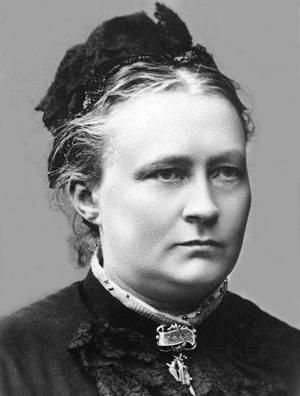
- Juhani Aho
- Pertti Ahokas
- Martti Ahtisaari
- Minna Canth
- Pekka Halonen
- Janne Happonen
- Matti Hautamäki
- Marko Hietala
- Zachary Hietala
- Olli Jokinen
- Kasperi Kapanen
- Sami Kapanen
- Elina Karjalainen
- Mika Kojonkoski
- H. Olliver Twisted
- Hannes Kolehmainen
- Lasse Lehtinen
- Paavo Lipponen
- Paavo Lötjönen
- Emmi Mäkelin
- Archbishop Leo
- Iivo Niskanen
- Martti Nissinen
- Petri Partanen
- Pertti "Spede" Pasanen
- Paavo Ruotsalainen
- Aarno Ruusuvuori
- Aulis Rytkönen
- Tuomo Saikkonen
- Petros Sasaki
- Päivi Setälä
- Sanna Sillanpää
- Alma (Finnish singer)
- Johan Vilhelm Snellman
- Leena Suhl
- Samuli Suhonen
- Robert Taylor
- Kimmo Timonen
- Janne Tolsa
- Jenni Vartiainen
- Brothers von Wright: Magnus, Wilhelm and Ferdinand
- Ilpo Väisänen
International relations
Kuopio is twinned with 15 cities around the world. It also has one twin county, Lääne-Viru County, Estonia.
Twin towns – Sister cities
Kuopio is twinned with:
Notes
References
References
- (26 February 2016). "Kuopio Region – Unexpected encounters by Kirjakaari - Issuu".
- (12 February 2017). "Demonurkka vol. 52 (vk 6/2017)".
- "Kuopio". [[Oxford University Press]].
- (15 January 2008). "Taajamissa asuu 84 prosenttia väestöstä". Statistics Finland.
- (July 2022). "Väestö 31.12. muuttujina Vuosi, Taajama ja Tiedot". Tilastokeskuksen PX-Web tietokannat.
- (13 January 2016). "Hypo: Tässä ovat Suomen 10 kasvukeskusta".
- (30 March 2016). "Kuopio meni Helsingin ohi vetovoimaisuudessa – kaupunginjohtaja: "Pitkäjänteinen työ näkyy"".
- (20 November 2017). "Pääkirjoitus | Kuopio onnistui nousemaan Itä-Suomen aluekeskukseksi".
- "Tällainen on Kuopio kymmenen vuoden kuluttua - Viikkosavo".
- "Finavia's Air Traffic Statistics 2010". Finavia.
- "EPSI finlandKuntarating 2017 - EPSI finland".
- Alkula, Maarit. (18 July 2018). "Tutkimus: Asuntosijoittajan paras kaupunki on nyt Kuopio – Varoitus kiinnostuksen lopahtamisesta".
- "Seinäjoella on paras imago".
- [https://yle.fi/uutiset/3-11841741 Kuopio on Suomen toiseksi vetovoimaisin kaupunki, ainoastaan Tampere kiri edelle] – ''[[YLE]]'', 17 March 2021. (in Finnish)
- [https://yle.fi/uutiset/3-12396201 Kuopio on Suomen toiseksi vetovoimaisin kaupunki] – ''[[YLE]]'', 8 April 2022. (in Finnish)
- Hurme, Anu. (29 March 2023). "Tampere listattiin jo kolmatta kertaa Suomen vetovoimaisimmaksi kaupungiksi – muista suurista kaupungeista vain Oulu paransi tulostaan". [[Yle]].
- "European region of gastronomy Kuopio 2020".
- (14 July 2019). "Kuopio - muutakin kuin kalakukkoa 🐟🐓".
- The Rough Guide to Finland. Rough Guides, 2010. {{ISBN. 1848362579
- (26 January 2010). "Kuopion kaupunki".
- Raatikainen, Riitta. (December 16, 2007). "Varkaudesta Puutokseen". [[Savon Sanomat]].
- Pekka Lappalainen. (1982). "Kuopion historia 1". Kustannuskiila.
- "History of Kuopio".
- "Karl Mikael Hårdh". Suomen sukututkimusseura.
- Professor Jussi T. Lappalainen. (23 December 2009). "''Vanhassa vara parempi?''".
- Бойко Дм. А. Геральдика Великого Княжества Финляндского. – Запорожье, 2013.
- "Kuopion vaakuna". City of Kuopio.
- (August 2024). "Ennen 8.4.1949 annettua kunnanvaakunalakia vahvistetut vaakunat ja vahvistamispäätökset I:10 Kuopio". Kansallisarkiston digitaaliarkisto.
- "History and basic data". City of Kuopio.
- "The Savo Railway Museum".
- "Kaupungin elämää 1947".
- "Koulun arkea 1872".
- (1 July 2008). "Karttula sulautuu Kuopioon" & "Karttula ja Kuopio yhteen". Myöhänen, Pentti & Manner, Matias & Hartikainen, Jarno; Savon Sanomat.
- Houston, Craig. (19 April 2012). "A city in the heart of Savo". [[Helsinki Times]].
- Katainen, Milla. (8 June 2008). "Huipulla, vaikka oikeasti joen pohjalla".
- (16 October 2008). "Kuopion korkein asuinkerrostalo nousi harjakorkeuteen". Suomen Kiinteistölehti.
- "Kallaveden syleilyssä". Kuopio.
- (2 October 2009). "Kuopion rännikaduista tehdään nykyaikaa mennyttä kunnioittaen".
- Kuopion kaupungin tekninen virasto: Kuopio 2009 suunnittelee ja rakentaa (2009)
- "Kuopion Saaristokaupunki – kasvusuuntana täydennysrakentaminen".
- (June 2022)
- Leo Kosonen: Kuopio 2015: Jalankulku-, joukkoliikenne- ja autokaupunki. Ympäristöministeriö, 2007. {{ISBN. 978-952-11-2852-3
- (7 January 2015). "Kuopio-esittely - Kuopion kaupunki".
- (2008). "Pohjois-Savon metsä- ja ympäristökertomus 2007". Metsäkeskus.
- Ihantola, Anna-Riikka. (July 2022). "Lähes kaikki Kuopion lehtotyypit luokiteltiin uhanalaisiksi". Savon Sanomat.
- "Asuminen - Kuopion kaupunki".
- Spectrum tietokeskus (1978), p. 185 (in Finnish)
- "FMI normals 1981-2010". fmi.fi.
- "SUOMEN MAAKUNTIEN ILMASTO".
- (1941). "Suomen tilastollinen vuosikirja 1940". Tilastollinen päätoimisto.
- (31 May 2023). "Number of foreign-language speakers grew by nearly 38,000 persons". Statistics Finland.
- (2025-04-04). "Number of foreign-language speakers exceeded 600,000 during 2024". Statistics Finland.
- "Persons with foreign background". Statistics Finland.
- [https://pxdata.stat.fi/PXWeb/pxweb/en/StatFin/StatFin__vaerak/statfin_vaerak_pxt_11ra.px Key figures on population by region, 1990-2023] Statistics Finland
- Koskinen, Jerri. (6 May 2012). "Jari Jolkkonen vihittiin Kuopion piispan virkaan". Savon Sanomat.
- (12 April 2011). "Charming beauty of churches".
- "Savon Islamilainen Yhdyskunta".
- (5 January 2009). "Buddhist Channel | Buddhism News, Headlines | World | Burmese Buddhist monastery opens in Finland". Buddhistchannel.tv.
- (20 July 2019). "Burmalaiset keräsivät vuosikausia rahaa buddhalaisluostarin perustamiseksi Savoon – munkki Ven Pannasami: "Me tavoittelemme myös suomalaisia"".
- (2008). "Kuopion työpaikat ja elinkeinorakenne 1.1.2008". Kuopion kaupungin yrityspalvelu.
- (7 October 2008). "Elinkeinoelämä". City of Kuopio.
- "Suurimmat työnantajat Kuopiossa 1.1.2011". City of Kuopio.
- "Elinkeinoelämä - Kuopion kaupunki".
- Juutilainen, Jouko. (19 January 2008). ""Junttanin tiloihin kauppajätti" ja "Moottoritien varteen uusi kauppajätti".".
- "Finnpulp - Finnpulp Oy".
- "Kuopion karttapalvelu". City of Kuopio.
- "Kuopio". Ikano Retail Centres Finland Oy.
- Martelius, Katja. (24 April 2024). "Kaikkien aikojen projekti". [[Helsingin Sanomat]].
- "Official website of Niuvanniemi hospital".
- "Innsbruck and Kuopio Make Final Shortlist For 2012 Youth Olympic Winter Games".
- (26 March 2004). "WP2: Accessibility, Synthesis Report". Universell utforming.
- (2 May 2002). "Description of the Case Areas". VTT Technical Research Centre of Finland.
- "Napoleon ja Kuopio: Kuninkaiden Kuopio". Museums of Northern Savonia.
- "Matkustajasatama | Kuopio".
- "Kuopio - information for tourists | Finland travel destinations".
- (2007). "Key Data for 2007". University of Kuopio.
- (2009). "In English". Savonia University of Applied Sciences.
- "Pelastusopisto - Tutustu toimintaamme".
- "Steps leading to the establishment of the UEF".
- (July 2025). ["Twin cities"](https://www.kuopio.fi/en/ystavyyskaupungit }}{{Dead link). City of Kuopio.
This article was imported from Wikipedia and is available under the Creative Commons Attribution-ShareAlike 4.0 License. Content has been adapted to SurfDoc format. Original contributors can be found on the article history page.
Ask Mako anything about Kuopio — get instant answers, deeper analysis, and related topics.
Research with MakoFree with your Surf account
Create a free account to save articles, ask Mako questions, and organize your research.
Sign up freeThis content may have been generated or modified by AI. CloudSurf Software LLC is not responsible for the accuracy, completeness, or reliability of AI-generated content. Always verify important information from primary sources.
Report