From Surf Wiki (app.surf) — the open knowledge base
Kumbh Mela
Hindu pilgrimage and festival in India

Hindu pilgrimage and festival in India
| Field | Value | |
|---|---|---|
| name | Kumbh Mela | |
| image | {{multiple image | |
| perrow | 2/2 | |
| border | infobox | |
| total_width | 300 | |
| image1 | Third Shahi Snan in Hari Ki Pauri.jpg | |
| image2 | Kumbh Mela2001.JPG | |
| image3 | Nashik during 1989 Kumbh Mela.jpg | |
| image4 | Simhasth2016 Ujjain Snan1.jpg | |
| caption1 | Haridwar | |
| caption2 | Prayagraj | |
| caption3 | Nashik | |
| caption4 | Ujjain | |
| caption_align | center | |
| country | India | |
| last | Prayag Maha Kumbh (13 January–26 February 2025) | |
| next | Haridwar Ardh Kumbh (March 2027) | |
| Nashik-Trimbakeshwar Simhastha (July–August 2027) | ||
| genre | Pilgrimage | |
| frequency | {{plainlist | |
| location | Primary {{flatlist | |
| URL |
Nashik-Trimbakeshwar Simhastha (July–August 2027)
- Every 6 years
- (Ardha Kumbh)
- Every 12 years
- (Purna Kumbh)
- Every 144 years
- (Maha Kumbh)
- Haridwar
- Prayagraj
- Nashik-Trimbak
- Ujjain Other{{flatlist|*Bansberia
- Kumbakonam
- Kurukshetra
- Panauti
- Rajim
- T. Narasipura
- Vrindavan Kumbh Mela (, ; ) is a Hindu pilgrimage, celebrated every four or twelve years, correlated with the partial or full revolution of Jupiter. These are held at four locations–Prayagraj, Haridwar, Nashik, and Ujjain, with varying time intervals. As per the Puranas, these sites are considered to have received the drops of the divine nectar (amrita) during the Samudra Manthana (churning of the ocean of milk). The Kumbh Mela lasts between one and three months, with the Amavasya day attracting the largest crowds. The festival attracts millions of people, with the largest gathering recorded at Prayag. About 660 million attended the Kumbh Mela in 2025, and 200 million in 2019, making it one of the largest gatherings in the world. It has been inscribed on the UNESCO Representative List of Intangible Cultural Heritage of Humanity.
The Kumbh Mela is observed cycle at each site approximately once every 12 years based on the Hindu luni-solar calendar and the relative positions of the Jupiter, the Sun, and the Moon. As per Hindu astrology, specific alignments of the Jupiter, the Sun, and the Moon only occur at the four Kumbh locations in a 12-year cycle. The Prayag and Haridwar festivals are held with a six year gap in between, and feature a Maha (major) and Ardha (half) Kumbh Melas. The Kumbh Melas at Ujjain and Nashik are observed in the same year or one year apart, typically about three years after the Prayag Kumbh Mela. The festival is held at the confluence of major rivers, and people take a ritual dip in the waters, believed to be a means of prāyaścitta (atonement) for the past mistakes, and cleansing of their sins. Various fairs, educational events, religious discourses, mass gatherings of monks, and entertainment are also conducted during the festivities.
Before 1858, the name "Kumbh" was applied only to the 12th occurrence of an annual mela in Haridwar during the Vaishakha month. As mentioned in Hindu texts such as Ramcharitmanas, an annual Magh Mela was held in Prayag during the month of Pausha. The Haridwar mela had seen clashes between rival groups in the past, which had resulted in multiple deaths in 1796. After the Indian Rebellion of 1857 had been suppressed by the British Raj, the Pragwals (traditional priest castes) in Allahabad proposed the idea of an organised pilgrimage at Prayag under the surveillance of the British. The first Kumbh Mela at Prayag was organised in 1870
In other parts of India, similar but smaller community pilgrimage and bathing festivals are held. These Magha or Makar melas that have been called Kumbh Mela include those held in Kumbakonam, Kurukshetra, Panauti, Rajim, and Sonipat. These are also generally held at water bodies with various time intervals, and attracts a large gathering. For example, the Mahamaham is held in Kumbakonam once every twelve years, at the Mahamaham tank, near the Kaveri river.
Etymology and nomenclature
The Kumbha in Kumbha Mela literally means "pitcher, jar, pot" in Sanskrit. It is found in the Vedic texts, in this sense, often in the context of holding water or in mythical legends about the nectar of immortality. The word Kumbha or its derivatives are found in the Rigveda (1500–1200 BCE), for example, in verse 10.89.7; verse 19.16 of the Yajurveda, verse 6.3 of Samaveda, verse 19.53.3 of the Atharvaveda, and other Vedic and post-Vedic ancient Sanskrit literature. In astrological texts, the term also refers to the zodiac sign of Aquarius. The astrological etymology dates to late 1st-millennium CE.
The word mela means "unite, join, meet, move together, assembly, junction" in Sanskrit, particularly in the context of fairs, and community celebrations. This word too is found in the Rigveda and other ancient Hindu texts. Thus, Kumbh Mela means an "assembly, meet, union" around "water or nectar of immortality".
Historical origins
Hindus believe that the Kumbh Mela originated in times immemorial and is attested in the Hindu Puranas about Samudra Manthana (lit. churning of the ocean) found in the Puranas. Historians, in contrast, reject these claims as none of the ancient or medieval era texts that mention the Samudra Manthana legend ever link it to a "mela" or festival. According to Giorgio Bonazzoli, a scholar of Sanskrit Puranas, these are anachronistic explanations, an adaptation of early legends to a later practice by a "small circle of adherents" who have sought the roots of a highly popular pilgrimage and festival.

Hindu mythology describes the creation of a "pot of amrita (nectar of immortality)" after the forces of good and evil churn the ocean of creation. The gods and demons fight over this pot, the "kumbha", of nectar in order to gain immortality. In a later day extension to the legend, the pot is spilt at four places, and that is the origin of the four Kumbha Melas. The story varies, with some stating Vishnu as Mohini avatar, others stating Dhanavantari or Garuda or Indra spilling the pot. This "spilling" and associated Kumbh Mela story is not found in the earliest mentions of the original legend of Samudra Manthana (churning of the ocean) such as the Vedic era texts (pre-500 BCE), or the earliest of the Puranas (3rd to 10th-century CE).
While the Kumbha Mela phrase is not found in the ancient or medieval era texts, numerous chapters and verses in Hindu texts are found about a bathing festival, the sacred junction of rivers Ganga, Yamuna and sacred Saraswati at Prayag, and pilgrimage to Prayag. These are in the form of Snana (bathe) ritual and in the form of Prayag Mahatmya (greatness of Prayag, historical tour guides in Sanskrit).
History
The first Kumbh Mela event was organised in 1870, under British supervision. Some observers have found similarities between Kumbh Mela and other events that took place in the earlier times.
A mention of Prayaga and the bathing pilgrimage is found in Rigveda Pariśiṣṭa (supplement to the Rigveda). It is also mentioned in the Pali canons of Buddhism, such as in section 1.7 of Majjhima Nikaya, wherein the Buddha states that bathing in Payaga (Skt: Prayaga) cannot wash away cruel and evil deeds, rather the virtuous one should be pure in heart and fair in action. The Mahabharata mentions a bathing pilgrimage at Prayag as a means of prāyaścitta (atonement, penance) for past mistakes and guilt. In Tirthayatra Parva, before the great war, the epic states "the one who observes firm [ethical] vows, having bathed at Prayaga during Magha, O best of the Bharatas, becomes spotless and reaches heaven." In Anushasana Parva, after the war, the epic elaborates this bathing pilgrimage as "geographical tirtha" that must be combined with Manasa-tirtha (tirtha of the heart) whereby one lives by values such as truth, charity, self-control, patience and others.
There are other references to Prayaga and river-side festivals in ancient Indian texts, including at the places where present-day Kumbh Melas are held, but the exact age of the Kumbh Mela is uncertain. The 7th-century Buddhist Chinese traveller Xuanzang (Hiuen Tsang) mentions king Harsha and his capital of Prayag, which he states to be a sacred Hindu city with hundreds of "deva temples" and two Buddhist institutions. He also mentions the Hindu bathing rituals at the junction of the rivers. According to some scholars, this is the earliest surviving historical account of the Kumbh Mela, which took place in present-day Prayag in 644 CE.
Some traditions ascribe Kumbha Mela's origins to the 8th CE philosopher Shankara as a part of his efforts to start major Hindu gatherings for philosophical discussions and debates along with Hindu monasteries across the Indian subcontinent.
Kama MacLean, an Indologist who has published articles on the Kumbh Mela predominantly based on the colonial archives and English-language media, states based on emails from other scholars and a more recent interpretation of the 7th-century Xuanzang memoir, the Prayag event happened every 5 years (and not 12 years), featured a Buddha statue, involved alms giving and it might have been a Buddhist festival. In contrast, Ariel Glucklich – a scholar of Hinduism and Anthropology of Religion, the Xuanzang memoir includes, somewhat derisively, the reputation of Prayag as a place where people (Hindus) once committed superstitious devotional suicide to liberate their souls, and how a Brahmin of an earlier era successfully put an end to this practice. This and other details such as the names of temples and bathing pools suggest that Xuanzang presented Hindu practices at Prayag in the 7th century, from his Buddhist perspective and perhaps to "amuse his audience back in China", states Glucklich.
Other early accounts of the significance of Prayag to Hinduism are found in the various versions of the Prayaga Mahatmya, dated to the late 1st millennium CE. These Purana-genre Hindu texts describe it as a place "bustling with pilgrims, priests, vendors, beggars, guides" and local citizens busy along the confluence of the rivers (Sangam). These Sanskrit guide books of the medieval era India were updated over its editions, likely by priests and guides who had a mutual stake in the economic returns from the visiting pilgrims. One of the longest sections about Prayag rivers and their significance to Hindu pilgrimage is found in chapters 103–112 of the Matsya Purana.
Evolution of earlier melas to Kumbh Melas
There is evidence enough to suggest that although the Magh Mela – or at least, the tradition of religious festival at the triveni [Prayag] – is exceedingly old, the Kumbh Mela at Allahabad is much more recent. Some observers have found similarities between Kumbh Mela and other events that took place in the earlier times.
According to James Lochtefeld – a scholar of Indian religions, the phrase Kumbh Mela and historical data about it is missing in early Indian texts. However, states Lochtefeld, these historical texts "clearly reveal large, well-established bathing festivals" that were either annual or based on the twelve-year cycle of planet Jupiter. Manuscripts related to Hindu ascetics and warrior-monks – akharas fighting the Islamic Sultanates and Mughal Empire era – mention bathing pilgrimage and a large periodic assembly of Hindus at religious festivals associated with bathing, gift-giving, commerce and organisation. An early account of the Haridwar Kumbh Mela was published by Captain Thomas Hardwicke in 1796 CE.

According to James Mallinson – a scholar of Hindu yoga manuscripts and monastic institutions, bathing festivals at Prayag with large gatherings of pilgrims are attested since "at least the middle of the first millennium CE", while textual evidence exists for similar pilgrimage at other major sacred rivers since the medieval period. Four of these morphed under the Kumbh Mela brand during the East India Company rule (British colonial era) when it sought to control the war-prone monks and the lucrative tax and trade revenues at these Hindu pilgrimage festivals. Additionally, the priests sought the British administration to recognise the festival and protect their religious rights.
The 16th-century Ramcharitmanas of Tulsidas mentions an annual Mela in Prayag, as does a Muslim historian's Ain-i-Akbari (c. 1590 CE). The latter Akbar-era Persian text calls Prayag (spells it Priyag) the "king of shrines" for the Hindus, and mentions that it is considered particularly holy in the Hindu month of Magha. The late 16th-century Tabaqat-i-Akbari also records of an annual bathing festival at Prayag Sangam where "various classes of Hindus came from all sides of the country to bathe, in such numbers, that the jungles and plains [around it] were unable to hold them".

The Kumbh Mela of Haridwar appears to be the original Kumbh Mela, since it is held according to the astrological sign "Kumbha" (Aquarius), and because there are several references to a 12-year cycle for it. The later Mughal Empire era texts that contain the term "Kumbha Mela" in Haridwar's context include Khulasat-ut-Tawarikh (1695–1699 CE), and Chahar Gulshan (1759 CE).
Like the Prayag mela, the bathing pilgrimage mela at Nasik and Ujjain are of considerable antiquity. However, these were referred to as Singhasth mela, and the phrase "Kumbh mela" is yet to be found in literature prior to the 19th century. The phrases such as "Maha Kumbh" and "Ardh Kumbh" in the context of the ancient religious pilgrimage festivals with different names at Prayag, Nasik and Ujjain are evidently of a more modern era.
The Magh Mela of Prayag is probably the oldest among the four modern-day Kumbh Melas. It dates from the early centuries CE, given it has been mentioned in several early Puranas. However, the name Kumbh for these more ancient bathing pilgrimages probably dates to the mid-19th century. D. P. Dubey states that none of the ancient Hindu texts call the Prayag fair a "Kumbh Mela". Kama Maclean states that the early British records do not mention the name "Kumbh Mela" or the 12-year cycle for the Prayag fair. The first British reference to the Kumbh Mela in Prayag occurs only in an 1868 report, which mentions the need for increased pilgrimage and sanitation controls at the "Coomb fair" to be held in January 1870. According to Maclean, the Prayagwal Brahmin priests of Prayag coopted the Kumbh legend and brand to the annual Prayag Magh Mela given the socio-political circumstances in the 19th century.
The Kumbh Mela at Ujjain began in the 18th century when the Maratha ruler Ranoji Shinde invited ascetics from Nashik to Ujjain for a local festival. Like the priests at Prayag, those at Nashik and Ujjain, competing with other places for a sacred status, may have adopted the Kumbh tradition for their pre-existing Magha melas.
Akharas: Warrior monks, recruitment drive and logistics
One of the key features of the Kumbh Mela has been the camps and processions of the sadhus (monks). These soldier-monk traditions have been a well-established feature of the Indian society, and they are prominent feature of the Kumbh melas.
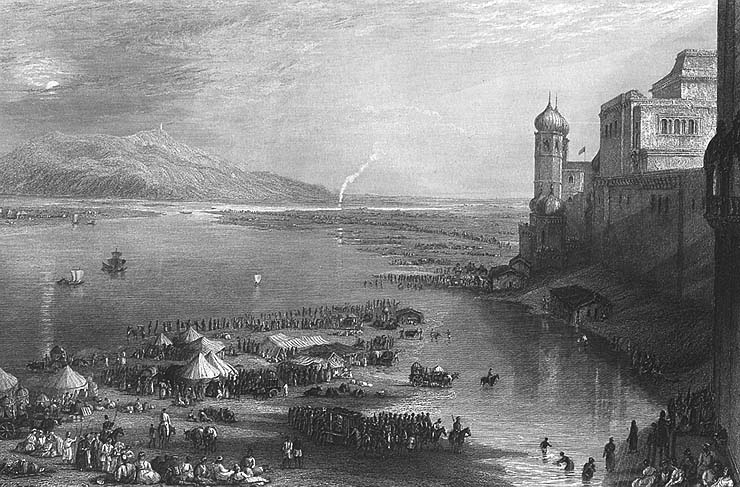
Until the East India Company rule, the Kumbh Melas (Magha Melas) were managed by these akharas. They provided logistical arrangements, and policing, intervened and judged any disputes and collected taxes. They also have been a central attraction and a stop for mainstream Hindus who seek their darsana (meeting, view) as well as spiritual guidance and blessings. and major Hindu gatherings for philosophical discussions and debates. However, there is no historical literary evidence that he actually did start the Kumbh melas.
During the 17th century, the akharas competed for ritual primacy, priority rights to who bathes first or at the most auspicious time, and prominence leading to violent conflicts. At the 1796 Kumbh Mela in Haridwar, violence broke out between the Shaivites and the Udasis on logistics and camping rights.
The repetitive clashes, battle-ready nature of the warrior monks, and the lucrative tax and trading opportunities at Kumbh melas in the 18th century attracted the attention of the East India Company officials. They intervened, laid out the camps, trading spaces, and established a bathing order for each akhara. After 1947, the state governments have taken over this role and provide the infrastructure for the Kumbh Mela in their respective states. The first Kumbh Mela event under British supervision was organised in 1870.
The Kumbh Melas attract many loner sadhus (monks) who do not belong to any akharas. Of those who do belong to a group, the thirteen active akharas have been,
- 7 Shaiva akharas: Mahanirvani, Atal, Niranjani, Anand, Juna, Avahan, and Agni
- 3 Vaishnava akharas: Nirvani, Digamb
Significance and impact

The Kumbh Melas of the past, albeit with different regional names, attracted large attendance and have been religiously significant to the Hindus for centuries. They have included initiation of followers to the akharas, discourses of religious leaders, and religious music. It is also financially significant.
Officials of the East India Company saw the Hindu pilgrimage as a means to collect large sums of revenue through a "pilgrim tax" and taxes on the trade that occurred during the festival. The British officials raised the tax to amount greater than average monthly income and the attendance fell drastically. The Prayagwal pandas resisted as the impact of the religious tax on the pilgrims became clear. According to colonial records, they had originally supported the tax; since the records of the Prayag Mela during this period were written by colonialists and missionaries, Macclean argues that they present a biased materialistic view.
Baptist missionary John Chamberlain, who visited the 1824 Ardh Kumbh Mela at Haridwar, stated that a large number of visitors came there for trade. He also includes a 1814 letter from his missionary friend who distributed copies of the Gospel to the pilgrims and tried to convert some to Christianity. According to an 1858 account of the Haridwar Kumbh Mela by the British civil servant Robert Montgomery Martin, the visitors at the fair included people from a number of races and clime. Along with priests, soldiers, and religious mendicants, the fair had horse traders from Bukhara, Kabul, Turkistan as well as Arabs and Persians. The festival had roadside merchants of food grains, confectioners, clothes, toys and other items. Thousands of pilgrims in every form of transport as well as on foot marched to the pilgrimage site, dressed in colourful costumes, some without clothes, occasionally shouting "Mahadeo Bol" and "Bol, Bol" together. At night the river banks and camps illuminated with oil lamps, fireworks burst over the river, and innumerable floating lamps set by the pilgrims drifted downstream of the river. Several Hindu rajas, Sikh rulers and Muslim Nawabs visited the fair. Europeans watched the crowds and few Christian missionaries distributed their religious literature at the Hardwar Mela, wrote Martin.
.jpg)
Prior to 1838, British officials collected taxes but provided no infrastructure or services to the pilgrims. Mark Twain also visited Kumbh Mela of Prayagraj in 1895 for which he wrote:
The positive impact of kumbh mela is this festival helps preserve cultural traditions and promotes the values of spirituality, unity, and devotion.It is wonderful, the power of a faith like that, that can make multitudes upon multitudes of the old and weak and the young and frail enter without hesitation or complaint upon incredible journeys and endure the resultant miseries without repining.
In 1938, Lord Auckland abolished the pilgrim tax, after which the number of pilgrims increased.
1857 rebellion and the Independence movement
According to the colonial archives, the Prayagwal community associated with the Kumbh Mela were one of those who seeded and perpetuated the resistance and 1857 rebellion against the colonial rule. Prayagwals objected to and campaigned against the colonial government-supported Christian missionaries and officials who treated them and the pilgrims as "ignorant co-religionists" and those who aggressively tried to convert the Hindu pilgrims to a Christian sect. During the 1857 rebellion, Colonel Neill targeted the Kumbh Mela site and shelled the region where the Prayagwals lived, destroying it in what Maclean describes as a "notoriously brutal pacification of Allahabad". In response, the Prayagwals targeted and destroyed the local mission press and churches. Once the British had regained control of the region, the Prayagwals were persecuted by colonial officials. Some were convicted and hanged, while others for whom the government did not have proof enough to convict were persecuted. Large tracts of Kumbh Mela lands near the Ganga-Yamuna confluence were confiscated and annexed into the government cantonment. In the years after 1857, the Prayagwals and the Kumbh Mela pilgrim crowds carried flags with images alluding to the rebellion and the racial persecution. The British media reported these pilgrim assemblies and protests at the later Kumbh Mela as strangely "hostile" and with "disbelief." The Kumbh Mela continued to play an important role in the independence movement through 1947, as a place where the native people and politicians periodically gathered in large numbers. In 1906, the Sanatan Dharm Sabha met at the Prayag Kumbh Mela and resolved to start the Banaras Hindu University in Madan Mohan Malaviya's leadership. Kumbh Melas have also been one of the hubs for the Hindutva movement and politics. In 1964, the Vishva Hindu Parishad was founded at the Haridwar Kumbh Mela.
Rising attendance and scale
.jpg)
The historical and modern estimates of attendance vary greatly between sources. For example, the colonial era Imperial Gazetteer of India reported that between 2 and 2.5 million pilgrims attended the Kumbh Mela in 1796 and 1808, then added these numbers may be exaggerations. Between 1892 and 1908, in an era of major famines, cholera and plague epidemics in British India, the pilgrimage dropped to between 300,000 and 400,000.
During World War II, the colonial government banned the Kumbh Mela to conserve scarce supplies of fuel. The ban, coupled with false rumours that Japan planned to bomb and commit genocide at the Kumbh Mela site, led to sharply lower attendance at the 1942 Kumbh Mela than in prior decades when an estimated 2 to 4 million pilgrims gathered at each Kumbh mela. After India's independence, the attendance rose sharply. On amavasya – one of the three key bathing dates, over 5 million attended the 1954 Kumbh, about 10 million attended the 1977 Kumbh while the 1989 Kumbh attracted about 15 million.
On 14 April 1998, 10 million pilgrims attended the Kumbh Mela at Haridwar on the busiest single day, according to the Himalayan Academy editors. In 2001, IKONOS satellite images confirmed a very large human gathering, with officials estimating 70 million people over the festival, Another estimate states that about 30 million attended the 2001 Kumbh mela on the busiest mauni amavasya day alone.

In 2007, as many as 70 million pilgrims attended the 45-day-long Ardha Kumbh Mela at Prayagraj. In 2013, 120 million pilgrims attended the Kumbh Mela at Prayagraj. Nasik has registered maximum visitors to 75 million.
Maha Kumbh at Prayagraj is the largest in the world, the attendance and scale of preparation of which keeps rising with each successive celebration. For the 2019 Ardh Kumbh at Prayagraj, the preparations included the construction of a temporary city over 2,500 hectares with 122,000 temporary toilets and range of accommodation from simple dormitory tents to 5-star tents, 800 special trains by the Indian Railways, artificially intelligent video surveillance and analytics by IBM, disease surveillance, river transport management by Inland Waterways Authority of India, and an app to help the visitors.
The Kumbh Mela is "widely regarded as the world's largest religious gathering", states James Lochtefeld. According to Kama Maclean, the coordinators and attendees themselves state that a part of the glory of the Kumbh festival is in that "feeling of brotherhood and love" where millions peacefully gather on the river banks in harmony and a sense of shared heritage.
In modern religious and psychological theory, the Kumbh Mela exemplifies Émile Durkheim's concept of collective effervescence. This phenomenon occurs when individuals gather in shared rituals, fostering a profound sense of unity and belonging. The collective energy generated during the Mela strengthens social bonds and elevates individual and communal consciousness, illustrating the power of such gatherings to create shared identity and purpose.
Stampedes and scandals
Several stampedes have occurred at the sites related to the Kumbh Melas. After an 1820 stampede at Haridwar killed 485 people, the Company government took extensive infrastructure projects, including the construction of new ghats and road widening, to prevent further stampedes. The various Kumbh melas, in the 19th- and 20th century witnessed sporadic stampedes, each tragedy leading to changes in how the flow of pilgrims to and from the river and ghats was managed. In a major crowd crush, over 500 people died in the 1954 Kumbh Mela stampede, although the real figure varies according to different sources. In 1986, 50 people were killed in a stampede.
The Prayag Kumbh Mela in 1885 became a source of scandal when a Muslim named Husain was appointed as the Kumbh Mela manager, and Indian newspaper reports stated that Husain had "organised a flotilla of festooned boats for the pleasure of European ladies and gentlemen, and entertained them with dancing girls, liquor and beef" as they watched the pilgrims bathing.
The Kumbh Mela held in Haridwar in 2021 was considered a COVID-19 super spreader, contributing to increased cases in Uttarakhand and India, as the number of pilgrims visiting the area grew and numerous health guidelines were violated. As the second wave was increasing infections in India, calls to cancel the festival were rejected by the state and central government that assured the festival was clean and safe.
In January 2025, at least 50 people died and 100 others were injured in the stampede at the Maha Kumbh venue in Prayagraj, and Amrit Snan was temporarily suspended. It was announced that a judicial enquiry by a three-member committee would be conducted, led by Justice Harsh Kumar. Media investigations have suggested a higher number of fatalities and a potential coverup.
Calendar, locations and preparation
Types
The Kumbh Mela are classified as:
- The Purna ("full") Kumbh Melas, which are held every 12 years at a given site.
- The Ardh ("half") Kumbh Mela held approximately every 6 years between the two Purna Kumbha Melas at Prayagraj and Haridwar. For the 2019 Prayagraj Kumbh Mela, the Uttar Pradesh Chief Minister Yogi Adityanath announced that the Ardh Kumbh Mela (organised every 6 years) will simply be known as "Kumbh Mela", and the Kumbh Mela (organised every 12 years) will be known as "Maha Kumbh Mela" ("Great Kumbh Mela"). The term Maha Kumbh Mela has also been used to publicise certain kumbha melas that are said to have had astrological attributes that would not be repeated for another 144 years, including the ones in 1954, 1989, 2001, and 2025.
Locations
Kalpvas

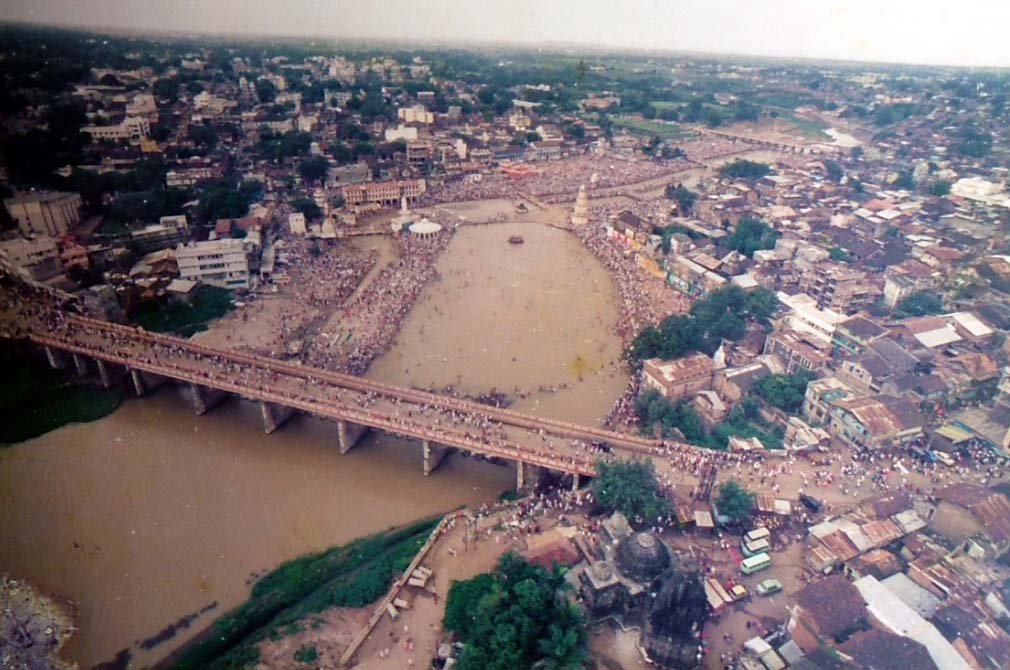
The fairs held at four sites are broadly recognised as the Kumbh Melas: Prayagraj, Haridwar, Nashik and Ujjain. Priests at other places have also attempted to boost the status of their tirtha by adapting the Kumbh legends. The places whose festivals have been claimed as "Kumbh Mela" include Thirumakudalu Narasipura in Karnataka, Varanasi and Vrindavan in Uttar Pradesh, Kumbhakonam (Mahamaham) in Tamil Nadu, Rajim (Rajim Kumbh Mela) in Chhattisgarh, Bansberia (Bansberia Kumbh Mela) in West Bengal, Kurukshetra and Sonipat in Haryana; and Panauti in Nepal. In 2022, the Bansberia Kumbh Mela (Hooghly) was claimed to have been organised after a 700-year old break. Even Tibet has hosted a festival claimed to be a Kumbh Mela.
Dates
Each site's celebration dates are calculated in advance according to a special combination of zodiacal positions of Bṛhaspati (Jupiter), Surya (the Sun) and Chandra (the Moon). The relative years vary between the four sites, but the cycle repeats about every 12 years. Since Jupiter's orbit completes in 11.86 years, a calendar year adjustment appears in approximately 8 cycles. Therefore, approximately once a century, the Kumbh Mela returns to a site after 11 years.
| Place | River | url=http://kumbhmelaallahabad.gov.in/english/astrological_aspect.html | title=Official Website of Kumbh Mela 2013 Allahabad Uttar Pradesh India | author=Mela Adhikari Kumbh Mela 2013 | access-date=24 November 2015 | archive-date=29 October 2019 | archive-url=https://web.archive.org/web/20191029000716/http://kumbhmelaallahabad.gov.in/english/astrological_aspect.html}} | Season, months | First bathing date | Second date | Third date |
|---|---|---|---|---|---|---|---|---|---|---|---|
| Haridwar | Ganga | Jupiter in Aquarius, Sun in Aries | Vasanta, Chaitra (January–April) | Maha Shivaratri | Chaitra Amavasya (new moon) | Mesha Sankranti | |||||
| Prayagraj | Ganga and Yamuna junction | Jupiter in Aries, Sun and Moon in Capricorn; or Jupiter in Taurus, Sun in Capricorn | Shishira, Magha (January–February) | Makara Sankranti | Magha Amavasya (new moon) | Vasanta Panchami | |||||
| Nashik-Trimbak | Godavari | Jupiter and Sun in Leo; or Jupiter, Sun and Moon enters in Cancer on lunar conjunction | Varsha, Bhadrapada (August–September) | Simha Sankranti | Bhadrapada Amavasya (new moon) | Devotthana Ekadashi | |||||
| Ujjain | Shipra | Jupiter in Leo and Sun in Aries; or Jupiter, Sun, and Moon in Libra on Kartik Amavasya | Grishma, Vaishakha (April–May) | Chaitra Purnima (full moon) | Chaitra Amavasya (new moon) | Vaishakha Purnima (full moon) |
Past and future years
Kumbh Mela at Prayagraj is celebrated approximately 3 years after Kumbh at Haridwar and 3 years before Kumbh at Nashik and Ujjain (both of which are celebrated in the same year or one year apart - with Ujjain Mela occurring after Nashik).
| Year | Haridwar | Prayagraj | Nashik-Trimbak | Ujjain |
|---|---|---|---|---|
| 1974 | Kumbh Mela | |||
| 1975 | ||||
| 1976 | ||||
| 1977 | Kumbh Mela | |||
| 1978 | ||||
| 1979 | ||||
| 1980 | Ardh Kumbh Mela | Kumbh Mela | Kumbh Mela | |
| 1981 | ||||
| 1982 | ||||
| 1983 | ||||
| 1984 | Ardh Kumbh Mela | |||
| 1985 | ||||
| 1986 | Kumbh Mela | |||
| 1987 | ||||
| 1988 | ||||
| 1989 | Kumbh Mela | |||
| 1990 | ||||
| 1991 | ||||
| 1992 | Ardh Kumbh Mela | Kumbh Mela | Kumbh Mela | |
| 1993 | ||||
| 1994 | ||||
| 1995 | Ardh Kumbh Mela | |||
| 1996 | ||||
| 1997 | ||||
| 1998 | Kumbh Mela | |||
| 1999 | ||||
| 2000 | ||||
| 2001 | Kumbh Mela | |||
| 2002 | ||||
| 2003 | Kumbh Mela | |||
| 2004 | Ardh Kumbh Mela | Kumbh Mela | ||
| 2005 | ||||
| 2006 | ||||
| 2007 | Ardh Kumbh Mela | |||
| 2008 | ||||
| 2009 | ||||
| 2010 | Kumbh Mela | |||
| 2011 | ||||
| 2012 | ||||
| 2013 | Maha Kumbh Mela | |||
| 2014 | ||||
| 2015 | Kumbh Mela | |||
| 2016 | Ardh Kumbh Mela | Kumbh Mela | ||
| 2017 | ||||
| 2018 | ||||
| 2019 | Ardh Kumbh Mela | |||
| 2020 | ||||
| 2021 | Kumbh Mela | |||
| 2022 | ||||
| 2023 | ||||
| 2024 | ||||
| 2025 | Maha Kumbh Mela | |||
| 2026 | ||||
| 2027 | Ardh Kumbh Mela | Kumbh Mela | ||
| 2028 | Kumbh Mela |
Festival management
The Kumbh Mela attracts tens of millions of pilgrims. Providing for a safe and pleasant temporary stay at the festival site is a complex and challenging task. The camping (santhas/akharas), food, water, sanitation, emergency health care, fire services, policing, disaster management preparations, and the movement of people require significant prior planning. Further, assistance to those with special needs and lost family members through Bhule-Bhatke Kendra demands extensive onsite communication and coordination. In the case of Prayag in particular, the festival site is predominantly submerged during the monsoon months. The festival management workers have only two and a half months to start and complete the construction of all temporary infrastructure necessary for the pilgrims, making the task even more challenging.
In 2013, the Indian government authorities, in co-operation with seva volunteers, monks and Indian companies, set up 11 sectors with 55 camp clusters, providing round-the-clock first aid, ambulance, pharmacy, sector cleaning, sanitation, food and water distribution (setting up 550 km of pipelines operated by 42 pumps), cooking fuel, and other services. According to Baranwal et al., their 13-day field study of the 2013 Kumbh Mela found that "the Mela committee and all other agencies involved in Mela management successfully supervised the event and made it convenient, efficient and safe," an assessment shared by the US-based Centers for Disease Control for the Nasik Kumbh mela.
In 2025, more than 13000 trains including 3000 special trains have allocated to accommodate large volume of passengers. Yet the surge in devotees caused a full blown crisis across railway stations, especially in Bihar, where passengers who were trying to board the train caused extensive damages to trains. At Madhubani and Samastipur stations, devotees vandalised six air-conditioned coaches of the Jayanagar-New Delhi Swatantrata Senani Express.
Rituals
Bathing and processions
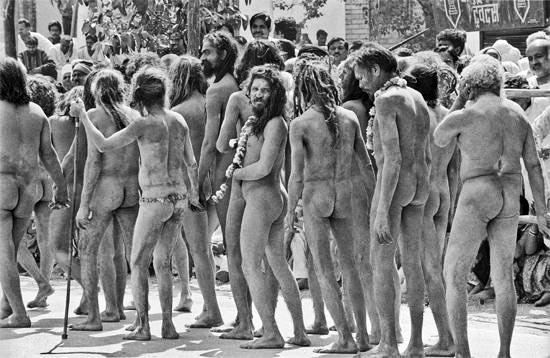

Bathing, or a dip in the river waters, with a prayer, is the central ritual of the Kumbh Melas for all pilgrims. Traditionally, on amavasya – the most cherished day for bathing – the Hindu pilgrims welcome and wait for the thirteen sadhu akharas to bathe first. This event – called shahi snan or rajyogi snan – is marked by a celebratory processional march, with banners, flags, elephants, horses and musicians along with the naked or scantily clad monks, some smeared with bhasma (ashes). The largest contingent is the Juna akhara, traced to Adi Shankara, representing a diverse mix from the four of the largest Hindu monasteries in India with their headquarters at Sringeri, Dvarka, Jyotirmatha and Govardhana. The Mahanirbani and Niranjani are the other large contingents, and each akhara has their own lineage of saints and teachers. Large crowds gather in reverence and cheer for this procession of monks. Once these monks have taken the dip, the festival day opens for bathing by the pilgrims from far and near the site. Nandita Sengupta (13 February 2010). "Naga sadhus steal the show at Kumbh", TNN
The bathing ritual by the pilgrims may be aided by a Prayagwal priest or maybe a simple dip that is private. When aided, the rituals may begin with mundan (shaving of head), prayers with offerings such as flowers, sindur (vermilion), milk or coconut, along with the recitation of hymns with shradha (prayers in the honour of one's ancestors). More elaborate ceremonies include a yajna (homa) led by a priest. After these river-side rituals, the pilgrim then takes a dip in the water, stands up, prays for a short while, then exits the river waters. Many then proceed to visit old Hindu temples near the site.
The motivations for the bathing ritual are several. The most significant is the belief that the tirtha (pilgrimage) to the Kumbh Mela sites and then bathing in these holy rivers has a salvific value, moksha – a means to liberation from the cycle of rebirths (samsara). The pilgrimage is also recommended in Hindu texts to those who have made mistakes or sinned, to repent for their errors and as a means of prāyaścitta (atonement, penance) for these mistakes. Pilgrimage and bathing in holy rivers with a motivation to do penance and as a means to self-purify has Vedic precedents and is discussed in the early dharma literature of Hinduism. For example, in the epic Mahabharata, the king Yudhisthira is described to be in a state full of sorrow and despair after participating in the violence of the great war that killed many. He goes to a saint, who advises him to go on a pilgrimage to Prayag and bathe in the river Ganges as a means of penance.
Feasts, festivities and discussions

Some pilgrims walk considerable distances and arrive barefoot, as a part of their religious tradition. Most pilgrims stay for a day or two, but some stay the entire month of Magh during the festival and live an austere life during the stay. They attend spiritual discourses, fast and pray over the month, and these Kumbh pilgrims are called kalpavasis.
The festival site is strictly vegetarian by tradition, as violence against animals is considered unacceptable. Many pilgrims practice partial (one meal a day) or full vrata (day-long fasting), and some abstain from elaborate meals. These ritual practices are punctuated by celebratory feasts where the vast number of people sit in rows and share a community meal – mahaprasada – prepared by volunteers from charitable donations. By tradition, families and companies sponsor these anna dana (food charity) events, particularly for the monks and the poor pilgrims. The management has established multiple food stalls, offering delicacies from different states of India.
Other activities at the mela include religious discussions (pravachan), devotional singing (kirtan), and religious assemblies where doctrines are debated and standardised (shastrartha). The festival grounds also feature a wide range of cultural spectacles over the month of celebrations. These include kalagram (venues of kala, Indian arts), laser light shows, classical dance and musical performances from different parts of India, thematic gates reflecting the historic regional architectural diversity, boat rides, tourist walks to historic sites near the river, as well opportunities to visit the monastic camps to watch yoga adepts and spiritual discourses.
Darshan

Darshan, or the act of sacred viewing, holds immense significance at the Kumbh Mela. Pilgrims undertake this journey to experience the profound religious and cultural essence of the event. Two key groups central to the Kumbh Mela are the Sadhus (Hindu ascetics) and the pilgrims. Through their dedicated yogic practices, Sadhus embody the transient nature of life and play a vital role in connecting the spiritual and the mundane.
Sadhus attend the Kumbh Mela to engage with the broader Hindu community, offering the opportunity for devotees to partake in darshan. This interaction allows pilgrims to seek spiritual guidance and advice. Darshan emphasises a visual exchange—a divine connection where worshippers symbolically "drink" the deity's power through sight.
The Kumbh Mela is structured into camps, facilitating access to Sadhus for Hindu worshippers. The darshan experience is integral to the Kumbh Mela, and worshippers approach it with great reverence, ensuring they do not inadvertently offend the religious sanctity of the moment. Interactions with Sadhus are highly respectful, with devotees often leaving offerings at their feet as tokens of devotion and gratitude.
In culture
Kumbh Mela has been a theme for many documentaries, including Kings with Straw Mats (1998) directed by Ira Cohen, Kumbh Mela: The Greatest Show on Earth (2001) directed by Graham Day, Short Cut to Nirvana: Kumbh Mela (2004) directed by Nick Day and produced by Maurizio Benazzo, Kumbh Mela: Songs of the River (2004) by Nadeem Uddin, Invocation, Kumbh Mela (2008), Kumbh Mela 2013: Living with Mahatiagi (2013) by the Ukrainian Religious Studies Project Ahamot, and Kumbh Mela: Walking with the Nagas (2011), Amrit: Nectar of Immortality (2012) directed by Jonas Scheu and Philipp Eyer.
In 2007, National Geographic filmed and broadcast a documentary of the Prayag Kumbh Mela, named Inside Nirvana, under the direction of Karina Holden with the scholar Kama Maclean as a consultant. In 2013, National Geographic returned and filmed the documentary Inside the Mahakumbh. Indian and foreign news media have covered the Kumbh Mela regularly. On 18 April 2010, a popular American morning show, CBS News Sunday Morning, extensively covered Haridwar's Kumbh Mela, calling it "The Largest Pilgrimage on Earth". On 28 April 2010, the BBC released an audio and a video report on Kumbh Mela, titled "Kumbh Mela: 'greatest show on earth'. On 30 September 2010, the Kumbh Mela featured in the second episode of the Sky One TV series An Idiot Abroad with Karl Pilkington visiting the festival.
Young siblings getting separated at the Kumbh Mela was once a recurring theme in Hindi movies. Amrita Kumbher Sandhane, a 1982 Bengali feature film directed by Dilip Roy, also documents the Kumbh Mela.
Ashish Avikunthak's Bengali-language feature length fiction film Kalkimanthakatha (2015) was shot in the Prayag Kumbh Mela in 2013. In this film, two characters search for the tenth and final avatar of Lord Vishnu – Kalki, in the lines of Samuel Beckett's Waiting for Godot.
Notes
References
Bibliography
- Harvard University, South Asia Institute (2015) Kumbh Mela: Mapping the Ephemeral Megacity New Delhi: Niyogi Books.
- Kumbh Mela and The Sadhus, (English, Paperback, Badri Narain and Kedar Narain) Pilgrims Publishings, India, , 8177698052
- Kumbh : Sarvjan – Sahbhagita ka Vishalatam Amritparva with 1 Disc (Hindi, Paperback, Ramanand) Pilgrims Publishings, India,, 8177696718
References
- (25 February 2025). "2027 Ardh Kumbh to be known as Kumbh". Live Hindustan.
- (26 February 2025). "Maha Kumbh 2025 concludes: When is next Kumbh Mela?". [[The Hindustan Times]].
- (15 January 2019). "Kumbh Mela Hindu festival begins in India". [[Deutsche Welle]].
- (1996). "The Skanda Purana". [[Motilal Banarsidass]].
- "Sangam". [[Government of Uttar Pradesh]].
- Haghani, Milad. (14 January 2025). "The world's largest gathering: how India plans to keep 400 million pilgrims safe at the Maha Kumbh Mela festival". [[The Conversation (website).
- James Lochtefeld. (2008). "South Asian Religions on Display: Religious Processions in South Asia and in the Diaspora". [[Routledge]].
- James Mallinson. (2016). "Key Concepts in Modern Indian Studies". New York University Press.
- (10 February 2013). "Over 3 crore take holy dip in Sangam on Mauni Amavasya". [[India Times]].
- Rashid, Omar. (11 February 2013). "Over three crore devotees take the dip at Sangam". [[The Hindu]].
- (4 February 2019). "Mauni Amavasya: Five crore pilgrims take holy dip at Kumbh till 5 pm". [[The Times of India]].
- (27 February 2025). ""Whole World Is Surprised How...": PM Modi As Maha Kumbh Draws 66 Crore People". [[NDTV]].
- (21 May 2019). "A record over 24 crore people visited Kumbh-2019, more than total tourists in UP in 2014–17". [[The Hindustan Times]].
- (2015). "Kumbh Mela: Hindu festival". [[Encyclopaedia Britannica]].
- (27 May 2025). "On the Road to Allahabad".
- "Kumbh Mela". [[UNESCO]].
- (7 December 2017). "Kumbh Mela on UNESCO's list of intangible heritage". [[The Economic Times]].
- Matthew James Clark. (2006). "The Daśanāmī-saṃnyāsīs: The Integration of Ascetic Lineages into an Order". Brill.
- K. Shadananan Nair. (2004). "Mela". IAHS.
- Maclean, Kama. (September 2009). "Seeing, Being Seen, and Not Being Seen: Pilgrimage, Tourism, and Layers of Looking at the Kumbh Mela". CrossCurrents.
- Diana L. Eck. (2012). "India: A Sacred Geography". Harmony Books.
- Williams Sox. (2005). "Encyclopedia of Religion, 2nd Edition". Macmillan.
- General, India Office of the Registrar. (14 January 1972). "Census of India, 1971: Haryana". Manager of Publications.
- (1988). "Town Survey Report: Haryana, Thanesar, District Kurukshetra".
- Gerard Toffin. (2012). "Sins and Sinners: Perspectives from Asian Religions". BRILL Academic.
- "Rajim Kumbh Kalp Mela 2025". [[NDTV]].
- Diana L. Eck. (2012). "India: A Sacred Geography". Harmony Books.
- (2014). "The Rigveda: 3-Volume Set". Oxford University Press.
- Nityananda Misra. (2019). "Kumbha: The Traditionally Modern Mela". Bloomsbury Academic.
- Nicholas Campion. (2012). "Astrology and Cosmology in the World's Religions". [[New York University Press]].
- Monier Monier Williams (Updated 2006), Sanskrit English Dictionary with Etymology, [https://www.sanskrit-lexicon.uni-koeln.de/scans/MWScan/2014/web/webtc/servepdf.php?page=833 Mel, Melaka, Melana, Melā]
- Nityananda Misra. (2019). "Kumbha: The Traditionally Modern Mela". Bloomsbury Academic.
- Giorgio Bonazzoli. (1977). "Prayaga and Its Kumbha Mela". Purana.
- [http://www.library.upenn.edu/collections/sasia/skt-mss/psv/index.html Prayaagasnaanavidhi], Manuscript UP No. 140, Poleman No. 3324, University of Pennsylvania Sanskrit Archives
- Maclean, Kama. (2003). "Making the Colonial State Work for You: The Modern Beginnings of the Ancient Kumbh Mela in Allahabad". The Journal of Asian Studies.
- Collins, Charles Dillard. (1988). "The Iconography and Ritual of Śiva at Elephanta". SUNY Press.
- Ariel Glucklich. (2008). "The Strides of Vishnu: Hindu Culture in Historical Perspective". Oxford University Press.
- (1995). "Teachings of The Buddha: Majjhima Nikaya". Simon and Schuster.
- Diana L. Eck. (2013). "India: A Sacred Geography". Three Rivers Press.
- Diane Eck (1981), India's "Tīrthas: "Crossings" in Sacred Geography, ''History of Religions'', Vol. 20, No. 4, pp. 340–341 with footnote
- Ariel Glucklich. (2008). "The Strides of Vishnu: Hindu Culture in Historical Perspective". Oxford University Press.
- (1955). "Kumbha: India's ageless festival". Bharatiya Vidya Bhavan.
- Mark Tully. (1992). "No Full Stops in India". Penguin Books Limited.
- (2011). "Encyclopedia of Global Religion". SAGE Publications.
- Christian Lee Novetzke. (2010). "Review of Pilgrimage and Power: The Kumbh Mela in Allahabad, 1765–1954". Journal of Interdisciplinary History.
- Maclean, Kama. (2003). "Making the Colonial State Work for You: The Modern Beginnings of the Ancient Kumbh Mela in Allahabad". The Journal of Asian Studies.
- Ludo Rocher. (1986). "The Purāṇas". Otto Harrassowitz Verlag.
- James Lochtefeld. (2008). "South Asian Religions on Display: Religious Processions in South Asia and in the Diaspora". Routledge.
- Alexander Cunningham. (1877). "Corpus Inscriptionum Indicarum".
- Jadunath Sarkar. (1901). "India of Aurangzib". Kinnera.
- James G. Lochtefeld. (2008). "South Asian Religions on Display: Religious Processions in South Asia and in the Diaspora". Routledge.
- James Lochtefeld. (2008). "South Asian Religions on Display: Religious Processions in South Asia and in the Diaspora". Routledge.
- James Lochtefeld. (2009). "Gods Gateway: Identity and Meaning in a Hindu Pilgrimage Place". Oxford University Press.
- Thomas Hardwicke. (1801). "Narrative of a Journey to Sirinagur".
- Hari Ram Gupta. (2001). "History of the Sikhs: The Sikh commonwealth or Rise and fall of Sikh misls (Volume IV)". Munshiram Manoharlal Publishers.
- Black, G.. (2018). "On the Ganges: Encounters with Saints and Sinners Along India's Mythic River". St. Martin's Publishing Group.
- (17 December 2024). "अंग्रेजों ने आधिकारिक रूप से कराया था छह कुम्भ".
- S.P. Dubey. (2001). "Kumbh City Prayag". CCRT.
- (1826). "Memoirs of Mr. John Chamberlain, late missionary in India". Baptist Mission Press.
- Robert Montgomery Martin. (1858). "The Indian Empire". The London Printing and Publishing Company.
- Amna Khalid. (2008). "The Social History of Health and Medicine in Colonial India". Routledge.
- R. Dasgupta. "Time Trends of Cholera in India: An Overview". INFLIBNET.
- Twain, Mark. (1897). "Following the Equator". American Publishing Co.
- Jagannath Prasad Misra. (2016). "Madan Mohan Malaviya and the Indian Freedom Movement". Oxford University Press.
- [https://dsal.uchicago.edu/reference/gazetteer/pager.html?objectid=DS405.1.I34_V13_058.gif Haridwar] ''[[The Imperial Gazetteer of India]]'', 1909, v. 13, pp. 52–53
- (2007). "What Is Hinduism?: Modern Adventures into a Profound Global Faith". Himalayan Academy Publications.
- (26 January 2001). "Kumbh Mela pictured from space". BBC.
- (25 January 2001). "Kumbh Mela". New Scientist.
- (14 January 2013). "India's Hindu Kumbh Mela festival begins in Allahabad". BBC News.
- (2 January 2007). "70 mn to take holy dip during Ardh Kumbh". [[Hindustan Times]].
- [https://economictimes.indiatimes.com/news/politics-and-nation/kumbh-mela-how-up-will-manage-one-of-the-worlds-biggest-religious-festival/articleshow/67177421.cms Kumbh Mela: How UP will manage one of the world's biggest religious festival], Economic Times, 21 December 2018.
- James Lochtefeld. (2008). "South Asian Religions on Display: Religious Processions in South Asia and in the Diaspora". Routledge.
- Collins, Randall. (30 January 2014). "Interaction ritual chains and collective effervescence". Oxford University Press.
- (5 December 2016). "Collective Effervescence, Social Change, and Charisma: Durkheim, Weber, and 1989". Routledge.
- (14 April 2010). "Five die in stampede at Hindu bathing festival". BBC.
- (1 August 2024). "Health implications of mass gatherings: Kumbh Mela in India 2025". Journal of Travel Medicine.
- (30 May 2021). "Kumbh Mela: how a superspreader festival seeded Covid across India". The Guardian.
- (28 January 2025). "Maha Kumbh stampede highlights: 30 dead, 60 injured in Prayagraj; judicial probe ordered". The Hindu.
- (29 January 2025). "Mahakumbh Stampede highlights: Yogi announces judicial enquiry by 3-member committee, Rs 25 lakh ex-gratia".
- (30 January 2025). "Mahakumbh stampede: Yogi announces judicial probe, report in a month".
- (29 January 2025). "Dozens killed in India's Kumbh festival stampede".
- (5 February 2025). "Exclusive: Hospital, police records suggest at least 79 deaths in Kumbh stampede".
- (6 February 2025). "Report suggests 79 pilgrims died in Kumbh Mela stampede, far exceeding official toll".
- (14 December 2017). "U.P. Governor launches Kumbh 2019 logo". The Hindu.
- Nandan, Shyam. (19 December 2024). "Mahakumbh 2025: 144 साल बाद प्रयागराज महाकुंभ में होंगे कुल 6 शाही स्नान, मिस हुआ तो कभी नहीं मिलेगा मौका!". News24 Hindi.
- Thakur, Anupriya. (10 January 2025). "Maha Kumbh Mela 2025: How this event after 144 years is different from 3 other Kumbhs".
- J. S. Mishra. (2004). "Mahakumbh, the Greatest Show on Earth". Har-Anand Publications.
- (2004). "The Basis of Civilization—water Science?". International Association of Hydrological Science.
- (7 February 2004). "Kumbh Mela concludes at T. Narsipur". The Hindu.
- G. S. Randhir, 2016, [https://books.google.com/books?id=BCyYDQAAQBAJ&dq=kurukshetra+kumbh&pg=PT46 Sikh Shrines in India].
- Madan Prasad Bezbaruah, Dr. Krishna Gopal, Phal S. Girota, 2003, [https://books.google.com/books?id=GAfgAAAAMAAJ&q=kurukshetra+kumbh Fairs and Festivals of India: Chandigarh, Delhi, Haryana, Himachal Pradesh, Jammu and Kashmir, Punjab, Rajasthan, Uttaranchal, Uttar Pradesh].
- Katyayani. (22 February 2022). "West Bengal: Return of Tribeni Kumbh Mela after 700 years; was discontinued after Islamic invasion of Bengal". Hindu Post.
- (26 February 2023). "Revival of age-old 'Tribeni Kumbho Mohotshav' in Bengal finds mention in PM Modi's Mann Ki Baat address". The Economic Times.
- Singh, Shiv Sahay. (8 June 2023). "Kumbh Mela at Tribeni: inventing tradition in West Bengal". The Hindu.
- James Lochtefeld. (2008). "South Asian Religions on Display: Religious Processions in South Asia and in the Diaspora". Routledge.
- Mela Adhikari Kumbh Mela 2013. "Official Website of Kumbh Mela 2013 Allahabad Uttar Pradesh India".
- "Comptroller and Auditor General of India Audit Reports".
- "U.P. Govt. Ordinance 2017 renaming ardh kumbh to kumbh and kumbh to maha-kumbh".
- Pioneer, The. "CM reviews Kumbh Mela 2021 preparations".
- Thakur, Anjali. (12 January 2025). "Mahakumbh 2025: Know Shahi Snan Date, Time, Significance". NDTV.
- (2015). "Managing the Earth's Biggest Mass Gathering Event and WASH Conditions: Maha Kumbh Mela (India)". Public Library of Science (PLoS).
- [https://www.cdc.gov/globalhealth/security/stories/india-staying-healthy.html India: Staying Healthy at "The Biggest Gathering on Earth"], CDC, Global Health Security, USA
- (31 January 2025). "Maha Kumbh 2025: Special trains to connect all major cities; check list and routes here". The Times of India.
- (14 February 2025). "Off the rails: Maha Kumbh Mela chaos sparks train vandalism in Bihar". The Times of India.
- (30 January 2010). "Sadhus astride elephants, horses at Maha Kumbh". The New Indian Express.
- [http://kumbh.gov.in/en/bathing-dates Special Bathing Dates] {{Webarchive. link. (30 September 2019 , Kumbh Mela Official, Government of India (2019))
- (1995). "Pilgrimage: Past and Present in the World Religions". Harvard University Press.
- (2018). "Hindu Law: A New History of Dharmaśāstra". Oxford University Press.
- Diana L. Eck. (2013). "India: A Sacred Geography". Three Rivers Press.
- (14 January 2019). "Prayagraj: Food Hub At Kumbh To Offer Cuisines From Different Indian States". NDTV.
- (4 February 2019). "5 special foods you can't miss at this Kumbh Mela in Prayagraj". The Times of India.
- [http://kumbh.gov.in/en/attractions Attractions and Cultural Events of Kumbh] {{Webarchive. link. (30 September 2019 , Kumbh Mela Official, Government of India (2019))
- "Kumbh Mela: The Greatest Show on Earth".
- "Short Cut to Nirvana – A Documentary about the Kumbh Mela Spiritual Festival". Mela Films.
- "Kumbh Mela: Songs of the River".
- Агеєв. "Kumbh Mela 2013 – living with mahatiagi".
- "Amrit:Nectar of Immortality".
- "BBC Two - Kumbh Mela: The Greatest Show on Earth".
- (15 January 2010). "Why twins no longer get separated at Kumbh Mela". rediff.com.
- (29 July 2015). "Eyes Wide Open". Indian Express.
- (17 March 2017). "Uncertified film screening at Kolkata gallery miffs CBFC". Times of India.
This article was imported from Wikipedia and is available under the Creative Commons Attribution-ShareAlike 4.0 License. Content has been adapted to SurfDoc format. Original contributors can be found on the article history page.
Ask Mako anything about Kumbh Mela — get instant answers, deeper analysis, and related topics.
Research with MakoFree with your Surf account
Create a free account to save articles, ask Mako questions, and organize your research.
Sign up freeThis content may have been generated or modified by AI. CloudSurf Software LLC is not responsible for the accuracy, completeness, or reliability of AI-generated content. Always verify important information from primary sources.
Report