From Surf Wiki (app.surf) — the open knowledge base
Ktetor
Church benefactor or church warden in Orthodox Christianity
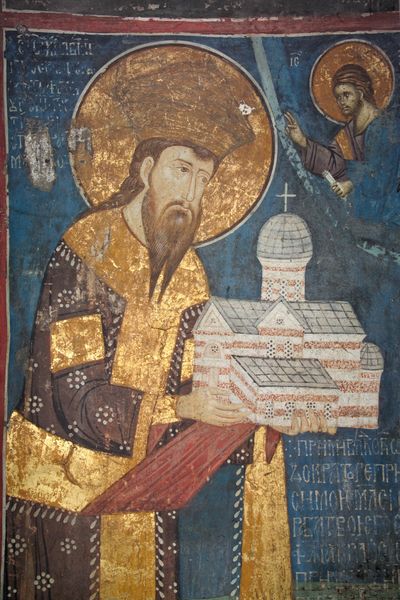
Church benefactor or church warden in Orthodox Christianity
Ktetor () or ktitor (; ქტიტორი kt’it’ori; ), meaning 'founder', is a title given in the Middle Ages in the Byzantine sphere to the provider of funds for construction or reconstruction of an Eastern Orthodox church or monastery, for the addition of icons, frescos, and other works of art. The Catholic equivalent of the term is donator. At the time of founding, the ktetor often issued typika, and was illustrated on frescoes ("ktetor portrait"). The female form is ktetorissa () or ktitoritsa ().
The donator or renovator of churches are known as "second ktetor" or "new ktetor" ().
History
The Serbian Nemanjić dynasty were ktetors to many monasteries and churches, including the "Medieval Monuments in Kosovo" inscribed as World Heritage.
Notable people
- Saint Sava, Serbian Archbishop (1219–35), founded Hilandar and reconstructed Karakallou, Xeropotamou, and Philotheou at Mount Athos.
- Andronikos II Palaiologos, Byzantine emperor (r. 1282–1328), founded the monasteries of Ardenica and reconstructed the destroyed Zograf.
- Stefan Dušan, Serbian king and emperor (r. 1331–55), founded the monasteries of the Holy Archangels, Podlastva, Duljevo and reconstructed Visoki Dečani.
Sources
This article was imported from Wikipedia and is available under the Creative Commons Attribution-ShareAlike 4.0 License. Content has been adapted to SurfDoc format. Original contributors can be found on the article history page.
Ask Mako anything about Ktetor — get instant answers, deeper analysis, and related topics.
Research with MakoFree with your Surf account
Create a free account to save articles, ask Mako questions, and organize your research.
Sign up freeThis content may have been generated or modified by AI. CloudSurf Software LLC is not responsible for the accuracy, completeness, or reliability of AI-generated content. Always verify important information from primary sources.
Report