From Surf Wiki (app.surf) — the open knowledge base
Kretinga Museum

| Field | Value |
|---|---|
| name | Kretinga Manor |
| native_name | Kretingos Dvaras |
| image | Kretingos Dvaro rūmai.jpg |
| est_completion | 15-16th century |
| location_city | Kretinga |
| location_country | Lithuania |
| architectural_style | Neoclassicism |
| building_type | Manor |
| owner | Kretinga Museum |
| coordinates |
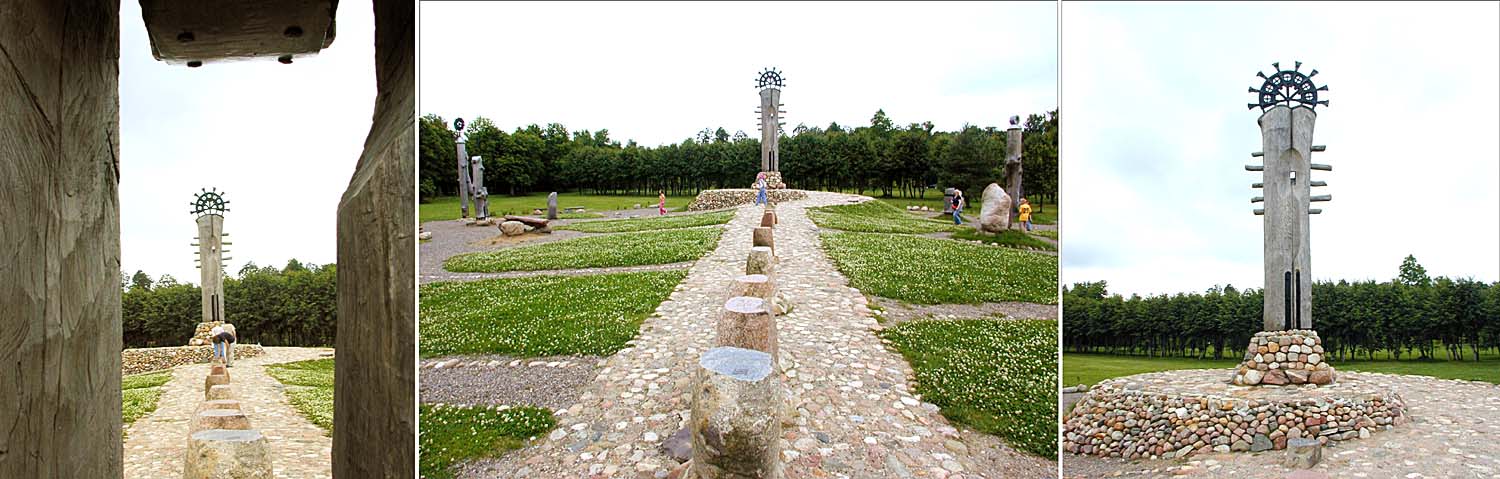
The Kretinga Museum (), also known as Kretinga Manor, is located near the Baltic Sea in Kretinga, Lithuania. Originally a private estate, it was converted to a museum in 1992, and now contains a number of archeological finds, fine and applied art collections, folk art, and ethnographic exhibits, as well as a restored orangery. Nearby is a sculpture garden featuring a reconstruction of a Lithuanian solar calendar. The museum is operated by the Kretinga district municipality.
History
The manor's location had always provided shelter from maritime winds in the area. Its modern history is said to have begun when the bishop of Vilnius, Ignacy Jakub Massalski, planted fruit trees there in the late 18th century. In 1874 the land was purchased in an auction by Count Tyszkiewicz (Tiškevičiai). In the course of creating a family manor, he converted the existing residence into a palace, built the orangery, now known as the Winter Garden (), and re-landscaped the grounds. The landscaping included cascading ponds, a waterfall, arbors, fountains, sculptures, and parterres.
The idea of turning the manor into a museum is credited to Juozas Žilvitis (1903–1975); the Kretinga Museum Committee was established in 1935. The garden was completely destroyed during World War II. In 1940 the museum became a branch of the Kaunas State Museum (now the Vytautas the Great War Museum). In 1987 the greenhouse was rebuilt; since 1998 the Kretinga Estate Park Friends Club has been a co-sponsor.
Exhibits and expositions

The exhibits portraying the life of the Tyszkiewicz family occupy seven halls, and contain family portraits, furniture, photographs, household objects, and paintings. The folk art exhibits contain textile art and works of Lithuanian cross crafters. Household articles include tools and furniture used during various eras.
Recent exhibitions have featured jewelry, ceramics, printed matter of historic interest, and folk costumes. The gardens and the orangery, which contains a cafe, are frequently updated. The museum sponsors concerts, scientific and research projects, holiday specials, a "Tree Feast", and folk dance presentations.
References
- Museum website
- Museums of Lithuania
- Samogitian Cultural Association
- Museum history and exhibitions
- Photos of a modern solar calendar near the museum
pl:Pałac Tyszkiewiczów w Kretyndze
This article was imported from Wikipedia and is available under the Creative Commons Attribution-ShareAlike 4.0 License. Content has been adapted to SurfDoc format. Original contributors can be found on the article history page.
Ask Mako anything about Kretinga Museum — get instant answers, deeper analysis, and related topics.
Research with MakoFree with your Surf account
Create a free account to save articles, ask Mako questions, and organize your research.
Sign up freeThis content may have been generated or modified by AI. CloudSurf Software LLC is not responsible for the accuracy, completeness, or reliability of AI-generated content. Always verify important information from primary sources.
Report