From Surf Wiki (app.surf) — the open knowledge base
Krakus Mound
Prehistoric tumulus in Kraków, Poland
.jpg)
Prehistoric tumulus in Kraków, Poland
| Field | Value |
|---|---|
| name | Krakus Mound |
| image | Wschód słońca nad Kopcem Krakusa 02.jpg |
| caption | Krakus Mound view from the west |
| map_type | Poland Lesser Poland Voivodeship |
| relief | yes |
| map_caption | Map of lesser Poland showing location of Krakus Mound |
| coordinates | |
| location | Kraków |
| Poland | |
| built | ~150 BCE (hypothesised) |
| cultures | Celtic (hypothesised) |
| builder | Unknown |
| material | Soil, wood, and stone |
| excavations | 1934–1937 |
| diameter | 60 m |
| height | 16 m |
Poland
Krakus Mound or Kopiec Krakusa in Polish, also called the Krak Mound, is a tumulus located in the Podgórze district of Kraków, Poland; it is thought to be the resting place of Kraków's mythical founder, the legendary king Krakus. It is located on Lasota Hill, approximately 3 km south of Kraków's city centre, at an altitude of 271 m, with a base diameter of 60 m and a height of 16 m. Together with nearby Wanda Mound, it is one of Kraków's two prehistoric mounds as well as the oldest man-made structure in Kraków. Nearby are two modern, man-made mounds, Kościuszko Mound, constructed in 1823, and Piłsudski's Mound, completed in 1937. These four make up Kraków's four memorial mounds.
History
.jpg)
The age and the original purpose of the mound remain a mystery, although religious and memorial purposes have been ascribed to the mounds. Excavations conducted in mid-1930s revealed that the mound consists of a solid wooden core covered with soil and turf. Some artifacts dating from between the 8th and 10th centuries were found inside, but no human remains or bones were discovered. According to another hypothesis the mound is of Celtic origin and dates from the 2nd-1st century BCE. Mythical origins are also connected to the mound. Krakus is said to have been constructed to honour the death of King Krakus when mourning townspeople filled their sleeves with sand and dirt and brought it to the site of the Krakus Mound to create a mountain that would rule over the rest of the landscape, as King Krakus had. Originally, four smaller mounds ringed the Krakus Mound, but they were demolished in the 19th century to create Kraków's city wall.
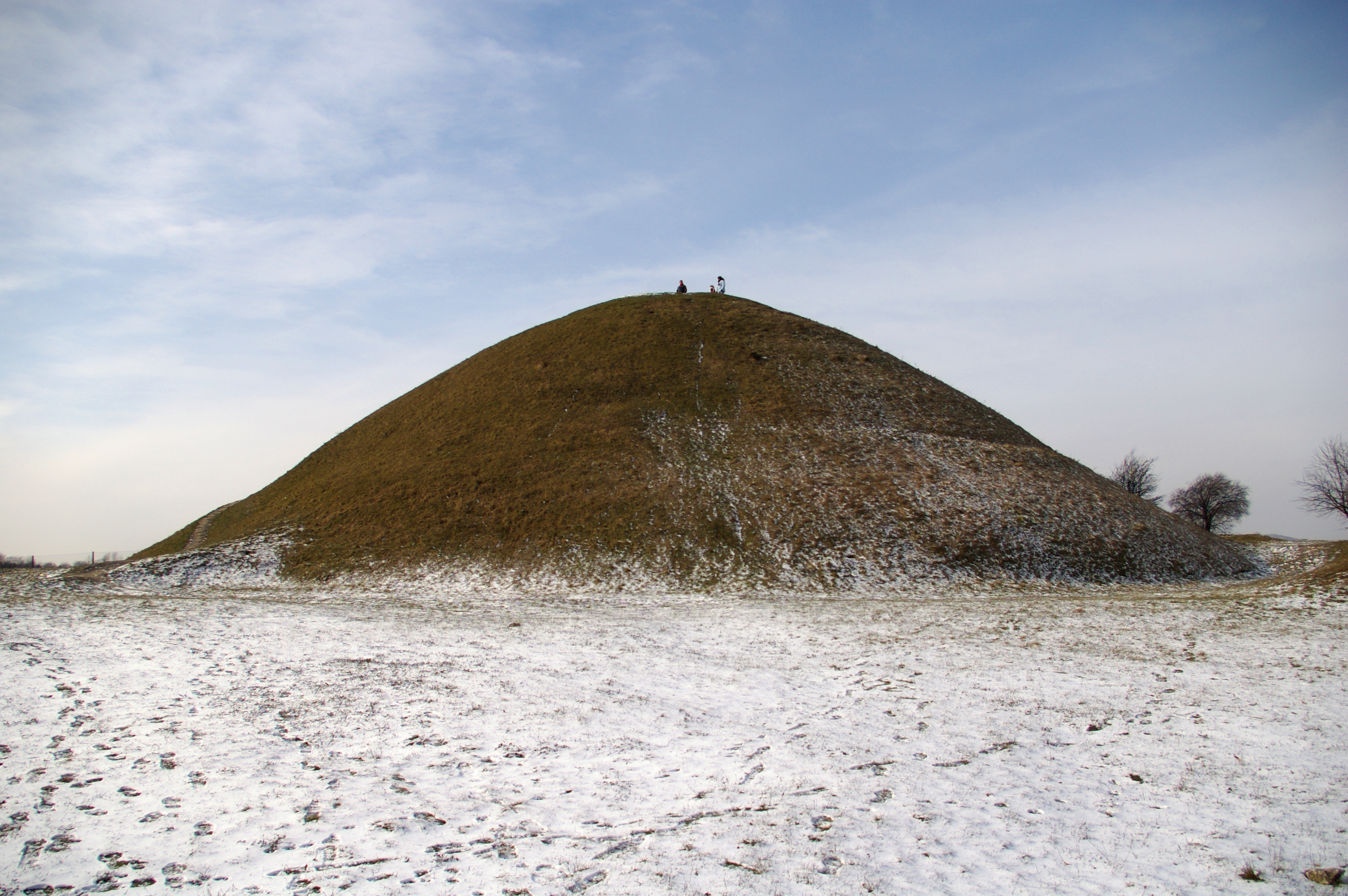
Similar to other ancient structures, such as Stonehenge, the Krakus Mound may have been constructed with astronomy in mind. If one stands on the Krakus Mound and looks towards Wanda Mound at sunrise on the morning of Beltane, the second-largest Celtic feast day, one will see the sun rise directly over Wanda Mound.
Until the mid-1830s, a folk festival was held annually on the first Tuesday after Easter on the slopes of the Krakus Mound. It's been revived in the 2000s and is being held annually again.
References
References
- The Krakus Mound monument in Podgorze, Kraków, at www.cracowonline.com
- [http://www.e-krakow.com/e-krakow/kopce Kopce w Krakowie] at e-Krakow.com ''(in Polish)''
- [http://www.krakow-info.com/mounds.htm Kraków mounds at Kraków Info.com]
- [http://www.sacred-destinations.com/poland/krakow-krakus-and-wanda-mounds.htm Kraków Mounds: Krakus & Wanda; Kraków, Poland] at Sacred Destinations, 2009
- [http://www.inyourpocket.com/poland/krakow/sightseeing/Podgorze-Places-of-Interest/Krakus-Mound_49805v Poland, Kraków sightseeing: Podgorze. Places of Interest: Krakus Mound] at In Your Pocket.com.
This article was imported from Wikipedia and is available under the Creative Commons Attribution-ShareAlike 4.0 License. Content has been adapted to SurfDoc format. Original contributors can be found on the article history page.
Ask Mako anything about Krakus Mound — get instant answers, deeper analysis, and related topics.
Research with MakoFree with your Surf account
Create a free account to save articles, ask Mako questions, and organize your research.
Sign up freeThis content may have been generated or modified by AI. CloudSurf Software LLC is not responsible for the accuracy, completeness, or reliability of AI-generated content. Always verify important information from primary sources.
Report