From Surf Wiki (app.surf) — the open knowledge base
Korolyov, Moscow Oblast
City in Moscow Oblast, Russia
.jpg)
City in Moscow Oblast, Russia
| Field | Value |
|---|---|
| en_name | Korolyov |
| ru_name | Королёв |
| image_skyline | Korolev moscow region.jpeg |
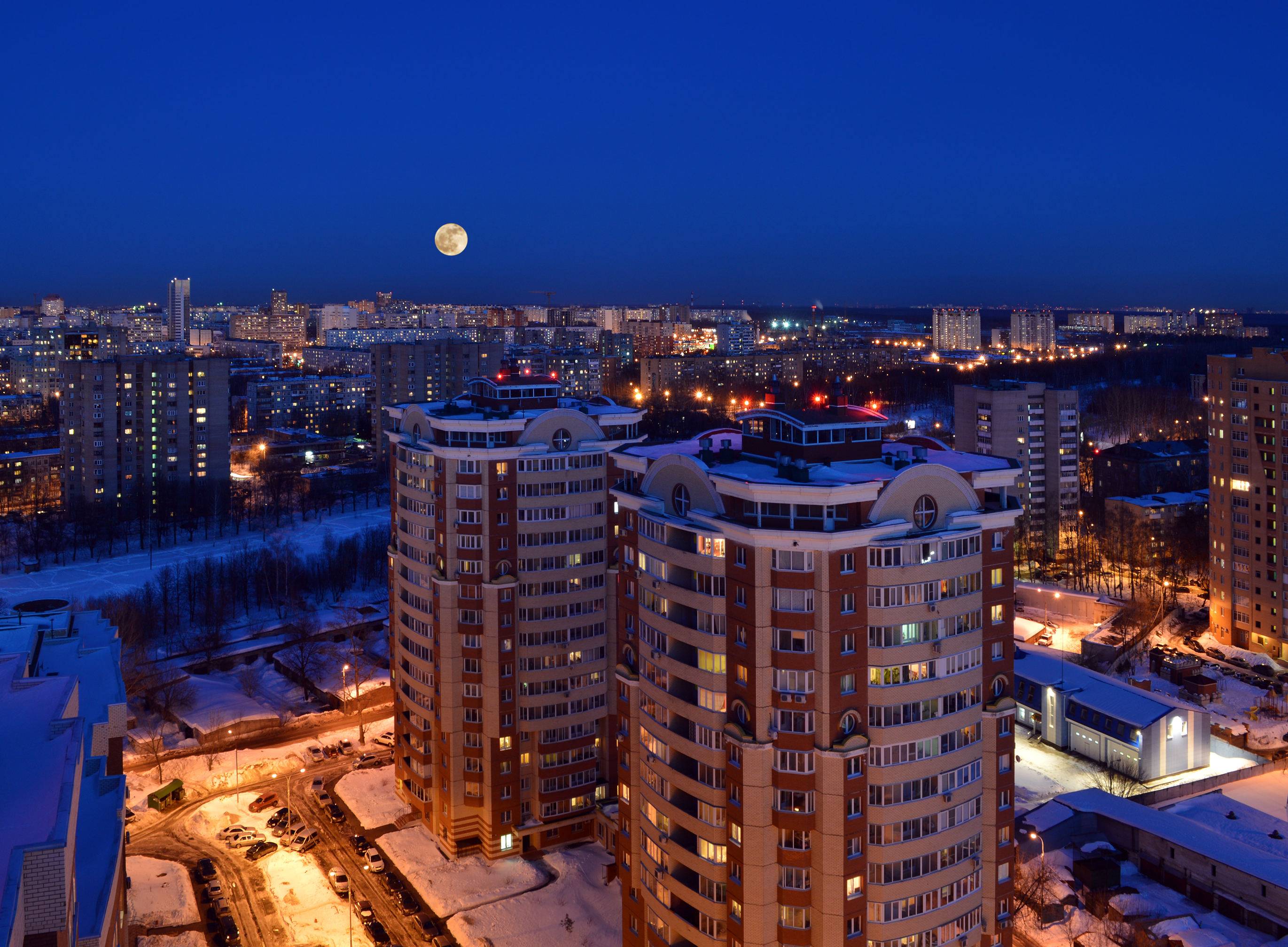
| image_caption | Monument R-2 (It was established in 1997) at the entrance to the city from the M8 Highway |
| coordinates | |
| image_flag | Flag of Korolyov.svg |
| image_coa | Coat of Arms of Korolyov (Moscow Oblast).svg |
| federal_subject | Moscow Oblast |
| federal_subject_ref | |
| adm_inhabloc_jur | Korolyov City Under Oblast Jurisdiction |
| adm_inhabloc_jur_ref | |
| adm_ctr_of1 | Korolyov City Under Oblast Jurisdiction |
| adm_ctr_of1_ref | |
| inhabloc_cat | City |
| inhabloc_cat_ref | |
| urban_okrug_jur | Korolyov Urban Okrug |
| urban_okrug_jur_ref | |
| mun_admctr_of1 | Korolyov Urban Okrug |
| mun_admctr_of1_ref | |
| leader_title | Head |
| leader_title_ref | |
| leader_name | Trifonov, Igor Vladimirovich |
| leader_name_ref | |
| pop_2010census | 183402 |
| pop_2010census_rank | 98th |
| pop_2010census_ref | |
| current_cat_date | 1938 |
| current_cat_date_ref | |
| postal_codes | 141060, 141062, 141065, 141067–141071, 141073–141080, 141089, 994009 |
| website | http://korolev.ru |
Korolyov or Korolev (Королёв) is an industrial city in Moscow Oblast, Russia, well known as the cradle of Soviet and Russian space exploration. As of the 2010 Census, its population was 183,402, the largest as a science city. As of 2018, the population was more than 222,000 people.
It was known as Kaliningrad (Калинингра́д) from 1938 to 1996 and served as the leading Soviet center for production of anti-tank and air-defense guns. In 1946, in the aftermath of World War II, the artillery plant was reconstructed for production of rockets, launch vehicles, and spacecraft, under the guidance of Soviet scientist and academician Sergei Korolev, who envisioned, consolidated and guided the activities of many people in the Soviet space-exploration program. The plant later became known as the RKK Energia; when the Vostok space vehicle was being developed, this research center was designated as NII-88 or POB 989.
Russian Mission Control Center is also located in Korolyov. Though the real control is decentralized due to security reasons and all space aircraft may be controlled from many different locations across Russia, the historic center of control is still in Korolyov, and is called FCC – Flights Control Center.
In July 1996, the city was renamed in commemoration of Sergei Korolev, the father of the Soviet/Russian space program, who died in 1966. Since 1997, Korolyov has hosted the International Space Olympics, an annual competition for young people to promote space related research.
History
In the 12th century, a Slavic settlement was located on the site of modern Korolyov. The settlement stood on a junction of trade routes between the Moscow and Vladimir-Suzdal principalities. After the Mongol conquests in the 13th century, the region was in decline.
The village of Podlipki had formed on the site by the 18th century, when one of the first textile factories in Russia was established there.
From the late 19 century, Podlipki was also known as a dacha village frequented by many literali, as can be witnessed by the name of Podlipki-Dachnye railway station. They later moved their dachas to Peredelkino in Moscow's southwestern suburb, when Podlipki became a closed city of the Russian SFSR.
In 1924, the first OGPU working commune in the Soviet Union was established at Podlipki. In 1938, the Kalininsky settlement near an artillery plant (which had previously been relocated from Leningrad to better protect it in case of any future war) was granted town status and named Kaliningrad (meaning Kalinin City, after Bolshevik leader Mikhail Kalinin; not to be confused with the Baltic port city also renamed Kaliningrad after Mikhail Kalinin in 1946). Over the next three decades the town expanded greatly as a home of rocket manufacturing for both military missiles and the Soviet space program. As such it was a closed city to foreigners, who could not travel there.
Administrative and municipal status
Within the framework of administrative divisions, it is incorporated as Korolyov City Under Oblast Jurisdiction—an administrative unit with the status equal to that of the districts. As a municipal division, Korolyov City Under Oblast Jurisdiction is incorporated as Korolyov Urban Okrug.
In June 2014, Yubileyny, Moscow Oblast Town Under Oblast Jurisdiction was merged into Korolyov City Under Oblast Jurisdiction and on the municipal side, Yubileyny Urban Okrug was merged into Korolyov Urban Okrug. The town of Yubileyny ceased to exist as an independent entity.
Demographics
As of 1 January 2016, Korolyov was in 93 place out of 1112 cities in Russia based on demographics.
On 2 June 2014, the city of Yubileniy officially became a part of Korolyov. With a total population of 220 thousand people, Korolyov became the third largest city in Moscow Oblast based on population after Balashikha (428,400) and Khimki (239 967).
Politics

During the implementation of the municipal reform, by 1 January 2006, Korolyov was granted the status of the Korolyov urban district as the only settlement within it.
Authorities
On 14 September 2014, the candidate from the United Russia party, Alexander Khodyrev, was elected head of Korolyov.
Economy
The main enterprise of the city is the RKK Energia, but there are several kinds of industry in the city. This naukograd (science city) is the place in which the first Youth Residential Complex in the Soviet Union was built. Another notable company located in the city is OAO Kompozit, which is engaged in the field of materials science.
Today the city is prosperous overall. But in the Soviet-era economy, the city typified the wide contrasts and ironic juxtapositions that arose as some aspects of life were heavily funded by the government while others remained chronically underfunded. Yuri Krotkov described in his 1967 memoir how, at the same time that advanced technology was being built for space rockets, the textile plants of old Podlipki went on for decades with nearly no improvement on their 1920s equipment, and starkly impoverished workers in various hard and glamourless jobs of prerevolutionary days crossed paths, sometimes resentfully, with the skilled technicians and scientists, who were substantially better paid despite the slogans of Soviet ideology around the equal dignity of manual labourers.
Sports
The bandy club Vympel has played in the Russian Bandy Supreme League, which is the second-highest division. Their home arena has a capacity of 10 000. A plan existed to equip the stadium with artificial ice, but the project has been abandoned. Although an indoor ice hockey-sized arena entered the plans instead, the official reason given was financial problems. Now Vympel only plays in the amateur league of Moscow Oblast. In 2014 a bandy federation for the city was founded.
Notable people
The area was a place of elite dachas at the end of the 19th century and beginning of the 20th century. Many famous people, such as Konstantin Stanislavsky, Anton Chekhov, Valery Bryusov, Boris Pasternak, Anna Akhmatova, Isaac Levitan, Pavel Tretyakov, Marina Tsvetaeva and Vladimir Lenin, lived here.
Twin towns and sister cities
Korolyov is twinned with:
- RUS Zhukovsky, Russia
- RUS Moscow, Russia
- RUS Khimki, Russia
- KAZ Baikonur, Kazakhstan
References
Notes
↑ Population of Russian Federation by municipality from 1 January 2016. Численность населения Российской Федерации по муниципальным образованиям на 1 января 2016 года. Таблица «31. Численность населения городов и пгт по федеральным округам и субъектам Российской Федерации на 1 января 2016 года». RAR-архив (1,0 Mб) http://www.gks.ru/free_doc/doc_2016/bul_dr/mun_obr2016.rar
Sources
- {{Cite Russian law
References
- link
- ''Encyclopædia Britannica''. [http://global.britannica.com/EBchecked/topic/310211/Korolyov Entry on Korolyov]
- {{ru-pop-ref. 2010Census
- Law #11/2013-OZ
- Law #53/2014-OZ
- Law #54/2014-OZ. Additionally, the town of Yubileyny was struck from the ''Inventory Data of the Administrative-Territorial and Territorial Units of Moscow Oblast'' in August 2014.
- "Главой города избран А. Н. Ходырев". Official website of the Korolyov administration.
- {{Harvnb. Krotkov. 1967
- "На встречу к звёздам – Вымпел (хоккейный клуб)". vimpel-bandy.ru.
- link. (October 11, 2007 (in [[Russian language]]).)
- "Информация о стадионе "Вымпел", Королёв - Реестр - Федерация хоккея с мячом России".
- "В Королёве обсудили перспективы развития "Вымпела" - Архив новостей - Федерация хоккея с мячом России".
- "Болельщики "Вымпела" просят поддержки - Архив новостей - Федерация хоккея с мячом России".
- "korolev-bandy.com".
This article was imported from Wikipedia and is available under the Creative Commons Attribution-ShareAlike 4.0 License. Content has been adapted to SurfDoc format. Original contributors can be found on the article history page.
Ask Mako anything about Korolyov, Moscow Oblast — get instant answers, deeper analysis, and related topics.
Research with MakoFree with your Surf account
Create a free account to save articles, ask Mako questions, and organize your research.
Sign up freeThis content may have been generated or modified by AI. CloudSurf Software LLC is not responsible for the accuracy, completeness, or reliability of AI-generated content. Always verify important information from primary sources.
Report