From Surf Wiki (app.surf) — the open knowledge base
Kobe
City in Kansai region, Japan

City in Kansai region, Japan
| Field | Value | |
|---|---|---|
| name | Kobe | |
| native_name | 神戸市 | |
| official_name | Kobe City | |
| settlement_type | Prefecture capital and Designated city | |
| image_skyline | {{multiple image | |
| border | infobox | |
| total_width | 280 | |
| image_style | border:1; | |
| perrow | 1/2/2/1/2 | |
| image1 | Kobe Port Tower and Maritime Museum, November 2016.jpg | |
| alt1 | Port of Kobe | |
| image2 | The old settlement hall of no15 01 1920.jpg | |
| alt2 | Old Kobe Residency 15th Hall (The Former American Consulate in Kobe) | |
| image3 | Hyogo prefectural museum of art08s3200.jpg | |
| alt3 | Hyogo Prefectural Museum of Art | |
| image4 | Chang'an gate (Nankinmachi, Kobe).jpg | |
| alt4 | Nankin-machi | |
| image5 | Ikuta Shrine 201208.JPG | |
| alt5 | Ikuta Shrine | |
| image6 | Kobe kitano thomas house07 2816.jpg | |
| alt6 | The Former Thomas House | |
| image_caption | From top left: Kobe Port Tower and Kobe Maritime Museum in Meriken Park, Old Kobe Residency 15th Hall (the former American consulate in Kobe) of the Kobe foreign settlement, Hyogo Prefectural Museum of Art, the Chinatown in Nankin-machi, Ikuta Shrine, and a view from Kobe Weathervane House (the former Thomas House) of Kitano-cho | |
| image_flag | Flag of Kobe.svg | |
| image_seal | Emblem of Kobe, Hyogo.svg | |
| motto | ||
| image_map | ||
| map_caption | Interactive map outlining Kobe | |
| image_map1 | Kobe in Hyogo Prefecture Ja.svg | |
| mapsize1 | 290 | |
| map_caption1 | Location of Kobe in Hyōgo Prefecture | |
| pushpin_map | Japan | |
| pushpin_mapsize | 300 | |
| pushpin_label_position | ||
| coordinates | ||
| coor_pinpoint | ||
| coordinates_footnotes | tags -- | |
| subdivision_type | Country | |
| subdivision_name | Japan | |
| subdivision_type1 | Region | |
| subdivision_name1 | Kansai | |
| subdivision_type2 | Prefecture | |
| subdivision_name2 | Hyōgo Prefecture | |
| subdivision_name3 | ||
| established_title | First official record | |
| established_date | 201 AD | |
| established_title2 | City Status | |
| established_date2 | April 1, 1889 | |
| named_for | ||
| seat_type | ||
| seat | ||
| government_footnotes | tags -- | |
| leader_title | Mayor | |
| leader_name | Kizō Hisamoto | |
| leader_name1 | ||
| total_type | ||
| unit_pref | ||
| area_magnitude | ||
| area_footnotes | tags -- | |
| area_total_km2 | 557.02 | |
| area_note | ||
| elevation_footnotes | tags -- | |
| elevation_ft | ||
| population_footnotes | tags -- | |
| population_total | 1,522,188 (7th) | |
| population_as_of | June 1, 2021 | |
| population_density_km2 | auto | |
| population_demonym | ||
| population_metro_footnotes | (2015) | |
| population_metro | 2419973 (6th) | |
| timezone1 | Japan Standard Time | |
| utc_offset1 | +9 | |
| postal_code_type | ||
| area_code_type | ||
| area_code | ||
| blank_name_sec1 | Phone number | |
| blank_info_sec1 | 078-331-8181 | |
| blank1_name_sec1 | Address | |
| blank1_info_sec1 | 6-5-1 Kano-chō, Chūō-ku, Kōbe-shi, Hyōgo-ken | |
| 650-8570 | ||
| blank_name_sec2 | Climate | |
| blank_info_sec2 | Cfa | |
| website | City of Kobe | |
| module | {{Infobox place symbols | embedded=yes |
| tree | Camellia sasanqua | |
| flower | Hydrangea |
the city in Japan
650-8570
Kobe ( ; , ), officially Kobe City, is the capital city of Hyōgo Prefecture, Japan. With a population of around 1.5 million, Kobe is Japan's seventh-largest city and the third-largest port city after Tokyo and Yokohama. It is located in the Kansai region, which makes up the southern side of the main island of Honshū, on the north shore of Osaka Bay. It is part of the Keihanshin metropolitan area along with Osaka and Kyoto. The Kobe city centre is located about 35 km west of Osaka and 70 km southwest of Kyoto.
The earliest written records regarding the region come from the Nihon Shoki, which describes the founding of the Ikuta Shrine by Empress Jingū in AD 201. For most of its history, the area was never a single political entity, even during the Tokugawa period, when the port was controlled directly by the Tokugawa shogunate. Kobe did not exist in its current form until its founding in 1889. Its name comes from . Kobe became one of Japan's designated cities in 1956.
Kobe was one of the cities to open for trade with the West following the 1853 end of the policy of seclusion and has retained its cosmopolitan character ever since with a rich architectural heritage dating back to the Meiji era. While the 1995 Great Hanshin earthquake diminished some of Kobe's prominence as a port city, it remains Japan's fourth-busiest container port. Companies headquartered in Kobe include ASICS, Kawasaki Heavy Industries, and Kobe Steel, while over 100 international corporations have their Asian or Japanese headquarters in the city, including Eli Lilly and Company, Procter & Gamble, Boehringer Ingelheim, and Nestlé. The city is the point of origin and namesake of Kobe beef, the home of Kobe University, and the site of one of Japan's most famous hot spring resorts, Arima Onsen.
History
Origins
Tools found in western Kobe demonstrate that the area was populated at least from the Jōmon period.
The natural geography of the area, particularly of Wada Cape in Hyōgo-ku, led to the development of a port, which has remained the economic center of the city. Some of the earliest written documents mentioning the region include the Nihon Shoki, which describes the founding of the Ikuta Shrine by Empress Jingū in AD 201. File:Ikuta Shrine, Kobe City; April 2017 (04).jpg|Ikuta Shrine File:Taisanji31s3872.jpg|Taisan-ji. The main hall is a National Treasure of Japan (built in 716).
Nara and Heian periods
During the Nara and Heian periods, the port was known by the name Ōwada Anchorage and was one of the ports from which imperial embassies to China were dispatched. The city was briefly the capital of Japan in 1180, when Taira no Kiyomori moved his grandson Emperor Antoku to Fukuhara-kyō in present-day Hyōgo-ku. The Emperor returned to Kyoto after about five months. Shortly thereafter in 1184, the Taira fortress in Hyōgo-ku and the nearby Ikuta Shrine became the sites of the Genpei War battle of Ichi-no-Tani between the Taira and Minamoto clans. The Minamoto prevailed, forcing Taira remnants to flee to Shikoku. File:Taira no Kiyomori Portrait by Fujiwara Tamenobu and Takenobu.png|Taira no Kiyomori File:Genpei kassen.jpg|Battle of Ichi-no-Tani (Genpei War)
Kamakura period
As the port grew during the Kamakura period, it became an important hub for trade with China and other countries. In the 13th century, the city came to be known by the name Hyōgo Port. During this time, Hyōgo Port, along with northern Osaka, composed the province of Settsu (most of today's Kobe belonged to Settsu except Nishi Ward and Tarumi Ward, which belonged to Harima). File:Yukai sanjurokkassen 勇魁三十六合戦 (Courageous Leaders in Thirty-six Battles) (BM 2008,3037.02214).jpg|Kusunoki Masashige (Battle of Minatogawa) File:Minatogawa-jinja shinmon.jpg|Minatogawa Shrine
Edo period
Later, during the Edo period, the eastern parts of present-day Kobe came under the jurisdiction of the Amagasaki Domain and the western parts under that of the Akashi Domain, while the center was controlled directly by the Tokugawa shogunate. It was not until the abolition of the han system in 1871 and the establishment of the current prefecture system that the area became politically distinct.
Meiji period
Hyōgo Port was opened to foreign trade by the Shogunal government at the same time as Osaka on January 1, 1868, just before the advent of the Boshin War and the Meiji Restoration. At the time of the opening of the city for foreign trade, the area saw intense fighting resulting from the civil war in progress. Shortly after the opening of Kobe to trade, the Kobe Incident occurred, where several western soldiers sustained wounds from gunfire by troops from Bizen. The region has since been identified with the West and many foreign residences from the period remain in Kobe's Kitano area. File:Shinkaichi.jpg|Shinkaichi theatre street in Kobe (Taisho era) File:Viewofkobe.PNG|Hyōgo Port in the 19th century File:Sesshu Kobe coast prosperity view.jpg|This nishiki-e (colored woodcut) shows a foreign steamboat entering Hyōgo Port shortly after its opening to the West in the late 19th century.
Modern era
Kobe, as it is known today, was founded on April 1, 1889, and was designated on September 1, 1956 by government ordinance. The history of the city is closely tied to that of the Ikuta Shrine, and the name "Kobe" derives from , an archaic name for those who supported the shrine.
During World War II, Kobe was lightly bombed in the Doolittle Raid on April 18, 1942, along with Tokyo and a few other cities. Eventually, it was bombed again with incendiary bombs by B-29 Superfortress bombers on March 16 and 17, 1945, causing the death of 8,841 residents and the destruction of 21% of Kobe's urban area. This incident inspired the well-known Studio Ghibli film Grave of the Fireflies and the book by Akiyuki Nosaka on which the film was based. It also features in the motion picture A Boy Called H.
Following continuous pressure from citizens, on March 18, 1975, the Kobe City Council passed an ordinance banning vessels carrying nuclear weapons from Kobe Port. This effectively prevented any U.S. warships from entering the port, because U.S. policy is to never disclose whether any given warship is carrying nuclear weapons. This nonproliferation policy has been termed the "Kobe formula".
On January 17, 1995, a magnitude 6.9 earthquake occurred at 5:46 am JST near the city. About 6,434 people in the city were killed, 212,443 were made homeless, and large parts of the port facilities and other parts of the city were destroyed. The earthquake destroyed portions of the Hanshin Expressway, an elevated freeway that dramatically toppled over. In Japan, this earthquake is known as the Great Hanshin earthquake (or the Hanshin-Awaji earthquake). To commemorate Kobe's recovery from it, the city holds an event every December called the Luminarie, where the city center is decorated with illuminated metal archways.
The Port of Kobe was Japan's busiest port and one of Asia's top ports until the Great Hanshin earthquake. Kobe later dropped to fourth in Japan and, as of 2025, was the 72nd-busiest container port worldwide, as ranked by Lloyds.
File:KobeFormerSettelment Map JapDirectory (1905).tif|Map of the Foreign Settlement File:Kobe after the 1945 air raid.JPG|View of Kobe after the bombing in 1945 File:Hanshin-Awaji earthquake 1995 337.jpg|Damage in Sannomiya after the Great Hanshin earthquake in 1995
Geography
Wedged between the coast and the mountains, the city of Kobe is long and narrow. To the east is the city of Ashiya, while the city of Akashi lies to its west. Other adjacent cities include Takarazuka and Nishinomiya to the east and Sanda and Miki to the north.
The landmark of the port area is the red steel Port Tower. A ferris wheel sits in nearby Harborland, a notable tourist promenade. Two artificial islands, Port Island and Rokkō Island, have been constructed to give the city room to expand.
Away from the seaside at the heart of Kobe lie the Motomachi and Sannomiya districts, as well as Kobe's Chinatown, Nankin-machi, all well-known retail areas. A multitude of train lines cross the city from east to west. The main transport hub is Sannomiya Station, with the eponymous Kobe Station located to the west and the Shinkansen Shin-Kobe Station to the north.
Mount Rokkō overlooks Kobe at an elevation of 931 m. During autumn, it is famous for the rich change in colors of its forests.
Wards
Kobe has nine wards (ku):
- Nishi-ku: The westernmost area of Kobe, Nishi-ku overlooks the city of Akashi and is the site of Kobe Gakuin University. This ward has the largest population, with 247,000 residents.
- Kita-ku: Kita-ku is the largest ward by area and contains the Rokko Mountain Range, including Mount Rokkō and Mount Maya. The area is well known for its rugged landscape and hiking trails. The onsen resort town of Arima also lies within Kita-ku.
- Tarumi-ku: Tarumi-ku is a mostly residential area. The second-longest suspension bridge in the world, the Akashi Kaikyō Bridge, extends from Maiko in Tarumi-ku to Awaji Island to the south. A relatively new addition to Kobe, Tarumi-ku was not a part of the city until 1946.
- Suma-ku: Suma-ku is the site of Suma beach, attracting visitors during the summer months.
- Nagata-ku: Nagata-ku is the site of Nagata Shrine, one of the three "Great Shrines" in Kobe.
- Hyōgo-ku: At various times known as Ōwada Anchorage or Hyōgo Port, this area is the historical heart of the city. Shinkaichi in Hyogo-ku was once the commercial center of Kobe, but was heavily damaged during World War II, and since, Hyogo-ku has lost much of its former prominence.
- Chūō-ku: Chūō literally means "central" and, as such, Chūō-ku is the commercial and entertainment center of Kobe. Sannomiya, Motomachi and Harborland make up the main entertainment areas in Kobe. Chūō-ku includes the city hall and Hyōgo prefectural government offices. Port Island and Kobe Airport lie in the southern part of this ward.
- Nada-ku: The site of Oji Zoo and Kobe University, Nada is known for its sake. Along with Fushimi in Kyoto, it accounts for 45% of Japan's sake production.
- Higashinada-ku: The easternmost area of Kobe, Higashinada-ku borders the city of Ashiya. The man-made island of Rokko makes up the southern part of this ward.
| Wards of Kobe | Place Name | Map of Kobe | Rōmaji | Kanji | Population | Land area in km2 | Pop. density | |||||
|---|---|---|---|---|---|---|---|---|---|---|---|---|
| 1 | Nishi-ku | 西区 | 240,386 | 138.01 | 1,742 | [[File:兵庫県神戸市区画図_番号.png | alt= | border | center | 399x399px | A map of Kobe's Wards]] | |
| 2 | Kita-ku | 北区 | 212,211 | 240.29 | 883 | |||||||
| 3 | Tarumi-ku | 垂水区 | 216,337 | 28.11 | 7,696 | |||||||
| 4 | Suma-ku | 須磨区 | 158,196 | 28.93 | 5,468 | |||||||
| 5 | Nagata-ku | 長田区 | 95,155 | 11.36 | 8,376 | |||||||
| 6 | Hyōgo-ku | 兵庫区 | 107,307 | 14.68 | 7,310 | |||||||
| 7 | Chūō-ku | 中央区 | 142,232 | 28.97 | 4,910 | |||||||
| 8 | Nada-ku | 灘区 | 136,865 | 32.66 | 4,191 | |||||||
| 9 | Higashinada-ku | 東灘区 | 214,255 | 34.02 | 6,298 |
Cityscape
File:Meriken-boat.jpg|View of MOSAIC and Meriken Park from ferry at dusk (2022) File:Kobe unterwegs in Kobe 3.jpg|Meriken Park (2018) File:151003 Port of Kobe Japan01s3.jpg|Skyline of Kobe from Kobe Bridge (2015) File:Twilight view of Kobe, from a point near Shin-Kobe station.jpg|View of Sannomiya from Shin-Kobe Station (2009) File:121208 Nunobiki Herb Garden Kobe Hyogo pref Japan09s3.jpg|Nunobiki Herb Garden (2012) File:Kobe Kobe Port Tower Panoaramablick 03.jpg|Kobe central business district (2018) File:Kobe Meriken Park area at night 2016-06-14.jpg|Kobe central business district at night (2016) File:Kobe Chuo and Suma at night.jpeg|Downtown at night File:View of Kikuseidai from Mount Maya Kobe.jpg|Night view from Kikuseidai File:Views from Venus Bridge in Kobe 001.jpg|alt=|Sunset from Mt. Suwa (Suwayama) observation deck File:Views from Venus Bridge in Kobe 003.jpg|Chūō-ku, seen by night from Mt. Suwa observation deck File:Views from Venus Bridge in Kobe 002.jpg|Panorama of Kobe from Mt. Suwa observation deck
Climate
Kobe has a humid subtropical climate (Köppen climate classification Cfa) with hot summers and cool to cold winters. Precipitation is significantly higher in summer than in winter, though on the whole lower than most parts of Honshū, and there is no significant snowfall. The average annual temperature in Kobe is 17.0 C. The average annual rainfall is 1277.8 mm with July as the wettest month. The temperatures are highest on average in August, at around 28.6 C, and lowest in January, at around 6.2 C. The highest temperature ever recorded in Kobe was 38.8 C on August 5, 1994; the coldest temperature ever recorded was -7.2 C on February 27, 1981.
|Jan record high C = 19.2 |Feb record high C = 20.8 |Mar record high C = 23.7 |Apr record high C = 28.5 |May record high C = 31.9 |Jun record high C = 36.3 |Jul record high C = 37.7 |Aug record high C = 38.8 |Sep record high C = 35.9 |Oct record high C = 31.9 |Nov record high C = 26.3 |Dec record high C = 23.7 |Jan record low C = -6.4 |Feb record low C = -7.2 |Mar record low C = -5.0 |Apr record low C = -0.6 |May record low C = 3.9 |Jun record low C = 10.0 |Jul record low C = 14.5 |Aug record low C = 16.1 |Sep record low C = 10.5 |Oct record low C = 5.3 |Nov record low C = -0.2 |Dec record low C = -4.3 |script-title=ja:気象庁 / 平年値(年・月ごとの値) | access-date = May 19, 2021}} |Jan record high C = 17.2 |Feb record high C = 19.5 |Mar record high C = 22.9 |Apr record high C = 24.9 |May record high C = 30.2 |Jun record high C = 34.5 |Jul record high C = 36.2 |Aug record high C = 37.0 |Sep record high C = 36.2 |Oct record high C = 31.5 |Nov record high C = 25.6 |Dec record high C = 21.9 |Jan record low C = -3.6 |Feb record low C = -3.4 |Mar record low C = -1.5 |Apr record low C = 1.9 |May record low C = 7.0 |Jun record low C = 14.2 |Jul record low C = 19.4 |Aug record low C = 20.5 |Sep record low C = 14.7 |Oct record low C = 8.5 |Nov record low C = 2.7 |Dec record low C = -1.4 |script-title=ja:観測史上1~10位の値(年間を通じての値) | access-date = February 26, 2022}}{{cite web |script-title=ja:気象庁 / 平年値(年・月ごとの値) | access-date = February 26, 2022}}
Demographics
| Nationality | Population (2018) | |
|---|---|---|
| South Korea | ||
| China | ||
| Vietnam | ||
| Taiwan | ||
| Others |
|1870|18650 |1880|48786 |1890|142965 |1900|283839 |1910|398905 |1920|746500 |1925|818619 |1930|915234 |1935|1058053 |1940|1134458 |1945|694000 |1950|821062 |1955|986344 |1960|1113977 |1965|1216682 |1970|1288930 |1975|1360605 |1980|1367390 |1985|1410734 |1990|1477410 |1995|1423792 |2000|1493398 |2005|1525393 |2010|1544873 |2015|1537272 |2020|1521241

As of September 2007, Kobe had an estimated population of 1,530,295 making up 658,876 households. This was an increase of 1,347 persons or approximately 0.1% over the previous year. The population density was approximately 2,768 persons per square kilometre, while there are about 90.2 males to every 100 females. About thirteen percent of the population are between the ages of 0 and 14, sixty-seven percent are between 15 and 64, and twenty percent are over the age of 65.
Approximately 44,000 registered foreign nationals live in Kobe. The four most common nationalities are Korean (22,237), Chinese (12,516), Vietnamese (1,301), and American (1,280).
Economy

The Port of Kobe is both an important port and manufacturing center within the Hanshin Industrial Region. Kobe is the busiest container port in the region, surpassing even Osaka, and the fourth-busiest in Japan.
, the city's total real GDP was ¥6.3 trillion, which amounts to thirty-four percent of the GDP for Hyōgo Prefecture and approximately eight percent for the whole Kansai region. Per capita income for the year was approximately ¥2.7 million. Broken down by sector, about one percent of those employed work in the primary sector (agriculture, fishing and mining), twenty-one percent work in the secondary sector (manufacturing and industry), and seventy-eight percent work in the service sector.
The value of manufactured goods produced and exported from Kobe for 2004 was ¥2.5 trillion. The four largest sectors in terms of value of goods produced are small appliances, food products, transportation equipment, and communication equipment making up over fifty percent of Kobe's manufactured goods. In terms of numbers of employees, food products, small appliances, and transportation equipment make up the three largest sectors.
The GDP in Kobe Metropolitan Employment Area (2.4 million people) is US$96.0 billion in 2010.
Major companies and institutes
Japanese companies which have their headquarters in Kobe include ASICS, a shoe manufacturer; Daiei, a department store chain; Kawasaki Heavy Industries, Kawasaki Shipbuilding Co., Kinki Sharyo, Mitsubishi Motors, Mitsubishi Heavy Industries (ship manufacturer), Mitsubishi Electric, Kobe Steel, Sumitomo Rubber Industries, Sysmex Corporation (medical devices manufacturer) and TOA Corporation. Other companies include the confectionery manufacturers Konigs-Krone and Morozoff Ltd., Sun Television Japan and UCC Ueshima Coffee Co.
There are over 100 international corporations that have their East Asian or Japanese headquarters in Kobe. Of these, twenty-four are from China, eighteen from the United States, and nine from Switzerland. Some prominent corporations include Eli Lilly and Company, Nestlé, Procter & Gamble, Tempur-Pedic, Boehringer-Ingelheim, and Toys "R" Us. In 2018, April, Swift Engineering USA, an American aerospace engineering firm established their joint venture in Kobe called Swift Xi Inc.
Kobe is the site of a number of research institutes, such as the RIKEN Kobe Institute Center for developmental biology and medical imaging techniques, and Center for Computational Science (R-CCS, home of the Fugaku supercomputer), the National Institute of Information and Communications Technology (NICT) Advanced ICT Research Institute, the National Research Institute for Earth Science and Disaster Prevention, and the Asian Disaster Reduction Center.
International organizations include the WHO Centre for Health Development, an intergovernmental agency forming part of the World Health Organization. The Consulate-General of Panama in Kobe is located on the eighth floor of the Moriyama Building in Chūō-ku, Kobe.
File:Kobe crystal tower01 2048.jpg|Kawasaki Heavy Industries headquarters on Harborland File:Kobe Kawasaki Shipbuilding Co02ds3200.jpg|Kawasaki Shipbuilding Co. headquarters on Kobe Harbor File:P and g02 1024.jpg|Procter & Gamble Asia headquarters on Rokko Island File:Kobe Nestle Japan HQ01ss3200.jpg|Nestlé Japan Ltd. headquarters on Sannomiya File:UCC Ueshima Coffee Company02s3872.jpg|UCC Ueshima Coffee Co. headquarters on Port Island
Transportation


Air
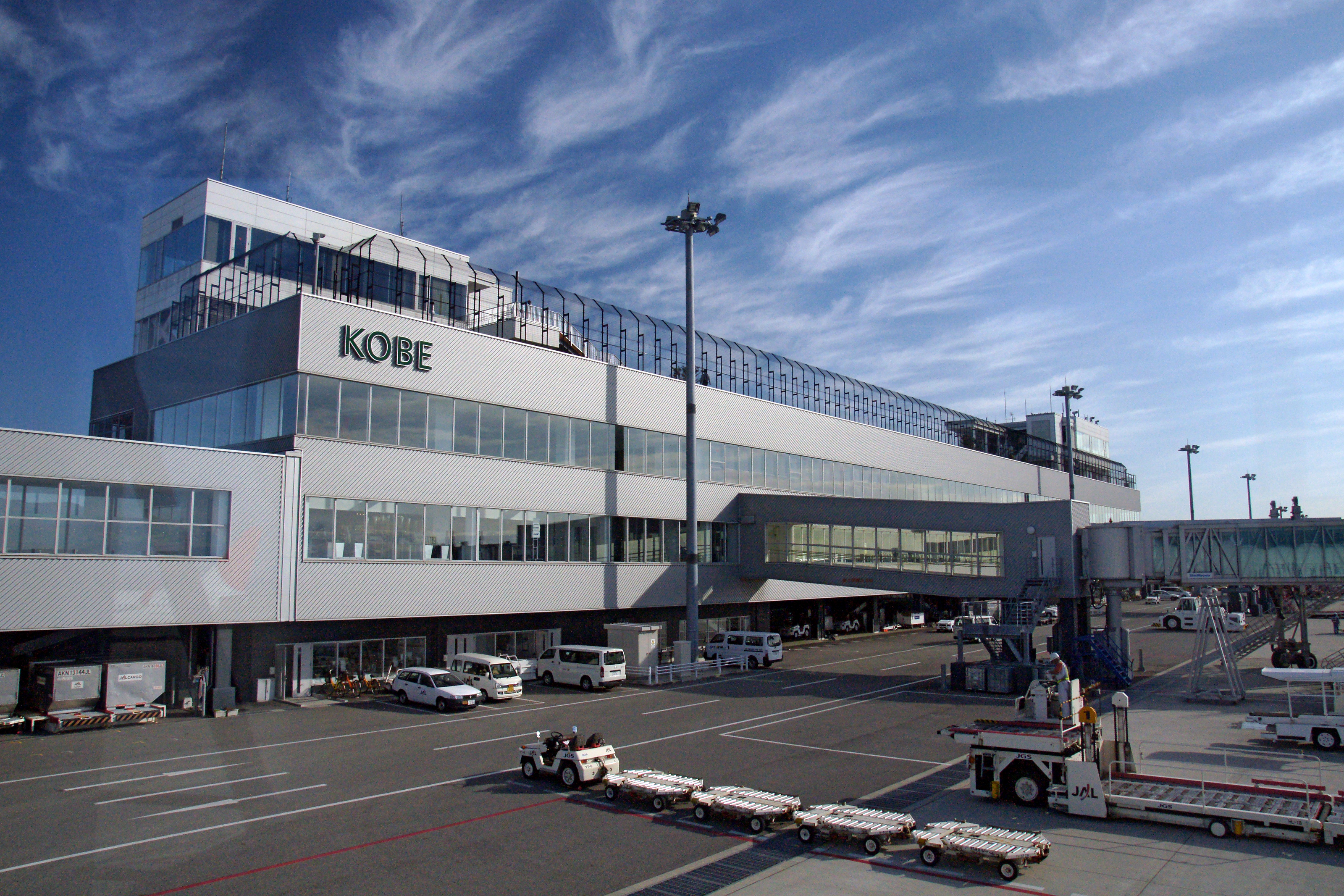
Itami Airport, in nearby Itami, serves primarily domestic flights throughout Japan, Kobe Airport, built on a reclaimed island south of Port Island, also offers mostly domestic and charter flights, while Kansai International Airport in Osaka mainly serves international flights in the area.
Rail
The JR West Sanyō Shinkansen stops at Shin-Kobe Station. Sannomiya Station is the main commuter hub in Kobe, serving as the transfer point for major intercity rail services: the JR Kobe Line connects Kobe to Osaka and Himeji, while both the Hankyū Kobe Line and the Hanshin Main Line run from Kobe to Umeda Station in Osaka. Sanyō Electric Railway trains from Himeji reach Sannomiya via the Kōbe Rapid Transit Railway. Kōbe Electric Railway runs north to Sanda and Arima Onsen.
Kobe Municipal Subway provides connections to Shin-Kobe and Sannomiya stations from Kobe's western and eastern suburbs. Additionally, Kobe New Transit runs two lines serving Kobe Airport and Rokko Island.
Ropeway
Over Mount Rokkō, the city has two funicular lines and three aerial lifts as well, namely Maya Cablecar, Rokkō Cable Line, Rokkō Arima Ropeway, Maya Ropeway, and Shin-Kobe Ropeway.
Road
Kobe is a transportation hub for a number of expressways, including the Meishin Expressway (Nagoya – Kobe) and the Hanshin Expressway (Osaka – Kobe). Other expressways include the Sanyō Expressway (Kobe – Yamaguchi) and the Chūgoku Expressway (Osaka – Yamaguchi). The Kobe-Awaji-Naruto Expressway runs from Kobe to Naruto via Awaji Island and includes the Akashi Kaikyō Bridge, the second longest suspension bridge in the world.
Maritime
The Port of Kobe is one of Japan's busiest container ports and also offers ferry services to Kansai International Airport, Shikoku and Kyushu. Sub Area Activity Hanshin of the Japan Maritime Self-Defense Forces provides monitoring across Osaka Bay and Harima Sea.
Education

Main article: Education in Kobe
The city of Kobe directly administers 169 elementary and 81 middle schools, with enrollments of approximately 80,200 and 36,000 students, respectively. If the city's four private elementary schools and fourteen private middle schools are included, these figures jump to a total 82,000 elementary school students and 42,300 junior high students enrolled for the 2006 school year.
Kobe also directly controls six of the city's twenty-five full-time public high schools including Fukiai High School and Rokkō Island High School. The remainder are administered by the Hyogo Prefectural Board of Education. In addition, twenty-five high schools are run privately within the city. The total enrollment for high schools in 2006 was 43,400.
Kobe is home to eighteen public and private universities, including Kobe University, Kobe Institute of Computing and Konan University, and eight junior colleges. Students enrolled for 2006 reached 67,000 and 4,100, respectively. Kobe is also home to 17 Japanese language schools for international students, including the international training group Lexis Japan.
International schools serve both long-term foreign residents and expatriates living in Kobe and the Kansai region. The schools offer instruction in English, German, Chinese, and Korean. There are three English-language international schools: Canadian Academy, Marist Brothers International School, and St. Michael's International School.
Culture

Kobe is most famous for its Kobe beef (which is raised in the surrounding Hyōgo Prefecture) and Arima Onsen (hot springs). Notable buildings include the Ikuta Shrine as well as the Kobe Port Tower. Nearby mountains such as Mount Rokkō and Mount Maya overlook the city. The city is recognized as a "Design City" by UNESCO.
The city is widely associated with cosmopolitanism and fashion, encapsulated in the Japanese saying, "If you can't go to Paris, go to Kobe." The biannual fashion event Kobe Fashion Week, featuring the Kobe Collection, is held in Kobe. The jazz festival "Kobe Jazz Street" has been held every October at jazz clubs and hotels since 1981. It also hosts both a Festival, as well as a statue of Elvis Presley, the unveiling of which was heralded by the presence of former Prime Minister of Japan Junichiro Koizumi. Kobe is well known in Japan as being a city for the affluent, as many high-end stores and mansions line its streets.
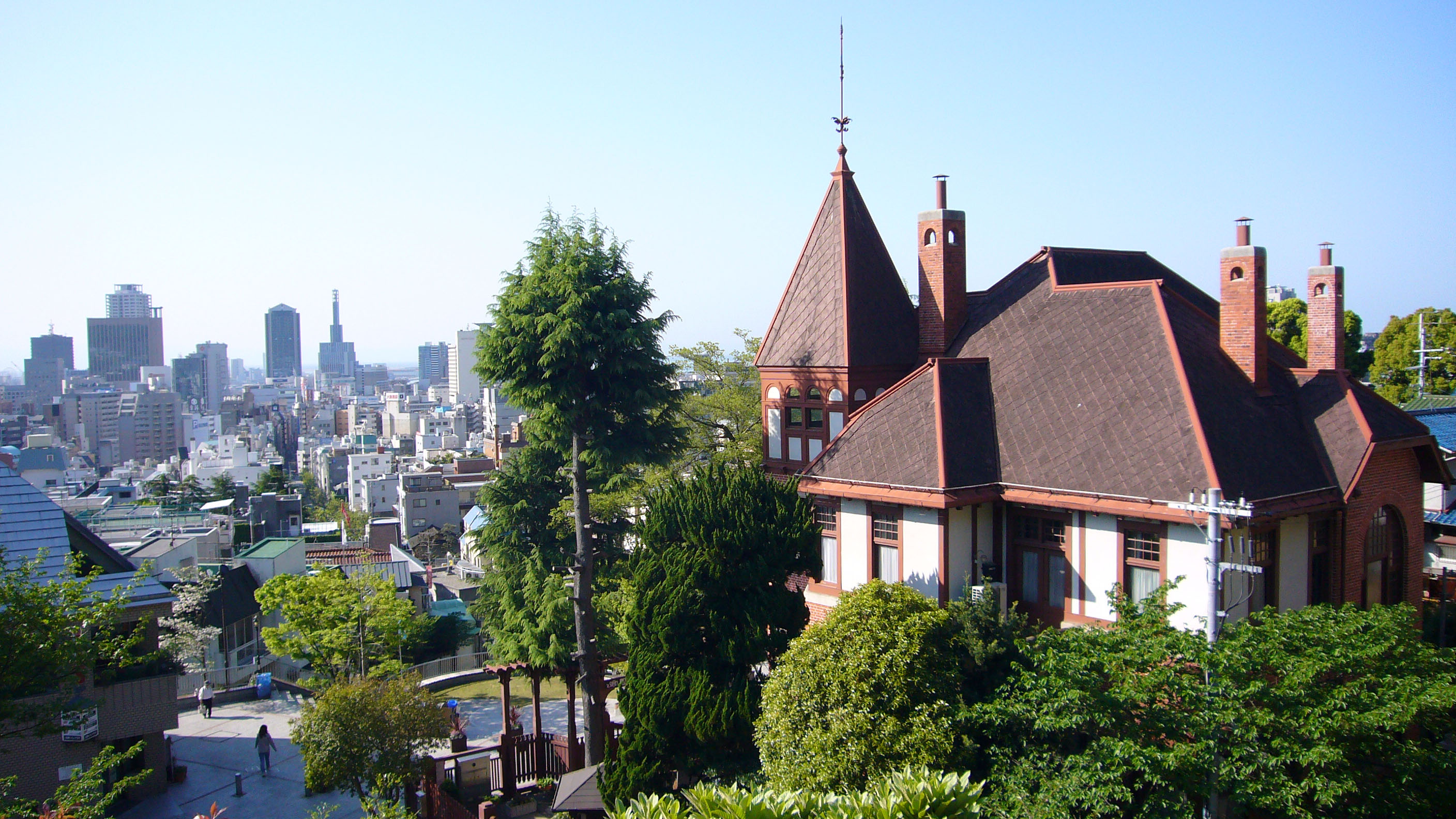
Kobe is the site of Japan's first golf course, Kobe Golf Club, established by Arthur Hesketh Groom in 1903, and Japan's first mosque, Kobe Mosque, built in 1935. The city hosts the Kobe Regatta & Athletic Club, founded in 1870 by Alexander Cameron Sim, and a prominent foreign cemetery. A number of Western-style residences – – from the 19th century still stand in Kitano and elsewhere in Kobe. Museums include the Kobe City Museum and Museum of Literature.
The city headquarters the professional wrestling promotion Dragongate, established in 2004 as an offshoot of Último Dragón's original Toryumon system.
The dialect spoken in Kobe is called Kobe-ben, a sub-dialect of Kansai dialect.
Sports
| Club | Sport | League | Venue | Established |
|---|---|---|---|---|
| Kobe Storks | Basketball | Japan Professional Basketball League | World Memorial Hall | 2011 |
| Orix Buffaloes | Baseball | Pacific League | Kobe Sports Park Baseball Stadium | |
| Osaka Dome | 1938 | |||
| Vissel Kobe | Football | J. League | Noevir Stadium Kobe | |
| Kobe Universiade Memorial Stadium | 1995 | |||
| INAC Kobe Leonessa | Football | L. League | Noevir Stadium Kobe | |
| Kobe Universiade Memorial Stadium | 2001 | |||
| Deução Kobe | Futsal | F. League | World Hall | 1993 |
| Kobelco Steelers | Rugby | Top League | Noevir Stadium Kobe | |
| Kobe Universiade Memorial Stadium | 1928 | |||
| Hisamitsu Springs | Volleyball | V.Premier League | 1948 |
Kobe hosted the 1985 Summer Universiade as well as the 1991 Men's Asian Basketball Championship, which was the qualifier for the 1992 Summer Olympics Basketball Tournament. Kobe was one of the host cities of the 2002 FIFA World Cup, hosting matches at Noevir Stadium Kobe (then known as Wing Stadium Kobe), which was renovated to increase its capacity to 40,000 for the event. Kobe was one of the host cities for the official 2006 Women's Volleyball World Championship.
Kobe also hosted the World Darts Federation World Cup in October 2017. The event was held in the Exhibition Hall in Port Island with over 50 countries competing.
International relations
Sister cities Note to editors: This list is for sister cities of Kobe, but not included fictional sister cities like:
- DEU Hamburg, Germany (1966)
- CAN Vancouver, BC, Canada (1990) Please do not add any of them to this list. --
Kobe's sister cities are:
- ESP Barcelona, Catalonia, Spain (1993)
- AUS Brisbane, Queensland, Australia (1985)
- KOR Incheon, South Korea (2010)
- ITA Genoa, Liguria, Italy (1963)
- FRA Marseille, Provence-Alpes-Côte d'Azur, France (1961)
- LVA Riga, Latvia (1974)
- BRA Rio de Janeiro, Brazil (1969)
- USA Seattle, WA, United States (1957)
- CHN Tianjin, China (1973)
- SCO Aberdeen, Scotland (2022)
Friendship and cooperation cities Kobe also cooperates with:
- KOR Daegu, South Korea (2010)
- PAK Faisalabad, Punjab, Pakistan (2000)
- RWA Kigali, Rwanda (2016)
- USA Philadelphia, PA, United States (1986)
A memorandum of understanding on the possible establishment of sister city relations in the future was concluded in 2019 with Ahmedabad, Gujarat, India.
Sister ports The Port of Kobe's sister ports are:
- NED Port of Rotterdam, Netherlands (1967)
- USA Port of Seattle, United States (1967)
- CHN Port of Tianjin, China
Gallery
File:Anyoin03 1024.jpg|An'yō-in. Its karesansui is one of Japan's Places of Scenic Beauty. File:140517 Kobe Municipal Arboretum Japan02bs.jpg|Kobe Municipal Arboretum File:Kobe port tower11s3200.jpg|Kobe Port Tower File:Mosaic04s3200.jpg|Harborland File:Be kobe sign.jpg|"Be Kobe" sign near Harborland File:Kobe Nankinmachi at night.jpg|Nankin-machi, Motomachi File:Giant panda01 960.jpg|Kobe Oji Zoo as home of the giant and red pandas File:171125 Kobe Municipal Foreign Cemetery Kobe Japan01s.jpg|Foreigners' cemetery on the slopes of Futatabiyama File:Notre Dame Kobe Japan01-r.jpg|Notre Dame Kobe Wedding Hall File:170811 Rokko-Arima Ropeway Kobe Japan00n.jpg|Arima Onsen located north of Kobe File:171125 Futatabi Park Kobe Japan02s.jpg|Futatabi Park located Mount Rokkō
References
Bibliography
References
- "UEA Code Tables". Center for Spatial Information Science, University of Tokyo.
- Gabriele Zanatta. (April 13, 2016). "Kobe". [[la Repubblica]].
- [http://www.ikutajinja.or.jp/index1.html Ikuta Shrine official website]; {{webarchive. link. (April 4, 2008 – "History of Ikuta Shrine" (Japanese))
- [https://cityofkobe.org/about-kobe/history/ Kobe City Info]; {{Webarchive. link. (June 16, 2008 – "History". Retrieved February 2, 2007.)
- link. (May 16, 2007 – "Ikuta Shrine". Retrieved February 3, 2007.)
- Entry for {{lang. ja-Hani. 「神戸(かんべ)」. ''[[Kōjien]]'', fifth edition, 1998, {{ISBN. 4-00-080111-2
- [http://aapa.files.cms-plus.com/Statistics/worldportrankings%5F2006.xls American Association of Port Authorities]; {{webarchive. link. (December 21, 2008 – "World Port Rankings 2006". Retrieved April 15, 2008.)
- "Number of foreign corporations with headquarters in Kobe passes 100." (Japanese) in Nikkei Net, retrieved from [http://www.nikkei.co.jp/news/retto/20070702c6b0202c02.html NIKKEI.net] {{Webarchive. link. (July 6, 2007 on July 3, 2007.)
- [http://www.hyogo-kobe.jp/english/list/company.html Hyogo-Kobe Investment Guide] {{webarchive. link. (December 8, 2006 – "List of Foreign Enterprises and Examples". Retrieved February 8, 2007.)
- [http://www.city.kobe.jp/cityoffice/15/020/youran/rekishi.html City of Kobe] {{Webarchive. link. (September 18, 2007 – "Kobe's History" (Japanese). Retrieved October 22, 2007.)
- [http://www.hyogo-tourism.jp/english/hyogotsu/index.html Hyogo International Tourism Guide] {{Webarchive. link. (November 30, 2006 – "Hyogo-tsu". Retrieved February 2, 2007.)
- [http://www.city.kobe.jp/cityoffice/06/014/year/year.html#3 City of Kobe] {{Webarchive. link. (April 20, 2008 – "Old Kobe" (Japanese). Retrieved February 16, 2007.)
- [http://www.city.ashiya.hyogo.jp/english/history.html City of Ashiya] {{webarchive. link. (June 17, 2008 – "An Outline History of Ashiya". Retrieved February 16, 2007.)
- (1988). "The Cambridge History of Japan". Cambridge University Press.
- From the [http://digitalgallery.nypl.org/nypldigital/id?110089 NYPL Digital Library] {{Webarchive. link. (July 8, 2012)
- [http://www.prop1.org/prop1/jkobef.htm Kobe City Council] – "Resolution on the Rejection of the Visit of Nuclear-Armed Warships into Kobe Port", March 18, 1975. Retrieved February 16, 2007.
- Kamimura, Naoki. "Japanese Civil Society and U.S.-Japan Security Relations in the 1990s". retrieved from [http://www.ippnw.org/MGS/V7N1Kamimura.html International Physicians for the Prevention of Nuclear War] {{webarchive. link. (May 16, 2006 on February 2, 2007)
- [https://web.archive.org/web/20080625151141/http://www.city.kobe.jp/cityoffice/06/013/report/january.2008.pdf The Great Hanshin-Awaji Earthquake Statistics and Restoration Progress] (Jan. 2008). Retrieved April 14, 2008.
- [http://www.kkr.mlit.go.jp/en/topics_hanshin.html Great Hanshin Earthquake Restoration] {{Webarchive. link. (October 14, 2014 . Retrieved April 14, 2008.)
- [https://web.archive.org/web/20010303054315/http://maruhon.com/business/port.htm Maruhon Business News] – Port Conditions in Japan. Retrieved January 23, 2007.
- [http://www.city.kobe.jp/cityoffice/06/013/toukei/contents/kubetusihyo.html City of Kobe] {{Webarchive. link. (October 14, 2007 , "Population by Ward" (Japanese). Retrieved July 25, 2007.)
- [http://www.kippo.or.jp/culture_e/syoku/sakejijo/sakejijo1.html Kansai Window] {{webarchive. link. (June 19, 2006 , "Japan's number one sake production". Retrieved February 6, 2007.)
- link. 6. 外国人数". Kobe Government
- [http://www.city.kobe.jp/cityoffice/06/013/toukei/contents/suikeijinkou.html City of Kobe] {{Webarchive. link. (December 25, 2008 – "Estimated Population of Kobe". Retrieved October 2, 2007.)
- [http://www.city.kobe.jp/cityoffice/06/013/toukei/contents/pocket.html City of Kobe] {{Webarchive. link. (August 8, 2007 – "Statistical Summary of Kobe". Retrieved July 25, 2007.)
- [http://aapa.files.cms-plus.com/Statistics/WORLD%20PORT%20RANKINGS%202005.xls American Association of Port Authorities] {{webarchive. link. (September 27, 2007 – "World Port Rankings 2005". Retrieved July 3, 2007.)
- [http://web.hyogo-iic.ne.jp/hyogoip/4-2-1.pdf Hyogo Industrial Advancement Center] {{webarchive. link. (July 4, 2007 – "Industry Tendencies in Various Areas of Hyogo Prefecture" (Japanese). Retrieved July 3, 2007.)
- [http://www.esri.cao.go.jp/jp/sna/kenmin/h16/main.html Cabinet Office, Government of Japan] {{webarchive. link. (July 16, 2007 – "2004 Prefectural Economy Survey" (Japanese). Retrieved July 3, 2007.)
- [http://www.city.kobe.jp/cityoffice/06/013/toukei/pdf/kougyou/16kiji.pdf Kobe City Report on Census of Manufacturers, 2004] {{Webarchive. link. (May 28, 2008 (Japanese). Retrieved March 30, 2007.)
- Yoshitsugu Kanemoto. "Metropolitan Employment Area (MEA) Data". Center for Spatial Information Science, The [[University of Tokyo]].
- [https://data.oecd.org/conversion/exchange-rates.htm Conversion rates – Exchange rates] – OECD Data
- "[http://www.srigroup.co.jp/english/corporate/outline.html Company Outline]." [[Sumitomo Rubber Industries]]. Retrieved on January 24, 2015.
- "[http://www.sysmex.co.jp/en/sysmex/profile/index.html Corporate Profile] {{webarchive. link. (2015-01-19 ." [[Sysmex Corporation]]. Retrieved on January 21, 2015.)
- "[http://www.pg.com/company/who_we_are/worldwide_operations.shtml P&G Locations]." ''[[Procter & Gamble]]''. Retrieved November 14, 2008.
- [http://www.cdb.riken.go.jp/en/index.html RIKEN Center for Developmental Biology RIKEN Kobe Institute] {{Webarchive. link. (April 10, 2007 . Retrieved June 26, 2007.)
- [http://www2.nict.go.jp/w/w103/en/index.html National Institute of Information and Communications Technology Kobe Advanced ICT Research Center] {{webarchive. link. (July 2, 2007 . Retrieved June 26, 2007.)
- "History of Advanced ICT Research Institute".
- [http://www.bosai.go.jp/e/index.html National Research Institute for Earth Science and Disaster Prevention]. Retrieved June 12, 2007.
- [http://www.adrc.or.jp Asian Disaster Reduction Center] {{webarchive. link. (July 2, 2007 . Retrieved June 12, 2007.)
- "[http://www.m-osaka.com/en/consulate/index.html List of Consulates in Kansai Area] {{webarchive. link. (2008-09-23 ." ''Creation Core Higashi Osaka''. Retrieved on January 15, 2009.)
- [http://www.city.kobe.jp/cityoffice/27/kigyo-yuchi/invest-kobe/e/access/domestic/index.html Hyogo-Kobe Investment Guide] {{Webarchive. link. (June 16, 2008 – "Domestic Access". Retrieved February 15, 2007.)
- [http://www.city.kobe.jp/cityoffice/57/kyouikutyousa/index.html City of Kobe] {{Webarchive. link. (September 27, 2007 – "Number of municipal schools and students" (Japanese). Retrieved July 2, 2007.)
- [http://web.pref.hyogo.jp/pa15/pa15_000000005.html Hyogo Prefectural Government] – "Private elementary schools" (Japanese). Retrieved July 2, 2007.
- [http://web.pref.hyogo.jp/pa15/pa15_000000004.html Hyogo Prefectural Government] – "Private middle schools" (Japanese). Retrieved July 2, 2007.
- [http://www.city.kobe.lg.jp/child/college/highschool/ City of Kobe] – "Municipal high school" (Japanese). Retrieved March 2, 2016.
- [http://web.pref.hyogo.jp/pa15/pa15_000000003.html Hyogo Prefectural Government] – "Private high schools" (Japanese). Retrieved July 2, 2007.
- Hassan, Sally. (April 9, 1989). "Where Japan Opened a Door To the West". ''[[The New York Times]]'', retrieved from [https://query.nytimes.com/gst/fullpage.html?res=950DEED6173FF93AA35757C0A96F948260&sec=travel&spon=&partner=permalink&exprod=permalink New York Times website] on February 7, 2007.
- [http://kobe-collection.com/ Kobe Collection Official Website] (Japanese). Retrieved February 27, 2007.
- [http://www.kobejazzstreet.gr.jp/history/english.html Kobe Jazz Street] {{webarchive. link. (February 10, 2007 . Retrieved March 12, 2007.)
- [http://www.golfclubatlas.com/alison1.html Golf Club Atlas] {{webarchive. link. (February 18, 2007 – "Gliding Past Fuji – C.H. Alison in Japan". Retrieved February 7, 2007.)
- Penn, M. "Islam in Japan", ''[http://www.asiaquarterly.com/content/view/168/ Harvard Asia Quarterly] {{webarchive. link. (February 2, 2007 '' Vol. 10, No. 1, Winter 2006. Retrieved February 15, 2007.)
- [http://www.krac.org/history.shtml Kobe Regatta and Athletic Club] {{webarchive. link. (March 10, 2007 – "a distinguished history". Retrieved February 7, 2007.)
- Carroll, John. (January 7, 2013). "Dragon Gate 101 – History and Generations".
- "About Kobe". Global Kobe Investment.
- (November 16, 2022). "Hydrogen Twin Cities Award for Aberdeen and Kobe, Japan | Aberdeen City Council".
- (June 27, 2019). "Kobe, Ahmedabad to be sister cities". Times of India.
This article was imported from Wikipedia and is available under the Creative Commons Attribution-ShareAlike 4.0 License. Content has been adapted to SurfDoc format. Original contributors can be found on the article history page.
Ask Mako anything about Kobe — get instant answers, deeper analysis, and related topics.
Research with MakoFree with your Surf account
Create a free account to save articles, ask Mako questions, and organize your research.
Sign up freeThis content may have been generated or modified by AI. CloudSurf Software LLC is not responsible for the accuracy, completeness, or reliability of AI-generated content. Always verify important information from primary sources.
Report