From Surf Wiki (app.surf) — the open knowledge base
Knights of Rizal
Order of Chivalry from the Philippines

Order of Chivalry from the Philippines
| Field | Value | |
|---|---|---|
| title | Knights of Rizal | |
| name | Knights of Rizal | |
| Orden de Caballeros de Rizál | ||
| {{noitalic | Mga Maginoo ni Rizal}} | |
| image | File:Logo der Knights of Rizal.jpg | |
| caption | Badge of the Knights of Rizal with the name of the Order and the motto circumscribed | |
| awarded_by | ||
| type | Order of chivalry | |
| established | ; | |
| chartered by Congress in | seat=Port Area, Manila | motto = Non Omnis Moriar |
| eligibility | Men of legal age with good moral character and reputation, irrespective of nationality, race, social status, or religion | |
| for | Outstanding services to the Order or the Philippines, or a demonstrated commitment to the Rizalian ideals of education, service, internationalism, and social justice | |
| status | Currently constituted with legislative charter | |
| founder | Colonel Antonio C. Torres (1911); President Elpidio Quirino (1951 charter) | head_title = Supreme Commander |
| head | Sir Emmanuel Franco Calairo, KGCR | |
| grades | Knight Grand Cross of Rizal (KGCR) | |
| Knight Grand Officer of Rizal (KGOR) | ||
| Knight Commander of Rizal (KCR) | ||
| Knight Officer of Rizal (KOR) | ||
| Knight of Rizal (KR) | ||
| website | date = | |
| total | 25,000+ knights in approximately 200 chapters around the world | higher =Awards and decorations of the Armed Forces of the Philippines and Presidential Medal of Merit |
| lower | Decorations of the Reserves and Auxiliaries of the Armed Forces of the Philippines, Philippine National Police, and Coast Guard | |
| image2 | [[File:Order of the Knights of Rizal Ribbon.png | 100px]] |
| caption2 | Ribbon bar | |
| country | Philippines Philippines |
Orden de Caballeros de Rizál
The Supreme Council of the Knights of Rizal chartered by Congress in |seat=Port Area, Manila|motto = Non Omnis Moriar Knight Grand Officer of Rizal (KGOR) Knight Commander of Rizal (KCR) Knight Officer of Rizal (KOR) Knight of Rizal (KR)

The Knights of Rizal (Spanish: Orden de Caballeros de Rizál; Filipino: Mga Maginoo ni Rizal; sometimes abbreviated as KOR) is an order of chivalry of the Philippines, created to honor and uphold the ideals of the de facto Philippine national hero José Rizal. Knighthood confers a personal title (Sir) and its status, as well as any professional affiliation to the Order, is protected by law against impersonation or fraud. The insignia of the Knights of Rizal is ranked seventh in the Order of Wear pursuant to the Implementing Rules and Regulations of the Honors Code of the Philippines, and is often worn by members of the Philippine government and diplomatic corps.
The Order was established in 1911 by Colonel Antonio C. Torres, who later served as the first Filipino chief of police of Manila. The Order was granted a legislative charter by President Elpidio Quirino as a non-sectarian, non-partisan, civic, patriotic, and cultural organization under Republic Act 646 on June 14, 1951. Although not a state order, it is the one order of knighthood in the Philippines officially recognized and endorsed by an official act of the national government, and its awards and titles are recognized by the Honors Code of the Philippines as official awards of the Republic.
Since its founding, the Order has grown to more than 25,000 members belonging to 131 active chapters in the Philippines and 61 active chapters around the world. Its international headquarters is located on Bonifacio Drive in Port Area, Manila.
History
The Order of the Knights of Rizal was first organized out of a group of nine men by Manila Police Chief Colonel Antonio C. Torres on Rizal Day, December 30, 1911, to commemorate the martyrdom of José Rizal against the Spanish Empire. This group of founding members included Sir Martin P. de Veyra (a pensionado who graduated from the Massachusetts Institute of Technology and worked for the Philippine Assembly), Sir Jose A. del Barrio (a Bureau of Internal Revenue employee), and Sir Jose S. Galvez (a lawyer, stage actor, and the President of Talca, a dramatic guild).
A year later, on December 30, 1912, a state funeral was held to transfer Rizal's remains from his family's house in Binondo, Manila for a wake in the Ayuntamiento and finally a burial in Luneta. The Knights of Rizal kept vigil during the wake and acted as honor guards during the subsequent burial. Asunción López Bantug, Rizal's sister's granddaughter, recounts how the event took place in her biography of Rizal published in 1982:On December 29, 1912, the urn containing the remains was borne in solemn procession from the family's house to the Ayuntamiento, that fine Marble Hall that had been a symbol of Spanish sovereignty in the Philippines. In the salon of the Ayuntamiento, the urn was enshrined on a magnificent catafalque surrounded by innumerable floral wreaths, offerings of the nation. Throughout that night, the Knights of Rizal and other patriotic groups as well as the public kept vigil round the catafalque.
Next morning, December 30, 1912 -- sixteenth anniversary of the martyrdom -- the urn was borne to the Luneta on an artillery caisson drawn by six horses. Thousands joined the procession and thousands more lined the streets.Since then, the Order has led commemorations of Rizal's birth anniversary and has played a prominent role during Rizal Day ceremonies commemorating his death anniversary. On the 100th anniversary of the state funeral, the Order joined the President of the Philippines, Sir Benigno Aquino III, and the National Historical Commission of the Philippines, in leading the country through the reenactment of the 1912 funeral march. The knights wore a replica of their 1912 uniform and marched alongside a motorized caisson. Around 7,000 students, soldiers, policemen, government employees, and descendants of Rizal joined the commemoration.

In 1916, Col. Torres formally organized the Order as a private non-stock corporation. In 1951, the Supreme Council of the Order created a Committee on Legislation for the purpose of studying the feasibility of filing a bill in the Congress of the Philippines to be enacted into law to enable the Order to secure a legislative charter. Justice Roman Ozaeta was the Chairman of the Committee with Sir Carlos Hilado and Sir Pedro Sabido as members.
The bill seeking to give the Order of the Knights of Rizal a legislative charter was docketed as Senate Bill No. 251. Senators Enrique Magalona, Lorenzo Sumulong, Esteban Abada, Emiliano Tria Tirona, Camilo Osías, Geronima Pécson, José Avelino and Ramon Torres sponsored the bill in the Senate while Congressman Manuel Zola of Cebu was the principal sponsor in the House of Representatives. Attached to the bill was an explanatory note that read:The bill if enacted into law will also serve as a historical monument to Rizal; it will constitute an official recognition by the Republic of the Philippines of the inestimable value to the nation of his teachings an examples and the wisdom and necessity of inculcating them into the minds and hearts of our people so they may strive to follow and practice them. The authors and proponents of this bill believe that if the purposes thereof are faithfully and effectively carried out, social discipline, civic virtues, and love of justice will be fostered, promoted, and enhanced in this country, and that the Knights of Rizal as a chartered entity is the most convenient instrumentality by which this desirable ends can be attained. Let Rizal's life and martyrdom influence and guide the destiny of the nation. Let this and future generations live the Rizal way.The bill was passed by Congress on May 15, 1951. It was signed into law by President Elpidio Quirino on June 14, 1951 as Republic Act 646. The new law shortened the English name to "Knights of Rizal" while keeping its original form in Spanish as "Orden de Caballeros de Rizál."
Structure and Governance

As set forth by Philippine Republic Act 646, the general administration and direction of the affairs of the Order is in the hands of a Supreme Council of nine members including the Supreme Commander, Deputy Supreme Commander, Supreme Chancellor, Supreme Pursuivant, Supreme Exchequer, Supreme Archivist, Supreme Auditor, Deputy Supreme Pursuivant and Deputy Supreme Exchequer. The Supreme Council Trustees serve the Supreme Council for two (2) years, with maximum of two (2) re-elections as stated in the Amended By-Laws.
The present Supreme Council of the Order consist of the following knights who were elected on November 30, 2025:
- Supreme Commander: Sir Emmanuel F. Calairo, KGCR (former Chairperson, National Historical Commission of the Philippines);
- Deputy Supreme Commander: Sir Joel V. Tuplano, KGOR (Municipal Agriculturist-Veterinarian, Municipality of Angono, Rizal);
- Supreme Chancellor: Sir Mauricio L. Sardido, KGOR;
- Supreme Pursuivant: Sir Jose Vicente B. Salazar, KGOR (Senior Partner, SEDA Law and former Undersecretary, Department of Justice);
- Supreme Exchequer: Sir Robert Theodore S. Romero, KGOR;
- Supreme Auditor: Sir Arnold Villafuerte, KGCR;
- Supreme Archivist and Overseas Representative: Sir Alexander Onia, KGOR;
- Deputy Supreme Pursuivant: Sir Joselito Jay C. Cayabyab, KGOR; and
- Deputy Supreme Exchequer: Sir Rene Elias C. Lopez., KGOR (former City Councilor, Davao City).
Activities
The Knights of Rizal is an active order with many social, cultural, and charitable projects all around the world.
Knights lead or take an active role in official and diplomatic ceremonies commemorating important dates in José Rizal's life and the Philippine Independence Day. In the Philippines, the Order is a staple at most national events held at Luneta with the President of the Philippines in attendance. In various cities overseas, the Order sponsors and marches as honor guards in the Philippine Independence Day Parade and other events in the Filipino community.
The Order also focuses on Filipino youth across the world through programs such as the annual National Rizal Youth Leadership Institute Conference and the annual Search for Jose Rizal Model Students of the Philippines (JRMSP) held every December in the Philippines.
Globally, chapters sponsor charitable projects for the betterment of their local or international communities year-round. Projects include construction of various schoolhouses for children, support for families in times of disaster, sponsorship and scholarship programs for students, among others.
Various fundraisers, balls, and galas are held throughout the year by chapters across the world to raise money in support of the Order’s mission and to exhibit Filipino culture and cuisine. These events usually feature Rigodon de Honor dancing, Filipiniana fashion shows, and music by Filipino artists.
The Knights of Rizal, in keeping with Rizal's advocacy of wellness, has joined hands with the Children's First 1000 Days Coalition (CFDC), an alliance of various government, private, and non-government sectors of Filipino society in its fight against malnutrition during the first 1000 days of a child's life through various health programs, policy reforms, and advocacy efforts.
Eligibility and Membership
The Order respects all races, faiths, and social status, and does not take into account one’s nationality or citizenship. Membership does not only convey privilege but requires continuous participation in the work of the Order.
Membership is by invitation only with the endorsement of two active knights and the approval of the Supreme Council. Postulants may be approached by knights of the Order directly or they may petition for membership. A postulant must be a man of legal age who is of impeccable character and has a demonstrated commitment to the values epitomized by Rizal. Postulants who are successfully admitted into the Order may enjoy all the privileges of knights of the Order whether or not they are citizens of the Philippines. All knighthoods are substantive and never simply honorary as they are not only a recognition of past service and charitable deeds but also an expectation of future active work and growth within the Order.
All postulants are privately investigated before any formal proceedings take place. Upon successful vetting, the local chapter files a formal recommendation to the appropriate prefectural tribunal for approval, after which the recommendation goes before the eyes of the Supreme Council acting as Lower Prefectural Tribunal, who votes on conferring knighthood. This also applies to rank promotions until the third degree rank and awards up to the Distinguished Service Cross (DSC).
The honor of knighthood and all subsequent promotions and awards are conferred by the local chapter through a diploma signed by the Supreme Commander and Supreme Pursuivant under the authority of the Supreme Council vested in it by Republic Act 646. The postulant is knighted or promoted in a solemn ceremony steeped in tradition that is presided usually by the Supreme Commander or members of the Supreme Council present. In their absence, the Supreme Commander gives authority the Regional or Area Commander in performing such ceremonies.
It is tradition that all new rank insignia or decoration presented to the knight being dubbed, promoted or awarded are done with a loved one or a sponsoring senior knight taking an active part in affixing the new rank or decoration onto the knight’s uniform for the first time, similar to a military pinning ceremony.
Privileges, titles, and precedence

As the only state-recognized order of chivalry in the Philippines, the honor of membership is held in high regard. It is a crime for any person to misrepresent themselves to be a knight or agent of the Order and anyone found guilty of doing so may be fined or imprisoned for up to six months, or both.
Knights have the right to wear the insignia and vestments of the Order at all appropriate occasions in accordance to the Order's Amended By-Laws and to the Order of Wear of the Philippines. The Order's ranks and insignia are formally recognized by Executive Order No. 236, more commonly known as the Honors Code of the Philippines, making the Order seventh in precedence.
Titles
Knights of all degrees, and their wives, are entitled to specific titles that apply to both spoken and written forms of address.
Knights
Knights of the Order prefix Sir before their names and may use the appropriate post-nominal letters of their rank after their names.
- Knight Grand Cross of Rizal recipients use the post-nominals KGCR;
- Knight Grand Officers, KGOR;
- Knight Commanders, KCR;
- Knight Officers, KOR; and
- Knights, KR.
For example, a Juan de la Cruz of the rank Knight Grand Cross may be styled as Sir Juan de la Cruz, KGCR. The dignity of knighthood is only held for life and cannot be inherited nor passed down.
Wives of knights
A wife of a knight prefixes Lady to her first name regardless of whether she uses her own surname or her husband's surname. For example, a Christine Reyes, wife of Sir Juan de la Cruz, may be styled as:
- Lady Christine Reyes, or
- Lady Christine
Note that this differs from Western convention, specifically that of the British system used in the United Kingdom and the Commonwealth realms (e.g. Order of the British Empire) where wives of knights prefix Lady to their surname instead and only if they use their husband's surname.
Degrees and Decorations
All of the Order's medals and awards are considered awards given by the Republic of the Philippines.
Degrees and Insignia
There are five degrees of knighthood, each with their own post-nominals and insignia.
| Degrees | 1st | 2nd | 3rd | 4th | 5th | Insignia | |||||||||||||||
|---|---|---|---|---|---|---|---|---|---|---|---|---|---|---|---|---|---|---|---|---|---|
| {{Center | Knight | ||||||||||||||||||||
| [[File:1st-Degree-Knight-of-Rizal.jpg | center | frameless | Regalia of a KR is a ribbon of the Order]] | [[File:2nd-Degree-Knight-Officer-of-Rizal.jpg | center | frameless | Regalia of a KOR is a ribbon with a golden anahaw rosette]] | [[File:3rd-Degree-Knight-Commander-of-Rizal.jpg | center | frameless | Regalia of a KCR is a neck ribbon of the Order]] | [[File:4th-Degree-Knight-Grand-Officer-of-Rizal.jpg | center | frameless | Regalia of a KGOR includes a silver breast star and sash of the Order]] | [[File:5th-Degree-Knight-Grand-Cross-of-Rizal.jpg | center | frameless | Regalia of a KGCR includes a gold breast star and sash of the Order]] | ||
| {{Center | Ribbon with a |
Other Awards and Decorations
These commendations may be awarded to any knight or person on the merit of their achievements for the Order or the Philippines.
- Medal of Recognition
- Distinguished Service Medal
- Distinguished Service Star
- Distinguished Service Cross
- Rizal Pro Patria Award
For Women and Ladies Auxiliary
In addition to the above, these awards are specifically reserved for women who have distinguished themselves within or outside the Order.
- Teodora Alonzo Award
- Rizal Women of Malolos Award
Prominent recipients
Presidents of the Philippines
Most Philippine presidents since the country first declared independence from colonial powers in 1898 have received the honor of knighthood or an award from the Order by virtue of their office and/or services they have given to the Filipino people.
| Presidential Term | Photo | Name | Known for | Notes | 1899-1901 | 1935-1944 | 1943-1945 | 1957-1961 | 1961-1965 | 1965-1986 | 1992-1998 | 1998-2001 | 2001-2010 | 2010-2016 | 2016-2022 | |||
|---|---|---|---|---|---|---|---|---|---|---|---|---|---|---|---|---|---|---|
| [[File:General Emilio Aguinaldo.jpg | center | frameless]] | Sir Emilio Aguinaldo y Famy | |||||||||||||||
| [[File:Manuel L. Quezon (November 1942).jpg | center | frameless]] | Sir Manuel Luis Quezon y Molina | |||||||||||||||
| [[File:President Jose P. Laurel.jpg | center | frameless]] | Sir José Paciano Laurel y Garcia | |||||||||||||||
| [[File:Carlos P Garcia photo.jpg | center | frameless]] | Sir Carlos Polestico Garcia | |||||||||||||||
| [[File:Diosdado_Macapagal_photo.jpg | center | frameless | Diosdado Macapagal photo]] | Sir Diosdado Pangan Macapagal, Sr. | ||||||||||||||
| [[File:Ferdinand Marcos (cropped).jpg | center | frameless]] | Sir Ferdinand Emmanuel Edralin Marcos, Sr. | |||||||||||||||
| [[File:Fidel Valdez Ramos Official Photo as President of the Philippines (1995).jpg | center | frameless]] | Sir Fidel Valdez Ramos | |||||||||||||||
| [[File:Joseph estrada 2000.jpg | center | frameless]] | Sir Joseph Ejercito Estrada | |||||||||||||||
| [[File:President Arroyo (06-14-2006).jpg | center | frameless]] | Excelentísima Señora Gloria Macapagal-Arroyo | Conferred the Teodora Alonzo Award by the Order | ||||||||||||||
| [[File:Benigno "Noynoy" S. Aquino III (cropped).jpg | center | frameless]] | Sir Benigno Simeon Aquino III | |||||||||||||||
| [[File:President Rodrigo Duterte portrait.jpg | center | frameless]] | Sir Rodrigo Roa Duterte |

Members of Philippine Senate and House of Representatives
- Sir Benigno S. Aquino Jr.: Senator of the Philippines. Governor of Tarlac. Husband to President Corazon Aquino, the first female President of the Philippines, and father to President Sir Benigno Aquino III.
- Sir Jovito Salonga: First Chairman of the Presidential Commission on Good Government and President of the Senate of the Philippines.
- Sir Feliciano Belmonte Jr.: Speaker of the House of Representatives of the Philippines.
- Pia S. Cayetano: Senator of the Philippines: Conferred the Rizal Women of Malolos Award by the Order.
Cabinet Secretaries, Vice Presidents, and Ministers of the Philippines
- H.E. Sir Fernando Lopez: Vice President of the Philippines. Secretary of Agriculture, Senator, and Natural Resources and Chairman of ABS-CBN Corporation.
- H.E. Sir Salvador Laurel: Vice President of the Philippines. Prime Minister and Secretary of Foreign Affairs.
- H.E. Sir Cesar Virata: Prime Minister of the Philippines.
- Sir Jose D. Lina Jr.: Secretary of the Interior and Local Government, Governor of Laguna, Governor of Metro Manila, and Senator of the Philippines. Supreme Commander of the Order.
- Sir Delfin Lorenzana: Secretary of National Defense and Chairman of the National Task Force against COVID-19.
Chief Justices of the Philippines
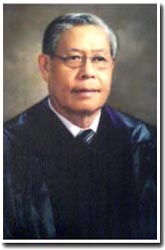
- The Honorable Sir Hilario Davide Jr.: Chief Justice of the Philippines, Philippine Representative to the United Nations, author of the 1986 Constitution of the Philippines, and Supreme Commander of the Order.
- The Honorable Sir Claudio Teehankee: Chief Justice and Secretary of Justice of the Philippines. Supreme Commander of the Order.
- The Honorable Sir Reynato Puno: Chief Justice of the Philippines. Supreme Commander of the Order.
Artists of the Philippines
- Sir Juan F. Nakpil: National Artist of the Philippines. Supreme Commander of the Order.
- Sir Jhett Tolentino: Entertainment Producer and first Filipino to win both a Grammy Award and a Tony Award for his work in the entertainment industry.
Philippine Diplomatic Corps
- H.E. Sir Carlos P. Romulo: President of the United Nations General Assembly. President of the University of the Philippines, Philippine Ambassador to the United States, Secretary of Foreign Affairs, and Secretary of Education.
- H.E. Sir León María Guerrero III: Philippine Ambassador to the United Kingdom, India, Spain, Mexico, and Yugoslavia.
- H.E. Sir Jose L. Cuisia Jr.: Philippine Ambassador to the United States. Governor of the Central Bank of the Philippines.
- H.E. Sir Victor G. Garcia III: Philippine Ambassador to the Russian Federation, Austria, Croatia, Slovenia, Bosnia-Herzegovina, and Philippine Permanent Resident to international organizations in Vienna, Austria. Signatory for the UN Convention Against Transnational Organized Crime.
- H.E. Sir Jose S. Laurel III: Philippine Ambassador to Japan. Supreme Commander of the Order.
- H.E. Sir Eduardo de Vega, KGOR https://dfa.gov.ph/dfa-news/news-from-our-foreign-service-postsupdate/25729-ph-embassy-in-brussels-the-order-of-the-knights-of-rizal-commemorate-rizal-day-in-belgium : Philippine Ambassador to Mexico, Belgium, Luxembourg, and the European Union.
- H.E. Sir Philippe Lhuillier: Philippine Ambassador to Italy, Albania, San Marino, and Spain.
- H.E. Sir Jesus S. Domingo: Philippine Ambassador to New Zealand, Cook Islands, Fiji, Samoa and Tonga.
- H.E. Sir J. Eduardo Malaya, KGOR: Philippine Ambassador to The Kingdom of the Netherlands.
Other Prominent Members
- Sir Antonio C. Torres: First Filipino Chief of Manila Police Department (MPD), Founder of the Order.
- Sir Gabriel A. Daza: Charter member of the Boy Scouts of the Philippines (BSP). Supreme Exchequer and of the Order.
- Sir Hermenegildo Reyes: Co-Founder of the University of the East. Supreme Commander of the Order.
Foreign Recipients of the Order or its awards
| Country | Photo | Name | Known for | Notes | Spain Spain | United States United States of America | United States United States of America | Malaysia Malaysia | Croatia Croatia | Yugoslavia Yugoslavia | Thailand Thailand | Czech Republic Czech Republic | Australia Australia | Canada Canada | France France | United Kingdom United Kingdom | United States United States of America | Japan Japan | Japan Japan | Canada Canada | United States United States of America | Australia Australia | Rwanda Rwanda | United Kingdom United Kingdom | |||
|---|---|---|---|---|---|---|---|---|---|---|---|---|---|---|---|---|---|---|---|---|---|---|---|---|---|---|---|
| [[File:Vladimir Putin and Juan Carlos I (cropped).jpg | center | frameless]] | HM King Juan Carlos I | King of Spain | |||||||||||||||||||||||
| [[File:Henry A. Kissinger, U.S. Secretary of State, 1973-1977.jpg | center | frameless]] | Sir Henry Kissinger | Secretary of State of the United States of America | |||||||||||||||||||||||
| [[File:LC-DIG-ggbain-37582.jpg | center | frameless]] | Sir Theodore Roosevelt III | Governor-General of the Commonwealth of the Philippines | Knighted by then-Senate President Sir Manuel L. Quezon at Luneta. | ||||||||||||||||||||||
| [[File:Anwar Ibrahim 09012023 (cropped).jpg | center | frameless]] | Sir Anwar Ibrahim | 10th Prime Minister of Malaysia | |||||||||||||||||||||||
| [[File:Adjuntant to the Croatian President.jpg | center | frameless]] | Sir Stjepan Mesić, KGCR | President of Croatia (2000-2010) | |||||||||||||||||||||||
| President of Yugoslavia (1991) | |||||||||||||||||||||||||||
| [[File:Itthiphol_Kunplome_by_Trisorn_Triboon_D85_5978.jpg | alt=Itthiphol Kunplome Minister of Culture of Thailand | center | frameless]] | Sir Itthiphol Khunpluem | Thai Minister of Culture and Mayor of Pattaya | ||||||||||||||||||||||
| Sir Antonín Staněk, KGOR | 16th Minister of Culture of the Czech Republic (2018-2019), former Member of Chamber of Deputies, Parliament of the Czech Republic (2017-2021), former Vice-chairman of Committee on Defence (2020-2021), 26th Mayor of the City of Olomouc (2014-2018) | ||||||||||||||||||||||||||
| Sir Billy Chan KGOR | Ambassador for the Global Fair Pay Charter, UNITAR | ||||||||||||||||||||||||||
| [[File:Tobias Enverga (38647995776) (cropped).jpg | center | frameless]] | Sir Tobias Enverga | Senator for Ontario | |||||||||||||||||||||||
| [[File:Jean-Marc_Ayrault_-_septembre_2011.jpg | center | frameless | Jean-Marc Ayrault - septembre 2011]] | Britgitte Ayrault | Wife of Prime Minister of France Jean-Marc Ayrault | Conferred the Rizal Women of Malolos Award for her charity work with Filipino children | |||||||||||||||||||||
| Sir Austin Coates | British civil servant and author | Wrote “Rizal: Philippine Nationalist and Martyr“ (1968) | |||||||||||||||||||||||||
| [[File:Sen John Ensign official(2).jpg | center | frameless]] | Sir John Ensign | United States Senator of the State of Nevada | |||||||||||||||||||||||
| [[File:DaisakuIkedaTokyoMay2010.jpg | center | frameless]] | Sir Daisaku Ikeda | President of Soka Gakkai in Japan | |||||||||||||||||||||||
| Sir Kiyoshi Sumiya | Japanese Ambassador to the Philippines | ||||||||||||||||||||||||||
| [[File:Anthony campaign shot december 2014.jpg | center | frameless]] | Sir Anthony Housefather | Member of the Canadian Parliament and Mayor of Côte Saint-Luc | |||||||||||||||||||||||
| [[File:Emanuel Jones (46948866015).jpg | center | frameless]] | Sir Emanuel Jones, KCR | USA Georgia State Senator, Senate Committee on Economic Development and International Relations | |||||||||||||||||||||||
| Sir Nicholas George Tam, KCR | Vice Chairman of the Royal Commonwealth Society Hong Kong Branch | ||||||||||||||||||||||||||
| [[File:Yuhi VI of Rwanda (2017).jpg | Yuhi_VI_of_Rwanda_(2017) | center | frameless]] | HM King Yuhi VI of Rwanda | Titular King of Rwanda | ||||||||||||||||||||||
| Sir Mark Clayton, KOR | Chairman of the British Chamber of Commerce South China |
References
References
- (1951-06-14). "An Act to Convert the "Orden de Caballeros de Rizal" Into a Public Corporation to be Known in English as "Knights of Rizal" and in Spanish as "Orden de Caballeros de Rizal", and to Define Its Purposes and Powers". [[Official Gazette (Philippines).
- (September 19, 2003). "Establishing the Honors Code of the Philippines to Create an Order of Precedence of Honors Conferred and for Other Purposes". [[Official Gazette (Philippines).
- (June 14, 2001). "The Order of the Knights of Rizal". [[Manila Bulletin]].
- "Speech of President Aquino at the International Assembly and Conference of Rizal, February 17, 2011". Official Gazette of the Republic of the Philippines.
- "Order of theKnights Of Rizal".
- Chew, Ai En Isabel. (August 2014). "Producing Rizal: Negotiating Modernity Among the Filipino Diaspora in Hawaii".
- Bantug, Asunción López. (1982). "Lolo José: An Intimate and Illustrated Portrait of José Rizal".
- Bocobo, Dean Reyes. (December 30, 2012). "Why the Catholic Church should apologize to Rizal's mother". [[Philippine Daily Inquirer]].
- Ubac, Erika Sauler, Michael Lim. (2012-12-30). "Aquino to lead restaging of transfer of Rizal's bones from Binondo to Luneta".
- "History".
- "Knights Of Rizal {{!}} SUPREME COUNCIL".
- "How to Become a Member".
- (2003). "Implementing Rules and Regulations Implementing Rules and Regulations of Executive Order 236 of Executive Order 236".
- "About Us".
- (2023-11-07). "Titles and styles of knights and dames {{!}} Department of the Prime Minister and Cabinet (DPMC)".
- "Rank and awards".
- "Remembering our humanitarian legacy with 'Safe Haven: Jewish Refugees in the Philippines'".
- "Collections Search - United States Holocaust Memorial Museum".
- Tenorio, Rich. (February 20, 2020). "Little known Philippines' WWII rescue of Jews was capped by US interference".
- "Jose P. Laurel A Register of His Papers in the Jose P. Laurel Memorial Library-Museum" (PDF). ''E-LIS repository''. Jose P. Laurel Memorial Library. 1982. Retrieved August 16, 2022.
- Eufronio Alip, ed., The Philippine Presidents from Aguinaldo to Garcia (1958); Jesús V. Merritt, Our Presidents: Profiles in History (1962); and Pedro A. Gagelonia, Presidents All (1967). See also Hernando J. Abaya, The Untold Philippine Story (1967). Further information can be found in Ester G. Maring and Joel M. Maring, eds., Historical and Cultural Dictionary of the Philippines (1973).
- "[https://www.officialgazette.gov.ph/1971/06/28/presidents-week-in-review-june-18-24-1971/ President's Week in Review: June 18 – 24, 1971]". Official Gazette of the Republic of the Philippines. June 28, 1971. Retrieved August 7, 2022.
- Republic Act No. 4166 (August 4, 1964). [https://elibrary.judiciary.gov.ph/thebookshelf/showdocs/2/6095 "An Act Changing the Date of Philippine Independence Day From July Four to June Twelve, and Declaring July Four as Philippine Republic Day, Further Amending for the Purpose Section Twenty-nine of the Revised Administrative Code"]. ''Supreme Court E-Library''.
- (2011-09-29). "Diosdado Macapagal".
- Bonner, William; Bonner, Raymond (1987). ''Waltzing with a Dictator: The Marcoses and the Making of American Policy''. Times Books. {{ISBN. 978-0-8129-1326-2.
- Fuentecilla, Jose V. (April 1, 2013). ''Fighting from a Distance: How Filipino Exiles Helped Topple a Dictator''. University of Illinois Press. {{ISBN. 978-0-252-09509-2. Archived from the original on November 20, 2021. Retrieved September 30, 2021.
- Inquirer, Philippine Daily. (2016-11-19). "Marcos: Rise and fall of a dictator".
- (2022-07-22). "EDSA PEOPLE POWER REVOLUTION".
- (2022-04-25). "Five things to know about Martial Law in the Philippines".
- Magramo, Kathleen. (2022-09-30). "They were tortured under Philippine dictator Ferdinand Marcos Snr. Now they fear their stories are being erased".
- (2022-09-28). "Philippines martial law: The fight to remember a decade of arrests and torture".
- Diola, Camille. "Debt, deprivation and spoils of dictatorship {{!}} 31 years of amnesia".
- (2022-05-10). "Why the Marcos family is so infamous in the Philippines".
- "The truth about the economy under the Marcos regime {{!}} Per Se".
- Yamsuan, Cathy. (2011-12-12). "Open records of Marcos' spy agency, Enrile urges".
- Shleifer, Andrei; Vishny, Robert W. (August 1, 1993). "Corruption*". ''The Quarterly Journal of Economics''. '''108''' (3): 599–617. [[Doi (identifier). doi]]:10.2307/2118402. [[ISSN (identifier). ISSN]] 0033-5533. [[JSTOR (identifier). JSTOR]] 2118402. [[S2CID (identifier). S2CID]] 265951232. Retrieved March 13, 2022.
- Quah, Jon S.T. (2010). "Curbing Corruption in the Philippines: Is this an Impossible Dream". ''Philippine Journal of Public Administration''. '''54''' (1–2): 1–43. Archived from the original on September 25, 2021. Retrieved September 1, 2020 – via University of the Philippines Diliman.
- Hodess, Robin; Inowlocki, Tania; Rodriguez, Diana; Wolfe, Toby, eds. (2004). ''[https://images.transparencycdn.org/images/2004_GCR_PoliticalCorruption_EN.pdf Global Corruption Report 2004]'' (PDF). Sterling, VA, USA: Pluto Press in association with Transparency International. pp. 13, 101. {{ISBN. 0-7453-2231-X. Archived (PDF) from the original on May 13, 2022. Retrieved September 18, 2021.
- (2021-11-20). "Curbing Corruption in the Philippines: Is this an Impossible Dream? {{!}} Quah {{!}} Philippine Journal of Public Administration".
- (2006-02-25). "The weird world of Imelda Marcos".
- "From the archives: Excerpt Imelda Marcos from ABC 20/20 March 1986 {{!}} Ghostarchive".
- (2007-07-08). "Marcos family returning to the limelight in the Philippines (Published 2007)".
- (1976-09-01). "Report of an AI Mission to the Republic of the Philippines 1975".
- (2022-09-01). "Alfred McCoy, Dark Legacy: Human rights under the Marcos regime".
- ''The Guinness Book of World Records 1989''. Bantam. 1988. p. 400. {{ISBN. 978-0-553-27926-9.
- (2022-02-21). "Greatest robbery of a Government {{!}} Guinness World Records".
- "2000 Distinguished Graduate Award: Fidel Ramos".
- Magno, Alexander R. (2001). "PHILIPPINES: Trauma of a Failed Presidency". Southeast Asian Affairs. 2001: 251–262. doi:10.1355/SEAA01P. JSTOR [https://www.jstor.org/stable/27912279 27912279].
- (2011-08-13). "Philippine Military Takes Moro Headquarters".
- article 13, Reglamento de la Orden de Isabel la Católica (1998)
- [https://www.boe.es/boe/dias/2007/12/01/pdfs/A49782-49782.pdf "Real Decreto 1587/2007, de 30 de noviembre, por el que se concede el Collar de la Orden de Isabel la Católica a Su Excelencia señora Gloria Macapagal Arroyo, Presidenta de Filipinas"] (PDF) (in Spanish). Boletín Oficial del Estado (BOE). Retrieved November 27, 2015.
- "GMA sets unique records among former presidential children".
- "Philippines bans death penalty".
- (2006-04-18). "Philippines: Largest ever commutation of death sentences".
- [https://www.bloomberg.com/professional/insights/markets/rising-tiger-philippines-posts-worlds-fastest-growth/ "Rising tiger Philippines posts some of the world's fastest growth".] ''[[Bloomberg News]]''. January 26, 2017. Archived from the original on June 24, 2021. Retrieved June 24, 2021.
- Solomon, Feliz. (2021-06-24). "Benigno Aquino III, Former Philippine President Who Resisted China, Dies at 61". Wall Street Journal.
- (January 5, 2025). "On the Run, a Hit Man Gives One Last Confession". [[The New York Times]].
- "PH Ambassador to NZ Charters Knights of Rizal Chapter in Wellington".
- "Conferment of Knight Grand Officer of Rizal to Embassy Officials".
- (2024-02-17). "Mesić dobio važno priznanje za mir, održao dirljiv govor: 'Ratovi nemaju pobjednika'".
- "Knighthood for Vice Chairman {{!}} Royal Commonwealth Society in HK".
- Brandon, Katrina. (15 May 2024). "Local Filipino earns knighthood honour". Latrobe Valley Express.
- Ashton, David. (2024). "What They're Doing Now". Great Scot.
- (2025-02-22). "Hexham-born BritCham chairman knighted in the Philippines".
This article was imported from Wikipedia and is available under the Creative Commons Attribution-ShareAlike 4.0 License. Content has been adapted to SurfDoc format. Original contributors can be found on the article history page.
Ask Mako anything about Knights of Rizal — get instant answers, deeper analysis, and related topics.
Research with MakoFree with your Surf account
Create a free account to save articles, ask Mako questions, and organize your research.
Sign up freeThis content may have been generated or modified by AI. CloudSurf Software LLC is not responsible for the accuracy, completeness, or reliability of AI-generated content. Always verify important information from primary sources.
Report