From Surf Wiki (app.surf) — the open knowledge base
Kishkindha
Vanara kingdom in Ramayana

Vanara kingdom in Ramayana
Kishkindha (, ) is a kingdom mentioned in Ramayana. It is ruled by King Sugriva, the younger brother of Vali, in the Sanskrit epic Ramayana. According to the Hindu epic this was the kingdom that Sugriva ruled with the assistance of his counsellor, Hanuman. Kishkindha is identified with the present location of Hampi, the erstwhile royal capital of Vijayanagara Empire.
During the Treta Yuga, the whole region was within the dense Dandaka Forest which was founded by King Danda, son of Ikshvaku, and descendant of Vaivasvata Manu in the Satya Yuga, which extended from the Vindhya range to the South Indian peninsula. Thus, this kingdom was considered that of the vanaras. During the Dvapara Yuga, the Pandava Sahadeva is stated to have visited this kingdom in the epic Mahabharata during his southern military campaign to collect tribute for Yudhishthira's Rajasuya sacrifice.
Literature
Ramayana
The Ramayana has a book that is based in Kishkindha, known as the Kishkindha Kanda. In this text, a banished Sugriva sends his trusted counsellor, Hanuman, to meet the mysterious Rama and Lakshmana. Satisfied with their noble demeanour, he brings them to Sugriva. The two parties exchange their tales, after which Rama forges an alliance with the former vanara monarch: Sugriva, in turn, shows the cloak and jewels of Sita that had descended from the sky upon his kingdom during her abduction by Ravana. After Sugriva regales the tales of his brother's exploits, he goes to challenge his brother for a duel, having sought Rama's assistance in the fight. When Rama does not loose his arrow, Sugriva flees towards the Rishyamuka hill, where his brother dared not venture. Rama explains that he did not intercede since he could not distinguish between the two, upon which a wreath of flowers was placed around the vanara's neck. The entourage then visit the hermitage of Saptajanas:

Wild and ferocious elephants adorned with ivory tusks, who proved a menace to the lakes by causing the banks to crumble, wandered about here and there and intoxicated with Mada juice, striking their foreheads against the rocks, resembled moving mountains. Monkeys as large as elephants, covered with dust and every species of wild beast and bird were seen by the followers of Sugriva as they passed on their way.|author=Valmiki|title=Ramayana|source=Kishkindha Kanda, Chapter 13}} Ignoring his wife Tara's pleas to make peace with Rama, Bali sets out to duel his brother once more, and is slain by Rama's arrow to his breast. Vali and Rama engage in a conversation about the morality of Rama's actions, to which Rama retorts that the vanara had conducted himself in a heinous manner by forcefully bedding Ruma, Sugriva's wife. Even as Tara laments, Sugriva is installed as king once more. However, four months later, he fails to honour his pledge to support Rama's rescue, lost in his blissful dalliance with Tara. A furious Lakshmana, first mollified by Tara, reproaches Sugriva for his conduct, after which he reconciles with him. Sugriva assembles his vanara forces and commands them to venture into the following regions:

The vanara army then venture out of Kishkindha to scour these regions for Sita.
Mahabharata
Sahadeva's conflict with the kings of Kishkindha is mentioned in the Mahabharata:
Garuda Purana
Brahma mentions Kishkindha while narrating the Ramayanam:
In popular culture
- This kingdom is often identified to be the region around the Tungabhadra river (then known as Pampa Sarovara) near Hampi in present-day Vijayanagara district, Karnataka. The mountain near the river known as Rishimukha, where Sugriva lived with Hanuman during his exile, bears the same name.
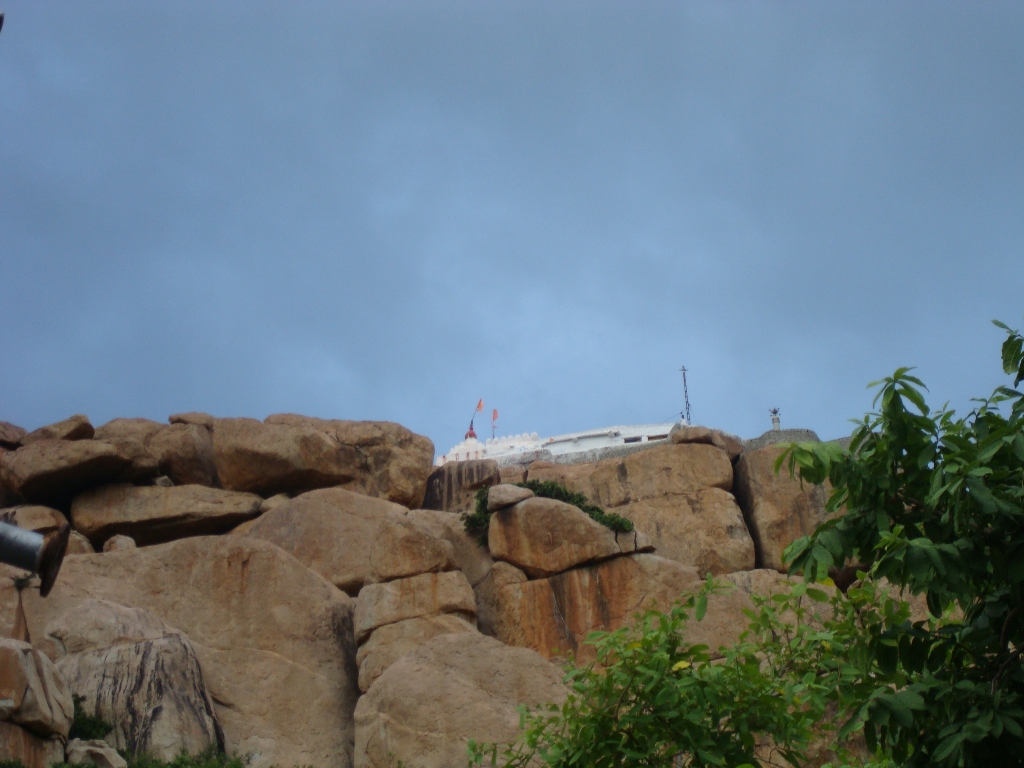
- The Anjaneyadri Hill is held by the locals to the birthplace of Hanuman.
- 2024 Malayalam Movie Kishkindha Kaandam have similar reference.
References
References
- Kishore, B. R.. (2007). "Ramayana". Diamond Pocket Books (P) Ltd..
- Dharma, Krishna. (2020-08-18). "Mahabharata: The Greatest Spiritual Epic of All Time". Simon and Schuster.
- Vālmīki. (1962). "Aranya Kanda". Shanti Sadan.
- Vālmīki. (1952). "The Ramayana of Valmiki: Aranya kanda. Kishkindha kanda. Sundara kanda". Shanti Sadan.
- Vālmīki. (1962). "Aranya Kanda". Shanti Sadan.
- www.wisdomlib.org. (2020-09-26). "Sugriva sends out other Monkeys to explore the Southern Region [Chapter 41]".
- www.wisdomlib.org. (2015-01-09). "Lord Krishna Benedicts the Imprisoned Kings [Chapter 5]".
- www.wisdomlib.org. (2015-04-15). "The Ramayana [Chapter CXLIII]".
- Pushkar Bhatnagar. (2004). "Dating The Era of Lord Ram". Rupa Publications.
This article was imported from Wikipedia and is available under the Creative Commons Attribution-ShareAlike 4.0 License. Content has been adapted to SurfDoc format. Original contributors can be found on the article history page.
Ask Mako anything about Kishkindha — get instant answers, deeper analysis, and related topics.
Research with MakoFree with your Surf account
Create a free account to save articles, ask Mako questions, and organize your research.
Sign up freeThis content may have been generated or modified by AI. CloudSurf Software LLC is not responsible for the accuracy, completeness, or reliability of AI-generated content. Always verify important information from primary sources.
Report