From Surf Wiki (app.surf) — the open knowledge base
Kingsway Camp
| Field | Value |
|---|---|
| name | Kingsway Camp |
| official_name | Guru Teg Bahadur Nagar |
| settlement_type | Neighborhood of Delhi |
| pushpin_map | India Delhi |
| pushpin_map_caption | Location in Delhi, India |
| coordinates | |
| subdivision_type | Country |
| subdivision_name | India |
| subdivision_type1 | State |
| subdivision_name1 | Delhi |
| subdivision_type2 | District |
| subdivision_name2 | North West Delhi |
| subdivision_type3 | Metro |
| established_title | |
| unit_pref | Metric |
| population_density_km2 | auto |
| timezone1 | IST |
| utc_offset1 | +5:30 |
| postal_code_type | PIN |
| postal_code | 110009 |
| blank2_name_sec1 | Civic agency |
| blank2_info_sec1 | Municipal Corporation of Delhi |
Kingsway Camp (officially Guru Teg Bahadur Nagar (GTB Nagar) since 1970) is a historic locality situated in the vicinity of Civil Lines and Delhi University in North West Delhi. It commences from the Guru Teg Bahadur Nagar (GTB) intersection, and encompasses residential areas like Hudson Lines and Outram Lines. Neighbouring localities include Dhaka Village, Mukherjee Nagar, and Hakikat Nagar. The foundation of the new capital of British India, New Delhi, was laid at the Coronation Park by King George V in December, 1911, rendering this area historically significant.
Originally named after Kingsway, an avenue built as a precursor to the residence of the Viceroy of India following the Delhi Durbar of 1911, the location was ultimately shifted to Raisina Hill, its current site. The road formerly known as Kingsway was rechistened to Rajpath after the British withdrawal from India. The area stretched over twenty-five square miles from the banks of Yamuna River in the east to Shalimar Bagh in the west. After independence, it became the site of Delhi's largest refugee camp, accommodating 300,000 refugees. Today, it is a bustling residential area, home to a significant student population due to its close proximity to Delhi University. The locality is served by the GTB Nagar station on the Yellow Line of the Delhi Metro.
History
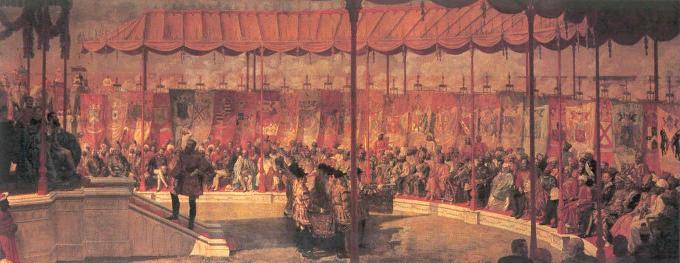

During the British Raj, it acquired importance owing to its proximity to the Coronation Park where all the three renditions of the Delhi Durbar took place. Coronation Memorial comprises vast swathes of land with an obelisk erected at the very spot where the three successive grand Durbars (1877, 1903, and 1911 respectively) unfolded. The most seminal event took place on 12 December 1911, when George V, the then Emperor of India along with Queen Mary, at the sidelines of the Delhi Durbar, proclaimed that the capital of the Raj was to be shifted from Calcutta to Delhi. Thereafter, on 15 December 1911, they laid the foundation stone for the Viceroy's residence (which was designated the official residence of the President of India after India became independent) and New Delhi at this site, which was eventually shifted to its present location on Raisina Hill, further down south. The newly-appointed emperors of the British Raj were stationed at Kingsway Camp during the Durbars. Since the emperors/empresses had to pass through this route, it was named Kingsway Camp.
In the 1910s, the government established a steam-generation power plant here, known as the Central Power House. Around 1931, when the capital of India shifted to New Delhi, the plant was relocated to Raj Ghat.
The Harijan Sevak Sangh for Dalits was founded here by Mahatma Gandhi on September 24, 1932. Later, the Valmiki Bhawan within the campus served as Gandhi’s one-room ashram. Today, the 20-acre (81,000 m²) campus houses the Gandhi Ashram, Harijan Basti, Lala Hans Raj Gupta Industrial Training Institute, and a residential school for boys and girls.

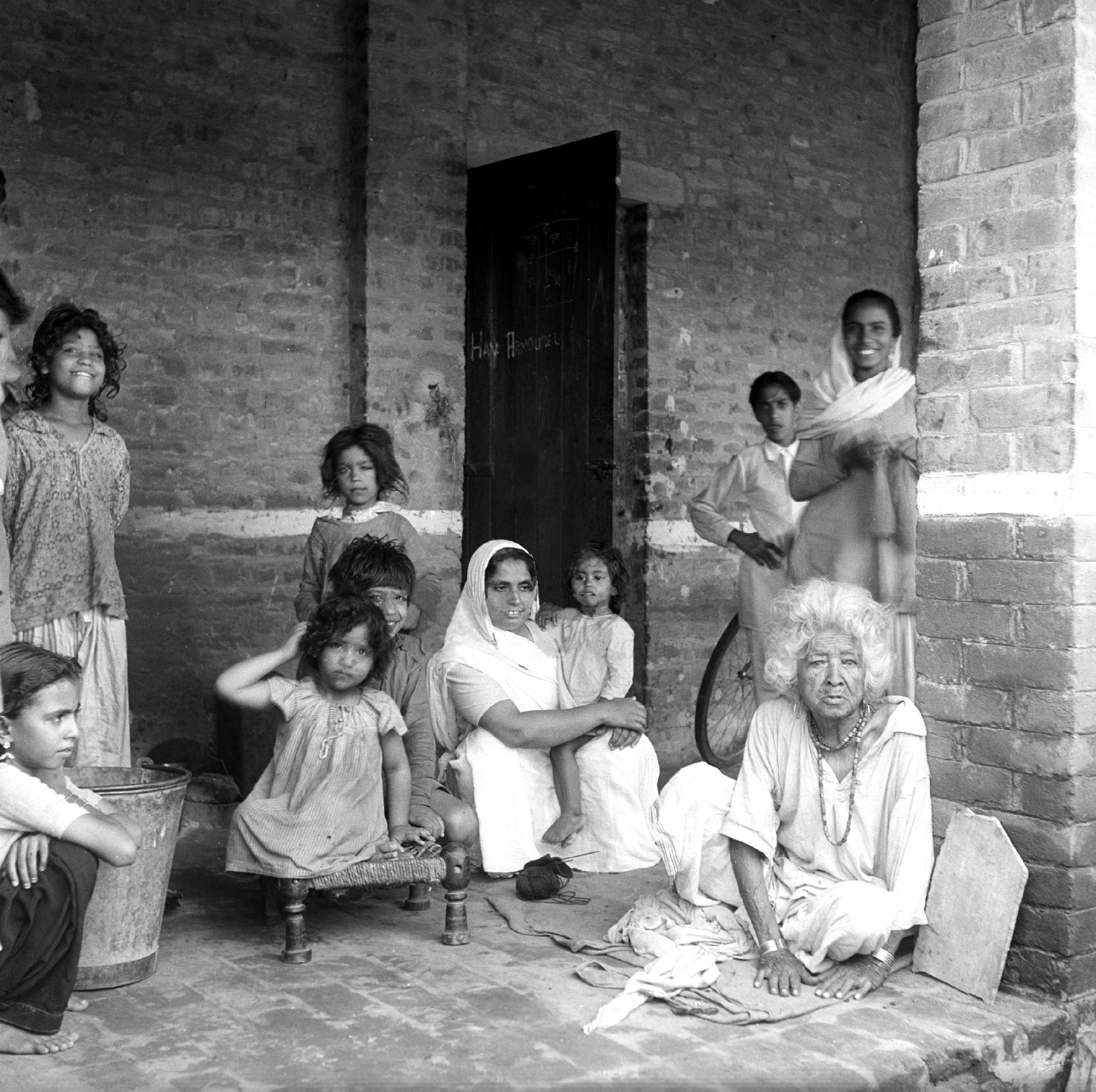
However, until India gained independence, much of the area remained covered with fruit gardens or was left as wilderness and swamps, owing to its low-lying location that often flooded during the rainy season. With India’s independence in 1947, Kingsway Camp became one of the many refugee camps established in Delhi. It housed approximately 300,000 people displaced from the newly formed Pakistan during the partition of India, making it the largest such camp. In May 1949, over 42,000 refugees were still residing in the camp as the construction of rehabilitation colonies and houses in the area was underway. It was during this time that the camp's inhabitants launched a hunger strike. Gandhian Lakshmi Chand Jain was in charge of the camp's operations, which was located near the Gandhi Ashram where Gandhi held his prayer meetings. Kamaladevi Chattopadhyay also played a vital role, working extensively with women's groups and promoting the formation of cooperatives. Over the next few years, many refugees settled in the nearby area, with some moving to West Delhi residential neighborhoods and newly built refugee townships. Unlike other refugee townships like Nilokheri, Faridabad, and Rajpura, there was no concerted effort to integrate residential and economic activities. However, due to its proximity to Delhi University, the area thrived in the years that followed..
The Oznam Home, a noted old-age home, was established here by St. Vincent de Paul Society in 1958. The Home was administered by an Austrian nun, Sister Edith, who stayed for the next 30 years. Kingsway Camp was officially renamed Guru Teg Bahadur Nagar on December 12, 1970, by the Municipal Corporation of Delhi. All India Radio's first external service shortwave facility was also established here.
Literature
References
References
- Gundry Alexander, Horace. (1951). "New citizens of India". Oxford University Press (India).
- [[#Ku. Singh, p. 318]]
- Ishii, Hiroshi. (2007). "Political and social transformations in north India and Nepal". Manohar.
- Hall, P. (2002). "Cities of Tomorrow". Blackwell Publishing.
- (August 2021)
- (30 Sep 2006). "Share Gandhi's space @Rs 800 pm". CNN-IBN.
- (2 October 2009). "Tirath spends time with Dalits on Gandhi Jayanti". Thaindian News.
- [[Kingsway Camp#Si. Sinha, p. 1483]]
- The burgeoning tide of refugees pouring from Pakistan sought refuge in tents and temporary barracks over the course of time.[[#Pa. Pandey, p. 140]]
- Tyagi, Vijendra Kumar. (1982). "Urban growth and urban villages: a case study of Delhi". Kalyani Publishers.
- (15 May 1949). "Delhi Strike". Pittsburgh Post-Gazette.
- [[#Ra. Rao, p. 43]]
- Johri, Pradeep Kumar. (2005). "Social Development And Social Welfare". Anmol Publications.
- ''The Sikh review, Volume 37, Issues 421-432''. Sikh Cultural Centre, Calcutta. 1989. ''p. 53'' "Resolution no. 954"
- Magne, Lawrence. (2001). "Passport to World Band Radio 2002". International Broadcasting Services.
This article was imported from Wikipedia and is available under the Creative Commons Attribution-ShareAlike 4.0 License. Content has been adapted to SurfDoc format. Original contributors can be found on the article history page.
Ask Mako anything about Kingsway Camp — get instant answers, deeper analysis, and related topics.
Research with MakoFree with your Surf account
Create a free account to save articles, ask Mako questions, and organize your research.
Sign up freeThis content may have been generated or modified by AI. CloudSurf Software LLC is not responsible for the accuracy, completeness, or reliability of AI-generated content. Always verify important information from primary sources.
Report