From Surf Wiki (app.surf) — the open knowledge base
Kinarut
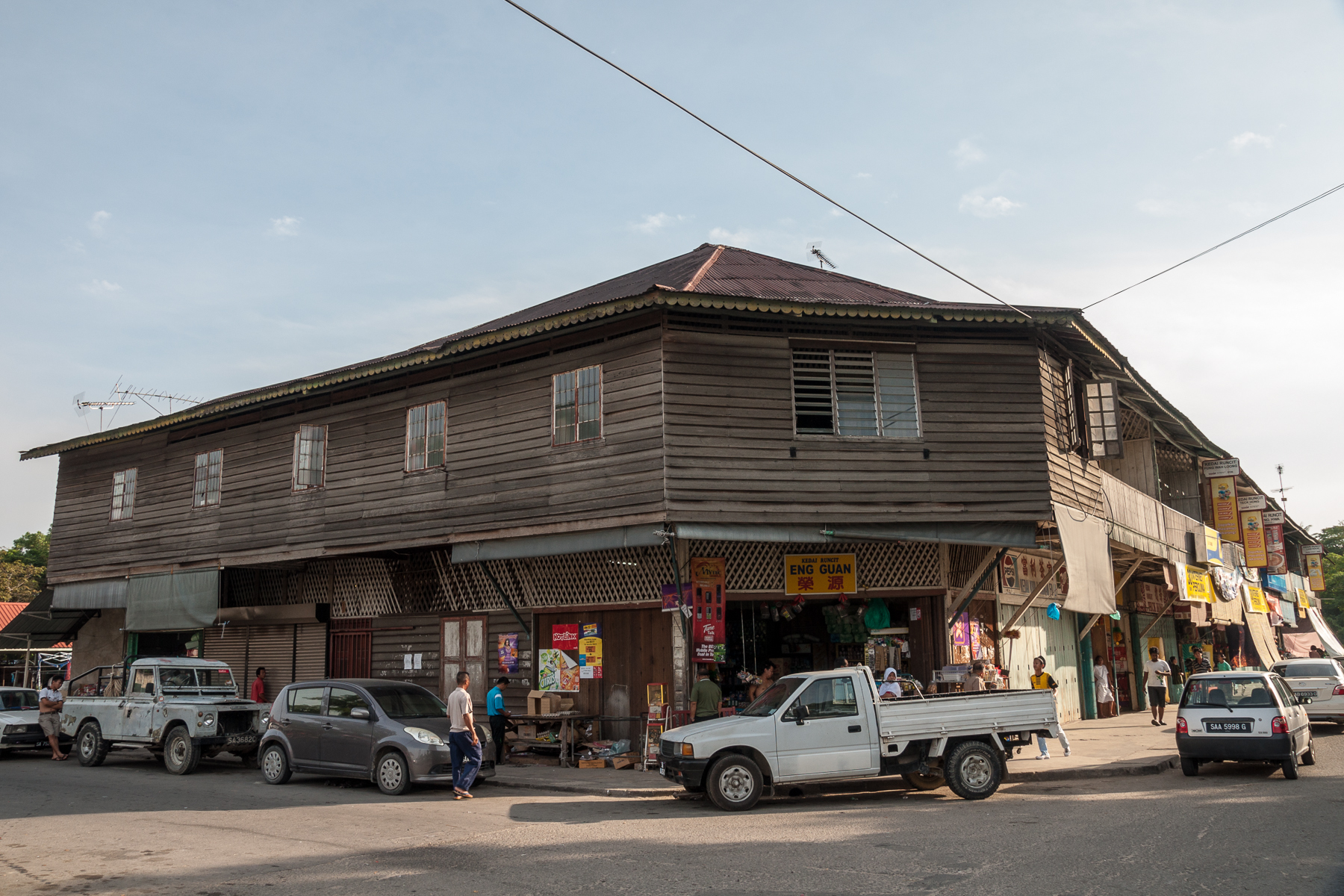
| Field | Value |
|---|---|
| official_name | Kinarut |
| translit_lang1 | Other |
| translit_lang1_type1 | Chinese |
| translit_lang1_info1 | 京那律 |
| image_skyline | Kinarut Sabah OldTownHouse-10.jpg |
| image_caption | Kinarut town centre and railway station |
| settlement_type | Town |
| coordinates | |
| pushpin_label_position | right |
| subdivision_type | Country |
| subdivision_name | Malaysia |
| subdivision_type1 | State |
| subdivision_name1 | Sabah |
| subdivision_type2 | Division |
| subdivision_name2 | West Coast |
| subdivision_type3 | District |
| subdivision_name3 | Papar |
| seat_type | Administration |
| seat | Papar District Council |
| governing_body | Papar District Council |
| timezone | MST |
| utc_offset | +8 |
| blank1_name | Neighbourhood Area |
| blank1_info | Papar, Lok Kawi |
| population_as_of | 2010 |
| population_total | 18,029 |
Kinarut is a town in the state of Sabah, Malaysia. It is located about 20 kilometres south of the state capital, Kota Kinabalu, and Kinarut railway station is one of the stops on the Sabah State Railway. Kinarut is under the administration of the Papar District.
Etymology
Several theories exist as to the etymological origins of the name 'Kinarut'. One such theory is that it refers to a street in the town which was formerly called China Road. Another theory is that it originated from the Dusun word Kinorut which means 'cutting using a knife'.
History
Kinarut originally belonged to the Sultanate of Brunei. In the late 17th century, when Sultan Abdul Hakkul Mubin had to withdraw from Chermin Island (Pulau Chermin) during the Brunei Civil War, he built a base in Kinarut at a strategic location protected by two rivers. He remained there for ten years as the Sultan of Kinarut, during which incidents of piracy in the surrounding seas decreased significantly. With help from the local Bajau and Dusun people, he managed to counter several attacks from Sultan Muhyiddin.
Demographics
A 2010 census estimated the population of Kinarut at 18,029. This population consists mainly of Bajaus, Bruneian Malays, Kadazans and Chinese (of whom most are Hakka Chinese) There is also a large Filipino refugee settlement in Kinarut, which has reportedly caused ethnic tension among locals.
Attractions

Kinarut is noted for its weekly tamu, an open air market dominated by native sellers which is held every Saturday. It is also close to Dinawan Island, Lok Kawi Wildlife Centre and the Kinarut Mansion ruins.
Notes
References
References
- [http://www.statistics.gov.my/portal/download_Population/files/population/04Jadual_PBT_negeri/PBT_Sabah.pdf ''Population Distribution by Local Authority Areas and Mukims, 2010'' (Census 2010)] {{webarchive. link. (14 November 2013 (PDF; 1,9 MB), Page 138)
- Richard Nelson Sokial: ''Colonial Townships in Sabah: West Coast'', Homeland Publisher Sdn Bhd, 2012, Page 224-236, {{ISBN. 978-983-40734-4-2
- (1956). "Malaysia in History". Malaysian Historical Society..
- Brunei. (1968). "Report". Printed at the Brunei Press.
- Wanderlust. "Kinarut Weekend Getaway". [[New Sabah Times]].
- (3 March 2013). "Did the police walk into a trap in Semporna?". Free Malaysia Today.
- "Kinarut's Philippine Refugee Settlement (Map)". [[WikiMapia]].
This article was imported from Wikipedia and is available under the Creative Commons Attribution-ShareAlike 4.0 License. Content has been adapted to SurfDoc format. Original contributors can be found on the article history page.
Ask Mako anything about Kinarut — get instant answers, deeper analysis, and related topics.
Research with MakoFree with your Surf account
Create a free account to save articles, ask Mako questions, and organize your research.
Sign up freeThis content may have been generated or modified by AI. CloudSurf Software LLC is not responsible for the accuracy, completeness, or reliability of AI-generated content. Always verify important information from primary sources.
Report