From Surf Wiki (app.surf) — the open knowledge base
Kerosene lamp
Type of lighting device that uses kerosene as a fuel

Type of lighting device that uses kerosene as a fuel
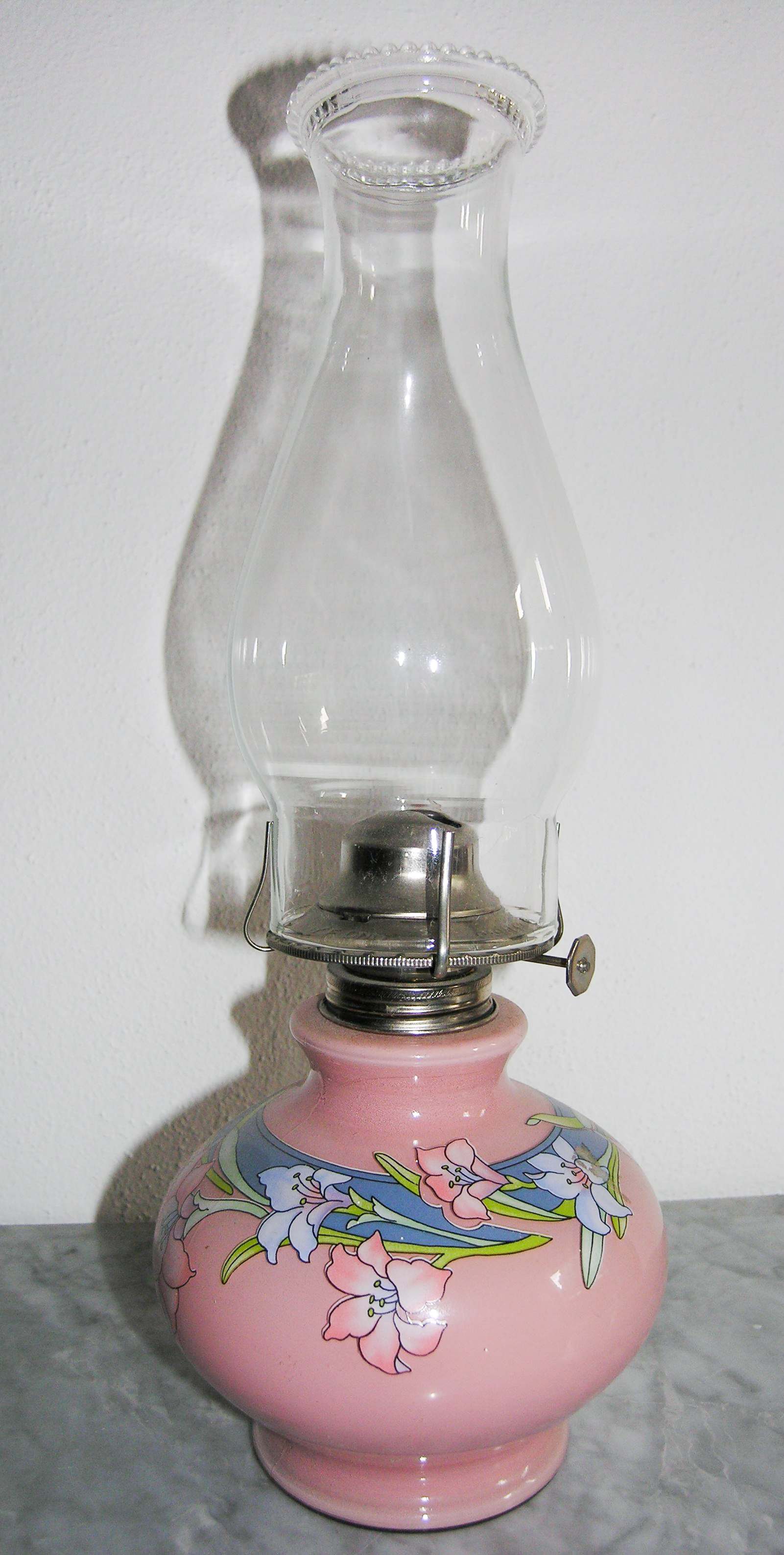
A kerosene lamp (also known as a paraffin lamp in some countries) is a type of lighting device that uses kerosene as a fuel. Kerosene lamps utilize a wick or mantle as a light source, protected by a glass chimney or globe; lamps may be used on a table, or as hand-held lanterns for portable lighting. Like oil lamps, they are useful for lighting without electricity, such as in regions without rural electrification, in electrified areas during power outages, at campsites, and on boats. There are three common types of kerosene lamp: flat-wick, central-draft (tubular round wick), and mantle lamp. Kerosene lanterns meant for portable use have a flat wick and are made in dead-flame, hot-blast, and cold-blast variants.
Pressurized kerosene lamps use a gas mantle; these are known as Petromax, Tilley lamps, or Coleman lamps, among other manufacturers. They produce more light per unit of fuel than wick-type lamps, but are more complex and expensive in construction and more complex to operate. A hand-pump pressurizes air, which forces liquid fuel from a reservoir into a gas chamber. Vapor from the chamber burns, heating a mantle to incandescence and providing heat.
Kerosene lamps are widely used for lighting in rural areas of Africa and Asia, where electricity is not distributed or is too costly. As of 2005, kerosene and other fuel-based illumination methods consume an estimated 77 e9L of fuel per year, equivalent to 1.3 e6BOE per day.Jean-Claude Bolay, Alexandre Schmid, Gabriela Tejada Technologies and Innovations for Development: Scientific Cooperation for a Sustainable Future, Springer, 2012 page 308. This is comparable to annual U.S. jet-fuel consumption of 76 e9L per year.
History
In 1813, John Tilley invented the hydro-pneumatic blowpipe. In 1818, William Henry Tilley, gas fitters, was manufacturing gas lamps in Stoke Newington.*Tilley lamp Company
In 1846, Abraham Pineo Gesner invented a substitute for whale oil for lighting, distilled from coal. Later made from petroleum, kerosene became a popular lighting fuel. Modern and most popular versions of the paraffin lamp were later constructed by Polish inventor and pharmacist Ignacy Łukasiewicz, in Lviv in 1853.{{Cite web |archive-url=https://web.archive.org/web/20090828103133/http://www.beskidniski.org.pl/szlaki/naftowy/szlak_naftowy.htm |archive-date=2009-08-28 |access-date=June 9, 2019 |archive-date=June 9, 2019 |archive-url=https://web.archive.org/web/20190609140011/https://www.historychannel.com.au/this-day-in-history/pharmacist-introduces-kerosene-lamp-saves-whales/ |url-status=dead
In 1914, the Coleman Lantern pressure lamp was introduced by the Coleman Company.
In 1919, Tilley High-Pressure Gas Company started using kerosene as a fuel for lamps.
Types
Flat-wick lamp

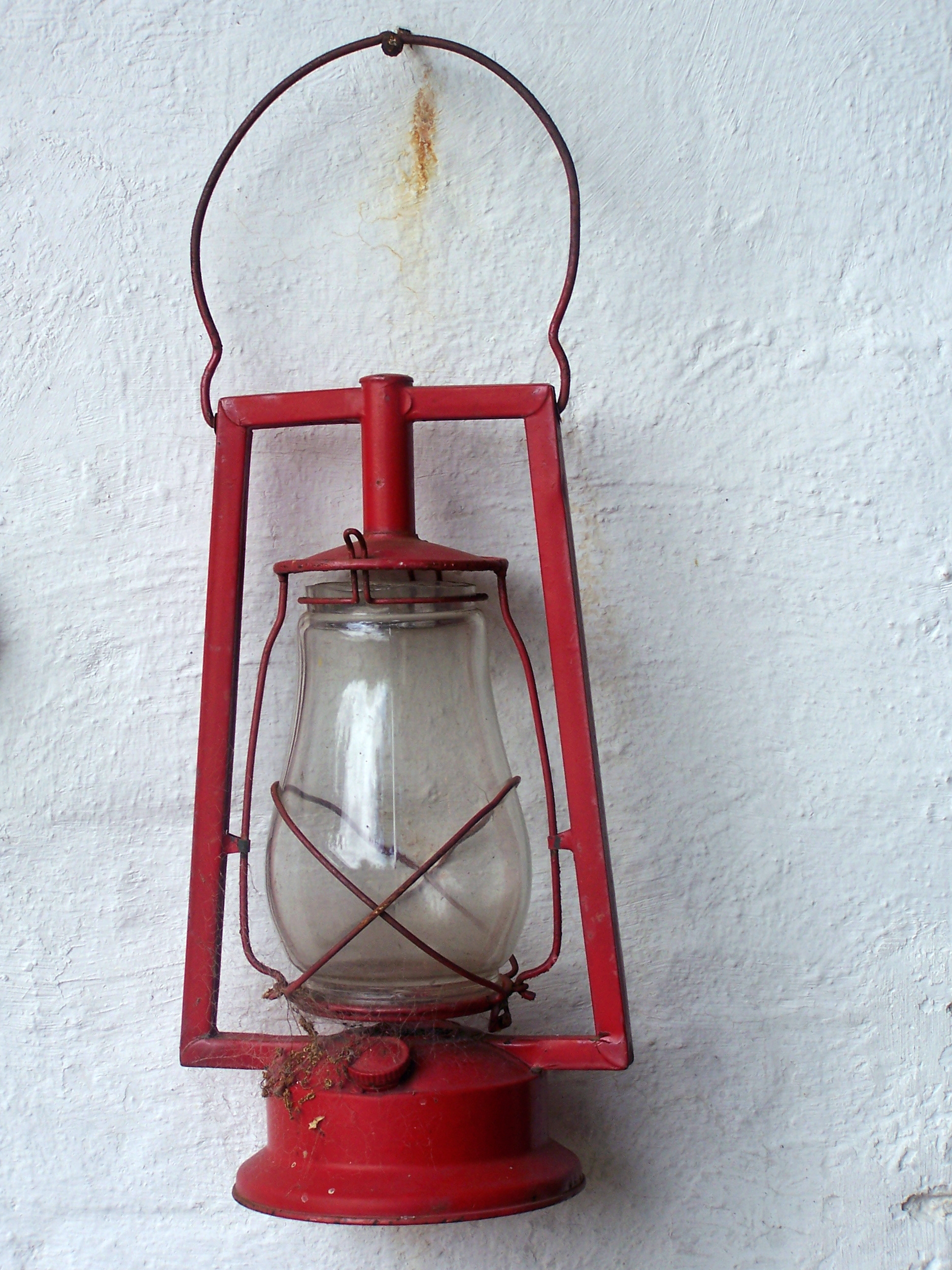
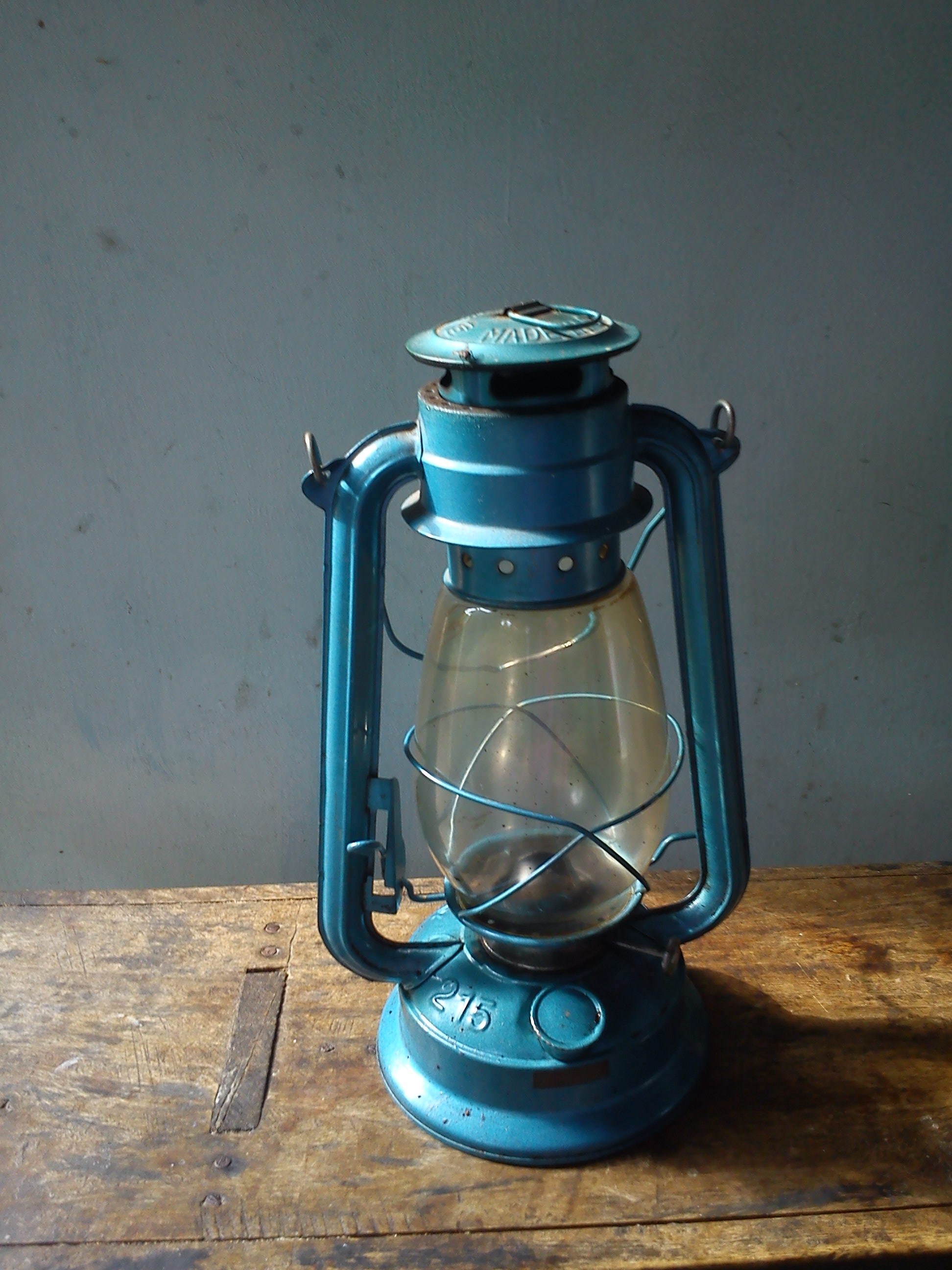
A kerosene lantern, also known as a "barn lantern" or "hurricane lantern", is a flat-wick lamp made for portable and outdoor use. They are made of soldered or crimped-together sheet-metal stampings, with tin-plated sheet steel being the most common material, followed by brass and copper. There are three types: dead-flame, hot-blast, and cold-blast. Both hot-blast and cold-blast designs are called tubular lanterns and are safer than dead-flame lamps, as tipping over a tubular lantern cuts off the oxygen flow to the burner and will extinguish the flame within seconds.
The earliest portable kerosene "glass globe" lanterns, of the 1850s and 1860s, were of the dead-flame type, meaning that it had an open wick, but the airflow to the flame was strictly controlled in an upward motion by a combination of vents at the bottom of the burner and an open topped chimney. This had the effect of removing side-to-side drafts and thus significantly reducing or even eliminating the flickering that can occur with an exposed flame.
Later lanterns, such as the hot-blast and cold-blast lanterns, took this airflow control even further by partially or fully enclosing the wick in a "deflector" or "burner cone" and then channeling the air to be supplied for combustion at the wick while at the same time pre-heating the air for combustion.
The hot-blast design, also known as a "tubular lantern" due to the metal tubes used in its construction, was invented by John H. Irwin and was . As noted in the patent, the "novel mode of constructing a lantern whereby the wind, instead of acting upon the flame in such a manner as to extinguish it, serves to support or sustain and prevent the extinguishment thereof." This improvement essentially redirected wind which might normally tend to extinguish the flame of an unprotected dead-flame lantern, instead is redirected, slowed, pre-heated, and supplied to the burner to actually support and promote the combustion of the fuel.
Later, Irwin improved upon this design by inventing and . This design is similar to his earlier "hot-blast" design, except that the oxygen-depleted hot combustion byproducts are redirected and prevented from recirculating back to the burner by redesigning the intake products, so that only oxygen-rich, fresh air is drawn from the atmosphere into the lamp ("the inlets for fresh air are placed out of the ascending current of products of combustion, and said products are thereby prevented from entering [the air intake]"). The primary benefit of this design compared to the earlier "hot-blast" design was to maximize the amount of oxygen available for combustion by ensuring that only fresh air is supplied to the burner, thereby increasing the brightness and stability of the flame.
Safety
Combustion
Contamination of lamp fuel with even a small amount of gasoline results in a lower flash point and higher vapor pressure for the fuel, with potentially dangerous consequences. Vapors from spilled fuel may ignite; vapor trapped above liquid fuel may lead to excess pressure and fires. Kerosene lamps are still extensively used in areas without electrical lighting; the cost and dangers of combustion lighting are a continuing concern in many countries.
Inhalation
The World Health Organization considers kerosene to be a polluting fuel and recommends that "governments and practitioners immediately stop promoting its household use". Kerosene smoke contains high levels of harmful particulate matter, and household use of kerosene is associated with higher risks of cancer, respiratory infections, asthma, tuberculosis, cataract, and adverse pregnancy outcomes.
Performance
Flat-wick lamps have the lowest light output, center-draft round-wick lamps have three to four times the output of flat-wick lamps, and pressurized lamps have bright light outputs ; the range is from 8 to 100 lumens. A kerosene lamp producing 37 lumens for 4 hours per day for a month (120 hours) consumes about 3 L of kerosene.
| Flat-wick width | Candlepower | Lumens | Watts |
|---|---|---|---|
| " | 2 | 25 | 1.65 |
| " | 4 | 50 | 3.3 |
| " | 7 | 88 | 5.9 |
| " | 9 | 113 | 7.5 |
| " | 10 | 125 | 8.3 |
| –1" | 12 | 151 | 10.1 |
| 1-1/2" | 20 | 251 | 16.7 |
| 2× 1", ", " | 30 | 377 | 25 |
| 2× " | 50 | 628.5 | 42 |
| " round "Dressel Belgian" | 67 | 842 | 56 |
| " round "Rayo" | 80 | 1000 | 66.6 |
| " round "Firelight" or "store" lamp | 300 | 3771 | 251 |
12.57 lumens = 1 CP
Notes
References
| issue-date = 1873-05-06
References
- Mills, E.. (2005-05-27). "ENVIRONMENT: The Specter of Fuel-Based Lighting". Science.
- "Jet fuel consumption by country, around the world".
- (April 1814). "LIX. Description of a hydro-pneumatic blow-pipe for the use of chemists, enamellers, assayers, and glass-blowers". The Philosophical Magazine.
- (25 January 2018). "Coleman US lanterns 1914 – 1920".
- "How to date your Coleman® Lamp, Lantern and Stove".
- "Our Story".
- "Tilley Lamp Co".
- "Side Draft vs Center Draft Lamp, an explanation.".
- The round burner https://artoluys.com/index.php/en/paraffin-kerosene-burners/the-kosmos-burner
- "Aladdin Kerosene Lamps".
- Dennis L. Noble ''Lighthouses & Keepers: The U.S. Lighthouse Service and Its Legacy'', Naval Institute Press, 2004 {{ISBN. 1-59114-626-7, page 34.
- "Tubular Oil Lanterns—Frequently Asked Questions". W. T. Kirkman Lanterns, Inc..
- (April 2008). "Kerosene lamps and cookstoves—The hazards of gasoline contamination". Fire Safety Journal.
- (2016). "Burning opportunity: clean household energy for health, sustainable development, and wellbeing of women and children". [[World Health Organization]].
- Narasimha Desirazu Rao (2011). [https://purl.stanford.edu/py027yn9445 ''Distributional Impacts of Energy Policies in India: Implications for Equity'']. Ph.D. Stanford, Calif.: Stanford University. p. 36.
- "Lumens to watts (W) conversion calculator".
This article was imported from Wikipedia and is available under the Creative Commons Attribution-ShareAlike 4.0 License. Content has been adapted to SurfDoc format. Original contributors can be found on the article history page.
Ask Mako anything about Kerosene lamp — get instant answers, deeper analysis, and related topics.
Research with MakoFree with your Surf account
Create a free account to save articles, ask Mako questions, and organize your research.
Sign up freeThis content may have been generated or modified by AI. CloudSurf Software LLC is not responsible for the accuracy, completeness, or reliability of AI-generated content. Always verify important information from primary sources.
Report