From Surf Wiki (app.surf) — the open knowledge base
Keikogi
Training uniform in Japanese martial arts
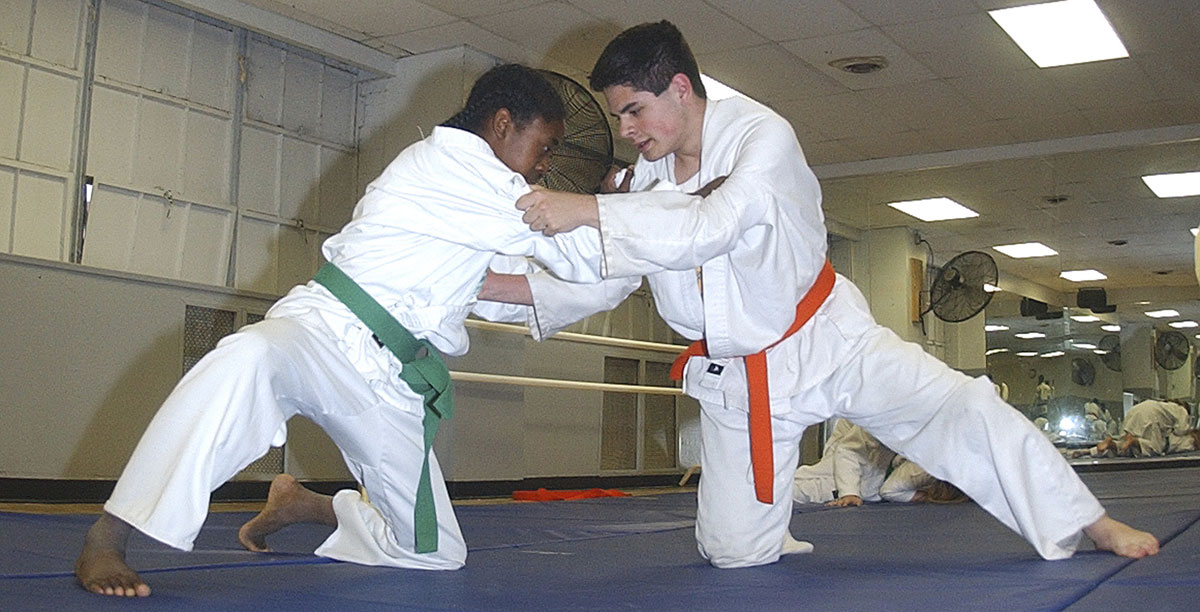
Training uniform in Japanese martial arts
(ja, 'practice', ja, 'dress' or 'clothes'), also known as or , is a traditional uniform worn for training in Japanese martial arts and their derivatives. Emerging in the late 19th century, the ja was developed by judo founder Kanō Jigorō.
Origin
Japanese martial arts historian Dave Lowry speculates that Kanō derived the uniform's design from the uniforms of Japanese firefighters' heavy hemp jackets, . By 1920, the ja as it exists today was worn by Kanō's students for judo practice; a photo displayed in the Kodokan (judo headquarters) taken in 1920 shows Kanō himself wearing a modern ja.
Until the 1920s, Okinawan karate practice was usually performed in everyday clothes. Given the social climate between the Japanese and Okinawans during this time, karate was seen as brutish compared to Japanese martial arts, which had their roots in samurai culture, such as jujutsu. To help market karate to the Japanese, Gichin Funakoshi – the founder of Shotokan karate and the instructor responsible for importing karate to mainland Japan – adopted a uniform style similar to Kanō's design.
Construction
Over time, karate practitioners modified the ja for karate by lightening the weave of the fabric, and adding strings to the inside of the jacket, tied to keep the jacket closed. The jacket is also held closed by a belt or ja.
The top part of the ja is called the . The trousers of the ja are called , or .
In modern times, white, black, blue and indigo are the most common colours of ja. In competitive judo, one contestant wears a white uniform, and their opponent wears a royal blue one. However, traditionally, the ja was white in all instances.
Commonly used ja include:
- , aikido uniform)
- Brazilian Jiu-Jitsu gi/kimono (Brazilian Jiu-Jitsu uniform)
- ko, Korean martial arts uniform
- , judo uniform
- , jujutsu uniform
- , karate uniform
- kendo uniform, consisting of an ja and a ja
- ru (Самбовка) Sambo uniform
- Võ phục, Vietnamese martial arts uniform
ja can also be replaced by ja, meaning 'the way', referring to both the martial art and the lifestyle of the martial artist. In this, it is similar to the term for Korean martial arts uniforms, ko.
{{Transliteration|ja|Keikogi}} materials
- Single weave: A lighter material, cooler for use in the summer.
- Double weave: A very thick material, not as cool as other weaves.
- Gold weave: Between a single and double weave thickness; gold weave was initially required by the International Brazilian Jiu-Jitsu Federation in order to standardize ja for competitions.
- Platinum weave: Lighter than gold weave, cooler for use in the summer.
Notes
References
References
- Lowry, Dave. (2006). "In the Dojo". Weatherhill.
This article was imported from Wikipedia and is available under the Creative Commons Attribution-ShareAlike 4.0 License. Content has been adapted to SurfDoc format. Original contributors can be found on the article history page.
Ask Mako anything about Keikogi — get instant answers, deeper analysis, and related topics.
Research with MakoFree with your Surf account
Create a free account to save articles, ask Mako questions, and organize your research.
Sign up freeThis content may have been generated or modified by AI. CloudSurf Software LLC is not responsible for the accuracy, completeness, or reliability of AI-generated content. Always verify important information from primary sources.
Report