From Surf Wiki (app.surf) — the open knowledge base
Keelung
City in Taiwan
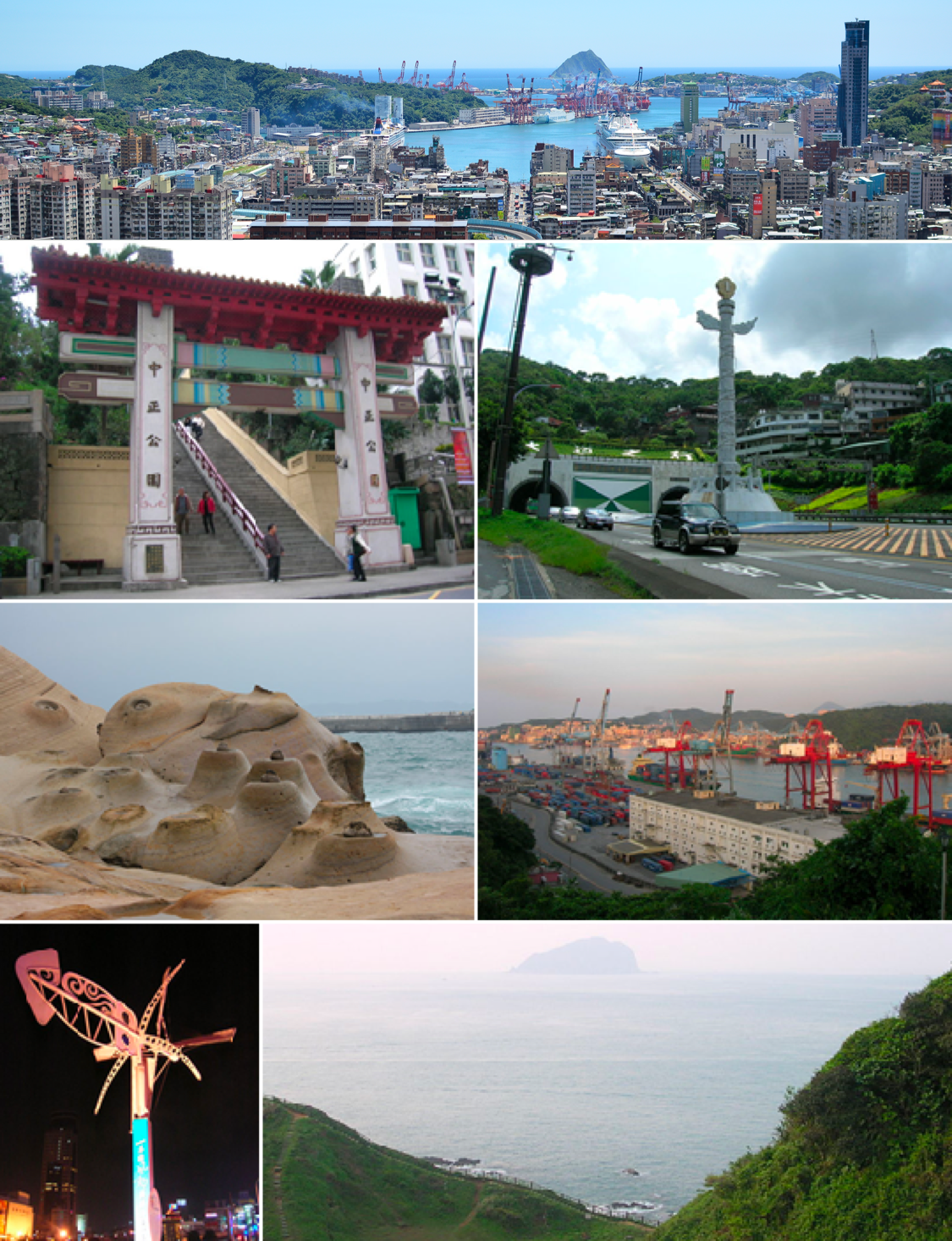
City in Taiwan
| Field | Value | |
|---|---|---|
| <!-- See Template:Infobox settlement for additional fields and descriptions --> | name | Keelung |
| official_name | Keelung City | |
| native_name | 基隆市 | |
| other_name | Jilong, Ke-lung, Chilung, San Salvador de Pacán | |
| settlement_type | City | |
| image_skyline | {{multiple image | |
| border | infobox | |
| total_width | 290 | |
| image_style | border:1; | |
| perrow | 1/2/2 | |
| image1 | 獅球嶺眺望基隆港2017.jpg | |
| caption1 | Skyline of Keelung | |
| image2 | 基隆 大武崙砲台.jpg | |
| caption2 | Dawulun Fort | |
| image3 | Panoramic View of Zhengbin Fishing Port 07.23 (2).jpg | |
| caption3 | Zhengbin Fishing Port | |
| image4 | 2018 Vessel Traffic Service Centre in Port of Keelung.jpg | |
| caption4 | Keelung Outer Harbor and Keelung Islet | |
| image5 | 和平島公園海兔岩 20190804.jpg | |
| caption5 | Heping Island Park | |
| image_flag | Flag of Keelung City.svg | |
| image_seal | Seal of Keelung.svg | |
| seal_type | Logo | |
| nickname | The Rainy Port (雨港) | |
| image_map | Taiwan ROC political division map Keelung City.svg | |
| map_caption | Location in Taiwan | |
| coordinates | ||
| iso_code | TW-KEE | |
| subdivision_type | Country | |
| subdivision_name | ||
| subdivision_type1 | Province | |
| subdivision_name1 | Taiwan Province (streamlined) | |
| subdivision_type2 | Region | |
| subdivision_name2 | Northern Taiwan | |
| subdivision_type3 | Districts | |
| subdivision_name3 | 7 | |
| established_title | Founded as La Santisima Trinidad | |
| established_date | 1626 | |
| established_title1 | Part of Taihoku Prefecture | |
| established_date1 | 17 April 1895 | |
| established_title2 | Provincial city status | |
| established_date2 | 11 November 1945 | |
| seat_type | City seat | |
| seat | Zhongzheng District | |
| governing_body | {{unbulleted list | |
| leader_title1 | Mayor | |
| leader_name1 | George Hsieh (KMT) | |
| area_total_km2 | 132.7589 | |
| area_rank | 18 of 22 | |
| population_footnotes | ||
| population_total | 362487 | |
| population_as_of | October 2023 | |
| population_density_km2 | auto | |
| population_rank | 16 of 22 | |
| timezone | National Standard Time | |
| utc_offset | +8 | |
| website | ||
| blank_name_sec1 | Symbols | |
| blank1_name_sec1 | – Bird | |
| blank1_info_sec1 | Eagle | |
| blank2_name_sec1 | – Flower | |
| blank2_info_sec1 | Common crepe myrtle | |
| blank3_name_sec1 | – Tree | |
| blank3_info_sec1 | Formosan Sweet-gum | |
| blank_name_sec2 | Abbreviations | |
| blank1_name_sec2 | English | |
| blank1_info_sec2 | Keelung/KLC | |
| blank2_name_sec2 | Chinese | |
| blank2_info_sec2 | 基隆/基市 | |
| postal_code_type | Postal code | |
| postal_code | 200–206 | |
| area_code | (0)32 |
|Keelung City Government |Keelung City Council}}
Keelung ( ; ), Chilung or Jilong ( ), officially known as Keelung City, is a major port city in northeastern Taiwan. The city is part of the Taipei–Keelung metropolitan area with neighboring New Taipei City and Taipei. Nicknamed the Rainy Port for its frequent rain and maritime role, the city is Taiwan's second largest seaport (after Kaohsiung), and was the world's 7th largest port in 1984.
In 1626, the Spanish established Fort San Salvador at present-day Keelung, an area inhabited by Taiwanese indigenous peoples. Control of the area eventually passed to the Qing dynasty. Fighting between China and Europeans around Keelung occurred in the 19th century during the First Opium War and the Sino-French War. The island of Taiwan was ceded to the Empire of Japan in 1895 after the First Sino-Japanese War; under Japanese rule the city was called Kirun. Keelung became part of Taiwan Province under the Republic of China after 1945. Administratively, the city became a first-level subdivision in 2018 after the provincial government was abolished.
Name
According to early Chinese accounts, this northern coastal area was originally called Pak-kang (). By the early 20th century, the city was known to the Western world as Kelung, as well as the variants Kiloung, Kilang and Keelung. In his 1903 general history of Taiwan, US Consul to Formosa (1898–1904) James W. Davidson related that "Kelung" was among the few well-known names, thus warranting no alternate Japanese romanization.
However, the Taiwanese people have long called the city Kelang (). While it has been proposed that this name was derived from the local mountain that took the shape of a rooster cage, it is more likely that the name was derived from the first inhabitants of the region, as are the names of many other Taiwanese cities. In this case, the Ketagalan people were the first inhabitants, and early Han settlers probably approximated "Ketagalan" with Ke-lâng (Ketagalan: ke- -an, "domain marker circumfix" + Taiwanese Hokkien ), with the noun root and the suffix part of the circumfix replaced together with the common Taiwanese Hokkien term for people, shortening the circumfix to just its prefix part.
In 1875, during the late Qing era, a new official name was given (). In Mandarin, probably the working language of Chinese government at the time, both the old and new names were likely pronounced Gīlóng (hence "Keelung").
Under Japanese rule (1895–1945), the city was also known to the west by the Japanese romanization Kiirun.
In Taiwanese Hokkien, the native language of the area, the city is called Ke-lâng. In Hanyu Pinyin, the most common romanization system for Mandarin Chinese, the name of Keelung is written as Jīlóng (the shift from g to j is a recent development in the Beijing dialect; see Old Mandarin).
History
Early history

.jpg)
Keelung was first inhabited by the Ketagalan, a tribe of Taiwanese aborigine. The Spanish expedition to Formosa in the early 17th century was its first contact with the West; by 1624 the Spanish had built San Salvador de Quelung, a fort in Keelung serving as an outpost of the Manila-based Spanish East Indies. The Spanish ruled it as a part of Spanish Formosa. Besides the native Taiwanese aborigines, the Spanish authorities from Spanish Manila settled North Taiwan (especially Keelung and Tamsui) with a mixture of Sangley Chinese (primarily Fujianese traders), Christian Japanese, native Filipinos (e.g. Kapampangan, Tagalogs, etc.) as merchants and laborers, and some Mexican Mestizos, Mulattos, Blacks, Mexican Amerindians as soldiers and laborers and a few Spanish Filipinos from Spanish Philippines and rarely Mexican Criollo Spaniards from New Spain (Mexico) as Catholic friar missionaries and colonial leaders, with the Latin Americans from New Spain (Mexico) brought over to North Taiwan from Manila through the Manila-Acapulco Galleons. From 1642 to 1661 and 1663–1668, Keelung was under Dutch control. The Dutch East India Company took over the Spanish Fort San Salvador at Santissima Trinidad. They reduced its size and renamed it Fort Noort-Hollant. The Dutch had three more minor fortifications in Keelung and also a little school and a preacher.
When Ming dynasty loyalist Koxinga successfully attacked the Dutch in southern Taiwan (Siege of Fort Zeelandia), the crew of the Keelung forts fled to the Dutch trading post in Japan. The Dutch came back in 1663 and re-occupied and strengthened their earlier forts. However, trade with Qing China through Keelung was not what they hoped it would be and, in 1668, they left after getting harassed by aboriginals.
Qing dynasty

First Opium War
Main article: First Opium War, Nerbudda incident
During the First Opium War, the British merchant ship Nerbudda shipwrecked near the port of Keelung due to a typhoon in September 1841. Several months later, another British merchantman, the brig Ann, also shipwrecked near Keelung on March 1842. Hundreds of survivors from both ships were captured by Chinese authorities and transferred to Taiwan. Two senior Chinese officials, Dahonga and Yao Ying, filed a false report to the Daoguang Emperor, claiming to have beaten off a British attack against Keelung. In October 1841, the Royal Navy sloop HMS Nimrod sailed to Keelung to search for survivors of Nerbudda, but after they found out the Chinese sent them south for imprisonment, Nimrod bombarded the city's port, destroying 27 cannon before returning to British Hong Kong. Most of the survivors—over 130 from the Nerbudda and 54 from the Ann—were summarily executed by the Chinese in August 1842.
In 1863, the Qing Empire opened up Keelung as a trading port and the city enjoyed rapid development due to the abundant commodities such as placer gold and high quality coal found in the drainage area of Keelung River. In 1875, Taipeh Prefecture was created and included Keelung. In 1878, Keelung was formed into a ting or sub-prefecture. Around the same time, the name was changed from Ke-lang () to Kilong (), which means "rich and prosperous land".
The city suffered serious damage and lost hundreds of inhabitants during an earthquake and tsunami in 1867. The earthquake had an estimated magnitude of 7.0 and was caused by movement on a nearby fault.
Sino-French War
Main article: Sino-French War, Keelung Campaign

During the Sino-French War (1884–85), the French attempted an invasion of Taiwan during the Keelung Campaign. Liu Mingchuan, who led the defence of Taiwan, recruited Aboriginals to serve alongside the Chinese soldiers in fighting against the French of Colonel Jacques Duchesne's Formosa Expeditionary Corps. The French were defeated at the Battle of Tamsui and the Qing forces pinned the French down at Keelung in an eight-month-long campaign before the French withdrew.
Empire of Japan
A systematic city development started during the Japanese Era, after the 1895 Treaty of Shimonoseki, which handed all Taiwan over to Japan. A five-phase construction of Keelung Harbor was initiated, and in by 1916 trade volume had exceeded even those of Tamsui and Kaohsiung Harbors to become one of the major commercial harbors of Taiwan.
Keelung was governed as Kīrun town, Kīrun District, Taihoku Prefecture in 1920 and was upgraded to a city in 1924. The Pacific War broke out in 1941, and Keelung became one of the first targets of Allied bombers and was nearly destroyed as a result.
Republic of China
After the handover of Taiwan from Japan to the Republic of China in October 1945, Keelung was established as a provincial city of Taiwan Province. The Keelung City Government worked with the Keelung Harbor Bureau to rebuild the city and the harbor and by 1984, the harbor became the 7th largest container harbor in the world. The city became directly governed by the Executive Yuan after Taiwan Province was streamlined in 1998 and became a de facto first level division in 2018 following the dissolution of the Taiwan Provincial Government.
Geography


Keelung City is located in the northern part of Taiwan Island. It occupies an area of 132.76 km2 and is separated from its neighboring county by mountains in the east, west and south. The northern part of the city faces the ocean and is a great deep water harbor since early times. Keelung also administers the nearby Keelung Islet as well as the more distant and strategically important Pengjia Islet, Mianhua Islet and Huaping Islet.
Climate
Keelung has a humid subtropical climate (Köppen Cfa) with a yearly rainfall average upwards of 3700 mm. It has long been noted as one of the wettest and gloomiest cities in the world; the effect is related to the Kuroshio Current. Although it is one of the coolest cities of Taiwan, winters are still short and warm, whilst summers are long, relatively dry and hot, temperatures can peek above 26 °C during a warm winter day, while it can dip below 27 °C during a rainy summer day, much like the rest of northern Taiwan. However its location on northern mountain slopes means that due to orographic lift, rainfall is heavier during fall and winter, the latter during which a northeasterly flow prevails. During summer, southwesterly winds dominate and thus there is a slight rain shadow effect. Fog is most serious during winter and spring, when relative humidity levels are also highest.
|Jan record high C = 32.1 |Feb record high C = 31.2 |Mar record high C = 33.0 |Apr record high C = 35.2 |May record high C = 37.3 |Jun record high C = 37.6 |Jul record high C = 38.8 |Aug record high C = 38.5 |Sep record high C = 37.0 |Oct record high C = 34.3 |Nov record high C = 32.4 |Dec record high C = 30.0 |year record high C = |Jan record low C = 3.9 |Feb record low C = 5.6 |Mar record low C = 3.9 |Apr record low C = 9.2 |May record low C = 13.9 |Jun record low C = 16.7 |Jul record low C = 21.4 |Aug record low C = 20.1 |Sep record low C = 17.1 |Oct record low C = 12.2 |Nov record low C = 9.7 |Dec record low C = 4.6 |year record low C =
Administration
Main article: Keelung City Government


Zhongzheng District is the seat of Keelung City which houses the Keelung City Government and Keelung City Council. The current Mayor of Keelung is George Hsieh of the Kuomintang.
Administrative divisions
Keelung has seven (7) districts:
| Map | Name | Chinese | Taiwanese | Hakka | Population (October 2023) | Area (km²) | |
|---|---|---|---|---|---|---|---|
| [[File:Districts of Keelung-Taiwan.svg | 250px]] | Zhongzheng | Tiong-chèng | Tsûng-tsang | 50,693 | ||
| Zhongshan | Tiong-san | Tsûng-sân | 45,523 | 10.5238 | |||
| Ren-ai | Jîn-ài | Yìn-oi | 41,159 | 4.2335 | |||
| Xinyi (Sinyi) | Sìn-gī | Sin-ngi | 53,399 | 10.6706 | |||
| Anle | An-lo̍k | Ôn-lo̍k | 80,452 | 18.0250 | |||
| Nuannuan | Loán-loán | Nôn-nôn | 38,455 | 22.8283 | |||
| Qidu | Chhit-tó͘ | Tshit-tù | 52,806 | 56.2659 |
Politics
Keelung City is represented in the Legislative Yuan by Lin Pei-hsiang, or Jonathan Lin, of the Kuomintang, who was elected in 2024.
Demographics
|1960|234442 |1970|324040 |1980|344867 |1990|348586 |2000|387504 |2010|381809 |2020|367264
Keelung became the “loneliest” city in Taiwan in 2024, with more than 41 percent of its households comprising one person living alone. Indigenous peoples made up 3,617 of its households.
Population growth
| Year | Population | Notes | ||
|---|---|---|---|---|
Festivals
One of the most popular festivals in Taiwan is the mid-summer Ghost Festival. The Keelung Ghost Festival is among the oldest and largest in Taiwan, dating back to 1855 after bitter clashes between rival clans, which claimed many lives before mediators stepped in. A truce was negotiated and the two sides agreed to bury their dead together and to maintain communal peace through competition in folk performances. The Keelung Ghost Festival is the first folklore custom to be included in Taiwan's national cultural heritage list. Today, the festivities are organized on a rotation basis by the city's 15 major clan associations, which are formed by people sharing the same surname. The highlight of the festival comes on the evening of the 14th day of the Ghost Month. Clan associations display elaborate floats in a parade, which culminates in the release of lit water lanterns into the sea to honor the dead. The event has become a major attraction drawing visitors from home and abroad.
Economy
When Taiwan shifted from import substitution to an export-oriented economy after the Second World War, Keelung became increasingly important for foreign trade, serving as a major logistics hub in northern Taiwan and a crucial point for international shipping. As Taiwan’s trade volume rose steadily in the 1970s, transport, warehousing, customs brokerage, and other ports logistics services expanded in Keelung, as did the shipbuilding and ship maintenance industry. The city developed quickly and by 1984, the Port of Keelung became the 7th largest container port in the world.
However, in the 1990s, Keelung Port’s overall throughput began to decline as a result of intense domestic and international competition and geographical constraints limiting its expansion. The port gradually opened to tourism. It attracted major cruise operators such as Star Cruises, Princess Cruises, Royal Caribbean, and Costa Cruises, positioning itself as a home port for cruise liners. In 2017, Keelung earned the title of Asia’s best cruise home port at the Asia Cruise Forum Jeju in South Korea. At the same event five years later, Keelung won a Special Achievement Award from Jeju-based Asia Cruise Leaders Network for its post-pandemic business recovery. In 2024, Keelung Port recorded 331 cruise calls and served 787,000 passengers. Although the figures had yet to reach the 2019 level before the COVID-19 pandemic, there was a slight increase in the number of foreign visitors.
File:Keelung-Garnot-Kelung-1894.jpg|Keelung Port Croquis (in 1894) File:Keelung Landmark Observatory 20141213.jpg|Keelung Landmark File:Keelung City and Harbor, Looking Eastward.jpg|Keelung City and Harbor, between 1860 and 1880
Education

Education in Keelung City is governed by the Department of Education of Keelung City Government.
Universities and colleges
Keelung City houses three universities and colleges, namely the National Taiwan Ocean University, Deh Yu College of Nursing and Health and Chungyu University of Film and Arts.
About 45 percent of city residents aged 15 and above have a bachelor’s degree.
High schools
Keelung has 12 senior high schools—eight public and four private, which are attended by about 7,000 students.
-
National Keelung Maritime Vocational High School
-
National Keelung Commercial & Industrial Vocational Senior High School
-
Er Xin Senior High School
-
Keelung Fu Jen Sacred Heart Senior High School
-
Kuang-Lung Home and Commerce Vocational High School
-
Pei Teh Industrial and Home Economics Vocational High School
-
Keelung Municipal Zhong Shan Senior High School
-
Keelung Municipal Anle Senior High School
Energy

Keelung City houses the only fully oil-fired power plant in Taiwan, the Hsieh-ho Power Plant, which is located in Zhongshan District. The installed capacity of the power plant is 2,000 MW.
Tourist attractions

Ports
- Badouzi Fishing Port
- Bisha Fishing Port
- Port of Keelung
- Zhengbin Fishing Port
Parks
- Zhongzheng Park
- Heping Island Park
Cultural centers
- Embrace Cultural and Creative Park
- Keelung Cultural Center
- Keelung City Indigenous Cultural Hall
Museums
-
National Museum of Marine Science and Technology
-
YM Oceanic Culture and Art Museum
Historical structures
Baimiweng Fort, Dawulun Fort, Gongzi Liao Fort, Keelung Fort Commander's Official Residence, Nuannuan Ande Temple, Pengjia Lighthouse, Uhrshawan Battery and Xian Dong Yan.
Night markets
Keelung Miaokou Night Market
Transportation
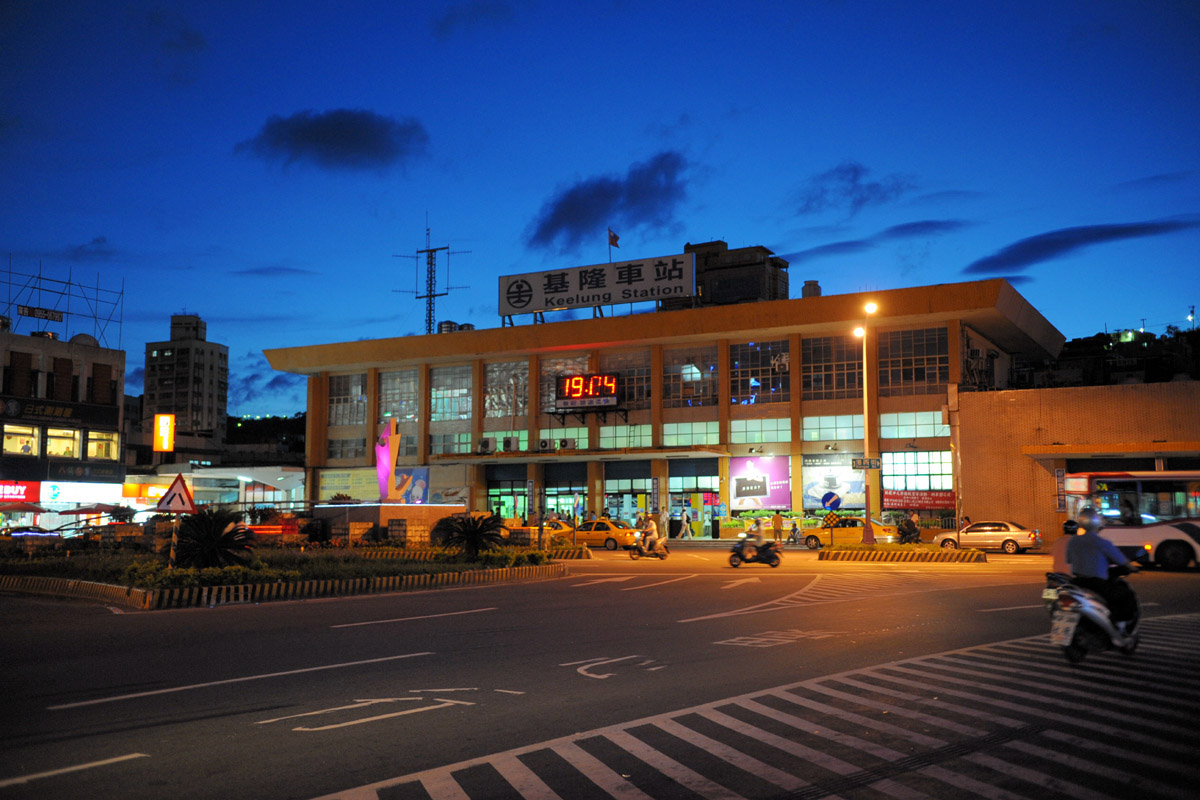

Rail
- Taiwan Railway: Keelung, Sankeng, Badu, Qidu, Baifu, Nuannuan
- Shen'ao line: Haikeguan, Badouzi
Water
Taiwan's second largest port, the Port of Keelung, is located in the city. The port serves destinations to Matsu Islands, Xiamen and Okinawa.
International relations
Main article: List of twin towns and sister cities in Taiwan (Republic of China)
Twin towns – Sister cities
Keelung is twinned with:
- Philippines Bacolod and Davao City, Philippines
- MHL Bikini Atoll, Marshall Islands
- US Campbell, California, U.S.
- US Corpus Christi, Texas, U.S.
- RSA East London, South Africa
- AUS Marrickville, New South Wales, Australia
- JPN Miyakojima, Okinawa, Japan
- US Rosemead, California, U.S.
- US Salt Lake City, Utah, U.S.
- ROK Sangju, North Gyeongsang, South Korea
- CAN Thunder Bay, Ontario, Canada
- US Yakima, Washington, U.S.
Notable people
Notable people from Keelung include:
- Chen Ti, Taiwanese tennis player
- Zero Chou, Taiwanese director
- Jiang Yi-huah, Premier of the Republic of China
- Show Lo, Taiwanese entertainer
- Danson Tang, Taiwanese Mandopop singer
- Yi Huan, Taiwanese comic creator/animator
- Feng-hsuing Hsu, American-Taiwanese computer scientist
- Hsie Zhen-Wu, Taiwanese TV presenter/lawyer
- Jaw Shaw-kong, Member of the Legislative Yuan
References
References
- link
- {{Cite Merriam-Webster. Jilong
- (1903). "Formosa under the Dutch: described from contemporary records, with explanatory notes and a bibliography of the island". Kegan Paul.
- Smith, D. Warres. (1900). "European settlements in the Far East: China, Japan, Corea, Indo-China, Straits Settlements, Malay States, Siam, Netherlands, India, Borneo, the Philippines etc.". S. Low, Marston & company.
- "Welcome to Keelung City: The Beginning". Keelung City Government.
- "Ching Dynasty". Keelung City Government.
- Terry, Thomas Philip. (1914). "Terry's Japanese Empire". Houghton Mifflin Company.
- {{R:nan:tdj
- {{holodict. 35351
- (12 November 2016). "Una excavación aporta una nueva visión de la colonización de Asia". El País.
- Andrade, Tonio. (2005). "How Taiwan Became Chinese: Dutch, Spanish and Han Colonization in the Seventeenth Century". Columbia University Press.
- [https://academic.oup.com/past/article/232/1/87/1752419 Convicts or Conquistadores? Spanish Soldiers in the Seventeenth-Century Pacific By Stephanie J. Mawson] AGI, México, leg. 25, núm. 62; AGI, Filipinas, leg. 8, ramo 3, núm. 50; leg. 10, ramo 1, núm. 6; leg. 22, ramo 1, núm. 1, fos. 408 r −428 v; núm. 21; leg. 32, núm. 30; leg. 285, núm. 1, fos. 30 r −41 v .
- Twitchett, Denis Crispin. (1978). "The Cambridge history of China, Volume 2; Volume 8". Cambridge University Press.
- "Ming Dynasty and Cheng Cheng kung's Era". Keelung City Government.
- Shepherd, John Robert. (1993). "Statecraft and political economy on the Taiwan frontier, 1600-1800". Stanford University Press.
- Shih-Shan Henry Tsai. (2009). "Maritime Taiwan: Historical Encounters with the East and the West". Routledge.
- Leonard H. D. Gordon. (2007). "Confrontation Over Taiwan: Nineteenth-Century China and the Powers". Lexington Books.
- (2016). "Reconstructing the 1867 Keelung Earthquake and Tsunami Based on Historical Documents". Terrestrial, Atmospheric and Oceanic Sciences.
- (15 November 2001). "Exhuming French history in Taiwan - Taipei Times".
- "Japanese Occupation". Keelung City Government.
- Han Cheung. (16 June 2024). "Taiwan in Time: When US bombs rained down on Keelung". Taipei Times.
- "History-Port of Keelung, Taiwan International Ports Corporation, Ltd.".
- "Introduction". Keelung City Government.
- "Beautiful Scenery".
- (7 September 2012). "Pengjia Islet gets rare attention from Ma's visit".
- (1903). "The Island of Formosa, Past and Present : history, people, resources, and commercial prospects : tea, camphor, sugar, gold, coal, sulphur, economical plants, and other productions". Macmillan.
- "Monthly Mean". [[Central Weather Bureau]].
- "氣象站各月份最高氣溫統計". Central Weather Bureau.
- "氣象站各月份最高氣溫統計(續)". Central Weather Bureau.
- "氣象站各月份最低氣溫統計". Central Weather Bureau.
- "氣象站各月份最低氣溫統計(續)". Central Weather Bureau.
- "Geography".
- "Ren-ai District Office, Keelung City".
- "[https://www.ly.gov.tw/EngPages/List.aspx?nodeid=37104 Eleventh-term Legislators]". Legislative Yuan (Taiwan). Retrieved April 17, 2025.
- "歷年底各縣市人口數 Resident Population during Year". [[Ministry of the Interior (Taiwan).
- "Statistical Tables". National Statistics, Republic of China (Taiwan).
- 基隆市政府主計處統計科. (2024-09-24). "112年基隆市統計年報".
- (2025-03-02). "Keelung Taiwan’s ‘loneliest’ city, ministry data show - Taipei Times".
- (1907). "Japanese rule in Formosa". Longmans, Green, and co..
- world, Taiwan Panorama Magazine {{!}} An international, bilingual magazine for Chinese people around the. "Bringing Together the Living and the Dead: The 170th Year of the Keelung Midsummer Ghost Festival".
- "Keelung Zhongyuan Ghost Festival-Taiwan Religious Culture Map-臺灣宗教百景".
- "鷄籠中元文化館".
- "港邊住了誰?揭開基隆港都發展起伏,看見時代變革下在地樣貌 - 雨都漫步 - 微笑台灣 - 用深度旅遊體驗鄉鎮魅力". 微笑台灣.
- "The Republic of China". Keelung City Government.
- "History-Port of Keelung, Taiwan International Ports Corporation, Ltd.".
- Gao, BY Pat. (2023-09-01). "Grand Cruise".
- 臺灣港務股份有限公司. (2010-01-01). "港務公司".
This article was imported from Wikipedia and is available under the Creative Commons Attribution-ShareAlike 4.0 License. Content has been adapted to SurfDoc format. Original contributors can be found on the article history page.
Ask Mako anything about Keelung — get instant answers, deeper analysis, and related topics.
Research with MakoFree with your Surf account
Create a free account to save articles, ask Mako questions, and organize your research.
Sign up freeThis content may have been generated or modified by AI. CloudSurf Software LLC is not responsible for the accuracy, completeness, or reliability of AI-generated content. Always verify important information from primary sources.
Report