From Surf Wiki (app.surf) — the open knowledge base
Kaziranga National Park
National park in the state of Assam, India

National park in the state of Assam, India
| Field | Value | |
|---|---|---|
| name | Kaziranga National Park | |
| iucn_category | II | |
| photo | Beauty of Kaziranga National Park.jpg | |
| photo_caption | Indian rhinoceros with a calf in Kaziranga National Park | |
| map | India Assam#India | |
| relief | 1 | |
| mapframe | Yes | |
| location | Golaghat and Nagaon districts, Assam, India | |
| nearest_city | Golaghat | |
| coords | ||
| area_km2 | 1090 | |
| established | ||
| (as national park) | ||
| governing_body | Government of Assam | |
| Government of India | ||
| embedded1 | {{designation list | embed=yes |
| designation1 | WHS | |
| designation1_date | 1985 (9th session) | |
| designation1_type | Natural | |
| designation1_criteria | ix, x | |
| designation1_number | 337 | |
| designation1_free1name | Region | |
| designation1_free1value | Asia | |
| website | https://kaziranga.nptr.in/ |
(as national park) Government of India Kaziranga National Park is a national park in the Golaghat, Sonitpur, Biswanath and Nagaon districts of the state of Assam, India. KNP has 5 ranges. The park, which hosts two-thirds of the world's Indian rhinoceroses, is a UNESCO World Heritage Site. According to a March 2018 census conducted jointly by the Forest Department of the Government of Assam and some recognized wildlife NGOs, the rhino population in Kaziranga National Park is 2,613. It comprises 1,641 adult rhinos and 385 calves.
Kaziranga National Park was declared a Tiger Reserve in 2006. The park is home to large breeding populations of Indian elephant, Wild water buffalo, and swamp deer. Kaziranga is recognized as an Important Bird Area by BirdLife International for conservation of avifaunal species which refers as the birds or types of birds found in a specific region, period, or environment. When compared with other protected areas in India, Kaziranga has achieved notable success in wildlife conservation. Located on the edge of the Eastern Himalaya biodiversity hotspot, the park combines high species diversity and visibility.
Kaziranga is a vast expanse of tall elephant grass, marshland, and dense tropical moist broadleaf forests, criss-crossed by four major rivers, including the Brahmaputra River, and the park includes numerous small bodies of water. Kaziranga has been the theme of several books, songs, and documentaries. The park celebrated its centennial in 2005 after its establishment in 1905 as a reserve forest.
Etymology
Although the etymology of the name Kaziranga is not certain, there exist a number of possible explanations derived from local legends and records. According to one legend, a girl named Rawnga, from a nearby village, and a youth named Kazi, from Karbi Anglong, fell in love. This match was not acceptable to their families, and the couple disappeared into the forest, never to be seen again, and the forest was named after them.
Testimony to the long history of the name can be found in some records, which state that once, while the Ahom king Pratap Singha was passing by the region during the seventeenth century, he was particularly impressed by the taste of fish, and on asking was told it came from Kaziranga. Kaziranga also could mean the "Land of red goats (Deer)", as the word Kazi in the Karbi language means "goat", and Rangai means "red".
History
Main article: History of Kaziranga National Park
The history of Kaziranga as a protected area can be traced back to 1904, when Mary Curzon, Baroness Curzon of Kedleston, the wife of the Viceroy of India, Lord Curzon of Kedleston, visited the area. After failing to see a single-horned rhinoceros, for which the area was renowned, she persuaded her husband to take urgent measures to protect the dwindling species, which he did by initiating planning for their protection. On 1 June 1905, the Kaziranga Proposed Reserve Forest was created with an area of 232 km2.
The Kaziranga Game Sanctuary was renamed the "Kaziranga Wildlife Sanctuary" in 1950 by P. D. Stracey, the forest conservationist, in order to rid the name of hunting connotations.
Kaziranga has been the target of several natural and man-made calamities in recent decades including major floods. Floods caused by the overflow of the river Brahmaputra, leading to significant losses of animal life. In 2024, six dead rhinos along with hundreds of deer were tallied as drowned by the rising water. An ongoing separatist movement in Assam led by the United Liberation Front of Assam (ULFA) has crippled the economy of the region, but Kaziranga has remained unaffected by the movement; indeed, instances of rebels from the United Liberation Front of Assam protecting the animals and, in extreme cases, killing poachers, have been reported since the 1980s.
Geography
Main article: Geography of Kaziranga National Park
Kaziranga is located between latitudes 26°30' N and 26°45' N, and longitudes 93°08' E to 93°36' E within three districts in the Indian state of Assam—the Kaliabor subdivision of Nagaon district, Bokajan subdivision of Karbi Anglong and the Bokakhat subdivision of Golaghat district.
The park is approximately 40 km in length from east to west, and 13 km in breadth from north to south. Kaziranga covers an area of 378 km2, with approximately 51.14 km2 lost to erosion in recent years.
The landscape consists of exposed sandbars, riverine flood-formed lakes known as, beels, and elevated regions known as, chapories, which provide retreats and shelter for animals during floods. Many artificial chapories have been built with the help of the Indian Army to ensure the safety of the animals. Kaziranga is one of the largest tracts of protected land in the sub-Himalayan belt, and due to the presence of highly diverse and visible species, has been described as a "biodiversity hotspot".
Climate


During this season, beels and nullahs (water channels) dry up. The rainy monsoon season lasts from June to September, and is responsible for most of Kaziranga's annual rainfall of 2220 mm. During the peak months of July and August, three-fourths of the western region of the park is submerged, due to the rising water level of the Brahmaputra. Each time a flood comes, 70%-80% percent of the national park is inundated for 5–10 days at a time. The flooding causes most animals to migrate to elevated and forested regions outside the southern border of the park, such as the Mikir Hills. 540 animals, including 13 rhinos and mostly hog deer perished in unprecedented floods of 2012. However, occasional dry spells create problems as well, such as food shortages and occasional forest fires.
Seasonal variations in the vegetation and habitat of the animal is notable in the park. During winter the shallow beels and nullahs (small water channel) dry up and the growth of short grasses cover up their beds. The grasses also grow around the perennial beels. With the end of the monsoon season, herbivorous animals, especially the rhinoceros, rush into these areas for grazing.
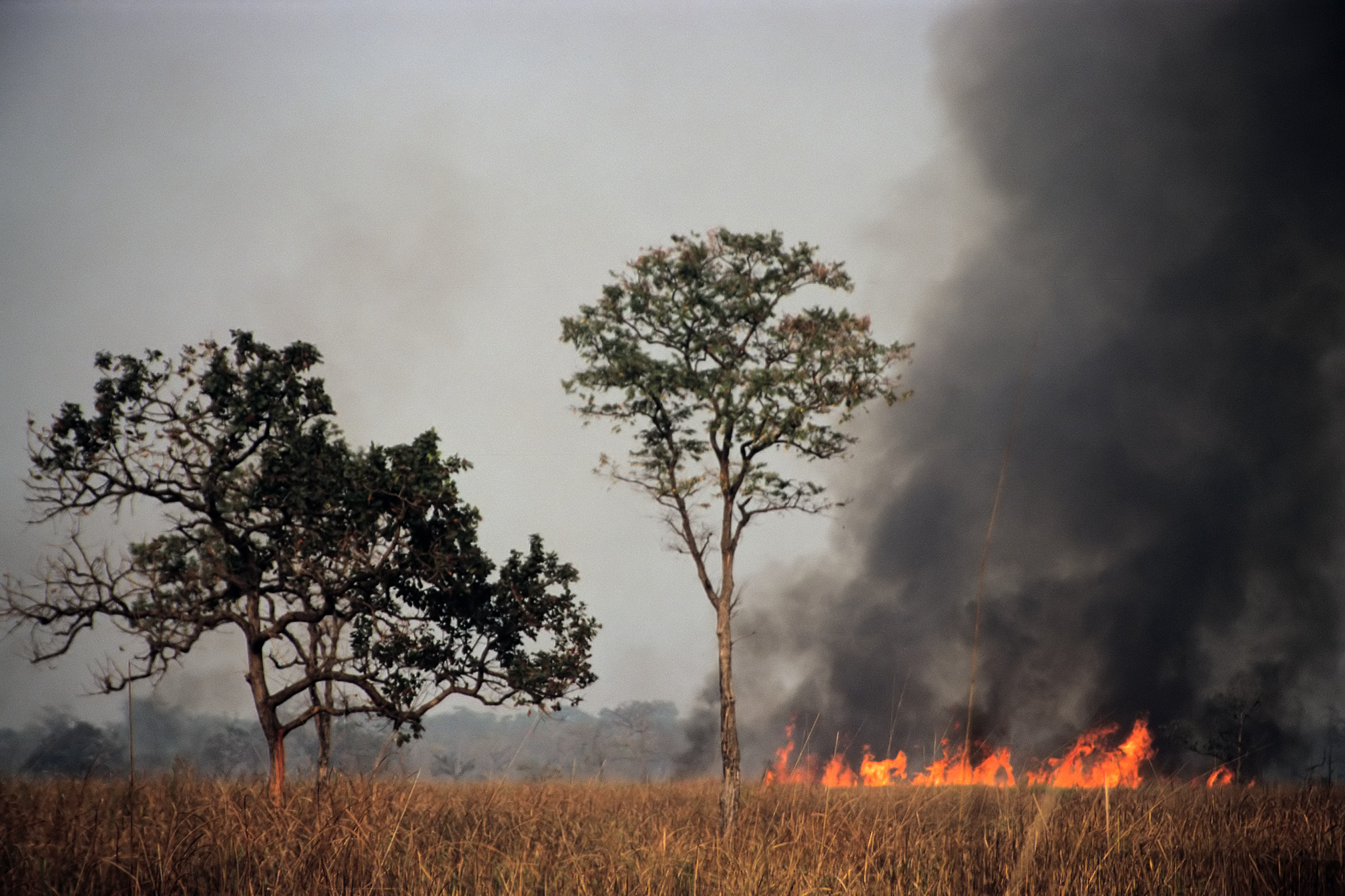
In the other parts of the park the tall coarse grasses dry up by the month of December and January and are then control burnt by the park staff. After such burning some animals begin to concentrate in the burnt patches and relish the ash and the partially burnt stems of the reeds. With few winter showers fresh grass blades shoot up in the burnt patches attracting larger number of animals to these areas. With the onset of the summer season the grasses in the burnt patches grow up quickly and the tender shoots turn into coarse blades, which no longer attract the animals. The temperature also goes up and the animals prefer to remain near the water sources especially around the numerous perennial beels and water streams inside the park. During the monsoon, the shallow beels and the nullahs start to get filled up, firstly by the monsoon showers and later by the floodwaters. The animals gradually start moving towards higher grounds, which are situated around the tree forests. When the flood water covers most of the areas the animals migrate to the nearby Karbi Anglong Hills and other adjoining areas.
Flora
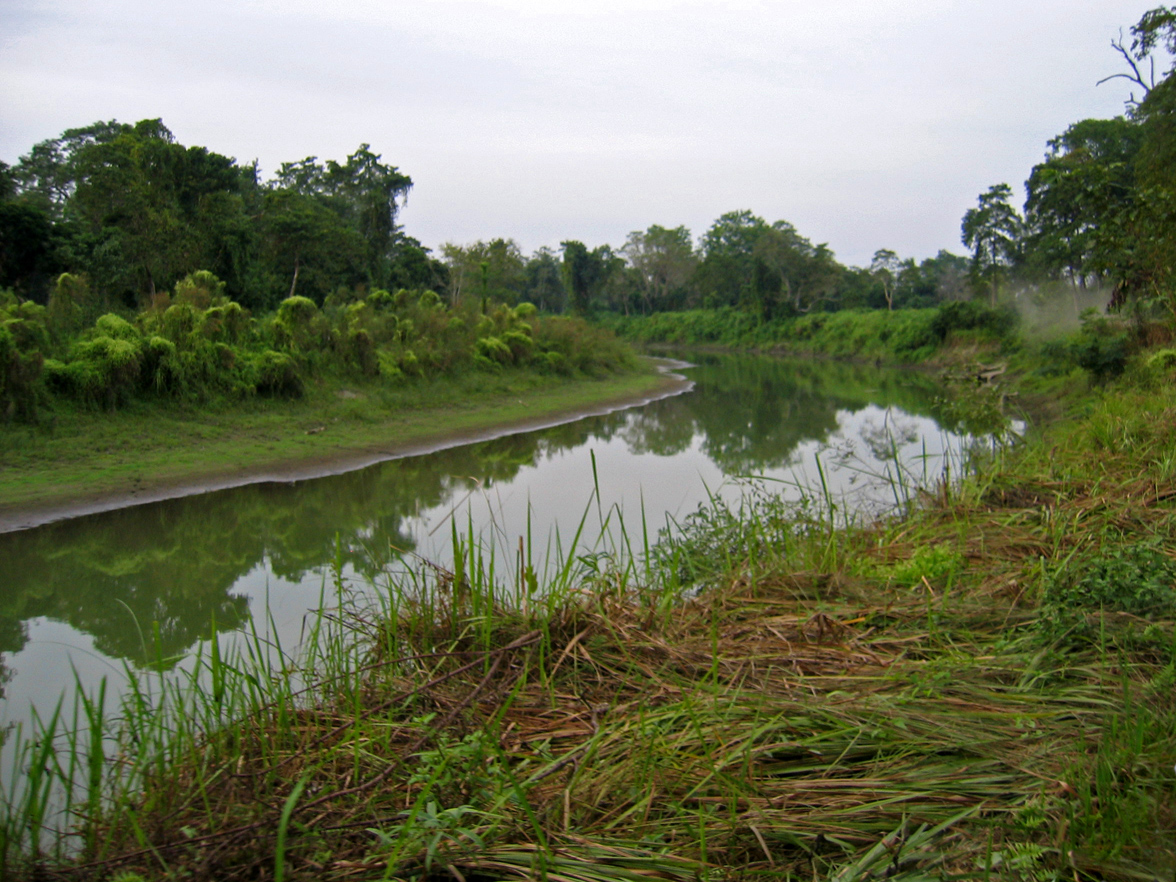
Four main types of vegetation exist in this park. These are alluvial inundated grasslands, alluvial savanna woodlands, tropical moist mixed deciduous forests, and tropical semi-evergreen forests. Based on Landsat data for 1986, percent coverage by vegetation is: tall grasses 41%, short grasses 11%, open jungle 29%, swamps 4%, rivers and water bodies 8%, and sand 6%.

Thick evergreen forests, near the Kanchanjhuri, Panbari, and Tamulipathar blocks, contain trees such as Aphanamixis polystachya, Talauma hodgsonii, Dillenia indica, Garcinia tinctoria, Ficus rumphii, Cinnamomum bejolghota, and species of Syzygium. Tropical semi-evergreen forests are present near Baguri, Bimali, and Haldibari. Common trees and shrubs are Albizia procera, Duabanga grandiflora, Lagerstroemia speciosa, Crateva unilocularis, Sterculia urens, Grewia serrulata, Mallotus philippensis, Bridelia retusa, Aphania rubra, Leea indica, and Leea umbraculifera.
There are many different aquatic floras in the lakes and ponds, and along the river shores. The invasive water hyacinth is very common, often choking the water bodies, but it is cleared during destructive floods. Another invasive species, Mimosa invisa, which is toxic to herbivores, was cleared by Kaziranga staff with help from the Wildlife Trust of India in 2005.
Fauna
Main article: Fauna of Kaziranga National Park, List of mammals in Kaziranga National Park, List of reptiles in Kaziranga National Park, List of fishes in Kaziranga National Park, List of birds in Kaziranga National Park


.jpg)
Kaziranga contains significant breeding populations of 35 mammalian species, The park has the distinction of being home to the world's largest population of the Indian rhinoceros (2,401), wild water buffalo (1,666) and eastern swamp deer (468). Significant populations of large herbivores include Indian elephants (1,940),{{Cite web |title=Elephant Survey in India |website=Ministry of Environment and Forests, Government of India
Kaziranga is one of the few wild breeding areas outside Africa for multiple species of large cats, such as Bengal tigers and Indian leopard. Kaziranga was declared a Tiger Reserve in 2007 . Other felids include the jungle cat, fishing cat and leopard cat. It is also the only place in India and the world, where a Golden tiger was spotted in the wild.
Small mammals include the rare hispid hare, Indian gray mongoose, small Indian mongooses, large Indian civet, small Indian civets, Bengal fox, golden jackal, sloth bear, Chinese pangolin, Indian pangolins, hog badger, Chinese ferret-badger, and particoloured flying squirrel. Nine of the 14 primate species found in India occur in the park. Prominent among them are the Assamese macaque, capped and golden langur, as well as the only ape found in India, the hoolock gibbon. The binturong and the Asian small-clawed otter were recorded in the park in the year 2024.


Kaziranga has been identified by Birdlife International as an Important Bird Area. It is home to a variety of migratory birds, water birds, predators, scavengers, and game birds. Birds such as the lesser white-fronted goose, ferruginous duck, Baer's pochard duck and lesser adjutant, greater adjutant, black-necked stork, and Asian openbill stork migrate from Central Asia to the park during winter. Riverine birds include the Blyth's kingfisher, white-bellied heron, Dalmatian pelican, spot-billed pelican, Nordmann's greenshank, and black-bellied tern. Birds of prey include the rare eastern imperial, greater spotted eagle, white-tailed eagle, Pallas's fish eagle, grey-headed fish eagle and the lesser kestrel.
Kaziranga was once home to seven species of vultures, but the vulture population reached near extinction, supposedly by feeding on animal carcasses containing the drug Diclofenac. Only the Indian vulture, slender-billed vulture, and white-rumped vulture have survived. Game birds include the swamp francolin, Bengal florican, and pale-capped pigeon.
Other families of birds inhabiting Kaziranga include the great pied hornbill and wreathed hornbill, Old World babblers such as Jerdon's and marsh babblers, weaver birds such as the common baya weaver, threatened Finn's weavers, and bristled grassbird. Other threatened species include the black-breasted parrotbill
Two of the largest snakes in the world, the reticulated python and Indian rock python, as well as the longest venomous snake in the world, the king cobra, inhabit the park. Other snakes found here include the Indian cobra, monocled cobra, Russell's viper, and the common krait. Monitor lizard species found in the park include the Bengal monitor and the Asian water monitor. Other reptiles include fifteen species of turtle, such as the endemic Assam roofed turtle and one species of tortoise, the brown tortoise. 42 species of fish are found in the area, including the Tetraodon.
Governance
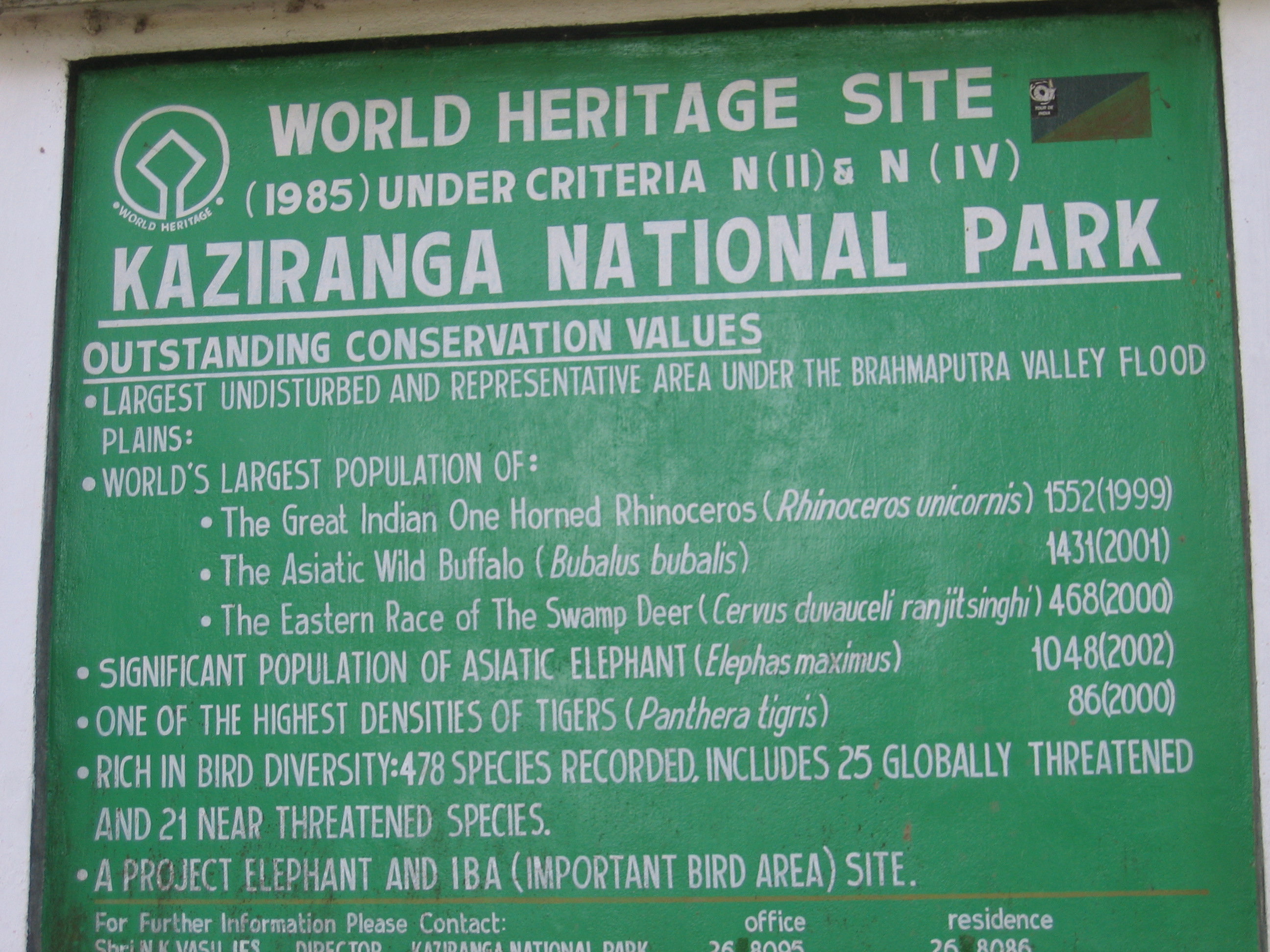
The Wildlife wing of the forest department of the Government of Assam, headquartered at Bokakhat, is responsible for the administration and management of Kaziranga. The administrative head of the park is the director, who is a Chief Conservator of Forests-level officer. A divisional Forest Officer is the administrative chief executive of the park. He is assisted by two officers with the rank of Assistant Conservator of Forests. The park area is divided into five ranges, overseen by Range Forest Officers. The five ranges are the Burapahar (HQ: Ghorakati), Western (HQ: Baguri), Central (HQ: Kohora), Eastern (HQ: Agaratoli) and Northern (HQ: Biswanath). Each range is further sub-divided into beats, headed by a forester, and sub-beats, headed by a forest guard.
The park receives financial aid from the State Government as well as the Ministry of Environment, Forests & Climate Change of Government of India under various Plan and Non-Plan Budgets. Additional funding is received under the Project Elephant from the Central Government. Most of this funding is used in paying wages and salaries of the staff and in anti-poaching measures, only a little sum is left behind for the development of the park. In spite of the funding from the government the park faces shortage of funds. In 1997–1998, a grant of US$ 100,000 was received under the Technical Co-operation for Security Reinforcement scheme from the World Heritage Fund.
Local people get employment from the park in the form of labour and allied activities. Labour requirements for the park include labour for anti-poaching activities and construction of bridges, culverts, etc. Approximately 100 to 200 people are hired per range for removal of Mimosa, a weed which is harmful for the herbivores. As of 2007 the park authorities have also hired security guards to protect the tourist jeeps inside the park. The park has developed a very good network of intelligence throughout the villages surrounding the park. There are key informants in every village, which reports about the movement of poachers and are monetarily compensated for information they provide to the park authorities.
Conservation management
Main article: Conservation Management of Kaziranga National Park
Kaziranga National Park has been granted maximum protection under the Indian law for wildlife conservation. Various laws, which range in dates from the Assam Forest Regulation of 1891 and the Biodiversity Conservation Act of 2002 have been enacted for protection of wildlife in the park. Poaching activities, particularly of the rhinoceroses for its horn, has been a major concern for the authorities. Between 1980 and 2005, 567 rhinoceroses were hunted by poachers. Following a decreasing trend for the past few years, 18 Indian rhinoceroses were killed by poachers in 2007. Reports have suggested that there are links between these poaching activities and funding of terrorist organizations.
Preventive measures such as construction of anti-poaching camps and maintenance of existing ones, patrolling, intelligence gathering, and control over the use of firearms around the park have reduced the number of casualties. Since 2013, the park used cameras on drones which are monitored by security guards to protect the rhino from armed poachers.
Perennial flooding and heavy rains have resulted in the death of wild animals and damage to the conservation infrastructures.{{Cite report Several corridors have been set up for the safe passage of animals across National Highway–37 which skirts around the southern boundary of the park.
Water pollution due to run-off from pesticides from tea gardens, and run-off from a petroleum refinery at Numaligarh, pose a hazard to the ecology of the region. Grassland management techniques, such as controlled burning, are effected annually to avoid forest fires.
Ecotourism


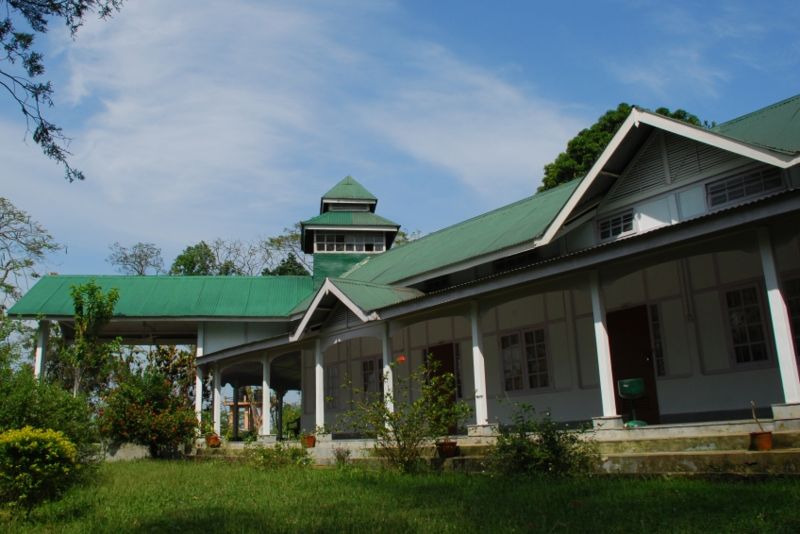
Observing the wildlife, including birding, is the main visitor activity in and around the park. Guided tours by elephant or Jeep are available. Hiking is prohibited in the park to avoid potential human-animal conflicts. Observation towers are situated at Sohola, Mihimukh, Kathpara, Foliamari, and Harmoti for wildlife viewing. The snow-covered Lower Himalayan peaks frame the park's landscape of trees and grass interspersed with numerous ponds. An interpretation centre is at the Bagori range of Kaziranga to help visitors learn more about the park. Increase in tourist inflow has led to the economic empowerment of the people living at the fringes of the park, by means of tourism related activities, encouraging a recognition of the value of its protection. A survey of tourists notes that 80 percent found rhino sightings most enjoyable and that foreign tourists were more likely to support park protection and employment opportunities financially, while local tourists favored support for veterinary services. Recently set up Kaziranga National Orchid and Biodiversity Park established at Durgapur village is a latest attraction to the tourists. It houses more than 500 species of orchids, 132 varieties of sour fruits and leafy vegetables, 12 species of cane, 46 species of bamboo and a large varieties of local fishes.
Tourism benefits the people living in the fringe of the park and helps in empowering the local people. As of 2007, about 35 hotels or lodges of various kinds located just outside the park, four of which run by the government. They employ about 300 people. Some families also offer home stay facilities just outside the park so that the tourists may get a taste of the local life and host can drive and guide visitors into the park. There are also 26 shops selling souvenirs and locally handmade woven cloth that are owned and/or managed by local community members. The Ministry of Tourism, Government of India and the United Nations Development Programme (UNDP) jointly support rural tourism in village of Durgapur, which falls in the periphery of the Kohora range of Kaziranga along with other initiatives at 31 sites across India.
Controversy
In 2017, Kaziranga came under severe criticism after a BBC News documentary revealed a hardliner strategy to conservation, reporting the killing of 20 people a year in the name of rhino conservation. As a consequence of this reporting, BBC News was banned from filming in protected areas in India for 5 years. While several news reports claimed that BBC had apologized for the documentary, the BBC stood by its report, with its director general, Tony Hall, writing in a letter to Survival International that "the letter 'in no way constitutes an apology for our journalism. As a response to the report, researchers in India have provided more nuanced understanding of the matter, calling out BBC for the carelessness of its journalism, but also pointing to the problems of conservation in Kaziranga and questioning whether shoot-at-sight has been a useful conservation strategy at all.
Economic valuation
Kaziranga Tiger Reserve estimated its annual flow benefits to be 9.8 billion rupees (0.95 lakh / hectare). Important ecosystem services included habitat and refugia for wildlife (5.73 billion), gene-pool protection (3.49 billion), recreation value (21 million), biological control (150 million) and sequestration of carbon (17 million).
In popular culture
Kaziranga has been the theme of, or has been mentioned in, several books, songs, and documentaries. The park first gained international prominence after Robin Banerjee, a physician-turned-photographer and filmmaker, produced a documentary titled Kaziranga, which was aired on television in Berlin in 1961 and became a runaway success.
Kaziranga Trail, a children's storybook by Arup Dutta about rhinoceros poaching in the national park, won the Shankar's Award. The Assamese singer Bhupen Hazarika refers to Kaziranga in one of his songs. The BBC conservationist and travel writer, Mark Shand, authored a book and the corresponding BBC documentary Queen of the Elephants, based on the life of the first female mahout in recent times—Parbati Barua of Kaziranga. The book went on to win the 1996 Thomas Cook Travel Book Award and the Prix Litteraire d'Amis, providing publicity simultaneously to the profession of mahouts as well as to Kaziranga.
References
Further information
- Jaws of Death—a 2005 documentary by Gautam Saikia about Kaziranga animals being hit by vehicular traffic while crossing National Highway 37, winner of the Vatavaran Award.
References
- "Kaziranga National Park and Tiger Reserve". our My India and Peak Adventure Tour.
- Bhaumik, Subir. (2007). "Assam rhino poaching 'spirals'". BBC News.
- Dutt, A.. (2018). "Kaziranga National Park's rhino population rises by 12 in 3 years".
- "Welcome to Kaziranga".
- Official Support Committee, Kaziranga National Park. (2009). "History-Legends". AMTRON.
- Mathur, V.B.. "UNESCO EoH Project_South Asia Technical Report No. 7–Kaziranga National Park". UNESCO.
- (2005). "Kaziranga's centenary celebrations".
- Bhaumik, S.. (2005). "Kaziranga's centenary celebrations". BBC News.
- Talukdar, S.. (2005). "Waiting for Curzon's kin to celebrate Kaziranga". [[The Hindu]].
- Oberai, C. P., & Bonal, B. S. (2002). ''[http://www.rhinoresourcecenter.com/pdf_files/137/1370074623.pdf Kaziranga, the rhino land]''. Delhi: B.R. Pub. Corp. Retrieved 29 August 2020.
- (2016). "Rapid Assessment of Recent Flood Episode in Kaziranga National Park, Assam Using Remotely Sensed Satellite Data". Current Science.
- [http://www.unep-wcmc.org/sites/wh/kazirang.html Kaziranga Factsheet (Revised)] {{Webarchive. link. (18 July 2008, [[UNESCO]], Retrieved on 2007-02-27)
- [https://www.bbc.com/news/articles/ckrg1lr4935o "Assam floods: India national park flooding kills more than 130 animals"]
- Deka, A. K.. "ULFA & THE PEACE PROCESS IN ASSAM". ipcs.org.
- (1972). "Kaziranga WildLife Sanctuary, Assam. A brief description and report on the census of large animals". Journal of the Bombay Natural History Society.
- Mathur, V.B.. "UNESCO EoH Project_South Asia Technical Report–Kaziranga National Park". UNESCO.
- "Kaziranga National Park".
- "State of Conservation of the World Heritage Properties in the Asia-Pacific Region –Kaziranga National Park". UNESCO.
- Phatarphekar, P. N.. (2005). "Horn of Plenty".
- "Kaziranga climate: Average Temperature, weather by month, Kaziranga weather averages - Climate-Data.org".
- "UN Kaziranga Factsheet". [[UNESCO]].
- (2012). "Assam flood: Over 500 animals dead in Kaziranga".
- AFP English Multimedia Wire. (2006). "Rare rhinos in India face food shortage".
- (2003). "Section II: Periodic Report on the State of Conservation of Kaziranga National Park, India". UNESCO.
- Talukdar, B. (1995). '' Status of Swamp Deer in Kaziranga National Park''. Department of Zoology, Guwahati University, Assam.
- Kushwaha, S.& Unni, M. (1986). Applications of remote sensing techniques in forest-cover-monitoring and habitat evaluation—a case study at Kaziranga National Park, Assam, in, Kamat, D.& Panwar, H.(eds), Wildlife Habitat Evaluation Using Remote Sensing Techniques. [[Indian Institute of Remote Sensing]] / [[Wildlife Institute of India]], Dehra Dun. pp. 238–247
- Jain, S.K. and Sastry, A.R.K. (1983). ''Botany of some tiger habitats in India''. Botanical Survey of India, Howrah. p71.
- "Indian Flooding Update – Hyacinth, Hyacinth Everywhere and no Water to Drink". International Fund for Animal Welfare.
- ''[http://www.wildlifetrustofindia.org/html/reports/Silent_Stranglers.pdf Silent Stranglers, Eradication of Mimosas in Kaziranga National Park, Assam] {{webarchive. link. (4 March 2007''; Vattakkavan et al.; Occasional Report No. 12, [[Wildlife Trust of India]], pp. 12–13. Retrieved on 2007-02-26)
- "wildlife in Kaziranga National Park". Kaziranga National Park Authorities.
- Hussain, Syed Zakir. (10 August 2006). "Kaziranga adds another feather – declared tiger reserve". Indo-Asian News Service.
- "Report on the Regional Meeting for India and Nepal IUCN/ SSC Asian Rhino Specialist Group (AsRSG)".
- 'Wild buffalo census in Kaziranga', The Rhino Foundation for Nature in NE India, Newsletter No. 3, June 2001
- Rashid, P.. (28 August 2005). "Here conservation is a way of life". [[The Tribune (Chandigarh).
- "Kaziranga National Park–Animal Survey". Kaziranga National Park Authorities.
- Choudhury, A.U. (2010) The vanishing herds: the wild water buffalo. Gibbon Books, Rhino Foundation, CEPF & COA, Taiwan, Guwahati, India
- (12 May 2022). "Golden tiger spotted in Assam's Kaziranga National Park {{pipe}} WATCH".
- (21 January 2024). "Two new mammalian species added to Kaziranga's fauna".
- "Wildlife in Kaziranga National Park". Kaziranga National Park Authorities.
- (1999). "Birds of Kaziranga National Park, India". Oriental Bird Club.
- Choudhury, A.U. (2003) Birds of Kaziranga: a check list. Gibbon Books & Rhino Foundation, Guwahati, India
- (February 2019). "Rapid population declines of Egyptian vulture (''Neophron percnopterus'') and red-headed vulture (''Sarcogyps calvus'') in India". Animal Conservation.
- (2003). "Section II: Periodic Report on the State of Conservation of Kaziranga National Park, India". [[UNESCO]].
- Mathur, V.B.. "UNESCO EoH Project_South Asia Technical Report No. -7 -Kaziranga National Park". UNESCO.
- (6 February 2008). "Another rhino killed in Kaziranga". [[The Times of India]].
- (September 2010). "Poachers kill Indian Rhino". The New York Times.
- Roy, A.. (2006). "Poaching for bin Laden, in Kaziranga". [[The Telegraph (Kolkata).
- "Kaziranga National Park–Heroes of Kaziranga". Kaziranga National Park Authorities.
- (2007). "Two poachers killed in Kaziranga – Tight security measures, better network yield results at park". The Telegraph.
- (2013). "India use drones to protect rhinos from poachers".
- Bonal, BS & Chowdhury, S (2004), ''Evaluation of barrier effect of National Highway37 on the wildlife of Kaziranga National Park and suggested strategies and planning for providing passage: A feasibility report to the Ministry of Environment & Forests'', Government of India.
- (2007). "Information Safari". [[The Telegraph (Kolkata).
- (2003). "A pilot survey of nature-based tourism at Kaziranga National Park and World Heritage Site, India". American Museum of Natural History.
- "Kaziranga National Orchid Park".
- (2017). "Kaziranga: The park that shoots people to protect rhinos". BBC News.
- Pinjarkar, V. "Kaziranga report gets BBC banned for 5 years". The Economic Times.
- "BBC boss stands by Kaziranga killings exposé".
- "Grasslands of Grey: The Kaziranga Model Isn't Perfect – But Not in the Ways You Think". The Wire.
- (2017-03-02). "Shoot-at-sight is not unjustified. But that alone can't stop poaching at Kaziranga".
- (January 2015). "Economic Valuation of Tiger Reserves in India: A Value+ Approach". Indian Institute of Forest Management.
- [http://golaghat.gov.in/PERSONAL.HTM Personalities of Golaghat district]. Retrieved on 2007-03-22 {{webarchive. link. (2007)
- [http://golaghat.gov.in/rabin.htm Robin Banerjee]. Retrieved on 2007-03-22 {{webarchive. link. (2007)
- ''Lover of the wild, Uncle Robin no more''. [[The Sentinel (Gauhati)]] 6 August 2003
- Khorana, Meena. (1991). ''The Indian Subcontinent in Literature for Children and Young Adults''. Greenwood Press
- Bordoloi, A.. (2005). "Wild at heart". [[The Telegraph (Kolkata).
This article was imported from Wikipedia and is available under the Creative Commons Attribution-ShareAlike 4.0 License. Content has been adapted to SurfDoc format. Original contributors can be found on the article history page.
Ask Mako anything about Kaziranga National Park — get instant answers, deeper analysis, and related topics.
Research with MakoFree with your Surf account
Create a free account to save articles, ask Mako questions, and organize your research.
Sign up freeThis content may have been generated or modified by AI. CloudSurf Software LLC is not responsible for the accuracy, completeness, or reliability of AI-generated content. Always verify important information from primary sources.
Report