From Surf Wiki (app.surf) — the open knowledge base
Kasaragod district
District in Kerala, India

District in Kerala, India
| Field | Value | ||||
|---|---|---|---|---|---|
| name | Kasaragod district | ||||
| image_skyline | {{Photomontage | ||||
| photo1a | Ranipuram hill.jpg | ||||
| photo2a | Chandragiri River.jpg | ||||
| photo2b | Bekal Fort Kasargod.jpg | ||||
| photo3a | Kottappuram-nileshwaram-house-boat.jpg | ||||
| photo3b | Bakel Fort Beach Kasaragod4.jpg | ||||
| photo4a | Chandragiri Fort, Kerala.jpg | ||||
| spacing | 1 | ||||
| color_border | black | ||||
| color | white | ||||
| size | 215 | ||||
| foot_montage | Clockwise from top: | ||||
| Ranipuram, Bekal Fort, Bekal beach, Chandragiri fort, Kavvayi Backwaters at Nileshwaram, Chandragiri River at Kanathur near Kasaragod | |||||
| nickname | The Land of Seven Languages | ||||
| image_map | India Kerala Kasaragod district.svg | ||||
| mapframe | yes | ||||
| mapframe-point | none | ||||
| map_caption | Location in Kerala | ||||
| coordinates | |||||
| subdivision_type | Country | ||||
| subdivision_name | India | ||||
| subdivision_type1 | State | ||||
| subdivision_name1 | Kerala | ||||
| established_title | Established | ||||
| established_date | |||||
| seat_type | Headquarters | ||||
| seat | Collectorate, Kasaragod | ||||
| founder | Government of Kerala | ||||
| parts_type | Subdivisions | ||||
| parts | {{Collapsible list | ||||
| title | Revenue Divisions: 2 | ||||
| 1 | Kasaragod | ||||
| 2 | Hosdurg | ||||
| title | Taluks: 4 | ||||
| 1 | Kasaragod | ||||
| 2 | Hosdurg | ||||
| 3 | Manjeshwaram | ||||
| 4 | Vellarikundu | ||||
| government_type | District administration | ||||
| leader_title | District Collector | ||||
| leader_name | K Inbasekar IAS | ||||
| leader_title1 | District Police Chief | ||||
| leader_name1 | BV Vijaya Bharath Reddy IPS | ||||
| leader_title2 | MP | ||||
| leader_title3 | MLAs | ||||
| leader_name2 | Rajmohan Unnithan | ||||
| leader_name3 | |||||
| unit_pref | Metric | ||||
| area_total_km2 | 1992 | ||||
| area_rank | 13th | ||||
| population_total | 1,390,894 | ||||
| population_as_of | 2018 | ||||
| population_footnotes | |||||
| population_density_km2 | 698 | ||||
| demographics_type1 | Demographics | ||||
| demographics1_title1 | Language (2011) | ||||
| demographics1_info1 | {{unbulleted list | 82.7% Malayalam | 8.8% Tulu | 4.2% Kannada | 4.3% Others |
| demographics1_title2 | Religion (2011) | ||||
| demographics1_info2 | |||||
| demographics_type2 | Human Development | ||||
| demographics2_title1 | Sex ratio (2011) | ||||
| demographics2_info1 | 1080 ♀/1000 ♂ | ||||
| demographics2_title2 | Literacy (2011) | ||||
| demographics2_info2 | 90.09% | ||||
| blank_info_sec1 | 0.760 () | ||||
| blank_name_sec1 | HDI (2005) | ||||
| blank_info_sec2 | |||||
| blank_name_sec2 | |||||
| timezone1 | IST | ||||
| utc_offset1 | +5:30 | ||||
| postal_code_type | PIN | ||||
| postal_code | 671121 | ||||
| area_code | 0499 | ||||
| area_code_type | Telephone code | ||||
| iso_code | IN-KL | ||||
| registration_plate | KL-14, KL-60, KL-79 | ||||
| website |
Ranipuram, Bekal Fort, Bekal beach, Chandragiri fort, Kavvayi Backwaters at Nileshwaram, Chandragiri River at Kanathur near Kasaragod | mapframe-point = none
Revenue villages: 128 (INC) Kasaragod district ( (, , ; English: Kassergode) is one of the 14 districts in the southern Indian state of Kerala. Its northern border Thalappady is located just 9 km south to Ullal, which is the southernmost portion of the major port city Mangalore, on the southwestern Malabar coast of India.it is located most northern part of kerala.
Kasaragod is the northernmost district of Kerala and is also known as Saptha Bhasha Sangama Bhoomi (The place where Seven languages meets)
The district is situated on the rich biodiversity of the Western Ghats. It was a part of the Kannur district of Kerala until 24 May 1984. It also remains the last formed district of kerala to date. The district is bounded by Dakshina Kannada district to the north, Western Ghats to the northeast, Kodagu district to the southeast, Kannur district to the south, and the Arabian Sea to the west. Kasaragod district has the maximum number of rivers in Kerala - 12.
Kasaragod town is located on the estuary where the Chandragiri River, which is also the longest river in the district, empties into Arabian Sea. Kasaragod is home to several forts which include Arikady fort, Bekal Fort, Chandragiri Fort, and Hosdurg Fort. Bekal Fort is also the largest fort in Kerala. The historic hill of Ezhimala is located on the southern portion of Kavvayi Backwaters of Nileshwaram. Talakaveri, which is home to Talakaveri Wildlife Sanctuary where the 805 km long Kaveri River originates, is located closer to Ranipuram in Kerala-Karnataka border. Robert Caldwell describes the extent of Malayalam in the late 19th century as extending from Chandragiri fort and Chandragiri River in the north to Neyyar River beyond Thiruvananthapuram in the south.
Tulunadu, where Tulu language is traditionally spoken, is said to be bound on the south by the Chandragiri river and fort, thus including Kasaragod city within the Tulunadu region. Historian N. Shyam Bhat states that at present, the Tulu nadu can linguistically be said to extend to the south up to the river Chandragiri or Payaswini, and culturally up to the Kavvayi river in the south, as the region between the Chandragiri and Kavai (Kavvayi) rivers presents the characteristics of a twilight zone between the Malayalam and Tulu speaking areas.
Kasargod is also the first district in India to have official symbols-official tree, flower, bird, species.
Etymology
From the Kannada words kāsara "Strychnos nux vomica" and gōḍe "fort". Until the 16th century CE, Kasaragod town was known by the name Kāññirakkōṭŭ from Malayalam kāññiram "Strychnos nux vomica" and kōṭŭ "fort".
History
Main article: History of Kasaragod
Ancient period
The Ancient Tamil Works of Sangam Age records that the area covering the district was part of Puzhinadu, which consists of the coastal belt from Kozhikode to Mangalore. Politically the area was part of the Ezhimala Kingdom with its Capital at Ezhimala in present day Kannur district. The most famous King of Ezhimala was Nannan whose kingdom extended up to Gudalur and northern parts of Coimbatore. Poozhinad, along with Karkanad which included the eastern regions of Ezhimala dynasty (Wayanad-Gudalur region with some portions of Kodagu), had its capital at Ezhimala. The Mooshaka Kings were considered descendants of Nannan. By the 14th century, Mooshaka Kingdom was known as Kolathirinad and the Rulers as Kolathiris. The Kolathunad Kingdom at the peak of its power reportedly extended from Netravati River (Mangalore) in the north to Korapuzha (Kozhikode) in the south with Arabian Sea on the west and Kodagu hills on the eastern boundary, also including the isolated islands of Lakshadweep in Arabian Sea.
Medieval period
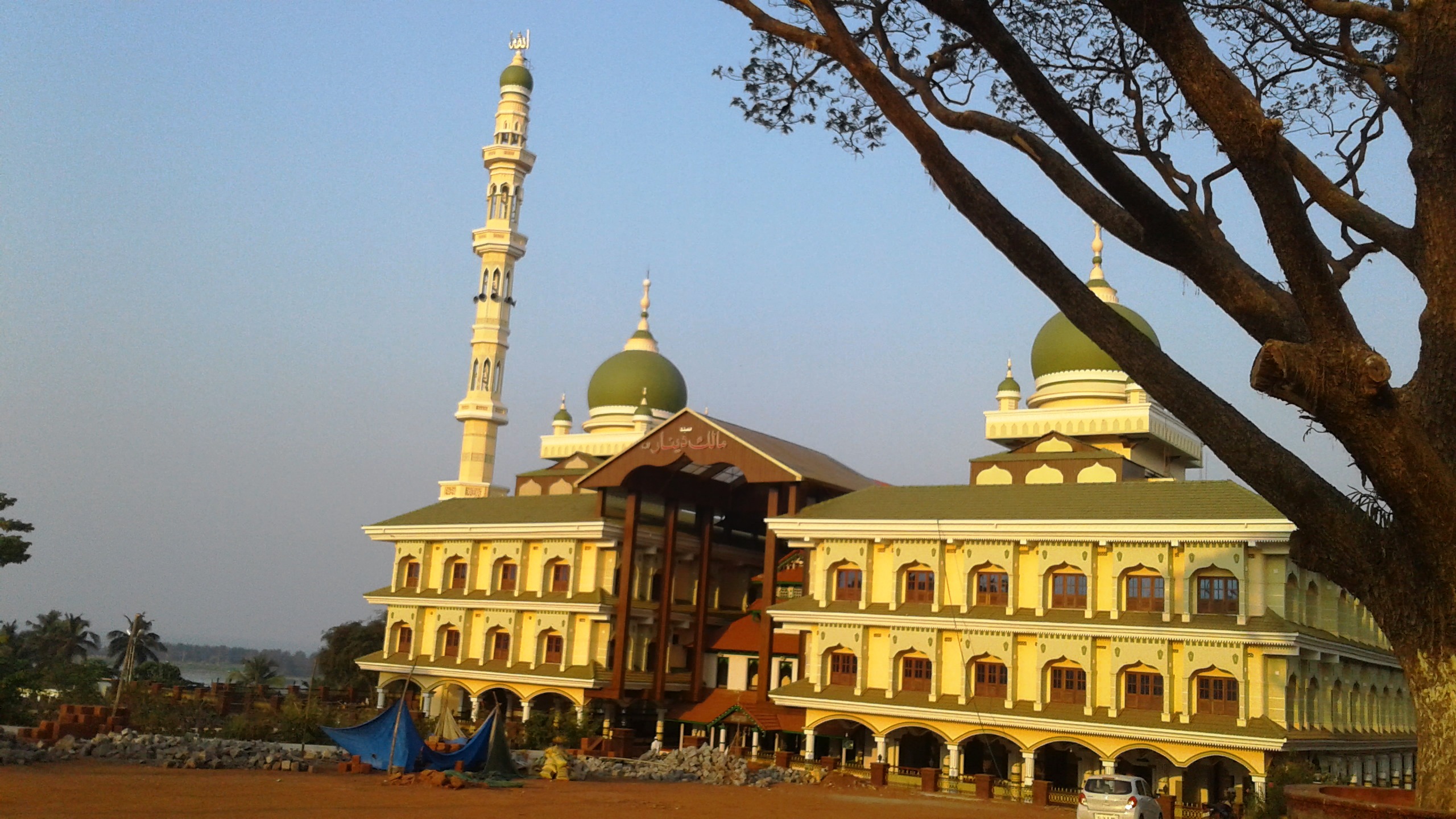


Ramacharitam, probably the oldest literary work written in Old Malayalam, which dates back to the 12th century CE, is thought to have been written in Kasargod district as its manuscripts were discovered from Nileshwaram and the poem mentions about Ananthapura Lake Temple in Kumbla in detail. Kasaragod was known to the Arabs by the name Harkwillia. Malik Dinar Mosque at Kasaragod town is one of the oldest mosques in the Indian subcontinent. According to Qissat Shakarwati Farmad, the Masjids at Kodungallur, Kollam, Madayi, Barkur, Mangalore, Kasaragod, Kannur, Dharmadam, Panthalayini, and Chaliyam, were built during the era of Malik Dinar, and they are among the oldest Masjids in the Indian subcontinent. It is believed that Malik Dinar died at Thalangara in Kasaragod town.
Many Arab travelers visiting Kerala between the 9th and the 14th centuries visited Kasaragod, being an important trade centre then. Duarte Barbosa, a Portuguese traveler who visited Kumbla, near Kasargod in 1514 recorded that rice being exported for coir to Maldives. According to Barbosa, the people in the southwestern Malabar coast of India from Chandragiri in the north to Kanyakumari in the south spoke a unique language, which they called as "Maliama" (Malayalam).
Until the 16th century CE, Kasargod town was known by the name Kanhirakode (may be by the meaning, 'The land of Kanhira Trees') in Malayalam.{{cite book
The Kolathiri Dominion emerged into independent 10 principalities i.e., Kadathanadu (Vadakara), Randathara or Poyanad (Dharmadom), Kottayam (Thalassery), Nileshwaram, Iruvazhinadu (Panoor), Kurumbranad etc., under separate royal chieftains due to the outcome of internal dissensions. Many portions of the present-day Hosdurg taluk (Kanhangad) and Vellarikundu were parts of the Nileshwaram dynasty, who were relatives to both Kolathunadu as well as Zamorin of Calicut, in the early medieval period. The areas north to the Chandragiri river (present-day Taluks of Manjeshwaram and Kasaragod) were ruled by the Kumbala dynasty. According to local legends, the region between Talapadi and Kavvayi rivers which constituted the erstwhile Kasaragod taluk, consisted of 32 Tulu and 32 Malayalam villages.
Kannada kingdoms focused on Kasaragod in the 16th century CE. The Vijayanagara Empire attacked and annexed Kasaragod from the Kolathiri Raja with Nileshwaram as one of the capital in the 16th century. During the decline of the Vijayanagara Empire, the administration of this area was vested with Ikkeri Nayakas. At the onset of collapse of the Vijayanagara empire, Venkappa Nayaka declared independence to Ikkery. Kumbla, Chandragiri, and Bekal are considered to be the chain of forts constructed or renovated by Shivappa Nayaka.
The Chandragiri Fort is built on the southern bank of the estuary of Chandragiri River, just opposite to Kasaragod town. The Bekal Fort at Bekal, Pallikkara, which is situated in the midway between Kasaragod and Kanhangad, and is also largest fort in Kerala, was built in 1650 by Shivappa Nayaka of Keladi.
Modern period


Kasargod is famous for its ancient forts.
Francis Buchanan, the family doctor of Arthur Wellesley, visited Kasaragod in 1800. In his travelogue, he recorded information on places like Athiraparambu, Kavvai, Nileshwaram, Bekal, Chandragiri and Manjeshwar. Hosdurg and Vellarikundu is part of Kolathunadu (south of Chandragiri River) and Kasargod and Manjeshwaram is in the Tulu Nadu region (north of Chandragiri River). On 19 January 1801, Francis speaks of visiting a Siva temple at Pulla (Pallikere), beyond which, the country rises into open rising lands, all the way to Chandragiri river and Chandragiri fort, which he describes as the northern border of the Malayala. He says that the country on the north of the Chandragiri fort and river is called by Hindus as Tulunadu, the Tulu country. According to Stuart (1895) “The Kasargod taluk originally formed the southern portion of the ancient Tulunadu kingdom and was separated from the kingdom of Kerala by the Chandragiri River which was formerly called “Perumpula”; the river on which the fort stands is shallow but very wide and formed the southern boundary of the ancient Tuluva kingdom. The nayars and the other females of the Kasargod taluk of south Canara, are prohibited from crossing the river.” In 1763, Hyder Ali raided Bedanoor (Bidnur), the capital of the Ikkery Naiks. His son Tippu Sultan raided much of Malabar region in Kerala. As per the Treaty of Seringapatam of 1792, Tippu surrendered Malabar, except Kanara to the British. The British occupied Kanara only after the death of Tippu Sultan. it is said that Kinavoor Molom (Sree Dharma Shashtha Temple) is belonging to Karinthalam (one of 64 Brahmin villages in old Kerala).
Before the formation of Kerala, Kasargod was a part of South Canara district of erstwhile Madras Presidency. Initially South Canara was included in the Bombay presidency.{{cite book
Geography

The district is the northernmost district of the State of Kerala. Kasargod is located at . It has an average elevation of 19 metres (62 feet). Ranipuram or Madathumala (1016m) peak is the highest peak in the Kasargod district of Kerala, located in the Ranipuram Wildlife Sanctuary.
Climate
Kasaragod has a tropical climate.
Rivers
Kasaragod district has the largest number of rivers in Kerala - 12. All of them are west-flowing rivers.{{cite book
| Name | Origin | Navigable (km) | Total length (km) |
|---|---|---|---|
| Manjeshwaram | Kadandur hills | 16 | 3 |
| Uppala River | Kudipadi hills, Veerakamba | 50 | |
| Shiriya River | Kanakad hills, Anegundi Reserve Forest | 61 | 5 |
| Kumbla | Yedanad | 11 | 3 |
| Mogral River | Kanlur, Karadka Reserve Forest | 34 | |
| Chandragiri River | Patti forest, Talakaveri Wildlife Sanctuary | 105 | 13 |
| Kalnad | Chettianchal | 8 | |
| Bekal | Kaniyadka | 11 | |
| Chittari River | Kundiya | 25 | |
| Neeleshwaram River | Kinanoor, Talakaveri Wildlife Sanctuary | 47 | 11 |
| Kariangode River | Padinalkad, Coorg hills | 64 | 24 |
| Kavvayi Backwaters | Cheemeni | 23 | 10 |
Administration
|}

The district administration is headed by the District Collector, and the incumbent collector is Inbasekar K IAS. Kasargod district consists of two revenue subdivisions- Kasargod and Kanhangad, each headed by a Revenue Divisional Officer (RDO). For land revenue administration, The district is further divided into 128 revenue villages which together form 4 taluks.
For sake of rural administration, 38 Gram Panchayats are combined in 6 Blocks, which together form the Kasargod District Panchayat. For the sake of urban administration, 3 municipalities are there.{{cite web | access-date= 12 September 2020
For the representation of Kasargod in Kerala Legislative Assembly, there are 5 assembly constituencies. These are included in the Kasaragod (Lok Sabha constituency).{{cite web |access-date = 12 September 2020
For rural governance, the Kasaragod District Panchayat functions at the apex level, with 6 block panchayats at the block level and 38 gram panchayats at the village level for local self-governance.
Major Towns
The major towns of the district include:
- **Manjeshwaram taluk:**Manjeshwar, Uppala, Kumbla, Puthige, Paivalike, Vorkady, Meenja, Perla, Hosabettu, Thalapady
- **Kasaragod taluk:**Kasaragod, Mogral Puthur, Badiyadka, Cherkala, Bellur, Chattanchal
- Hosdurg taluk: Cheruvathur, Nileshwaram, Ajanur, Kanhangad, Udma, Pullur, Thrikaripur, Bekal, Pilicode
- **Vellarikund taluk:**Vellarikundu, Malom, Panathur
Revenue divisions
Manjeshwaram and Kasargod subdistricts (Taluks) are included in the Kasaragod revenue subdivision whereas the remaining two Taluks are included in the Kanhangad subdivision.

| Subdistrict | Area | ||
|---|---|---|---|
| (in km2) | Population | ||
| (2011) | Villages | ||
| Manjeshwaram | 382 | 268,642 | 48 |
| Kasargod | 594 | 413,094 | 34 |
| Vellarikundu | 547 | 177,157 | 15 |
| Hosdurg (Puthiya Kotta) | 442 | 448,484 | 31 |
| Sources: 2011 Census of India, Official website of Kasargod district |
Political divisions

State legislature
| Assembly | ||||
|---|---|---|---|---|
| Constituency | Political | |||
| party | Political | |||
| coalition | Elected | |||
| Representative | ||||
| Manjeshwaram | Indian Union Muslim League}};" | IUML | A. K. M. Ashraf | |
| Kasaragod | Indian Union Muslim League}};" | IUML | N. A. Nellikkunnu | |
| Udma | Communist Party of India (Marxist)}};" | CPI(M) | C. H. Kunhambu | |
| Kanhangad | Communist Party of India}};" | CPI | E. Chandrasekharan | |
| Thrikaripur | Communist Party of India (Marxist)}};" | CPI(M) | M. Rajagopalan |
Parliament
| Parliamentary | ||||
|---|---|---|---|---|
| Constituency | Political | |||
| party | Political | |||
| coalition | Elected | |||
| Representative | ||||
| Kasaragod | Indian National Congress}};" | INC | Rajmohan Unnithan |
Transport
.jpg)
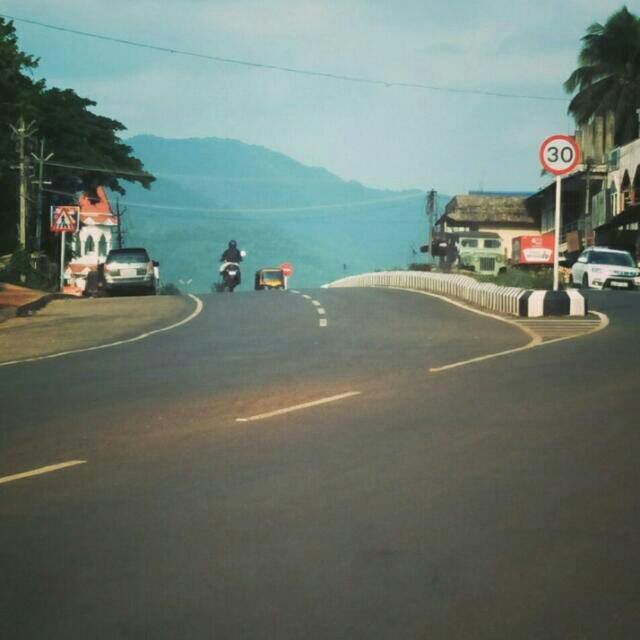
The National Highway 66 which connects the western coast of India from Mumbai to Kanyakumari passes through coastal area of the district connecting the major coastal towns of Manjeshwar, Uppala, Kumbla, Kasaragod, Udma, Bekal, Kanhangad, Nileshwaram, and Thrikaripur. It enters the district at Thalappady and goes out through Payyanur. There are State highways starting/ending at Kasaragod and Kanhangad. Total length of Major District Road (MDR) is around 1460 km and it accounts for around 11.2 km of MDR for every 10,000 people in the district. The Kerala State Road Transport Corporation (KSRTC) has stations to operate its service in the district. The railway goes through coastal area. Kasaragod railway station lies in Palakkad railway division of southern zone on Mangalore-Shoranur line. Kasaragod district is home to 3 out of 13 minor ports in Kerala- Manjeshwar, Kasaragod, and Nileshwaram. The nearest international airports are situated at Mangalore (65 km away) and Kannur (110 km away).
Demographics
According to the 2018 Vital Statistics published by the Government of Kerala, Kasargod district has a population of 1,390,894, roughly equal to the nation of Trinidad and Tobago or the US state of New Hampshire.{{cite web |access-date=30 September 2011 |url-status=dead |archive-url=https://web.archive.org/web/20110101090833/http://2010.census.gov/2010census/data/apportionment-pop-text.php |archive-date=1 January 2011
Kasaragod district majorly consists of Malayalam speakers who form 82.69% of the population. Tulu and Kannada speakers concentrated in the Northern parts of the district like Manjeshwar, Uppala, Enmakaje, Badiyadka, Kumbla and Seethangoli form a significant linguistic minority with 8.77% and 4.23% each.
Religion (Taluk-wise, 2011 Census)
As per the 2011 Census of India, when Kasaragod district comprised only two taluks (Kasaragod and Hosdurg), the taluk-wise religious composition was as follows:
| Taluk | Hindu (%) | Muslim (%) | Christian (%) | Others / Not stated (%) |
|---|---|---|---|---|
| Kasaragod | 48.84 | 48.15 | 2.82 | 0.19 |
| Hosdurg | 63.46 | 25.36 | 10.90 | 0.29 |
- Note: At the time of the 2011 Census, Kasaragod district comprised only two taluks — Kasaragod and Hosdurg. The taluks of Manjeshwaram and Vellarikundu were created in 2013 by bifurcating the earlier taluks; religion-wise 2011 data for these new taluks are not available in aggregated form.
Education

Main article: List of educational institutions in Kasaragod district


Kasargod district comes under the jurisdiction of Kannur University.
- Central Plantation Crops Research Institute at Kasaragod was established in 1916.
- Central University of Kerala was established in 2009.
- College of Engineering Trikaripur was established in 2000.
- Government College Kasaragod was established in 1957.
Development
.jpg)
Kasaragod district is the northernmost district of Kerala, which is far away from Thiruvananthapuram, the state headquarters, which is located in the southernmost tip of state. Manjeshwaram town is located about 600 km north of the state headquarters Thiruvananthapuram, about 30 km south of Mangalore, about 350 km west of Bangalore, the headquarters of the neighbouring state Karnataka, and about 950 km south of Mumbai city. In 2012, the Second Oommen Chandy ministry appointed a commission under the leadership of the former Chief Secretary P. Prabhakaran to study about the backwardness and issues faced by this northernmost district of Kerala and to draw up a special package for the district. In 2013, two more taluks, namely Manjeshwaram and Vellarikundu were formed in the district. Before it the district had only two Taluks. The decision to implement a gas-based powerplant at Cheemeni was taken by the second Chandy government. A government medical college was allowed for Kasaragod district, as a part of the government's new policy to establish at ensure availability of at least one Government Medical College in all the 14 districts of the state in 2013.
Tourism
Main article: List of tourist attractions in Kasaragod
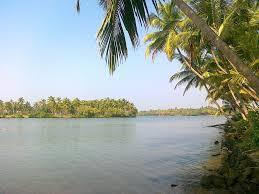
- Ananthapuram Lake Temple
- Arikady fort
- Bekal Fort
- Chandragiri Fort
- Edayilakkad Island
- Kanwatheertha beach
- Kappil beach
- Kottanchery hills
- Malik Dinar Mosque
- Mayipady palace
- Nileshwaram Estuary beach.
- Our Lady of Sorrows Church
- Pallikkara beach
- Manjeshwaram beach
- Ranipuram Hill Station
- Valiyaparamba Island
Notable people

- C. V. Balakrishnan - Malayalam Writer
- Ambikasuthan Mangad - Malayalam Writer
- Anil Kumble - Indian Cricketer
- Arya - Indian Actor
- Asif Kottayil - Indian Footballer
- BR Shenoy - Indian Economist
- DK Chowta - Indian Businessman
- E Chandrasekharan- Ex. Minister of Kerala
- Harikumar Pallathadka - RTI activist
- KK Venugopal - Attorney General of India
- Kanayi Kunhiraman - Indian Sculptor
- Kavya Madhavan - Film Actress
- KK Rai - Independence activist
- Kesavananda Bharati - Hindu Monk
- Mahima Nambiar - Film Actress
- Mirshad Michu - Indian Footballer
- Mohammed Rafi - Indian Footballer
- Mohammed Azharuddeen - Indian Cricketer
- P Kunhiraman Nair - Malayalam Poet
- Prakash Bare - Film Actor
- PP Kumari - Indian Materials Scientist
- Roopesh Shetty - Film Actor, RJ & Model
- Santhosh Echikkanam - Malayalam Writer
- Sara Aboobacker - Kannada Writer
- Sathya - Fil Actor
- Vysakh - Malayalam Film Director
Localities
- Athinhal
- Bekal
- Kanhangad
- Kasaragod North
- Kodoth
- Kumbla
- Kunjar
- Manjeshwar
- Mavilakadappuram
- Nileshwaram
- Periyanganam
- Thrikaripur
References
References
- "Kasargod - the land of seven languages". Government of Kerala.
- https://kasargod.nic.in/en/tehsil/
- (2020). "Annual Vital Statistics Report - 2018". Department of Economics and Statistics, Government of Kerala.
- (2011). "Table C-01: Population by religious community: Kerala". [[Registrar General and Census Commissioner of India]].
- "Sex Ratio".
- "Literacy".
- "Kerala | UNDP in India".
- "Rivers in Kasargod".
- Caldwell, Robert. (1998). "A Comparative Grammar of the Dravidian Or South-Indian Family of Languages". Asian Educational Services.
- Steever, Sanford B.. (15 April 2015). "The Dravidian Languages". Taylor & Francis.
- Bhat, N. Shyam. (1998). "South Kanara, 1799-1860, A Study in Colonial Administration and Regional Response". Mittal Publications.
- (2023-10-20). "Kasaragod becomes first district in India to declare official tree, flower, bird, species". The Hindu.
- https://dsal.uchicago.edu/cgi-bin/app/burrow_query.py?qs=k%C4%81%C3%B1cirai,%20k%C4%81%C3%B1ciram&searchhws=yes&matchtype=exact
- https://kolichala.com/DEDR/search.php?esb=0&q=go%CC%84%E1%B8%8De&lsg=0&emb=0&meaning=&tgt=unicode2
- (2007). "''Kerala Charitram''". DC Books.
- "District Census Handbook, Kasaragod (2011)". Directorate of Census Operation, Kerala.
- [http://sdeuoc.ac.in/sites/default/files/sde_videos/SLM-MA-Mal-Aadyakala%20Malayala%20kavitha%20%281%29.pdf SLM MA Mal Aadyaka]sdeuoc.ac.in {{Webarchive. link. (8 June 2021)
- "Kasaragod History". Government of Kerala.
- Prange, Sebastian R. ''Monsoon Islam: Trade and Faith on the Medieval Malabar Coast.'' Cambridge University Press, 2018. 98.
- Pg 58, Cultural heritage of [[Kerala]]: an introduction, A. Sreedhara Menon, East-West Publications, 1978
- Barbosa, Duarte. (1989). "The Book of Duarte Barbosa: An Account of the countries bordering on the Indian Ocean and their inhabitants (Volume 2)". Asian Educational Services.
- Logan, William. (2010). "Malabar Manual (Volume-I)". Asian Educational Services.
- The Hindu staff reporter. (21 November 2011). "Neeleswaram fete to showcase its heritage".
- (2007). "A Survey of Kerala History". DC Books.
- (12 August 2019). "A Portion of Kasaragod's Bekal Forts Observation Post Caves in". The Hindu.
- Buchanan, Francis Hamilton. (1807). "A Journey from Madras Through the Countries of Mysore, Canara, and Malabar". Cadell.
- M., Amruth. (2004). "Forest-Agriculture Linkage and its Implications on Forest Management: A study of Delampady panchayat".
- "Kasargod After District Formation". Kasargod District.
- Roy Mathew. (24 May 2012). "Commission to draw up package for Kasaragod". The Hindu.
- (21 March 2013). "12 new taluks to be formed in Kerala". The Hindu.
- [http://www.fallingrain.com/world/IN/13/Kasaragod.html Falling Rain Genomics, Inc - Kasaragod]
- "Municipalities in Kasaragod".
- Bureau, The Hindu. (2023-05-18). "Inbasekar Kalimuthu to take charge as Kasaragod District Collector". The Hindu.
- "Taluk Offices {{!}} Website of Kasargod {{!}} India".
- "Niyamasabha constituencies of Kasargod".
- "കാസര്ഗോഡ് ജില്ലയിലെ ഗ്രാമ പഞ്ചായത്തുകളുടെ അടിസ്ഥാന വിവരങ്ങള് {{!}} Deparyment of Panchayats".
- "Taluk-wise demography of Kasargod". Directorate of Census Operations, Kerala.
- "Villages in Kasargod".
- "All new national highways to be made of concrete: Nitin Gadkari". timesofindia-economictimes.
- (27 August 2017). "National Highway work gains speed in Kerala".
- "Home".
- (April 2018). "Economic review 2015".
- Government of Kerala. (2021). "Economic Review 2020 - Volume I". Kerala State Planning Board.
- "All about KSRTC". Keralartc.com.
- "SALIENT FEATURES OF PALGHAT DIVISION". Southern Railway.
- [http://www.censusindia.gov.in/2011census/PCA/A2_Data_Table.html Decadal Variation In Population Since 1901]
- US Directorate of Intelligence. "Country Comparison:Population".
- "District Census Hand Book: Kasaragod". [[Registrar General and Census Commissioner of India]].
- "Literacy and Sex Ratio - 2011".
- "Table C-16 Population by Mother Tongue: Kerala". [[Registrar General and Census Commissioner of India]].
- C-01: Population by religious community – Kerala, 2011 Census, Office of the Registrar General & Census Commissioner, India.
- "Central Plantation Crops Research Institute(CPCRI)". cpcri.
- [https://web.archive.org/web/20150202231030/http://cukerala.ac.in/index.php?option=com_content&view=article&id=6&Itemid=141&lang=en Description on official website]
- [https://web.archive.org/web/20130722022223/http://www.cukerala.ac.in/docs/Prospectus-2013-Central-University-of-Kerala.pdf Prospectus of Central University of Kerala]
- "CETKR {{!}} College Of Engineering Trikaripur".
- (26 August 2013). "Kerala to get three gas-based power projects". Projects Today.
- Special Currespondent. (4 May 2019). "MCI recognition for Manjeri medical college". The Hindu.
- Staff Reporter. (2 September 2013). "A new government medical college in Kerala after 31 years". The Hindu.
- Simran Gill. (14 June 2020). "5 Lesser Known Forts in India". Outlook India.
- Divakaran, Kattakada. (2005). "Kerala Sanchaaram". Z Library.
- (March 2024). "Proposal Submitted to Government of India: Integrated Coastal Zone Management". Government of Kerala.
- Vishnu Mohan. (27 July 2020). "6 Lesser-Known Places in Kerala for a Weekend Break". Outlook India.
- Giridhar Khasnis. (17 May 2015). "Finding everland". Deccan Herald.
- "Athinhal · Kanhangad, Kerala 671531, India".
- "Kunjar, Kerala, India".
This article was imported from Wikipedia and is available under the Creative Commons Attribution-ShareAlike 4.0 License. Content has been adapted to SurfDoc format. Original contributors can be found on the article history page.
Ask Mako anything about Kasaragod district — get instant answers, deeper analysis, and related topics.
Research with MakoFree with your Surf account
Create a free account to save articles, ask Mako questions, and organize your research.
Sign up freeThis content may have been generated or modified by AI. CloudSurf Software LLC is not responsible for the accuracy, completeness, or reliability of AI-generated content. Always verify important information from primary sources.
Report