From Surf Wiki (app.surf) — the open knowledge base
Kapālama
Neighborhood in Honolulu, Hawaii, United States
.jpg)
Neighborhood in Honolulu, Hawaii, United States
Kapālama, now often called Pālama, is a neighborhood of Honolulu, Hawaii. It is often combined with the adjacent Kalihi and referred to as a single entity, Kalihi–Pālama.
History
The name comes from ka pā lama in the Hawaiian language which means "the enclosure of lama wood". "Lama" is the Hawaiian name for endemic ebony trees of genus Diospyros that were used in religious ceremonies.
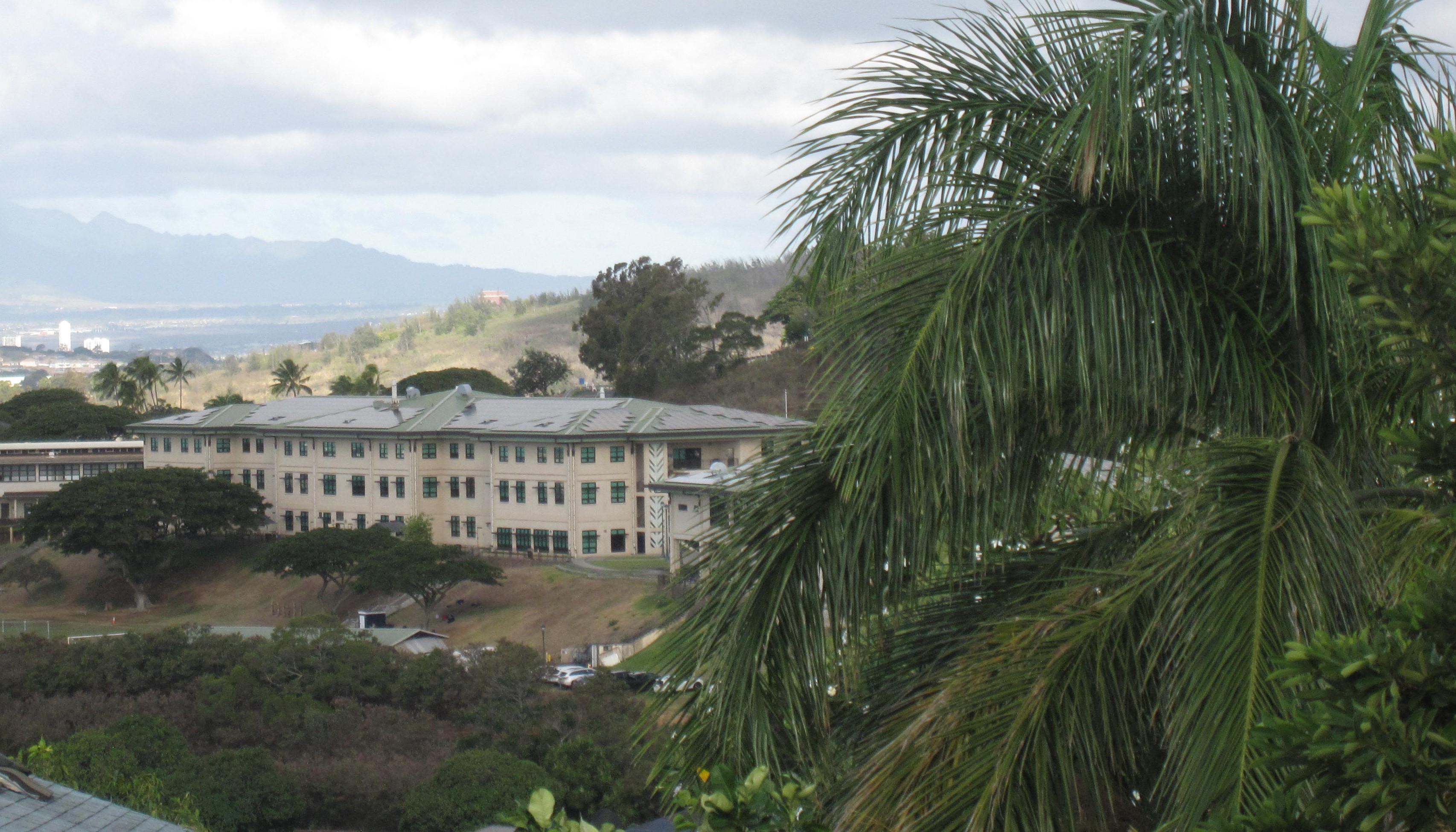
Traditional land divisions (ahupuaa) in ancient Hawaii were agricultural units that ran from the seashore to mountains. The shoreline areas of Kapālama were later developed into part of Honolulu harbor. The upland areas of Kapālama developed into ‘Ālewa Heights, and the main campus of Kamehameha Schools. Other educational institutions range from Honolulu Community College to the Kapālama Elementary school. Palama Street at , and Kapālama Avenue at , are named for the neighborhood. The Kapālama Stream starts at and then runs into the Kapālama canal and basin. To the northwest is the neighborhood of Kalihi, and to the southeast downtown Honolulu.
The Kapalama Military Reservation, constructed for logistical support in World War II was scheduled to close. A museum has been proposed in a building that served as a morgue during the Vietnam War in the 1960s. The Palama fire station at 879 North King Street was added to the National Register of Historic Places listings in Oahu as site 76000661 April 21, 1976, along with other Fire Stations of Oahu. It was designed in 1901 by Oliver G. Traphagen.
The Kaumakapili Church was moved to 766 North King Street after the 1900 fire in Chinatown. It was originally established on April 1, 1838, as a Protestant church for common people, to supplement the Kawaiahao Church which was generally intended for nobility. From 1881 to 1888 a new brick and wood-frame structure was built. Temporary services were held until the new structure was built. Ground was broken on May 7, 1910, and the new building dedicated on June 25, 1911. It is located at the southern end of Palama Street at After much damage through the years, members raised US$2.4 million for a renovation starting in 1993 of the Gothic Revival architecture building.
Peter Cushman Jones established a Palama Chapel in the area in 1896. After the 1900 fire, James Arthur and Ragna Helsher Rath added social services to the center and called it Palama Settlement. The center, located at 810 North Vineyard Boulevard at Palama Street continues to offer community recreation and educational programs. The martial art of Kajukenbo was developed at the Palama Settlement.
References
References
- {{gnis. 1853016
- Lloyd J. Soehren. (2004). "lookup of Kapalama". Ulukau, the Hawaiian Electronic Library.
- [[Mary Kawena Pukui]] and Elbert. (2003). "lookup of lama". Ulukau, the Hawaiian Electronic Library, University of Hawaii.
- "Kapālama Campus". [[Kamehameha Schools]].
- {{gnis. 360501
- {{gnis. 360512
- (February 1990). "Enhanced Preliminary Assessment, Kapalama Military Reservation, Honolulu, Hawaii". US Defense Technical Information Center web site.
- William Cole. (March 24, 2008). "Some seek to preserve former morgue". [[Honolulu Advertiser]].
- {{NRISref. 2009a
- "History of Kaumakapili Church". Kaumakapili Church.
- "Kaumakapili Church Restoration". Mason Architects.
- Mike Gordon. (July 2, 2006). "Palama Settlement". [[Honolulu Advertiser]].
- (January 2010). "Palama Settlement". official web site.
- John Evan Bishop. (2006). "Kajukenbo – the Original Mixed Martial Art".
This article was imported from Wikipedia and is available under the Creative Commons Attribution-ShareAlike 4.0 License. Content has been adapted to SurfDoc format. Original contributors can be found on the article history page.
Ask Mako anything about Kapālama — get instant answers, deeper analysis, and related topics.
Research with MakoFree with your Surf account
Create a free account to save articles, ask Mako questions, and organize your research.
Sign up freeThis content may have been generated or modified by AI. CloudSurf Software LLC is not responsible for the accuracy, completeness, or reliability of AI-generated content. Always verify important information from primary sources.
Report