From Surf Wiki (app.surf) — the open knowledge base
Kandze Monastery
Tibetan Buddhist monastery in Sichuan, China
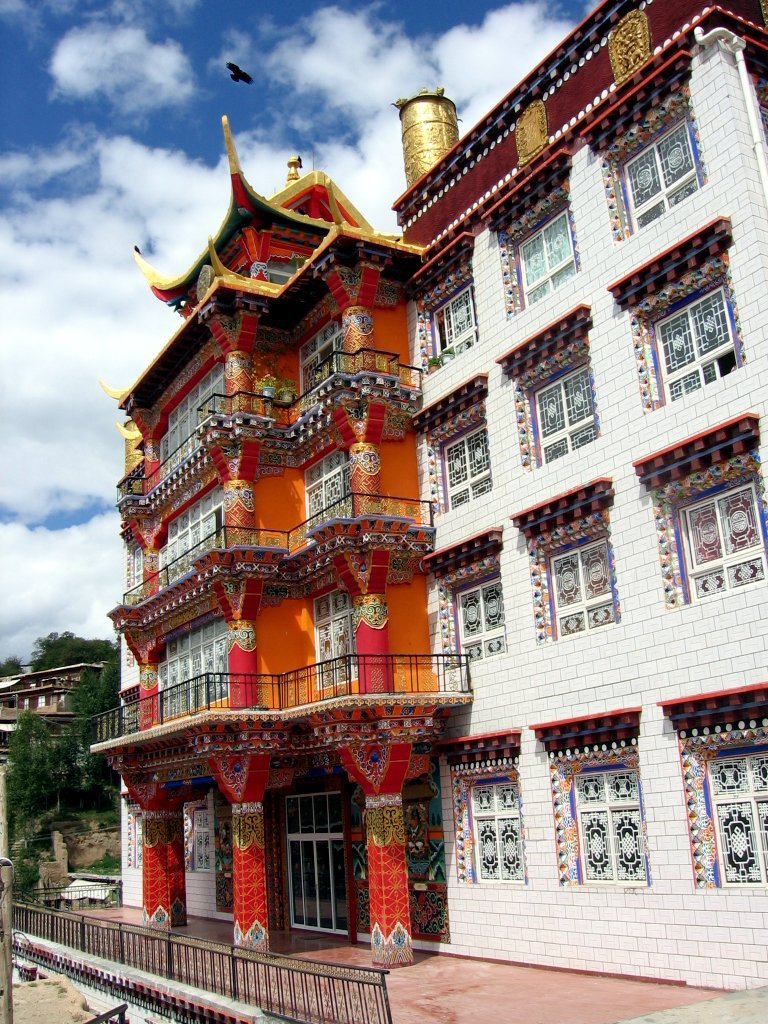
Tibetan Buddhist monastery in Sichuan, China
| Field | Value |
|---|---|
| name | Kandze Monastery |
| image | Ganzi-monasterio-d08.jpg |
| pushpin_map | China Sichuan |
| coordinates | |
| map_caption | Garzê County Kandze. |
| location | Garzê Town, Garzê County, Ganzi Tibetan Autonomous Prefecture (Kham region), Sichuan Province, China |
| founded_by | Qosot Mongols |
| founded | c. 1642 CE |
| sect | Gelugpa |
Kandze Monastery (also Ganzi or Garze Monastery or Gompa; ) is situated 2 km north of Garzê Town on a hilltop overlooking the town, in Tibet.
History
The monastery was built c. 1642 CE by the Khoshut or Qosot Mongols overlooking their castles known as Mazur and Khangsar. It once housed 1,500 monks making it, with Chamdo, the largest in Kham. The pilgrimage circuit around the monastery was almost eight kilometres long. In the 1909-1918 war the castles were occupied by Chinese troops and are now in ruins.
It has been extensively renovated since 1981 and now houses about 700 monks, including three tulkus - one of whom, Lamdark Rinpoche, returned from Switzerland and established a girls' school.
Description
;Assembly Hall The main Assembly Hall building has a golden roof and has views of the valley and nearby town. It is approached by a long flight of stairs and the inner sanctum is reached though long passageways formed by red wooden columns.
Inside three sets of images are displayed high up in glass cabinets representing the founders of the Nyingmapa, Kadampa and Gelugpa lineages. There are also a number of fine tangkas representing the meditational deities, Guhyasamaja, Cakrasamvara, and Yamantaka.
;Maitreya Hall The Maitreya Hall contains a huge image of Jampa (Maitreya), the Buddha-to-come, flanked by images of Shakyamuni, Tsongkhapa, Dipamkara and Sitatapatra.
;Other rooms Upstairs is a library containing the Kangyur and old images of the eleven-faced form of Avalokiteśvara and the great Gelupa teacher, Je Tsongkhapa (1357–1419). There is also Gonkhang room dedicated to the guardian deities mentioned above which is entered through a black and gold door, and painted images of protector deities.
To the northeast of the monastery on a hill is a reconstructed white chorten (stupa).
Footnotes

References
- Dorje, Gyurme. (1999). Footprint Tibet Handbook; with Bhutan. (2nd ed.) Bath, England: Footprint Handbooks
- Mayhew, Bradley & Kohn, Michael. Tibet. (2005). 6th ed. Lonely Planet.
- Leffman, David; Lewis, Simon; Atiyah, Jeremy & others. (2005). The Rough Guide to China. 4th ed. New York: Rough Guides
References
- Dorje (1999), p. 496.
- Leffman, et al. (2005), p. 949.
- Dorje (1999), p. 496.
- The Voice that Remembers: One Woman's Historic Fight to Free TibetBy Adhe Tapontsang, Joy BlakesleeP.188https://books.google.co.uk/books?id=5MY6AwAAQBAJ&pg=PA188&lpg=PA188&dq=lamdark+rinpoche&source=bl&ots=WmJgytpszv&sig=ACfU3U3Le3hg-
- Dorje (1999), pp. 496-497.
- Dorje (1999), p. 497.
This article was imported from Wikipedia and is available under the Creative Commons Attribution-ShareAlike 4.0 License. Content has been adapted to SurfDoc format. Original contributors can be found on the article history page.
Ask Mako anything about Kandze Monastery — get instant answers, deeper analysis, and related topics.
Research with MakoFree with your Surf account
Create a free account to save articles, ask Mako questions, and organize your research.
Sign up freeThis content may have been generated or modified by AI. CloudSurf Software LLC is not responsible for the accuracy, completeness, or reliability of AI-generated content. Always verify important information from primary sources.
Report