From Surf Wiki (app.surf) — the open knowledge base
Kampala
Capital and largest city of Uganda

Capital and largest city of Uganda
| Field | Value |
|---|---|
| official_name | Kampala |
| settlement_type | Capital city |
| image_skyline | Kampalamontage.png |
| image_caption | Counter-clockwise; from top: Panoramic view of central Kampala, Bahá'i Temple, Makerere University, panoramic view of Lake Victoria, Kampala Worker's House, Uganda National Mosque |
| image_map | Kampala District in Uganda.svg |
| mapsize | 150px |
| map_caption | Kampala highlighted in red inside the Republic of Uganda |
| pushpin_map | Uganda#Africa |
| pushpin_map_caption | Location of Kampala in Uganda##Location in Africa |
| pushpin_relief | yes |
| subdivision_type | Country |
| subdivision_name | Uganda |
| subdivision_type1 | City |
| subdivision_name1 | Kampala District |
| leader_title1 | Lord Mayor |
| leader_name1 | Erias Lukwago |
| leader_title2 | Executive Director |
| leader_name2 | Hajjat Sharifah Buzeki |
| area_total_km2 | 189 |
| area_land_km2 | 176 |
| area_water_km2 | 13 |
| population_as_of | 2024 census |
| population_density_km2 | 22500 |
| population_total | 1,797,722 |
| population_metro | 6,709,900 |
| area_metro_km2 | 8,451.9 |
| population_density_metro_km2 | 793 |
| population_demonyms | Munnakampala |
| timezone | EAT |
| utc_offset | +03:00 |
| coordinates | |
| elevation_m | 1200 |
| website |
the city
Kampala (, ) is the capital and largest city of Uganda. The city proper has a population of 1,797,722 (2024 census) and is divided into the five political divisions of Kampala Central, Kawempe, Makindye, Nakawa, and Rubaga.
Kampala's metropolitan area consists of the city proper and the neighboring Wakiso District, Mukono District, Mpigi District, Buikwe District and Luweero District. It has a rapidly growing population that is estimated at 6,709,900 people in 2019 by the Uganda Bureau of Statistics in an area of 8,451.9 km2. Other estimates put the size of the metropolitan area at around four million people.
In 2015, this metropolitan area generated an estimated nominal GDP of $13.80221 billion (constant US dollars of 2011), which was more than half of Uganda's GDP for that year, indicating the importance of Kampala to Uganda's economy.
Kampala is reported to be among the fastest-growing cities in Africa, with an annual population growth rate of 4.03 percent, by City Mayors. American consulting firm Mercer has regularly ranked Kampala as East Africa's best city to live in,{{cite news |access-date=2019-08-27 |archive-date=2019-08-27 |archive-url=https://web.archive.org/web/20190827020437/https://www.newvision.co.ug/new_vision/news/1418082/kampala-ranked-city-east-africa |url-status=dead
Etymology
Kampala originally referred to only the present-day Old Kampala hill, on whose summit Fort Lugard was located, and the initial headquarters of the British colonial authorities in the soon to be Uganda Protectorate.
Before the British construction of Fort Lugard, the hill was a hunting reserve of the Kabaka (King) of Buganda and had several species of antelope, especially the impala. As a result, when the British colonial officials were allocated this hill by the then Kabaka of Buganda, they referred to it as "The Hill of the Impala".
The natives, in whose territory this British settlement was located, then translated "Hill of the Impala" as Akasozi k’empala. This was then shortened to k'empala and finally, the name ‘Kampala’ was brought to life. Kasozi means "hill", ke "of", and empala the plural of "impala". Hence the name "Kampala" came to refer to this initial British colonial settlement that would later on spread out from the occupied Old Kampala hill near the pre-existing Kibuga (capital) of the Buganda Kingdom.{{cite web | access-date=11 June 2014 | archive-url=https://web.archive.org/web/20131231000657/http://www.myetymology.com/encyclopedia/Kampala.html | archive-date=31 December 2013 | url-status=usurped
History
This area of numerous hills and swamps that later become known as Kampala was part of the core of the highly centralised Buganda Kingdom. It was also the site of the shifting Kibuga (capital) of the different Bassekabaka (kings) of the Buganda Kingdom, with each Kabaka (king) upon coronation, or subsequently during their reign, setting up their Kibuga (capital) on a new or different hill as they wished or desired.
19th century
The first written description of this Kibuga (capital) was by the explorer Sir Richard Burton in his book, The Lake Region of East Africa, published in 1860. In the book, Burton, relying on the information collected by Snay Bin Amir, an Arab trader, described the Kibuga as:
In 1862, when explorer John Speke arrived in Buganda, the Kibuga (capital) was at Bandabarogo, present-day Banda Hill, and the reigning Kabaka (King) was Mutesa I.
In 1875, explorer Henry Morton Stanley reported the capital as being at present-day Lubaga Hill, where he met the same Kabaka, Mutesa I. During this visit, Stanley wrote a letter that was published in The Daily Telegraph, inviting missionaries to come to Buganda. He also described the Kibuga in his 1870s dispatches to The New York Herald, thus:
In 1877, the first missionaries from the Church Mission Society, who were of the Protestant faith, arrived from the United Kingdom and were allocated Namirembe Hill. Two years later, in 1879, the Catholic White Fathers also arrived, first settling at the present-day village of Kitebi near Lubaga; subsequently, they would be allocated Lubaga Hill. The arrival of these two missionary groups laid the ground for the religious wars of 1888 to 1892 between their new converts and forced the missionaries from Great Britain to then lobby for the British government to take over Buganda/Uganda as a protectorate.
In 1890, Frederick Lugard, an agent of the Imperial British East Africa Company, arrived in Buganda during the reign of Kabaka Mwanga II, with whom he signed a treaty of protection by the British government over Buganda, and the Kibuga (capital) was located at Mengo Hill. Captain Lugard would, later on, be allocated the Kampala hill that would soon be known as Old Kampala, and on which he built a fort.
In 1895, Mengo Senior School, the first school offering Western education in Kampala, was opened by the Church Missionary Society at Namirembe hill, where mostly the children of chiefs and pages of the royal palaces were students.
In 1897, Mwanga launched a rebellion but was defeated and was subsequently captured and exiled, in 1899, to the Seychelles alongside Omukama Kabalega, and his 3-year-old son was made Kabaka by the combined forces of the European officers leading Nubian and Baganda colonial soldiers. This state of affairs later culminated in the signing of the Buganda Agreement (1900) that formalised British colonial rule in Buganda.
Also in 1897, Kampala's first Western-style health facility, Mengo Hospital, was opened on Namirembe hill by British doctor and missionary Sir Albert Ruskin Cook. In addition, Sir Albert Ruskin Cook founded Mulago Hospital, the current National Referral Hospital, at Mulago hill in 1913.
In 1899, the Missionary Sisters of Our Lady of Africa founded Lubaga Hospital on Lubaga Hill.
20th century
In 1900, the regents of the infant Kabaka Daudi Cwa II (who were Apolo Kagwa, the Katikiro (Prime Minister) of Buganda, Stanislaus Mugwanya, the Mulamuzi (Chief Judge) of Buganda, and Zakaria Kisingiri, the Muwanika (Chief Treasurer) of Buganda, with Bishop Alfred Tucker), signed the Buganda Agreement on behalf of Buganda with Sir Harry Johnston, who signed on behalf of the British government. This agreement with Sir Harry Johnston created new land tenures such as freehold, Crown land, and mailo, and divided up and allocated the land in such a way that would come to define the development of Kampala.
The land in Buganda's Kibuga (capital), including Mengo Hill and Makerere Hill, was allocated to the young Kabaka, the Baganda colonial collaborators, etc., under mailo and freehold. The religious missions were also formally allocated land they were previously occupying. Thus, the Catholic White Fathers got Lubaga Hill, the Protestant Church Missionary Society got Namirembe Hill, the Muslims under Prince Nuhu Mbogo's leadership received Kibuli Hill, the British Catholic Mill Hill Missionaries received most of Nsambya Hill. The Uganda Protectorate government obtained land classified as Crown lands in the area such as Old Kampala Hill, Nakasero Hill, etc.
To legalise the above changes, the following laws and ordinances were subsequently passed: The Crown lands Ordinance of 1903, The Land Law of 1908, The Registration of Land Titles ordinance of 1922, and the Busulu and Envujo law of 1928.
In 1906, the Crown lands consisting of Old Kampala, Nakasero hills etc. and covering 567 ha was consolidated and gazetted as Kampala Township.
In 1912, Kampala Township received its first land-use plan and had a European and Asian population of 2,850.
In 1922, Kampala's oldest university, Makerere, was founded as the Uganda Technical College at the present Makerere Hill and initially offered carpentry, building construction, mechanics, arts, education, agriculture, and medicine.
In 1930, the first sewerage plan was prepared to target a population of 20,000 people in the Nakasero and Old Kampala areas of the Kampala township. This plan guided sewerage development from 1936 to 1940 in planned urban areas of the Kampala Township and excluded the Kibuga area occupied by the Baganda and other natives.

In 1931, the Uganda Railway line reached Kampala, connecting Kampala to Mombasa Port, thirty-five years after the commencement of its construction.
In 1938, The East African Power & Lighting Company was granted a licence for thermal electric power generation and distribution for the towns of Kampala and Entebbe, and in the same year Sir Philip Mitchel, the Governor of Uganda, switched on Kampala and Uganda's first electric street lights.
In 1945, Ernst May, a German architect, was commissioned by the Uganda Protectorate Government to design a new physical plan for Kampala. Ernst May's plan of 1947 was intended to extend Kampala eastwards covering Kololo Hill and Naguru Hill, and with the commercial centre on the southern slopes of Nakasero Hill, an industrial zone in the southeast of Kampala, and, for the first time, a planned residential zone for the Ugandan natives. The plan was never fully implemented, and in 1951 the third physical plan by Henry Kendall was instead adopted, though it incorporated some elements of Ernst May's 1947 plan.

Henry Kendall's 1951 plan expanded Kampala from the 5.67 km2 area of the 1930 plan to an area of 28 km2 incorporating areas like Kololo Hill, and the Industrial Area. However, like the first two planning schemes, the 1951 plan failed to achieve many of its stated objectives.
On 9 October 1962, Uganda gained independence; subsequently the capital city was transferred from Entebbe to Kampala and in the same year, Kampala was granted city status.
In 1968, six years after Uganda attained independence, the boundaries of Kampala were expanded incorporating the Kibuga (then known as Mengo Municipality), Kawempe and Nakawa Townships, and areas including Muyenga and Ggaba. This increased the administrative area of Kampala from 28 km2 to the current 189 km2.
In 1972, the fourth physical plan for Kampala was made covering the newly incorporated areas of Kampala's boundary extensions of 1968, but the subsequent political and economic turmoil of the 1970s and 1980s meant the plan was never implemented.
The Battle of Kampala during the Ugandan Bush War occurred in January 1986. It resulted in the capture of the city by the National Resistance Movement, led by Yoweri Museveni and the subsequent surrender of the Ugandan government.
Similarly, the fifth physical plan for Kampala, made in 1994, like the 1972 plan, was also never implemented.
21st century
In 2010, the Kampala Capital City Authority Act was enacted, giving the Ugandan Government more control of the administration of Kampala. The act also created the Kampala Metropolitan Physical Planning Authority with the stated aims of improving the infrastructure of the City of Kampala and the surrounding districts of Wakiso, Mukono, Buikwe, Mpigi and Luwero.
On 11 July 2010, suicide bombers affiliated with al-Shabaab, a Sunni Islamist group based in Somalia, carried out two nearly simultaneous bombings in Kampala, killing 74 people. After eleven years of relative calm, on 16 November 2021, the Allied Democratic Forces (ADF), an Islamist group based in eastern Congo with ties to the Islamic State, carried out two suicide bombings near the central police station and parliament, killing three people and injuring 36.
Geography

Topography

The City of Kampala covers a total area of 189 km2, comprising 176 km2 of land and 13 km2 of water.
Kampala is a hilly place with its valleys filled with sluggish rivers/ swamps. The highest point in the city proper is the summit of Kololo hill at 1311 m, located in the center of the city and the lowest point at the shores of Lake Victoria south of the city center at altitude of 1135 m.
Hills

Kampala was originally built on seven hills, but it has expanded to cover more than the original seven hills.
The original seven hills are:
- Old Kampala Hill on which Fort Lugard was located, the first seat of the British colonial authorities in colonial Uganda.
- The second is Mengo Hill which was the then Kibuga (capital) of Buganda kingdom at the start of British colonial rule.
- The third is Kibuli Hill, that is home to the Kibuli Mosque.
- The fourth is Namirembe Hill, that was home to the Anglican (Wangeleza) faction of the Buganda religious wars of 1888 to 1892 and site of Namirembe Anglican Cathedral.
- The fifth is Lubaga Hill, that was home to the White Fathers Catholic (Wafaransa) faction of the above-mentioned Buganda religious wars and also site of the Rubaga Catholic Cathedral.
- The sixth is Nsambya Hill, site of the former Cathedral of St Peter's Nsambya and allocated to the British Catholic Mill Hill Mission during the signing of the Uganda Agreement (1900).
- The seventh is Nakasero Hill on whose summit was Fort Nakasero, a British military installation built after relocating from Fort Lugard in Old Kampala. The hill was also the site of the European Hospital (the current government analytical laboratory opposite Ministry of Public Service headquarters).
Swamps and slow rivers
Due to Kampala's hilly nature and tropical climate, the valleys have slow rivers and swamps that tend to flow southwards towards Lake Victoria or northwards. These swamps cover 15% of Kampala's land area. They include:
- Kinawataka swamp river covering an area of 1.5 km2 flowing southwards into Lake Victoria and is located in Nakawa Division.
- Nakivubo swamp river covering an area of 5.29 km2 flowing southwards to Lake Victoria from the foothills of Makerere and of length 9 km.
- Lubigi swamp covering an area of 2.85 km2 flowing westwards from the foothills of Kisaasi into the Mayanja River.
- Kansanga swamp
- Kyetinda swamp
Vegetation
Kampala, due to the diversity of habitats that include wetlands and hills, was previously covered with short grasses on the tops of the hills, elephant grass (Pennisetum purpureum Schumach.), Cyperus papyrus, African water lily etc. in the swamps and evergreen forests with trees such as African olive (mpafu) and Natal fig (mutuba).
Geology
Kampala is located on the East African Plateau between the two arms of the East African Rift and on the northern limits of Tanzania Craton.
Climate
Kampala has a tropical rainforest climate (Af) under the Köppen-Geiger climate classification system.
A facet of Kampala's weather is that it features two annual wetter seasons. While the city does not have a true dry season month, it experiences heavier precipitation from August to December and from February to June. However, it is between February and June that Kampala sees substantially heavier rainfall per month, with April typically seeing the heaviest amount of precipitation at an average of around 169 mm of rain.
|Jan record high C = 33 |Feb record high C = 36 |Mar record high C = 33 |Apr record high C = 33 |May record high C = 29 |Jun record high C = 29 |Jul record high C = 29 |Aug record high C = 29 |Sep record high C = 31 |Oct record high C = 32 |Nov record high C = 32 |Dec record high C = 32 |Jan record low C = 12 |Feb record low C = 14 |Mar record low C = 13 |Apr record low C = 14 |May record low C = 15 |Jun record low C = 12 |Jul record low C = 12 |Aug record low C = 12 |Sep record low C = 13 |Oct record low C = 13 |Nov record low C = 14 |Dec record low C = 12
Education


Pre-primary education
Pre-primary education is offered only by private entities which are located in the various neighbourhoods of Kampala and is lightly regulated by the Ministry of Education and Sports and starts from age of 6 weeks. Education in Kampala city is provided by a vast number of public and private institutions offering a wide range of educational training that includes pre-primary, primary, secondary, vocational, technical undergraduate and post-graduate education.
Primary and secondary education in Kampala
Kampala has a number of both primary and secondary schools in every parish that are mostly privately owned and a handful that are state-owned and are also lightly regulated by the City Education directorate and Ministry of Education and Sports.
Some of the private institutions:
- Kampala Parents School
- Aga Khan School
- Gayaza High School
- Good Times Primary School
- Global Junior School
- Kawempe Muslim secondary school
Vocational and technical education in Kampala
Kampala has a number of both private and state institutions offering training in a broad range of fields as indicated in the table below:
| Vocation/technical | Speciality | Location | Ownership | Est |
|---|---|---|---|---|
| Nakawa Vocational Training Institute | Nakawa | State owned | 1971 | |
| Tiner International School of Beauty | Wandegeya | Private | 1995 | |
| Jimmy Sekasi Institute of Catering | Kabalagala | Private | 1989 | |
| St Mbaaga Major Seminary | Ggaba | Private | 1976 |
The city is also home to various public and private universities in the country including Makerere University, Kyambogo University, Kampala University, African Bible University, International University of East Africa, Ndejje University and many others. [[File:Kyambogo University Central library.jpg | thumb|220x124px | right | alt= A library at kyambogo university Kampala | Kyambogo university library]]
Demographics
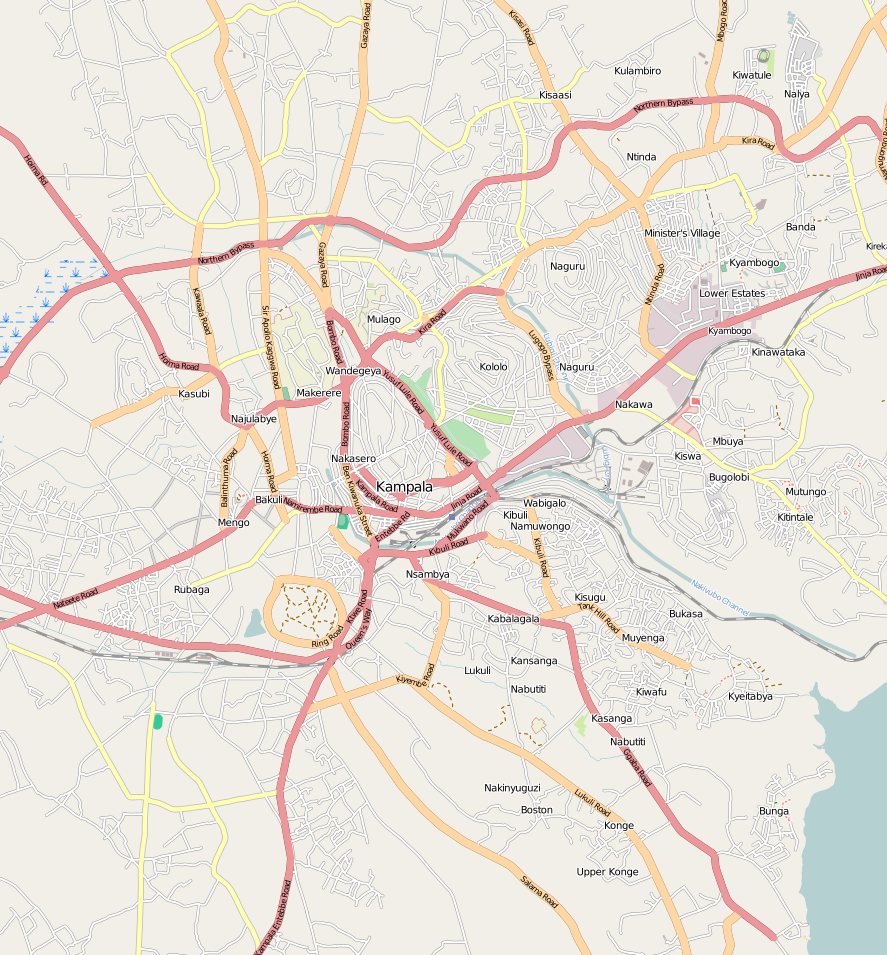

The population of Kampala city proper has been rapidly increasing from 62,264 in 1948 to 1,189,142 in 2002, then 1,507,080 in 2014. In 2019, the population was estimated to be 1,650,800.
According to the 2024 Uganda Population and Housing Census, Kampala had a population of 1,797,722 residents, consisting of 1,004,884 males and 792,838 females. The average household size in the city was 2.9 persons.
Kampala, being the capital city and economic engine of Uganda, has a diverse ethnic population drawn from all parts of the country and also from neighboring countries such as Democratic Republic of the Congo, Rwanda, South Sudan, Eritrea, Somalia, and even from countries as far away as India and China.
Cross-cultural intimate relations in Kampala and even Uganda as a whole is still unusual. Although many of Kampala's residents live and work in close contact, they still define themselves by their ethnic origins. This is more evident in the native languages (alongside Luganda and English) that are used at home, workplaces, and public spaces. In addition to the Baganda and Banyankole, other large ethnic groups include the Basoga, Bafumbira, Batoro, Bakiga, Alur, Bagisu (better known as Bamasaba), Banyoro, Iteso, Langi, and Acholi.
Historical population data for Kampala
| Year | 1948 | 1959 | 1969 | 1980 | 1991 | 2002 | 2014 | 2019 | 2024 | ||||||||
|---|---|---|---|---|---|---|---|---|---|---|---|---|---|---|---|---|---|
| Kampala (city proper) | url=https://books.google.com/books?id=6Sv-AQAAQBAJ&pg=PA4 | title=Neighbours and Nationals in an African City Ward | last=Parkin | first=David | date=2013-11-05 | publisher=Routledge | isbn=9781136532412}} | 107,058 | url=https://www.ubos.org/publications/statistical/20/ | title=Statistical – Page 20 – Uganda Bureau of Statistics | access-date=2019-09-17}} | 458,503 | 774,241 | 1,189,142 | 1,507,080 | 1,650,800 | 1,797,722 |
Culture

Cultural institutions
Prominent cultural institutions include the Uganda Museum and the Ugandan National Theatre. The city also serves as the seat of the Buganda kingdom in Mengo.[[File:Mengo Bulange ........(Royal Seat Of the Buganda Kingdom).jpg | thumb|220x124px | right | alt= Kampala culture | Bulange Mengo the headquarters of Buganda kingdom]]
One of the most notable sites is the Kasubi Tombs, a UNESCO World Heritage Site and the burial grounds of the Buganda kings.
The Independence Monument, located in the heart of Kampala, is a symbol of Uganda's freedom from colonial rule.
Shopping and entertainment
Kampala is also known for its vibrant shopping scene, offering everything from traditional crafts to modern fashion. Owino market (also known as St Balikuddembe market) is one of the largest and busiest markets in Uganda, where one can find an array of goods including clothes, shoes, and fresh produce.
The city is also filled with a number of shopping malls, such as Acacia Mall in kamwookya, Arena Mall in Nsambya, and Village Mall in bugolobi.
Wandegeya Market is located near Makerere University. There is also Nakasero Market, one of Africa's largest and liveliest.
Kampala's nightlife is another aspect of the city's leisure that cannot be overlooked. The city is alive with music and dance, with numerous bars, clubs, and lounges offering entertainment late into the night. Kabalagala and Kololo are popular areas for nightlife.
Cuisine

For those who prefer dining in a more formal setting, Kampala has numerous restaurants that offer a variety of cuisines.
Cafe javas is a popular chain that offers a blend of local and international dishes for both a casual meal and a business meeting.
One dish is called TV Chicken, named because the chicken is roasted in a rotisserie oven with a glass window that customers can watch the chicken through.
Nsenene vendors (nsenene are grasshoppers) set up shop in May and November, during grasshopper season.
Gaba Fish Market, located on Lake Victoria, is the biggest fish market in the city.

Ndere Cultural Centre
A prominent cultural centre in the Kampala area of Kisasi that aims to promote Ugandan and African cultural expressions through music, dance, and drama. The name Ndere is derived from the noun 'endere', which means flute. As an instrument found in all cultures, it is chosen as a peaceful symbol of the universality of cultural expressions. The Ndere centre is famous for its Ndere troupe, a music and dance troupe that perform several nights every week at the centre showcasing music and dance from all over Uganda as well as Rwanda and Burundi.{{cite news |archive-url=https://web.archive.org/web/20170814133626/http://www.newvision.co.ug/new_vision/news/1338374/ndere-centre-african-culture-alive |url-status=dead |archive-date=August 14, 2017 |access-date=2019-08-27

Sport
Kampala is home to the City Oilers, one of East Africa's top basketball club teams. It is the only East African team that competes in the FIBA Africa Clubs Champions Cup. The Oilers play their home games in the MTN Arena, which is based in Kampala's Lugogo Area.{{cite news |access-date=2019-08-27 |archive-date=2019-08-27 |archive-url=https://web.archive.org/web/20190827020439/https://www.newvision.co.ug/new_vision/news/1319958/juruni-eyes-2013-basketball-crown |url-status=dead
The city hosted the IAAF World Cross Country Championships in 2017. The city also hosted the Rugby Africa Cup in 2024 at the Mandela National Stadium. The 2027 Africa Cup of Nations will be hosted in the city alongside neighbouring countries of Tanzania and Kenya.
The Mandela National Stadium, commonly known as Namboole Stadium, is the largest and most iconic sports facility in Uganda. Located just outside Kampala in Bweyogerere, this multi-purpose stadium has a seating capacity of over 45,000 and is the primary venue for major sporting events, including football matches, athletics, and concerts. The stadium is home to the Uganda national football team, the Cranes, and hosts various local and international competitions.
Lugogo Sports Complex is a sports hub in Kampala, offering facilities for a range of sports including tennis, cricket, and boxing. The MTN Arena within the complex is a modern indoor arena with a capacity of around 3,000, used for basketball, netball, volleyball, and other indoor sports. The Lugogo Cricket Oval is another highlight, hosting national and international cricket matches, making it the center of cricket in Uganda.
The Kampala Golf Club, located in the heart of the city, is Uganda's oldest golf course and a premier destination for golfers. The 18-hole course offers a challenging yet scenic layout, with well-maintained greens and fairways. The club also has a driving range and a clubhouse, making it a popular spot for both serious golfers and those looking to relax in a green environment.

The renewed Hamz Nakivubo Stadium, formerly known as Nakivubo War Memorial Stadium, is in the central business district of Kampala.
The city is home to various football clubs playing in the Uganda Premier League such as Kampala Capital City Authority FC, SC Villa, Police FC, and Express FC There are also a number of teams in Kampala playing in the FUFA Women Super League like Kawempe Muslim LFC, Lady Doves FC and many others
Economy

Efforts are underway to relocate heavy industry to the Kampala Business and Industrial Park, located in Namanve, Mukono District, approximately 14 km east of the city's central business district, thereby cutting down on city traffic congestion. Some of the businesses that maintain their headquarters in the city center include all of the 25 commercial banks licensed in Uganda; the New Vision Group, the leading news media conglomerate and majority owned by the government; and the Daily Monitor publication, a member of the Kenya-based Nation Media Group. Air Uganda maintained its headquarters in an office complex on Kololo Hill in Kampala.{{cite news |access-date=2019-08-27 |archive-date=2019-08-27 |archive-url=https://web.archive.org/web/20190827020402/https://www.newvision.co.ug/new_vision/news/1249387/air-uganda-increases-flights-dar |url-status=dead
The informal sector is a large contributor to Kampala's GDP. Citizens who work in the formal sector also participate in informal activities to earn more income for their families. A public servant in Kampala, for example, may engage in agriculture in addition to working in the formal sector. Other informal fields include owning taxis and urban agriculture. The use of Kampala's wetlands for urban farming has increased over the past few decades. It connects the informal rural settlements with the more industrialized parts of the city. The produce grown in the wetlands is sold in markets in the urban areas.
In December 2015, Google launched its first Wi-Fi network in Kampala.
While more than 30 percent of Kampala's inhabitants practice urban agriculture, the city of Kampala donated 32 acre to promote urban agriculture in the northeastern parish of Kyanja, in Nakawa Division.
Transport
Kampala is served by Entebbe International Airport, which is the largest airport in Uganda.

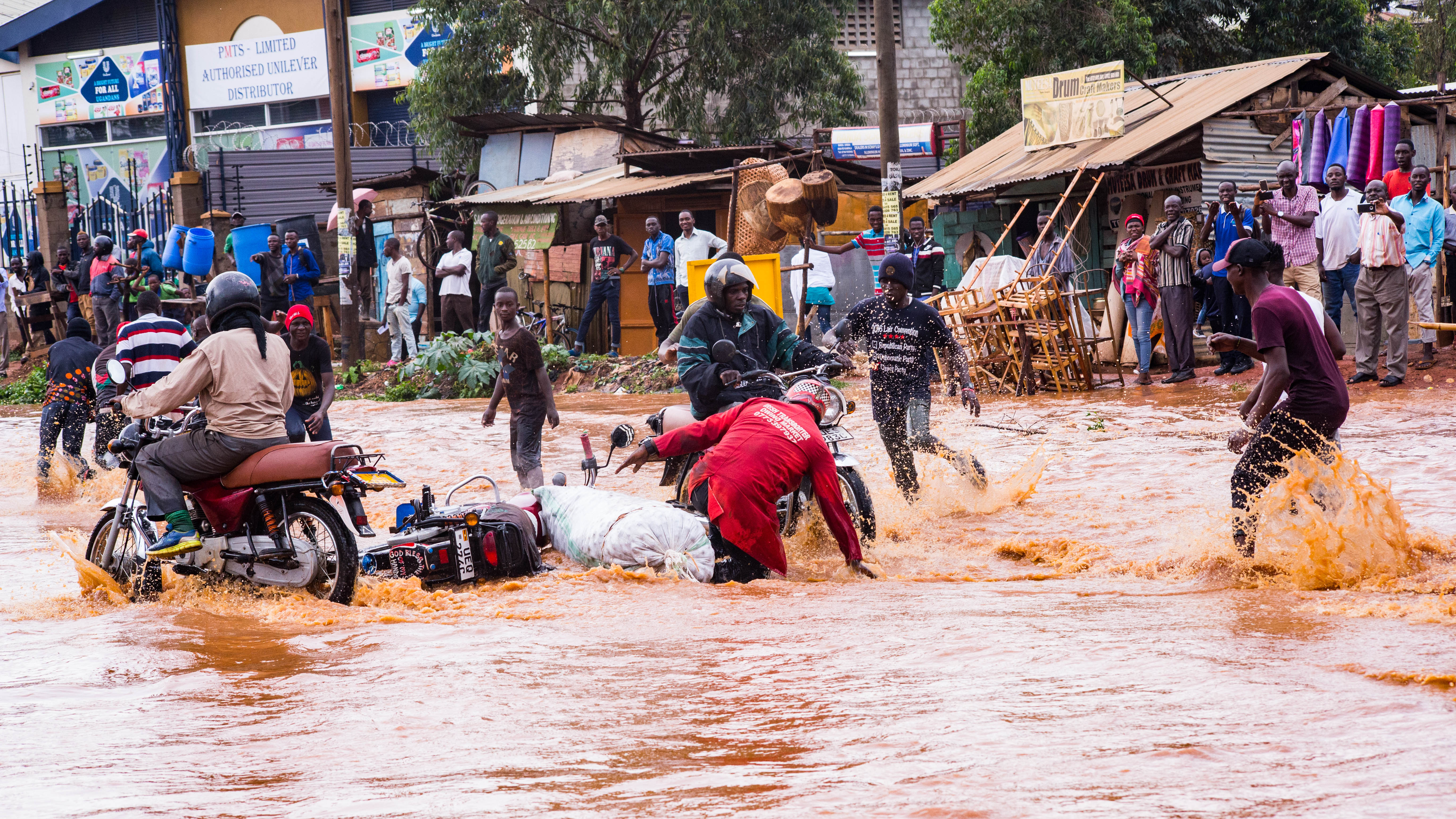
Boda-bodas (local motorbike transport) are a popular mode of transport that gives access to many areas within and outside the city. Standard fees for these range from USh:1,000 to 2,000 or more. Boda-bodas are useful for passing through rush-hour traffic, although many are poorly maintained and dangerous.{{cite news | access-date=2019-08-27 | archive-date=2019-08-27 | archive-url=https://web.archive.org/web/20190827020413/https://www.newvision.co.ug/new_vision/news/1182601/deadly-ride-boda-bodas-leading-cause-hospital-casualties | url-status=dead
In early 2007, it was announced that Kampala would remove commuter taxis from its streets and replace them with a comprehensive city bus service. (In Kampala, the term "taxi" refers to a 15-seater minibus used as public transport.) The bus service was expected to cover the greater Kampala metropolitan area including Mukono, Mpigi, Bombo, Entebbe, Wakiso and Gayaza. the service had not yet started.{{cite news |access-date=2019-08-27 |archive-date=2019-08-27 |archive-url=https://web.archive.org/web/20190827020358/https://www.newvision.co.ug/new_vision/news/1004456/pioneer-easy-buses-offer-hour-service |url-status=dead
In 2014, Uganda's President Yoweri Museveni and China Civil Engineering Construction Corporation signed a Memorandum of Understanding, to embark on building a light rail system, the Greater Kampala Light Rail, similar to the one in Addis Ababa, Ethiopia.
On 11 April 2011, the pressure group Activists for Change (A4C) held its first Walk to Work protest near Kampala, in response to a comment by President Museveni on the increased cost of fuel, which had risen by 50 percent between January and April 2011. He said: "What I call on the public to do is to use fuel sparingly. Don't drive to bars." The protest, which called on workers to walk to work to highlight the increased cost of transport in Uganda, was disrupted by police, who fired tear gas and arrested three-time presidential candidate Kizza Besigye and Democratic Party leader Norbert Mao. In the course of the protest, Besigye was shot in the right arm by a rubber bullet. The government blamed the violence on protesters.
In 2016, the Rift Valley Railways Consortium (RVR) and Kampala Capital City Authority established passenger rail service between Namanve and Kampala and between Kampala and Kyengera. Those services were temporarily discontinued after RVR lost its concession in Uganda in October 2017.{{cite web|access-date=24 February 2018 | url=http://www.monitor.co.ug/News/National/Passenger-train-services-resume-Monday/688334-4316028-5l40lxz/index.html
Places of worship
File:Baha'i House of Worship, Kampala, Uganda.jpg|Baha'i House of Worship in Kampala File:NAMIREMBE CATHEDRAL. side view.jpg |St. Paul's Anglican Cathedral located on Namirembe Hill File:Rubaga Cthedral.jpg|Rubaga Cathedral, the seat for the Roman Catholic Church File:Outer view Kampala National mosque.jpg | Uganda National Mosque (Islam)
Among the places of worship are predominantly Christian churches and temples: Roman Catholic Archdiocese of Kampala (Catholic Church), Church of Uganda (Anglican Communion), Presbyterian Church in Uganda (World Communion of Reformed Churches), Baptist Union of Uganda (Baptist World Alliance), and Assemblies of God. There are also Muslim mosques.
Kampala hosts a Bahá'í House of Worship known as the Mother Temple of Africa which is situated on Kikaya Hill in the outskirts of the city. The temple was inaugurated in January 1961.
Health care
Kampala is the country's main hub for health care services. It offers a mix of public hospitals, private clinics, and specialized medical centers that serve both locals and international visitors. The quality of care varies depending on the type of facility, but in general, Kampala provides the best medical options in the country.
Public health care in Kampala is overseen by the Ministry of Health. The city hosts key government hospitals such as Mulago National Referral Hospital, Uganda's largest and most advanced public hospital. Mulago serves as a teaching hospital for Makerere University's College of Health Sciences and provides a wide range of services, including surgery, maternal health, pediatrics, and specialized care. While public hospitals are often affordable or free, they face challenges like overcrowding, long waiting times, limited medical supplies, and under-staffing.
Kampala also has a growing number of private hospitals and clinics offering higher standards of care, often preferred by the middle class, expats, and medical tourists. Some notable private institutions include: Nakasero Hospital – a modern private hospital known for advanced diagnostics and surgery. International Hospital Kampala (IHK) – a leading facility offering general and specialized care. Kampala Hospital – known for quality services and patient-focused care. Case Hospital – provides both inpatient and outpatient services among many others. Private facilities tend to be better equipped and offer faster service but come at a higher cost. Many accept international health insurance, though it's important to confirm in advance.
Health facilities in Kampala
File:Aerial view of old Mulago Hospital in Uganda.jpg|Old Mulago Hospital in Uganda File:Mengo hospital 2.jpg|Mengo hospital File:Kawempe General Hospital 2016.jpg|Kawempe General Hospital File:IHK Namuwongo.jpg|IHK Namuwongo.jpg
Notable people
Politics
Heads of state
- Idi Amin (Dada)
- Yoweri Kaguta Museveni, one of Africa's longest ruling presidents
- Mutesa II of Buganda, the 1st president. Kabaka of Buganda
- Paulo Muwanga, former president and prime minister
- Apollo Milton Obote, led Uganda to independence in 1962
- Tito Okello
Monarchs
- Muteesa I, the 30th Kabaka of Buganda
- Muwenda Mutebi II of Buganda, the 36th Kabaka of Buganda
Other officials
- Salma Lakhani, Lieutenant Governor for the province of Alberta, Canada
- Erias Lukwago, Ugandan lawyer and politician and the Lord Mayor of Kampala City
- Zohran Mamdani, Mayor of New York City
- Bobi Wine (Robert Kyagulanyi Ssentamu), Ugandan politician, businessman, entrepreneur, philanthropist and musician
Activists
- Sandra Kwikiriza, feminist, LBQ rights and digital rights activist
- Esther Nakajjigo, humanitarian and human rights activist
- Pepe Julian Onziema, human rights activist
Artists
- Alex Mukulu
Business
- Maggie Kigozi
- James Mulwana
- Sudhir Ruparelia, Ugandan entrepreneur and builder, Founder Chairman of Ruparelia Group
- Hasmukh Dawda
Chess
- Robert Katende
- Phiona Mutesi, chess prodigy and subject of the 2012 book and 2016 Disney film Queen of Katwe
Fashion
- Santa Anzo
- Stella Atal
- Anita Beryl
- Aamito Lagum, fashion model, winner of the first season of Africa's Next Top Model
- Sylvia Owori
Film and television
- Shimit Amin, Uganda-born Indian filmmaker
- Mathew Nabwiso, Ugandan actor
- Whitney Peak, Uganda-born Canadian actress
Journalists
- Yasmin Alibhai-Brown, British journalist and author
- Nancy Kacungira
- Maurice Mugisha
- Rajat Neogy, Ugandan-Indian journalist, writer, poet and founder and editor of Transition Magazine
- Solomon Serwanjja
Law
- Julia Sebutinde (born 1954), jurist on the International Court of Justice
Music
- Rachael Kungu (born 1978), DJ and recording artist
Public speakers
- Derreck Kayongo
Religion and spirituality
- Robert Kayanja
- Martin Ssempa
- John Sentamu, Archbishop of York
Scientists and academics
- Kwatsi Alibaruho
- Ash Amin, British academic and geographer
- Venansius Baryamureeba
- Alex Coutinho
- Ellinor Catherine Cunningham van Someren, scientist
- Ivan Edwards
- Sebastian Kyalwazi
- Joshua Sikhu Okonya
- Samuel Sejjaaka, professor
- Robert Ssentongo (surgeon)
Sport
- Micheal Azira, Ugandan footballer, who plays for the New Mexico United in the USL Championship
- Cornelius Boza-Edwards, former boxer
- Moses Magogo Hassim, FUFA President who took Uganda Cranes to AFCON after 39 years and first Ugandan on CAF Executive
- Mandy Juruni, basketball coach
- John Mugabi, world champion boxer
- Martin Kayongo-Mutumba
- Denis Onyango, footballer
- Wasswa Serwanga, American football player
- Pione Sisto, footballer, Ugandan born Danish footballer
- Stephen Kiprotich, long-distance runner, Gold medallist at the 2012 Olympics
- Joshua Cheptegei, long-distance runner, world-record holder in the 10,000 metres and 5000 metres
- Jacob Kiplimo, long-distance runner, world-record holder in the Half marathon
Writers
- Marcel Theroux, British novelist
Other
- Allen Kagina, executive director, Uganda National Roads Authority, UNRA
- Julius Kakeeto, Bank executive and CEO of PostBank Uganda
- Jennifer Musisi, former execute Director of Kampala Capital City Authority
People awarded the honorary citizenship of Kampala are:
| Date | Name | Notes | |
|---|---|---|---|
| 16 June 2017 | Aga Khan IV (1936–2025) | British humanitarian and Imam of Nizari-Ismaili Shia Islam{{cite news |
Gallery
File:Mengo Palace.jpg|Mengo Palace File:KampalaSkyline.jpg|Kampala skyline File:Parliament-Of-Uganda.JPG|Entrance to the Parliament building File:Stride monument (Kampala) 04.JPG|Stride monument File:KAMPALA CITY.jpg|Kampala City by night File:Mandela National Stadium Uganda.jpg|Nelson Mandela National Stadium, the home of the national football team, the Uganda Cranes File:Independence Monument (Kampala) 02.JPG|Independence Monument File:Church Namugongo Uganda.jpg|Namugongo Martyrs Shrine File:The Uganda Museum Main Entrance.JPG|Uganda Museum File:Monument at Uganda Museum.jpg|National Theatre File:KampalaRd Uganda house Kampala.JPG|Uganda House – Kampala / Jinja Road
References
References
- "Table 1.1 : Estimated Land Area and Projected Population by Sex by Lower Local Government".
- "Kampala". [[HarperCollins]].
- "Kampala". [[Oxford University Press]].
- {{Cite American Heritage Dictionary. Kampala
- "Kampala (City, Uganda) - Population Statistics, Charts, Map and Location".
- "About the Authority - KAMPALA CAPITAL CITY AUTHORITY {{!}} For a better City".
- [https://www.ubos.org/wp-content/uploads/publication/09_2019Final_2020_21_LLG_IPFs_Sept_2019.pdf Kampala Population 2019]{{Dead link. (March 2020)
- "Kampala, Uganda Metro Area Population 1950-2023".
- (16 January 2019). "Estimation and Mapping of Sub-National GDP in Uganda Using NPP-VIIRS Imagery". Remote Sensing.
- "City Mayors: World's fastest-growing urban areas (1)".
- "Quality of Living City Ranking".
- "Visit Kampala, Uganda".
- (1864). "Journal of the Discovery of the Source of the Nile". Harper.
- Monteith, William. (11 December 2017). "Markets and monarchs: indigenous urbanism in postcolonial Kampala". Settler Colonial Studies.
- "The betrayal and capture of Mwanga and Kabalega".
- ["MULAGO NATIONAL REFERRAL HOSPITAL -"](https://mulagohospital.go.ug/#:~:text=Mulago%20National%20Referral%20Hospital%20(MNRH,for%20tertiary%20healthcare%20in%20Uganda.).
- "The great Buganda land grab of 1900".
- (1957). "Townsmen In The Making, Kampala and its suburbs". East African Institute Of Social Research.
- Mukwaya, A.B (1953). "The Land Tenure System in Buganda: Present day Tendencies". The Eagle Press. pp.1–22.
- Mukwaya, A.B. (1953). "Land Tenure in Buganda: Present Day Practices".
- Nyakwebara, C (2010). "Chronology of Planning in Kampala: Implications for Future Structure Planning". The Urban Planning Magazine. No. 1. pp. 3–6.
- Nilsson, David. (2006). "A heritage of unsustainability? Reviewing the origin of the large-scale water and sanitation system in Kampala, Uganda". SAGE Publications.
- Lubega, Henry. (2015-04-18). "History of Uganda Railway".
- Gore, Christopher D.. (2017). "Electricity in Africa: The Politics of Transformation in Uganda". Boydell & Brewer.
- Mugabe, Faustin. (2018-04-20). "110 years of electricity in Uganda".
- (2012). "Afropolis: City Media Art". Jacana Media.
- Folkers, Antoni S. et al. (2019). "Modern Architecture in Africa: Practical Encounters with Intricate African Modernity". Springer. 1st Ed. p. 61.
- (2007). "Situation Analysis of Informal Settlements in Kampala". United Nations Human Settlements Programme.
- (Jan–Feb 2011). "Perspectives on City Planning of Post Independence Kampala: The Emergence of the Metropolitan Growth Model and the Hexagonal Cell".
- Lawino, Miriam. (June 2012). "Participatory physical planning in Uganda: investigation on public participation processes during the {{as written". Makerere University.
- (2010-12-28). "Kampala Capital City Act, 2010".
- Boyle, Emma Leonard. (2023-03-30). "Eleven years since the Kampala world cup bombings: what we remember and why". Routledge.
- "Jihadists in Congo are extending their reach in the region". The Economist.
- Ntale, Tim Lister, Ruba Alhenawi, Hande Atay Alam, Samson. (2021-11-17). "Islamic State claims responsibility for Uganda bombings".
- (2021-11-16). "Uganda Police Say Three Killed, 33 Injured in Twin Suicide Bombings".
- Gumm, Emily. (2011-04-01). "The Use and Misuse of Wetlands in Kampala". Independent Study Project (ISP) Collection.
- "Nakivubo Channel, where good and bad meet".
- (2020-07-19). "Wetlands on verge of extinction".
- Thomas, A. S.. (July 1946). "The Vegetation of Some Hillsides in Uganda: Illustrations of Human Influence in Tropical Ecology. II". The Journal of Ecology.
- "World Weather Information Service: Kampala".
- "Kampala Climate".
- "Kampala".
- "Education – KAMPALA CAPITAL CITY AUTHORITY | for a better City".
- "Nakawa Vocational training Institute — Uganda BTVET – Business Technical Vocational Education and Training".
- "Tiner International School of Beauty Hairdressing Art & Fashion Designing — Uganda BTVET – Business Technical Vocational Education and Training".
- "Jimmy Sekasi Institute of Catering — Uganda BTVET – Business Technical Vocational Education and Training".
- "100 seminarians graduate at St. Mbaaga Seminary".
- (18 January 1980). "Uganda: Regions, Major Cities & Towns".
- "National Population and Housing Census 2014 Main Report". Uganda Bureau of Statistics.
- (11 June 2025). "Kampala City {{!}} NPHC 2024". Uganda Bureau of Statistics.
- (2 January 2021). "More than 10,000 Chinese migrants in Uganda illegally".
- (25 July 2016). "Press Statement: 28 Suspected Illegal Immigrants Arrested".
- (6 July 2020). "Kisenyi slum: The Little Mogadishu of Kampala".
- "UNDERSTANDING THE NEEDS OF URBAN REFUGEES AND HOST COMMUNITIES RESIDING IN VULNERABLE NEIGHBORHOODS OF KAMPALA".
- (21 August 2019). "Africa :: Uganda".
- Parkin, David. (2013-11-05). "Neighbours and Nationals in an African City Ward". Routledge.
- "Statistical – Page 20 – Uganda Bureau of Statistics".
- "Kasubi Tombs Ruins".
- "Kampala Population 2025".
- "Wandegeya Market, Kampala, Uganda - Reviews, Ratings, Tips and Why You Should Go".
- Yam. (2024-12-21). "Visiting the Overcrowded Nakasero Market in Kampala: A Thrilling Experience Worth the Risk - Kosupa Travel".
- "Uganda's 'TV Chicken' Is Dinner and a Show".
- "Fried Grasshopper Is a Popular Bar Snack In Uganda".
- Paul, Julie Syl and. (2018-03-05). "How to Eat Like a Local in Kampala Uganda, East Africa!".
- "Distance between Kampala Road and Namanve Industrial Park, Mukono, Central Region, Uganda".
- (14 October 2013). "Two decades of positive growth for Crown Beverages". [[The Independent (Uganda)]].
- (2015-12-14). "Hazards and vulnerabilities among informal wetland communities in Kampala, Uganda". SAGE Publications.
- (2015-12-04). "Google launches wi-fi network in Kampala, Uganda". BBC News.
- (June 2009). "Designing for Urban Agriculture in an African City: Kampala, Uganda.". Open House International.
- Muhairwe, Priscilla. (5 April 2011). "Pioneer Easy Bus Set to Introduce Electronic Pay Buses". [[The Independent (Uganda)]].
- (12 March 2012). "Pioneer Buses Start Service, Taxi Strike Flops". Welcometokampala.com.
- (5 January 2021). "Pioneer buses back: What has changed?". [[Daily Monitor]].
- Barrow, Keith. (2015-12-16). "Uganda and China sign Kampala light rail MoU".
- (23 April 2011). "Deadly Crackdown on Uganda's Walk-to-Work Protests".
- Musaazi Namiti. "Uganda walk-to-work protests kick up dust".
- (12 April 2011). "Kizza Besigye held over Uganda 'Walk to Work' protest". BBC News.
- (27 February 2018). "Kampalans welcome revamped passenger train services". [[The Observer (Uganda)]].
- (2010). "Religions of the World: A Comprehensive Encyclopedia of Beliefs and Practices". ABC-CLIO.
- (18 January 2011). "Fifty years on, Uganda's Baha'i temple stands as a symbol of unity and progress – Bahá'í World News Service (BWNS)".
- (18 May 2021). "Best Hospitals in Uganda".
- (5 June 2021). "Huge population choking Kampala hospitals".
- (19 January 2021). "Uganda's Museveni clings on as one of Africa's longest serving leaders".
- [[Milton Obote, 2020-04-25]]
- (1960-03-04). "John Mugabi".
- URN. (2017-06-15). "Aga Khan granted Honorary Citizenship of Kampala".
This article was imported from Wikipedia and is available under the Creative Commons Attribution-ShareAlike 4.0 License. Content has been adapted to SurfDoc format. Original contributors can be found on the article history page.
Ask Mako anything about Kampala — get instant answers, deeper analysis, and related topics.
Research with MakoFree with your Surf account
Create a free account to save articles, ask Mako questions, and organize your research.
Sign up freeThis content may have been generated or modified by AI. CloudSurf Software LLC is not responsible for the accuracy, completeness, or reliability of AI-generated content. Always verify important information from primary sources.
Report