From Surf Wiki (app.surf) — the open knowledge base
Kajaki
Village in Helmand Province, Afghanistan
Village in Helmand Province, Afghanistan
| Field | Value | |
|---|---|---|
| official_name | Kajaki | |
| native_name | ||
| settlement_type | ||
| image_skyline | Kajaki Dam and spillway in 2012.jpg | |
| imagesize | 300px | |
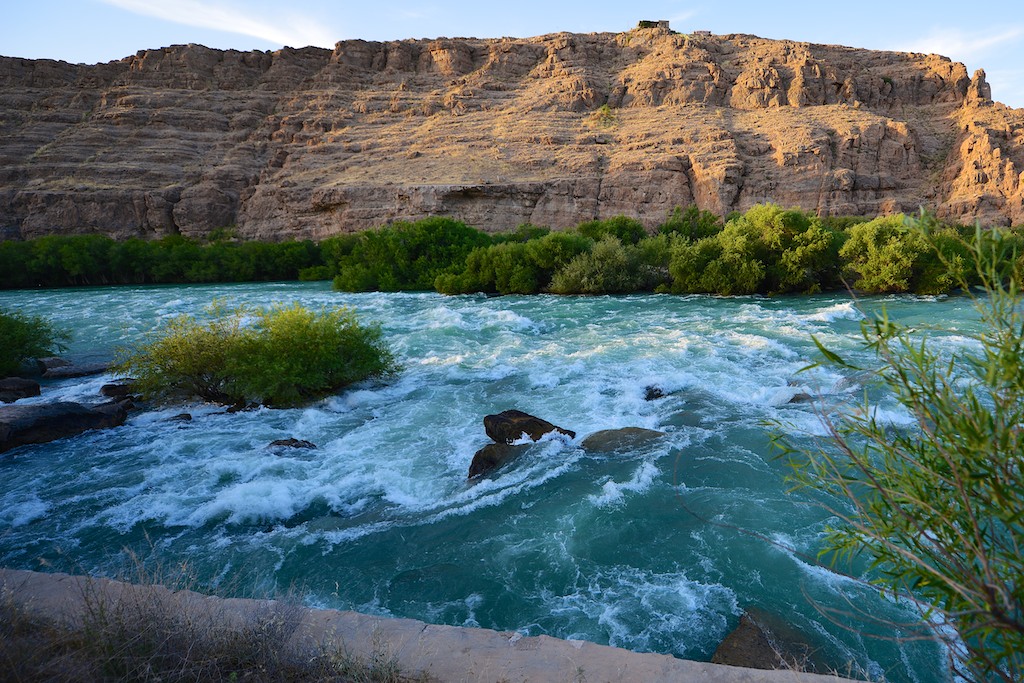
| image_caption | The Kajaki Dam, located northeast of Kajaki village | |
| dot_x | dot_y = | |
| pushpin_map | Afghanistan | |
| pushpin_label_position | bottom | |
| pushpin_map_caption | Location in Afghanistan | |
| pushpin_mapsize | 300 | |
| subdivision_type | Country | |
| subdivision_name | Afghanistan | |
| subdivision_type1 | Province | |
| subdivision_name1 | Helmand Province | |
| subdivision_type2 | District | |
| subdivision_name2 | Kajaki District | |
| leader_title1 | ||
| established_title | ||
| established_title2 | ||
| established_title3 | ||
| unit_pref | Imperial | |
| area_total_km2 | ||
| area_land_km2 | ||
| population_blank1_title | Ethnicities | |
| population_blank2_title | Religions | |
| timezone | UTC+4:30 | |
| coordinates | ||
| elevation_footnotes | ||
| elevation_m | 938 | |
| postal_code_type |
Kajaki is a village in southern Afghanistan, and is split between two townsteads, Kajaki 'Olya, and Kajaki Sofla. It is the district centre of Kajaki District in Helmand Province. North east of the village is an important hydro power station for electricity and irrigation projects, the Kajaki Dam. The village itself hugs the east side of the Helmand River, right after it makes its first turn south, one km out from the dam. Kajaki is bordered by the town Payson to its west, Tangeye, an abandoned bazaar to its north, Shabez Kheyl, and Kanzi to its north west, all across the Helmand. Kajaki serves as the northern terminus of Route 611.
History
It was announced in December 2006 that British Corporal Mark Wright would be posthumously awarded the George Cross for his actions after entering an unmarked minefield near Kajaki, in an attempt to save the lives of other injured soldiers which is the plot for the 2014 film Kajaki: The True Story.
On August 23, 2007, three British soldiers of the Royal Anglian Regiment were killed in a suspected friendly fire incident northwest of Kajaki. The soldiers were on patrol when they were attacked by Taliban insurgents. A pair of United States Air Force McDonnell Douglas F-15 Eagle fighter jets were called in to provide close air support dropping one 500 lb bomb in support of British forces; it is believed that this bomb exploded close to the British position killing three soldiers and injuring two others. On August 26, 2007, the Sunday Telegraph reported that American officials were investigating the possibility that the bombing was the result of a failure in the bombs guidance system rather than being the result of pilot error.
Climate
Kajaki has a hot desert climate (Köppen BWh), characterised by little precipitation and high variation between summer and winter temperatures. The average temperature in Kajaki is 18.3 °C, while the annual precipitation averages 163 mm. July is the hottest month of the year with an average temperature of 30.9 °C. The coldest month January has an average temperature of 5.5 °C.
References
References
- [http://www.mod.uk/DefenceInternet/DefenceNews/MilitaryOperations/ThreeBritishSoldiersKilledInAfghanistan.htm Ministry of Defence. Defence News. Three British soldiers killed in Afghanistan]
This article was imported from Wikipedia and is available under the Creative Commons Attribution-ShareAlike 4.0 License. Content has been adapted to SurfDoc format. Original contributors can be found on the article history page.
Ask Mako anything about Kajaki — get instant answers, deeper analysis, and related topics.
Research with MakoFree with your Surf account
Create a free account to save articles, ask Mako questions, and organize your research.
Sign up freeThis content may have been generated or modified by AI. CloudSurf Software LLC is not responsible for the accuracy, completeness, or reliability of AI-generated content. Always verify important information from primary sources.
Report