From Surf Wiki (app.surf) — the open knowledge base
Juno Beach, Florida
Town in the state of Florida, United States

Town in the state of Florida, United States
| Field | Value |
|---|---|
| name | Juno Beach, Florida |
| official_name | Town of Juno Beach |
| settlement_type | Town |
| image_skyline | File:Juno Beach Town Center.jpg |
| image_flag | Flag of Juno Beach, Florida.gif |
| image_map | Map of Florida highlighting Juno Beach.svg |
| mapsize | 250x200px |
| map_caption | Location of Juno Beach in Palm Beach County, Florida |
| subdivision_type | Country |
| subdivision_name | United States |
| subdivision_type1 | State |
| subdivision_name1 | Florida |
| subdivision_type2 | County |
| subdivision_name2 | Palm Beach |
| established_title | Incorporated |
| established_date | 1953 |
| government_type | Council-Manager |
| leader_title | Mayor |
| unit_pref | Imperial |
| area_footnotes | |
| area_total_km2 | 7.05 |
| area_land_km2 | 5.28 |
| area_water_km2 | 1.77 |
| area_total_sq_mi | 2.72 |
| area_land_sq_mi | 2.04 |
| area_water_sq_mi | 0.68 |
| population_as_of | 2020 |
| population_total | 3858 |
| population_density_km2 | 730.39 |
| population_density_sq_mi | 1892.10 |
| timezone | Eastern (EST) |
| utc_offset | -5 |
| timezone_DST | EDT |
| utc_offset_DST | -4 |
| elevation_footnotes | |
| elevation_ft | 3 |
| coordinates | |
| postal_code_type | ZIP code |
| postal_code | 33408 |
| area_codes | 561, 728 |
| blank_name | FIPS code |
| blank_info | 12-35850 |
| blank1_name | GNIS feature ID |
| blank1_info | 2405926 |
| website |
Juno Beach is a town in Palm Beach County, Florida, United States. Juno Beach is home to the headquarters of Florida Power & Light, the Loggerhead Marinelife Center and the Seminole Golf Club. It is home to one of the most dense sea turtle nesting areas in the world. In 2023, the Loggerhead Marinelife Center recorded a record-breaking 25,025 sea turtle nests on their 9.5-mile stretch of beach. This included 15,672 loggerhead nests, 9,137 green turtle nests, and 216 leatherback nests, producing more than one million hatchlings. It was also the original county seat for the area that was then known as Dade County. Juno Beach is in the Miami metropolitan area. The political climate in Juno Beach is leaning liberal.{{cite web |url= https://www.bestplaces.net/voting/city/florida/juno_beach
History
As a sister settlement to the town of Jupiter to the north, the development was named, at some point in the 19th century, after Jupiter's wife, the ancient Roman goddess Juno. The designation in 1944 of a namesake D-Day landing beach in Normandy, named for Juno Dawnay, a Canadian officer's wife, was purely coincidental.
A pier was built in 1950 and the town was platted in 1948. It was officially incorporated as a town in 1953. and a new 993-foot Juno Beach Pier built in 1999.
The area has evidence of human settlement dating back to around 500 B.C., with early indigenous civilizations, and saw European contact beginning in the 1500s through Spanish exploration. In the late 19th century, the nearby town of Juno served as the Dade County seat and transportation hub for the Jupiter and Lake Worth Railway, often referred to as the "Celestial Railroad." This prominence faded after Henry Flagler's development of Palm Beach in 1893, which shifted regional economic activity further south.

Modern development of Juno Beach began in the late 1940s when Bessemer Properties platted a subdivision near the Seminole Golf Club and initiated early infrastructure improvements. Following incorporation in 1953, the town expanded steadily, with street naming by the Juno Beach Garden Club in 1958 and condominium growth in the 1960s. The 1980s saw increased commercial and residential development, including the addition of The Waterford life care community and Florida Power & Light's administrative offices, contributing to a diversified tax base. By 1991, the completion of Town Center marked a new chapter in civic identity, supporting a growing population and fostering a seaside residential character.
During the Second World War
During World War II, German U-boats patrolled this coastline. Tankers were a favorite target as they transported oil via the swift, northbound gulf stream which runs close to the south Florida coast.
A submarine attacked this tanker south of Juno Beach, off Singer Island.
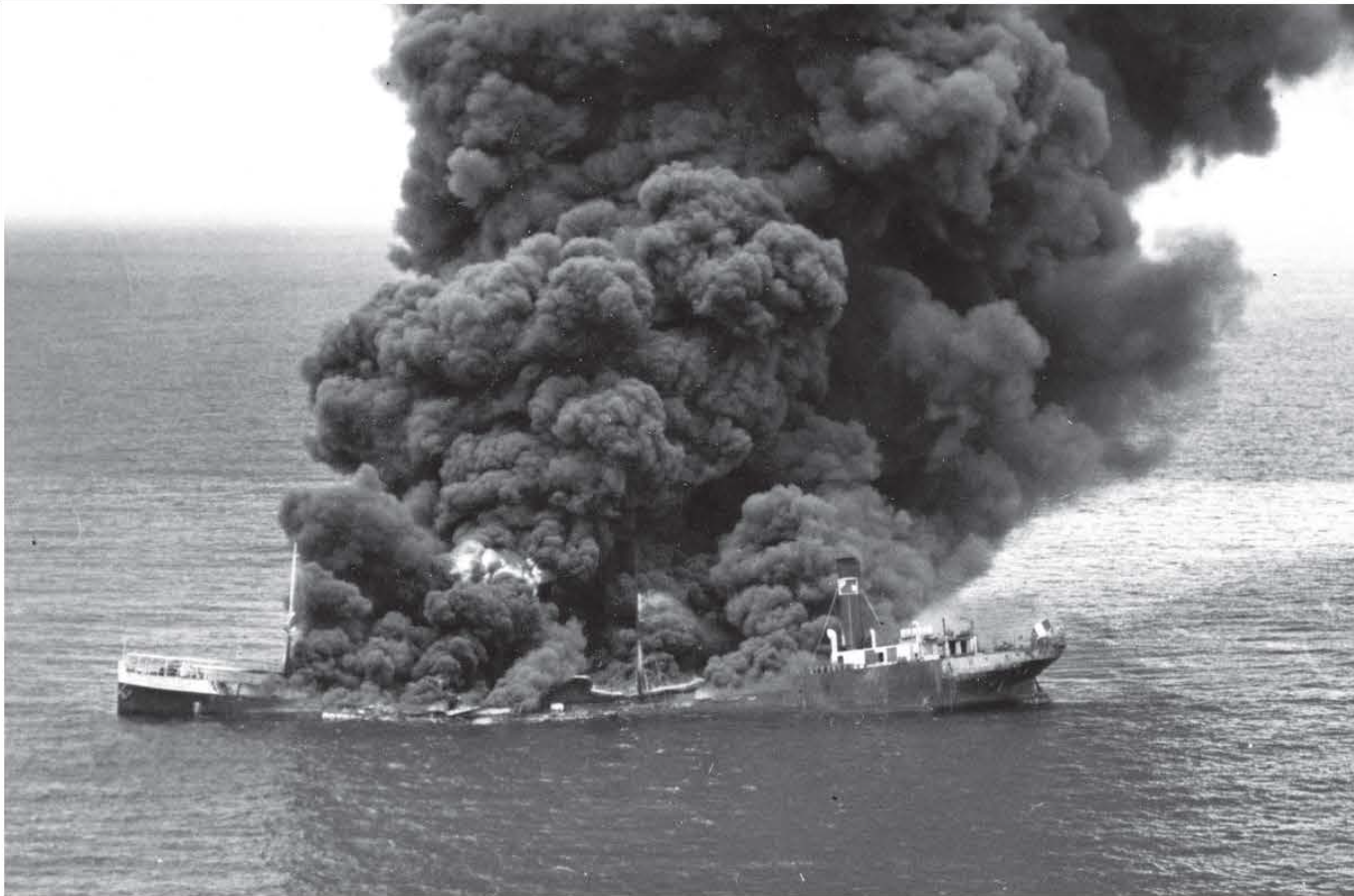
With these submarines offshore, people feared that our sparsely inhabited coastline would be ideal for landing parties of German spies or saboteurs. To watch for them: "A beach patrol was formed, and men on horseback rode along the beach to warn of enemy activity. . . Wounded American sailors, whose ships had been sunk by the submarines, occasionally were found on the beach and rushed to the hospital . . . by the townspeople." - Nora Fitzgerald, a local resident.
The U.S. Coast Guard leased the Surf Cottages motel during the war. Horseback beach patrols, which included civilian volunteers, used the motel car sheds across the street as stables.
Geography

According to the United States Census Bureau, the town has a total area of 1.9 sqmi, of which 0.5 sqmi (25.13%) is covered by water.
Climate
Juno Beach has a tropical rainforest climate with hot summers and warm winters, and no dry season.
|Jan record high F = 86 |Feb record high F = 89 |Mar record high F = 92 |Apr record high F = 97 |May record high F = 94 |Jun record high F = 98 |Jul record high F = 99 |Aug record high F = 97 |Sep record high F = 96 |Oct record high F = 94 |Nov record high F = 91 |Dec record high F = 90
|Jan avg record high F = 83.7 |Feb avg record high F = 85.4 |Mar avg record high F = 88.2 |Apr avg record high F = 89.6 |May avg record high F = 90.5 |Jun avg record high F = 93.8 |Jul avg record high F = 94.2 |Aug avg record high F = 94.1 |Sep avg record high F = 93.1 |Oct avg record high F = 90.5 |Nov avg record high F = 87.1 |Dec avg record high F = 85.0 |year avg record high F = 95.5
|Jan avg record low F = 39.9 |Feb avg record low F = 43.8 |Mar avg record low F = 48.1 |Apr avg record low F = 56.1 |May avg record low F = 64.2 |Jun avg record low F = 71.1 |Jul avg record low F = 71.9 |Aug avg record low F = 72.9 |Sep avg record low F = 71.9 |Oct avg record low F = 60.7 |Nov avg record low F = 51.3 |Dec avg record low F = 46.7 |year avg record low F = 37.5
|Jan record low F = 30 |Feb record low F = 32 |Mar record low F = 39 |Apr record low F = 48 |May record low F = 55 |Jun record low F = 69 |Jul record low F = 65 |Aug record low F = 70 |Sep record low F = 66 |Oct record low F = 49 |Nov record low F = 42 |Dec record low F = 31
Demographics
2020 census
| Race | Number | Percentage |
|---|---|---|
| White (NH) | 3,492 | 90.51% |
| Black or African American (NH) | 21 | 0.54% |
| Native American or Alaska Native (NH) | 3 | 0.08% |
| Asian (NH) | 69 | 1.79% |
| Pacific Islander or Native Hawaiian (NH) | 0 | 0.00% |
| Some other race (NH) | 4 | 0.10% |
| Two or more races/Multiracial (NH) | 87 | 2.26% |
| Hispanic or Latino (any race) | 182 | 4.72% |
| Total | 3,858 | 100.00% |
As of the 2020 United States census, there were 3,858 people, 2,334 households, and 943 families were residing in the town.
2010 census
| Juno Beach Demographics |
|---|
| 2010 Census |
| Total population |
| Population, percent change, 2000 to 2010 |
| Population density |
| White or Caucasian (including White Hispanic) |
| (Non-Hispanic White or Caucasian) |
| Black or African-American |
| Hispanic or Latino (of any race) |
| Asian |
| Native American or Native Alaskan |
| Pacific Islander or Native Hawaiian |
| Two or more races (Multiracial) |
| Some Other Race |
As of the 2010 United States census, there were 3,176 people, 1,989 households, and 909 families were residing in the town.
2000 census
At the 2000 census, there were 3,176 people, 1,791 households, and 929 families resided in the town. The population density was 2,339.2 PD/sqmi. The 2,603 housing units hd an average density of 1,866.6 /sqmi. The racial makeup of the town was 97.82% White (of which 95% were Non-Hispanic white), 0.43% African American, 0.12% Native American, 0.61% Asian, 0.06% Pacific Islander, 0.34% from other races, and 0.61% from two or more races. Hispanics or Latinos of any race were 3.37%.
As of 2000, there were 1,791 households, 9.1% had children under 18 living with them, 47.8% were married couples living together, 3.0% had a female householder with no husband present, and 48.1% were not families. About 42.9% of households were one person and 25.5% were one person 65 or older. The average household size was 1.80, and the average family size was 2.42.
In 2000, the age distribution was 10.1% under 18, 2.3% from 18 to 24, 16.2% from 25 to 44, 28.8% from 45 to 64, and 42.6% 65 or older. The median age was 60 years. For every 100 females, there were 84.9 males. For every 100 females 18 and over, there were 79.7 males.
In 2000, the median household income was $55,263 and the median family income was $68,382. Males had a median income of $50,545 versus $36,842 for females. The per capita income for the town was $50,344. About 3.9% of families and 4.5% of the population were below the poverty line, including 5.7% of those under 18 and 2.7% of those 65 or over.
As of 2000, speakers of English as a first language accounted for 96.34% of all residents, while French made up 2.01%, Greek was at 1.00%, and Spanish accounted for 0.63% of the population.{{cite web |url=http://www.mla.org/map_data_results&state_id=12&county_id=&mode=place&zip=&place_id=35850&cty_id=&ll=&a=&ea=&order=r
Places of interest
- Juno Dunes Natural Area
- Loggerhead Park and Loggerhead Marinelife Center
Juno Beach FL Loggerhead Marinelife Center01.jpg|The Loggerhead Marinelife center in Loggerhead Park. Juno Beach Florida Pier.JPG|Juno Beach fishing pier, next to Loggerhead park Beach Sunflower (5561869554).jpg|Flower from the Juno Dunes Natural Area
References
References
- "Palm Beach County History Online: Timeline of Municipalities". www.pbchistoryonline.org.
- "2020 U.S. Gazetteer Files". United States Census Bureau.
- "U.S. Census website". [[United States Census Bureau]].
- {{GNIS. 2405926
- "Research".
- Longo, Tom. (2024-02-16). "Loggerhead Marinelife Center Reports First Sea Turtle Nest of the Season, Earliest Ever Recorded".
- "Crime in Juno Beach, Florida". Best Places.
- Eliot Kleinberg. (September 16, 1987). "A Town by Any Other Name". The Palm Beach Post.
- (September 25, 2017). "Why the code name Juno Beach?". Juno Beach Centre.
- Morse, Hannah. "'New' Juno Beach Pier celebrates 20 years".
- "Juno Beach". Palm Beach County Historical Society.
- (January 15, 1999). "Anglers in Juno No Longer Without Pier".
- (August 5, 2016). "Telling the Juno Beach Pier's Story". Loggerhead Marine Life Centre.
- "Juno Beach Park Pier". Palm Beach County.
- "Juno Beach History".
- "The Dawn of Tourism".
- "Census of Population and Housing". Census.gov.
- "Explore Census Data".
- "S1101 HOUSEHOLDS AND FAMILIES - 2020: Juno Beach town, Florida".
- "S1101 HOUSEHOLDS AND FAMILIES - 2010: Juno Beach town, Florida".
- "Demographics of Juno Beach, FL". MuniNetGuide.com.
This article was imported from Wikipedia and is available under the Creative Commons Attribution-ShareAlike 4.0 License. Content has been adapted to SurfDoc format. Original contributors can be found on the article history page.
Ask Mako anything about Juno Beach, Florida — get instant answers, deeper analysis, and related topics.
Research with MakoFree with your Surf account
Create a free account to save articles, ask Mako questions, and organize your research.
Sign up freeThis content may have been generated or modified by AI. CloudSurf Software LLC is not responsible for the accuracy, completeness, or reliability of AI-generated content. Always verify important information from primary sources.
Report