From Surf Wiki (app.surf) — the open knowledge base
Junior Mints
American candy

American candy
| Field | Value | |
|---|---|---|
| name | Junior Mints | |
| image | [[File:Junior Mints logo.svg | 200px]] |
| caption | An old box of Junior Mints | |
| type | Candy | |
| country | United States | |
| creator | James O. Welch Company | |
| year | 1949 | |
| main_ingredient | Semi-sweet chocolate | |
| minor_ingredient | Mint | |
| serving_size | 100 g | |
| no_recipes | false |
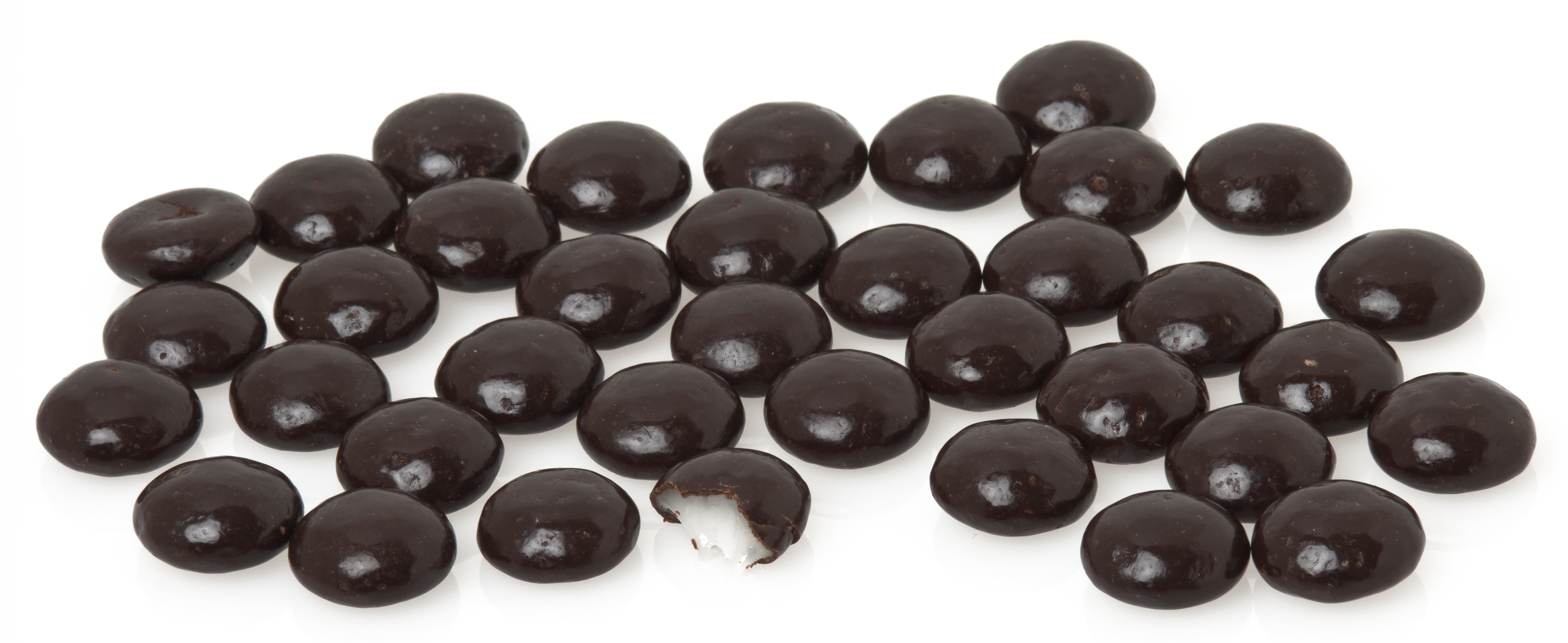
Junior Mints are a candy brand consisting of small rounds of mint filling inside a semi-sweet chocolate coating, with a dimple on one side. The mints are produced by Tootsie Roll Industries, and packaged in varying amounts from the so-called 'fun-size box' to the much larger 12 oz. box.
History
James O. Welch was born in Hertford, North Carolina, attended the University of North Carolina, and then founded his Cambridge candy company in 1927. His partner in the company was his brother, Robert W. Welch, Jr., who retired from the confectionery business in 1956 and two years later founded the John Birch Society.
In 1963, the brand was acquired by Nabisco, who sold the brand to Warner-Lambert Company (now part of Pfizer) in 1988, who in turn sold the brand to Tootsie Roll in 1993. Today, Junior Mints are still manufactured in the Area 4 neighborhood of Cambridge at a factory of Cambridge Brands, a Tootsie Roll Industries subsidiary. The same factory makes all Sugar Babies and Charleston Chews.
Origin of product name
The name of the product is a pun on Sally Benson's Junior Miss, a collection of her stories from The New Yorker, which were adapted by Jerome Chodorov and Joseph Fields into a successful play. The play was produced by Max Gordon and directed by Moss Hart and ran on Broadway from 1941 to 1943. According to one past official company history, when James Welch developed and launched the product in 1949, he named the candy after his favorite Broadway show.
Product
Over 15 million Junior Mints are produced daily. Tootsie Roll also makes Junior Caramels (caramel filling with a milk chocolate coating) and limited edition "Inside Outs" (mint-chocolate filling with a white chocolate shell). Other limited edition Junior Mints include Valentine's Day Pastels/Valentine's Day Regulars (not pastel), Easter Pastels, Christmas edition (featuring red and green fillings), and Christmas Peppermint Crunch edition (featuring crunchy peppermint flakes in the outer chocolate coating). Junior Mints are sold in various amounts from the fun-size boxes to the movie theater-size boxes, since the product continues to sell well in movie theaters. Junior Mints have traveled throughout the world. They are now certified kosher dairy by the Orthodox Union.
In popular culture
Junior Mints are featured heavily in the Seinfeld episode "The Junior Mint”, in which, while observing a surgical procedure, Jerry pushes Kramer’s hand away, causing a Junior Mint to fall into the patient. Later, the Junior Mint is implied to have cured the patient's infection.
References
References
- Gray, Paula. (October 18, 1984). "Candy Creator spends retirement years sweetening his community". The Register.
- (February 1, 1985). "James O. Welch Dies at 79; Founder of Candy Company".
- (May 4, 2018). "A factory in Cambridge makes 14 million Junior Mints a day. Why is no one allowed inside? - The Boston Globe".
- Smith, Andrew F.. (July 14, 2006). "Encyclopedia of Junk Food and Fast Food". Greenwood Publishing Group.
- "OU UKD Public".
This article was imported from Wikipedia and is available under the Creative Commons Attribution-ShareAlike 4.0 License. Content has been adapted to SurfDoc format. Original contributors can be found on the article history page.
Ask Mako anything about Junior Mints — get instant answers, deeper analysis, and related topics.
Research with MakoFree with your Surf account
Create a free account to save articles, ask Mako questions, and organize your research.
Sign up freeThis content may have been generated or modified by AI. CloudSurf Software LLC is not responsible for the accuracy, completeness, or reliability of AI-generated content. Always verify important information from primary sources.
Report