From Surf Wiki (app.surf) — the open knowledge base
Juilliard School
American performing arts conservatory in New York City
American performing arts conservatory in New York City
| Field | Value | |
|---|---|---|
| name | The Juilliard School | |
| image | Seal of the Juilliard School.png | |
| image_upright | .53 | |
| established | ||
| founder | Frank Damrosch | |
| former_names | {{Plainlist | |
| type | Private conservatory | |
| accreditation | MSCHE | |
| endowment | $1.38 billion (2021) | |
| president | Damian Woetzel | |
| city | New York City | |
| state | New York | |
| country | United States | |
| coordinates | ||
| campus | Small Urban | |
| enrollment | 1,028 (plus ~290 pre-college) | |
| undergrad | 619 (2023) | |
| postgrad | 409 (2023) | |
| academic_staff | 138 FT/ 314 PT (2023) | |
| mascot | Penguin | |
| colors | red and blue | |
| website | ||
| logo | Juilliard School Logo 02.2022.svg | |
| logo_upright | .85 |
- Institute of Musical Art (1905–1926)
- Juilliard School of Music (1926–1968) }}
The Juilliard School ( ) is a private performing arts conservatory in New York City. Founded by Frank Damrosch as the Institute of Musical Art in 1905, the school later added dance and drama programs and became the Juilliard School, named after its principal benefactor Augustus D. Juilliard.
The school is composed of three primary academic divisions: dance, drama, and music, of which the last is the largest and oldest. Juilliard offers degrees for undergraduate and graduate students and liberal arts courses, non-degree diploma programs for professional artists, and musical training for pre-college students. Juilliard has a single campus at the Lincoln Center for the Performing Arts, comprising numerous studio rooms, performance halls, a library with special collections, and a dormitory. It has one of the lowest acceptance rates of schools in the United States. With a total enrollment of about 950 students, Juilliard has several student and faculty ensembles that perform throughout the year, most notably the Juilliard String Quartet.
Juilliard alumni have won 105 Grammy Awards, 62 Tony Awards, 47 Emmy Awards, and 24 Academy Awards, including two alumni with EGOTs. Musicians from Juilliard have pursued careers as international virtuosos and concertmasters of professional symphony orchestras. Its alumni and faculty include more than 16 Pulitzer Prize and 12 National Medal of Arts recipients.
History
Early years: 1905–1946
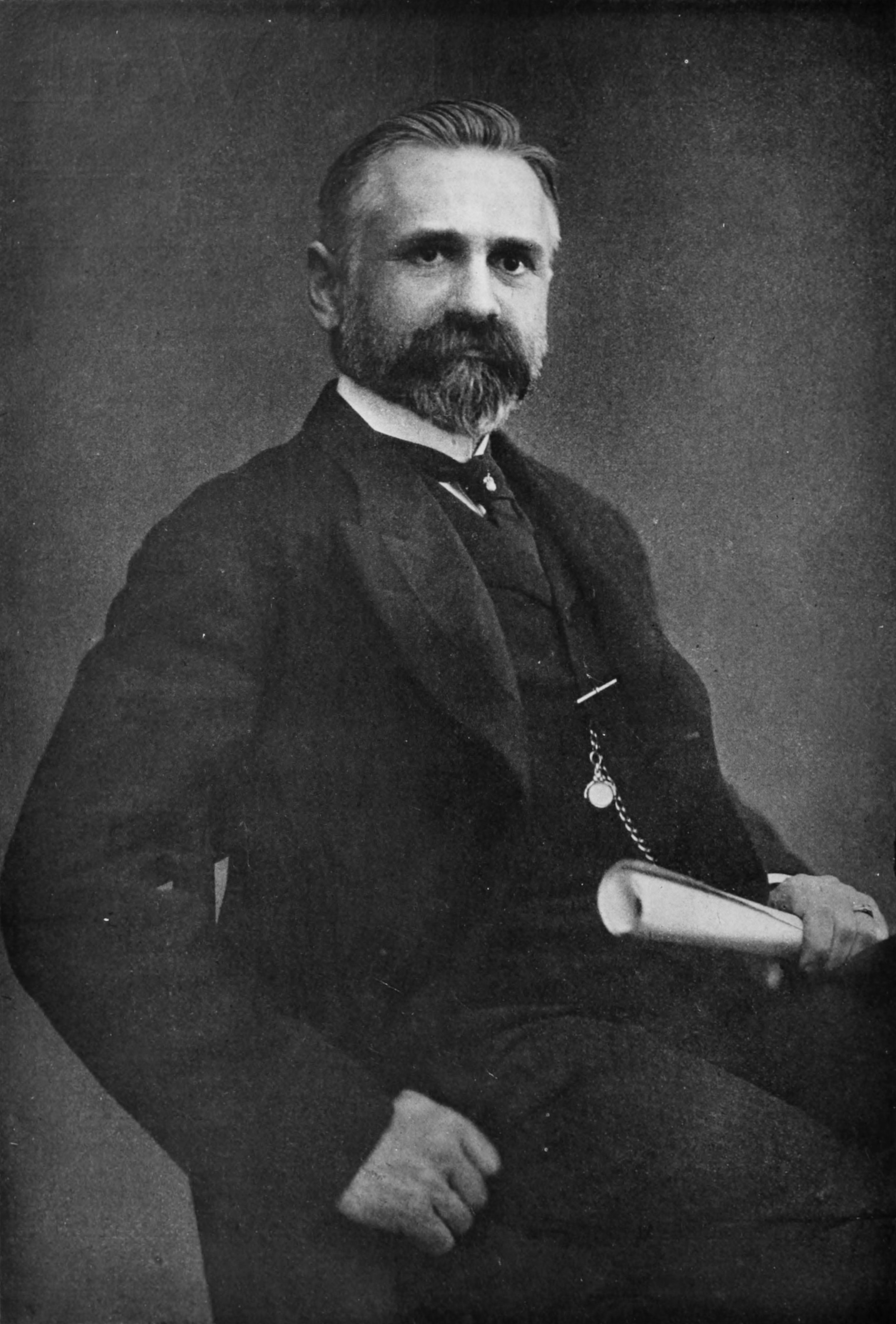
In 1905, the Institute of Musical Art (IMA), Juilliard's predecessor institution, was founded by Frank Damrosch, a German-American conductor and godson of Franz Liszt, on the premise that the United States did not have a premier music school and too many students were going to Europe to study music. Chartered by the Board of Regents of the University of the State of New York, the institute became one of first endowed music schools in the US, with significant funding provided by philanthropist and banker James Loeb.
Damrosch and Loeb's mission was to establish a musical institution with high standards of teaching and learning that would incorporate a unified pedagogy and develop a "true musical culture among all classes". Accordingly, the school would rely on its endowment to ensure the quality of instruction was independent of students' financial status.
The Institute of Musical Art opened in the former Lenox Mansion, Fifth Avenue and 12th Street, on October 11, 1905. When the school opened, most teachers were European; however, only Americans were allowed to study at the institute.{{efn|Members of the original faculty included notable figures such as members of the internationally known Kneisel Quartet, Sigismund Stojowski, Etelka Gerster, Georg Henschel, Georges Barrère, Gaston Dethier and Percy Goetschius. The school offered courses in voice culture, ear training, sight-singing, chorus, stringed instruments, organ, theory and composition, orchestral instruments, languages (French, German, Italian), and pedagogy. Walter Damrosch conducted the orchestra and chorus and taught sight-singing, ear training, and pedagogy courses.

In 1919, a wealthy textile merchant named Augustus D. Juilliard died and left a vast sum of money for the advancement of music in his will, which set up the Juilliard Musical Foundation (JMF) a year later as one of its primary beneficiaries. Under Eugene Noble as executive secretary, the foundation purchased the Vanderbilt family guesthouse at 49 E. 52nd Street, and established a separate new music school, the Juilliard Graduate School (JGS), in 1924.
After much discussion, the Juilliard School of Music was eventually created in 1926 through a merger of the Institute and the Graduate School. The JGS moved from E 52nd Street to 130 Claremont Avenue next to the IMA in 1931. The two schools had the same board of directors and president but maintained their distinct identities. Columbia University Professor John Erskine became the first president of the two institutions (1928–1937). Frank Damrosch continued as the institute's dean, and the Australian pianist and composer Ernest Hutcheson was appointed dean of the Graduate School. Hutcheson later served as president from 1937 to 1945.
Expansion and growth: 1946–1990
Juilliard's third president, William Schuman, an American composer and the first Pulitzer Prize for Music winner, led the school from 1945 to 1961 and brought about several significant changes to raise the school's academic standards. In 1946, Schuman completely consolidated the Institute of Musical Art and the Juilliard Graduate School to form a single institution and created the Juilliard String Quartet as the school's main quartet-in-residence. During his tenure, Schuman cut down enrollment by more than half, eliminated the Juilliard Summer School and Music Education Program, and opened Juilliard's admission to non-Americans.
Schuman discontinued the Theory Department and initiated a new curriculum called the Literature and Materials of Music (L&M), which began in 1947–1948, and was based on the assumption that musical theory education "should transfer theoretical knowledge into practical performance." Designed for composers to teach, the more practical-orientated curriculum would provide an overview of the "literature of music". L&M was a reaction against more formal theory and ear training, and as a result did not have a formal structure and allowed for more flexibility.
Schuman established the school's Dance Department under Martha Hill's direction in 1951, intending that students in the program would receive an education in dance, choreography, and music. The department, later renamed the Dance Division, offered performance opportunities through the Juilliard Dance Theatre (1954–1958) and later the Juilliard Dance Ensemble (founded ), which often collaborated with the Juilliard Orchestra. For many years, the Juilliard Dance Department shared facilities with the School of American Ballet.
In 1957, after two years of deliberation, the Juilliard School of Music board announced that the school would relocate from upper Manhattan to the future Lincoln Center. The Lincoln Center would cover the costs for the construction project, but the school would have to instruct exclusively advanced students, introduce a drama program and cut its Preparatory School. Juilliard's new building at Lincoln Center would be designed by Pietro Belluschi with associates Eduardo Catalano and Helge Westermann. The Juilliard School building at Lincoln Center was completed on October 26, 1969, officially opening with a dedication ceremony and concert. With Lincoln Center's prestige came a newly elevated status for the Juilliard School.

William Schuman assumed the presidency of Lincoln Center in 1962 and composer Peter Mennin succeeded him. Mennin made substantial changes to the L&M program—ending ear training and music history, adding performances and composition in class, and hiring the well-known pedagogue Renée Longy to teach solfège. Mennin organized several new programs, such as Juilliard's Master Class Program and Doctoral Music Program. Under Mennin, Juilliard's international reputation grew as several alumni won competitive international competitions. In the 1950s, the school received international attention when alumnus Van Cliburn won the International Tchaikovsky Competition.
In 1968, Mennin hired John Houseman to manage the new Drama Division as director and Michel Saint-Denis as associate director and consultant. The School's name was changed to The Juilliard School to reflect its broadened mission to educate musicians, dancers, directors, and actors. The drama department first only trained actors, of which the first class graduated as Group 1 in 1972, but added playwrights and directors programs in the 1990s. Houseman founded The Acting Company in 1972, which allowed Juilliard students to perform and tour throughout the country. Also in 1972, Lila Acheson Wallace donated $5 million to Juilliard, which later named the Lila Acheson Wallace American Playwrights Program after her.
Modernization: 1990–2020
Juilliard's longest-serving president Joseph W. Polisi (1984–2017), helped the school modernize by developing educational outreach, formalizing and expanding its music programs, establishing interdisciplinary programs and reforming the school's finances. In 1991, Polisi founded the Music Advancement Program (MAP) to help underrepresented students affected by music education budget cuts throughout public schools in New York. Between 1990 and 1993, individual departments for all instruments and voice were established, the Meredith Wilson Residence Hall was built next to the school, salaries for teachers were increased, and the school hoped to accept fewer people and eventually cut 100 students to allow for more funding. In 2001, the school established a jazz performance training program.
By the end of the 20th century, Juilliard had established itself as a prestigious performing arts school. At the time, graduates comprised approximately 20 percent of the Big Five American Orchestras and half of the New York Philharmonic. Juilliard's endowment nearly tripled over the 1980s, reaching a quarter billion in the mid-1990s. Despite high tuition, on average, over 90 percent of accepted students ended up attending the school. In 1999, the Juilliard School was awarded the National Medal of Arts and became the first educational institution to receive the award.
In September 2005, Colin Davis conducted an orchestra that combined students from the Juilliard and London's Royal Academy of Music at the BBC Proms, and during 2008 the Juilliard Orchestra embarked on a successful tour of China, performing concerts as part of the Cultural Olympiad in Beijing, Suzhou, and Shanghai under the expert leadership of Maestro Xian Zhang.
The school has received various gifts and donations since the 2000s. Manuscript collectionIn 2006, Juilliard obtained a trove of precious music manuscripts from board chair and philanthropist Bruce Kovner that make up the Juilliard Manuscript Collection. Philanthropist James S. Marcus donated $10 million to the school to establish the Ellen and James S. Marcus Institute for Vocal Arts at the school in 2010. In 2014, Kovner gave $60 million for the Kovner Fellowship Program to provide expenses for exceptionally gifted students.

On September 28, 2015, the Juilliard School announced a major expansion into Tianjin during a visit by China's first lady, Peng Liyuan, the institution's first such full-scale foray outside the United States. The school opened in 2020 and offers a Master of Music degree program.
In May 2017, retired New York City Ballet principal dancer Damian Woetzel was named president, replacing Joseph W. Polisi. From March 2020 through the spring 2021 semester, the school switched to online classes and suspended live performances in response to the COVID-19 pandemic.
Post-pandemic: 2020–present
In June 2021, members of the student group The Socialist Penguins organized a protest against rising tuition costs after claiming that they "weren't being listened to" when meeting with president and provost about the tuition fees. In September, the school's Evening Division was renamed to Juilliard Extension which would broaden to offer programs in person and online. In December of the same year, a $50 million gift was given to the school's Music Advancement Program to help students of underrepresented backgrounds.
Campus
{ "type": "FeatureCollection", "features":
{ "type": "Feature", "properties": { "title": "[Alice Tully Hall", "marker-symbol": "-number", "marker-color": "302060", "marker-size": "medium" }, "geometry": { "type": "Point", "coordinates": [-73.98255267162323, 40.77338364167763] }
},
{ "type": "Feature", "properties": { "title": "Juillliard School, Irene Diamond Building", "marker-symbol": "-number", "marker-color": "302060", "marker-size": "medium" }, "geometry": { "type": "Point", "coordinates": [-73.98328267162323,40.7738036] } }, { "type": "Feature", "properties": { "title": "Meredith Willson Residence Hall", "marker-symbol": "-number", "marker-color": "302060", "marker-size": "medium" }, "geometry": { "type": "Point", "coordinates": [-73.98408267162323,40.7740036] } } ] }
The Juilliard School occupies a single main building, the Irene Diamond Building, in the Lincoln Center for the Performing Arts, along Broadway and W 65th Street. The Juilliard building contains several large studio rooms and performance venues, such as the Glorya Kaufman Dance Studio, Stephanie P. McClelland Drama Theater, Harold and Mimi Steinberg Drama Studio, the Judith Harris and Tony Woolfson Orchestral Studio, and Edwin and Nancy Marks Jazz Rehearsal Room. Recital halls include the Peter Jay Sharp Theater, Paul Recital Hall, and the Morse Recital Hall. The building also houses the Alice Tully Hall, where the Chamber Music Society of Lincoln Center performs.
Adjacent to the Juilliard building is the Samuel B. & David Rose Building, which is the home of the school's Meredith Willson Residence Hall, named after the composer, conductor and Juilliard alumnus Meredith Willson. The building consists of student dormitories, faculty suites, and studios for visiting artists. and is also home to the School of American Ballet.
File:Alice Tully Hall (48047494177).jpg|Alice Tully Hall File:The Juilliard School photo Don Ramey Logan.jpg| Main entrance File:Juilliard School 003.jpg|Irene Diamond Building
Organization and administration
Juilliard's leadership and administration consist of a board of trustees, executive officers, and senior administrators. The board of trustees includes approximately thirty members, with a chair and two vice-chairs, and is responsible for appointing Juilliard's president and managing the school's business affairs. Executive offices include the offices of the president and provost. Four administrators serve each as dean and director of the dance, music, drama, and preparatory divisions. There is an additional director for the jazz program. Other academic subdivisions include the Ellen and James S. Marcus Institute for Vocal Arts and Lila Acheson Wallace Library. The vice president holds the position of chief advancement officer and manages the development of the school. Other administrative areas include the chief operating officer and corporate secretary, the public affairs office, and enrollment management and student development.
The Juilliard School has ties with higher education institutions such as Barnard College, Columbia University, and Fordham University and has associations with Nord Anglia Education for primary and secondary education since 2015. The school is accredited by the Middle States Commission on Higher Education (MSCHE), with its last reaffirmation in 2020.
Academics
Admission
Juilliard admits both degree program seekers and pre-college division students. The latter enter a conservatory program for younger students to develop their skills; All applicants who wish to enroll in the Music Advancement Program, for the Pre-College Division, must perform an audition in person before members of the faculty and administration and must be between ages 8 and 18.
The Juilliard admissions program comprises several distinct steps. Applicants must submit a complete application, school transcripts, and recommendations; some majors also require that applicants submit prescreening recordings of their work, which are evaluated as part of the application. A limited number of applicants are then invited to a live audition,
Admission to the Juilliard School is highly competitive, as it ranks among the most selective schools in the United States. In 2007, the school received 2,138 applications for admission, of which 162 were admitted for a 7.6% acceptance rate. For the fall semester of 2009, the school had an 8.0% acceptance rate. In 2011, the school accepted 5.5% of applicants. For Fall 2012, 2,657 undergraduate applicants were received by the college division and 7.2% were accepted. The 75th percentile accepted into Juilliard in 2012 had a GPA of 3.96 and an SAT score of 1350.
A cross-registration program is available with Columbia University where Juilliard students who are accepted to the program are able to attend Columbia classes, and vice versa. The program is highly selective, admitting 10–12 students from Juilliard per year. Columbia students also have the option of pursuing an accelerated Master of Music degree at Juilliard and obtaining a bachelor's degree at Barnard or Columbia and an MM from Juilliard in five (or potentially six, for voice majors) years.
Academic programs
The school offers courses in dance, drama, and music. All Bachelor's and master's degree programs require credits from Liberal Arts courses, which include seminar classes on writing, literature, history, culture, gender, philosophy, environment, and modern languages.
The Dance Division was established in 1951 by William Schuman with Martha Hill as its director. It offers a Bachelor of Fine Arts or a Diploma. Areas of study include ballet and modern and contemporary dance, with courses ranging from dance technique and performance to dance studies. Since its inception, the dance program has had a strong emphasis not only on performance but also on choreography and collaboration.
The Drama Division was established in 1968 by the actor John Houseman and Michel Saint-Denis. Its acting programs offer a Bachelor of Fine Arts, a Diploma and, beginning in Fall 2012, a Master of Fine Arts. Until 2006, when James Houghton became director of the Drama Division, there was a "cut system" that would remove up to one-third of the second-year class. The Lila Acheson Wallace American Playwrights Program, begun in 1993, offers one-year, tuition-free, graduate fellowships; selected students may be offered a second-year extension and receive an Artist Diploma. The Andrew W. Mellon Artist Diploma Program for Theatre Directors was a two-year graduate fellowship that began in 1995 (expanded to three years in 1997); this was discontinued in the fall of 2006.
The Music Division is the largest of the school's divisions. Available degrees are Bachelor of Music or Diploma, Master of Music or Graduate Diploma, Artist Diploma and Doctor of Musical Arts. Academic majors are brass, collaborative piano, composition, guitar, harp, historical performance, jazz studies, orchestral conducting, organ, percussion, piano, strings, voice, and woodwinds. The largest music department is Juilliard's string department, followed by the piano department. The collaborative piano, historical performance, and orchestral conducting programs are solely at the graduate level; the opera studies and music performance subprograms only offer Artist Diplomas. The Juilliard Vocal Arts department now incorporates the former Juilliard Opera Center.
The school's non-degree diploma programs are for specialized training to advance a performer's professional career. These include undergraduate and graduate programs in dance, drama, and music. Musicians and performers can also complete Artist Diploma programs in jazz studies, performance, opera, playwriting, and string quartet studies.
Pre-College Division
The Pre-College Division teaches students enrolled in elementary, junior high, and high school. The Pre-College Division is conducted every Saturday from September to May in the Juilliard Building at Lincoln Center.
All students study solfège and music theory in addition to their primary instrument. Vocal majors must also study diction and performance. Similarly, pianists must study piano performance. String, brass and woodwind players, as well as percussionists, also participate in orchestra. The pre-college has two orchestras, the Pre-College Symphony (PCS) and the Pre-College Orchestra (PCO). Placement is by age and students may elect to study conducting, chorus, and chamber music.
The Pre-College Division began as the Preparatory Centers (later the Preparatory Division), part of the Institute of Musical Art since 1916. The Pre-College Division was established in 1969 with Katherine McC. Ellis as its first director. Olegna Fuschi served as director from 1975 to 1988. The Fuschi/Mennin partnership allowed the Pre-College Division to thrive, affording its graduates training at the highest artistic level (with many of the same teachers as the college division), as well as their own commencement ceremony and diplomas. In addition to Fuschi, directors of Juilliard's Pre-College Division have included composer Dr. Andrew Thomas. The current director of the Pre-College Division is Yoheved Kaplinsky.
Center for Innovation in the Arts
The Center for Innovation in the Arts (CIA), formerly called the Music Technology Center, at the Juilliard School was created in 1993 to provide students with the opportunity to use digital technology in the creation and performance of new music. Since then, the program has expanded to include a wide offering of classes such as, Introduction to Music Technology, Music Production, Film scoring, Computers In Performance and an Independent Study In Composition.
In 2009, the Music Technology Center moved to a new, state of the art facility that includes a mix and record suite and a digital "playroom" for composing and rehearsing with technology. Together with the Willson Theater, the Center for Innovation in the Arts is the home of interdisciplinary and electro-acoustic projects and performances at the Juilliard School.
Instruments
The Juilliard School has about 275 pianos, of which 231 are Steinway grand pianos. It is one of the world's largest collections of Steinway and Sons pianos in the space of concert halls and practice rooms.
Pipe organs at Juilliard include those by Holtkamp (III/57, III/44, II/7), Schoenstein (III/12), Flentrop (II/17), Noack (II/3) and Kuhn (IV/85), which are located in various practice rooms and recital halls.
The strings department allows students to borrow valuable historic stringed instruments for special concerts and competitions. There are more than 200 such stringed instruments, including several by Antonio Stradivari and Giuseppe Guarneri del Gesù.
Print and digital resources
The Lila Acheson Wallace Library is the main library at Juilliard that holds study scores, performance and sound recordings, books, and videos. The school's archives include manuscript collections with digitized holographs. The library has over 87,000 musical scores and 25,000 sound recordings. The Peter Jay Sharp Special Collections features the Igor and Soulima Stravinsky Collection, the Arthur Gold and Robert Fizdale Collection, and the Eugène Ysaÿe Collection.

The school acquired the Juilliard Manuscript Collection in 2006, which includes autograph scores, sketches, composer-emended proofs and first editions of major works by Mozart, Bach, Beethoven, Brahms, Schumann, Chopin, Schubert, Liszt, Ravel, Stravinsky, Copland, and other composers of the classical music canon. Many of the manuscripts had been unavailable for generations. Among the items are the printer's manuscript of Beethoven's Ninth Symphony, complete with Beethoven's handwritten amendments, that was used for the first performance in Vienna in 1824; Mozart's autograph of the wind parts of the final scene of The Marriage of Figaro; Beethoven's arrangement of his monumental Große Fuge for piano four hands; Schumann's working draft of his Symphony No. 2; and manuscripts of Brahms's Symphony No. 2 and Piano Concerto No. 2. The entire collection has since been digitized and can be viewed online.
Rankings
Juilliard consistently ranks as one of the top performing arts schools in the world. Since Quacquarelli Symonds first published its QS World University Rankings for the subject performing arts in 2016, Juilliard held the top spot among academic institution for performing arts for six years. The school dropped its ranking to third place in 2022, falling behind the Royal College of Music and the University of Music and Performing Arts Vienna.
As part of Juilliard's ranking criteria for 2022, the school scored 100 out of 100 for academic reputation and 69.2 for employer reputation for an overall score of 93.8. Juilliard and the Curtis Institute of Music were the only two American conservatories that made the top ten in the 2022 QS World Rankings in performing arts. In another report, The Hollywood Reporter ranked the school first among drama schools in the world in 2021. According to ''The Hollywood Reporter'''s 2022 listing of the top-ranked music schools in the world, Juilliard ranked fourth.
Student life
Student body and diversity
| Race and ethnicity | Total | Economic diversity | |||
|---|---|---|---|---|---|
| White | {{bartable | 34 | % | 2 | background:gray}} |
| Foreign national | {{bartable | 31 | % | 2 | background:purple}} |
| Asian | {{bartable | 11 | % | 2 | background:green}} |
| Hispanic | {{bartable | 9 | % | 2 | background:orange}} |
| Black | {{bartable | 8 | % | 2 | background:mediumblue}} |
| Other | {{bartable | 7 | % | 2 | background:brown}} |
| Low-income | {{bartable | 16 | % | 2 | background:red}} |
| Affluent | {{bartable | 84 | % | 2 | background:black}} |
The Juilliard School enrolled 492 full-time undergraduates, 114 part-time undergraduates and 374 graduate students as of the 2019–2020 school year. Women made up 47% of all the students enrolled. The retention rate for that academic year was 94%. That same year, Juilliard awarded 116 Bachelor's Degrees and 140 Master's Degrees and had a graduation rate of 94%. Of the undergraduate degrees, 87 were in music, 20 in dance, and nine in drama. The school conferred 132 Master of Music Degrees and eight Master of Fine Arts Degrees in drama.
Juilliard has made efforts to diversify its student body and program. In 2001, the conservatory introduced a Jazz Studies Program, which Wynton Marsalis currently directs. In the same year, Alicia Graf Mack, who previously danced with the Dance Theatre of Harlem, became the school's first black dance director. The school has recently invested in funding for minority students and schoolchildren to address inequalities. However, some have criticized the school's lack of diversity in its faculty and curriculum and focus on primarily Western Classical Music.
Student organizations
The Juilliard Black Student Union (JBSU) was founded in the fall of 2016. A group of students established the Alliance for Latin American & Spanish Students (ALAS) in the summer of 2018. The political organization, the Socialist Penguins, was created in 2021 to encourage "anti-capitalist and anti-racist discussions." Other Juilliard clubs include the Juilliard Chinese Student & Scholars Association (J-CSSA), the Juilliard Christian Fellowship (JCF) and the Juilliard Green Club, among others. Juilliard does not have any fraternities or sororities.
In the 1980s, Juilliard students assembled an ice hockey team called the Fighting Penguins to compete against a faculty team. The naming of the teams became the first usage of the penguin as the school's mascot. Later in the 1980s, the school had several running and racing events and a tennis team from the 1970s to 1990s. Today, there is a faculty-staff softball team and the student Juilliard Volleyball Club. However, no varsity teams play for the school.
Performing ensembles
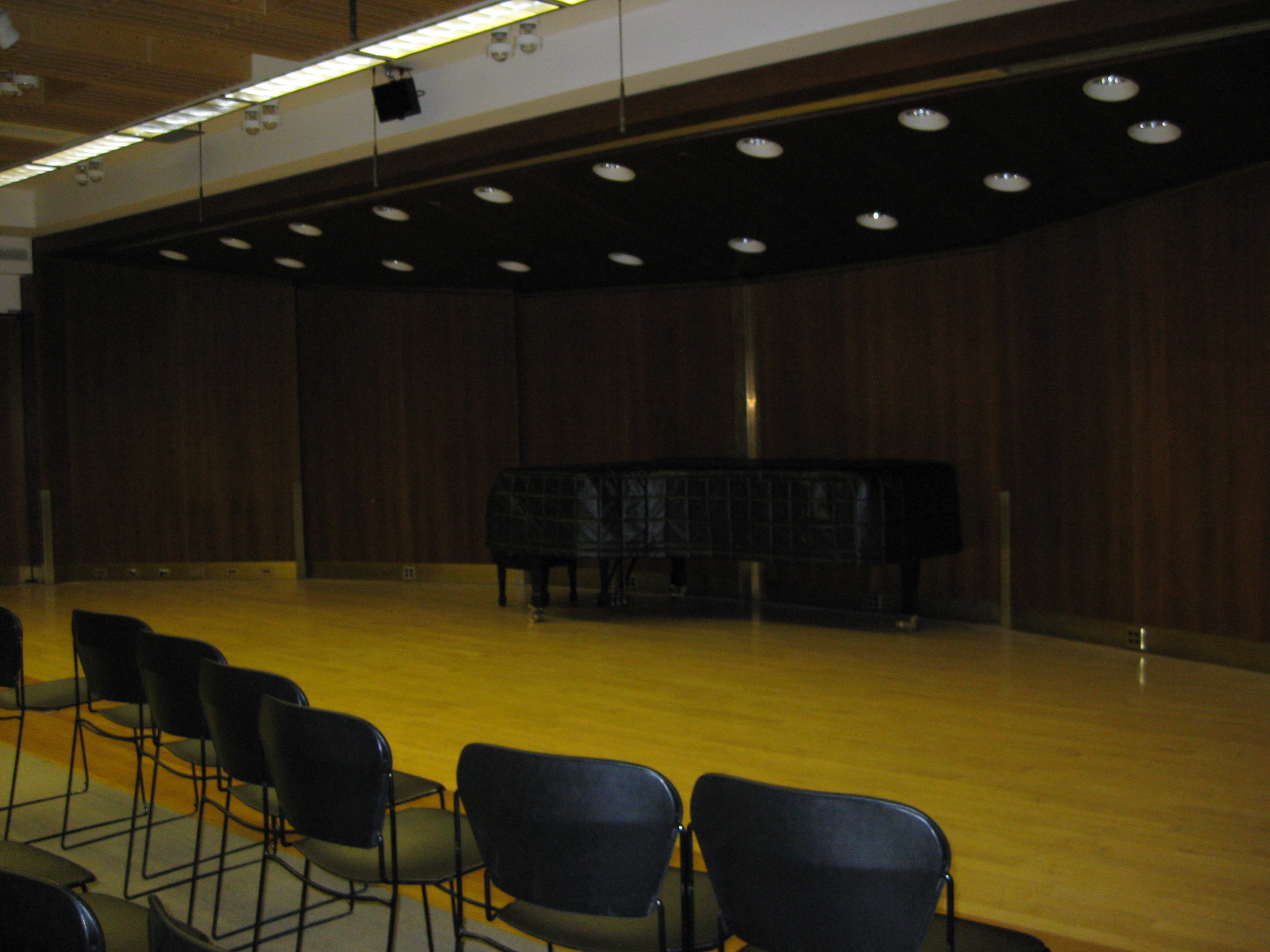
The Juilliard School has a variety of ensembles, including chamber music, jazz, orchestras, and vocal/choral groups. Juilliard's orchestras include the Juilliard Orchestra, the Juilliard Chamber Orchestra, the Wind Orchestra, the New Juilliard Ensemble, the Juilliard Theatre Orchestra, and the Conductors' Orchestra. The Axiom Ensemble is a student directed and managed group dedicated to well-known 20th-century works.
Established in 2003, the Juilliard Electric Ensemble allows all students to use multi-media technology to produce and perform works. The ensemble has performed works that incorporate new technology by many contemporary composers.
In addition, Juilliard resident ensembles, which feature faculty members, perform frequently at the school. These groups include the Juilliard String Quartet and the American Brass Quintet, which are American ensembles that perform throughout the United States and abroad.
Notable people
Main article: List of Juilliard School people
Alumni
Over the years, Juilliard alumni have contributed significantly to the arts and culture. Collectively, they have won numerous awards nationally and internationally, including more than 300 Grammy, Oscar, Emmy, and Tony Awards. Juilliard alumni include principal players and concertmasters of several symphony orchestras such as the New York Philharmonic, the Chicago Symphony Orchestra, the Philadelphia Orchestra and the Berlin Philharmonic.{{multiref2||||| File:Henry Mancini.jpg|Henry Mancini, film composer and conductor (entered 1942, drafted for WWII) File:Miles Davis by Palumbo cropped.jpg|Miles Davis, jazz musician, trumpeter, bandleader, composer (entered Juilliard 1944) File:Leontyne Price (color) by Jack Mitchell.jpg|Leontyne Price, operatic soprano (Special Studies 1952) File:James Levine 2013.jpg|James Levine, conductor and pianist (Graduated 1964) File:Pinchas Zukerman, cropped.jpg|Pinchas Zukerman, violinist (Professional Studies, 1969) File:MX MM YO-YOMA (cropped).jpg|Yo-Yo Ma, cellist (Pre-College, 1971; Professional Studies, 1972) File:KevinKlineSept2013TIFF.jpg|Kevin Kline, actor (GrDiP, 1972) File:Patti Lupone AICP Social Media New York 2014 (cropped).jpg|Patti LuPone, actress (GrDiP, 1972) File:Christine Baranski Met Opera 2010 Shankbone crop.JPG|Christine Baranski, actress (BFA, 1974) File:Kelsey Grammer May 2010 (cropped).jpg|Kelsey Grammer, actor (1973–1975, left Juilliard) File:Robin Williams Happy Feet premiere.jpg|Robin Williams, comedian and actor (1973–1975, left Juilliard) File:C Reeve in Marriage of Figaro Opening night 1985.jpg|Christopher Reeve, actor, known for playing Superman (1973–1975, left Juilliard) File:History of Violence 002 (7271227040).jpg|William Hurt, actor (GrDip, 1976)
Faculty
Juilliard has over 350 college faculty members. Present and past faculty have included Pulitzer Prize, Presidential Medal of Freedom and Grammy Lifetime Achievement Award recipients, as well as members of the American Academy of Arts and Sciences and the American Philosophical Society. Since Peter Mennin's presidency, the school regularly offers master classes with various professional artists and its own faculty members. Past guest artists for these classes have included Leonard Bernstein, Herbert von Karajan, Arthur Rubinstein, Maria Callas, Luciano Pavarotti, Murray Perahia, András Schiff, Joyce DiDonato, Yannick Nézet-Séguin, Renée Fleming, Robert Levin, and Steven Isserlis, among others.
File:Rene Auberjonois, by Kyle Cassidy (Cropped).jpg|René Auberjonois
File:Rótterdam- Yannick Nézet-Séguin24 (14874140070).jpg|Emanuel Ax (Pre-College 1966; BM, 1970; MM, 1972)
File:Luciano Berio.jpg|Luciano Berio
File:Elliott Carter.jpg|Elliott Carter
File:Ron Carter Berkeley1.jpg|Ron Carter
File:Bella Davidovich 1966.jpg|Bella Davidovich
File:Dorothy DeLay.png|Dorothy Delay
File:David Diamond 1987.jpg|David Diamond
File:Ernő Dohnányi.jpg|Ernst von Dohnányi
File:George Enesco.jpg|George Enescu
File:Martha Graham, seated, c. 1940.jpg|Martha Graham
File:John Guare at the 2009 Tribeca Film Festival.jpg|John Guare
File:Henschel.jpg|George Henschel
File:John Houseman - 1980.jpg|John Houseman
File:Doris Humphrey - Feb 1922 Shadowland.jpg|Doris Humphrey
File:Tony Kushner - Hollywood and Socialism - The Laura Flanders Show 2.png|Tony Kushner
File:Josef Lhévinne by Otto Sarony (BPL Hale Coll).jpg|Josef Lhévinne
File:Wynton Marsalis Lyon 2016.jpg|Wynton Marsalis, (BM, 1981)
File:Terrence_McNally_2020.jpg|Terrence McNally
File:Itzhak Perlman violinist 1984.jpg| Itzhak Perlman
File:Ruggiero-Ricci-1961.png|Ruggiero Ricci
File:Marian Seldes.jpg|Marian Seldes
File:Marcella Sembrich - portrait.jpg|Marcella Sembrich
File:Roger Sessions portrait 1920s.jpg|Roger Sessions
File: Teddy Wilson (William P Gottlieb).jpg|Teddy Wilson
References
- "The Juilliard School".
- "The Juilliard School".
- "Juilliard School Celebrates Centennial".
- {{cite EPD. 18
- (October 5, 2016). "Transformative Juilliard President Will Step Down After Three Decades". The New York Times.
- (September 8, 2014). "Chief of $1 billion Juilliard endowment is leaving".
- "Diploma Programs Statistics & Disclosure".
- (April 1939). "A Tribute to Frank Damrosch (June 22, 1859 – October 22, 1937)". Oxford University Press.
- "Loeb Classical Library: About James Loeb, Founder".
- Gandre, James. (November 2001). "And Then There Were Seven: An Historical Case Study of The Seven Independent American Conservatories of the Music that Survived the Twentieth Century". [[University of Nebraska–Lincoln]].
- Gottlieb, Jane. (September 1999). "The Juilliard School Library and Its Special Collections". Notes.
- "Historical Significance".
- (June 27, 1919). "Gives $5,000,000 to Advance Music; Will of A. D. Juilliard Provides Aid for Worthy Students and for Entertainment.". The New York Times.
- (October 11, 1926). "Music: Charges".
- Dahmus, Jeni. (March 2010). "Time Capsule". The Juilliard Journal Online.
- (November 14, 2012). "Rachmaninoff Performs at Opening of Claremont Avenue Building (1931); Opera Premieres Chabrier's "The Reluctant King" (1976)".
- Dahmus Farah, Jeni. (April 30, 2020). "Time Capsule from the Juilliard Archives: The Claremont Avenue Campus".
- "The Core Curriculum, Faculty Profiles: John Erskine".
- (April 29, 2019). "Time Capsule from the Juilliard Archives: A 1936 Ravel Premiere". Juilliard Journal.
- "Ernest Hutcheson: 1871–1951". [[National Portrait Gallery (Australia)]].
- (December 3, 2021). "The Juilliard String Quartet Remains at the Nexus of Continuity and Change as it Celebrates Its 75th Anniversary".
- (1946-09-26). "Juilliard Enrolls 1,800: Record Matriculation Includes 500 Veterans Under GI Bill". [[The New York Times]].
- (June 13, 2012). "Polisi's Biography of Schuman Is Published".
- "The Columbia Electronic Encyclopedia".
- (2005). "The Artist as Citizen". Amadeus Press.
- Schuman, William. (April 1948). "On Teaching the Literature and Materials of Music". Oxford University Press.
- Schonberg, Harold C.. (1957-02-07). "Juilliard to Move to Lincoln Sq. and Add Training in the Drama". [[The New York Times]].
- Gent, George. (1969-10-27). "Juilliard School Dedication Marks Completion of Lincoln Center; The Juilliard School Is Dedicated". [[The New York Times]].
- (August 11, 2014). "Pop Culture Places: An Encyclopedia of Places in American Popular Culture". ABC-CLIO.
- Parmenter, Ross. (1962-06-11). "Composer Named Juilliard's Head; Peter Mennin to Lead Music School into Arts Center". [[The New York Times]].
- "Peter Mennin". [[The Kennedy Center]].
- (June 19, 1983). "Juilliard Head Peter Mennin Is Dead at 60".
- (August 4, 1972). "Juilliard Class Gives 18 to New Troupe". The New York Times.
- (2021). "A Brief History".
- "History and Mission".
- (May 24, 1972). "Mrs. DeWitt Wallace Donates $5-Million to Juilliard". The New York Times.
- "PlaywritingArtist DiplomaApplication & Audition Requirements".
- Wieland Howe, Sondra. (March 2001). "Juilliard: A History (review)". Notes.
- (Spring–Fall 2001). "The Juilliard School Archives, New York". Music in Art.
- (2021). "Program Overview – Music Advancement Program".
- Grimes, William. (1993-07-02). "Too Many Musicians? An Overhaul at Juilliard". [[The New York Times]].
- Ratliff, Ben. (April 26, 2000). "Juilliard School to Introduce a Jazz Studies Program". [[The New York Times]].
- (1993). "Endowment funds of the 120 institutions of higher education with the largest amounts: Fiscal year 1993". U.S. Department of Education.
- "Lifetime Honors: National Medal of Arts". [[National Endowment for the Arts]].
- "Juilliard 1984–2018, The Pelosi Years".
- (September 4, 2005). "Juilliard/ORAM/Davis".
- "A relationship of note".
- (September 2008). "10 Days in China".
- (March 2006). "Juilliard Receives Music Manuscript Collection". The New York Times.
- Plotkin, Fred. (July 7, 2015). "Remembering James S. Marcus". [[WQXR-FM.
- (October 11, 2013). "Juilliard School Receives $60 Million for Classical Music Fellowship Program".
- "Kovner Fellowship Program: About the Program".
- Cooper, Michael. (September 28, 2015). "Juilliard's China Plans Move Forward". The New York Times.
- (October 26, 2021). "The Tianjin Juilliard School Campus Formally Dedicated on Tuesday, October 26, 2021".
- Nietzel, Michael T.. (2021-02-21). "Juilliard Goes To China". [[Forbes]].
- Cooper, Michael. (May 10, 2017). "Juilliard Names Damian Woetzel as Its New President". The New York Times.
- (March 12, 2020). "Juilliard Announces Operational Changes in Response to COVID-19".
- (December 15, 2021). "Juilliard Announces Spring 2022 Performances". Broadway World.
- Chang, Richard J.. (2021-06-29). "Juilliard Students Stage First-Ever Protest Against Tuition Hikes". [[Forbes]].
- (2021-06-11). "Inside the Unprecedented Protests Erupting at Juilliard".
- (2021-08-19). "Juilliard's Flagship Continuing Education Program, The Evening Division, Undergoes Expansion; Renamed Juilliard Extension".
- Hernández, Javier C.. (2022-12-16). "$50 Million Gift to Juilliard Targets Racial Disparities in Music". [[The New York Times]].
- "Performance Venues".
- (October 20, 2017). "Juilliard Campus Tour".
- "Alice Tully Hall".
- "Samuel B. & David Rose Building".
- Kozinn, Allan. (December 10, 1991). "Juilliard Naming Dormitory for a Composer". [[The New York Times]].
- "On-Campus Suites".
- "Living in N.Y.C.".
- "Getting Here".
- (July 25, 2022). "Mai Elected Board Chair".
- (May 10, 2017). "Juilliard Names Damian Woetzel as Seventh President".
- "Leaders and Administration".
- "Cross-Registration Programs".
- "The Juilliard School: For the Performing Arts".
- "Juilliard and Nord Anglia".
- "The Juilliard School".
- "Juilliard Pre-College at the Juilliard School".
- (n.d.). "Voice, Bachelor of Music: Application & Audition Requirements". The Juilliard School.
- (November 25, 2019). "Audition Dates". The Juilliard School.
- Hernández, Javier C.. (2025-04-24). "Juilliard Plans $550 Million Drive to Go Tuition Free". The New York Times.
- Passy, Charles. (2017-05-10). "Juilliard School Taps Former Ballet Dancer as New President". Wall Street Journal.
- Bond, Jeff. (2024-11-22). "The 20 Best Music Schools in the World".
- "Top 100 – Lowest Acceptance Rates".
- (April 22, 2022). "Here's Why You Shouldn't Take College Rankings Lists At Face Value".
- "The Juilliard School, New York". Citytowninfo.com.
- "Juilliard School". [[U.S. News & World Report]].
- Finnegan, Leah. (March 30, 2011). "College Admissions Rates Drop For The Class Of 2015". [[The Huffington Post]].
- "Juilliard school". Parchment.com.
- "Cross-Registration Programs {{!}} The Juilliard School".
- "Liberal Arts".
- "Dance". The Juilliard School.
- "Dance Division".
- "Drama". The Juilliard School.
- "Violin".
- "Piano".
- "Diploma Programs Statistics & Disclosure".
- "Juilliard Pre-College". The Juilliard School.
- "Center for Innovation in the Arts". The Juilliard School.
- "Maintaining The Juilliard School's Pianos".
- "Juilliard's Ever-Popular Practice Rooms Continue a Steinway Grand Tradition".
- "Organs".
- "Organ".
- "Strings".
- (2006). "A Living Legacy: Historic Stringed Instruments at Juilliard". Amadeus Press.
- "Library and Archives".
- "Juilliard Manuscript Collection".
- (June 27, 2012). "The Juilliard Manuscript Collection Comes Home".
- "The Juilliard School: Overview".
- "QS World University Rankings by Subject 2022: Performing Arts 2022".
- (March 22, 2016). "QS world university rankings 2016: performing arts". [[The Guardian]].
- (June 19, 2021). "The World's 25 Best Drama Schools, Ranked". [[The Hollywood Reporter]].
- (November 5, 2022). "The World's Best Music Schools, Ranked". [[The Hollywood Reporter]].
- "College Scoreboard: The Juilliard School".
- (2021). "IPEDS Data Feedback Report 2021: The Juilliard School". [[Institute of Education Sciences]].
- (Spring 2020). "Together Apart: Congratulations Class of 2020". Juilliard Journal.
- "Juilliard School".
- "20 Years of Juilliard Jazz".
- "Equity, Diversity, Inclusion & Belonging".
- (May 23, 2022). ""We Got Very Creative": Alicia Graf Mack on Leading Juilliard's Dancers Into a New Era".
- (December 16, 2021). "$50 Million Gift to Juilliard Targets Racial Disparities in Music". The New York Times.
- (May 26, 2021). "Juilliard School criticized for lack of diversity and "slavery" workshop: "Those are things that still live in my mind"".
- (March 8, 2021). "Juilliard Must Modernize, or It Will Disappear".
- (November 28, 2016). "Striving for Racial Justice".
- "I Want More Latin Young Artists to Audition for Juilliard".
- (June 11, 2021). "Inside the Unprecedented Protests Erupting at Juilliard".
- "Going Green".
- "Student Affairs".
- (September 6, 2007). "The Juilliard Difference".
- "Sports at Juilliard?".
- "Performance Opportunities".
- (October 1, 2007). "Juilliard's New Semester Starts With New Music". [[The New York Times]].
- "Axiom".
- (2002). "Juilliard". Harry N. Abrams.
- "Juilliard String Quartet Ensemble".
- "American Brass Quintet".
- "Admission Numbers".
- "Diploma Programs Statistics & Disclosure".
- (November 19, 2013). "Wynton Marsalis on How Music Theory Applies to Diplomacy, Personal Life".
- "Renowned violinist Sarah Chang presents an inspiring evening of Brahms, Franck, and Bartók".
- (June 27, 1991). "Academy of Achievement: Leontyne Price".
- "Messengers of Peace".
- (January 26, 2022). "Face to Face with cellist Yo-Yo Ma".
- "Mancini".
- (May 25, 1926). "Miles Davis".
- "Leontyne Price: A Legendary Met Career".
- (February 10, 2017). "Leontyne Price At 90: The Voice We Still Love To Talk About".
- (March 17, 2021). "Conductor James Levine, who was fired for sexual misconduct, dies at 77".
- (May 19, 2011). "James Levine's Official Biography".
- "How Juilliard Made Me a Better Scientist".
- (July 15, 2019). "Yo-Yo Ma: The messenger of music".
- (June 18, 2021). "Yo-Yo MaCellist and Founder, Silkroad".
- "American Masters: Kevin Kline".
- (June 14, 2012). "Patti LuPone Shares Her Voice for Holiday Celebrations".
- (January 24, 2022). "Christine Baranski Has Entered Her Gilded Age".
- "Kelsey Grammer: American actor".
- "Robin Williams like a planet unto himself". [[Chicago Tribune]].
- (May 24, 1997). "Trust Audiences, Christopher Reeve Tells Juilliard Graduates". The New York Times.
- (March 14, 2022). "William Hurt obituary". The Guardian.
- "By The Numbers".
- "Faculty Directory".
- "Member Directory, Affiliation Juilliard".
- "Member History, The Arts, Professions, and Leaders in Public & Private Affairs".
- "Maestro as Educator".
- (November 8, 1976). "Herbert von Karajan to Aid Class at Juillaird". The New York Times.
- (June 4, 2012). "The School Receives Arthur Rubinstein Collection".
- "The Ultimate Diva".
- (November 4, 2007). "Take a Master Class With Luciano Pavarotti Hear the late, great tenor teach students to sing at Juilliard".
- "Juilliard to Live Stream Series of Master Classes With Pianists Murray Perahia (Oct. 12) and András Schiff (Oct. 16); Mezzo-Soprano Joyce DiDonato (Oct. 17); and Conductor Yannick Nézet-Séguin (Jan. 26)".
- (June 27, 2012). "Renée Fleming: A Class Act".
- "Robert Levin Master Class With Juilliard Music and Historical Performance Students on December 9, 2019, at 4pm".
- "Master Class Season Begins".
- (September 14, 2007). "Juilliard Drama Division Opens (1968)".
- "Musician Emmanuel Ax".
- Griffiths, Paul. (May 28, 2003). "Luciano Berio Is Dead at 77; Composer of Mind and Heart". [[The New York Times]].
- (February 17, 2013). "Remembering Elliott Carter: 1908-2012".
- (March 26, 2012). "With a new Juilliard scholarship in his name, Ron Carter looks back on his own education in music".
- (September 23, 1989). "Davidovich, In Demand". The Washington Post.
- (July 10, 2017). "Former Students Pay Tribute to Legendary Juilliard Violin Teacher Dorothy DeLay". Strings Magazine.
- "David Diamond (1915-2005)".
- (1951). "Music and Dance in New York State". Bureau of Musical Research.
- (2013). "The Violin: A Social History of the World's Most Versatile Instrument". W. W. Norton.
- "70 Years of Juilliard Dance".
- "John Guare: American author".
- "John Singer Sargent's George Henschel". John Singer Sargent Gallery.
- "John Houseman: Finalist, National Book Awards 1973 Finalist, 1980 National Book Awards".
- Kisselgoff, Anna. (May 19, 1972). "Juilliard Dance Troupe Honors Doris Humphrey with 4 Works". [[The New York Times]].
- (October 28, 2014). ""Angels in America" Returns to Juilliard".
- Ericson, Raymond. (November 11, 1976). "Rosina Lhevinne, Pianist, Is Dead; Juilliard Teacher of Noted Students". [[The New York Times]].
- "Wynton Marsalis".
- "Wynton Marsalis: 2015 National Humanities Medalist".
- "Terrence McNally 1938-2020: In Memoriam".
- "Itzhak Perlman: Virtuoso of the Violin".
- (August 26, 2020). "Itzhak Perlman, Violin Legend, Still Proves the Critics Wrong". The New York Times.
- (March 10, 2014). "Ruggiero Ricci 1918-2012: Violin Faculty Member".
- (October 28, 2014). "Marian Seldes 1928-2014: Remembering a Beloved Teacher".
- "Marcella Sembrich: Polish singer".
- Henahan, Donal. (March 4, 1977). "For Roger Sessions, a Tribute and a Premiere at 80". [[The New York Times]].
- "Teddy Wilson: Pianist, Arranger, Educator".
This article was imported from Wikipedia and is available under the Creative Commons Attribution-ShareAlike 4.0 License. Content has been adapted to SurfDoc format. Original contributors can be found on the article history page.
Ask Mako anything about Juilliard School — get instant answers, deeper analysis, and related topics.
Research with MakoFree with your Surf account
Create a free account to save articles, ask Mako questions, and organize your research.
Sign up freeThis content may have been generated or modified by AI. CloudSurf Software LLC is not responsible for the accuracy, completeness, or reliability of AI-generated content. Always verify important information from primary sources.
Report