From Surf Wiki (app.surf) — the open knowledge base
Jude the Apostle
One of the Twelve Apostles of Jesus

One of the Twelve Apostles of Jesus
| Field | Value |
|---|---|
| honorific_prefix | Saint |
| name | Jude the Apostle |
| birth_date | |
| death_date | |
| feast_day | 28 October (Western Christianity) |
| 19 June and 30 June, | |
| (Eastern Christianity) | |
| venerated_in | All Christian denominations that venerate saints |
| image | Anthonis van Dyck, Kunsthistorisches Museum Wien, Gemäldegalerie - Apostel Judas Thaddäus - GG 6809 - Kunsthistorisches Museum.jpg |
| caption | The Apostle Judas Thaddeus by Anthony van Dyck |
| birth_place | Galilee, Judea |
| death_place | |
| titles | Apostle and Martyr |
| canonized_date | Pre-Congregation |
| attributes | Axe, club, canon, medallion |
| patronage | Armenia; lost causes; desperate situations; hospitals; St. Petersburg, Florida; Cotta; the Chicago Police Department; Clube de Regatas do Flamengo (in Rio de Janeiro, Brazil); places in the Philippines (Lucena in Quezon, Sibalom in Antique, and Trece Martires in Cavite); and Sinajana (in Guam) |
| major_shrine | St. Thaddeus Armenian Monastery, northern Iran; St. Peter's Basilica, Rome; Reims, Toulouse, France |
19 June and 30 June, (Eastern Christianity) Jude the Apostle (Ancient Greek: Ἰούδας Ἰακώβου translit. Ioúdas Iakóbou Syriac/Aramaic: ܝܗܘܕܐ translit. Yahwada) was one of the Twelve Apostles of Jesus according to the New Testament. He is generally identified as Thaddeus (Ancient Greek: Θαδδαῖος; Armenian: Թադեոս; Coptic: ⲑⲁⲇⲇⲉⲟⲥ) and is also variously called Judas Thaddaeus, Jude Thaddaeus, Jude of James, or Lebbaeus. He is sometimes identified with Jude, the brother of Jesus, but is clearly distinguished from Judas Iscariot, the disciple who betrayed Jesus prior to his crucifixion. Catholic writer Michal Hunt suggests that Judas Thaddaeus became known as Jude after early translators of the New Testament from Greek into English sought to distinguish him from Judas Iscariot and subsequently abbreviated his forename. Most versions of the New Testament in languages other than English and French refer to Judas and Jude by the same name.
The Armenian Apostolic Church honors Thaddeus along with Saint Bartholomew as its patron saints. In the Catholic Church, he is the patron saint of desperate cases and lost causes.
Jude Thaddeus is commonly depicted with a club. He is also often shown in icons with a flame around his head. This represents his presence at Pentecost, when he received the Holy Spirit with the other apostles. Another common attribute is Jude holding an image of Jesus, known as the Image of Edessa. In some instances, he may be shown with a scroll or a book (the Epistle of Jude) or holding a carpenter's rule.
Identity
New Testament
Jude is clearly distinguished from Judas Iscariot, another apostle and later the betrayer of Jesus. Both Jude and Judas are translations of the name Ὶούδας in the Koine Greek original text of the New Testament, which in turn is a Greek variant of Judah (Y'hudah), a name which was common among Jews at the time. In most Bibles in languages other than English and French, Jude and Judas are referred to by the same name.
Aside from Judas Iscariot, the New Testament mentions Jude or Judas six times, in four different contexts:
- "Jude of James", explicitly listed as one of the twelve apostles ( and );
- "Judas, (not Judas Iscariot)", apparently an apostle (as he was present at the Last Supper) ();
- the brother of Jesus (, );
- the writer of the Epistle of Jude, who identifies himself as "the brother of James" ().
Protestants generally believe 1 and 2 to be one person, although theologian Raymond Brown saw the identification as uncertain.
Brother of James or son of James?
Translations into English from the original Greek of the New Testament vary in their rendering of Luke 6:16 and Acts 1:13. A literal translation of the references to Jude in these passages gives "Jude of James" (), as in Young's Literal Translation of the Bible, but scholars differ on whether this means "Jude, brother of James" or "Jude, son of James". The King James and the Douay-Rheims versions call him "Judas the brother of James", making him the same person as the writer of the Epistle of Jude, who identifies himself as "Jude, the servant of Jesus Christ, and brother of James" (Jude 1:1).
Most modern translations (including the New International Version, Revised Standard Version and New Revised Standard Version), identify him as "Jude the son of James", and not the same person as the author of the Epistle of Jude. Protestant scholar Darrell L. Bock writes that it must mean "son" not "brother", because when "brother" is intended, the Greek word for "brother" (adelphos) is present. Bock also says that means he was not the brother of Jesus. Additionally the use of the genitive case of "James" (Iakovou) in Greek, usually signifies or implies the person's father to be distinguished from his homonyms.
Opinion is divided on whether Jude the apostle was also Jude, brother of Jesus, the traditional author of the Epistle of Jude. Generally, Catholics believe the two Judes are the same person.
According to the surviving fragments of the work Exposition of the Sayings of the Lord of the Apostolic Father Papias of Hierapolis, who lived c. 60–130 AD, Mary the wife of Cleophas or Alphaeus would be the mother of Judas the brother of Jesus that Papias identifies with Thaddeus:
However, the above fragment is properly attributed by J.B. Lightfoot to a different Papias, an 11th century Latin lexicographer. The quotation is found in this Papias' Elementarium Doctrinae Rudimentum.
Possible identity with Thaddeus

In the apostolic lists at and , Jude is omitted, but there is a Thaddeus (or in some manuscripts of Matthew 10:3, "Lebbaeus who was surnamed Thaddaeus", as in the King James Version) listed in his place. This has led many Christians since early times to harmonize the lists by positing a "Jude Thaddeus", known by either name. This is made plausible by the fact that a number of New Testament figures have multiple names (such as Simon Peter and Joseph Barnabas). It has been argued that the name "Judas" was tarnished by Judas Iscariot and for this reason Mark and Matthew referred to him by an alternative name.
Some Biblical scholars reject this theory, however. They have proposed alternative theories to explain the discrepancy: an unrecorded replacement of one for the other during the ministry of Jesus because of apostasy or death; the possibility that "twelve" was a symbolic number and an estimation; or simply that the names were not recorded perfectly by the early church.
Thaddeus, one of the twelve apostles, is often indistinguishable from Thaddeus of Edessa, whom Eastern Christianity considers as one of the Seventy disciples.
In some Latin manuscripts of Matthew 10:3, Thaddeus is called Judas the Zealot.
In other manuscripts
According to the Golden Legend, which is a collection of hagiographies compiled by Jacobus de Voragine in the thirteenth century:
In the same work, Simon Cananean and Judas Thaddeus are described as siblings of James the Less and sons of Mary of Clopas, who was married to Alpheus.
The Epistle of Saint Jude was traditionally attributed to the Apostle Jude, and is a short piece. Some statues of Saint Jude include the letter (such as the statue of Saint Jude by Adam Kossowski in Faversham, Kent).
Tradition and legend
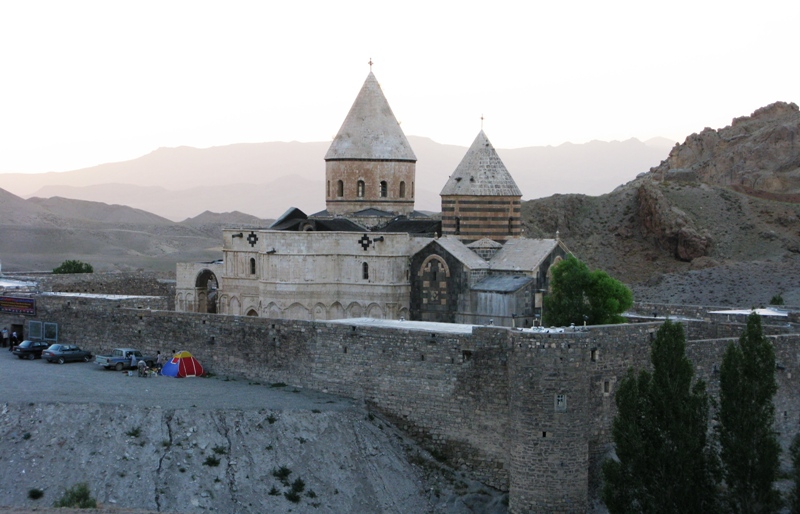
Tradition holds that Jude preached the Gospel in Judea, Samaria, Idumaea, Syria, Mesopotamia and Libya. He is also said to have visited Beirut and Edessa, though the emissary of the latter mission is also identified as Thaddeus of Edessa, Addai, one of the Seventy. The 14th-century writer Nicephorus Callistus makes Jude the bridegroom at the wedding at Cana. The legend reports that Jude was born into a Jewish family in Paneas, a town in Galilee later rebuilt during the Roman period and renamed Caesarea Philippi.
In all probability, he spoke both Greek and Aramaic, like almost all of his contemporaries in that area, and was a farmer by trade. According to the legend, Jude was son of Clopas and Mary of Clopas, sister of the Virgin Mary.
Although Saint Gregory the Illuminator is credited as the "Apostle to the Armenians", when he baptized King Tiridates III of Armenia in 301, converting the Armenians, the Apostles Jude and Bartholomew are traditionally believed to have been the first to bring Christianity to Armenia, and are therefore venerated as the patron saints of the Armenian Apostolic Church. Linked to this tradition is the Saint Thaddeus Monastery (now in northern Iran) and Saint Bartholomew Monastery (now in southeastern Turkey) which were both constructed in what was then Armenia.

Death and remains

According to the hagiographic tradition of the Armenian Apostolic Church, Thaddeus suffered martyrdom in AD 66 in Armenia by the order of Armenia's King Sanatruk, along with Bartholomew the Apostle and Saint Santoukhd. According to this tradition, his tomb is located at the Monastery of Saint Thaddeus in Qareh Kelisa, West Azerbaijan Province, Iran.
A different tradition holds that Jude suffered martyrdom about 65 AD in Beirut, in the Roman province of Syria during the 1st century in Lebanon together with the apostle Simon the Zealot, with whom he is usually connected. The axe that he is often shown holding in pictures symbolizes the way in which he was killed.
According to one account, Jude's body was brought from Beirut to Rome and placed in a crypt in St. Peter's Basilica which is visited by many devotees. His bones are in the left transept of St. Peter's Basilica under the main altar of St. Joseph, in one tomb with the remains of the apostle Simon the Zealot. These were moved here on 27 December 1665. An arm was removed from St. Jude's remains centuries ago and placed in a wooden reliquary carved in the shape of an upright arm imparting a blessing. From September 2023 to May 2024, the arm of Saint Jude Thaddeus went on a pilgrimage in the United States, making stops in 100 cities.
According to another popular tradition, the remains of Jude were preserved in an Armenian monastery on an island in the northern part of Issyk-Kul Lake in Kyrgyzstan at least until the mid-15th century.
A plain ossuary marked with the inscription "Judas Thaddaeus" (Ιουδας Θαδδαιου) was found in Kefar Barukh, Jezreel Valley, alongside fragments of four uninscribed ossuaries. The site was dated by lamps and other pottery to no later than the early second century.
Iconography

Jude is traditionally depicted carrying the image of Jesus in his hand or close to his chest, betokening the legend of the Image of Edessa, also known as the legend of Abgar, a story resulting from the accretion of several narratives over the centuries. (The oldest source for the legend is Eusebius' Ecclesiastical History, I, xiii written between 311 and 325 A.D., reproducing apocryphal correspondence between Jesus and Abgar – but no mention of the image of Edessa – whilst details about the image appear notably in the Doctrine of Addai, written about 400 A.D., the Acts of Thaddaeus, probably written around 700 A.D., and the Narratio De Imagine Edessena composed in 944 A.D.). According to some versions of the legend, King Abgar of Edessa (now Şanlıurfa in southeast Turkey) sent a letter to Jesus seeking a cure for an illness afflicting him. With the letter he sent his envoy Hannan (also known as Ananias), the keeper of the archives, offering his own home city to Jesus as a safe dwelling place. The envoy painted a likeness of Jesus with choice paints (or alternatively, impressed with Abgar's faith, Jesus pressed his face into a cloth and gave it to Hannan) to take to Abgar with his answer. Upon seeing Jesus' image, the king placed it with great honor in one of his palatial houses. After Christ's execution, Thomas the Apostle sent Addai (identifiable with Thaddaeus and often conflated with Judas Thaddaeus), to King Abgar and the king was cured. Astonished, he converted to Christianity, along with many of the people under his rule. Additionally, Jude is often depicted with a flame above his head, representing his presence at Pentecost, when he was said to have received the Holy Spirit with the other apostles.
Veneration


According to tradition, after his martyrdom, pilgrims came to his grave to pray and many of them experienced the powerful intercessions of St. Jude. Thus the title, 'The Saint for the Hopeless and the Despaired'. St. Bridget of Sweden and St. Bernard had visions from God asking each to accept St. Jude as 'The Patron Saint of the Impossible'. Jude is remembered (with Simon the Zealot) in the Church of England with a Festival on 28 October.
His feast day is 28 October (in the Roman Catholic Church, Anglican Communion, and Lutheran Church).
Apostle Jude son of James (Lebbaeus, Thaddaeus) the Brother of the Lord is commemorated on 19 June and 30 June (Synaxis of the Holy, Glorious and All-Praised Twelve Apostles) in the Eastern Orthodox Church.
The Order of Preachers (better known as the Dominicans) began working in present-day Armenia soon after their founding in 1216. At that time, there was already a substantial devotion to Saint Jude by both Catholic and Orthodox Christians in the area. This lasted until Muslim persecution drove Christians from the area in the 18th century. Devotion to Saint Jude began again in earnest in the 19th century, starting in Italy and Spain, spreading to South America and finally to the United States (starting in the vicinity of Chicago) owing to the influence of the Claretians who established the National Shrine of St. Jude in 1929.
Thaddeus of Edessa, an Apostle of the Seventy (sometimes identified as Jude Thaddaeus, one of the Twelve Apostles) is commemorated on 21 August and 4 January (Synaxis of the Seventy Apostles) in the Eastern Orthodox Church.
Patronage
Among some Roman Catholics, Jude is venerated as the "patron saint of hopeless causes". This practice is said to stem from the belief that few Christians invoked him for misplaced fear of praying to Christ's betrayer, Judas Iscariot, because of their similar names. The ignored Jude thus supposedly became quite eager to assist anyone who sought his help, to the point of interceding in the most dire of circumstances.
Jude is the patron saint of the Chicago Police Department, of Clube de Regatas do Flamengo (a soccer team in Rio de Janeiro, Brazil) and of two St Jude's GAA teams, the first in Templeogue Dublin 6W and also St Jude's GAA club in Southampton & Bournemouth (UK). His other patronages include desperate situations and hospitals. One of his namesakes is St. Jude Children's Research Hospital in Memphis, Tennessee, which has helped many children with terminal illnesses and their families since its founding in 1962.
Shrines and churches
Many countries venerate the Apostle Jude and have constructed shrines or churches dedicated to his memory. Such sites include those in Australia, Brazil, Sri Lanka, Cuba, India, Iran, the Philippines, New Zealand, the United Kingdom, the United States and Lebanon. The Nationwide Center of St. Jude Devotions in Baltimore was founded in 1917 by the Pallottines. The National Shrine of Saint Jude Thaddeus in the Philippines was erected by the Archdiocese of Manila in 1954 as Espíritu Santo Chinese Parish. The Shrine holds the saint's novena liturgy every Thursday and is now under the Society of the Divine Word that also runs the attached Saint Jude Catholic School. The National Shrine of Saint Jude at Faversham in England was founded in 1955. There is also a shrine of St. Jude built by the Dominicans (Order of Preachers) in Lagos, Nigeria.
The cathedral of the Roman Catholic Diocese of Phoenix, Arizona is the Cathedral of Saints Simon and Jude.
In Islam
The Quranic account of the disciples of Jesus does not include their names, numbers, or any detailed accounts of their lives. Muslim exegesis, however, more or less agrees with the New Testament list and says that the disciples included Peter, Philip, Thomas, Bartholomew, Matthew, Andrew, James, Jude, John and Simon the Zealot.
References
Notes
Citations
References
- (2004). "Saints and Their Symbols: Recognizing Saints in Art and in Popular Images". [[Liturgical Press]].
- Butler, Alban. "St Jude, Apostle". EWTN.
- "St. Jude Shrine, Yoodhapuram". Yoodhapuramchurch.com.
- "Saint Jude".
- "The Letter of Saint Jude".
- "Frequently Asked Questions Regarding Saint Jude".
- "St. Jude Novena".
- Fournier, Catherine. (2010). "Saint Simon and Saint Jude". Domestic Church Communications Ltd..
- Commentary on John 14:22, Expositor's Bible Commentary CDROM, [[Zondervan]], 1978
- Brown, Raymond E., ''The Gospel According to Saint John'' volume 2, p. 641.
- [[Darrell L. Bock]], ''Luke, volume 1, 1:1–9:50'', (Baker Books, 1994), p. 546
- (18 June 2019). "Ποιος ήταν ο Άγιος Ιούδας ο Θαδδαίος".
- Neyrey, Jerome H., ''2 Peter, Jude'', Anchor Bible Reference Library, Doubleday, 1993. p.44-45.
- "CATHOLIC ENCYCLOPEDIA: The Brethren of the Lord".
- "Exposition of the Sayings of the Lord. Fragment X".
- (1865). "The Brethren of the Lord".
- "Papias of Hierapolis".
- https://digital-beta.staatsbibliothek-berlin.de/werkansicht?PPN=PPN815335946&PHYSID=PHYS_0258&DMDID= Digitalisierte Sammlungen der Staatsbibliothek zu Berlin Werkansicht: Vocabularius(PPN815335946 - PHYS_0258 - Übersicht mit Inhaltsverzeichnis)]
- "St. Jude". 12apostlesofthecatholicchurch.com.
- Pesch, Rudolf. "Simon-Petrus. Geschichte und geschichtliche Bedeutung der ersten Juengers Jesu Christ", ''Paepste und Papsttum'' '''15''', Hiersmann, 1980. p.36.
- [[John P. Meier. Meier, John P.]], ''A Marginal Jew'' volume 3, pp 130–133, 200 ("Christian imagination was quick to harmonize and produce Jude Thaddeus, a conflation that has no basis in reality.")
- Sanders, E.P.]], ''Jesus and Judaism, Fortress Press, 1985. {{ISBN. 0-334-02091-3. p.102''
- [[Joseph Fitzmyer. Fitzmyer, Joseph]], ''The Gospel according to Luke: Introduction, translation, and notes'', Volume 2, The Anchor Bible, Garden City, NY: Doubleday, 1981–1985. {{ISBN. 0-385-00515-6. p.619-620
- Kutash, V. Rev. Ihor. "Thaddeus, Apostle of the Seventy". Ukrainian-orthodoxy.org.
- (4-5 September 2014). "Judas, Thaddeus, Addai: possible connections with the vicissitudes of the Edessan and Constantinopolitan Mandylion and any research perspectives | Mimmo Repice and Emanuela Marinelli". Academia.edu.
- (1275). "The Golden Legend or Lives Of The Saints".
- "Golden Legend: Life of SS. Simon and Jude".
- (20 October 2016). "Shrine of Saint Jude".
- "About Saint Jude, Shrine of St. Jude Thaddeus, San Francisco, Ca". Stjude-shrine.org.
- "CATHOLIC ENCYCLOPEDIA: Doctrine of Addai".
- "Lk 10:1–12".
- (2005). "Come and See: The Synoptics: On the Gospels of Matthew, Mark, Luke". Emmaus Road Publishing.
- John Francis Wilson. (23 July 2004). "Caesarea Philippi: Banias, the Lost City of Pan". I.B.Tauris.
- [[Richard Bauckham]] The Relatives of Jesus '''''Themelios''''' Volume 21 (2)pp.18–21 1996
- "Who is St. Jude?, International Shrine of St. Jude, New Orleans, La". Judeshrine.com.
- UNESCO World Heritage Convention. (2007). "Executive Summary: The Armenian Monastic Ensembles in Iranian Azarbayjan". UNESCO World Heritage Convention.
- (2014). "The Martyrdom of St. Bartholomew: Greek, Arabic, and Armenian Versions". Dalcassian Publishing Company.
- . (2025). ["St. Santoukhd, the First Martyr"](https://armenianchurch.us/the-saints/st-santoukhd-the-first-martyr/). *Eastern Diocese of the Armenian Church of America*.
- . (2020). ["SAINTS THADDEUS AND BARTHOLOMEW"](https://armenianprelacy.org/2024/11/27/saints-thaddeus-and-bartholomew/). *Eastern Prelacy of the Armenian Apostolic Church*.
- "CATHOLIC ENCYCLOPEDIA: Apocrypha".
- Jensen, Kurt. (8 September 2023). "Relic of St. Jude, apostle and patron of desperate causes, begins US tour".
- "Home".
- Prausnitz M. and Rahmani L.Y. (1967). Jewish Burial Caves of the Early Second Century CE at Kfar Baruch. In ''Me'eretz Kishon: The Book of the 'Emek''. Kishon County Council, Tel Adashim. 309–312.
- Marc Guscin, ''The Image of Edessa'', Leiden: Brill, 2009, pp. 141-146; Andrea Nicolotti, ''From the Mandylion of Edessa to the Shroud of Turin: The Metamorphosis and Manipulation of a Legend'', Leiden: Brill, 2014, pp.7-14.
- Marc Guscin, ''The Image of Edessa'', Leiden: Brill, 2009, p. 168.
- The Doctrine of Addai, see http://www.tertullian.org/fathers/addai_2_text.htm
- "St. Jude Shrine Koothattukulam : St.Jude the Apostle".
- "Biography of St. Jude Thaddeus, St. Jude's Pilgrim Shrine, Travandrum, India". Stjudetvm.com.
- "Biography of St. Jude Thaddeus, St. Jude's Novena". stjudenovena.org.
- "The Calendar".
- "ИУДА, БРАТ ГОСПОДЕНЬ - Древо".
- "Апостол Иу́да Иаковлев (Левве́й, Фадде́й), брат Господень".
- (3 November 2018). "History of the Shrine | The National Shrine of Saint Jude".
- "Άγιος Θαδδαίος ο Απόστολος".
- "Saint Jude {{!}} History, Facts, & Feast Day".
- "ФАДДЕЙ, АПОСТОЛ - Древо".
- "Апостол от 70-ти Фадде́й Едесский, Бейрутский, епископ".
- Farmer, David. (2011). "Jude". Oxford University Press.
- (1996). "Thank You, St. Jude: Women's Devotion to the Patron Saint of Hopeless Causes". Yale University Press.
- Wickramage, Hemamala. "The Sunday Leader Online – Review".
- "Nationwide Center of St. Jude Devotions".
- "Who is Saint Jude?". Carmelite.org.
- "Dominican Shrine of St. Jude Thaddeus".
- (2003). "Historical Dictionary of Prophets in Islam and Judaism". Scarecrow Press (Rowman & Littlefield).
This article was imported from Wikipedia and is available under the Creative Commons Attribution-ShareAlike 4.0 License. Content has been adapted to SurfDoc format. Original contributors can be found on the article history page.
Ask Mako anything about Jude the Apostle — get instant answers, deeper analysis, and related topics.
Research with MakoFree with your Surf account
Create a free account to save articles, ask Mako questions, and organize your research.
Sign up freeThis content may have been generated or modified by AI. CloudSurf Software LLC is not responsible for the accuracy, completeness, or reliability of AI-generated content. Always verify important information from primary sources.
Report