From Surf Wiki (app.surf) — the open knowledge base
Jorge Sampaio
President of Portugal from 1996 to 2006

President of Portugal from 1996 to 2006
| Field | Value |
|---|---|
| honorific-prefix | His Excellency |
| birthname | Jorge Fernando Branco de Sampaio |
| death_date | |
| honorific-suffix | GColTE GColIH GColL |
| image | Jorge Sampaio 3.jpg |
| caption | Sampaio in 2003 |
| office | President of Portugal |
| primeminister1 | António Guterres |
| José Manuel Barroso | |
| Pedro Santana Lopes | |
| José Sócrates | |
| predecessor1 | Mário Soares |
| successor1 | Aníbal Cavaco Silva |
| term_start1 | 9 March 1996 |
| term_end1 | 9 March 2006 |
| office2 | High-Representative for the Alliance of Civilizations |
| term_start2 | 1 April 2007 |
| term_end2 | 1 March 2013 |
| predecessor2 | Position established |
| successor2 | Nassir Abdulaziz Al-Nasser |
| office3 | Mayor of Lisbon |
| predecessor3 | Nuno Krus Abecasis |
| successor3 | João Soares |
| term_start3 | 22 January 1990 |
| term_end3 | 15 November 1995 |
| office4 | Secretary-General of the Socialist Party |
| term_start4 | 16 January 1989 |
| term_end4 | 23 February 1992 |
| president4 | João Ferraz de Abreu |
| predecessor4 | Vítor Constâncio |
| successor4 | António Guterres |
| office5 | Leader of the Opposition |
| term_start5 | 6 November 1988 |
| term_end5 | 23 February 1992 |
| primeminister5 | Aníbal Cavaco Silva |
| predecessor5 | Vítor Constâncio |
| successor5 | António Guterres |
| office6 | |
| term_start6 | 4 November 1991 |
| term_end6 | 26 October 1995 |
| constituency6 | Lisbon |
| term_start7 | 13 August 1987 |
| term_end7 | 3 November 1991 |
| constituency7 | Santarém |
| term_start8 | 4 November 1985 |
| term_end8 | 12 August 1987 |
| constituency8 | Lisbon |
| term_start9 | 3 June 1976 |
| term_end9 | 30 May 1983 |
| constituency9 | Lisbon |
| birth_date | |
| birth_place | Lisbon, Portugal |
| death_place | Lisbon, Portugal |
| party | Socialist Party (1978-2021) |
| spouse | |
| profession | Lawyer |
| children | Vera Ritta de Sampaio |
| André Ritta de Sampaio | |
| alma_mater | University of Lisbon |
| signature | Signature of Jorge Sampaio.png |
| otherparty | Movement of Socialist Left (1974) |
| honorific-prefix = His Excellency | honorific-suffix = GColTE GColIH GColL José Manuel Barroso Pedro Santana Lopes José Sócrates
André Ritta de Sampaio
Jorge Fernando Branco de Sampaio (; 18 September 1939 – 10 September 2021) was a Portuguese lawyer and politician who was the president of Portugal from 1996 to 2006. Sampaio was a member of the Socialist Party, a party which he led between 1989 and 1992. He served as the Mayor of Lisbon from 1990 to 1995 and High-Representative for the United Nations' Alliance of Civilizations between 2007 and 2013.
Sampaio was an opponent to the dictatorship of Estado Novo. He participated in the student crisis in the 1960s and worked as a lawyer for political prisoners. During his presidency, Portugal relinquished its last colony, Macau, to China. Sampaio also played an important role in the 1999 East Timorese crisis.
Sampaio is to date the last president from the Socialist Party.
Early life
Sampaio was born in Lisbon on 18 September 1939 into a jewish middle-class family. The Sampaio family lived in the United States and the United Kingdom for some years due to the professional activity of his father Arnaldo Sampaio (1908–1984), a physician who was recognized for promoting the National Vaccination Program. Jorge Sampaio's mother was Fernanda Bensaúde Branco (1908–2000), daughter of Sara Bensliman Bensaúde, who was a Sephardi Jew from Morocco and died in 1976. Sampaio's maternal grandfather (1880–1940) was an officer of the Portuguese Navy and later served as Foreign Minister of Portugal, and his maternal great-granduncle was the businessman (1835–1922). Sampaio did not consider himself a Jew and was agnostic.{{efn|
- Jerusalem Post: I understand that you have Jewish ancestry in your family. What is your personal connection to the Jewish people? Do you consider yourself to be a Jew?.
- Jorge Sampaio: My grandmother belonged to a Jewish family that came from Morocco in the beginning of the 19th century. She married a non-Jewish naval officer who later was Foreign Affairs minister. I am naturally very proud of this ancestry and of all those that I call my "favorite Jewish cousins", one of whom is the president of the Lisbon Jewish Community, as I am proud of the ancestry on my non-Jewish father's side. Personally, I am agnostic, and I do not consider myself a Jew; but I am proud, as I said, of my ancestors.}}
In an interview for the daily newspaper Público, Sampaio said he recalled his parents "putting tapes on the windows, because it was feared that Hitler would come down that way [to Portugal]". His brother is psychiatrist and academic (born 1946).
Sampaio grew up in a manor house in Sintra. In the 1947–1948 school year, the Sampaio family—except Daniel—moved to the United States and settled in Baltimore, where his father taught at Johns Hopkins University. Sampaio enrolled at the YMCA, where he practiced boxing and swimming; he also attended piano lessons at the Peabody Institute and participated in its orchestra. At the end of the school year, Sampaio returned to his aunt's and uncle's house in Lisbon, and soon after to Sintra when his parents returned from the US. In 1949, Jorge Sampaio attempted to enroll at Colégio Militar, but failed, so he enrolled at Liceu Pedro Nunes. After finishing the fifth grade, Sampaio chose a set of subjects that gave him access to the law course at Liceu Passos Manuel.
Political career
Jorge Sampaio started his political career as a student of the Faculty of Law of the University of Lisbon. Sampaio had a key role in student resistance and the 1960s academic crisis protesting against the fascist Estado Novo regime, and led the Lisbon students union between 1960 and 1961. Following his graduation in 1961, Sampaio started a career as a lawyer before entering politics following his father's advice, and often defended political prisoners. He was in charge of the defense of the accused in famous cases such as the assault on Beja Barracks and those arrested during the protest. The documents that opposed the exile of Mário Soares, who Sampaio would later succeed in the presidency of the Republic, were in his office. He also worked as a director for the Portuguese Bar Association. In the 1970s, he was a co-founder of Movimento de Esquerda Socialista (MES).
Carnation Revolution and political beginnings
On 25 April 1974, during the Carnation Revolution, Sampaio was awakened by a friend's telephone call; he went to his office to gather information but returned home when the Armed Forces Movement ordered via radio no-one should leave their homes. Sampaio originated the slogan "25 de Abril, sempre!" ("Always the 25 of April!").
In May 1974, Sampaio co-founded the Movement of Socialist Left ("Movimento de Esquerda Socialista (MES)") but soon after abandoned the political project when, in the first MES congress in December, he strongly opposed its Marxist-Leninist ideology. On 28 September 1974, Sampaio participated in the barricades to prevent the arrival of citizens at a demonstration in support of General António de Spínola, then-president of the Republic, in an act known as the "demonstration of the silent majority".
After the failed communist coup of 25 November 1975, Sampaio founded Intervenção Socialista (IS) (Socialist Intervention) in an attempt to unify the left but with little success.
Sampaio was first elected to the Assembly of the Republic in the 1979 legislative election as a deputy for Lisbon, an office he successively held until 1991. Between 1987 and 1988, he was president of the parliamentary bench of the PS. On 18 November 1988, Jorge Sampaio became a candidate for Secretary-General of the PS, and on 16 January 1989, after defeating Jaime Gama, he succeeded Vítor Constâncio, who resigned. Sampaio led the PS until 1992, when António Guterres defeated him by winning the primaries, after being presented as an alternative following the party's poor results in the 1991 legislative election.
Mayor of Lisbon
Also in 1989, Sampaio was elected the 62nd Mayor of Lisbon with a left-wing coalition the PS led after winning 49.1% of the vote against PSD candidate Marcelo Rebelo de Sousa.
Sampaio's mandate as mayor of Lisbon saw the conclusion of the Plano Estratégico e do Plano Diretor Municipal (PDM) and of the Plano Especial de Realojamento (PER), the consolidation and inauguration of Lisbon as European Capital of Culture in 1994, the reconstruction of Chiado district that burned down in 1988, and the opening of the Chiado and Music museums.
Sampaio was re-elected for a second term as mayor in 1993.
Presidency (1996–2006)
First term: 1996–2001
The electoral campaign began on 31 December 1995; throughout the campaign, polls favored Sampaio over the other candidate, former Prime Minister Aníbal Cavaco Silva. Sampaio won the election with 3,035,056 votes (52.66%) and was sworn in on 9 March 1996 in a ceremony at the Assembly of the Republic, succeeding Mário Soares. There was also a historic coincidence: it was the first time the sitting president and prime minister were members of the same political party.
On 13 April, Sampaio was admitted to Lisboan Santa Cruz hospital to undergo heart surgery and was discharged 12 days later. On 27 July, he was again admitted to the hospital for open heart surgery. Due to this, Sampaio requested leave for a temporary impediment at the Constitutional Court; it was the first-such incident. Sampaio was replaced by the President of the Assembly Almeida Santos.
On 19 May 1996, during the 1996 Taça de Portugal Final at Estádio Nacional, a S. L. Benfica cheerleader launched a rocket that killed a Sporting CP fan. Sampaio called for an emergency meeting at halftime in which he tried to cancel the second half of the match. In May 1998, Sampaio inaugurated Expo '98 in Lisbon.

In 1998, Sampaio became the first president to call referendums: the first was held on 28 June about abortion and the second was held on 8 November about regionalization.
East Timorese struggle
Upon becoming president in 1996, Sampaio and the government of António Guterres began to work on the independence of East Timor, which was then a province of Indonesia. In Oslo in 1999, in a CNN debate on the situation in Timor with Nobel Peace Prize winners José Ramos-Horta and bishop Carlos Ximenes Belo, Sampaio's intervention had international repercussions due to his confrontation with the Indonesian ambassador to the United Nations (UN) Nugroho Wisnumurtio. Sampaio supported the independence of East Timor.
After the resignation of Indonesia's President Suharto in 1998 and the succession of B. J. Habibie, Portuguese and international diplomacy led to the holding in East Timor of an independence referendum for the province. The plebescite was held on 30 August 1999 and was followed by a campaign of extreme violence and terror by pro-Indonesian militias, and Portugal put pressure on the international community, especially the administration of U.S. President Bill Clinton, to take a position.
Former President of East Timor José Ramos-Horta said Sampaio "was a great defender of the East Timorese cause and played a crucial role in the political and diplomatic solution that led to independence". Sampaio returned to East Timor in 2002 following the country's Independence with Xanana Gusmão as president. East Timor was also the destination for Sampaio's last official trip in 2006.
End of Portuguese sovereignty over Macau
In 1999, negotiations for the transfer of sovereignty over Macau to China came to an end and on 19 December, the transfer was completed with the Chinese leader Jiang Zemin. Shortly before midnight, Sampaio made a farewell speech, ending 442 years of Portuguese colonialism in Macau. Sampaio's participation in the ceremony was doubtful in March of that year because Sampaio refused to take part without the resolution of questions about the territory's future.
Second term: 2001–2006
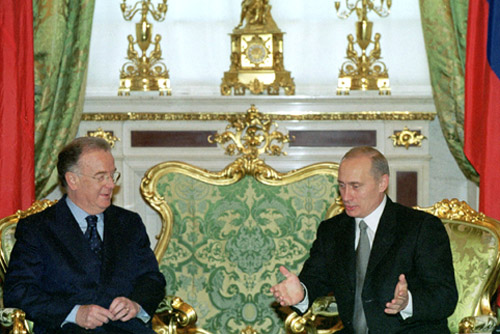
On 19 October 2000, Sampaio announced his candidacy
In 2001, while the September 11 attacks on the United States were underway, Sampaio was having lunch with a guest at Belém Palace and had to immediately cancel.
The defeat of the Socialist Party in the municipal elections of 2001 ended the government of António Guterres, who resigned. Instead of appointing the new leader of the PS Eduardo Ferro Rodrigues as head of government, after a round of consultations with the parliamentary parties, Sampaio dissolved the Assembly and called elections for March 2002.
In February 2002, in an interview for the BBC, Sampaio said Portugal would hold a new referendum to decriminalize abortion. In the same interview, he defended the government's decision to decriminalize the use of certain drugs, a proposal several European leaders criticized. Sampaio also stated Europe should commit itself more energetically to resolve the crisis in the Middle East, and that the Palestinians and Israelis should return to negotiations.
On 4 April 2002, Sampaio said he welcomed the peace accords that ended the Angolan Civil War, saying it "opens the way to reconciliation among Angolans and general elections".

In October 2003, Sampaio invited the presidents of Finland and Germany, and the soon-to-be EU members Hungary, Latvia, and Poland to Arraiolos to discuss the consequences of the 2004 enlargement of the European Union and plans for a Constitution for Europe.
In 2004, Sampaio refused to hold an early election following the resignation of Social Democratic Party Prime Minister Durão Barroso. Sampaio's refusal was met with protests from all left-wing parties and the resignation of socialist leader Ferro Rodrigues. Sampaio appointed Pedro Santana Lopes as Prime Minister on 9 July 2004. Following the PS's absolute majority in this election, Sampaio appointed José Sócrates Prime Minister.
Sampaio's successor was chosen in the presidential election on 22 January 2006. Aníbal Cavaco Silva, who Sampaio defeated in 1996, succeeded him on 9 March 2006. During his ten years in office, Sampaio convened the Portuguese Council of State 22 times, mainly to manage the Macau issue. , it is the highest number of conventions of any Portuguese president.
Post-presidential career
_(cropped).jpg)
As a former President, Jorge Sampaio became a member of the Portuguese Council of State in 2006. He was also member of the Club de Madrid, an organization of more than 80 former democratic statespersons.
In May 2006, United Nations Secretary-General Kofi Annan appointed Sampaio as his first Special Envoy for the Global Plan to Stop Tuberculosis. On 26 April 2007, new UN Secretary-General Ban Ki-moon designated Sampaio as High Representative for the Alliance of Civilizations, a position he held until February 2013, when Nassir Abdulaziz Al-Nasser succeeded him.
In 2010, Sampaio participated in the jury for Fondation Chirac's Conflict Prevention Prize. From 2013, he led the Global Platform for Syrian Students to boost the academic training of young people in Syria after the outbreak of the country's civil war and refugee crisis. On 26 August 2021, in an article in the newspaper Público, Sampaio announced the Global Platform for Syrian Students was creating academic training for female Afghan students amid the Taliban's seizure of power in Afghanistan.
Personal life
Jorge Sampaio married twice. In 1967, he married Karin Schmidt Dias, a physician and daughter of anthropologist and German-born pianist Margot Dias (née Schmidt), with whom he had no children. The couple divorced in 1971.
On 6 April 1974, Sampaio married Maria José Ritta, with whom he had two children: Vera Ritta de Sampaio was born in 1975 and André Ritta de Sampaio was born in 1980.
Sampaio played piano from childhood and was a member of Sporting CP, in which his membership number was 3,109. He supported bullfighting, and collected records and paintings. He was shy, cried easily, was discreet, had a poor temper, and was altruistic. He also had a British accent and red hair he inherited from a paternal great-grandfather.
Death and funeral

In August 2021, while on vacation in Algarve, Sampaio began to feel unwell and was transferred by helicopter to Lisbon. On 27 August, he was admitted to Santa Cruz hospital, where he died of respiratory failure on 10 September 2021, eight days before his 82nd birthday. On that day, the Council of Ministers decreed three days of national mourning would begin on 11 September. The next day, the funeral procession transited Lisbon City Hall, where the mayor Fernando Medina received him. The final destination was the Royal Riding Arena of the National Coach Museum, where the mortuary chapel was installed and his coffin was flanked with wreaths of red carnations.
On Sunday 12 September, Sampaio's state funeral was held at Jerónimos Monastery and was attended by the highest national institutions, including UN Secretary-General and former Prime Minister António Guterres. Also present were foreign leaders such as the King of Spain Felipe VI, the Prime Minister of Cape Verde Ulisses Correia e Silva, the President of the Parliament of East Timor Aniceto Guterres Lopes, and delegates of the Community of Portuguese Language Countries. Later, in a private ceremony, Sampaio was buried at Alto de São João Cemetery, Lisbon.
Electoral history
PS leadership election, 1989
|- style="background-color:#E9E9E9" ! align="center" colspan=2 style="width: 60px"|Candidate ! align="center" style="width: 50px"|Votes ! align="center" style="width: 50px"|%
| - |
|---|
| - |
| - style="background-color:#E9E9E9" |
| - |
| } |
Lisbon City Council election, 1989
Main article: 1989 Lisbon local election
|- ! colspan="2" | Party ! Candidate ! align="center" style="width: 50px"| Votes ! align="center" style="width: 50px"|% ! align="center" style="width: 50px"|Seats ! align="center" style="width: 50px"|+/−
| - |
|---|
| - |
| - |
| - |
| - |
| 13,433 |
| - style="background-color:#E9E9E9" |
| 368,125 |
| - |
| } |
Legislative election, 1991
Main article: 1991 Portuguese legislative election
|- ! colspan="2" | Party ! Candidate ! Votes ! align="center" style="width: 50px"|% ! align="center" style="width: 50px"|Seats ! align="center" style="width: 50px"|+/−
| - |
|---|
| - |
| - |
| - |
| - |
| - |
| 132,495 |
| - |
| 110,672 |
| - style="background-color:#E9E9E9" |
| 5,735,431 |
| - |
| } |
Lisbon City Council election, 1993
Main article: 1993 Lisbon local election
|- ! colspan="2" | Party ! Candidate ! align="center" style="width: 50px"| Votes ! align="center" style="width: 50px"|% ! align="center" style="width: 50px"|Seats ! align="center" style="width: 50px"|+/−
| - |
|---|
| - |
| - |
| - |
| - |
| - |
| 12,463 |
| - style="background-color:#E9E9E9" |
| 354,526 |
| - |
| } |
Presidential election, 1996
Main article: 1996 Portuguese presidential election
|- ! colspan="2" |Candidate ! Votes ! align="center" style="width: 50px"|%
| - |
|---|
| - |
| 132,791 |
| - style="background-color:#E9E9E9" |
| 5,762,978 |
| - |
| } |
Presidential election, 2001
Main article: 2001 Portuguese presidential election
|- ! colspan="2" |Candidate ! Votes ! align="center" style="width: 50px"|%
| - |
|---|
| - |
| - |
| - |
| - |
| 127,901 |
| - style="background-color:#E9E9E9" |
| 4,449,800 |
| - |
| } |
Honours and awards
.svg)
In 2004, Sampaio received the Charles V European Award. In 2015, he, along with Dr. Helena Ndume, was a recipient of the Nelson Rolihlahla Mandela Prize in recognition of his role in the campaign for the restoration of democracy in Portugal, the pro bono defense of political prisoners, and for raising awareness of tuberculosis as the UN Secretary-General's first Special Envoy to Stop Tuberculosis.
National honours
- [[File:PRT Order of Prince Henry - Grand Collar BAR.svg|55px]] Grand Collar of the Order of Prince Henry (5 April 2018)
- [[File:PRT Order of Liberty - Grand Collar BAR.svg|55px]] Grand Collar of the Order of Liberty (9 March 2006)
- [[File:PRT Military Order of the Tower and of the Sword - Grand Collar.svg|55px]] Grand Collar of the Military Order of the Tower and Sword (9 March 2006)
- [[File:PRT Three Orders BAR.svg|55px]] Grand Cross of the Sash of the Three Orders (9 March 1996 - 9 March 2006)
- [[File:PRT Order of Prince Henry - Grand Officer BAR.svg|55px]] Grand Officer of the Order of Prince Henry (3 August 1983)
Foreign honours
Source:
- Algeria: Collar of the National Order of Merit (1 December 2004)
- Argentina: Collar of the Order of the Liberator General San Martín (12 December 2001)
- Belgium: Grand Cordon of the Order of Leopold (9 October 2000)
- Brazil:
- Grand Collar of the Order of the Southern Cross (9 December 1997)
- Grand Cross of the Order of the Southern Cross (22 August 1991)
- Grand Cross of the Order of Rio Branco (25 July 1996)
- Cape Verde: First Class of the (26 March 2001)
- Chile:
- Collar of the Order of Merit (30 September 2001)
- Grand Cross of the Order of Bernardo O'Higgins (5 March 1993)
- Cyprus: Grand Cross of the Order of Merit of the Republic of Cyprus (30 September 2001)
- East Timor: Grand Collar of the Order of Timor-Leste (30 August 2009)
- Estonia:
- Collar of the Order of the Cross of Terra Mariana (27 June 2003)
- First Class of the Order of the White Star (29 March 2006)
- Finland:
- Grand Cross with Collar of the Order of the White Rose of Finland (6 February 2003)
- Commander Grand Cross of the Order of the Lion of Finland (8 March 1991)
- France: Grand Cross of the National Order of the Legion of Honour (29 November 1999)
- Gabon: Grand Cross of the Order of the Equatorial Star (8 January 2002)
- Germany:
- Grand Cross Special Class of the Order of Merit of the Federal Republic of Germany (17 May 1999)
- Grand Cross 1st Class of the Order of Merit of the Federal Republic of Germany (15 October 1996)
- Greece: Grand Cross of the Order of the Redeemer (10 December 1999)
- Guinea-Bissau: Grand Cross of the (2 July 1996)
- Hungary:
- Grand Cross with Chain of the Hungarian Order of Merit (23 September 2003)
- Grand Cross of the Hungarian Order of Merit (22 April 1999)
- Italy: Knight Grand Cross with Collar of the Order of Merit of the Italian Republic (4 December 2001)
- Latvia: Commander Grand Cross with Chain of the Order of the Three Stars (8 May 2003)
- Lithuania: Grand Cross of the Order of Vytautas the Great (27 June 2003)
- Luxembourg: Knight of the Order of the Gold Lion of the House of Nassau (15 June 2010)
- Mexico: Collar of the Order of the Aztec Eagle (14 May 1999)
- Morocco: Grand Cordon of the Order of Ouissam Alaouite (27 July 1995)
- Mozambique: First Class of the Order of Friendship and Peace (12 May 1997)
- Netherlands: Knight Grand Cross of the Order of Orange-Nassau (25 March 1992)
- Norway: Grand Cross of the Order of St Olav (24 June 2004)
- Paraguay: Collar of the National Order of Merit (4 January 2006)
- Poland: Knight of the Order of the White Eagle (9 October 1997)
- Romania: Collar of the Order of the Star of Romania (15 March 2000)
- Slovakia: Grand Cross of the Order of the White Double Cross (30 June 2003)
- Slovenia: Gold Medal of the Order of Freedom of the Republic of Slovenia (31 March 2000)
- Spain:
- Collar of the Order of Charles III (11 September 2000)
- Collar of the Order of Isabella the Catholic (3 March 1998)
- Tunisia:
- Grand Cordon of the Order of the Republic (12 July 1994)
- Grand Cordon of the Order of 7 November (10 May 2000)
- Ukraine: First Class of the Order of Prince Yaroslav the Wise (13 April 1998)
- United Kingdom:
- Honorary Knight Grand Cross of the Most Distinguished Order of Saint Michael and Saint George (23 September 2002)
- Honorary Knight Grand Cross of the Royal Victorian Order (12 July 1994)
- Venezuela:
- Collar of the Order of the Liberator (24 February 1999)
- Grand Cross of the Order of Francisco de Miranda (24 June 2002)
''Honoris causa''
- Honoris causa from the University of Aveiro (2008)
- Honoris causa from the University of Coimbra (2010)
- Honoris causa from the University of Lisbon (2010)
- Honoris causa from King's College London (2014)
- Honoris causa from the University of Porto (2015)
Footnotes
References
References
- Henriques, Graça. (18 September 2019). "Oito décadas na vida de Jorge Sampaio". Diário de Notícias.
- [https://www.presidencia.pt/en/president-of-the-republic/the-presidency/previous-presidents/jorge-sampaio/ Jorge Sampaio (Presidency of the Portuguese Republic website, Previous Presidents)]
- Wise, Peter. (10 September 2021). "Jorge Sampaio, president of Portugal, 1939–2021". [[Financial Times]].
- "Jorge Sampaio". Museum of the Presidency of the Republic.
- Valdemar, António. (10 September 2021). "As raízes judaicas açorianas de Jorge Sampaio". [[Público (Portugal).
- link. (9 February 2008)
- Ferreira, João. (10 September 2021). "Juventude. De menino a adolescente". [[Diário de Notícias]].
- (10 September 2021). "Jorge Sampaio. Presidente, socialista, paciente e conciliador". [[Rádio e Televisão de Portugal]].
- Lopes, Sónia Sapage e Maria. (2022-04-25). "Cronologia dos Partidos".
- Teixeira da Silva, Helena. (10 September 2021). "Jorge Sampaio, uma vida em momentos e imagens". [[Jornal de Negócios]].
- (2001). "The Portuguese Socialists and the Third Way". [[European Consortium for Political Research]].
- "Jorge Sampaio, Presidência da República Portuguesa".
- (10 September 2021). "Sampaio, o primeiro líder partidário candidato a Lisboa e precursor de acordos com o PCP". SAPO.
- (1 January 1996). "Arranca la campaña presidencial en Portugal con clara ventaja de Sampaio". La Vanguardia.
- (14 January 1996). "El socialista Sampaio, claro favorito en las elecciones presidenciales de hoy en Portugal". La Vanguardia.
- link. (4 October 2018 (1996))
- (9 March 1996). "PORTUGAL: LISBON: NEW PRESIDENT JORGE SAMPAIO SWORN IN".
- (22 May 1998). "Portugual [sic] opens huge exhibition". [[BBC]].
- Luís, Filipe. (10 September 2021). "Morreu Jorge Sampaio, um lutador pela liberdade. Nove momentos decisivos". [[Visão]].
- (10 September 2021). "Jorge Sampaio empenhou-se na causa de Timor-Leste". RTP.
- Martins, Andreia. (10 September 2021). "Os temas que marcaram a passagem de Jorge Sampaio por Belém".
- Lluis Maria de Puig, member of the Political Affairs Committee. (20 September 1999). "Situation in East Timor". [[Parliamentary Assembly of the Council of Europe]].
- (15 September 1999). "Security Council authorises multinational force in East Timor". United Nations.
- (22 March 1999). "Portugal unhappy at China's Macau moves". BBC.
- (14 January 2001). "Sampaio re-elected president in Portugal". BBC.
- (7 May 2016). "Sampaio pensava que Cimeira era para evitar a guerra no Iraque". Observador.
- (28 December 2001). "Portugal set for early elections". BBC.
- (14 February 2002). "Abortion debate in Portugal reopened". BBC.
- (4 April 2002). "Angolans celebrate peace deal". BBC.
- "Foreign Policy Events, 13–20 October 2003". [[Ministry of Foreign Affairs (Latvia).
- (12 July 2004). "Portugal names new prime minister". BBC.
- (22 January 2006). "Conservative wins Portugal race". BBC.
- "Anibal Cavaco Silva presta juramento e toma posse como Presidente da República para um mandato de 5 anos". RTP.
- Mendes, Inês. (9 December 2015). "Sampaio foi quem mais usou o Conselho de Estado". [[Observador]].
- (17 March 2020). "O que é e o que faz o Conselho de Estado, órgão de consulta do Presidente". Público.
- Club de Madrid. (21 May 2014). "Jorge Sampaio – Club de Madrid".
- [[World Health Organization]]. (11 May 2006). "UN Secretary-General appoints former head of state as first Special Envoy to Stop TB".
- (27 April 2007). "Ban Ki-moon nombra a Jorge Sampaio para dirigir la Alianza de Civilizaciones". [[ABC (newspaper).
- (27 February 2013). "Jorge Sampaio abandona cargo na Aliança das Civilizações". Público.
- "The Jury". Fondation Chirac.
- Chacón, Francisco. (10 September 2021). "Portugal pierde al histórico expresidente socialista Jorge Sampaio". [[ABC (newspaper).
- (26 August 2021). "Universidades e politécnicos portugueses disponíveis para acolher estudantes afegãos". Público.
- Carrasco, Tiago. (15 September 2021). "Amores e mágoas de Sampaio". [[Sábado (magazine).
- "Jorge Sampaio, Museu da Presidência da República".
- Moreira Rato, Maria. (11 September 2021). "Jorge Sampaio: Democrata e humanista". Nascer do SOL.
- Teixeira da Silva, Helena. (10 September 2021). "Morreu Jorge Sampaio, o "prisioneiro da ansiedade por um futuro melhor"". Jornal do Noticias.
- Antunes, Alexandra. (11 September 2021). "Jorge Sampaio, o presidente que tocava piano e falava inglês". SAPO.
- (28 March 2007). "Ex-Presidente da República, Jorge Sampaio, sai em defesa das touradas". [[O Mirante]].
- (11 September 2021). "Jorge Sampaio. Um político de lágrima fácil mas de decisões duras". [[Jornal de Negócios]].
- (27 August 2021). "Jorge Sampaio internado com dificuldades respiratórias". [[Jornal de Notícias]].
- (10 September 2021). "Morreu Jorge Sampaio". [[Rádio e Televisão de Portugal]].
- (10 September 2021). "Jorge Sampaio, who showed extent of Portuguese presidential powers, dies at 81". [[Reuters]].
- (10 September 2021). "Jorge Sampaio. Governo decreta luto nacional de três dias". RTP.
- (11 September 2021). "Coroas de cravos vermelhos e aplausos. As imagens do velório de Jorge Sampaio". Observador.
- Lopes, Miguel A.. (12 September 2021). "Homenagem e funeral com Honras de Estado no último adeus a Jorge Sampaio". RTP.
- "A última homenagem a Jorge Sampaio, o "homem bom" que não quis ser herói. "Mas foi" – como aconteceu". Observador.
- [https://www.rtp.pt/noticias/politica/jorge-sampaio-a-historia-de-duas-derrotas-que-fizeram-o-candidato-a-belem_es1061153 "Jorge Sampaio. A história de duas derrotas que fizeram o candidato a Belém "], ''RTP'', 10 September 2021. Retrieved 6 June 2022.
- "Distrito de Lisboa : Autárquicas Resultados 1989 : Dossier : Grupo Marktest". Marktest.
- (18 December 1989). "Entrevista a Hermínio Martinho". RTP.
- (18 December 1989). "Garcia Pereira candidato à Câmara de Lisboa". RTP.
- (3 November 1989). "Garcia Pereira candidato à Câmara de Lisboa". RTP.
- (12 December 1989). "Campanha da FER para as autárquicas de Lisboa". RTP.
- "Resultados AR 1991". Comissão Nacional de Eleições.
- "Resultados 1993 CM AM". CNE.
- (8 December 1993). "Campanha do MPT para as autárquicas". RTP.
- (12 December 1993). "Campanha do MRPP para as autárquicas". RTP.
- (1 March 1993). "João Santos candidato à Câmara de Lisboa". RTP.
- "Resultados PR 1996". Comissão Nacional de Eleições.
- "Resultados PR 2001". Comissão Nacional de Eleições.
- [https://www.un.org/en/events/mandeladay/laureates.shtml. President Kutesa announces the winners of the United Nations Nelson Rolihlahla Mandela Prize]
- (22 June 2015). "United Nations News Centre". UN News Service Section.
- "ENTIDADES NACIONAIS AGRACIADAS COM ORDENS PORTUGUESAS". Presidency of Portugal.
- "Banda da Grã-Cruz das Três Ordens". Historic Archive of the Presidency of Portugal.
- "ENTIDADES NACIONAIS AGRACIADAS COM ORDENS ESTRANGEIRAS". Presidency of Portugal.
- [http://www.monarchie.be/sites/default/files/imagecache/ImageDetail/images/fr_GalaPortugal05.jpg Royal website photo]
- "Lithuanian Presidency".
- Slovak republic website, [http://www.slovak-republic.org/symbols/honours/ State honours] : 1st Class in 2003 (click on "Holders of the Order of the 1st Class White Double Cross" to see the holders' table)
- "Real Decreto 1558/2000, de 8 de septiembre, por el que se concede el Collar de la Real y Muy Distinguida Orden de Carlos III a su excelencia señor Jorge Fernando Branco de Sampaio, Presidente de la República Portuguesa.". [[Boletín Oficial del Estado]].
- "Real Decreto 1126/1996, de 17 de mayo, por el que se concede el Collar de la Orden de Isabel la Católica a su excelencia señor Jorge Fernando Branco de Sampaio Presidente de la República Portuguesa.". [[Boletín Oficial del Estado]].
- "Honoris Causa". University of Aveiro.
- (24 January 2010). "Jorge Sampaio recebe hoje grau de doutor "honoris causa" pela Universidade de Coimbra". [[Público (Portugal).
- (12 November 2014). "Jorge Sampaio distinguido com doutoramento 'honoris causa'". [[Sol (newspaper).
- "Doutores Honoris Causa pela Universidade do Porto". University of Porto.
This article was imported from Wikipedia and is available under the Creative Commons Attribution-ShareAlike 4.0 License. Content has been adapted to SurfDoc format. Original contributors can be found on the article history page.
Ask Mako anything about Jorge Sampaio — get instant answers, deeper analysis, and related topics.
Research with MakoFree with your Surf account
Create a free account to save articles, ask Mako questions, and organize your research.
Sign up freeThis content may have been generated or modified by AI. CloudSurf Software LLC is not responsible for the accuracy, completeness, or reliability of AI-generated content. Always verify important information from primary sources.
Report