From Surf Wiki (app.surf) — the open knowledge base
John Suckling (politician)
English politician (1569–1627)
English politician (1569–1627)
Sir John Suckling (1569 – 27 March 1627) was an English politician who sat in the House of Commons at various times between 1601 and 1627.
Suckling was the son of Robert Suckling, mayor of Norwich and MP for the city's constituency between 1571-1572 and 1586-1588, and his wife Elizabeth Barwick, daughter of William Barwick. He entered Gray's Inn on 22 May 1590. He was elected Member of Parliament for Dunwich in 1601.
In 1602, he was acting as secretary to the Lord High Treasurer, Sir Robert Cecil, and in December 1604 he became receiver of fines on alienations, in succession to Sir Arthur Aty. In 1614 he was elected MP for Reigate. In February 1619 he became a Master of Requests, and, in 1622, he was appointed comptroller of the royal household, "paying well for the post." Suckling had become wealthy and accumulated manors, fee-farms, and advowsons in various parts of the country.
In September 1621, he was mentioned as Sir Richard Weston's most serious competitor for the chancellorship of the exchequer and in March 1622 he was promoted to be secretary of state. Charles I, upon his accession three years later, created him a privy councillor. [[File:Monument to Sir John Suckling.JPG|thumb|Alabaster monument (circa 1611) to Sir John Suckling (politician)]]
In 1624, he was elected MP for Middlesex, Lichfield and Kingston upon Hull and chose to sit for Middlesex. In 1625, he represented Yarmouth (IoW) after Edward Clarke opted to sit for Hythe. In 1626 he was elected MP for Norwich and for Sandwich; he chose to sit for Norwich.
Marriages
Suckling married Martha Cranfield, daughter of Thomas Cranfield of London, and sister of Lionel Cranfield, 1st Earl of Middlesex. She died on 28 October 1613, aged 35. By her, he was the father of the poet Sir John Suckling. A monument of Sir John Suckling, his first wife, Martha, and family, can be seen in St Andrew's Church, Norwich.
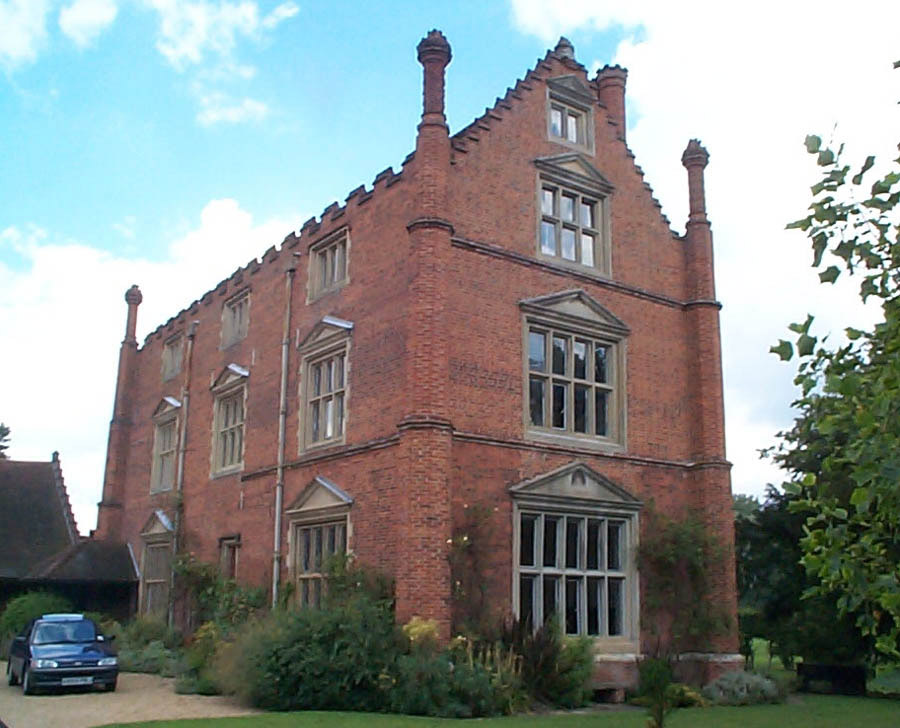
On 2 March 1616, Suckling married Jane Hawkins, widow of Charles Hawkins and originally of the Suffolk family of Reve or Reeve. Suckling's widow took as her third husband Sir Edwin Rich, of Mulbarton, Norfolk and on the default of her stepson carried into that family the estate of Roos Hall near Beccles Suffolk which Suckling had acquired in 1600 as his residence. but was later repurchased by the family.
References
References
- [[s:Suckling, John (DNB00). Dictionary of National Biography]]
- {{Cite Notitia Parliamentaria
- He was knighted by [[James VI and I. James I]] at [[Theobalds]] on 22 January 1616.[https://archive.org/stream/knightsofengland02shawuoft#page/n165/mode/2up Knights of England]
- ''The registers of St. Olave, Hart Street, London'' (London, 1916), p. 261.
- Copinger, Walter Arthur. (1911). "The Manors of Suffolk". TF Unwin.
This article was imported from Wikipedia and is available under the Creative Commons Attribution-ShareAlike 4.0 License. Content has been adapted to SurfDoc format. Original contributors can be found on the article history page.
Ask Mako anything about John Suckling (politician) — get instant answers, deeper analysis, and related topics.
Research with MakoFree with your Surf account
Create a free account to save articles, ask Mako questions, and organize your research.
Sign up freeThis content may have been generated or modified by AI. CloudSurf Software LLC is not responsible for the accuracy, completeness, or reliability of AI-generated content. Always verify important information from primary sources.
Report