From Surf Wiki (app.surf) — the open knowledge base
John Peter Zenger
Printer, journalist and defender of freedom of the press in early America (1697–1746)
Summary
Printer, journalist and defender of freedom of the press in early America (1697–1746)
Field
Value
name
John Peter Zenger
image
John Peter Zenger trial.jpg
caption
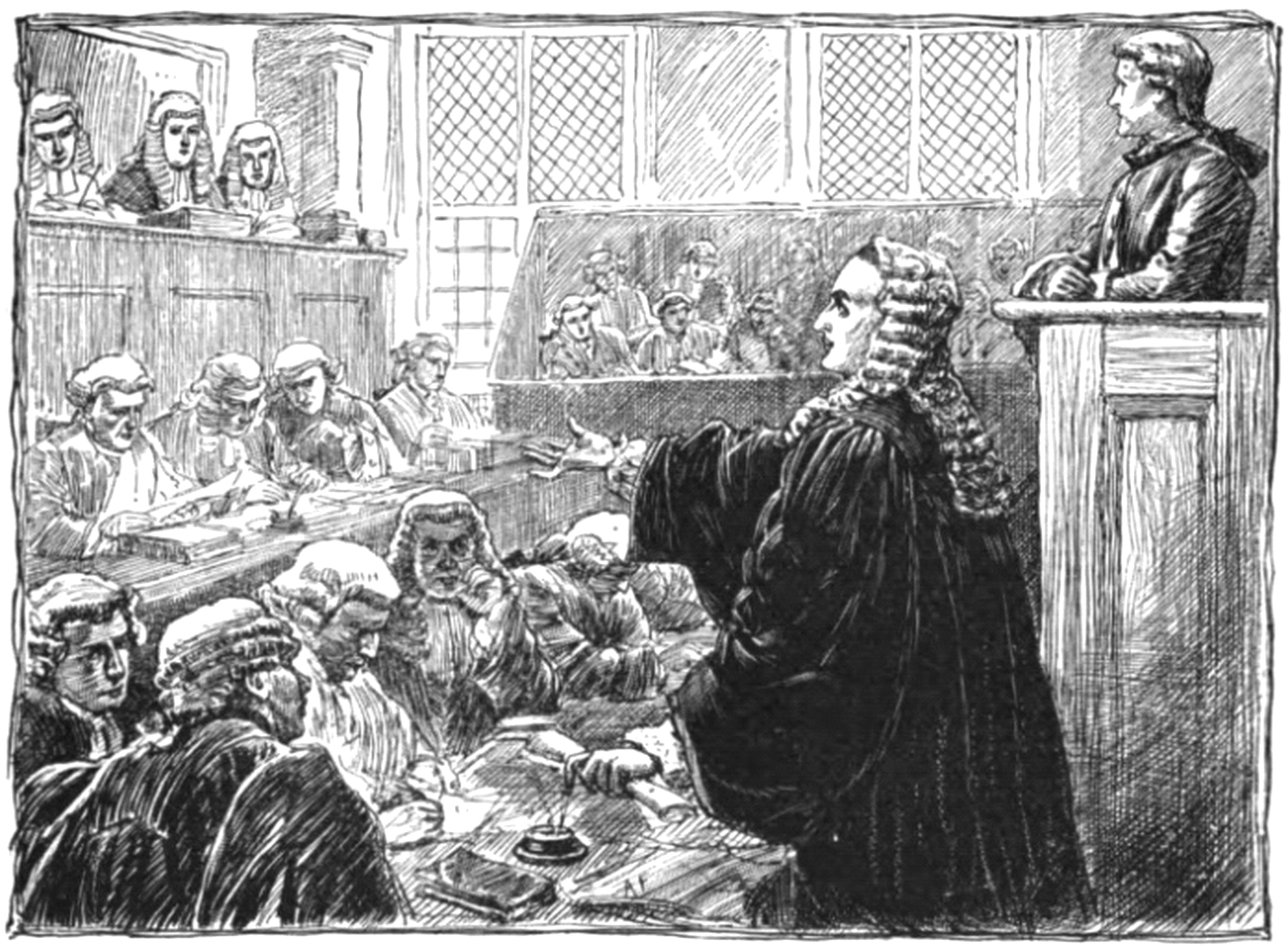
Andrew Hamilton defending John Peter Zenger in court, 1734–1735
birth_date
October 26, 1697
birth_place
Impflingen, or Rumbach
Rhenish Palatinate
death_date
death_place
New York, Province of New York
citizenship
British
occupation
Newspaper writer
years_active
1720–1746
known_for
Zenger trial
notable_works
The New York Weekly Journal
Rhenish Palatinate
The trial, as imagined by an illustrator in the 1883 book ''Wall Street in History''
**John Peter Zenger **(October 26, 1697 – July 28, 1746) was a German printer and journalist in New York City. Zenger printed The New York Weekly Journal. He was accused of libel in 1734 by William Cosby, the royal governor of New York, but the jury acquitted Zenger, who became a symbol for freedom of the press.
In 1733, Zenger began printing The New York Weekly Journal, which voiced opinions critical of the colonial governor, William Cosby. On November 17, 1734, on Cosby's orders, the sheriff arrested Zenger. After a grand jury refused to indict him, the Attorney General Richard Bradley charged him with libel in August 1735. Zenger's lawyers, Andrew Hamilton and William Smith, Sr., successfully argued that truth is a defense against charges of libel.
Early life
Peter Zenger was born in 1697 in the German Palatinate. Most of the details of his early life are obscure. He was the son of Nicolaus Eberhard Zenger and his wife Johanna. His father was a school teacher in Impflingen in 1701. The Zenger family had other children baptized in Rumbach in 1697 and in 1703 and in Waldfischbach in 1706. The Zenger family immigrated to New York in 1710 as part of a large group of German Palatines, and Nicolaus Zenger was one of those who died before settlement. The governor of New York had agreed to provide apprenticeships for all the children of immigrants from the Palatinate, and John Peter was bound for eight years as an apprentice to William Bradford, the first printer in New York. By 1720, he was taking on printing work in Maryland, though he returned to New York permanently by 1722.
When in 1725 William Bradford began publishing the New York Gazette, the first and only newspaper in New York at the time, John Peter Zenger was directly responsible for its production and also became a partner in Bradford’s business.
After a brief partnership with Bradford in 1725, Zenger set up as a commercial printer on Smith Street in New York City. In 1730, Zenger published Peter Venema’s Arithmetica, considered the first arithmetic text printed in New York. By 1731, his printing house on Smith Street had released 21 titles, while his main competitor and former employer, Bradford, had printed 50.
On 28 May 1719, Zenger married Mary White in the First Presbyterian Church, Philadelphia. On 24 August 1722, widower Zenger married Anna Catharina Maul in the Collegiate Church, New York. He was the father of many children by his second wife, six of whom survived.
Libel case
A page from Zenger's ''New-York Weekly Journal'', 7 January 1733
In 1733, Zenger printed copies of newspapers in New York to voice his disagreement with the actions of the newly appointed colonial governor William Cosby. On his arrival in New York City, Cosby had plunged into a rancorous quarrel with the colony council over his salary, trying to recoup half of the salary of the previous acting governor Rip Van Dam. Unable to control the colony's supreme court, which had ruled against Cosby in the dispute, Cosby removed Chief Justice Lewis Morris, replacing him with the royalist justice James DeLancey. Supported by members of the Popular Party, Zenger's New-York Weekly Journal continued to publish articles critical of the royal governor. Finally, Cosby issued a proclamation condemning the newspaper's "divers scandalous, virulent, false and seditious reflections."
Zenger was charged with libel. James Alexander was Zenger's first counsel, but the court found him in contempt and disbarred him, removing him from the case. After more than eight months in prison, Zenger went to trial, defended by the Philadelphia lawyer Andrew Hamilton and the New York lawyer William Smith, Sr. The case was now a cause célèbre, with the public interest at fever-pitch. Rebuffed repeatedly by chief justice James DeLancey during the trial, Hamilton decided to plead his client's case directly to the jury. After the lawyers for both sides finished their arguments on August 5, 1735, the jury retired only to return in ten minutes with a verdict of not guilty, a famous example of jury nullification.
In defending Zenger in this landmark case, Hamilton and Smith attempted to establish the precedent that a statement, even if defamatory, is not libelous if it can be proved, thus affirming freedom of the press in America; however, succeeding royal governors clamped down on freedom of the press until the American Revolution. This case is the groundwork of freedom of the press, not its legal precedent.
"Cato" article
In the February 25, 1733 issue of The New York Weekly Journal an opinion piece was written under the pseudonym "Cato." This was a pen-name used by British writers John Trenchard and Thomas Gordon, whose essays were published as Cato's Letters (1723). Jeffery A. Smith writes that "Cato" was "The leading luminary of the 18th century libertarian press theory...Editions of Cato's Letters were published and republished for decades in Britain and were immensely popular in America." This article gave its readers a preview of the same argument attorneys Hamilton and Smith presented 18 months later in the government's libel case against Zenger – that truth is an absolute defense against libel. The words are reprinted from Cato's essay "Reflections Upon Libelling":
Death
Zenger died in New York on July 28, 1746, at the age of 48 years old with his wife continuing his printing business.
Legacy and honors
During World War II, the Liberty ship was named in his honor.
Zenger was a Madison, Wisconsin based underground newspaper that operated during the late 20th century.
Zenger News is a wire service owned and operated by journalists.
A ten foot high limestone statue of John Peter Zenger is mounted on the brick wall of P.S. 18 in the Bronx in New York City. The sculpture was created by sculptor Joseph Kiselewski.
Bibliography
Copeland, David. "The Zenger Trial." Media Studies Journal 14#2 (2000): 2–7.
Covert, Cathy. "'Passion Is Ye Prevailing Motive': The Feud Behind the Zenger Case." Journalism & Mass Communication Quarterly (1973) 50#1 pp: 3–10.
Eldridge, Larry D. "Before Zenger: Truth and Seditious Speech in Colonial America, 1607–1700." American Journal of Legal History (1995): 337-358. in JSTOR
Levy, Leonard Williams, ed. Freedom of the press from Zenger to Jefferson: early American libertarian theories (Irvington Publishers, 1966)
Presbyterian Historical Society; Philadelphia, Pennsylvania; Church Registers; Book Title: Church Register 1701–1746; Accession Number: V MI46 P477rr v.1.
The Archives of the Reformed Church in America; New Brunswick, New Jersey; Collegiate Church, Ecclesiastical Records, Baptisms, Members, Marriages, 1639–1774.
[https://www.immigrantentrepreneurship.org/entry.php?rec=8 Keene, A. (2013, February 12). John Peter Zenger. Retrieved March 05, 2018]
National Park Service. "Intrigue on the Village Green: The Election of 1733 at St. Paul's." [https://www.nps.gov/articles/000/intrigue-on-the-village-green-the-election-of-1733-at-st-paul-s.htm]
Hudson, Frederic. (1873) [https://archive.org/details/journalisminunit00huds/page/82 Journalism in the United States, from 1690–1872]. Forgotten Books. p. 82.
[[#pasley2003. Pasley, 2003]], pp. 30–31
[[#levy1960. Levy, 1960]], p. 43
[[#lawson1914. Lawson, 1914]], p. viii
As late as 1804, the journalist [[Harry Croswell]] lost a series of prosecutions and appeals because truth was ''not'' a defense against libel, as decided by the [[New York Court of Appeals. New York Supreme Court]] in ''[[People v. Croswell]]''. It was only the following year that the assembly, reacting to this verdict, passed a law that allowed truth as a defense against a charge of libel.[[#levy1960. Levy, 1960]], p. 38
Although this issue of Zenger's newspaper is dated 1733, the actual year was 1734. At the time, Britain and the colonies used a [[Old Style and New Style dates. calendar system]] wherein January, February and part of March retained the preceding year's date. This system was eliminated in the 1750s.
This content may have been generated or modified by AI. CloudSurf Software LLC is not responsible for the accuracy, completeness, or reliability of AI-generated content. Always verify important information from primary sources.