From Surf Wiki (app.surf) — the open knowledge base
John LeConte
American scientist and academic (1818-1891)
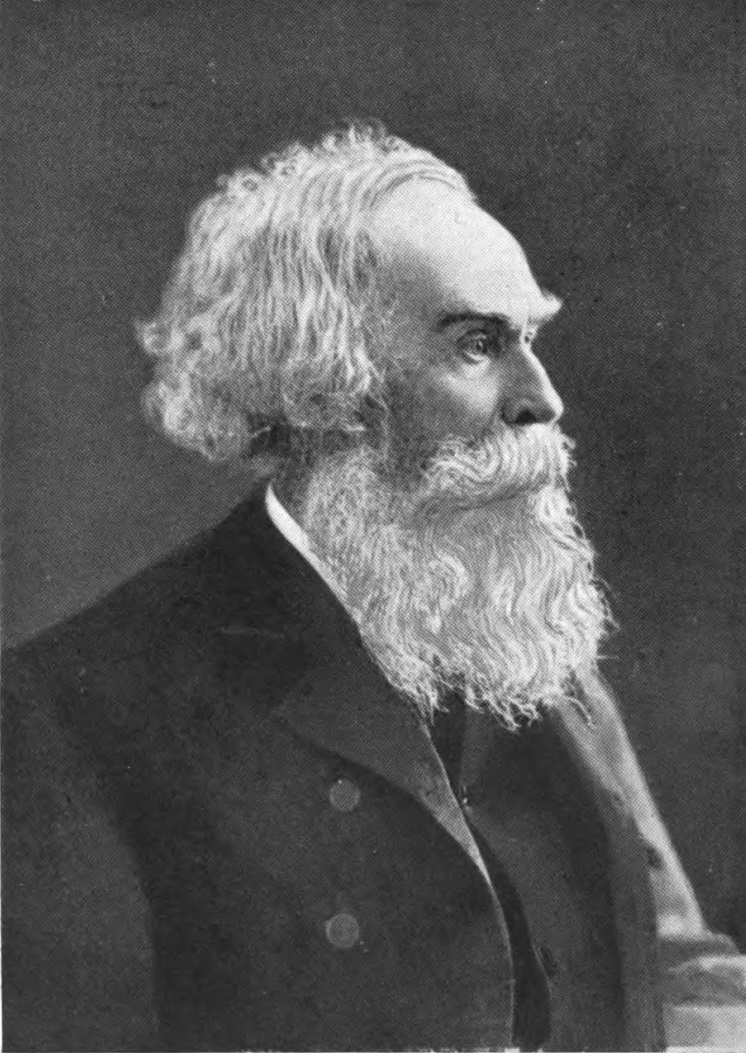
American scientist and academic (1818-1891)
John LeConte (December 4, 1818 – April 29, 1891) was an American scientist and academic. He served as president of the University of California from 1869 to 1870 and from 1875 to 1881.
Biography
LeConte was born in Liberty County, Georgia, to Louis Le Conte, patriarch of the noted LeConte family. He attended Franklin College at the University of Georgia where he was a member of the Phi Kappa Literary Society and graduated in 1838. His younger brother Joseph LeConte also attended the university.
Like many of his immediate relatives, LeConte studied medicine at the New York College of Physicians and Surgeons and earned his M.D. in 1842. During this time, LeConte married Eleanor Josephine Graham. He practiced medicine until 1846 when he returned to the University of Georgia as a professor of physics and chemistry and taught there until 1855. His next academic position was at the University of South Carolina as professor of physics and chemistry from 1856 until 1869.
In March 1869, he moved to Oakland, California, to join the faculty of the newly established University of California as a professor of physics.{{cite journal|title=Sketch of Prof. John Le Conte| author=Walter Le Conte Stevens|journal=The Popular Science Monthly|volume=36|date=November 1889|pages=112–120|url=https://books.google.com/books?id=lt4KAAAAYAAJ&pg=PA112}} In June 1869, he was appointed acting president of the university, serving until Henry Durant became the president in 1870. In September 1869, his brother Joseph arrived in California to join the faculty of the university as a professor of geology. LeConte was elected as a member to the American Philosophical Society in 1873 and the National Academy of Sciences in 1878.{{cite archive |item-url= |item-id= |collection-url=https://archivesspace.mit.edu/repositories/2/resources/805
LeConte died at his home in Berkeley on April 29, 1891, while still active as a professor of physics.
Legacy
LeConte contributed major discoveries to physics throughout the 19th century. In 1858, he demonstrated that flames are sensitive to sound, "On the Influence of Musical Sounds on the Flame of a Jet of Coal Gas," [American Journal of Science], 2nd series 23 (1858): 62-67 and in 1864, LeConte successfully measured the speed of sound. LeConte began studying underwater vibrations in 1882.
LeConte's younger brother, Joseph, was a white supremacist, and a building named in their honour at UC Berkeley was renamed, as announced on July 7, 2020, because of Joseph's vigorous white supremacy writings in that regard.
LeConte Avenue in Westwood, Los Angeles, which is an east/west street, is located to the south entrance to the UCLA campus.
References
References
- "University of California History Digital Archives: U.C. Presidents Overview".
- "APS Member History".
- SFGATE, Katie Dowd. (2020-07-07). "UC Berkeley may rename halls honoring white supremacist, anthropologist".
- (18 November 2020). "UC Berkeley's LeConte and Barrows halls lose their names".
- (18 November 2020). "Chancellor Christ on the unnaming of LeConte and Barrows halls".
- (18 November 2020). "UC Berkeley strips the names of professors with racist views off 3 buildings".
This article was imported from Wikipedia and is available under the Creative Commons Attribution-ShareAlike 4.0 License. Content has been adapted to SurfDoc format. Original contributors can be found on the article history page.
Ask Mako anything about John LeConte — get instant answers, deeper analysis, and related topics.
Research with MakoFree with your Surf account
Create a free account to save articles, ask Mako questions, and organize your research.
Sign up freeThis content may have been generated or modified by AI. CloudSurf Software LLC is not responsible for the accuracy, completeness, or reliability of AI-generated content. Always verify important information from primary sources.
Report