From Surf Wiki (app.surf) — the open knowledge base
Joe Rantz
American rower (1914–2007)
American rower (1914–2007)
| Field | Value |
|---|---|
| image | File:Joe Rantz pic.jpg |
| image_size | |
| landscape | |
| alt | |
| caption | Rantz in 1936 |
| headercolor | lightsteelblue |
| birth_name | |
| full_name | |
| nationality | |
| national_team | |
| birth_date | |
| birth_place | Spokane, Washington, U.S. |
| death_date | |
| death_place | Redmond, Washington, U.S. |
| height | |
| weight | |
| parents | |
| website |
| show-medals = | medaltemplates-title =
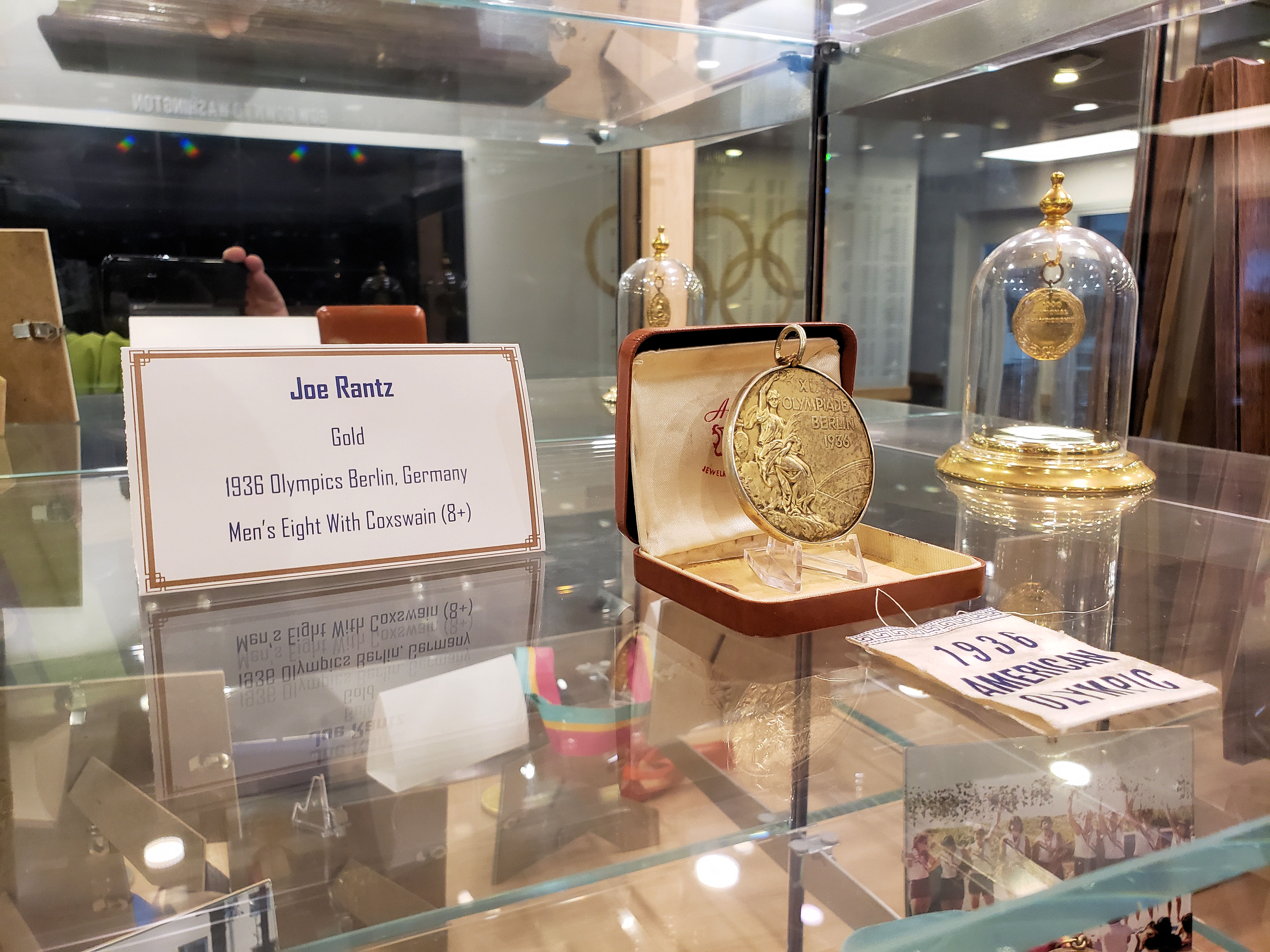
Joseph Harry Rantz (March 31, 1914 – September 10, 2007) was an American rower and chemical engineer. He won the Olympic gold in the men's eight at the 1936 Summer Olympics. Rantz worked as a chemical engineer for the Boeing aviation company for 35 years. He pioneered a dust-free particle workspace concept known as "safe room" that had wide impact on improving work environments in both aerospace and medical facilities. It was a precursor to the cleanroom.
Early life
Born in Spokane, Washington, Joe Rantz had a harsh childhood in Boulder City, Idaho and, later, Sequim, Washington. His mother, Nellie Maxwell (1881–1918), died from throat cancer when Rantz was four. His father, Harry Rantz (1880–1966), remarried in 1921, but Rantz did not connect well with his stepmother, Thula LaFollete (1897–1935), who struggled to raise Rantz and her four younger biological children.
Rantz was abandoned by his family at the age of 12, and had to fend for himself from that point on. He supported himself working in hay fields and by chopping down trees along the Dungeness River and selling the wood to a pulp mill in Port Angeles. He reared himself in an unfinished house abandoned by his father and stepmother and put himself through high school. He attended Seattle's Roosevelt High School. He gained admission to the University of Washington.
Rowing and later career
Rantz rowed in the University of Washington senior varsity eights which won US national Intercollegiate Rowing Association titles in 1936 and 1937 as well as the victorious sophomore eight of 1935 and freshman eight of 1934.{{cite web| last = Lange | first = Greg | title = HistoryLink: Rowing crew of the University of Washington wins the Olympic Gold Medal on August 14, 1936 | url = http://www.historylink.org/index.cfm?DisplayPage=output.cfm&file_id=700 | date = 1999-01-15
Rantz earned a chemical engineering degree from the university and worked for Boeing for 35 years following his retirement from rowing, inventing a precursor of the cleanroom known as "safe room".
Personal life
In 1939 Rantz married his college sweetheart, Joyce Simdars. They were married for 63 years until Joyce's death in 2002. They had five children.
Rantz died of congestive heart failure at the home of his daughter in Redmond, Washington, at age 93.
References
References
- Smith, Craig. (September 12, 2007). "Undefeated UW rowers Rantz earned gold". [[The Seattle Times]].
- Dashiell, Michael. (September 19, 2007). "Rantz, Gold Medal Winner, Dead at 93". [[The Sequim Gazette]].
- (2023-12-22). "Shawn Vestal: Before becoming a boy in the boat, rower grew up hard in Spokane and North Idaho".
- (2014-03-24). "No ordinary Joe".
- Brown, Daniel James (2013). ''The Boys In The Boat'', Viking / Penguin Group, New York. {{ISBN. 978-0-670-02581-7.
- "NFHS".
- Dashiell, Michael. (September 19, 2007). "Rantz, Gold Medal Winner, Dead at 93". [[The Sequim Gazette]].
This article was imported from Wikipedia and is available under the Creative Commons Attribution-ShareAlike 4.0 License. Content has been adapted to SurfDoc format. Original contributors can be found on the article history page.
Ask Mako anything about Joe Rantz — get instant answers, deeper analysis, and related topics.
Research with MakoFree with your Surf account
Create a free account to save articles, ask Mako questions, and organize your research.
Sign up freeThis content may have been generated or modified by AI. CloudSurf Software LLC is not responsible for the accuracy, completeness, or reliability of AI-generated content. Always verify important information from primary sources.
Report